
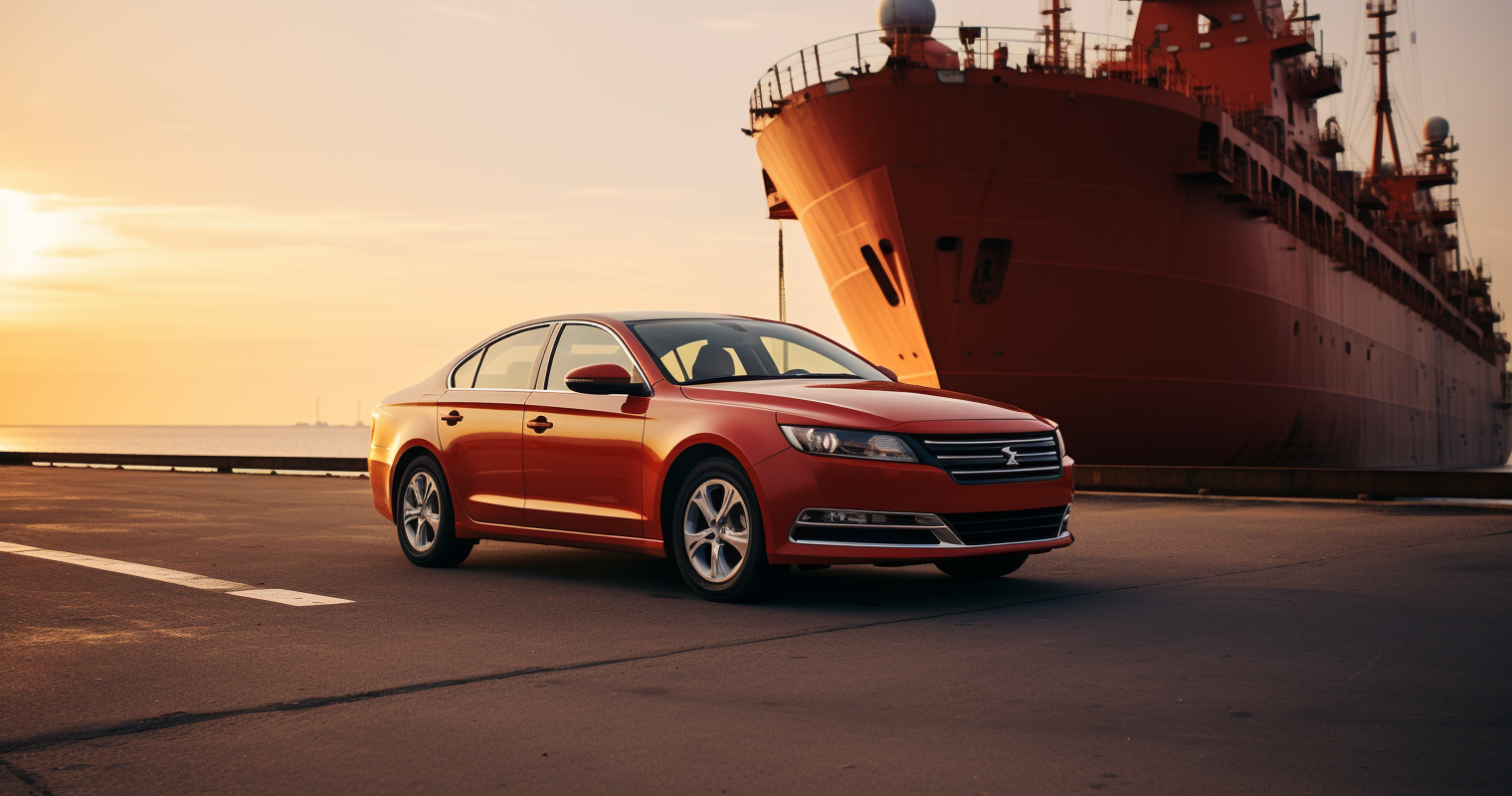
Purchasing or importing a vehicle in Qatar is a straightforward process for foreign residents, as long as you hold a valid Qatar ID (residence permit) and a Qatari driving licence. Qatar drives on the left-hand side of the road, new and pre-owned vehicles are readily available through local dealerships, and the standard customs duty on imports stands at 5% of the vehicle’s CIF value — with a possible exemption for privately used vehicles more than three years old. Residents are encouraged to verify the latest requirements with the Traffic Department and the General Authority of Customs.
| Item | Details |
|---|---|
| Residency requirement to buy | Valid Qatar ID (residence permit) required; minimum age 18 (as of 2025) |
| Standard import duty | 5% of CIF (cost, insurance, freight) value; potential exemption for personal-use vehicles over 3 years old (as of 2025 — verify with General Authority of Customs) |
| Drive side | Left-hand drive; right-hand drive vehicles are not used on Qatari roads |
| Vehicle registration fee | Approximately QAR 100 (~USD 27) as of 2025 — confirm current fee at hukoomi.gov.qa |
| Minimum insurance | Compulsory third-party liability (TPL) insurance required for all vehicles (as of 2025) |
| Licence exchange | Some foreign licences can be exchanged without a test; others require theory and practical tests — check the Traffic Department for the current approved countries list |
How do I buy a new car in Qatar as a foreigner?
Vehicle ownership in Qatar is open to both nationals and expatriates, subject to the buyer being aged 18 or over and holding a valid residence permit. This permit — issued physically as a Qatar ID card — is the essential document that enables you to purchase, register, and insure a car in your own name. Those who have not yet received their Qatar ID, or who are in the country on a visitor visa, will encounter considerably more restrictions when attempting to acquire a vehicle.
The exact documents required differ from one seller to another, but you should generally be prepared to present your passport, residence permit, and a valid driving licence. When dealing with an authorised dealership, the sales team will ordinarily take care of all registration paperwork on your behalf, making the overall experience far more convenient than handling it independently.
It is wise to arrange your finances before visiting a showroom, since dealerships can manage the entire journey from purchase through to registration. Many dealers also offer instalment payment options, so it is always worth enquiring. Unlike some Western markets where car finance is routinely offered to foreign nationals without complication, lending criteria for expatriates in Qatar can vary between institutions and may depend on your employment arrangement. Contacting your bank in advance, or asking your employer’s HR team about salary-assignment loan structures, is a sensible first step before setting foot in a dealership.
Qatar has a well-developed dealership landscape covering both new and pre-owned vehicles, with some outlets focusing on a single marque and others stocking multiple brands. Negotiating on price is entirely normal and culturally accepted, particularly at multi-brand or independent outlets. Before agreeing a final figure, always clarify what the price includes — extended warranties, tinted windows, and bundled insurance packages are regularly offered as incentives, especially during public holidays or promotional periods.
All vehicles sold new in Qatar must comply with Gulf Cooperation Council (GCC) specifications. Qatar has adopted Euro 6 emission standards for imported vehicles, so any model you are considering should satisfy these requirements. For the most up-to-date guidance on vehicle specifications and purchase conditions, contact the Traffic Department of the Ministry of Interior.
How do I buy a used car in Qatar?
The rapid turnover of expatriate residents in Qatar creates a lively second-hand car market, and buying a pre-owned vehicle at a competitive price is often far more practical than purchasing brand new off a forecourt. It is not uncommon to find well-maintained cars with transferable dealer warranties being sold at notably reduced prices by expats who are preparing to leave the country.
Thorough due diligence is non-negotiable when buying privately. Carefully examine the paintwork, brake pads, air-conditioning unit, and chassis, and check the bodywork for any dents or scratches. Qatar’s extreme heat and dusty desert conditions take a particular toll on vehicles, so it is worth giving extra scrutiny to the cooling system and the condition of the tyres. Always arrange an independent mechanical inspection from a qualified technician before handing over any money.
Prospective buyers can use the Metrash2 app to check whether a vehicle has any recorded accident history. Metrash2 is the official government mobile application developed by the Ministry of Interior and can also be used to check for any outstanding traffic fines or violations attached to a vehicle. This is the Qatari equivalent of running a vehicle history check in other countries, and it should be treated as an essential step in any private purchase.
If a car carries valid registration at the time of purchase, it will also carry valid insurance, which simplifies matters for the incoming owner. However, you will need to arrange your own insurance policy as a matter of priority, since the seller’s coverage will not automatically transfer to your name. At the point of sale, both parties should sign a Bill of Sale or Purchase Agreement, and the seller should hand over the Vehicle Registration Certificate and the Insurance Certificate to the buyer.
Once the sale has been agreed privately, formal ownership must be transferred through the Traffic Department of the Ministry of Interior. The buyer is responsible for registering the vehicle with the Traffic Department and obtaining new Qatari registration plates, while the seller must submit a Notice of Transfer of Ownership to the Traffic Department within seven days of the transaction. Until this transfer is formally recorded, the seller retains legal responsibility for the vehicle, so neither party should delay completing this step.
Can I import a vehicle into Qatar, and how does the process work?
Because Qatar is a left-hand drive country, only left-hand drive vehicles are permitted on its roads. Right-hand drive models — standard in countries such as the United Kingdom, Japan, Australia, and South Africa — cannot be registered for road use in Qatar under any circumstances. This is a fundamental consideration for anyone thinking about shipping a vehicle from a right-hand drive market.
Foreign nationals wishing to import a vehicle must have already obtained their Qatar Residence Permit before the car can be brought into the country. Since a Residence Permit can take up to six weeks to be issued, a third party may need to handle the importation on the applicant’s behalf if the permit has not yet been secured.
The most frequent scenario in which expatriates bring a vehicle into Qatar involves relocation from another GCC state — the UAE, Oman, Saudi Arabia, Bahrain, or Kuwait — where vehicles have comparable retail values and can be moved overland or by short sea transit. Importing from more distant markets is possible but introduces greater cost and procedural complexity. Regardless of the vehicle’s origin, working with an experienced removals company or customs agent is a practical measure to ensure all current requirements are correctly followed.
The full import process, step by step, is as follows:
- Confirm eligibility: Ensure the vehicle is left-hand drive, meets GCC or Euro 6 emission standards, and that you hold a valid Qatar Residence Permit. Note that armoured vehicles and certain transport vehicles are prohibited from import by residents.
- Obtain a Certificate of Origin: Obtain a Certificate of Origin from the manufacturer.
- Obtain a Vehicle Purchase Invoice: Obtain a Vehicle Purchase Invoice from the seller.
- Arrange shipping and Bill of Lading: Obtain a Bill of Lading from the shipping company. All vehicles enter Qatar via sea, air, or overland through designated customs ports including Hamad Port and the Salwa Overland Terminal.
- Obtain a Customs Declaration: Obtain a Customs Declaration from the Customs Office. Qatar’s customs clearance now operates through a digital single-window system.
- Arrange insurance: Obtain an Insurance Certificate from an approved insurance company before collection of the vehicle.
- Technical inspection: Obtain a Technical Inspection Certificate from a licensed inspection centre.
- Pay customs duties and fees: Pay any applicable taxes and customs fees at the Customs Office. The standard rate is 5% of the CIF value — see the costs section below for details of potential exemptions.
- Register with the Traffic Department: Register the vehicle with the Traffic Department, providing all necessary documents. The Traffic Department will then issue Qatar registration plates and a Vehicle Registration Certificate.
The government bodies responsible for vehicle imports are the General Authority of Customs (GAC) for customs clearance and duties, and the Traffic Department of the Ministry of Interior for registration. Requirements can change and may vary depending on the vehicle’s model and age, so it is always advisable to confirm the current rules directly with these bodies before proceeding.
What are the costs involved in importing a car to Qatar?
Importing a vehicle involves several cost elements that should be factored into your budget carefully. The figures below reflect information current as of 2025; always confirm prevailing rates with the General Authority of Customs before committing to a shipment.
| Cost item | Indicative rate or amount | Notes |
|---|---|---|
| Customs import duty | 5% of CIF value | Standard GCC Unified Customs Law rate; potential exemption available — see below |
| Vehicle registration fee | Approx. QAR 100 (~USD 27) | Confirm current fee at hukoomi.gov.qa |
| Technical inspection | Varies by centre | Mandatory before registration |
| Shipping (from USA, as example) | Varies widely by origin port and method | Transit approx. 4–6 weeks from the US; get multiple quotes |
| Marine/transit insurance | Based on vehicle value | Comprehensive cover recommended |
| Port handling, storage, and delivery | Varies | Confirm with shipping agent |
| Compliance/modification costs | Varies significantly | Conversion of non-GCC-spec features (e.g. speedometer, lighting) can be costly |
All vehicles imported into Qatar are subject to a customs duty of 5% calculated on the CIF value. In certain situations, however, you may be eligible for an exemption — this includes vehicles that are more than three years old, provided you can demonstrate the vehicle’s age and confirm that it will be used exclusively for personal purposes and will not be resold.
Qatar’s customs framework exempts personal effects and household goods from duties under defined conditions, but qualifying a vehicle for exemption requires careful documentation. In principle, if a car can be shown to be over three years old and intended solely for private use, the 5% duty should not apply — though this remains subject to customs officers’ discretion and the quality of supporting documentation. Always confirm your eligibility with the General Authority of Customs before assuming that an exemption will be granted.
Budget also for any compliance and modification work needed to bring the vehicle up to Qatari standards. Vehicles not manufactured to GCC specifications — for example, those fitted with non-metric speedometers, non-compliant lighting, or lacking mandatory safety technologies — may require modifications before they can pass the technical inspection. Advanced Driver-Assistance Systems (ADAS) such as lane departure warning, automatic emergency braking, and adaptive cruise control are now compulsory for new vehicles imported into Qatar. For older or non-GCC-spec vehicles, these requirements can make importing financially unviable when weighed against the cost of buying locally.
Compared to vehicle pricing in many Western markets, cars in Qatar are relatively affordable, so the first thing to consider before committing to an import is whether doing so genuinely offers better value than purchasing through a local dealer.
How do I register a vehicle in Qatar?
All vehicle registrations in Qatar are administered by the Traffic Department of the Ministry of Interior. Whether your vehicle was bought locally or brought in from abroad, it must be registered before it can be legally driven on Qatari roads. Registration can be initiated online via the Hukoomi government services portal or by visiting a Traffic Department service centre in person.
Once you have acquired the vehicle, you are required to register it with the Traffic Department of the Ministry of Interior. Upon submission of the necessary documentation, the Traffic Department will issue Qatari registration plates and a Vehicle Registration Certificate.
The documents typically required for registration include:
- Your Qatar ID card (residence permit)
- Valid Qatari driving licence
- Vehicle Purchase Invoice or Bill of Sale
- Certificate of Origin (particularly important for imported vehicles)
- Bill of Lading (for imported vehicles)
- Customs Clearance Declaration (for imported vehicles)
- Technical Inspection Certificate from a licensed centre
- Valid insurance certificate from an approved insurer
- Payment of the registration fee (approximately QAR 100 as of 2025 — confirm the current fee with the Traffic Department)
The standard registration fee is QAR 100 (approximately USD 27). Should you wish to personalise your number plate, additional charges will apply. Once all required documents have been submitted and the relevant taxes, duties, and registration fee have been settled, your vehicle will be formally registered and issued with Qatari licence plates.
For new vehicles purchased from a dealership, the dealer will generally handle the registration process as part of the sale. When buying a used vehicle privately or completing an import, the responsibility for completing the ownership transfer falls to the buyer. Always confirm that there are no outstanding fines associated with the vehicle before proceeding, as unpaid fines can prevent the registration from being processed.
What insurance do I need to drive legally in Qatar?
Qatar operates a mandatory insurance scheme covering all motor vehicles. This means that no car may be registered or lawfully driven on public roads without at least a valid Third-Party Liability (TPL) insurance policy in place. Unlike some jurisdictions where motor insurance products are broadly unregulated at the product level, Qatar’s insurance sector functions within a framework overseen by the Qatar Central Bank (QCB), which serves as both the financial regulator and the insurance supervisory authority.
Expatriate vehicle owners are required to hold valid motor insurance in line with Qatari law. In practice, cover is available at two levels: Third-Party Liability (TPL), which compensates third parties for damage or injury caused by the policyholder, and comprehensive insurance, which additionally covers damage sustained by the policyholder’s own vehicle. Given Qatar’s busy road network and prevailing traffic conditions, the majority of resident expats choose comprehensive cover for greater peace of mind.
Qatar’s motor insurance market is served by a number of private insurers, including organisations such as Qatar Insurance Company (QIC) and other approved providers. The system functions along similar lines to private insurance markets elsewhere — policyholders are free to compare products and premiums from different providers. All insurers operating in this space must hold approval from the Qatar Central Bank, so it is important to confirm that any company you engage appears on the official approved list.
A question commonly raised by newly arrived residents is whether no-claims histories from a previous country of residence will be acknowledged by Qatari insurers. This varies from one company to another — some will accept a letter from a prior insurer confirming your claims history, while others will treat you as a new customer with no track record. It is worth raising this question with your prospective insurer before accepting a premium quote. For current insurance regulatory requirements, consult the Qatar Central Bank.
What driving licence do I need in Qatar as an expat?
Expatriates may drive using a GCC licence or an International Driving Permit (IDP) for a period of up to six months, after which a Qatari licence must be obtained. Tourists are required to carry an International Driving Permit alongside their home country licence. Once you have established residency, however, converting to a Qatari driving licence is strongly recommended — holders of temporary licences are generally restricted to driving rental vehicles, since insurance policies on privately owned cars do not typically extend to drivers operating under temporary licence arrangements.
Qatar recognises a number of foreign driving licences and permits their direct exchange for a Qatari licence without the need for additional tests. The list of eligible countries is maintained and periodically revised by the Traffic Department of the Ministry of Interior — always check the current list before assuming your licence qualifies, as the approved countries have changed over time. Applicants whose licences are not on the approved exchange list will be required to sit both a theory test and a practical driving examination.
For those whose licences do qualify for direct exchange, the procedure involves attending a Traffic Department service centre with the original foreign licence, Qatar ID, passport, and a passport-sized photograph. The Traffic Department will verify your documentation and issue the corresponding Qatari licence. The relevant authority is the Traffic Department, Ministry of Interior. Services can also be accessed through the Metrash2 app and the Hukoomi portal.
To be eligible for a driving licence in Qatar, applicants must be at least 18 years old, demonstrate physical and mental fitness to drive, and hold valid residency status if they are not Qatari citizens. Those who need to complete the full licensing process rather than an exchange will be required to enrol at a government-approved driving school.
How do I sell a car in Qatar?
Disposing of a vehicle in Qatar involves specific paperwork obligations, and approaching the process transparently will ensure the transaction runs smoothly. A key distinction from many other markets is that private sales are not legally finalised until the ownership transfer has been formally recorded with the Traffic Department — the handover of keys and money alone is not sufficient.
Before listing your car for sale, make sure the following are in order:
- The Vehicle Registration Certificate is current and valid
- All outstanding traffic fines are cleared (unpaid fines can block the transfer process)
- The vehicle carries a valid insurance certificate
- If the vehicle is subject to outstanding finance — for example, a car loan from a Qatari bank — this must be fully settled and a clearance letter obtained from the lender before any ownership transfer can proceed
At the point of sale, both the seller and buyer should sign a Bill of Sale or Purchase Agreement, and the seller should hand over the Vehicle Registration Certificate and Insurance Certificate to the buyer. Both parties must then attend the Traffic Department together — or arrange for an authorised representative to act on their behalf — to complete the formal ownership transfer. The seller is obligated to submit a Notice of Transfer of Ownership to the Traffic Department within seven days of the sale. This step is critical: until the transfer is officially recorded, the seller may remain legally liable for the vehicle, including in respect of any incidents or violations that occur after the physical handover.
Qatar does not currently impose capital gains tax on the private sale of vehicles, so sellers do not ordinarily face a tax liability arising from the disposal of a car. That said, Qatar’s fiscal framework continues to develop, and it is prudent to seek current guidance from the General Tax Authority if you have any specific concerns about tax treatment.
Online classifieds are the most widely used platforms for listing used cars in Qatar. Expatriate community groups and workplace notice boards are also popular channels, and a departing resident selling a well-looked-after vehicle will often find a ready audience among newly arrived expats looking for reliable transport.
Are there any ongoing costs or obligations for vehicle ownership in Qatar?
Qatar does not impose an annual road tax or vehicle excise duty of the kind levied in many European countries — there is no local equivalent of the UK’s Vehicle Excise Duty or Germany’s Kraftfahrzeugsteuer. This absence of a recurring tax charge is a meaningful difference from ownership costs in much of the developed world and removes one significant expense from the annual vehicle budget.
The primary ongoing obligations for vehicle owners in Qatar are:
- Annual vehicle registration renewal: Registrations must be renewed on an annual basis through the Traffic Department. Renewal requires presentation of a valid insurance certificate and, where applicable, a current technical inspection certificate. Fees are modest but should be confirmed with the Traffic Department each year as they are subject to revision.
- Periodic roadworthiness inspection: Vehicles in Qatar are subject to mandatory periodic technical inspections, broadly comparable to an annual MOT in the United Kingdom or a similar roadworthiness test in other countries. The inspection covers safety systems, emissions, lighting, brakes, and structural integrity. Any vehicle that fails must be repaired and re-inspected before registration renewal can proceed. Inspections are conducted at government-licensed testing facilities.
- Compulsory insurance renewal: Qatar requires all vehicles to carry valid insurance at all times. Your TPL or comprehensive policy must be renewed at least annually, and you must ensure your cover does not lapse. Driving without valid insurance is a criminal offence in Qatar and carries the risk of heavy fines and vehicle impoundment.
- Traffic fine clearance: All outstanding fines must be settled before registration renewal can be processed. Fines can be reviewed and paid through the Metrash2 app or at Traffic Department service points.
- Fuel costs: Petrol prices in Qatar are subsidised relative to many countries and have historically been among the more competitive in the region. Current pump prices should be confirmed locally, as they are subject to periodic revision.
Vehicles deteriorate more quickly in Qatar’s intense heat and dusty environment than in more temperate climates, so it is prudent to budget for higher ongoing maintenance costs — particularly for air-conditioning systems, tyres, and engine cooling components. The availability and affordability of servicing and spare parts varies considerably by brand; Japanese and American manufacturers with strong local market presence tend to offer the best parts availability and most competitive servicing costs. For the most current information on inspection requirements and registration renewal procedures, consult the Traffic Department of the Ministry of Interior.
Frequently asked questions
Can I buy a car in Qatar without a residence permit?
Vehicle ownership in Qatar requires the buyer to be aged 18 or over and to hold a valid residence permit (Qatar ID). Without this document, it is generally not possible to purchase, register, or insure a vehicle in your own name. Visitors requiring transport should use rental cars, for which a passport, a valid visa, and an International Driving Permit are sufficient.
Is there VAT on vehicle purchases in Qatar?
Qatar does not currently levy Value Added Tax (VAT) domestically. As of 2025, it has not adopted the GCC-wide VAT framework that certain neighbouring states — including Saudi Arabia and the UAE — have implemented. As a result, locally purchased vehicles are not subject to VAT at the point of sale. For imported vehicles, a 5% customs duty applies on the CIF value. Always check the current tax position with the General Tax Authority, as Qatar’s fiscal policies continue to evolve.
Can I import a right-hand drive vehicle into Qatar?
No. Qatar is a left-hand drive country, and right-hand drive vehicles may not be registered or legally used on Qatari roads. Anyone relocating from a right-hand drive market will need to sell their existing vehicle before arriving or arrange to purchase a suitable left-hand drive model upon settling in Qatar.
How long does a foreign driving licence remain valid in Qatar before I need to exchange it?
Expatriates may use a GCC licence or an International Driving Permit for up to six months after establishing residency, after which a valid Qatari driving licence is required. Beyond this point, driving legally and insuring a privately owned vehicle both depend on holding a Qatari licence. Always check the Traffic Department’s current list of approved countries for direct licence exchange, as eligibility is reviewed and updated periodically.
Are there financing options for expats buying a car in Qatar?
Car financing is available in Qatar through both local and international banks, and some dealerships offer their own instalment payment arrangements. Eligibility criteria for expatriates can differ between lenders — many require applicants to meet a minimum salary threshold, have completed a minimum period of employment in Qatar, and maintain a salary transfer account with the lending institution. Confirm the current terms directly with your bank or a reputable broker, as lending conditions change regularly.
What is the Metrash2 app and how is it useful for vehicle owners?
Metrash2 is the official mobile application of Qatar’s Ministry of Interior. Vehicle buyers can use it to check whether a car being considered for purchase has any recorded accident history. It is equally useful for checking and settling outstanding traffic fines, renewing vehicle registrations, and accessing a broad range of other government services. Available for both iOS and Android, it is an indispensable tool for anyone owning or operating a vehicle in Qatar.
Do I need to clear fines before selling or transferring a car in Qatar?
Yes. Any traffic fines registered against a vehicle must be paid in full before an ownership transfer can be processed at the Traffic Department. As a seller, you should verify that there are no unpaid fines attached to the vehicle before agreeing a sale price, since resolving outstanding fines is generally the seller’s responsibility. Fines can be checked and paid through the Metrash2 app or via the Traffic Department’s online services.
How do I check the current approved list of countries for driving licence exchange in Qatar?
The list of countries whose licences may be exchanged for a Qatari licence without a driving test is maintained by the Traffic Department of the Ministry of Interior and is updated from time to time. Always verify the current list directly via the Traffic Department’s official page or through the Hukoomi government portal. Third-party sources should not be relied upon for this information, as eligibility can change without prominent public announcement.