

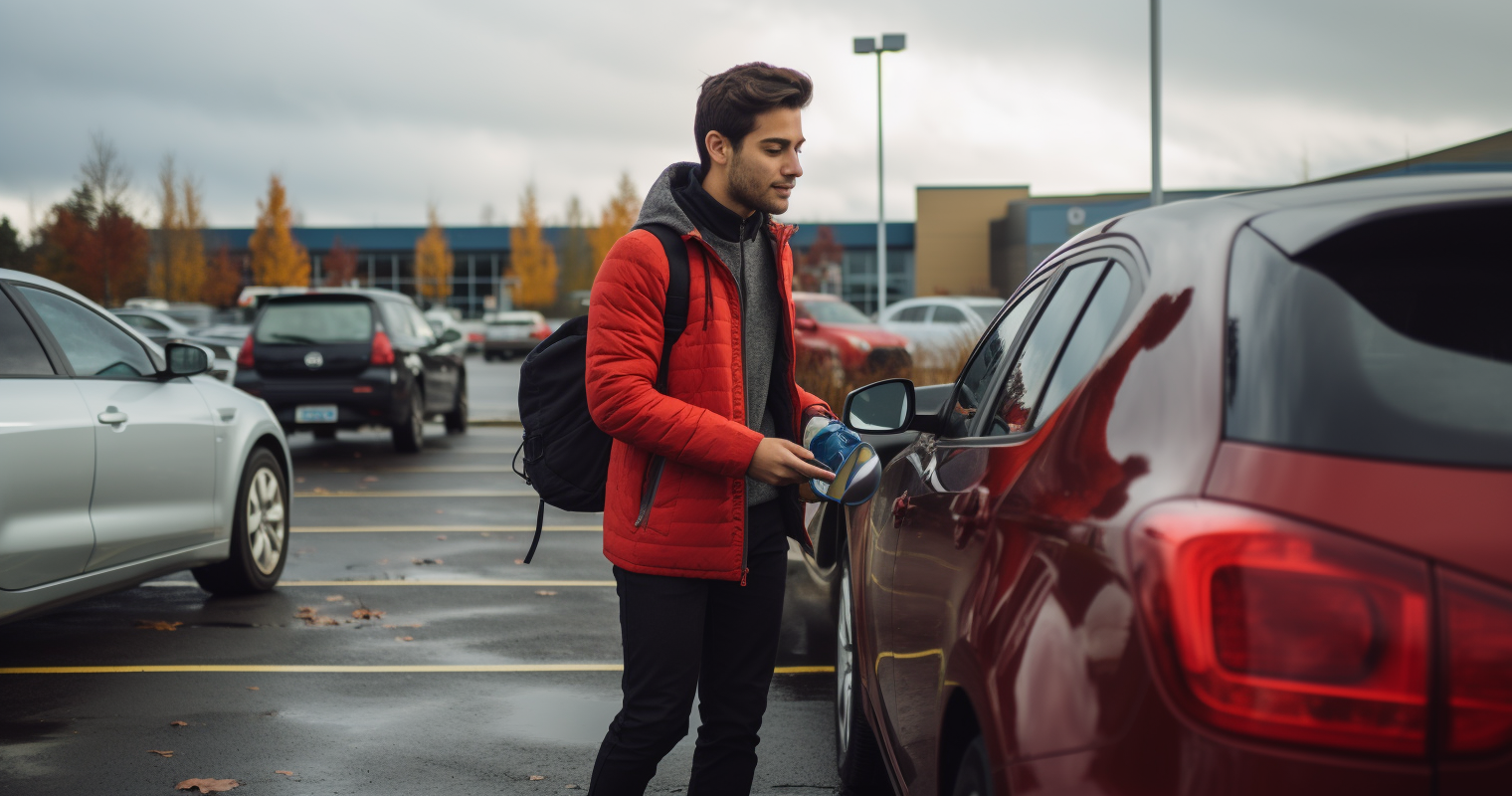
For most visitors and expats, hiring a car in Belgium is a simple and stress-free process. The minimum rental age is typically 21, renters must hold a valid driving licence, and an International Driving Permit is generally unnecessary unless your licence is printed in a non-Roman alphabet. All major international rental brands have a presence at Belgian airports and in city centres, and third-party liability coverage is legally mandated and automatically included in every rental.
| Item | Details |
|---|---|
| Minimum rental age (as of 2025) | 21 years old (most companies); some companies allow from 19 |
| Young driver surcharge | Typically applies to drivers aged 21–24; varies by company |
| Licence held for | At least 1–2 years (varies by company) |
| IDP required? | Not legally required; necessary if licence uses non-Roman alphabet |
| Third-party liability insurance | Mandatory by law; included in all rentals |
| Rental deposit (as of 2025) | €300–€800 depending on vehicle and company |
| Motorway tolls | Free for passenger cars (except Liefkenshoek Tunnel near Antwerp) |
| LEZ cities | Brussels, Antwerp, and Ghent — registration required for foreign plates |
What are the rules and requirements for renting a car in Belgium?
Although the legal driving age in Belgium is 18, every rental company enforces a higher minimum rental age of 21. Certain providers set their own thresholds: Sixt, for instance, permits rentals from age 19 for eligible vehicle categories, though higher-end models may carry a stricter minimum age. Before making a reservation, always review the individual policy of your chosen provider.
Renters below the age of 25 are frequently subject to a young driver surcharge, and the range of vehicles available to them may be limited — luxury and premium categories are commonly off-limits. As a current reference, Enterprise charges a young driver fee of €12.10 per day, capped at €121.00 per rental as of 2025, though these figures are subject to revision. Confirm the applicable surcharge directly with your provider before booking.
A valid European or international driving licence is required to rent a vehicle. Your licence must have been issued at least 12 months prior to the rental date, and some companies extend this requirement to a minimum of two years.
When collecting your vehicle, you will need to present your full, valid driving licence alongside a passport or national identity card. All licences issued within the European Union are accepted without issue. Licences from non-EU countries (Switzerland excepted) are accepted provided you hold a valid visa in your passport and have not been present in Europe for more than six months at the time of rental. If you have been resident in Europe for longer than six months, you will need to obtain a licence issued by an EU country.
Seatbelts must be worn by all occupants, and child seats are compulsory for children aged up to three years. Children must be at least 12 years old before they may sit in the front seat. Belgian law prohibits the use of mobile phones while driving, and the permitted blood alcohol limit is 0.05%. For the most up-to-date legal requirements, refer to the Belgian Federal Public Service Mobility and Public Works.
A security deposit of between €300 and €800 is required by rental companies, payable either by credit card or in cash. This is returned once the vehicle is brought back undamaged. The precise deposit amount depends on the vehicle class and the length of the rental, so confirm this figure when making your booking.
Which major car rental companies operate in Belgium, and where can I find them?
Belgium’s rental market features all the major international operators, including Avis, Sixt, Hertz, and Europcar, each offering a variety of vehicle types and pricing structures. It is well worth comparing these providers to identify the arrangement best suited to your journey. Enterprise is another well-established choice, serving both leisure and business travellers with rental periods ranging from a few days to several weeks.
Travellers arriving by air into Brussels will find rental desks directly within the terminal building. It is important to note whether you are landing at Brussels-Zaventem Airport (BRU) or Brussels-Charleroi Airport (CRL), as these are separate facilities some distance apart — booking at the wrong location could cause significant inconvenience. Sixt, for example, maintains counters at Brussels Airport (BRU) and Antwerp International Airport (ANR).
Those arriving by rail can opt to collect their rental car from Brussels South Station (Midi/Zuid), which is particularly convenient for visitors who wish to explore Brussels on foot before heading out into the wider country by road.
The following table provides a summary of the primary rental companies active in Belgium along with their official websites:
| Company | Website |
|---|---|
| Avis | avis.be |
| Hertz | hertz.be |
| Europcar | europcar.be |
| Sixt | sixt.com/car-rental/belgium |
| Enterprise | enterprise.com |
| Budget | budget.be |
As of December 2025, there are 347 operators available for car hire across Belgium, encompassing smaller local and regional suppliers accessible via comparison platforms. Searching through an aggregator can surface competitive deals from lesser-known providers, though you should always verify a company’s legitimacy and review its rental terms before confirming any booking.
How does car rental pricing work in Belgium, and what should I watch out for?
Car hire in Belgium is not excessively expensive as a baseline, but the final total can climb considerably once optional extras, fuel, and peak-season premiums are included. Booking well ahead and understanding what may be added to your bill is the most effective way to keep expenditure under control.
Rental pricing is structured around a base daily or weekly rate, to which a variety of extras may be appended. These commonly include a Collision Damage Waiver (CDW), theft protection, personal accident insurance, additional driver fees, GPS unit hire, and child seat hire. Some all-inclusive rate packages bundle CDW and theft protection, while others require these to be added separately. A Super CDW may also be offered at the counter, allowing you to reduce your liability excess to zero.
Fuel costs are a significant variable that should be factored into your overall budget. As of 2025, petrol averages around €1.75 per litre, with diesel running slightly lower at approximately €1.65 per litre. Filling a standard 40-litre tank therefore costs roughly €70. Fuel prices fluctuate, so check current rates before your journey.
The approach to fuel policy varies across providers. The most widely used arrangements are “full-to-full” — where you collect the car with a full tank and are expected to return it the same way — and “full-to-empty,” where you pay upfront for a full tank and return it at any level. As is generally true across Europe, the full-to-full arrangement tends to offer better value, provided you can fill the tank before dropping the car off, since prepaid fuel seldom represents a bargain.
Domestic one-way rentals between selected locations are available, though they may attract an additional charge. Cross-border one-way rentals carry their own fees, and not all vehicles are eligible. If you intend to collect from one city and return in another, clarify any one-way surcharges before you confirm your reservation.
Most Belgian cities use parking meters, and designated Blue Zones impose a maximum parking duration of three hours. To park in these areas, you must display a time-stamped parking disc, which can be purchased at police stations, most newsagents, and petrol stations. City centre parking costs should be included in your travel budget from the outset.
Should you encounter a dispute with a rental company, the European Consumer Centre Belgium (ECC Belgium) offers guidance on cross-border consumer rights, including issues arising from car hire agreements.
Do I need an International Driving Permit (IDP) to rent a car in Belgium?
For the majority of renters, an IDP is not a legal requirement in Belgium. Driving licences issued anywhere in the European Union are fully accepted, and holders of licences from many other countries — particularly those using the Roman alphabet — will generally find their licence accepted at the rental counter without any supplementary documentation, as of 2025.
There are, however, notable exceptions. If your driving licence is written in a non-Roman script — such as Arabic, Cyrillic, or Japanese — an International Driving Permit or a certified translation must accompany it when driving in Belgium. It is important to understand that an IDP is a supplement to, not a replacement for, your original licence; both documents must be carried whenever you drive.
Some Belgian rental companies additionally require that a driving licence include a photograph. If your foreign licence lacks a photo, you should obtain an IDP before departing for Belgium if you plan to hire a vehicle.
It is worth bearing in mind that even where national law does not demand an IDP, individual rental companies may impose their own requirements. Arranging an IDP before you travel removes this uncertainty and is especially sensible if your itinerary takes you through multiple European countries, as an IDP translates your licence into a range of languages in a single document.
Always confirm the current position with your rental company prior to travel, and contact your country’s national motoring authority — or authorised automobile club — to arrange IDP issuance if needed. Both company policies and national regulations can change, and it is safer to verify directly rather than assume.
What types of roads and driving conditions should I be prepared for in Belgium?
Belgium’s compact geography and well-developed road network make it an enjoyable country to explore by car, with motorways linking all major urban centres across diverse and often picturesque landscapes. The motorway network is generally in excellent condition and, unlike many neighbouring countries, is free of tolls for private vehicles — the sole exception being the Liefkenshoek Tunnel near Antwerp, where a charge applies. Confirm the current toll rate with your rental company or an official source before travelling.
As throughout continental Europe, traffic in Belgium travels on the right-hand side. Speed limits are 50 km/h (31 mph) in built-up areas, 90 km/h (55 mph) on rural roads outside towns, and 120 km/h (74 mph) on motorways with a central reservation. Note that the 90 km/h rural limit applies in the Brussels Capital Region and Wallonia, while a reduced 70 km/h limit is in force across the Flemish Region.
One of the most distinctive and frequently misunderstood rules for those new to driving in Belgium is the priority-to-the-right rule. Unless a junction is otherwise signed, traffic emerging from a side road on the right has right of way, even over vehicles on what might appear to be the more major road. This rule does not apply on motorways, at roundabouts, on roads marked with an orange diamond on a white background, or when rejoining traffic after an incorrect manoeuvre.
Trams take precedence over all other road users. When a tram stops to allow passengers to board or alight, drivers behind it must wait. Urban roads in Belgium frequently feature dedicated cycle lanes, so extra care is needed in towns and city centres.
Low Emission Zones (LEZs) represent an essential consideration for anyone driving a rental vehicle in Belgian cities. LEZs are in operation in Brussels, Ghent, and Antwerp and Linkeroever. Automatic cameras monitor all entering vehicles, and you are required to register separately for each zone before driving into it. Before collecting your rental car, verify with the company that the vehicle complies with the relevant emission standards — most modern rental fleets do, but it is always worth confirming.
Driving an unregistered or non-compliant vehicle within an LEZ carries a fine of at least €150 as of 2025. Where a vehicle does not meet the required emission standard, day passes are available for €35, covering the Brussels, Antwerp, and Ghent zones. The official LEZ Brussels website provides current information on regulations and the registration process.
Winter conditions, particularly in the Ardennes region, can include significant snowfall and icy roads. Plan your route carefully and ensure your fuel tank remains full in case bad weather leads to delays. Traffic congestion in Brussels and Antwerp can be severe during rush hours, and city centre parking is often in short supply. It is also worth noting that Ghent and Bruges both operate car-free historic centres, and many Belgian cities are progressively expanding their low-emission and pedestrian zones.
What insurance do I need when renting a car in Belgium?
Belgian law requires all drivers to carry unlimited third-party liability insurance, and this coverage is therefore automatically included in the price of every rental without exception. It protects you against claims arising from injury, death, or property damage caused to third parties while you are driving the rental vehicle.
In addition to this compulsory cover, rental companies in Belgium routinely offer further protection options. CDW and theft coverage reduce the financial excess payable in the event of damage or theft. Personal Accident Insurance (PAI) provides cover for the driver and passengers and can be added at the counter. A Super CDW may be offered locally, reducing the excess to zero.
A standard CDW typically leaves an excess in place — meaning you remain liable for a portion of repair or replacement costs even if the CDW is active. Depending on the vehicle category, this excess can range from a few hundred euros to well over a thousand. Taking out a Super CDW or a full excess waiver removes this residual liability entirely, though it adds to your daily rate. Unlike in some other markets, Belgian rental providers do not uniformly include zero-excess cover in standard packages, so studying the small print is essential.
Many credit cards extend rental car excess insurance as a benefit of card membership. Before travelling, contact your card issuer to establish precisely what cover it provides for overseas rentals. If your card does not offer adequate protection, you may need to purchase additional cover at the rental counter. Coverage terms differ considerably between issuers and may exclude specific vehicle types or rental durations, so always seek written confirmation before relying on this benefit.
Windscreen and window damage is a common claim in Belgium and is frequently excluded from standard CDW policies. A standalone glass-breakage add-on is widely available and generally advisable. When reviewing your policy documents, pay attention to exclusions relating to tyres, the roof, the underside of the vehicle, and any interior damage, as these areas are routinely omitted from basic rental insurance.
Are there any specific rules for expats or long-term residents renting cars in Belgium?
The applicable rules for hiring a car in Belgium differ noticeably depending on whether you are a short-stay visitor or a longer-term resident. Visitors on short trips may rent a vehicle and drive using a valid foreign licence for up to six months. This means that most recent arrivals and short-stay visa holders can present their existing licence at the rental counter without needing any supplementary documents beyond the IDP provisions outlined elsewhere in this guide.
All EU-issued licences are accepted in Belgium without restriction. Licences from non-EU countries (with the exception of Switzerland) are recognised provided the holder has a valid visa and has been in Europe for no longer than six months at the time of rental. If a licence is written in a non-Roman script, an IDP or certified translation is required alongside it.
Those residing in Belgium on a permanent or extended basis remain subject to Belgian licensing law, regardless of whether they still hold a valid foreign licence. The obligation to exchange a foreign licence for a Belgian one depends on your country of origin and any bilateral agreements in force. Holders of EU and EEA licences may generally continue to drive on their existing licence in Belgium indefinitely, whereas holders of licences from certain non-EU nations may be required to convert to a Belgian licence after registering as a resident.
For authoritative and current guidance on licence exchange as it applies to long-term residents, consult the Belgian Federal Public Service Mobility and Public Works — Driving Licences page, or contact your local municipality (commune/gemeente). Rules vary by nationality and residency status and are subject to change, so direct verification is always preferable to relying on secondary sources.
If you are in the process of establishing residency and your foreign licence remains valid for rental purposes, the majority of major rental companies will accept it for short-term hires, provided all other standard requirements are met. Once you become legally obliged under Belgian law to hold a local licence, rental companies may ask to see a Belgian licence when you arrive to collect the vehicle. If you are between licences during a transitional period, contact your chosen company in advance to clarify what documentation will be accepted.
Frequently Asked Questions
What is the minimum age to rent a car in Belgium?
Although 18 is the legal driving age in Belgium, rental companies universally enforce a minimum rental age of 21. Certain providers, including Sixt, will accept renters from age 19 for selected vehicle categories. Minimum ages can vary depending on the type of car, so always check with your specific rental company before making a reservation. As of 2025, these are the standard thresholds, but individual company policies should be confirmed directly.
Will I be charged extra as a young driver?
Renters aged under 25 may face a young driver surcharge, the amount of which varies between companies. As of 2025, Enterprise charges €12.10 per day up to a maximum of €121.00 per rental, though these figures are subject to change. Additionally, those under 25 may find their choice of vehicle restricted, as many rental providers prohibit young drivers from hiring premium or luxury models.
Can I take a Belgian rental car into other countries?
Most standard vehicle categories can be driven throughout Western Europe without any restrictions. Insurance regulations do, however, impose limitations on premium vehicle categories and travel to certain destinations. Eastern European travel is subject to additional restrictions, and cross-border fees may apply in some cases. Always obtain explicit written authorisation from your rental company before taking the car across an international border, and review your rental agreement carefully before setting off.
What happens if I have an accident in Belgium in a rental car?
If you are involved in a collision, prioritise the safety of everyone concerned and dial 112 for emergency services if required. You will need to fill in a European Accident Statement (known as a “constat amiable”), which should be stored in the rental vehicle’s documentation. Contact your rental company at the earliest opportunity and follow their claims procedure. The amount you are liable to pay will depend on the level of CDW or Super CDW cover you have in place. If it is safe to do so, photograph the scene thoroughly before any vehicles are moved.
What if I return the car with less fuel than when I collected it?
Under a full-to-full fuel policy — the most prevalent arrangement in Belgium — any shortfall in fuel on return will be charged by the rental company, typically at a rate well above standard pump prices. To avoid this, locate a petrol station close to the return point and fill the tank before handing the car back. Under a prepaid fuel policy, any unused fuel is not refunded, so it is important to understand which arrangement applies to your booking before you collect the vehicle.
Are Belgium’s motorways free to use?
Belgian motorways are free of tolls for private passenger vehicles, with the sole exception of the Liefkenshoek Tunnel near Antwerp, which requires payment. This makes road travel across Belgium comparatively economical. The kilometre-based Viapass tolling scheme applies exclusively to heavy goods vehicles and does not affect standard rental cars.
Do I need to register my rental car before entering a Low Emission Zone?
Low Emission Zones are active in Brussels, Ghent, and Antwerp. Automatic camera systems detect all vehicles entering these zones, and each zone requires a separate registration. Ask your rental company to confirm the vehicle’s Euro emission class before driving into any city centre. As of 2025, fines for unregistered or non-compliant vehicles start at €150. While most modern rental cars meet the relevant emission standards, you should always verify this before entering an LEZ.
Do I need an International Driving Permit to rent a car in Belgium?
An IDP is not a legal requirement for most renters in Belgium as of 2025. If your licence is written in a non-Roman alphabet — such as Cyrillic, Arabic, or Japanese — you will need an IDP or an officially certified translation when driving in the country. Some rental companies also insist on a photographic driving licence; if yours lacks a photo, you should obtain an IDP before travelling. Confirm the specific requirements with your rental company and the relevant national road authority prior to departure, as these can change.