
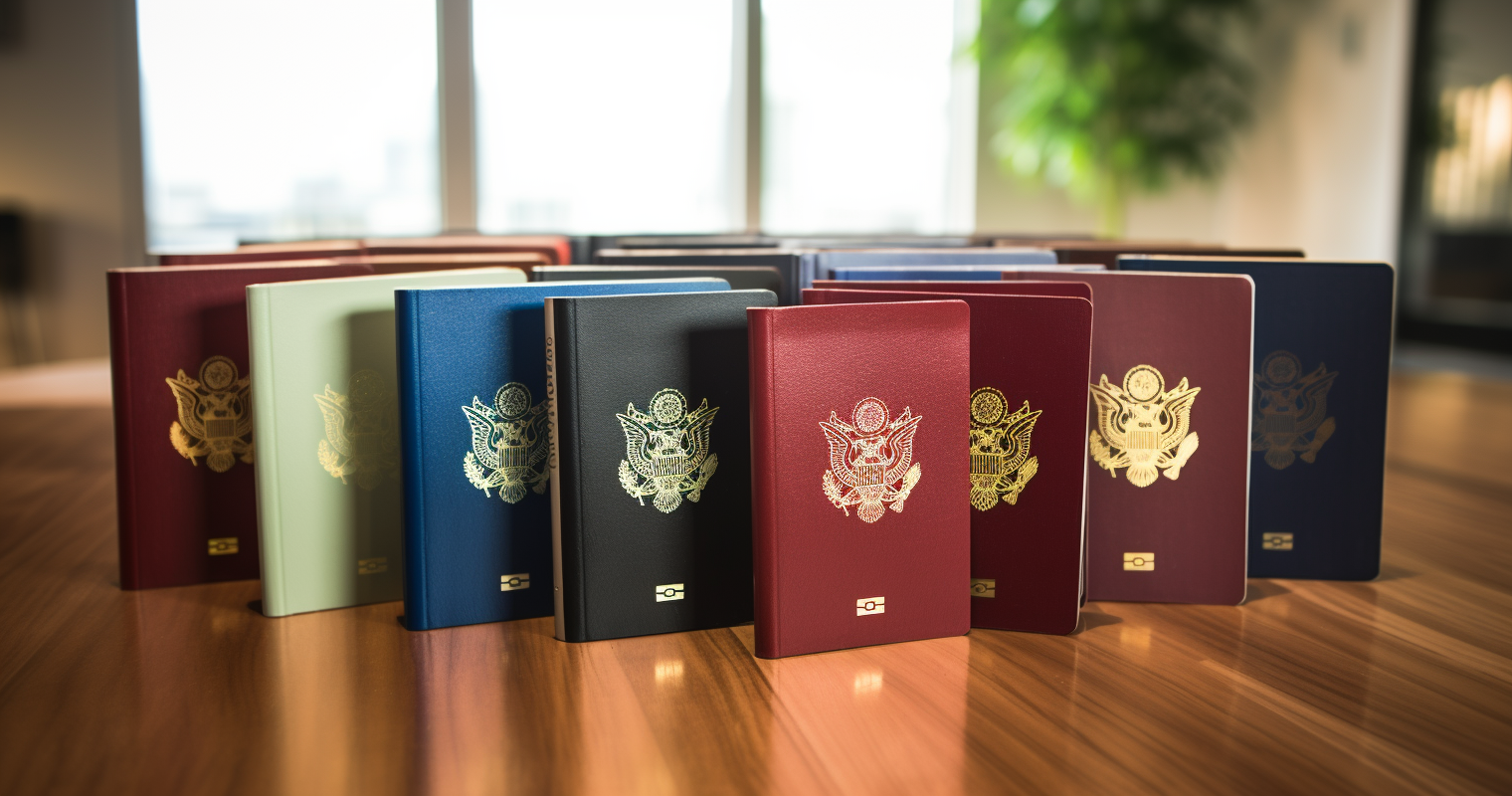
There are several ways to acquire Hungarian citizenship: the standard naturalisation route requires eight years of uninterrupted permanent residency, a simplified or accelerated path exists for those who can demonstrate Hungarian ancestry or marriage to a Hungarian citizen, and citizenship by descent is available with no residency requirement whatsoever. Hungary recognises dual citizenship, which means the majority of applicants can hold onto their existing nationality — although you should always check what rules apply in your home country before beginning the process.
| Item | Details |
|---|---|
| Standard naturalisation residency requirement | 8 years of continuous permanent residency (as of 2025) |
| Reduced residency (spouses with children) | 5 years of marriage if a child is shared with a Hungarian citizen (as of 2025) |
| Simplified naturalisation (ancestry/marriage) | No residency required for ancestry route; 10 years marriage (or 5 years with shared child) for spousal route (as of 2025) |
| Processing time | Typically 8–12 months after submission; simplified process can be 3 months (extendable by 60 days) per official embassy guidance (as of 2025) |
| Application fee (citizenship by descent via consulate) | Free of charge when applied directly through a Hungarian consulate (as of 2025); check official sources for current figures |
| Language requirement | Basic to intermediate Hungarian (A2–B1 level) for simplified route; constitutional knowledge exam in Hungarian for standard naturalisation |
| Dual citizenship | Permitted by Hungary — check your home country’s rules separately |
| Governing legislation | Act LV of 1993 on Hungarian Citizenship, administered by the Ministry of the Interior |
Who is eligible to apply for citizenship in Hungary?
Act LV of 1993 on Hungarian Citizenship, administered by the Ministry of the Interior (Belügyminisztérium), sets out a number of distinct pathways through which Hungarian citizenship may be acquired. Each pathway comes with its own set of requirements relating to residency, language ability, and documentation, so the critical first step is identifying which route best fits your personal circumstances.
Standard naturalisation
Applicants who have no Hungarian family connections or ancestral ties must complete 8 years of continuous permanent residency in Hungary before they become eligible to apply for citizenship and a Hungarian passport. Beyond this residency threshold, applicants must have a clean criminal record with no ongoing criminal proceedings against them in Hungary, must be able to demonstrate that their housing and financial situation is secure, and must not represent a risk to national or public security. The eight-year requirement stands out as one of the longer thresholds within Europe — considerably more than the five-year standard applied in countries such as Germany or the Netherlands, and broadly comparable to Switzerland’s standard route.
Simplified naturalisation (ancestry)
Hungary’s simplified naturalisation programme (egyszerűsített honosítás) offers a distinct route for descendants of Hungarian citizens — including those tracing their lineage through parents, grandparents, or even great-grandparents — to obtain citizenship without establishing residency in Hungary, as long as they can demonstrate Hungarian language proficiency and document their family connection.
Under the Hungarian citizenship law of 2011, ethnic Hungarians may apply for simplified naturalisation if they speak Hungarian and can provide evidence of Hungarian ancestry. Specifically, an applicant may qualify if they are descended from a person who held Hungarian citizenship either before 1920 or between 1941 and 1945, and who speaks Hungarian. Qualifying ancestors include those who were Hungarian citizens or who resided in the territories that formed part of Hungary before its borders were redrawn — regions such as what is now southern Slovakia, Transylvania, the Transcarpathian area of Ukraine, or Vojvodina, either before 1920 or during the period from 1938 to 1945.
Hungary operates on the jus sanguinis (right of blood) principle, meaning citizenship is transmitted through bloodline rather than place of birth. Any person with a Hungarian parent, grandparent, or more distant ancestor may potentially qualify, so long as that lineage can be established through official records. No explicit generational ceiling is set in law, but the practical requirement for solid documentary evidence remains throughout.
Citizenship by marriage or civil partnership
A foreign national who is married to a Hungarian citizen may apply for citizenship after ten years of marriage. Where the couple has a child together, this qualifying period is shortened to five years. Applicants must be able to demonstrate Hungarian language ability at an A2 level, hold a good moral character, and provide evidence of continuous cohabitation with their Hungarian spouse.
Citizenship for children and those born in Hungary
A child acquires Hungarian citizenship at birth if at least one parent holds Hungarian citizenship, irrespective of where the child is born. Certain groups of foreign nationals are eligible for simplified naturalisation, including descendants or spouses of Hungarian citizens, as well as refugees and stateless persons. More favourable conditions also apply to children of foreigners who are resident in Hungary — if the applicant was born in Hungary or took up residence there before reaching adulthood, only 5 years of continuous residency is required.
Citizenship by exceptional services
This route is reserved for truly extraordinary circumstances and bypasses both the usual waiting period and the language assessment entirely. It is rarely invoked and lies entirely within the discretion of the President of the Republic.
Investment route (indirect pathway)
Hungarian citizenship cannot be acquired directly through investment, but it is possible for foreign nationals to obtain a Hungary Golden Visa — a residence permit issued on the basis of investment — which can ultimately serve as a stepping stone toward citizenship. This visa category was introduced in 2023 and enables third-country nationals to secure a Hungarian residence permit by investing a minimum of €250,000. To eventually progress from this permit to citizenship, investors must satisfy the standard naturalisation criteria, including maintaining permanent residency for 8 years and passing a citizenship test conducted in Hungarian.
What are the steps involved in applying for citizenship in Hungary?
Since 2011, naturalisation applications may be lodged with the registrar of the local government, the territorial offices of the Office of Immigration and Nationality, the integrated helpdesks of the Government, or — for those abroad — with Hungarian consuls. Every application must be completed in Hungarian. The Office of Immigration and Nationality examines submitted applications and formulates a recommendation for decision, while the President of the Republic takes the final decision on conventional naturalisation cases, acting on a proposal from the Minister of the Interior.
- Determine your eligibility route. Identify whether you qualify under standard naturalisation (8 years’ residency), simplified naturalisation (ancestry or marriage), citizenship by descent, or another category. This will dictate both the documents you need to prepare and the authority you should approach.
- Gather your documents. Assemble all required paperwork, which may include birth certificates, marriage certificates, proof of a Hungarian ancestor’s citizenship status, and any other relevant supporting materials. Any documents not already in Hungarian must be professionally translated by an official translator. Documents issued abroad will generally need to be authenticated via an Apostille. For the standard naturalisation route, you will additionally need to supply proof of continuous residence, evidence that your housing and income are adequately secured, and a certificate confirming a clean criminal record.
- Complete the application forms. Forms must be filled out entirely in Hungarian and signed by the applicant in the Hungarian name format (family name followed by given name). Application forms for the simplified naturalisation process can be obtained through Hungarian embassies and consulates.
- Submit the application in person. Submission must be made in person following a prior appointment. This can be done at a local government office (járási hivatal), an integrated client service office of the county or metropolitan government, or at a Hungarian consulate if you are residing abroad.
- Attend the interview. For the simplified naturalisation procedure, a fundamental legal requirement is that the applicant can understand and express themselves in Hungarian to a sufficient standard — able to present their application independently, without outside help, and to respond to the officer’s questions unaided, using short sentences. For standard naturalisation, applicants must additionally pass the constitutional knowledge exam (described further below).
- Await the outcome. The simplified naturalisation process may take up to 3 months, with the possibility of a 60-day extension. Standard naturalisation typically takes 8–12 months from submission (as of 2025). It is advisable to check the official government website for the most current estimates, as processing times can fluctuate.
- Take the Oath of Allegiance. Upon a positive decision, the naturalisation document is issued to the applicant, who receives it following the formal oath ceremony. Hungarian citizenship is legally conferred on the day the oath is taken.
- Collect your citizenship documentation and apply for a passport. Following the oath, you will be registered in the national address registry and issued an address card (lakcímkártya) bearing your personal identification number, along with a permanent identity card. You may then apply for a Hungarian passport as a separate step.
On the question of fees: applying for Hungarian citizenship by descent directly through a Hungarian consulate is free of charge (as of 2025). Other costs to be aware of include the examination fee for the constitutional rights and Hungarian language knowledge test (approximately €320 as of 2025), plus the costs of translating and legalising documents. Always verify current charges with the Ministry of the Interior or your nearest Hungarian consulate, as these figures are subject to change.
What tests, interviews, or ceremonies are required?
Constitutional knowledge exam
Applicants pursuing standard naturalisation must pass an examination on basic constitutional knowledge, conducted in Hungarian. The exam covers Hungarian history, culture, and the fundamental principles underpinning the country’s constitutional framework. This requirement is broadly comparable to assessments used in other countries — such as the “Life in the UK” test or the civics exam required for naturalisation in the United States — all of which serve to confirm a basic understanding of national governance and society.
Certain applicants are granted an exemption from this exam. Those who are over 60 years of age at the time of submission are exempt, as are those who can provide a medical certificate confirming that their health prevents them from sitting the exam. Applicants who hold a final academic qualification in the Hungarian language from an educational or higher education institution in Hungary are also exempt.
Language interview (simplified naturalisation)
For the simplified naturalisation procedure, a core legal requirement is that applicants can comprehend and express themselves in Hungarian well enough to present their application independently — without assistance from anyone else — and to respond to the interviewing officer’s questions on their own, using short sentences. An applicant who cannot demonstrate an adequate command of Hungarian cannot expect a favourable outcome.
Full fluency is not the standard for the simplified route; what is needed is a basic to intermediate conversational ability, broadly equivalent to an A2–B1 level. The interview itself is conducted entirely in Hungarian, and officials are evaluating whether the applicant can sustain a basic exchange. For those beginning from scratch, allow for six to eighteen months of dedicated study before attempting the interview.
Background checks
Every application route includes a background check. Officials will confirm that the applicant has no criminal convictions under Hungarian law and that no criminal proceedings are pending against them. A national security assessment is also carried out as standard practice.
Oath of Allegiance
All persons who are granted Hungarian citizenship through naturalisation must take a formal Oath of Allegiance. This ceremony — similar in character to citizenship ceremonies held in countries such as Canada and Australia — marks the precise legal moment at which citizenship is conferred. The applicant becomes a Hungarian citizen on the day the oath is administered.
What are the benefits of citizenship in Hungary?
Acquiring Hungarian citizenship carries with it the full set of rights that come with EU membership, making it one of the most significant advantages available to any naturalised person on the continent.
A Hungarian citizen is simultaneously a citizen of the European Union. The foundational principles governing the acquisition of Hungarian citizenship are enshrined in the Fundamental Law, while the detailed provisions are set out in Act LV of 1993 on Hungarian Citizenship.
Because Hungary is a member of the European Union, Hungarian citizens enjoy EU citizenship and, with it, the rights of free movement and the right to participate in elections for the European Parliament. When a Hungarian citizen finds themselves in a country outside the EU where Hungary has no embassy or consulate, they are entitled to seek consular protection from the embassy of any other EU member state present in that country. The right of free movement and residence also means Hungarian citizens can live and work anywhere within the EU.
The Hungarian passport provides visa-free or visa-on-arrival entry to more than 180 countries, including the United Kingdom, Japan, and Canada, along with unrestricted travel across the Schengen Area. This degree of travel access is broadly in line with that offered by other strong EU passports, such as those of Austria or the Czech Republic.
Citizenship also opens the door to a range of economic opportunities within Hungary, including the ability to open bank accounts, take out loans and mortgages, invest in securities through European financial institutions, and establish or operate a business in Hungary and across other EU member states.
Hungarian citizens may sponsor family members for immigration to Hungary, facilitating family reunification. They also acquire the right to vote in national elections, hold a Hungarian national identity card, and access public services — including the national healthcare system — on equal terms with those born in the country.
Hungary permits dual citizenship without restriction and does not automatically confer tax residency upon new citizens, meaning that acquiring citizenship does not in itself alter your tax position. This is a practical matter worth exploring with a qualified tax adviser before you proceed with any application.
Does Hungary allow dual citizenship, or will you have to renounce your existing nationality?
Yes, Hungary permits its citizens to hold citizenship in more than one country simultaneously. Hungarian nationals are generally free to retain foreign citizenships without being required to renounce their Hungarian status. That said, the rules surrounding multiple citizenships vary from one country to another, so it is important to examine the specific legislation of every country involved to ensure you remain compliant with their respective laws.
You are not required to give up your previous citizenship in order to be naturalised in Hungary. This is a meaningful distinction — certain EU member states, including Austria and the Netherlands, generally require incoming naturalisation applicants to renounce their prior nationality (with some limited exceptions), whereas Hungary imposes no such obligation.
However, your country of origin may operate differently. Some states do not permit their nationals to hold a second citizenship, and acquiring Hungarian nationality could — in such cases — result in the automatic forfeiture of your original status. Hungary’s permissive stance on dual citizenship means you can retain your existing nationality, but it is essential to check whether your home country extends the same freedom — China, for instance, does not recognise dual citizenship.
Before submitting a citizenship application in Hungary, always consult your home country’s immigration authority or foreign affairs ministry to gain a clear picture of what consequences, if any, the acquisition of Hungarian citizenship will have for your current nationality.
One additional practical note applies to those who have acquired Hungarian citizenship through the simplified naturalisation route and who subsequently reside in the United States: it is worth verifying current ESTA eligibility with the US Embassy in Hungary, as this has been subject to change over time.
Regarding the involuntary loss of Hungarian citizenship: this cannot occur. The sole exception applies to cases involving fraudulent naturalisation applications, and even then, action is subject to a 20-year time limit beyond which no steps can be taken. Hungarian citizens who also hold another nationality and live outside Hungary may choose to voluntarily relinquish their Hungarian citizenship.
How long does it typically take to become a citizen of Hungary?
The total time from beginning the process to holding Hungarian citizenship depends substantially on which route you are eligible for. The following provides a realistic overview for each main pathway (as of 2025):
| Route | Minimum qualifying period | Typical processing time | Estimated total |
|---|---|---|---|
| Standard naturalisation (no Hungarian ties) | 8 years’ continuous permanent residency | 8–12 months | 9–10 years from arrival |
| Simplified naturalisation (ancestry) | No residency requirement | 3 months (can extend by 60 days); broader estimates put it at 6–18 months | Under 2 years from starting the process |
| Citizenship by marriage (no children) | 10 years of marriage to a Hungarian citizen | 8–12 months | 11+ years |
| Citizenship by marriage (with children) | 5 years of marriage to a Hungarian citizen | 8–12 months | 6+ years |
| Golden Visa → naturalisation | 8 years of permanent residency (residency permit obtainable in weeks) | 8–12 months | 9–10 years minimum |
For applicants pursuing the ancestry route, this is the swiftest available pathway, with citizenship and a new passport potentially achievable within as little as 12 to 14 months (as of 2025). Applicants going through the standard naturalisation route also need to factor in preparation time for the constitutional knowledge exam on top of the residency period, so this should be built into your planning from the outset.
These figures should be treated as indicative rather than definitive. Application volumes, individual circumstances, and the completeness of submitted documentation all have a bearing on how long the process takes. Always consult the Hungarian Ministry of the Interior or the National Directorate-General for Aliens Policing (NDGAP) for the most up-to-date guidance.
What are the main reasons an application for citizenship in Hungary might be refused?
Being aware of the common grounds for refusal can help you prepare a more robust application. Hungarian authorities may decline an application for a range of reasons, including an insufficient period of residence in Hungary, incorrectly completed forms, or a failure to supply the required supporting evidence.
Language ability is a fundamental requirement for naturalisation. An applicant who cannot demonstrate the necessary standard of Hungarian — particularly in speaking and comprehension — is likely to receive a negative decision. This is among the most frequently cited grounds for refusal in the simplified naturalisation procedure and should not be taken lightly; officials assess language ability directly in the interview and will not accept assistance from third parties.
A prior criminal conviction, particularly one involving serious or repeated offences, can substantially diminish the prospects of approval. The applicant’s criminal history is reviewed by Hungarian authorities as a standard component of the eligibility assessment.
Where credible evidence exists suggesting that the applicant poses a risk to national security or public order, the application will be rejected.
For applications based on descent, an incomplete or broken documentary chain of ancestry is one of the most common causes of delays or outright refusals. The lineage must be fully traceable — attaching only the birth certificate of a great-grandparent, for example, is not sufficient; documentation for each intervening generation (such as the grandfather and father) must also be provided.
On the matter of appeals: Hungary’s citizenship framework does include an administrative process, but there is no straightforward right of appeal to an independent court in the manner available in some other jurisdictions. Where an application is refused, it is advisable to consult the relevant Hungarian authority or a qualified legal professional to understand what recourse may be available. The final decision on naturalisation rests with the President of the Republic, and refusals are generally not subject to conventional appeals.
Where can you find reliable, up-to-date information about citizenship in Hungary?
Requirements, fees, and processing timelines are subject to change. The only authoritative sources of information are official Hungarian government bodies. The key authorities to consult are listed below:
- Ministry of the Interior (Belügyminisztérium): The central body responsible for citizenship policy and final decisions on naturalisation. Official guidance is available at bm.gov.hu.
- National Directorate-General for Aliens Policing (NDGAP / OIF): Responsible for residence permits and immigration matters, and plays a role in the citizenship process. Services can be accessed via the ndgap.gov.hu portal and the Enter Hungary online platform.
- Hungarian Embassies and Consulates abroad: Applications can be submitted at local government offices, integrated client service offices, or at a Hungarian consulate if you are residing outside Hungary. Your nearest Hungarian diplomatic representation can be located through the Konzinfo portal of the Ministry of Foreign Affairs and Trade.
- Hungarian Human Rights portal: The official government site at emberijogok.kormany.hu provides a comprehensive and authoritative overview of the rules governing the acquisition of Hungarian citizenship.
- UNHCR Hungary: For refugees and stateless persons, the UNHCR Hungary guide offers clear information on how the naturalisation process operates under special circumstances.
Immigration blogs, online forums, and third-party consultancy sites can offer helpful background orientation, but should never be relied upon as definitive sources for fees, residency requirements, or processing times. Always verify information against official government sources before taking any steps.
Frequently asked questions about citizenship in Hungary
Do children born in Hungary automatically receive Hungarian citizenship?
A child born in Hungary to foreign parents does not generally acquire Hungarian citizenship automatically. However, where a person was born in Hungary and did not acquire the foreign citizenship of their parents at birth under foreign law, and where both parents were residing in Hungary on the day of that birth, and the person has lived in Hungary for at least five years immediately before making a declaration, citizenship may be acquired through a declaration process. Children born to at least one Hungarian parent, by contrast, acquire citizenship automatically regardless of where they are born.
Can citizenship be lost or revoked in Hungary?
Hungarian citizenship cannot be stripped from a person involuntarily. The sole exception involves cases where citizenship was obtained through fraudulent means, though even this is subject to a 20-year time limit, after which no action may be taken. Citizens who reside outside Hungary and hold an additional nationality may choose to voluntarily renounce their Hungarian citizenship.
What happens to my citizenship application if I move abroad during the process?
An applicant who intends to leave Hungary for an extended period must notify the Immigration Office of Hungary. If the applicant has been present in Hungary for at least 180 days within the 365 days prior to giving that notice, permission to remain outside Hungary for up to two years without losing permanent residency status is generally granted. For those on the standard naturalisation route, maintaining continuous residence is a fundamental requirement — prolonged absences could reset the qualifying period. For the simplified naturalisation route based on ancestry, no residency in Hungary is required, so this consideration is far less significant.
Is there a generational limit for citizenship by descent in Hungary?
Hungarian law does not set an explicit cap on how far back a descent-based claim can reach. That said, what must be demonstrated is that the ancestor in question actually held Hungarian citizenship — not merely that they were born on what was once Hungarian territory. The overwhelming majority of applicants trace their lineage through grandparents or great-grandparents. Claims extending beyond great-grandparents are extremely uncommon in practice, due to the difficulty of sourcing historical documentation that establishes citizenship rather than simply origin.
Does getting Hungarian citizenship affect my tax residency?
Hungary permits dual citizenship without restriction and does not automatically confer tax residency status upon new citizens. Tax residency is governed by physical presence and the location of an individual’s economic ties, not by citizenship alone. It is strongly advisable to consult a qualified cross-border tax adviser to understand your specific situation before submitting an application.
Can a child be naturalised alongside a parent?
The naturalisation of a minor requires the consent of both parents. That consent may be given by signing the application form before the relevant authority, or by way of a declaration made before the authority or a notary. The continuous residency requirement in Hungary may be waived if the child’s naturalisation application is submitted at the same time as the parent’s, or if the parent has already acquired Hungarian citizenship.
Can I apply for Hungarian citizenship while living outside Hungary?
Yes, for those who qualify through the simplified naturalisation route based on ancestry or marriage. This path is considerably less demanding than the regular naturalisation procedure and does not require the applicant to have lived in Hungary prior to applying. Applications can be made in Hungary or at a Hungarian consulate abroad, though the entire process must be conducted in Hungarian.
What is the Hungarian Golden Visa and can it lead to citizenship?
The Hungarian Golden Visa grants a ten-year renewable residency permit in exchange for a qualifying investment. As of 2025, the two eligible investment routes are a minimum contribution of €250,000 to a government-approved real estate investment fund, or a non-refundable donation of €1 million to a public trust that supports higher education. Once residency has been secured through the Golden Visa programme, it becomes possible to apply for Hungarian citizenship following 8 years of continuous residence in the country.
Do I need to give up my current name when naturalising in Hungary?
No. An applicant may optionally submit a name change request alongside their naturalisation application, for example to remove name elements that are not conventionally used in Hungary or to adopt the Hungarian form of their given name. This option is designed to assist with integration. Any name change takes effect on the same day as citizenship is acquired. It is entirely voluntary and is not a condition of obtaining citizenship.
What if my Hungarian ancestor emigrated before 1920 — do I still qualify?
You may still be eligible. An applicant may apply for simplified naturalisation if they are a descendant of a person who held Hungarian citizenship either before 1920 — within the boundaries of the Kingdom of Hungary, which formed part of the Austro-Hungarian Empire — or between 1941 and 1945, and if they speak Hungarian. If your grandparents or great-grandparents were Hungarian citizens prior to the Treaty of Trianon in 1920, residents of regions such as Transylvania (now Romania), Vojvodina (now Serbia), or southern Slovakia may qualify. The key requirement is proof of Hungarian citizenship held by the ancestor, not merely ethnicity or birth in a formerly Hungarian territory.
Is there an expedited process for people with Hungarian spouses who also have children together?
Yes. A foreign national may apply for simplified naturalisation if they have been married to a Hungarian citizen for at least ten years, or if they have been married for at least five years and they share a child with their Hungarian spouse, provided they can demonstrate an adequate knowledge of the Hungarian language. This five-year spousal route — available where a child is shared — is markedly shorter than the standard ten-year spousal pathway, and represents one of the more accessible routes to citizenship for foreign nationals who do not have Hungarian ancestry.