
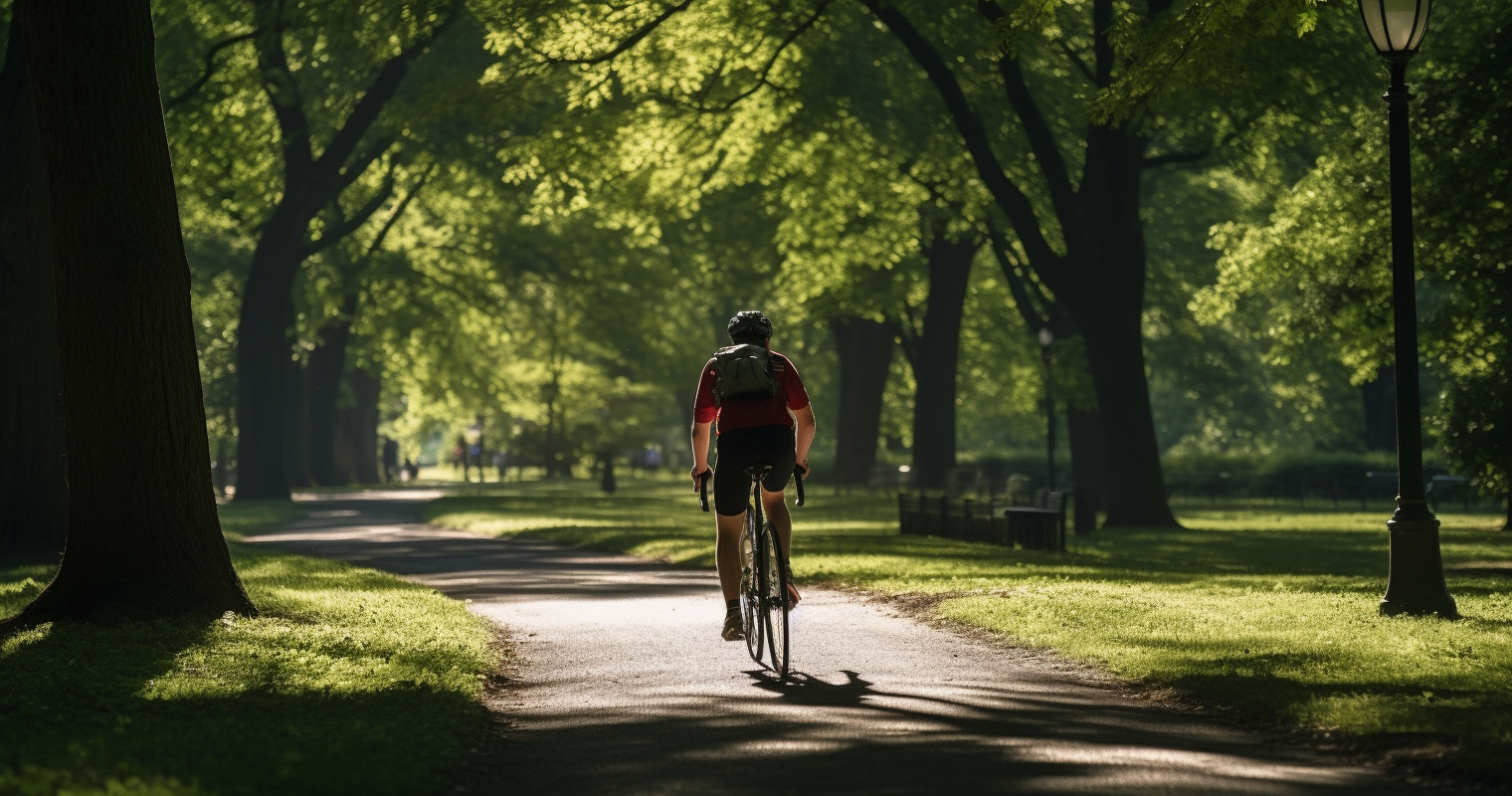
Austria is a genuinely bike-friendly nation, home to well over 7,000 kilometres of dedicated cycling paths, a thriving culture of leisure and tourism riding, and ongoing investment in urban cycling infrastructure — Vienna in particular leading the way. While cycling has not yet reached the everyday modal share seen in the Netherlands or Denmark, it is both a practical and pleasurable way to get around for commuting and recreation alike, and the trend is unmistakably upward.
| Item | Details |
|---|---|
| Dedicated cycle path network | Over 7,000 km nationally; 18,723 km of inclusive (“8–80”) infrastructure recorded (as of 2023) |
| Cycling modal share target | Government target of 14% by 2029 (up from ~7% as of 2025) |
| Helmet law | Mandatory for children under 12; recommended but not required for adults |
| Alcohol limit for cyclists | 0.8‰ BAC (blood alcohol content) |
| Bike insurance | Not legally required for standard bicycles; mandatory for speed pedelecs (over 25 km/h) |
| Vienna bike-share (WienMobil Rad) | 3,000 bikes, 200+ stations; from €0.60/30 min or annual subscription available (as of 2025) |
How popular is cycling in Austria — is it a common way to get around?
Austria has taken cycling to heart as both an environmentally conscious mode of transport and a beloved pastime. Its relationship with cycling sits somewhere between the heavily car-oriented habits of some Central European neighbours and the deeply ingrained cycling cultures of the Netherlands and Denmark — most closely resembling Germany, with bikes woven into daily urban life without yet being the dominant travel choice.
A 2023 national survey found that 27% of respondents cycled daily or several times a week — a notable drop from 38% in 2021, which may partly reflect a return to pre-pandemic patterns. Despite this shift, cycling remains a visible and routine part of life across Austrian cities and towns, especially for shopping and leisure trips.
When trip purposes are examined, cycling is most commonly used for recreational outings, shopping, and errands. Commuting by bike is on the rise but still lags behind cycling-forward nations. Austria previously targeted an increase in cycling’s modal share from 7% to 13% by 2025 under its Cycling Masterplan, and the current government has set an even more ambitious goal of 14% by the close of the legislative period in 2029.
More than one million electric bikes are already on Austrian roads, and the e-bike revolution is transforming attitudes toward cycling as a transport mode — particularly in hilly areas that might otherwise put off potential commuters. Around 35% of cyclists regularly combine riding with public transport, a habit especially common among younger people and particularly widespread in Vienna, Salzburg, and Vorarlberg.
What is the cycling infrastructure like in Austria?
Austria’s dedication to cycling is reflected in its far-reaching infrastructure, with over 7,000 kilometres of purpose-built cycling paths forming a national network that makes cycling a genuinely attractive transport option. When broader inclusive infrastructure is factored in, a total of 18,723 kilometres of cycling provision have been recorded under the “8–80” approach — meaning routes suitable for riders aged eight to eighty.
The quality of this infrastructure varies considerably by location. Urban centres — and Vienna above all — are particularly well catered for. The capital’s cycle path network stretches more than 1,700 kilometres and continues to grow, encompassing cycle lanes, fully separated paths, and shared pedestrian and cyclist routes. Investment is considerable: in 2024, around 80% of Vienna’s newly built cycling infrastructure consisted of physically separated bike lanes, with a further 12% comprising bike streets where cyclists take priority over motor traffic.
The picture is more uneven in rural and suburban settings. While well-maintained lanes and paths are the norm in cities, some rural regions lack comparable provision, which can present difficulties during heavy traffic or poor weather. That said, funding is spreading outward: the province of Vorarlberg and the federal government signed a partnership agreement in 2021 to expand cycle path infrastructure between 2022 and 2027 at a total cost of €62 million, with the aim of establishing a 200-kilometre network of fast cycling routes by 2027.
Fast cycling routes represent a relatively recent addition to Austria’s infrastructure hierarchy, providing the most direct links between municipalities and regions, with minimal intersections and few detours. Since July 2020, Austrian municipalities have been eligible to apply for federal funding to develop these routes. The national cycling advocacy organisation Radlobby Österreich actively champions cycling transport and cycle tourism across the country, publishing useful resources and pressing for cyclist-friendly improvements. For current maps and details of planned projects, visit the Cycle Competence Austria website and the Federal Ministry for Climate Action, Environment, Energy, Mobility, Innovation and Technology (BMK).
Is cycling safe in Austria?
The safety picture for cyclists in Austria is shaped by a range of factors. On the positive side, well-maintained urban cycling infrastructure — including dedicated lanes and separated paths — creates a relatively secure environment for city riders. Driver behaviour also plays a significant role: Austrian motorists generally show reasonable awareness of cyclists, though isolated incidents of inattentiveness or reckless driving do occur, meaning both parties need to stay alert at all times.
Compared with many other European countries, Austria records a relatively low number of cyclist fatalities — 50 cyclists lost their lives on Austrian roads in 2021, a figure considered low by European standards. Fluctuations between seasons and differences between urban and rural conditions do, however, affect overall safety. For the most current road safety data, visit KFV (Kuratorium für Verkehrssicherheit), Austria’s road safety authority, which publishes annual statistics on cycling incidents and fatalities.
On the question of helmets: children are legally required to wear a cycle helmet until their twelfth birthday, whether riding independently, being carried in a trailer, or riding as a passenger. Those aged 12 and above face no legal obligation to wear one. Riders relocating from countries such as Australia or New Zealand — where universal helmet laws apply — may find this surprising. Nevertheless, helmets are strongly advised for all cyclists, particularly in urban settings or on busy roads. It is also worth noting that Austrian courts have established a precedent whereby cycling without a helmet can reduce compensation awarded in personal injury cases, which provides a compelling practical incentive to wear one regardless of the law.
Austria is home to an extensive network of approximately 26,400 kilometres of designated mountain bike trails, but alpine terrain introduces its own hazards. In certain mountainous areas, time-of-day restrictions on alpine roads, mandatory route requirements for mountain bikers, and weather-related closures may apply. Cyclists are expected to moderate their speed on steep descents and narrow mountain tracks accordingly.
What are the rules of the road for cyclists in Austria?
Cyclists in Austria are governed by the Road Traffic Act (Straßenverkehrsordnung – StVO) in the same way as other road users, though a number of additional provisions apply specifically to those on bikes. The framework broadly mirrors Germany’s road traffic rules, so anyone already familiar with German traffic law will recognise much of the content.
The Austrian Bicycle Ordinance sets out mandatory equipment requirements for all bicycles, including reflective elements to enhance visibility, front and rear lights for riding after dark, a bell to warn pedestrians and fellow cyclists, and functioning brakes on both wheels.
Key rules that cyclists should be aware of include:
- Where a designated cycle lane exists, cyclists are obliged to use it.
- Pedestrians have right of way at zebra crossings, and cyclists must not put pedestrians at risk when crossing.
- When approaching an unsignalised bike crossing, cyclists must reduce speed to no more than ten kilometres per hour and must not cut directly across the path of an oncoming vehicle unexpectedly.
- Riding against the direction of traffic is only permitted in one-way streets where signage explicitly allows it.
- Cycling on motorways is strictly forbidden.
- A blood alcohol limit of 0.8‰ applies to cyclists, with fines ranging from €800 to €5,900 depending on the recorded level. This is less restrictive than the 0.5‰ limit for car drivers, though still well below what many people might consider a modest amount to drink.
- Cycling under the influence of drugs may result in fines of €800 to €3,700, and cyclists may only use mobile phones via a hands-free device.
- Bikes must be parked without causing obstruction; parking on pavements wider than 2.5 metres is permitted, but bike racks should be used whenever available.
In certain regions, additional rules may govern the use of cycle paths or shared pedestrian and cycling routes, so it is worth paying attention to local signage and, if in doubt, checking with local tourist offices or bike hire points. For the full current legal framework, consult the official oesterreich.gv.at portal and the City of Vienna’s cycling rules page.
Do I need to register my bike or have insurance to cycle in Austria?
Unlike cars and motorcycles, standard bicycles in Austria are not subject to any registration requirement, and there is no licensing system for cyclists. No equivalent of the vehicle registration obligations that apply to motorised vehicles exists for ordinary bikes.
Insurance is not a legal requirement for conventional bicycles or e-bikes with a maximum assisted speed of 25 km/h. However, if you own a speed pedelec — one capable of reaching up to 45 km/h — insurance becomes compulsory because the vehicle is legally treated as a moped. Equally, if your e-bike exceeds the EU’s standard thresholds for power output or assisted speed (250W or 25 km/h), it is classified as a moped under Austrian law, bringing with it stricter requirements and removing the more relaxed rules that apply to ordinary pedal-assisted bikes.
Even where insurance is not legally required for a standard bicycle, it is sensible to check whether your existing household liability policy covers cycling-related incidents. Many Austrian household insurance (Haushaltsversicherung) policies include personal liability cover that extends to cycling — but the details vary, so read the terms carefully. Dedicated cycling insurance and cover against bike theft can also be taken out separately, which is worth considering given the frequency of bicycle theft in cities. For up-to-date guidance on insurance requirements, contact the FMA (Financial Market Authority Austria) or speak to a local insurance broker.
Are there public bike-sharing or rental schemes in Austria?
Austria — and Vienna in particular — has built a well-developed bike-sharing ecosystem. WienMobil Rad is the city’s public bike rental service, enabling anyone to travel around the capital at low or no cost. Approximately 3,000 bikes are currently available across the city, with expansion planned. No advance booking is required.
Rental bikes are available across all 23 of Vienna’s districts around the clock, every day of the week. Charges are calculated in 30-minute increments at €0.75 per half-hour, with a ceiling of €19 per 24-hour period at the standard rate (as of 2025). Wiener Linien regular customers — those holding an annual, semester, or climate ticket — can access a discounted WienMobil mix annual subscription for €29.50, with the first 30 minutes of every journey included. Always consult the official WienMobil Rad website for the latest pricing, as tariffs may change.
Austria’s bike rental provision extends well beyond the capital — in major cities, tourist resorts, and along principal cycling routes, you will find a broad selection of rental options covering trekking bikes, mountain bikes, e-bikes, cargo bikes, and children’s bikes. Salzburg, Graz, Innsbruck, and Linz all have local hire operators offering increasingly extensive e-bike fleets. Austrian Railways (ÖBB) carry bikes on most of their services, though advance reservation of a bike space is frequently required — a convenient option for those wishing to combine cycling with longer rail journeys. Check the ÖBB website for the latest bike carriage policies and how to book.
Where can I buy or service a bike in Austria?
Acquiring a bicycle in Austria presents no difficulties. The market has seen strong growth in demand for electric bikes, driven by consumers’ increasing preference for sustainable travel and the country’s broader push to promote cycling as a healthy, active way of life. Austrians also tend to favour premium bicycles, supporting a well-developed market for high-quality brands. Specialist bike shops (Fahrradgeschäfte) can be found throughout all major cities and many smaller towns, carrying a broad range of road, mountain, city, and electric bikes.
For second-hand bicycles, willhaben.at — Austria’s largest classifieds platform, comparable to Gumtree in the UK or Kleinanzeigen in Germany — offers extensive listings at competitive prices. Flea markets (Flohmärkte) are another popular source of affordable used bikes. When buying second-hand, always request proof of purchase or ownership to ensure you are not inadvertently acquiring a stolen bicycle.
Servicing and repair facilities are widely available. Most specialist shops operate a workshop, and self-service repair stations — typically equipped with a pump and basic tools — have been installed along popular cycling routes and in urban areas across the country. As an EU member state, Austria applies standard EU consumer protection rules, meaning new bicycles purchased from retailers carry a two-year statutory warranty. Should a fault arise within that period, the retailer is required to repair or replace the bike, or offer a refund. For any queries about consumer rights, contact the Konsumentenfragen (Consumer Information) service.
Can I bring my bike when I move to Austria, and are there any import rules?
If you are moving to Austria from another EU member state, no customs duties or import taxes apply to bringing your bicycle — the free movement of goods principle covers personal possessions moving within the EU, and your bike requires no special documentation or formalities.
If you are relocating from outside the EU — for example from Switzerland, the UK, or another country further afield — your bicycle may in principle be subject to EU customs duties and VAT on entry. However, an important exemption exists: personal effects and household goods imported in connection with a permanent change of residence are generally free from import duties under EU customs law (specifically EU Regulation 1186/2009 on relief from customs duties). To qualify for this relief, you will typically need to show that you have been resident outside the EU for a minimum of 12 months, that the items have been in your possession for at least six months prior to the move, and that you intend to continue using them for the same purposes in Austria. The relief must ordinarily be claimed within 12 months of establishing residence.
For precise and current guidance on importing personal effects — including any applicable thresholds or procedural requirements — contact the Austrian Federal Ministry of Finance (BMF) or the Austrian customs authority (Zoll) before shipping your bike. Rules and procedures can change, so always verify the current position from official sources rather than relying on general guidance.
What are the best cycling routes or destinations in Austria?
Austria boasts more than 10,000 kilometres of official cycling routes, many of which carry international EuroVelo designation. The most celebrated itineraries trace the course of major rivers — the Danube, Inn, Drava, and Salzach — thread through scenic alpine valleys, and loop around crystal-clear mountain lakes. Excellent waymarking and surface maintenance, predominantly asphalted routes separated from motor traffic, and passage through national parks and historic settlements combine to create outstanding cycling conditions throughout the country.
Among the most remarkable routes and destinations are:
- The Danube Cycle Path (Donauradweg / EuroVelo 6): Arguably Europe’s most celebrated long-distance cycling route, following the Danube from Passau on the German border through the Wachau Valley wine region and on to Vienna and beyond. The Austrian stretch of the trail is largely flat and traffic-free, taking riders through one of the continent’s most striking river landscapes.
- EuroVelo 7 (Sun Route): Alongside EV6, this route connects Austria to the wider pan-European cycling network, offering riders varied and visually stunning territory.
- The Tauern Cycle Path: A spectacular descent from the Krimml Waterfalls in Salzburg province down through the Salzach valley to Salzburg city — a favourite with touring cyclists for its manageable gradients and breathtaking alpine scenery.
- Mountain biking in Tirol and Styria: An impressive 83% of Austrian Alpine Club members go mountain biking at least once a year, with 55% riding more than 20 times annually. Dedicated trail centres and lift-served bike parks establish Tirol and Styria as world-class destinations for off-road riding.
- Vienna’s urban cycling network: The capital combines flat, largely car-free paths with exceptional sightseeing opportunities — the Ringstrasse routes, the Donauinsel (Danube Island), and the Prater parkland are all served by well-maintained dedicated lanes.
For route planning, the national tourism authority Austria Tourism publishes comprehensive cycling guides. ÖAMTC (Austria’s automobile association) supports cyclists with detailed maps, route guides, and practical information. The Radlobby Österreich cycling federation is equally valuable for local knowledge and the latest updates on infrastructure developments.
How do I get set up as a cyclist in Austria after arriving?
- Decide on your bike: Weigh up whether to bring your own bicycle, purchase one locally, or use bike-share in the first instance. If you are arriving from outside the EU, check the import rules with the Austrian customs authority before shipping.
- Ensure your bike is legal: Confirm that your bicycle meets the requirements of the Austrian Bicycle Ordinance — front and rear lights, a bell, brakes on both wheels, and reflectors. Bikes sold in Austria and across the EU will typically already satisfy these requirements.
- Check insurance: Review your household or personal liability insurance policy to establish whether cycling incidents are covered. If they are not, consider taking out separate cover.
- Familiarise yourself with local rules: Read the City of Vienna’s cycling rules page if you are based in the capital, or contact your local municipality’s transport authority. Essential rules include using bike lanes whenever one is available, giving way to pedestrians, and observing the 0.8‰ alcohol limit.
- Register for bike-share if needed: In Vienna, download the nextbike app and sign up for WienMobil Rad. If you hold a Wiener Linien annual pass or KlimaTicket, register for the discounted annual subscription.
- Explore route maps: Download the WienMobil or Komoot app for navigation assistance, and collect a free city cycling map from a municipal office or tourist information centre.
- Consider a Radlobby membership: Austria’s cycling federation provides resources, advocacy support, and community connections — a useful way for newcomers to meet other cyclists and engage with local cycling life.
Frequently asked questions about cycling in Austria
Do I legally have to wear a helmet when cycling in Austria?
Children must wear a cycle helmet when cycling until they reach their twelfth birthday, including when carried in a bicycle trailer or riding as a passenger. Those aged 12 and over are not legally required to wear one. That said, helmets are strongly recommended for all riders, and Austrian courts have established that riding without a helmet can reduce the compensation awarded in personal injury cases.
Can I cycle on pavements in Austria?
Austrian law generally prohibits cycling on pavements. Cyclists must use the road or designated cycle paths, and where a cycle path is available, they are required to use it. Pedestrian zones may be entered on foot while pushing a bike outside restricted hours if signage permits, but cycling through them is not allowed unless explicitly indicated by signs.
Is it practical to commute by bike in Austrian cities?
Yes — especially in Vienna, Salzburg, Graz, Linz, and Innsbruck. Austria’s public transport network is among Europe’s finest: well-organised, reliable, and largely accommodating of bicycles, making combined cycling and transit journeys entirely feasible for longer distances. Urban cycling infrastructure is robust and improving at pace, particularly in Vienna.
What are the alcohol rules for cyclists in Austria?
Cyclists in Austria are subject to a blood alcohol limit of 0.8‰, with fines ranging from €800 to €5,900 depending on the level recorded. While this is higher than the 0.5‰ limit that applies to car drivers, it still represents a meaningful restriction. Cycling under the influence of drugs can lead to separate fines.
Can I take my bike on trains and public transport in Austria?
Austrian Railways (ÖBB) carry bikes on most services, though advance reservation of a bike space is frequently required. Within Vienna, bicycles are not permitted on trams or buses, but they may be taken onto the U-Bahn (metro) outside peak hours. Consult the ÖBB and Wiener Linien websites for current conditions and booking procedures.
Is bike theft a problem in Austria?
Bicycle theft is a real concern in Austrian cities, as it is throughout urban Europe. Using a high-quality lock — ideally a D-lock or folding lock — and securing both the frame and wheel is strongly advisable. Keeping a record of your bike’s serial number and taking out dedicated theft insurance is also recommended. Some local authorities maintain voluntary bike registration databases — check with your municipal council for details.
Do I need a licence to ride an e-bike in Austria?
If your e-bike exceeds the EU’s standard thresholds for power output or assisted speed (250W or 25 km/h), it is classified as a moped under Austrian law, requiring a licence, registration, and insurance. Standard pedal-assisted e-bikes (pedelecs) up to 25 km/h are treated identically to ordinary bicycles and require none of these. Check your e-bike’s specifications carefully, and consult the oesterreich.gv.at portal for current classifications.
Where can I find official cycling route maps for Austria?
ÖAMTC produces detailed maps, route guides, and practical cycling advice covering the whole of Austria. The national tourism board at austria.info hosts a comprehensive cycling section, and Radlobby Österreich offers current resources on infrastructure and route planning. For EuroVelo routes passing through Austria, the EuroVelo website is the authoritative source.