
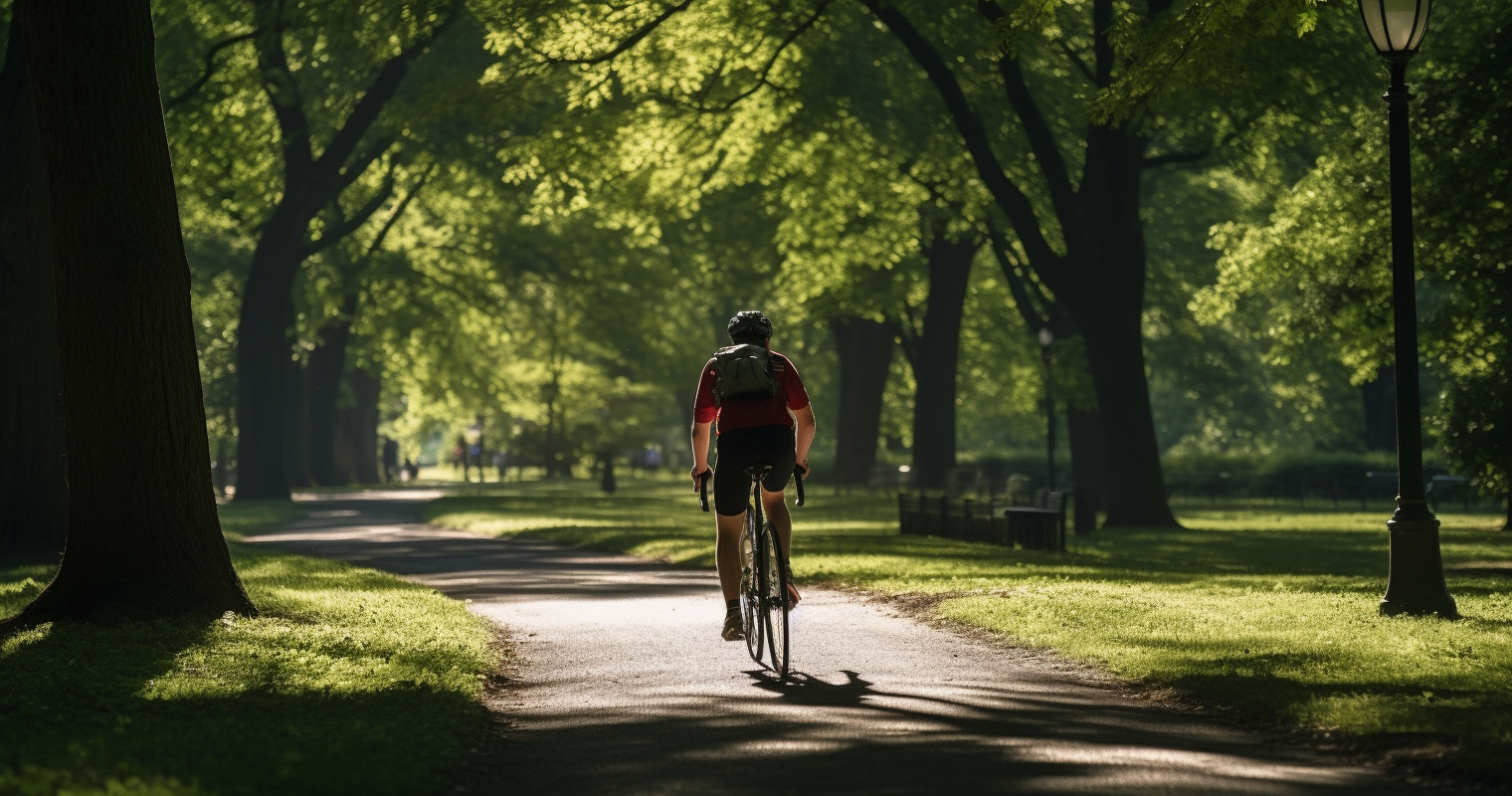
For those living on or relocating to the island, cycling in Barbados occupies an appealing space between everyday transport and active recreation. Dedicated cycling infrastructure remains sparse and road conditions present real challenges, yet the island’s 1,600 km of roads, breathtaking landscapes, and an energetic local cycling scene combine to make two-wheeled travel a genuinely worthwhile pursuit — as long as you approach it with awareness, good visibility, and a clear understanding of how traffic operates locally.
| Item | Details |
|---|---|
| Helmet law | No statutory requirement, but strongly recommended by the Barbados Cycling Union and road safety authorities |
| Side of road | Left-hand traffic (same as the UK, Australia, and other former British territories) |
| Dedicated cycle lanes | Very limited — the Richard Haynes Boardwalk (approx. 1.6 km, south coast) is a key dedicated path |
| Bike rental cost | Approx. USD $20–$50 per day (as of 2025); guided tours approx. USD $60–$100 per person |
| Overtaking distance rule | Motorists must maintain at least 1.5 metres clearance when passing cyclists |
| Import VAT on goods | 17.5% VAT applies to most imported goods; CARICOM common external tariff applies to bicycles (as of 2024) |
| Key cycling body | Barbados Cycling Union |
| Highway Code source | Barbados Licensing Authority (offices in Bridgetown, Holetown, and Oistins) |
How popular is cycling in Barbados — is it a common way to get around?
Cycling has been steadily gaining traction in Barbados, embraced both as a practical means of getting from A to B and as a recreational outlet. That said, it would be inaccurate to paint it as a routine commuting choice in the way cycling is woven into daily life in the Netherlands or Denmark, where purpose-built infrastructure and deeply ingrained cultural habits make the bicycle the obvious default. On Barbados, private cars and minibuses still account for the overwhelming majority of daily travel.
Within urban centres such as Bridgetown and Holetown, cycling is gaining recognition as a sustainable, health-conscious transport option, and the government has introduced measures aimed at encouraging its uptake. This direction mirrors what many small island states are pursuing as they look for ways to ease congestion and lower emissions without committing to the scale of infrastructure investment available to larger nations.
Competitive cycling is a different matter altogether: road racing and mountain biking both enjoy a strong following among Barbadians, and the island has produced talented competitive riders. The Barbados Cycling Union is a well-established body, a vibrant racing calendar exists, and Barbados has hosted the Caribbean Road Race Championships. For expats arriving with a passion for road or off-road cycling, there is a ready-made community to join.
At a policy level, the National Energy Policy of 2019 identified reducing vehicle numbers per capita and strengthening public transport as key objectives, while the Physical Development Plan of 2023 flagged the importance of expanding multimodal transport options to improve mobility. Together, these documents point toward a future in which cycling plays a larger everyday role — even if the physical infrastructure needed to support that vision is still being developed.
What is the cycling infrastructure like in Barbados?
Barbados offers outstanding scenery and roads that suit a broad spectrum of cycling abilities, even though formal cycling infrastructure remains thin on the ground. The contrast with cycle-friendly nations like Germany or the Netherlands — where segregated lanes are commonplace and legally protected — is stark. Across most of the island, cyclists share the carriageway with motor vehicles rather than riding in lanes set aside for them.
The most notable exception is the Richard Haynes Boardwalk — commonly known simply as the “Boardwalk” — in Hastings, Christ Church. Running along the south coast with sweeping views across the Caribbean Sea, this path stretches approximately 1.6 kilometres and provides a pleasant, traffic-free ride suitable for all ages and abilities. It stands as the island’s most prominent example of dedicated cycling and pedestrian space, and remains something of an anomaly in the broader road network.
The president of the Barbados Cycling Union has been candid in acknowledging that introducing dedicated bicycle lanes across the existing road network is simply not practical given current infrastructure constraints — a realistic assessment that new arrivals would do well to absorb. Most roads were laid out without cyclists in mind, and the expectation should be one of sharing space with motor vehicles.
In terms of terrain, the south and west coasts offer predominantly flat roads well suited to beginners and daily commuters. A ridge of hills runs through the centre of the island — taking in Mount Hillaby, White Hill, and Cherry Tree Hill — while the interior and east coast present more demanding gradients and conditions for riders seeking a genuine workout. Planning routes is made more complicated by the fact that many roads lack signposting, making a GPS device a particularly useful companion. The Ministry of Transport, Works and Water Resources oversees road and transport infrastructure on the island, and checking their latest announcements for any planned improvements before you arrive is worth doing.
Is cycling safe in Barbados?
The driving culture in Barbados is broadly courteous — it is common for motorists to sound a brief horn to signal they are about to pass — but the picture is uneven. Some drivers give cyclists little room, pass at speed, and disregard road-sharing conventions. This inconsistency will be recognisable to cyclists from many countries, yet the near-total absence of dedicated cycling infrastructure in Barbados means that the consequences of careless driving are more immediate and direct than in places where physical separation from traffic is available.
Narrow lanes and single-track roads are a recurring feature, and oncoming vehicles that pull out to overtake parked cars can appear suddenly in your path. Particular vigilance is needed around buses, taxis, and ZR vans, whose drivers can be unpredictable and may not consistently account for cyclists sharing the road.
According to the latest available figures from the Barbados Royal Police Force, approximately 1,200 road traffic collisions were recorded in the most recent year, resulting in 45 fatalities and more than 300 injuries. Cyclist-specific data is not routinely disaggregated in widely published reports; the most up-to-date figures on cyclist casualties can be sought directly from the Barbados Royal Police Force and the Make It Safe Barbados road safety campaign.
Road safety officials and the Ministry of Transport have introduced signage reminding motorists of their obligation to leave a minimum of 1.5 metres when overtaking a cyclist — a standard comparable to minimum passing distance legislation now in force in Australia, France, and a growing number of other jurisdictions. Enforcement remains a challenge, but the introduction of these signs represents a positive signal of intent.
Helmets carry no legal requirement in Barbados, but the Barbados Cycling Union president consistently advocates their use and encourages cyclists always to make clear hand signals. Wearing a helmet is especially advisable on rural roads and along the east coast, where surfaces and traffic dynamics are less predictable. Riding after dark is strongly discouraged: the combination of uneven road surfaces, the absence of hard shoulders, and limited lighting makes night cycling both hazardous and unpleasant.
What are the rules of the road for cyclists in Barbados?
Traffic in Barbados moves on the left side of the road, consistent with the UK, Ireland, Australia, and the majority of Caribbean and Commonwealth countries. Cyclists from these places will adjust naturally. Those arriving from countries where traffic flows on the right will need to build new habits, particularly when approaching junctions and executing turns.
A copy of Barbados’s Highway Code booklet is a worthwhile early acquisition. It is available from any of the Barbados Licensing Authority offices in Bridgetown, Holetown, and Oistins. The Barbados Licensing Authority is the body responsible for road traffic regulation, and their offices are the most reliable starting point for obtaining accurate, current information on legal requirements.
The core rules that cyclists need to observe include:
- Always ride on the left-hand side of the road.
- Signal turns and stops clearly using hand signals, ensuring other road users can anticipate your movements.
- Obey all traffic signals and signs without exception.
- Wear bright, high-visibility clothing and use reflective gear, especially at dawn and dusk when visibility is reduced.
- Motorists are legally required to leave at least 1.5 metres of clearance when overtaking a cyclist.
- Helmets are not a legal requirement but are strongly advised by cycling and safety bodies.
Barbados does not publish a cyclist-specific blood alcohol limit separate from general road traffic legislation, but cycling while impaired by alcohol is both inadvisable and potentially prosecutable under public order or road safety laws. Riders should always verify current rules with the Barbados Licensing Authority, as legislation is subject to revision. There is no blanket national prohibition on cycling along pavements, though local etiquette and consideration for pedestrians should always govern how such spaces are used.
Do I need to register my bike or have insurance to cycle in Barbados?
Bicycles in Barbados are not subject to mandatory registration. There is no requirement to obtain a number plate or register with the Barbados Licensing Authority before taking your bike onto public roads. This position is consistent with most other Caribbean nations and aligns with the approach taken in the UK, Canada, and the majority of European countries, where bicycle registration is an option rather than an obligation.
Third-party liability insurance for cyclists is likewise not a legal requirement. Nevertheless, given the road conditions and the general lack of cycling-specific infrastructure, arranging personal accident cover or travel insurance that explicitly includes cycling is a prudent step — particularly for expats who intend to ride regularly. Some home contents policies available in Barbados include optional protection against bicycle theft, so reviewing your policy terms carefully after settling in is advisable. For the definitive current position on both registration and insurance requirements, the Barbados Licensing Authority and the Financial Services Commission of Barbados — which regulates the local insurance sector — are the authoritative contacts.
Are there public bike-sharing or rental schemes in Barbados?
Steps have been taken at a governmental level to establish bike-sharing provision in urban areas. Bridgetown has launched a scheme called “Bridgetown Bikes,” enabling residents and visitors to rent bicycles for a modest fee for journeys around the city. These initiatives are relatively recent, and availability and pricing may evolve; the Ministry of Transport, Works and Water Resources is the best source of up-to-date information on publicly operated or subsidised programmes.
For recreational and tourist-oriented rentals, a number of private operators are active across the island. Companies including Fun Bike Tours Barbados and Island Bikes offer various bicycle types for hire, with daily rates generally falling between USD $25 and $50 depending on the bike and rental duration. Some hire packages include helmets and locks, but these details should always be confirmed in advance (as of 2025).
Broadly speaking, rental prices across private operators range from USD $20 to $50 per day, while guided tours — which commonly incorporate bike hire, water, and snacks — typically run from USD $60 to $100 per person (as of 2025). Electric bike experiences are also on offer: Barbados E-Bike Tours operates guided e-bike itineraries covering various parts of the island.
Bike Caribbean, operating out of the St Lawrence Gap area, is run by a professional cyclist who designs bespoke tours for different ability levels and collects clients directly from their accommodation. Prices and availability should always be verified with individual operators, as these figures are subject to seasonal and other fluctuations.
Where can I buy or service a bike in Barbados?
Bike hire is possible in Barbados, but the number of hire shops is small and the selection of available models is restricted. For anyone planning to cycle regularly, the practical recommendation is to bring your own bicycle from home — and to pack the tools, spare tubes, and components you are likely to need. This is a significant contrast to well-developed cycling markets such as Germany or the Netherlands, where bike shops, parts stockists, and repair centres are within easy reach in virtually every town.
The St Lawrence Gap area on the south coast serves as a convenient base for cyclists: road surfaces nearby are among the island’s better ones, the west coast escape route from traffic is quickly accessible, and Bike Caribbean’s shop is a short walk away. Bike Caribbean also offers hire and workshop services, with the owner leading mountain biking excursions.
The second-hand bicycle market operates informally through local classified listings, social media groups, and personal connections. New bikes can be sourced from hardware and sports retailers in Bridgetown and other commercial hubs, though the range of high-performance road bikes and mountain bikes is narrower than shoppers in larger markets might expect. Consumer rights in Barbados fall under the remit of the Consumer Affairs Commission, which handles complaints about traders and disputes over warranties — a body broadly comparable in function to consumer protection agencies found elsewhere, though the precise statutory warranty rights that apply to bicycle purchases are worth confirming locally.
Can I bring my bike when I move to Barbados, and are there any import rules?
Given how limited the local market for quality bicycles is, many expats opt to ship their bike as part of their relocation. A clear understanding of Barbados’s customs framework is essential before you arrange shipping.
Barbados is a full CARICOM member and applies the bloc’s Common External Tariff to imported goods, with duty rates spanning 0 to 20 percent (as of 2024). Bicycles fall within this tariff structure and are not classified as motor vehicles, so they are not subject to the higher duty bands applied to cars. VAT, however, is levied at 17.5 percent on most imported goods and services (as of 2024).
The central question for relocating expats is whether a bicycle arriving as part of a household removal can qualify for a personal effects concession. Items that are new, unused, or purchased within the past year will generally be subject to full duty liability. A bicycle that is evidently well-used and forms an integral part of your personal belongings at the time of the move may receive more favourable treatment, though this remains at the discretion of the customs officer. Once all required documentation is in order, customs clearance and delivery of goods typically takes three to five working days, and the importer must be available for a customs interview before their shipment is released.
The process for importing a bicycle as part of a household move involves the following steps:
- Draw up a comprehensive inventory of everything in your shipment, including a detailed description and declared value for the bicycle.
- Make certain your bike is visibly used and not in its original retail packaging, to strengthen a claim for personal effects treatment.
- Engage a licensed freight forwarder or customs broker with proven experience handling Barbados imports.
- On arrival, attend your customs interview and declare all contents of the shipment honestly to the customs officer.
- Settle any duties or VAT assessed by the Barbados Customs and Excise Department before your goods are released.
- Arrange delivery to your address — generally achievable within three to five working days following clearance.
Duty classifications and concession rules are subject to change, so always confirm the current position with the Barbados Customs and Excise Department before your shipment departs. Engaging a registered customs broker is strongly recommended for international relocations.
What are the best cycling routes or destinations in Barbados?
With 1,600 km (990 miles) of roads threading through varied terrain beneath reliably fine weather, Barbados rewards cyclists of every persuasion — whether your goal is daily training, weekend exploration, or a relaxed tour of coastal scenery. The island broadly divides into four distinct cycling zones, each offering something different.
The west coast is the natural starting point for those seeking a gentle, scenic experience. Roads here are largely flat, and the ride is accompanied by dazzling views across the turquoise Caribbean. Setting off from Holetown and heading north toward Speightstown, passing tranquil waters and the island’s luxury resort strip, makes for an ideal outing for families and newcomers to cycling.
The south coast similarly suits beginners with its relatively flat, attractive routes. The Richard Haynes Boardwalk in Hastings, Christ Church is a particular highlight — a traffic-free coastal path of approximately 1.6 kilometres with the ocean just alongside. Beginning at Rockley Beach and riding toward Hastings with a sea breeze at your back is a simple pleasure that never grows old.
For a taste of the island’s interior, Bridgetown provides a natural starting point heading east through St George Parish toward Gun Hill Signal Station, one of Barbados’s most recognisable landmarks. The ascent to Gun Hill is steep but the panoramic reward at the top more than justifies the effort. The full circuit covers approximately 20 kilometres.
Experienced riders in search of a genuine challenge will find it on the east coast, where the terrain becomes rugged and the Atlantic winds add another layer of difficulty. The scenery here is dramatic and wild, with tree-lined country lanes giving way to coastal clifftops, cane fields, and forested ridges offering spectacular views at every turn.
Along the eastern seaboard, the stretch from Hackelton’s Cliff to Codrington College takes riders past St John’s Parish Church and various historic plantation properties. In the northwest, the route from Harrison’s Point Lighthouse inland through Mount Gilboa passes through quiet villages and rolling fields of cotton and cane.
For organised participation, the Tour de West Coast takes place in May, featuring a 60 km ride through landmark scenery along the island’s western shoreline. The Barbados Tourism Marketing Inc. and the Barbados Cycling Union publish event calendars and route guidance and are the go-to resources for keeping up with what is on.
Frequently asked questions about cycling in Barbados
Do I legally have to wear a helmet when cycling in Barbados?
No legislation currently obliges cyclists in Barbados to wear a helmet. The Barbados Cycling Union and road safety advocates, however, consistently urge riders to wear one on every outing, particularly in light of the island’s narrow roads, inconsistent road surfaces, and variable driver behaviour. With dedicated cycle lanes absent across the vast majority of the island, making helmet use a personal non-negotiable is straightforward common sense.
Can I use cycling as my main way of commuting in Barbados?
Commuting by bicycle is feasible in Barbados, especially for shorter journeys within Bridgetown, Holetown, and along the south coast. However, the scarcity of dedicated cycling infrastructure, the prevalence of narrow roads, and the island’s strong car-ownership culture mean that cycle commuting demands more careful preparation and a higher tolerance for mixed-traffic conditions than is required in cities with mature cycling networks. Many regular riders recommend early-morning starts to beat both the heat and the traffic.
Which side of the road do cyclists ride on in Barbados?
Cyclists in Barbados ride on the left side of the road, in common with the UK, Ireland, Australia, and other Commonwealth nations. Riders from countries where traffic keeps to the right should exercise particular care at junctions, when turning, and when passing parked vehicles — always checking for oncoming traffic from the right before pulling out.
Is it safe to cycle alone in rural areas of Barbados?
Solo cycling in rural Barbados is an everyday reality for many riders without serious incident. That said, east coast roads in particular tend to be narrow and winding with little or no hard shoulder, while rural road surfaces can be rough and unpredictable. Sensible precautions include carrying a puncture repair kit, leaving details of your planned route with someone you trust, and setting off early to avoid riding in peak heat. Connecting with fellow cyclists through the Barbados Cycling Union is an excellent way to ride with company and tap into first-hand local knowledge.
How much does it cost to rent a bike in Barbados?
Private hire operators generally charge between USD $20 and $50 per day, with the rate depending on the type of bike and the duration of the rental (as of 2025). Guided tours that bundle in bicycle hire, water, and snacks typically fall in the USD $60 to $100 per person range. Pricing varies between operators and across seasons, so it is always best to confirm current rates directly with whoever you plan to rent from.
Can I bring my bicycle to Barbados when I relocate, and will I pay import duty?
Yes, bringing your bicycle as part of your household move is permitted. Barbados operates under the CARICOM Common External Tariff, which means import duties of between 0 and 20% may apply, alongside 17.5% VAT on most imported goods (as of 2024). Used personal possessions may receive more sympathetic treatment at the customs officer’s discretion, but new or unused bicycles will attract full duty liability. Confirm current rates and any available personal effects concessions directly with the Barbados Customs and Excise Department before shipping, and give serious consideration to engaging a licensed customs broker.
Are there off-road mountain biking trails in Barbados?
Yes. Mountain bikers will find a variety of off-road options across the island, from trails cutting through cane fields and forested hillsides to routes along the dramatic north and east coastlines. Operators including Bike Caribbean and Mountain Bike Barbados lead guided off-road tours for different ability levels. The hilly interior and rugged east coast terrain makes for demanding, exhilarating riding with scenery to match.
What should I do if my bike is stolen or I am involved in a road accident in Barbados?
Any theft or road collision should be reported to the Barbados Royal Police Force without delay. A police report reference number is essential for any subsequent insurance claim. If a motor vehicle is involved in a collision, seek medical attention immediately and collect the driver’s details, the vehicle’s registration number, and contact information for any witnesses. The Make It Safe Barbados road safety initiative offers practical guidance on steps to take following an incident. Comprehensive personal accident and travel insurance that explicitly covers cycling is strongly recommended before you take to the roads.