
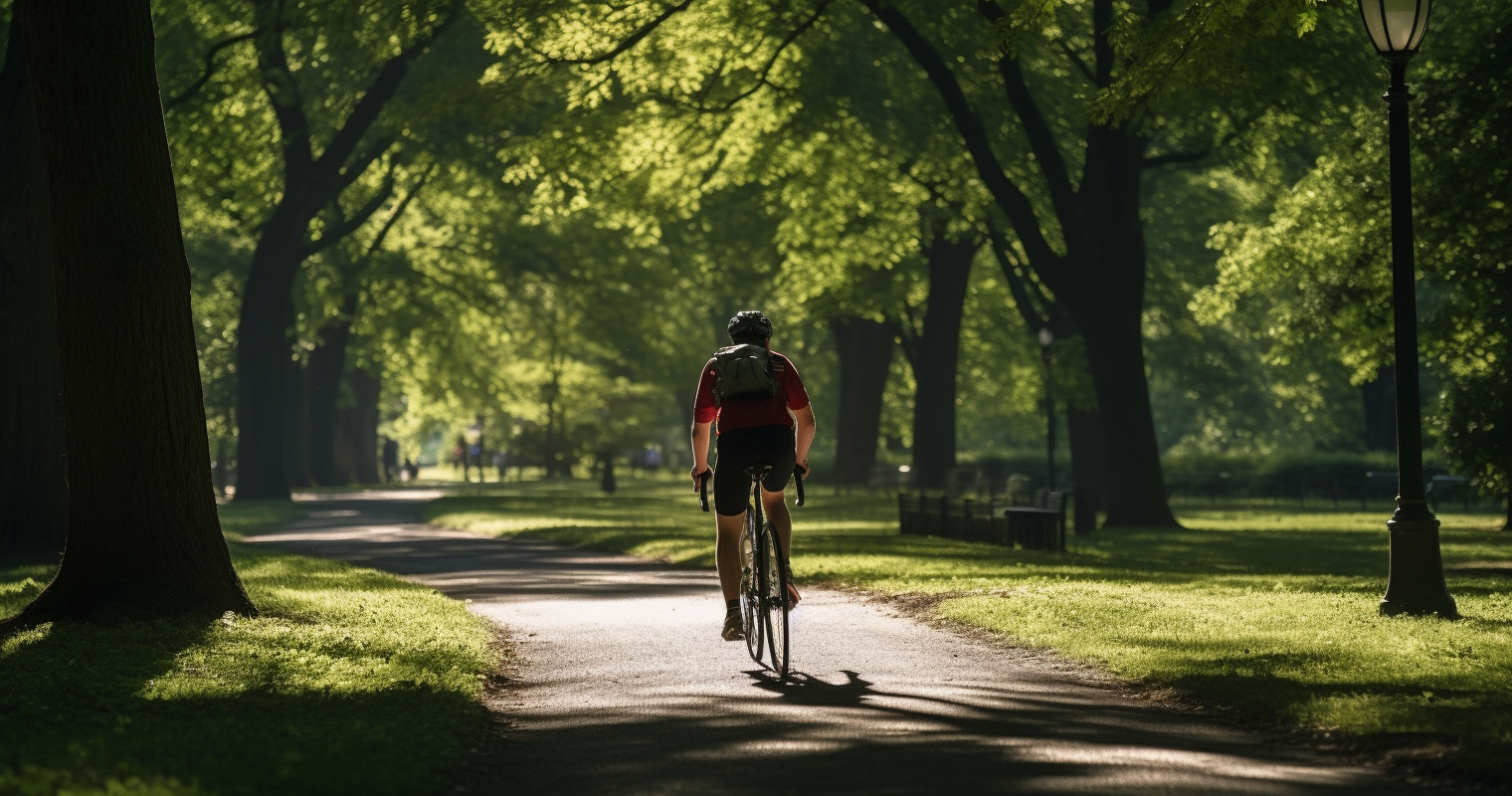
In Saudi Arabia, cycling is overwhelmingly a recreational and sporting pursuit rather than a mode of daily transport. Dedicated infrastructure is growing at pace under the Vision 2030 programme, with purpose-built tracks emerging in cities and headline destinations like AlUla, yet the majority of urban roads remain firmly in the grip of the car and pose genuine obstacles for anyone on two wheels. Newcomers will find cycling a pleasurable and increasingly popular pastime, but it has not yet matured into a viable substitute for car travel when going about everyday life.
| Item | Details |
|---|---|
| Cycling culture | Primarily recreational and sporting; commuter cycling rare (as of 2025) |
| Helmet law (cyclists) | Recommended but not legally mandatory for adults; required for children (as of 2025) |
| Alcohol limit for cyclists | 0.00% BAC — alcohol is prohibited nationwide |
| Bike registration | Not required for bicycles (motor vehicles only) |
| Bike-share availability | Schemes operating in Medina (e-bikes via Careem); expanding to other cities under Vision 2030 |
| Key cycling authority | Saudi Cycling Federation; Ministry of Transport and Logistics |
How popular is cycling in Saudi Arabia — is it a common way to get around?
Bicycle use remains relatively uncommon in Saudi Arabia, shaped by the country’s extreme heat and the way its cities have been built almost entirely around motor vehicles. Flying and driving are by far the two dominant forms of transport across the Kingdom. This stands in stark contrast to nations such as the Netherlands or Denmark, where flat terrain and densely woven cycling networks have made the bicycle the obvious choice for millions of daily journeys.
Nevertheless, attitudes are changing noticeably. A fresh wave of enthusiasm for cycling is sweeping the Arabian Peninsula, with Riyadh — the capital and largest city — at its centre. More people than ever before are taking to their bikes, fuelled by an expanding calendar of organised events and a flourishing club scene that is simultaneously driving demand for bicycles and rental services.
The Saudi Arabia bicycle market reached USD 625.5 million in 2024, and IMARC Group expects it to reach USD 853.6 million by 2033, exhibiting a compound annual growth rate of 3.51% during 2025–2033. The overwhelming majority of this activity is sport- and recreation-driven rather than commuter-led. Active cycling clubs are well established in the major cities: Darrajati is widely regarded by locals as the first and largest cycling club in Saudi Arabia, open to all and built around a shared passion for the sport, running organised rides every Saturday from Diriyah, a historic district to the west of Riyadh.
Although everyday bike riding is still far from routine in Riyadh, the trend is unmistakably upward, and as the city continues its transformation, cycling is expected to claim a more meaningful place in the urban fabric. Expats arriving in Saudi Arabia should set realistic expectations: the bicycle is a rewarding social and sporting companion, but the conditions and culture for routine utility cycling are still finding their feet.
What is the cycling infrastructure like in Saudi Arabia?
Saudi cities present a genuine challenge to cyclists. Roads are broad and fast-moving, and dedicated cycling provision has historically been scarce — riders frequently face the prospect of crossing six or more lanes of traffic. This is a marked contrast to countries with well-established cycling networks, such as Germany’s intercity Radschnellwege corridors or Australia’s widespread off-road shared paths, where dedicated facilities are taken for granted.
Within urban areas, however, things are improving. Dedicated cycling lanes and paths are appearing with growing frequency, and several cities are actively investing in connected cycling infrastructure. Jeddah, for instance, has rolled out a network of cycling paths linking residential neighbourhoods to commercial and leisure zones. Local authorities are also advancing broader initiatives to support cycling and environmental wellbeing, including bike-sharing programmes, the construction of dedicated cycling corridors, and subsidies for bicycle purchases.
The most striking purpose-built cycling provision in the Kingdom to date is found in AlUla. A 45 km dedicated cycling track — the most recent addition to AlUla’s cycling offer — carries riders from the AlFareed Roundabout in AlUla Central all the way to the world-famous Camel Cup grounds. AlUla is widely seen as having the potential to become Saudi Arabia’s cycling capital, creating a platform for people to spectate, draw inspiration, and ride.
Beyond city boundaries, a growing network of recreational and touring routes traverses dramatic coastal shorelines and highland mountain ranges. Route planning resources are improving steadily, with platforms such as Komoot and Bikemap hosting thousands of community-contributed routes across the Kingdom. For official route information and planned developments, consult the Ministry of Transport and Logistics and the Visit Saudi tourism portal, alongside the Saudi Cycling Federation for sport-specific infrastructure news.
Is cycling safe in Saudi Arabia?
Road safety is a serious concern for cyclists across Saudi Arabia. Urban environments are particularly demanding: traffic moves at high speeds along wide multi-lane roads, dedicated cycling facilities are absent in many districts, and motorist awareness of cyclists is still catching up with the growth in the sport. Riding in cities calls for consistent alertness and a defensive approach, as the mix of experienced and less experienced drivers makes unpredictable situations a regular occurrence.
On the other side of the ledger, cyclists undertaking long-distance journeys through the country frequently report feeling very secure, noting that petty crime rates are extremely low. The Saher automated camera enforcement programme has contributed to a meaningful reduction in road fatalities in recent years. Riding in rural and off-road settings — especially in the mountains and across desert terrain — tends to involve far less vehicle traffic, though riders need to stay alert to the risk of stray animals, including camels, which can appear suddenly and represent a serious hazard given their considerable size.
Helmets are recommended but not legally required for adult cyclists, although they are mandatory for children. This is a notably more permissive position than, for example, Australia’s blanket mandatory helmet law covering all ages. Even so, wearing a helmet is strongly encouraged given urban road speeds and conditions. The General Directorate of Traffic, operating under the Ministry of Interior, is the principal road safety authority; their official publications are the best source for current road safety statistics and guidance.
What are the rules of the road for cyclists in Saudi Arabia?
Cyclists on Saudi roads are bound by the same fundamental traffic rules as all other road users. Saudi Arabia’s Traffic Law was first enacted in 2007 and has since been revised through amendments in 2016, 2018, and between 2022 and 2024. Enforcement sits with the General Directorate of Traffic (GDT), a division of the Ministry of Interior.
The legally mandated Blood Alcohol Concentration (BAC) limit for all road users, including cyclists, is 0.00% — meaning any trace of alcohol is entirely prohibited. Since alcohol is comprehensively banned across Saudi Arabia, this is not a matter of grey areas or measurement thresholds; it simply means no alcohol consumption whatsoever before or during any ride on public roads.
Key rules that cyclists should know include:
- All traffic signals, road markings, and directional signs must be obeyed. Non-compliance can result in fines and penalties.
- Helmets are recommended but not legally required for adults; they are mandatory for children.
- Riding without lights at night or in poor visibility is a traffic offence. Cyclists venturing out after dark must carry working front and rear lights.
- Cyclists must ride on the right-hand side of the road, consistent with the requirement applying to all road users.
- Cycling on pavements or within pedestrian zones is generally prohibited. Designated pedestrian areas are reserved accordingly and cyclists should not encroach on them.
Saudi Arabia does not publish a dedicated cycling-specific highway code comparable to those found in certain other countries. For the full and up-to-date legal framework, refer to the Ministry of Interior’s Traffic portal and the official text of the Traffic Law, accessible through the Bureau of Experts at the Council of Ministers.
Do I need to register my bike or have insurance to cycle in Saudi Arabia?
Registration is not required for bicycles in Saudi Arabia. The General Directorate of Traffic (GDT) mandates registration for all motor vehicles, but this obligation does not extend to non-motorised bikes. As of 2025, there is no national bicycle registration scheme in operation — neither compulsory nor voluntary.
Third-party or personal liability insurance is equally not a legal requirement for cyclists. Motor vehicle owners are obliged to insure their vehicles in line with the applicable regulations, but again, this applies exclusively to motorised transport, not to bicycles. That said, taking out personal accident cover or a travel insurance policy that specifically includes cycling — particularly for incidents involving other road users — is a sensible precaution given the conditions on urban roads. Many expat health insurance policies available in Saudi Arabia can be extended to include cycling-related accidents; it is worth reviewing your policy documents carefully to understand exactly what is covered.
For the most current regulatory position, consult the Saudi Central Bank (SAMA), which oversees the insurance sector in Saudi Arabia, and the General Directorate of Traffic for any revisions to road-user and vehicle requirements.
Are there public bike-sharing or rental schemes in Saudi Arabia?
Bike-sharing is gaining traction in Saudi Arabia as a key component of the Vision 2030 smart-city agenda. Medina has introduced a fully electric urban micromobility solution developed in partnership with Careem, launching with a fleet of 500 e-bikes and 60 dedicated charging stations. The pedal-assist bikes are well adapted to the city’s hilly topography and dry climate, enabling commuters to move around efficiently without excessive physical exertion.
Plans were already in place to significantly expand the Medina fleet, with discussions underway about extending the system to NEOM, the futuristic desert city under development. The scheme is accessible via the Careem app — already widely used across the region for ride-hailing and micromobility services — and bikes can be hired using smartphones or smartcards at the charging stations.
Elsewhere in the Kingdom, the BSKL app provides e-scooter and e-bike sharing across a range of cities. Vision 2030’s commitment to environmental sustainability explicitly includes the promotion of electric transportation as a means of cutting harmful emissions. Private bike rental shops do exist in the major cities, though they are not widespread. Riyadh has relatively few rental outlets, but Wheels Bike Shop — which operates multiple branches in Riyadh and elsewhere in Saudi Arabia — is among those offering bikes at reasonable prices.
For current availability and pricing across public schemes, refer to the Careem app, the BSKL platform, and the transport authority of whichever city you are based in, as coverage is expanding continuously.
Where can I buy or service a bike in Saudi Arabia?
With the Saudi Arabia bicycle market valued at USD 625.5 million in 2024, the commercial landscape for cyclists is healthy and well-supplied. Leading international marques — including Trek, Giant, and Specialized — are carried by retailers in Riyadh, Jeddah, and Dammam. Large sports megastores and specialist cycling shops are the most dependable places to purchase a new bike, and the breadth and quality of stock have improved considerably as the sport’s popularity has grown.
The availability of spare parts and accessories has also expanded noticeably, making it far easier for riders to personalise and upgrade their machines. This represents a considerable improvement over the situation a decade ago, when sourcing components locally was often a frustrating exercise. Cyclists with very specific or premium component requirements may still find it more efficient to order from international online retailers, as the local market is strongest at the mid-range tier.
For servicing and mechanical repairs, quality bike workshops are concentrated in the major urban centres. Wheels Bike Shop is widely recommended for maintenance and repairs, with a presence in Riyadh and across Saudi Arabia. Away from the principal cities, specialist repair facilities are thin on the ground, which means expats living in smaller settlements may need to either travel to a city for professional work or invest time in developing their own basic mechanical knowledge.
A second-hand market exists but is considerably less formalised than in cycling-mature countries such as the Netherlands or Germany. Online classified platforms and expat community groups on Facebook tend to be the most productive places to look for used bikes in Saudi Arabia. Consumer protection standards broadly mirror standard retail warranty expectations, though it is always worth checking return policies and warranty terms at the point of sale, as these can differ between shops.
Can I bring my bike when I move to Saudi Arabia, and are there any import rules?
Bringing a personal bicycle to Saudi Arabia as part of a household relocation is generally a straightforward process. Bicycles transported as personal effects in connection with a move are typically treated alongside other household goods, and residents arriving on a residency permit (Iqama) are usually entitled to import personal possessions — bicycles included — with reduced or waived customs duties under the personal effects exemption. Confirm your eligibility for this exemption with a licensed customs broker or removal company before dispatching your shipment.
Saudi Arabia applies a standard customs duty rate of 5% on most imported goods under the GCC Common Customs Law, though personal effects associated with a long-term or permanent relocation may be exempt when correctly declared. The specific duty rate applicable to bicycles (HS code 8712) when imported commercially is worth verifying independently, as rates and exemption criteria are subject to change. Always consult the Zakat, Tax and Customs Authority (ZATCA) — Saudi Arabia’s national customs body — for the most current import duties, thresholds, and personal effects exemption conditions prior to shipping.
There are no known prohibitions on specific categories of bicycle (road, mountain, e-bike, etc.), though high-powered e-bikes may attract additional classification scrutiny. If shipping a high-value machine, ensure it is properly declared and comprehensively insured for transit. Keeping a receipted proof of purchase and a record of the frame serial number is also advisable, as these can help establish ownership on arrival.
What are the best cycling routes or destinations in Saudi Arabia?
The sheer variety of Saudi Arabia’s terrain is one of the country’s strongest cards for cyclists, encompassing vast open desert, rugged mountain ranges, and historically significant landscapes. As the 12th largest country in the world by land area, standout touring sections include the 700 km stretch from Haql to AlUla, which delivers spectacular desert scenery, and the 600 km passage from Missan to Abha through magnificent mountain country.
Within Riyadh, Wadi Hanifa is the most celebrated cycling corridor. This 120 km oasis-like green corridor cuts through the heart of the capital, running along a long road that traverses the city from south to north. It is largely free of motor traffic in the early mornings and after dark, and the surrounding greenery makes it a genuinely pleasant place to ride. The nearby Diriyah area, a UNESCO World Heritage Site, is another popular launchpad for weekend club rides.
AlUla has emerged as the Kingdom’s premier cycling destination. The AlUla Tour is actively building a cycling legacy there, with the ambition of establishing AlUla as Saudi Arabia’s cycling capital — a place where spectators, aspiring riders, and seasoned enthusiasts alike can find inspiration. The 45 km purpose-built cycling track running from the AlFareed Roundabout to the Camel Cup grounds represents the most ambitious piece of dedicated cycling infrastructure in the country.
The Asir region in the southwest — centred on the highland city of Abha, which sits at 2,300 metres above sea level — offers an entirely different experience: cooler temperatures, mist-draped mountain roads, and dramatic vistas that feel worlds apart from the rest of the Arabian Peninsula. One practical advantage for long-distance cyclists throughout the Kingdom is the abundance of free drinking water, often dispensed from roadside machines, which provides welcome relief during extended rides in the heat.
For route planning, the Visit Saudi bikepacking guide and community tools such as Komoot are excellent starting points. The Saudi Cycling Federation serves as the official governing body for competitive and organised cycling across the Kingdom.
How do I get started with cycling after moving to Saudi Arabia?
- Research your destination city’s cycling provision. Before relocating, look into what cycling paths and facilities exist where you will be living. Jeddah and AlUla have dedicated infrastructure; Riyadh offers Wadi Hanifa and a lively club scene; smaller cities may have little or nothing in place.
- Decide whether to bring or buy a bike. Weigh up whether to ship your own bike (taking customs rules via ZATCA into account) or purchase one locally on arrival. Major retailers carry well-known brands in Riyadh, Jeddah, and Dammam.
- Equip yourself with proper safety gear. Invest in a good helmet, functioning front and rear lights, and high-visibility clothing. Although helmets are not legally required for adults, wearing one is strongly advisable given urban road conditions.
- Get to grips with local traffic law. Read through the Saudi Traffic Law via the Bureau of Experts and the Ministry of Interior’s Traffic portal. Key points: zero alcohol tolerance (0.00% BAC), obey all road signals, and ride on the right.
- Connect with a local cycling club. Clubs such as Darrajati in Riyadh host weekly group rides and are genuinely welcoming to new faces. Club membership is the quickest way to discover safe local routes and build a network of fellow cyclists.
- Review your insurance coverage. Check whether your health or expat insurance policy includes cycling accident protection. Whilst insurance is not a legal requirement, having personal accident cover in place before riding on public roads is a wise precaution.
- Adapt your riding schedule to the climate. Saudi summers are unrelenting. Most experienced local riders head out before sunrise or wait until the evening. The period from October to March offers the most comfortable conditions for longer and more ambitious rides.
Frequently asked questions about cycling in Saudi Arabia
Is it legal to cycle on public roads in Saudi Arabia?
Yes, riding a bicycle on public roads is entirely legal in Saudi Arabia. Cyclists are required to abide by the same core traffic rules as all other road users — respecting traffic signals, riding on the right, and using lights in the dark. No licence or special permit is needed to ride a bicycle on public roads.
Do I need to wear a helmet when cycling in Saudi Arabia?
For adults, helmet use is recommended but not a legal requirement; for children, helmets are mandatory. Irrespective of what the law requires, wearing a helmet is very strongly advised given the speeds of urban traffic and the general state of road conditions throughout the country.
Can women cycle in Saudi Arabia?
Yes. Women are fully permitted to cycle in Saudi Arabia. Social norms have shifted considerably under Vision 2030 reforms, and female cyclists are an increasingly familiar sight, especially at organised events and on dedicated cycling paths. Community groups including Spokes Hub and Women on Wheels are actively championing inclusive participation in the sport. As with any outdoor activity in a public setting, dressing modestly and appropriately is advisable.
Is cycling practical for commuting to work in Saudi Arabia?
For the majority of people in most Saudi cities, cycling is not yet a realistic everyday commuting option — particularly during summer, when temperatures routinely climb above 40°C. Roads tend to be wide and fast-moving, and dedicated cycling infrastructure remains limited across much of the urban landscape. Short commutes along established cycling paths or cycle-friendly routes may be feasible during the cooler months for those who live close enough to their workplace.
What is the best time of year to cycle in Saudi Arabia?
The months from October through to March offer by far the most comfortable cycling conditions, with temperatures across many parts of the Kingdom typically falling between 15°C and 25°C. Summer — particularly June to September — can bring temperatures above 45°C, making outdoor riding genuinely hazardous for most people except in the pre-dawn hours. The Asir highlands centred on Abha remain considerably cooler throughout the year thanks to their altitude of 2,300 metres.
Are there cycling clubs I can join as an expat?
Darrajati is widely recognised as Saudi Arabia’s first and largest cycling club, open to everyone and built around sharing a passion for the sport and its local events. Riyadh Wheelers is another well-established club with a regular racing and events calendar. Most clubs maintain an active social media presence and are welcoming to newcomers of any nationality or ability level.
Do I need to register my bicycle in Saudi Arabia?
No. Vehicle registration obligations in Saudi Arabia are confined to motor vehicles; non-motorised bicycles are not subject to any registration requirement. There is currently no compulsory or voluntary bicycle registration programme in operation anywhere in the Kingdom.
Can I use a bike-sharing scheme in Saudi Arabia?
Medina has an operational bike-sharing service run in partnership with Careem, deploying a fully electric fleet of e-bikes. The BSKL platform extends e-bike and e-scooter sharing to additional cities across Saudi Arabia. Coverage varies considerably by location, and the overall network is still growing. Check the Careem and BSKL apps for the latest service availability in your city, as expansion is ongoing under the Vision 2030 initiative.