
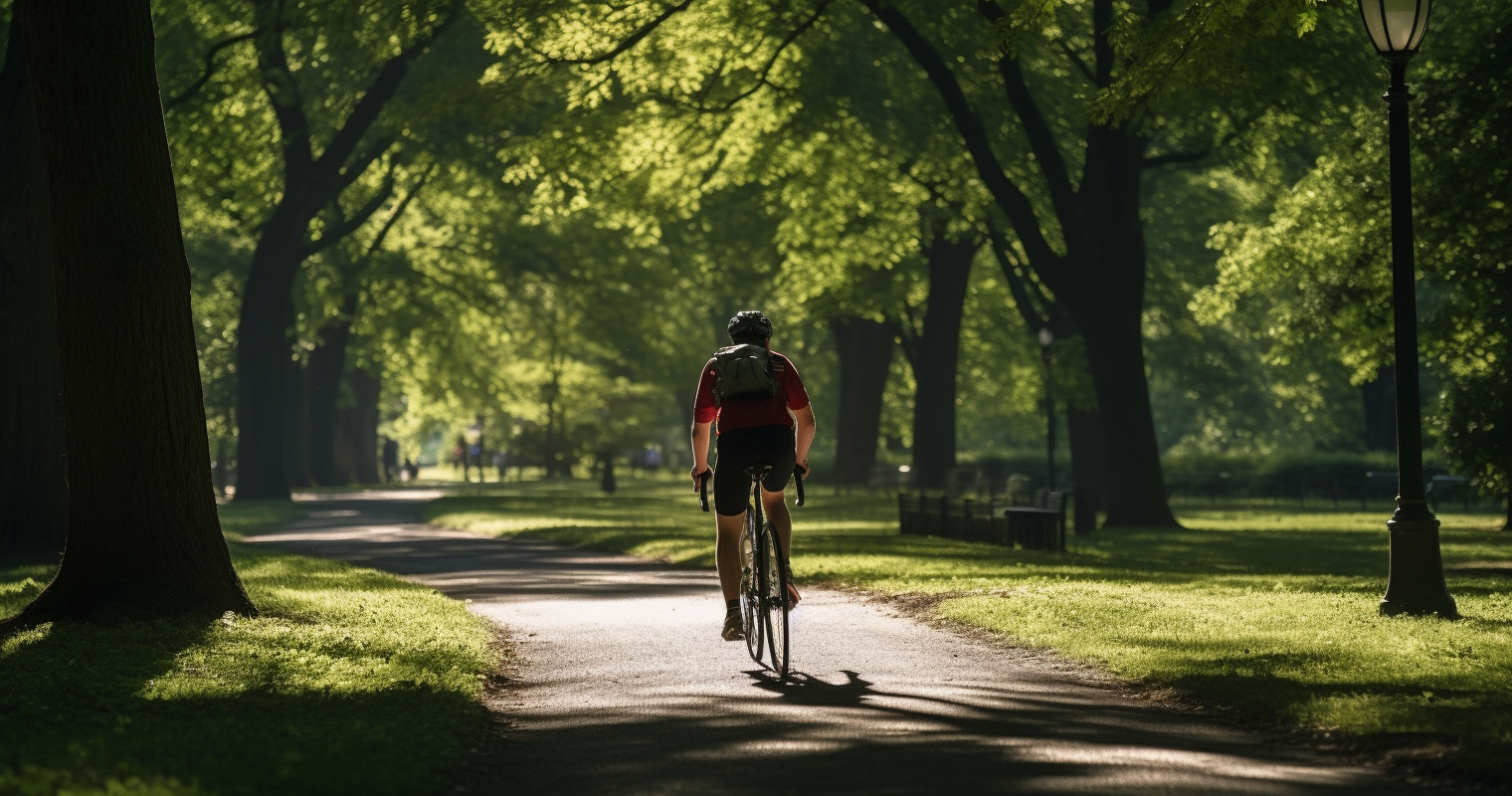
Cycling across the United States looks very different depending on where you happen to be. Nationwide participation has reached record levels — more than 112 million people got on a bike at least once in 2024 — yet the activity remains overwhelmingly recreational for most Americans. Infrastructure is growing in many cities, but decades of car-centred urban design mean that commuting by bicycle is only genuinely practical in a select handful of well-equipped urban areas.
| Item | Details |
|---|---|
| Cycling participation (as of 2024) | 112 million people (35% of those aged 3+) rode a bike at least once in 2024 — a record high |
| Commuter cycling share | Cycling accounts for approximately 1% of all trips nationally; higher in select cities such as Portland (~6–7%) and Boulder (~10%) |
| Cyclist fatalities (as of 2024) | 1,166 cyclists killed in 2023 — the highest in more than four decades; NHTSA is the official source for current figures |
| Helmet law | No federal helmet law; state and local rules vary — many states require helmets for children only |
| Bike registration | Not federally mandated; some municipalities operate voluntary or local registration schemes |
| Key infrastructure authority | Federal Highway Administration (FHWA) and state/city Departments of Transportation |
How popular is cycling in the United States — is it a common way to get around?
Some 112 million Americans — representing 35% of the population aged three and over — rode a bicycle at least once in 2024, setting the highest participation mark since recording began in 2014. The COVID-19 pandemic gave cycling a substantial boost that has not entirely dissipated. Yet that headline number tells only part of the story: for the overwhelming majority of those riders, cycling is a leisure pursuit or fitness activity rather than a genuine transport choice.
Nationally, bicycles account for just 1% of all journeys, a reflection of how thoroughly car ownership and car-centred planning have shaped American life. Countries like the Netherlands and Denmark, where a large share of everyday trips happen by bike, represent a very different cycling culture. The US sits closer to Australia or Canada — enthusiastic about recreational riding, but with commuting by bike confined to a small fraction of the population.
In most cities, public transit leads among active commute modes, with walking second and cycling a distant third. As of 2024, only two US cities have more than 20,000 people cycling to work on any given day, and just nine have more than 10,000. Still, certain places punch far above the national average. Portland, Oregon, has maintained a cycling mode share of roughly 6–7% — one of the highest anywhere in the country — and the bicycle has become deeply embedded in how the city sees itself.
Youth ridership is also moving in a more encouraging direction, with participation among young people climbing from 49% to 56% between the most recent surveys, reversing a prolonged decline since 2018. For expats relocating from countries with mature cycling cultures, the practical day-to-day reality will depend enormously on their destination. Settling in Portland, Boulder, or Minneapolis is a fundamentally different experience from arriving in Houston or Phoenix.
What is the cycling infrastructure like in the United States?
Cycling infrastructure across the US is highly inconsistent and shaped almost entirely by local rather than national decision-making. There is no equivalent of Germany’s nationally coordinated cycling network; instead, what exists is a mosaic of city-by-city initiatives at very different stages of maturity.
Federal investment has accelerated in recent years. The Bipartisan Infrastructure Law released billions of dollars for cycling projects, supplemented by significant state and local funding, resulting in hundreds of new riding locations opening in 2024 alone. The Federal Highway Administration (FHWA) issues design standards and channels funding, but the actual construction and maintenance of bike facilities rests with state and city Departments of Transportation.
The types of provision vary considerably. In some places, dedicated bike lanes run alongside roads, separated from motor traffic by kerbs, parked cars, plastic posts, or painted lines. In others, roads are marked with “sharrow” symbols — shared-road markings indicating that cyclists and slower-moving vehicles are expected to coexist — sometimes referred to as greenways or bicycle boulevards.
The gap between better-served and underserved cities is pronounced. Portland has more than 385 miles of bikeways woven through the urban fabric. Madison, Wisconsin, has developed over 75 miles of dedicated paths and 120 miles of lanes connecting its neighbourhoods, city centre, and university campus. Chicago has built more than 200 miles of bike lanes under its Streets for Cycling Plan, with a growing proportion of those being physically protected.
No US city has yet matched the genuinely transformative network ambitions seen in London, Paris, or Bogotá, though a growing number are articulating longer-term visions. Suburban and rural areas generally have little to offer cyclists, and sharing fast, multi-lane roads with heavy motor traffic remains the norm outside city centres.
California is directing approximately $930 million over four years towards walking and cycling infrastructure improvements statewide, including 265 miles of new or upgraded bike lanes on state highways by mid-2028. Newcomers should consult their local city or state Department of Transportation website alongside resources from PeopleForBikes and the League of American Bicyclists to understand what exists — and what is planned — in their area.
Is cycling safe in the United States?
Cyclist safety on American roads deserves a frank and clear-eyed assessment. The country’s profound reliance on the car, its wide arterial roads designed for high vehicle speeds, and driver attitudes that — even in the most progressive cities — have historically marginalised cyclists all combine to create an environment that carries genuine risk. The picture is not uniform, but it is serious.
In 2023, 1,166 cyclists lost their lives on US roads — the highest annual toll in over forty years. Non-fatal injuries also worsened, rising 8.2% to nearly 50,000 in a single year. On a per-capita basis, these figures are considerably worse than those recorded in the Netherlands, Germany, or the UK, where road design and driver education place much greater weight on protecting vulnerable road users.
The geography of these fatalities is telling. Around 81% of cyclist deaths occur in urban areas, and 65% of all cyclist fatalities between 2018 and 2022 happened on principal or minor arterial roads — even though those road types account for only 10% of the total national network. The most dangerous conditions for cyclists are not quiet country lanes but busy urban through-roads.
State-level data reveals wide disparities. Louisiana recorded the highest bicyclist fatality rate at 4.97%, while states such as Wyoming and Ohio were considerably safer. Where you choose to live and cycle has a direct and meaningful bearing on your personal risk.
There is no federal helmet mandate. Rules differ from state to state and city to city — the most common approach is to require helmets for children up to age 16 or 18, with adult riders generally free to choose, though helmets are universally advised. The National Highway Traffic Safety Administration (NHTSA) publishes the most current cyclist fatality data and safety recommendations and is the authoritative reference for up-to-date statistics. NHTSA recommends wearing bright or fluorescent clothing in daylight and using a white front light together with a red rear reflector or flashing light after dark.
What are the rules of the road for cyclists in the United States?
The United States has no single national rulebook for cyclists. Traffic law is set at the state level, with additional rules layered on by counties and cities. That said, most state vehicle codes treat bicycles as vehicles with the same fundamental rights and obligations as motor vehicles on public roads, producing a broadly consistent baseline across the country.
Key rules cyclists should be aware of include:
- Helmet laws: No federal requirement exists for adults. Most states require helmets for children, typically under the age of 16 or 18. Check your state’s specific provisions — California, for instance, requires helmet use by all riders under 18.
- Lighting: The majority of states require a white front light and a red rear reflector or light for night riding. Insufficient lighting is among the leading factors in fatal crashes involving cyclists after dark.
- Road positioning: Cyclists are generally obliged to ride as close to the right-hand side of the road as is reasonably practical, with exceptions for overtaking, turning left, or avoiding obstacles.
- Pavement/sidewalk riding: Rules differ by state and city. In many jurisdictions, adult cyclists are prohibited from riding on footpaths in commercial areas. Check local ordinances before assuming sidewalk riding is permitted.
- Traffic signals and signs: Cyclists must comply with all signals and stop signs just as drivers do. A growing number of states have introduced “Idaho Stop” laws allowing cyclists to treat stop signs as yield signs — check whether your state has adopted this provision.
- Alcohol: While the precise legal framework for cycling under the influence varies by state, riding while intoxicated is illegal in most jurisdictions and can lead to fines or arrest.
- Passing distance: Many states have enacted “3-foot passing laws” requiring drivers to maintain at least three feet of clearance when overtaking a cyclist.
Cyclists should always verify the specific rules applicable in their state and locality, as these can diverge from general principles. The relevant authority for traffic law in each state is usually the state Department of Motor Vehicles or Department of Transportation. The Governors Highway Safety Association (GHSA) maintains a helpful state-by-state summary of bicycle laws.
Do I need to register my bike or have insurance to cycle in the United States?
No federal or state law in the United States requires cyclists to register their bicycles. Some cities and municipalities do run voluntary or compulsory local registration schemes — usually involving a nominal one-time fee — which can assist police in reuniting stolen bikes with their owners. Always check what, if anything, your local city authority requires or offers.
There is equally no legal requirement to carry any form of third-party liability or personal injury insurance before cycling in the US. In contrast to parts of Europe where insurance for cyclists is either mandatory or strongly embedded in common practice, insurance for American cyclists is entirely optional. Even so, given how frequently accidents occur and how expensive US medical care can be, many regular riders choose to arrange some form of cover.
Relevant optional insurance products for US cyclists include:
- Homeowner’s or renter’s insurance: Many standard policies extend some cover to bicycle theft and may include limited personal liability protection, though limits are often modest. Read your policy carefully to understand what is and is not included.
- Dedicated bicycle insurance: Specialist insurers offer policies covering theft, accidental damage, personal accident, and third-party liability in a single package.
- Health insurance: Of particular importance in the US, where the cost of treating injuries sustained in an accident can be extraordinarily high without adequate cover. Ensure health insurance is in place before cycling regularly.
There is no national cycling insurance regulator. Each state has an Insurance Commissioner or Department of Insurance responsible for overseeing insurance products sold in that state. You can locate your state’s regulator through the National Association of Insurance Commissioners (NAIC).
Are there public bike-sharing or rental schemes in the United States?
The Bureau of Transportation Statistics publishes a National Bikeshare and eScooter Map, showing the availability and ridership for bike-share and e-scooter systems nationwide. The US has a broad and growing network of city-operated and privately run bike-share programmes, concentrated in major urban centres.
Some of the most prominent schemes include:
- Citi Bike (New York City): One of the largest bike-share programmes in the country, operating thousands of bikes and e-bikes across Manhattan, Brooklyn, Queens, the Bronx, and Jersey City. As of 2024, single rides start from around $4.99, with monthly memberships available. Check citibikenyc.com for current pricing.
- Divvy (Chicago): One of the country’s largest urban bike-share networks, with thousands of bikes spread across Chicago, including an e-bike fleet. Check divvybikes.com for current fares and membership options.
- Bluebikes (Boston): Serving Boston, Cambridge, Somerville, and nearby communities, with both standard and electric bikes in the fleet.
- Bay Wheels (San Francisco Bay Area): Run by Lyft, with stations across San Francisco, Oakland, Berkeley, and San Jose.
- BCycle: A national network with operations in multiple cities including Boulder, Denver, and Madison, complementing the strong cycling culture already present in many of those communities.
- Capital Bikeshare (Washington DC): Covering the DC metropolitan area, including sections of Virginia and Maryland.
Most schemes offer both pay-as-you-go rides and annual membership passes that bring the cost per trip down considerably. Pricing changes regularly, so always consult the operator’s official website or your local municipal transport authority for current rates. The Bureau of Transportation Statistics maintains a national overview of bike-share availability.
Where can I buy or service a bike in the United States?
The American bicycle retail market is mature and well-stocked, with buying options spanning every price bracket and riding style. Large cities support numerous independent specialist shops as well as national chains, and expats arriving from countries with well-developed cycling retail scenes — the Netherlands, Germany, or the UK, for example — will generally find a comparable product range, though prices may differ.
Your options for buying a bike include:
- Independent local bike shops (LBS): The best choice for personalised guidance, professional fitting, and ongoing support. Specialist shop staff are typically well-informed and well-placed to recommend the right bike for your riding style and local conditions.
- National chain retailers: REI (Recreation Equipment Inc.) stocks a broad selection of bikes and accessories at locations nationwide. REI operates on a co-operative model, and members receive dividends on qualifying purchases.
- Big-box retailers: Walmart, Target, and similar stores offer budget-priced bikes but limited fitting advice and after-sales support. These outlets can work for occasional or casual riders who need basic transport.
- Online marketplaces: Facebook Marketplace, Craigslist, and eBay carry a substantial volume of second-hand bikes that can represent strong value. Thoroughly inspect any used bike in person before purchase, or have a local shop assess it for you.
US consumer protection law provides certain baseline guarantees on new products. The Federal Trade Commission (FTC) oversees consumer rights at the federal level, and reputable retailers generally back new bikes with a manufacturer’s warranty — typically one to two years on the frame and shorter coverage on components. Confirm warranty terms at the point of sale.
Servicing facilities are widely available in cities. Workshop labour rates at US bike shops are broadly comparable to those in western Europe, with a standard tune-up typically running between $60 and $120 as of 2024, though exact costs vary by city and shop.
Can I bring my bike when I move to the United States, and are there any import rules?
If you are relocating to the United States on a long-term basis, it may be possible to bring your bicycle duty-free as part of your personal effects, subject to certain conditions. Getting to grips with the rules before you ship will help you avoid unexpected costs or hold-ups at the border.
Here is the general process for importing a bicycle as part of your household effects:
- Confirm eligibility: US Customs and Border Protection (CBP) generally permits duty-free entry of personal and household belongings for people who are transferring their principal residence to the United States, on the condition that those items were owned and in use abroad for at least one year before the move.
- Prepare documentation: Complete CBP Form 3299 (“Declaration for Free Entry of Unaccompanied Articles”). Include your bicycle on the list of household effects. Supporting evidence that you owned the bike before your move — purchase receipts, insurance documents, or dated photographs — will strengthen your claim.
- Declare at the border: Every item must be declared on arrival. Failing to declare goods can result in fines or confiscation. If your bike is being shipped separately, your removal company or freight forwarder will usually manage the customs paperwork on your behalf.
- Check for import duty if not exempt: If your bicycle does not qualify as a personal effect — for instance, if it was bought new overseas specifically with a view to importing it — standard duty rates will apply. As of 2025, US import duties on bicycles vary depending on the type of bike and the country of manufacture — consult the CBP official website or the US International Trade Commission’s Harmonized Tariff Schedule for the rate applicable to your specific bike, bearing in mind that these figures are subject to change in line with trade policy.
- State taxes: Even where no federal import duty is payable, some states impose use taxes on goods brought in from overseas. Check with the revenue authority in the state where you will be living.
Always verify the current rules directly with US Customs and Border Protection (CBP) before shipping, since tariff schedules and trade policies can shift. Your international removal company should also be able to walk you through the documentation needed for a smooth customs process.
What are the best cycling routes or destinations in the United States?
Few countries can match the sheer variety of cycling experiences available in the United States. From multi-day wilderness expeditions to well-maintained urban trails and world-class mountain biking terrain, the options span every landscape and ability level.
Some highlights include:
- The Adventure Cycling Association’s Great Divide Mountain Bike Route: Stretching nearly 3,000 miles from Banff, Canada, to the US–Mexico border in New Mexico, this ranks among the most celebrated off-road long-distance cycling journeys anywhere on earth. The Adventure Cycling Association is the leading national resource for long-distance route planning.
- The East Coast Greenway: A 3,000-mile corridor of connected urban trails under ongoing development, running from Maine to Florida and intended to serve both everyday commuters and touring cyclists.
- The TransAmerica Bicycle Trail: Approximately 4,200 miles connecting Astoria, Oregon, with Yorktown, Virginia — one of the most famous coast-to-coast touring routes in the country.
- Chicago Lakefront Trail: An 18.5-mile path tracing the shore of Lake Michigan, functioning as both a popular recreational amenity and a genuine transport corridor through the city.
- Portland, Oregon: With around 400 miles of cycling infrastructure woven through its streets, Portland is one of the most accessible cities in the country for day-to-day cycling. It also connects to regional off-road trails and forest paths for weekend riding.
- Hawaii’s Leeward Bikeway: The Leeward Bikeway extends the Pearl Harbor Historic Trail, and with a few more gap closures, riders will be able to travel on a 24-mile car-free bikeway from the eastern suburbs of Honolulu all the way to Diamond Head, connecting with the airport, downtown, Waikiki, and beyond.
- Moab, Utah: Internationally recognised as a mountain biking mecca, Moab draws riders to the iconic Slickrock Trail and an extensive network of routes through striking red-rock canyon country.
- Cape Cod Rail Trail, Massachusetts: A 25-mile converted railway corridor winding through woodlands, alongside freshwater ponds, and into seaside villages — a particularly welcoming option for families.
For route planning across all fifty states, the Adventure Cycling Association and TrailLink (run by the Rails-to-Trails Conservancy) are the most comprehensive national tools available. State and local tourism boards also produce cycling guides tailored to their own regions and landscapes.
Frequently asked questions
Do I need to wear a helmet when cycling in the United States?
No federal law compels cyclists to wear helmets in the United States. Obligations vary from state to state and city to city — the most common approach is to mandate helmets for children up to age 16 or 18, while adults face no legal requirement in most places. That said, wearing a helmet is strongly advisable given the country’s road safety record. Always check the rules specific to your state and municipality, since local ordinances can go further than state law.
Is cycling a realistic option for my daily commute in the US?
The honest answer depends on where you are based. In cities such as Portland, Boulder, Minneapolis, or Washington DC, cycling networks are developed enough to make bike commuting a viable and relatively safe choice for many residents. In car-dominated cities like Houston or Phoenix, or in most suburban environments, the infrastructure is too sparse and the conditions too hostile to make cycling to work practical for the majority of people. It is worth thoroughly researching your specific destination before assuming that a bike will work as everyday transport.
How does cycling safety in the US compare to Europe?
Per-capita cycling fatality rates in the United States are substantially higher than those in the Netherlands, Denmark, Germany, or the UK. The 1,166 cyclist deaths recorded in 2023 represented the worst toll in more than four decades, shaped by road layouts designed around motor traffic and prevailing driver behaviour. The situation is measurably better in cities that have invested seriously in cycling infrastructure, but the national picture remains troubling. Opting for a city with a well-developed network of separated bike lanes has a real and demonstrable impact on personal safety.
Can I take my bike on public transport in the US?
Rules vary widely between transit operators. Most major metro and commuter rail systems accept folding bikes at all times and permit full-sized bikes during off-peak hours, typically in carriages set aside for that purpose. Many city bus routes have bike racks mounted on the front of vehicles. Always check with your local transit authority for the specific conditions that apply. Amtrak allows bikes on most routes, either as checked baggage or in a box, for an additional fee — see amtrak.com for current policies and charges.
What is the best city for cycling if I can choose where to live?
Portland, Oregon, is routinely ranked as the top cycling city in the US, with more than 385 miles of bikeways and one of the highest bike commuting rates in the country. Boulder, Colorado, Minneapolis, Minnesota, Madison, Wisconsin, and Seattle, Washington, are consistently highlighted as strong alternatives. The PeopleForBikes City Ratings tool assesses hundreds of American cities on cycling infrastructure and safety, and is a practical starting point for anyone weighing up where to settle.
Do I need insurance to cycle in the United States?
No form of insurance is legally required for cyclists in the US. Nevertheless, given the country’s elevated road accident rates and the potentially ruinous cost of medical treatment, ensuring you have health insurance in place before cycling regularly is essential. Many renter’s and homeowner’s insurance policies offer limited cover for bicycle theft. If you want broader protection covering damage, theft, liability, and personal accident, specialist bicycle insurance policies are available from dedicated providers.
How much does a decent bike cost in the United States?
The US bike market caters to a wide spectrum of budgets. A solid entry-level commuter bike generally falls between $400 and $800 as of 2024, while a good mid-range hybrid or road bike typically costs between $800 and $2,500. Performance road, gravel, and mountain bikes can carry substantially higher price tags. Second-hand bikes sold through Facebook Marketplace, Craigslist, and similar platforms can offer excellent value — particularly in cities where cycling is popular and stock turns over frequently.
Are there tax benefits for cycling to work in the United States?
There is no direct equivalent in the US to the UK’s Cycle to Work salary sacrifice scheme. However, some employers participate in pre-tax Commuter Benefit programmes that can be used to cover the cost of bike-share membership. Eligibility and the scope of any benefit depend on your employer and are subject to IRS regulations. Speak to your HR department to find out whether any such arrangement is available in your workplace.