
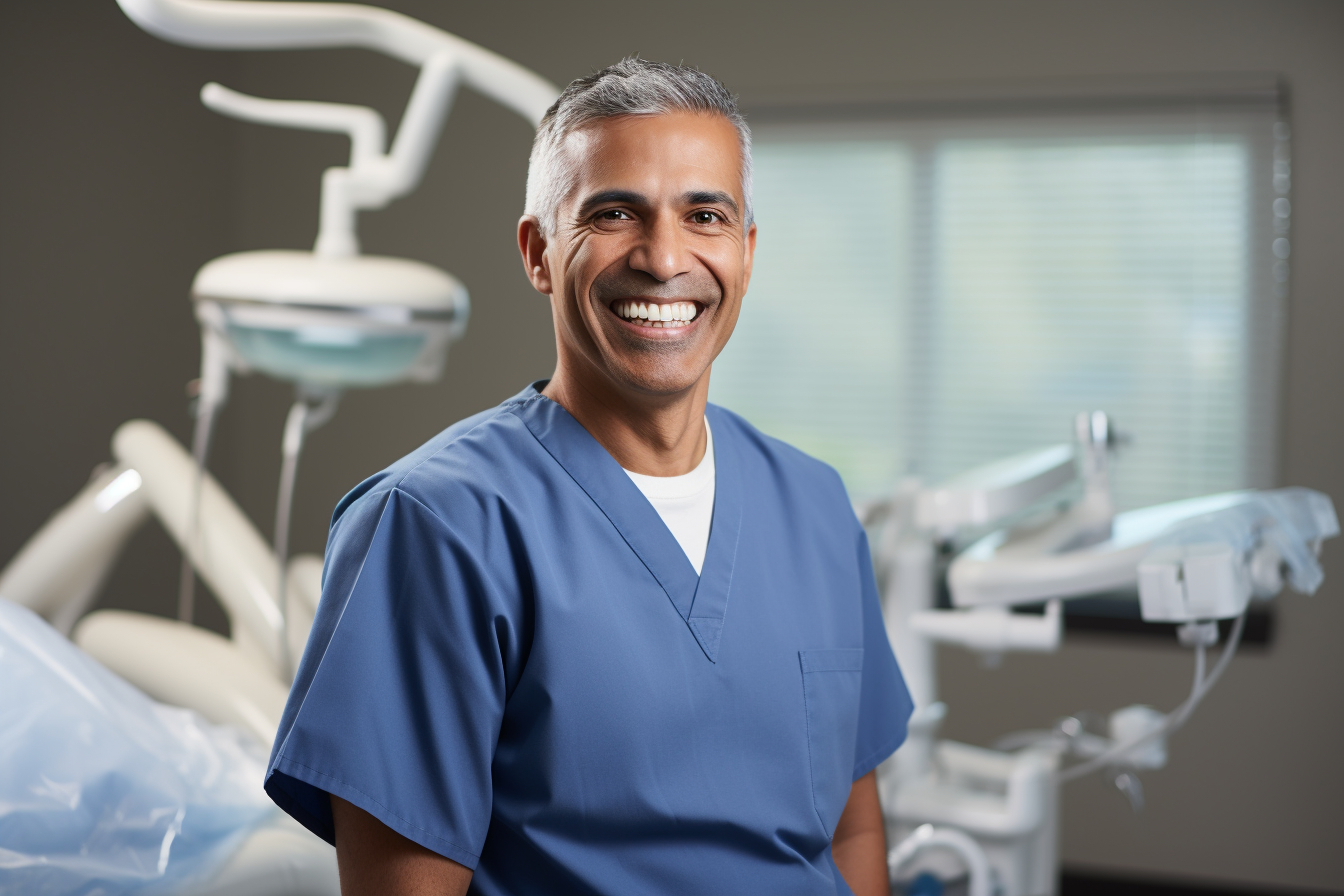
For the majority of residents who are neither Omani citizens nor government employees, dental services in Oman function predominantly on a private-pay basis. Although Oman maintains a well-established public health system, expats employed in the private sector are largely responsible for covering their own dental costs — whether directly out of pocket or via a private insurance plan that includes dental coverage. Private dental practices are plentiful, particularly across Muscat, and well-regarded clinics maintain impressively high standards of care.
| Item | Details |
|---|---|
| Public dental access for expats | Generally not available to private-sector expats; reserved mainly for Omani nationals and government employees (as of 2024) |
| Typical dental check-up / cleaning cost | From approximately OMR 10 at private clinics in Muscat (as of 2024 — verify with clinic) |
| Typical filling cost | Approximately OMR 20–25 at private clinics (as of 2024 — verify with clinic) |
| Dental implant cost | Approximately OMR 400–800+ per implant in Muscat (as of 2024 — verify with clinic) |
| Orthodontic braces (full course) | Approximately OMR 1,000–2,500 depending on brace type (as of 2024 — verify with clinic) |
| Regulatory body for dentists | Oman Medical Specialty Board (OMSB) and Ministry of Health (MOH) |
| Emergency ambulance number | 9999 (free to call) |
How the dental care system in Oman works — public, private, or mixed?
Oman’s healthcare landscape is structured around a two-tier model overseen by the Ministry of Health (MOH). Comprehensive, largely subsidised services are available to Omani nationals and certain defined groups through the public system, while public healthcare facilities are broadly reserved for citizens and government-sector workers. For the expatriate population, the private sector functions as the principal — and in many cases only — point of access.
Dentistry in particular sits firmly within the private sphere. Pharmaceutical services and the great majority of dental care are left almost entirely to private providers. This distinguishes Oman’s approach from countries such as France or Germany, where social insurance schemes subsidise at least basic dental treatment for all residents irrespective of their employment sector.
Private dental practices are spread across the country, with the highest concentration found in Muscat, Salalah, and Sohar. These clinics cover everything from routine preventive care to specialist and cosmetic procedures. The full spectrum includes routine check-ups, fillings, root canal therapy, orthodontic treatment, teeth whitening, and implants. Although costs at private clinics are higher than those at public hospitals, appointments are generally easier to obtain and waiting times tend to be considerably shorter.
Omani nationals and expatriates who hold passports from other Gulf Cooperation Council (GCC) member states are entitled to free public healthcare, encompassing primary care, specialist consultations, and the vast majority of medical treatments. Holders of a GCC passport may therefore be eligible for public dental services — but expatriates from outside the GCC who work in the private sector should expect to use and pay for private dental care.
How expats can find and register with a dentist in Oman
Oman’s private dental sector does not operate a mandatory patient registration system comparable to, for example, the NHS in the United Kingdom, where patients formally enrol with a dental practice. Instead, you simply contact a clinic, arrange an appointment, and attend. Most private practices in larger cities accept bookings online or by phone, and a number offer extended operating hours to accommodate residents who work standard daytime schedules.
Identifying a trustworthy clinic in urban areas is relatively uncomplicated. Helpful starting points include:
- The MOH’s Electronic Health Portal, which publishes a directory of licensed private healthcare facilities
- Expat community forums and city-specific social media groups for Muscat, Salalah, and Sohar — often the most candid and up-to-date sources of peer recommendations
- Your employer’s HR team, who may be able to supply a list of preferred clinics or insurance network providers
- Online platforms such as WhatClinic.com, which aggregate verified listings and patient reviews for dental practices across Oman
- Embassy or consular offices in Muscat, which sometimes hold informal referral lists of recommended healthcare practitioners
Oman Dental College (ODC) offers comprehensive oral and dental healthcare to all members of the public — both Omani and expatriate. The ODC’s Muscat clinic represents a more budget-friendly route to routine treatment, with procedures carried out by closely supervised dental students, a model common to dental school clinics worldwide.
When attending a private clinic for the first time, you will typically be asked to present your Omani residency card (Iqama), passport details, and — where applicable — your insurance card or policy number. Certain clinics have direct billing agreements with insurance companies, while others expect full payment at the time of treatment, with patients subsequently submitting claims to their insurer for reimbursement.
Whether dental treatment is covered by public healthcare or social security in Oman
For the overwhelming majority of expatriates employed in Oman’s private sector, public dental coverage simply does not apply. The MOH extends free universal healthcare to all Omani nationals and to expatriates working within the government sector; private-sector expat workers are largely expected to be covered by employer-provided insurance. Critically, however, there is no legal requirement for private-sector employers in Oman to provide health insurance to their expatriate staff.
Employers are not compelled by law to offer health coverage to non-national employees, though many choose to do so. Where this is not negotiable as part of an employment contract, expats are strongly advised to arrange their own private medical insurance. This differs from jurisdictions such as Singapore or Abu Dhabi in the UAE, where employer-funded health insurance for expatriate employees is a legal obligation.
Oman is progressively rolling out a mandatory insurance framework. The government is gradually implementing compulsory private health insurance for all expatriates under a programme called Dhamani; the basic plan commonly carries an annual benefit ceiling of OMR 3,000, which may prove insufficient for serious illness or extended care. Whether dental treatment falls within the scope of any mandatory policy will depend on the individual plan — check the current terms directly with your employer or insurer for the most accurate picture.
Even in cases where public dental facilities exist, access for non-national expatriates is restricted. While some government health facilities may provide basic dental services to expatriates for a fee, free care is not generally available to them. Routine check-ups, fillings, extractions, orthodontic treatment, and cosmetic procedures are almost exclusively delivered through — and paid for within — the private sector. The MOH website should be consulted for the latest updates on entitlements, as policy in this area is subject to ongoing change.
What dental treatment typically costs in Oman and how payment works
One of the more pleasant surprises for newcomers to Oman is how competitively priced dental care can be. Treatment costs are considerably lower than in many Western countries, even at clinics staffed by highly qualified practitioners. The figures below are drawn from publicly available clinic information and are intended as a general guide only — actual fees will vary according to the clinic, its location, and the complexity of the procedure. Always ask for a written treatment plan and a detailed cost breakdown before giving your consent to proceed.
| Procedure | Approximate cost (OMR) |
|---|---|
| Routine check-up / clean (scaling) | From OMR 10 |
| Filling (composite/amalgam) | OMR 20–25 |
| Orthodontic braces (full course) | OMR 1,000–2,500 depending on type |
| Single dental implant | OMR 400–800+ |
At Muscat clinics, a routine scale and polish starts from around OMR 10 — a procedure recommended every six months — while a standard filling runs approximately OMR 20–25, as of 2024. For more involved work, costs rise accordingly: a single dental implant in Muscat typically falls somewhere between OMR 400 and OMR 800 or beyond, depending on the clinic and the complexity of the case, while a full course of orthodontic braces may cost anywhere from OMR 1,000 to OMR 2,500 based on the type selected. These figures should be treated as approximations — fees are subject to change and can differ significantly between providers, so confirm current pricing with each clinic directly.
Payment at private dental clinics in Oman is ordinarily settled at the time of treatment, by cash, debit card, or credit card. Medical bills are generally expected to be cleared immediately. Where insurance cover applies, certain larger clinics operate direct billing arrangements with insurers, meaning you may owe little or nothing at the point of care. At other practices, you will pay upfront and then submit a reimbursement claim to your insurer — clarify which arrangement applies before your visit by checking your policy and contacting the clinic in advance.
It is worth noting that unpaid medical bills in Oman can carry serious consequences: those without adequate insurance or the means to settle outstanding fees may be prevented from departing the country until their accounts are cleared. Although this scenario most commonly arises in hospital contexts, it underscores the importance of maintaining appropriate healthcare coverage throughout your time in Oman.
Whether private health insurance covers dental treatment in Oman and if it’s worth having
For expatriates in Oman, private health insurance that includes a dental component is the most sensible and widely adopted means of managing dental expenditure. That said, dental coverage is not typically built into a standard health plan — it is most often offered as an optional add-on or rider that must be selected and paid for separately.
A significant number of health insurance policies available in Oman exclude dental care entirely, while others incorporate only limited provision. When comparing plans, it is important to understand the distinction between “basic dental” cover — which usually extends only to extractions and fillings — and “comprehensive dental” cover, which may include root canal treatment, crowns, and orthodontics. Cosmetic procedures such as teeth whitening or porcelain veneers are nearly always excluded regardless of the plan tier.
Among local insurers, National Life Insurance (NLGIC), Al Ahlia, Oman Insurance Company (OIC), Dhofar Insurance, and AXA Gulf are widely regarded providers offering individual, family, and group plans that can incorporate inpatient and outpatient care, dental and optical benefits, and maternity cover. International carriers including Allianz Care, Cigna Global, and Bupa also operate within Oman; Allianz, for instance, offers a dedicated Dental Plan as an add-on to its core Care product range.
If you are considering an internationally issued health insurance policy, confirm that your chosen Oman-based clinics will accept it before you commit. Important exclusions to scrutinise include pre-existing dental conditions (such as pre-existing decay, missing teeth, or orthodontic treatment already underway before the policy inception date), waiting periods applying to major restorative work, and annual benefit caps that may fall short of covering the full cost of implants or braces. Securing insurance before relocating to Oman is advisable to sidestep waiting periods related to pre-existing conditions.
Given that dental costs in Oman are modest by global standards, some expatriates — especially those who are younger and in good dental health — elect to self-fund routine preventive and restorative care, reserving insurance for major or unforeseen procedures. When evaluating a policy, ensure that it addresses a broad range of healthcare needs, including dental, mental health, and emergency treatment.
The standard and quality of dental care in Oman
At reputable private clinics — particularly those in Muscat — the quality of dental care available in Oman is generally excellent. Private facilities typically offer well-equipped, comfortable environments, and clinical staff commonly communicate proficiently in English. A large proportion of dentists working in the private sector have completed their training abroad, with qualifications and clinical experience gained at institutions and practices in countries including India, Jordan, Egypt, the UK, Ireland, and the Philippines.
Every dentist practising in Oman — whether a national or an internationally trained professional — must hold a valid licence issued by the MOH, and those seeking to practise as specialists must additionally pass the examinations administered by the Oman Medical Specialty Board (OMSB). OMSB General Dentist licensing assessments draw heavily on operative dentistry, oral surgery, and endodontics. This rigorous credentialling framework ensures that all licensed dental practitioners in Oman have demonstrated a defined level of competence before being permitted to treat patients.
Historically, Oman’s dental workforce was heavily reliant on expatriate practitioners — with only around 24% of dentists being Omani nationals as recently as 2010. Since Oman Dental College (ODC) began graduating its first domestic cohorts in 2012, the number of Omani-trained dentists entering the profession each year has grown steadily. ODC delivers a five-year BDS programme conducted largely in English and remains the country’s sole dental school.
Specialist dental care — covering orthodontics, prosthodontics, endodontics, oral surgery, periodontics, and paediatric dentistry — is available at larger multi-specialty clinics in Muscat. Some of the capital’s most established dental centres house multiple specialists under one roof, supported by advanced technology such as 3D cone-beam imaging and in-house CAD/CAM milling units for same-day crown fabrication, enabling complex treatment to be completed in fewer visits. Beyond Muscat and the other major cities, specialist provision becomes considerably thinner, and patients requiring anything other than routine treatment may need to travel to the capital.
Language and practical considerations expats should know before seeing a dentist in Oman
At private dental clinics in Oman, language is generally far less of an obstacle than in many other countries. Clinical staff at private institutions routinely speak English, and numerous Muscat clinics additionally employ team members fluent in Hindi, Urdu, Tagalog, Malayalam, and other languages widely spoken among the expatriate population. Some practices openly promote their multilingual capabilities — it is worth enquiring when you call to book if communication in a particular language is important to you.
Arabic is Oman’s official language and is used extensively in public signage and official documentation. In practice, however, the working language at private dental clinics — particularly those in expat-dense neighbourhoods of Muscat such as Al Qurum, Shatti Al Qurm, and Madinat Al Sultan Qaboos — tends to default to English as standard. At reputable private practices, consent forms and written treatment plans are typically made available in both Arabic and English.
Culturally, the clinical environment at dental practices in Oman broadly mirrors professional norms familiar to most expatriates. Courtesy and a degree of modesty are the expected standards of conduct. Female patients who would prefer to be treated by a female dentist will usually find this easy to arrange at larger Muscat clinics, though availability may be more limited at smaller practices or in rural settings. It is always advisable to raise this preference at the time of booking.
Other practical points worth keeping in mind: verify in advance whether your insurer has a direct billing agreement with your chosen clinic; bring your Iqama and insurance card to every appointment; and always request an itemised receipt covering all procedures and charges — this documentation is essential if you need to submit an insurance reimbursement claim. If you live outside Muscat and need to travel there for specialist treatment involving multiple appointments, factor accommodation costs into your planning from the outset.
What expats should do in a dental emergency in Oman
In the event of a dental emergency — whether severe toothache, a dental abscess, a fractured tooth, or trauma affecting the mouth — the most practical first course of action for most expatriates is to contact a private dental clinic directly. Many private practices in Muscat set aside slots for urgent cases or keep extended opening hours, and some will accept walk-in emergency patients.
If the pain or injury occurs outside clinic hours, or if the emergency involves significant trauma to the face or jaw, attending the emergency department of a private hospital is a reasonable alternative. Where a life-threatening emergency or serious facial injury is involved, expatriates can also be taken to a public hospital for necessary intervention or surgical care. For any situation that is potentially life-threatening, dial Oman’s emergency services on 9999. In major urban areas, ambulance response times are typically under 30 minutes, subject to prevailing traffic conditions.
For dental emergencies that are painful but not life-threatening — a dislodged crown, a chipped or broken tooth, or severe but stable toothache — telephoning a private clinic directly is usually the fastest way to receive appropriate care. Keep your regular clinic’s contact number saved in your phone alongside their opening hours. Local expat community groups can be a useful resource for identifying clinics known to offer out-of-hours or same-day emergency services.
Regarding costs, emergency dental consultations at private clinics are billed at standard private rates or at a premium depending on the time of attendance. Private dental treatment can be significant in cost, and payment is typically expected immediately, reinforcing the importance of maintaining adequate health insurance coverage while living in Oman. Review your policy to confirm whether emergency dental treatment is included and whether pre-authorisation is required before attending. Hospitals in Oman may retain your passport and identification documents until discharge and outstanding bills are settled.
The following steps outline a practical approach to managing a dental emergency in Oman:
- Evaluate the severity: If the emergency involves serious facial or jaw trauma, uncontrolled bleeding, or any compromise to breathing, call 9999 without delay.
- Call your regular dental clinic first: Most private practices can fit urgent cases in at short notice; describe your symptoms clearly when you call so staff can prioritise accordingly.
- Identify a nearby private hospital emergency department: If your usual clinic is closed or unavailable, a hospital emergency department can manage acute pain and arrange an onward referral to a dental specialist.
- Notify your insurer: Contact your health insurance provider as promptly as the situation allows. Certain policies require advance authorisation or prompt notification when emergency treatment is sought.
- Carry your identification and insurance documents: Take your Iqama, passport, and insurance card with you to the clinic or hospital.
- Obtain an itemised receipt: Request comprehensive written documentation of all procedures performed and all costs charged — you will need this to support any reimbursement claim.
Frequently asked questions about dental care in Oman
Do expats get free dental care in Oman?
In most cases, no. Free public dental services in Oman are reserved for Omani nationals and, under certain conditions, for expatriates employed directly by the Omani government or holding passports from other GCC states. Expatriates working in the private sector are expected to cover their own dental costs, either by paying privately or through health insurance that includes a dental component. Some government-run health facilities may provide basic dental treatment to expatriates for a fee, but this is the exception rather than any established norm.
Is dental treatment expensive in Oman?
Compared with many Western countries, dental treatment at private clinics in Oman is relatively inexpensive. As of 2024, a routine scale and clean starts from approximately OMR 10, and a standard filling costs around OMR 20–25 at Muscat practices. More complex procedures such as dental implants typically range from OMR 400 to OMR 800 or more per tooth. Fees vary between clinics and between regions, so it is always advisable to request a written cost estimate before commencing any treatment.
How do I find a dentist in Oman who speaks English?
The majority of private dental clinics in Muscat and other principal cities carry out consultations in English as a matter of routine, given that much of the dental workforce has trained internationally. You can enquire about the languages spoken at a clinic when making your booking. Expat community forums and groups — especially those oriented towards Muscat residents — are also a reliable channel for personal recommendations of English-speaking dental practitioners.
Does my employer’s health insurance cover dental treatment in Oman?
This varies entirely depending on the terms of your individual policy. Many basic employer-provided health plans in Oman do not include dental cover, or limit it to emergency extractions only. Review your policy schedule thoroughly and ask your employer’s HR team for a complete list of covered benefits. If dental treatment is not included, explore the option of adding a dental rider or taking out a supplementary dental policy through one of the insurers active in the Omani market.
Are there dental specialists available in Oman, or only general dentists?
Specialist dental services — encompassing orthodontics, endodontics, prosthodontics, periodontics, oral surgery, and paediatric dentistry — are available at larger multi-specialty clinics concentrated primarily in Muscat. Outside the capital and major cities, specialist access becomes noticeably limited, and referral to a Muscat-based practice may be necessary. All specialist dentists practising in Oman are required to hold both MOH licensure and OMSB certification.
What is the Oman Medical Specialty Board and why does it matter for patients?
The Oman Medical Specialty Board (OMSB) is the body responsible for establishing and assessing standards of specialist medical and dental practice throughout Oman. In conjunction with the Ministry of Health, it ensures that both domestic and internationally trained practitioners meet clearly defined competency benchmarks before receiving a licence to treat patients. For patients, this provides assurance that any licensed specialist dentist in Oman has successfully completed a credible and rigorous assessment process.
Can I use international health insurance at dental clinics in Oman?
Many well-established private dental clinics in Muscat accept major international health insurance plans, though the availability of direct billing arrangements differs from clinic to clinic. Some practices require you to pay the full fee at the time of treatment and then seek reimbursement from your insurer independently. Before your appointment, confirm the payment and billing arrangements with both the clinic and your insurance provider, and ensure you carry your insurance card and relevant policy documentation. Pre-authorisation may be required for more substantial procedures.
What should I do if I need urgent dental treatment outside normal clinic hours in Oman?
If you need emergency dental care outside regular hours, the first step is to call your usual clinic — many have an out-of-hours contact number or can advise you on the most appropriate next step. If the clinic cannot help, the emergency department of a nearby private hospital can provide initial pain relief and arrange a specialist referral. For serious facial trauma or any condition that may be life-threatening, contact the emergency services immediately on 9999. Make sure to inform your insurer as soon as the situation allows, and retain all receipts and treatment documentation to support any subsequent reimbursement claim.
Latest: Expat Focus International Healthcare Update June 2026 →