
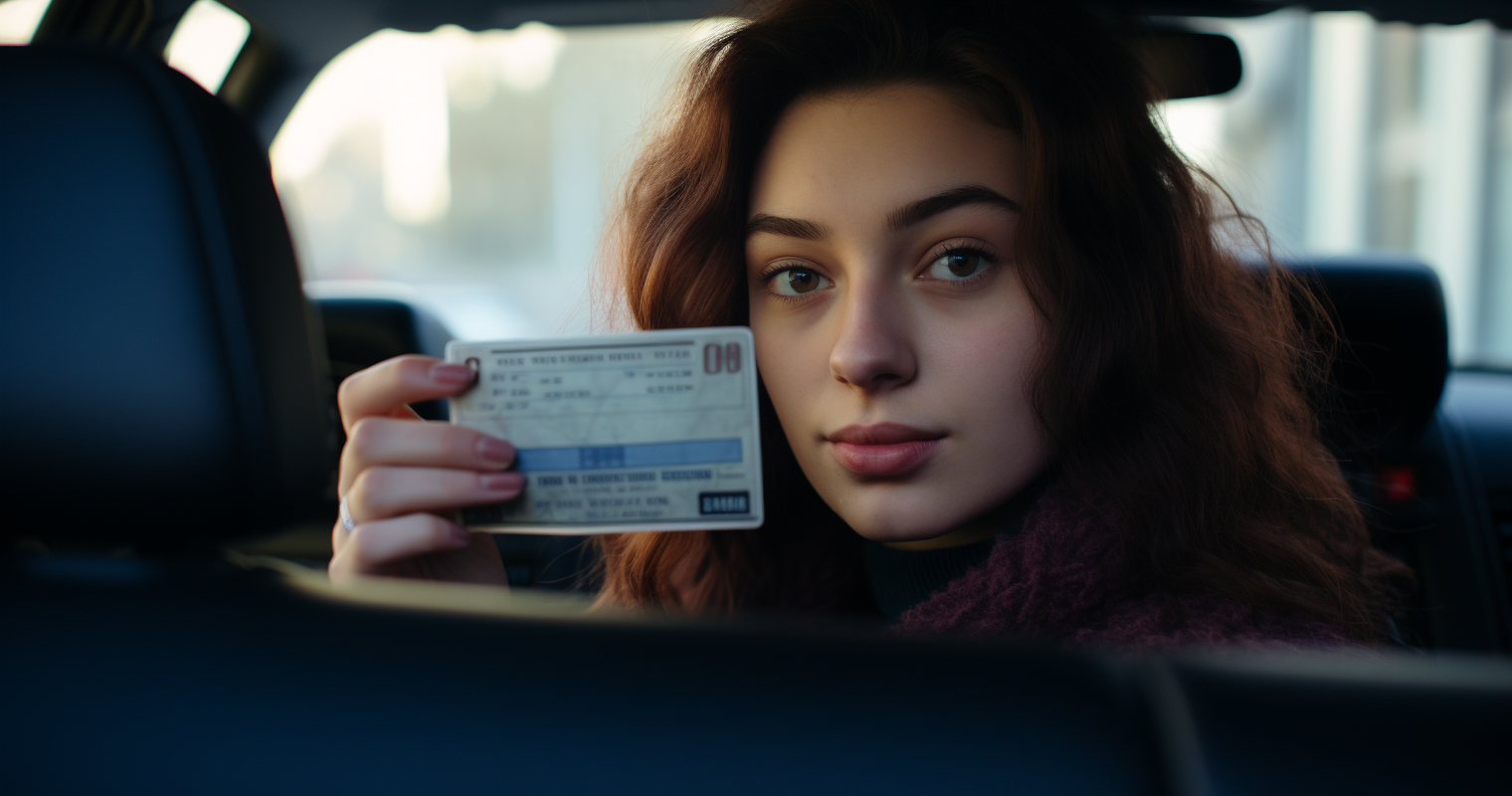
Expats who want to drive in Belgium need to familiarise themselves with two separate sets of rules, depending on whether their licence was issued within or outside the EU/EEA. Those holding an EU/EEA licence can typically continue using it without any immediate obligation to swap it, whereas non-EU licence holders are given a 185-day window from the date of their Belgian registration to either exchange their existing licence or acquire a new Belgian one. In all cases, applications are processed through your local municipal office.
| Item | Details |
|---|---|
| Grace period for non-EU licence holders | 185 days from date of registration in Belgium (as of 2025) |
| EU/EEA licence holders | May drive on existing licence until it expires; exchange mandatory if licence has no expiry date, within 2 years of registration |
| Licence exchange fee (approx.) | €25–€30 at most municipalities (as of 2025); fees vary by commune |
| Exchange processing time | Approximately 4–6 weeks (as of 2025) |
| Driving lessons (if test required) | Approx. €30–€50 per hour; full package approx. €1,200–€1,800 (as of 2025) |
| Belgian plastic card licence validity | 10 years (as of 2025) |
Can foreign nationals drive in Belgium on their home country licence, and for how long?
The rules governing the use of a foreign driving licence in Belgium vary considerably based on whether that licence was issued by an EU/EEA member state or by a country outside that bloc. The legal framework treats European and non-European licences in fundamentally different ways, and identifying which category applies to you is the critical first step for any newcomer intending to drive in Belgium.
EU and EEA licence holders: Holders of a valid driving licence from another European national authority are legally permitted to drive on Belgian public roads. Upon relocating to Belgium, there is generally no requirement to exchange your licence straight away — it remains valid for driving purposes for as long as it has not expired. The EEA encompasses all EU member states as well as Norway, Iceland, and Liechtenstein. Because member states recognise one another’s licences on a mutual basis, there is no obligation to swap a European driving licence for a Belgian one while the licence’s validity period remains active.
One notable exception applies to EU/EEA holders whose licence carries no expiry date: in such cases, the swap to a Belgian licence is compulsory and must be completed within two years of establishing residency in Belgium, at which point a new official validity period will be assigned to the Belgian licence issued in its place. It is also recommended that you register your licence with your local municipality when you first arrive. You may only ever hold one European national driving licence at any given time.
Non-EU/EEA licence holders: During the 185 days following registration in Belgium as a resident, you are permitted to drive using a valid and recognised foreign licence — either one issued in compliance with the Vienna or Geneva Conventions, or a valid non-European national driving licence that Belgium recognises. Non-European licences do not benefit from automatic recognition in Belgium. This 185-day grace period is specifically for registered residents; tourists visiting for a short period are generally able to drive on a valid foreign licence throughout the duration of their stay.
Once those 185 days have elapsed, driving on a non-EU licence is no longer permitted and converting to a Belgian licence becomes a legal requirement. Additionally, if your foreign licence is approaching its expiry date, you should schedule an appointment at your municipality before it expires — even if your 185-day period has not yet run out.
Does Belgium have licence exchange agreements with other countries?
Belgium acknowledges driving licences from a number of non-EU nations, either by virtue of the Vienna or Geneva Conventions on road traffic, or through individual bilateral arrangements. The FPS Mobility and Transport publishes two lists: one covering EU and EEA countries whose licences can be exchanged in Belgium, and another covering non-EU and non-EEA countries whose licences are also recognised for exchange purposes.
Exchange arrangements are in place with certain countries and territories — among them Australia, the United States, and Canada — allowing a valid licence to be swapped for a Belgian one, provided the exchange is requested within the first year of lawful residency in Belgium. However, for the US and Canada, these arrangements may operate at the level of individual states or provinces rather than at a national level. For holders of Canadian licences, the recognition status depends on the province: some have concluded a driver’s licence recognition agreement with Belgium, while others have not. Likewise, an American resident in Belgium holding a US licence must exchange it, but this is only possible if the particular US state concerned has a reciprocal arrangement with Belgium. If no such arrangement exists, the holder may be required to sit a theory and/or practical test in Belgium.
The Belgian government has entered into a mutual recognition arrangement with Australia, which means that Australian residents in Belgium are able to exchange their Australian licences for Belgian ones at their local commune without being required to pass either a theoretical or a practical driving examination.
Some licences, while recognised in principle, cannot be exchanged in practice — for instance, because Belgium has not received an official specimen of that particular foreign licence. In such circumstances, the licence holder must go through the standard test process to obtain a Belgian licence. Nationals of non-EU countries with which Belgium has no exchange agreement are obliged to pass both a theory and a practical driving test. However, they are exempt from the apprenticeship period — the waiting time of more than three months between passing the theory exam and sitting the practical test — if their driving licence has been authenticated by the Belgian police.
The definitive and up-to-date list of recognised non-EU countries is maintained by the Federal Public Service (FPS) Mobility and Transport. It is always advisable to check this official source directly before relying on any exchange arrangement, as the list can change over time.
How do you exchange or convert a foreign driving licence in Belgium?
For a foreign licence to be eligible for exchange into a Belgian one, it must be recognised by Belgium, must still be valid, must have been obtained before the holder registered as a resident in Belgium, and must be authentic. The exchange application must be lodged at the municipality in which the applicant is registered. Unlike systems in some other countries where a single centralised authority manages all exchanges, Belgium’s approach is decentralised: your local commune serves as the primary administrative contact. Procedures can vary to some degree between communes, so checking directly with your own municipality beforehand is advisable.
The non-European licence in question must have been issued at a time when the holder had not been registered in Belgium for a period of at least 185 days. Only the date of original issue, replacement, renewal, or first issuance is used as the relevant reference point. This rule prevents someone from using a licence issued after arriving in Belgium as the basis for an exchange.
The step-by-step exchange process is as follows:
- Check your eligibility: Verify that your country of licence issuance appears on Belgium’s list of recognised non-EU countries and that your licence was obtained prior to your Belgian registration. Consult the FPS Mobility and Transport website for the most current version of this list.
- Book an appointment: Because each exchange case is assessed individually and the process can be complex, you are required to visit the driving licence department at your municipal office in person and by prior appointment. Your application must be submitted at the municipality where you are registered as a resident.
- Prepare your documents: You will generally need your valid foreign driving licence, proof of Belgian residency registration, an identity document or passport, and a recent passport-sized photograph. In certain circumstances, further supporting documents may be required — such as a translation by an accredited sworn translator or a foreign passport. If you share the nationality of the country that issued your licence, no proof of prior residence there is needed. If your nationality differs from the issuing country, you must demonstrate that you resided in that country for a minimum of 185 days during the year your licence was issued, using supporting documents such as utility bills, tenancy agreements, employment contracts, or payslips.
- Attend the appointment and submit your licence: Your foreign licence will be forwarded to the police for authentication. Once authentication is confirmed, the municipal office will notify you that you may proceed with the exchange. The exchange cannot take place until a positive authentication result has been received from the relevant police service. If the police have doubts about the validity of the licence and provide reasons for those doubts, the exchange may be declined.
- Surrender your original licence: Your foreign licence will be kept by the commune. Australian licence holders, for example, must hand over their Australian licence, which is then held at the commune and may be reclaimed upon permanently leaving Belgium. This retention practice is standard for the vast majority of exchange situations.
- Order your Belgian licence: Once the authentication process is complete, you may order your Belgian driving licence, either by booking an appointment online or by attending the counter of the relevant administrative centre.
- Wait for your licence: A new Belgian licence is not issued on the spot. Processing typically takes several weeks to a few months, with an estimated timeframe of approximately 4 to 6 weeks.
Costs: Each municipality sets its own fee for issuing a driving licence, with an average cost of around €25 (as of 2025). Registering an EU driving licence is free of charge, while exchanging a non-Belgian licence costs approximately €30 (as of 2025). Charges differ between communes, so confirm the current rate with your local municipality.
If your licence is written in a non-Roman script — such as Arabic, Japanese, or Cyrillic — an International Driving Permit or an official translation into a recognised language may be required when driving in Belgium. A sworn translation by a certified translator may also be necessary as part of the exchange procedure itself.
How do you apply for a driving licence in Belgium from scratch?
If you do not hold a recognised foreign licence, or if your licence cannot be exchanged because Belgium has no agreement with the country that issued it, you will need to earn a Belgian driving licence by completing the full testing procedure. This involves passing both a theory examination and a practical driving test, which are designed to assess your knowledge of Belgian road traffic rules and your ability to operate a vehicle safely.
The theory examination can be taken in Dutch (in Flanders and Brussels), in French (in Wallonia and Brussels), or with the assistance of a sworn interpreter in German or English. This multilingual provision makes the test accessible to a broad range of expats, though thorough preparation using Belgian road traffic regulations is still essential regardless of the language chosen.
To gain the necessary driving skills, you may choose between practising independently on a provisional driving licence or enrolling at a recognised driving school. For most adult expats, attending an accredited driving school is the most practical option.
The key stages of the process are:
- Apply for a provisional (learner) licence: Submit your application for a provisional licence at your local municipality. The minimum age requirement for driving a car in Belgium is 18 years.
- Pass the theory exam: Study Belgian road traffic legislation thoroughly and book your theory test at an approved examination centre. The test is offered in several languages as described above.
- Complete your practical training: As of 1 March 2024, the minimum practice period was extended, and candidates must accumulate at least 5 months of driving on a provisional licence before becoming eligible to sit the practical test. If you hold a supervised learner licence (M18), you must be accompanied by a qualified supervising driver. Completing tuition at a driving school also satisfies this requirement.
- Pass the practical exam: Arrange your practical driving test at an accredited test centre. The examiner will evaluate your vehicle handling, road safety awareness, and capacity to drive independently.
- Apply for your full licence: Once you have passed the practical test, submit your application for a full driving licence at your municipality.
- Attend a follow-up session: Belgium’s graduated licensing system requires you to attend a follow-up session between 6 and 9 months after receiving your full licence. This session forms part of the country’s post-licence driver development framework.
Costs: Driving lessons generally cost between €30 and €50 per hour (as of 2025). A complete package covering both theory and practical components at a driving school may cost anywhere from approximately €1,200 to €1,800 (as of 2025), though these figures vary across schools and regions. Always request an itemised breakdown of costs from your chosen school and refer to the FPS Mobility and Transport website for up-to-date official examination fees.
Expats who hold an unrecognised foreign licence that has nevertheless been authenticated by the Belgian police are exempt from the apprenticeship waiting period that normally separates the theory and practical tests. This exemption can meaningfully reduce the total time needed to obtain a Belgian licence.
How do you renew a driving licence in Belgium?
Belgium issues all new and renewed driving licences in a plastic credit-card format. In contrast to the old paper-format licences that carried no expiry date, the modern plastic card licences are valid for a period of 10 years. All Belgian paper driving licences must be converted to the bank card model by 2033, meaning that holders of older-style paper licences will need to make this transition within that deadline.
Depending on the circumstances, renewal requests can be submitted either online or at the municipal counter. While the validity period varies by vehicle category, the maximum duration for a Belgian driving licence is 10 years. You are required to proactively request renewal no later than three months before the expiry date. Belgium does not dispatch automatic renewal reminders, so tracking your licence’s expiry date is entirely your own responsibility.
Renewals are handled at your local municipality, following the same process as the original application. If your licence has been lost, it can be ordered directly through the BelDrive online platform. If your licence has been stolen, you must file a theft report with the police to obtain a certificate showing your licence number, following which you can make an in-person appointment at the municipal counter to order a replacement.
For expats who have exchanged a foreign licence for a Belgian one, the renewal process is identical to that for any other Belgian licence holder — there is no differentiation based on nationality when it comes to renewals. Once you have exchanged your original foreign licence for a local Belgian one, you become subject to Belgian rules on matters such as validity periods and medical requirements. Belgium does not currently mandate a routine medical examination for standard licence renewals in most vehicle categories, although certain professional categories may attract additional requirements. Always confirm the latest renewal requirements with your municipality or the FPS Mobility and Transport ahead of your renewal date.
Renewal fees are set at the municipal level and are broadly comparable to the exchange fees described elsewhere in this article. Each commune sets its own charge, so check with your local municipality for the current amount. As of 2025, typical municipal fees for licence issuance are in the range of €25–€30, though this should be confirmed directly with your own commune.
Is an International Driving Permit valid in Belgium?
Belgium recognises the International Driving Permit (IDP). An IDP is a document that facilitates driving in countries where your home country driving licence might not otherwise be accepted. As a signatory to both the 1949 Geneva Convention and the 1968 Vienna Convention on road traffic, Belgium accepts IDPs issued under either framework.
It is essential to understand that an IDP is not a self-contained document. It is valid only when presented alongside a domestic driving licence and functions as a certified translation of that licence. Should you be stopped by a law enforcement officer, both your domestic licence and your IDP must be produced together. An IDP does not replace a valid driving licence, and you must carry your original domestic licence with you whenever you drive in Belgium.
An IDP is especially valuable when a national licence is printed in a non-Roman script. If your domestic licence uses a non-Roman alphabet — such as Arabic, Japanese, or Cyrillic characters — an IDP or an official translation is required when driving in Belgium. In such cases, the IDP acts as a multilingual translation document, enabling Belgian authorities to read and verify the details of your licence.
Regarding validity: an IDP issued under the 1949 Convention is valid for a maximum of one year from the date of issue, while an IDP issued under the 1968 Vienna Convention is valid for up to three years. However, in all cases, the IDP cannot remain valid beyond the expiry date of the underlying domestic driving licence.
For those who are relocating permanently or staying for an extended period, it is important to understand the limits of an IDP’s usefulness. While it may serve as a practical short-term measure, a person who takes up employment and/or residency in another country is expected to comply with local licensing laws. In Belgium, this means that although the IDP can be a helpful tool during the 185-day grace period, it does not override the legal obligation to exchange or obtain a Belgian licence once you become a registered resident.
What are the penalties for driving licence offences in Belgium?
Belgium enforces its motoring laws rigorously, and penalties for violations can be considerable. Offenders — whether residents or visitors — may face fines, penalty points, suspension of their driving privileges, or even imprisonment. This includes anyone who continues to drive on an expired or unexchanged foreign licence.
Driving without a valid licence in Belgium constitutes a criminal offence under the Belgian Road Traffic Act (Loi relative à la Police de la Circulation Routière). The offence can attract a monetary fine, and in more serious cases a court may impose a period of disqualification from driving or a suspended custodial sentence. Driving on a foreign licence that has expired — particularly after the 185-day grace period has passed — is treated in much the same way as driving with no licence at all, and Belgian police have the authority to seize and impound the vehicle involved.
Belgium operates a penalty point system (known in French as the “permis à points” system). Points are deducted from a starting total each time a traffic offence is committed, and losing all points results in the forfeiture of the driving licence. Drivers are also required to have their original licence with them at all times when driving; failing to produce it when asked by police is itself a punishable offence, even if the licence itself is perfectly valid.
Specific fine amounts for driving licence offences are established in Belgian legislation and are revised periodically. As of 2025, fines for driving without a valid licence can amount to several hundred euros, and aggravating factors may increase the penalties further. Because fine levels and penalty thresholds are subject to change through legislation, always verify the current schedule with the FPS Mobility and Transport or a qualified Belgian legal adviser before drawing conclusions about your particular circumstances.
A particular risk for expats is unintentionally continuing to use a non-EU licence after the 185-day deadline has elapsed. Once that deadline passes, the exchange to a Belgian driving licence is mandatory, and driving on the non-EU licence is no longer legally permitted. Beginning the exchange process well in advance of this cutoff is strongly recommended to ensure there is no gap in your legal entitlement to drive.
Which government departments or agencies handle driving licences in Belgium?
The administration of driving licences in Belgium is shared between federal and local authorities. This may feel unfamiliar to those accustomed to a single national licensing body, but understanding which organisation is responsible for what will help you navigate the system effectively.
Federal Public Service (FPS) Mobility and Transport — SPF Mobilité et Transports / FOD Mobiliteit en Vervoer: This federal body is the principal authority for driving licence policy, the recognition of foreign licences, and the maintenance of the lists of countries with which Belgium has exchange arrangements. The Federal Public Service Mobility and Transport is responsible for the issuance and renewal of driving licences in Belgium. Its website is the authoritative reference point for all official driving licence information. Visit: mobilit.belgium.be. The FPS can also be reached by telephone at +32 (0)2 277 31 11.
The FPS Mobility and Transport’s Foreign Driving Licences Department is located at: City Atrium, Vooruitgangstraat 56, 1210 Brussels.
Your local municipality (commune/gemeente): All licence exchange applications, EU licence registrations, and new Belgian licence applications must be submitted at the driving licence service desk of the municipality in which you are registered as a resident. Whether you are registering an EU licence, converting a non-EU licence, or starting the process from scratch, your local commune is the direct point of contact. Because the process is handled individually and can be complex, visits must be made in person and by prior appointment. Municipal websites for major cities include:
- City of Brussels (Brussels-Capitale)
- City of Leuven — Foreign driving licence information
- Antwerp, Ghent, Liège, and other cities all have their own municipal driving licence departments — search your commune’s website for “rijbewijs” (Dutch) or “permis de conduire” (French).
Belgian police (police fédérale / federale politie): The police play a key role in authenticating foreign licences during the exchange process. The exchange of a foreign licence can only proceed once the relevant police service has positively authenticated it.
BelDrive (online portal): Registered Belgian licence holders who have lost their licence can request a replacement directly online through BelDrive, the official Belgian digital platform for driving licence administration.
Official driving test centres (GOCA / CARA): Both theory and practical examinations are conducted at accredited examination centres. GOCA (Groupement des Organismes d’Inspection de l’Automobile) operates test facilities across Belgium. Information on finding your nearest official test centre is available through the FPS Mobility and Transport website.
Frequently asked questions
Can I drive in Belgium with a non-EU licence as a tourist?
Tourists who have not registered as residents in Belgium are generally permitted to drive on a valid foreign licence for the duration of a short visit. During the first 185 days following registration in Belgium as a resident, you may also drive using a valid recognised international driving licence (issued under the Vienna or Geneva Conventions) or a valid recognised non-European national driving licence. If your licence is printed in a non-Roman script, you should carry an IDP or an official translation alongside it at all times.
Do I need to retake my driving test in Belgium?
This depends on where your licence was issued. If your country of licence issuance has a mutual recognition agreement with Belgium — as Australia does, for example — you can exchange your licence for a Belgian one without sitting either a theory or a practical examination. Nationals of countries with which Belgium has no such agreement are required to pass both a theory and a practical test to obtain a Belgian licence. The FPS Mobility and Transport website maintains the current list of recognised countries.
How long does it take to get a Belgian driving licence through exchange?
Exchanging a foreign driving licence typically takes approximately 4 to 6 weeks, though in some cases — particularly where additional document checks or police authentication steps are involved — the process may take several months. It is strongly advisable to begin the exchange well before the 185-day deadline to avoid any interruption to your legal right to drive.
Will I have to surrender my original foreign licence when exchanging it in Belgium?
Yes, in most cases. Your foreign licence is retained by the municipality as part of the standard exchange procedure. For Australian licence holders, for instance, the original licence is held at the commune and may be retrieved upon permanently departing Belgium. The same general principle applies in most exchange situations — confirm the specific terms for your licence with your local commune.
Can I drive in Belgium with a US driving licence?
A valid US licence may be used for short visits to Belgium of up to 185 days as a tourist. However, once you become a registered resident, you are required to exchange your US licence for a Belgian one — and this is only possible if your particular US state has a reciprocal agreement with Belgium. If your state does not, you may need to sit a theory and/or practical driving test. Check with the US Embassy in Brussels or your local Belgian commune for the current position regarding your specific state.
How long is a Belgian driving licence valid?
The plastic card driving licence is valid for 10 years. Although validity periods vary by vehicle category, the maximum duration for any Belgian licence is 10 years. Renewal must be requested proactively and no later than 3 months before the expiry date. Belgium does not issue automatic renewal reminders, so it is your own responsibility to keep track of when your licence expires.
What happens if I drive in Belgium after the 185-day grace period on a non-EU licence?
Once the 185-day period has expired, converting to a Belgian driving licence is a legal obligation, and continuing to use the non-EU licence is no longer permitted. Driving on an expired foreign licence is treated in the same way as driving without any licence at all — a criminal offence under Belgian law that can result in substantial fines, vehicle impoundment, or disqualification from driving. Starting the exchange process promptly is the best way to avoid finding yourself in this situation.
Which official website should I consult for driving licence information in Belgium?
The main official reference is the Federal Public Service Mobility and Transport (FPS Mobility) at mobilit.belgium.be. This site publishes the authoritative lists of recognised foreign licences, exchange conditions, and links to regional resources. Your local municipal website is also essential for booking appointments and for details of the fees and procedures specific to your commune, which may vary somewhat from one municipality to another.