

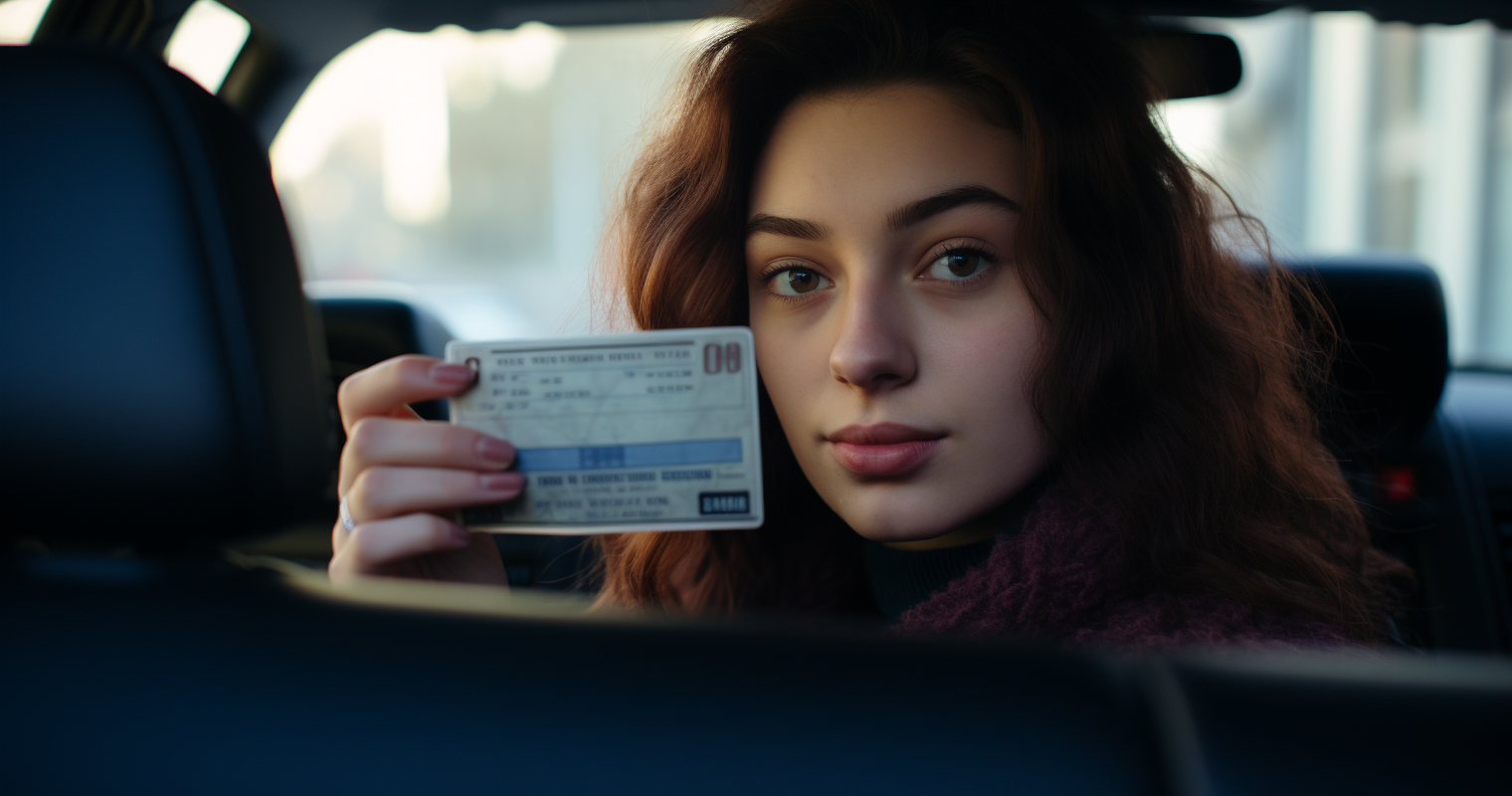
Foreign nationals residing in the Netherlands are permitted to drive on their home country licence for a defined period — a maximum of 185 days for those holding non-EU/EFTA licences, or up to 15 years for EU/EFTA licence holders. Beyond these limits, a valid Dutch rijbewijs is required. Whether you can swap your existing licence without undergoing any testing, or must complete the full Dutch theory and practical exams via the CBR, depends on both your country of origin and your residency circumstances.
| Item | Details |
|---|---|
| Non-EU/EFTA licence validity | 185 days from date of registration as a resident (as of 2025) |
| EU/EFTA licence validity | Up to 15 years from issue date for categories AM, A, B, BE (as of 2025) |
| Exchange fee (municipality) | Approximately €40–€70, varies per municipality (as of 2025) |
| CBR theory exam fee (category B) | €48.00 (as of 2024) |
| CBR practical exam fee (category B) | €138.50 (as of 2025) |
| Dutch driving licence validity | 10 years (5 years if aged 65 or over) (as of 2025) |
| Exchange processing time | Approximately 15 working days (as of 2025) |
Can foreign nationals drive in the Netherlands on their home country licence, and for how long?
How long you may legally drive on a foreign licence in the Netherlands depends on where that licence was issued and whether you are present as a visitor or have formally registered as a resident. Tourists and those on short-term visits may generally use a valid, recognisable foreign licence throughout their stay without restriction.
If your driving licence was issued by a country within the European Union (EU) or the European Free Trade Association (EFTA) and you are now resident in the Netherlands, you may continue driving on that licence for up to 15 years from its original date of issue. This applies to categories AM, A1, A2, A, B, and BE.
For categories C1, C, D1, D, C1E, CE, D1E, and DE, the permitted period is a maximum of five years from the date of issue. It is also important to note that if your driving licence was originally obtained in another EU/EFTA country during a time when you were already living in the Netherlands, that licence cannot lawfully be used to drive in the Netherlands.
Holders of a valid driving licence issued outside the EU/EFTA may use that licence for the first 185 days following their move to the Netherlands. Once that window closes, only a Dutch driving licence permits you to drive. The 185-day countdown begins from the date you register in the Dutch personal records database (BRP), not from the date of your arrival in the country.
Once those 185 days have elapsed and you have not yet obtained a Dutch driving licence, driving is no longer permitted — even if an exchange application is already in progress. It is therefore critical to begin the exchange procedure well in advance of this deadline.
Does the Netherlands have licence exchange agreements with other countries?
The Netherlands both acknowledges the automatic right to exchange EU/EFTA licences and maintains a series of bilateral arrangements with non-EU nations. The scope and applicable categories differ considerably from one country to another, so always check your specific situation on the official RDW website before submitting any application.
Licences issued by EU or European Economic Area (EU/EEA) member states can be exchanged for a Dutch licence, and holders may also continue using them for up to 15 years from the date of issue, whether or not they are resident in the Netherlands.
For licences from outside the EU, the Netherlands has concluded bilateral exchange arrangements with a number of countries, allowing a straight swap without the need to sit a driving test, as long as the licence is current and valid. These arrangements are frequently limited to particular licence categories — most commonly the car (Category B) category only.
Countries holding special exchange agreements with the Netherlands include: Monaco, Gibraltar, Jersey, Guernsey, Isle of Man, Aruba, Netherlands Antilles (Curaçao, Sint Maarten, Bonaire, Saba, and Sint Eustatius), and Switzerland (Category B); Israel, Taiwan, and Andorra (Category B); Japan (Categories A and B); Singapore (Categories A, B, and C); South Korea (Category B); the Canadian provinces of Quebec and Alberta (Category B, Class 5); and Great Britain (all categories, with Category BE only if a separate exam has been passed).
If your licence was issued by a country not included on the RDW list — for instance the United States — you cannot follow the standard exchange route unless you are eligible for the 30% tax ruling (see the exchange section below). The list of qualifying countries and exchangeable categories is subject to change, so always consult the current version on the official RDW website before proceeding.
A noteworthy alternative route also exists. Highly skilled migrants who qualify for the 30% ruling tax benefit may exchange their licence irrespective of which country issued it. Evidence of eligibility from the Dutch Tax Administration (Belastingdienst) must be provided. This entitlement extends equally to family members — partners or children — who are registered at the same address under the 30% ruling.
How do you exchange or convert a foreign driving licence in the Netherlands?
The licence exchange process in the Netherlands involves two bodies working in tandem: your local municipality (gemeente) and the national vehicle authority, the RDW. The gemeente serves as the point of submission and collection, while the RDW is the authority responsible for evaluating and approving the exchange. You cannot approach the RDW directly — all applications must be lodged through your local municipality.
Before starting, confirm that you meet the eligibility requirements. You must be registered as a resident in the Dutch personal records database (Basisregistratie Personen, BRP) if you intend to remain in the Netherlands for more than four months. Registration at your local municipal office (gemeente) is required, along with a permanent address and a BSN (citizen service number). Your foreign driving licence must be valid at the time of the exchange; expired licences will generally not be accepted, with limited exceptions for EU/EEA licence holders under specific conditions.
You must also be able to demonstrate that you lived in the country that issued your licence for a minimum of 185 days in the year in which it was issued. This requirement is frequently overlooked, yet it can disqualify what would otherwise appear to be a straightforward application.
The step-by-step process for exchanging your licence is as follows:
- Check your eligibility. Establish whether your country of origin has an exchange agreement with the Netherlands, or whether you qualify via the 30% ruling. Consult the RDW website for the current list of eligible countries and exchangeable categories.
- Complete a Health Declaration (Gezondheidsverklaring), if required. For non-EU/EFTA licence exchanges, a medical declaration is mandatory. This is submitted online via Mijn.cbr.nl using your DigiD. After completing the health-related questions, the declaration is typically approved on the same day and forwarded to you by email.
- Gather your documents. You will need: your valid foreign driving licence; a current passport or identity document; proof of BRP registration; a recent passport-sized photograph; your 30% ruling statement if applicable; and, where your licence is written in a non-Latin script (such as Japanese, Arabic, or Greek), a certified translation by a sworn interpreter. If the licence is not in Dutch, English, German, or French, a sworn translation is required.
- Book an appointment with your local municipality. Contact your local gemeente to arrange an appointment for submitting your exchange application. This cannot be done directly with the RDW.
- Attend your appointment and hand over your licence. Bring all required documents to your appointment and surrender your original foreign licence to the municipality. This licence will not be returned to you — it will be forwarded to the RDW, which returns it to the issuing country. Only the new Dutch licence will be issued to you.
- Pay the application fee. Complete the application form at the municipality and pay the applicable fee. The amount varies by municipality but typically falls within the range of €40 to €70. Amsterdam, for example, charges approximately €48 for a licence exchange (as of 2025).
- Wait for processing and collect your licence. Within approximately 15 working days you will receive a notification letter confirming that your Dutch driving licence is ready for collection at your municipality, normally after a further five working days.
One crucial point to bear in mind: from the moment you hand over your foreign licence until your Dutch licence is ready, you have no valid driving document and are therefore not permitted to drive. Unlike systems in some countries — for example, certain US states that issue a temporary paper licence during this transition period — the Netherlands provides no interim driving document whatsoever.
In total, costs typically range from around €90 to €150, comprising the municipality fee (approximately €48), the CBR health declaration fee (approximately €45), a passport photograph (approximately €10), and any translation fees required (€30–€100). Always verify the most up-to-date charges through official municipal and RDW sources.
How do you apply for a driving licence in the Netherlands from scratch?
If your foreign licence is not eligible for exchange — because your country has no arrangement with the Netherlands, because your licence has lapsed, or because you have never held one — you will need to obtain a Dutch driving licence through the full examination route administered by the CBR.
Those unable to exchange their foreign licence will need to sit both a theory and a practical driving test at the CBR. The CBR (Centraal Bureau Rijvaardigheid) is the body responsible for administering driving examinations in the Netherlands across all vehicle categories, including cars, mopeds, motorcycles, and heavy goods vehicles.
The process works as follows:
- Register with your municipality and obtain a BSN. You must be entered in the BRP and hold a valid BSN before the licensing process can begin.
- Complete a Health Declaration (Gezondheidsverklaring). Prior to sitting your practical exam, you are required to complete a health declaration covering vision, medication, and any condition that could affect your ability to drive safely. This is submitted via mijn.cbr.nl and costs €45.25 (2025 price).
- Take driving lessons at an accredited school. In the Netherlands, only certified driving instructors may provide tuition. A large number of driving schools operate throughout the country, and many offer lessons in English. The CBR website allows you to search for accredited instructors and view their students’ pass rates.
- Pass the theory exam. Theory tests are conducted in Dutch and English at 20 examination centres across the Netherlands. The computer-based test runs for 45 minutes and covers hazard perception (25 questions), traffic regulations (28 questions), and traffic understanding (12 questions). The theory exam fee for Category B (car) is €48.00 (as of 2024).
- Pass the practical driving exam. The practical test involves approximately 55 minutes of driving with an examiner. The practical car exam fee is €138.50 at CBR (as of 2025). Your driving instructor can submit the application for your practical exam on your behalf once both you and your instructor feel you are sufficiently prepared.
- Apply for your Dutch driving licence. Having passed both examinations, you apply for your licence at your local municipality. The licence itself costs €52.10 (as of 2025), and it is generally ready within five working days of your application.
If you pass the theory test, your practical driving test must be completed within 18 months. Failing to do so means you will need to retake the theory exam before you can proceed.
Obtaining a Dutch driving licence from scratch represents a considerable financial commitment. According to the CBR, the Netherlands ranks as the second most expensive country in the world in which to obtain a driving licence, with average costs of around €3,125. That said, expats who already have significant driving experience may find the total cost substantially lower, particularly if they pass all examinations on the first attempt. Depending on how much tuition is needed, total expenditure typically ranges between €750 and €3,500. Always refer to the CBR website for current fee schedules and to book examinations.
How do you renew a driving licence in the Netherlands?
A Dutch driving licence remains valid for 10 years, after which renewal is required at your local municipality. No new examination is necessary. Renewal can be completed either in person at the gemeente or online via the RDW website, depending on what your municipality supports.
There is no upper age limit on driving in the Netherlands. However, for anyone aged 65 or over, each renewed licence is valid for five years rather than ten. This shorter cycle applies universally to all licence holders in this age group, regardless of nationality. This is broadly consistent with renewal frameworks in other European countries such as France and Germany, where periodic renewal is standard but re-testing is not.
To renew, visit your municipality directly or, where the option is available, use the online renewal service via the RDW. The RDW website provides up-to-date information on which municipalities offer online renewal.
A Health Declaration is required when obtaining a driving licence for the first time, or when you need to demonstrate that you are medically fit to drive — for example, due to a medical condition or on account of your age. The CBR will determine whether an additional medical examination is needed; this is not always the case.
Expats should note that it is not possible to renew a foreign or EU/EEA driving licence in the Netherlands — a Dutch driving licence must be applied for via the RDW instead. Once you hold a Dutch rijbewijs, the renewal procedure is identical to that followed by any other Dutch licence holder. Current renewal fees are set by individual municipalities and can vary; check the RDW website for the most recent figures.
Is an International Driving Permit valid in the Netherlands?
An International Driving Permit (IDP) functions as an officially recognised translation of your national driving licence. It is a supplementary document only — it is not a licence in its own right and cannot serve as a replacement for one.
If the vehicle categories on your foreign driving licence are not designated by the letters A, B, C, D, or E, it is advisable to obtain an IDP alongside your national licence. This is especially relevant when your licence is issued in a script or language that Dutch officials may struggle to read.
It is important to understand that an international driving licence is purely an authenticated translation of your national licence and cannot itself be exchanged for a Dutch driving licence. If your intention is to eventually exchange your licence, the IDP plays no part in that process — it is your original national licence that must be presented.
The Netherlands recognises IDPs issued under both the 1949 and 1968 Vienna Conventions on Road Traffic. For tourists and temporary visitors using a foreign licence, an IDP offers useful supporting identification and helps clarify licence categories. For those who have taken up residence, however, the IDP is only a short-term convenience — it does not extend the 185-day validity period that applies to non-EU/EFTA licences, and it cannot be used as a substitute once that window has closed.
Residents should also be aware that an IDP is only valid when presented alongside the original national licence. Once you have surrendered your original licence to the municipality as part of the exchange process, the IDP ceases to be usable — and driving during this period is not permitted.
What are the penalties for driving licence offences in the Netherlands?
Dutch authorities treat driving licence compliance seriously, and there are well-defined consequences for driving without a valid licence, failing to exchange a foreign licence within the required timeframe, or breaching the relevant regulations in other ways. When stopped by police, you are required to produce a valid driving licence immediately.
Once the 185-day period has expired, driving without having exchanged your foreign licence for a Dutch one is unlawful and may result in administrative fines and confiscation of the licence. Furthermore, in the event of a collision, your insurance claims could be rejected entirely.
If you are stopped by police while driving, failure to present a valid licence may result in a fine. During the actual exchange process, the risk of being penalised is relatively low provided you comply with all traffic regulations. If you are stopped at a roadside check, officers can contact the RDW to confirm whether an exchange application has been submitted and whether a valid licence has been handed in. The likelihood of a fine in this situation is therefore limited, but not entirely absent — this is a risk each individual driver must weigh up personally.
The Netherlands operates a system of administrative fines (Wet administratiefrechtelijke handhaving verkeersvoorschriften, or WAHV) for most traffic violations, meaning that minor infractions result in fixed-penalty notices rather than court proceedings. More serious matters — such as repeated unlicensed driving or causing an accident while unlicensed — can lead to criminal prosecution, disqualification from driving, and substantial financial penalties. Current penalty amounts are set by central government and updated periodically; the official Public Prosecution Service (OM) and the Dutch police website publish current penalty schedules.
The insurance implications are equally significant. Provided you hold a valid driving licence and adequate insurance cover, you remain insured even if you are temporarily unable to present the licence when asked. However, driving on a licence that has expired or is otherwise invalid may completely void your insurance coverage, leaving you personally responsible for any damage or injury arising from an incident.
Which government departments or agencies handle driving licences in the Netherlands?
Responsibility for driving licences in the Netherlands is shared among several official bodies. Knowing which organisation handles each part of the process will help you navigate the system efficiently and direct your enquiries to the right place.
| Agency | Role | Website |
|---|---|---|
| RDW (Rijksdienst voor het Wegverkeer — Netherlands Vehicle Authority) | Issues, registers, and regulates driving licences; processes exchange applications forwarded by municipalities | rdw.nl/en |
| CBR (Centraal Bureau Rijvaardigheidsbewijzen — Central Office for Motor Vehicle Driver Testing) | Conducts theory and practical driving tests; processes Health Declarations (Gezondheidsverklaring) | cbr.nl |
| Gemeente (Local Municipality) | First point of contact for licence applications and exchanges; submits applications to RDW on your behalf | Your local gemeente website (varies by city) |
| Belastingdienst (Dutch Tax Administration) | Issues 30% ruling statements that enable licence exchange for eligible highly skilled migrants | belastingdienst.nl |
| Business.gov.nl | Official government portal with plain-language guidance on driving licence rules for residents and businesses | business.gov.nl |
The CBR (Centraal Bureau Rijvaardigheid) administers driving examinations across all vehicle categories in the Netherlands, covering cars, mopeds, motorcycles, and heavy goods vehicles. Its online portal, accessible at mijn.cbr.nl via DigiD, allows you to submit your Health Declaration, book your theory examination, and manage your practical test appointments.
For exchange applications, your local municipality collects your documentation and passes it on to the RDW for assessment and processing. Applications cannot be submitted to the RDW directly — the gemeente is the sole channel for this. Your local gemeente website will list available appointment slots and may specify any local variations in documentation requirements or fees.
The RDW operates a public information line and can be reached via its website for queries concerning licence validity and recognition. For those whose exchange eligibility rests on the 30% ruling, all enquiries about that benefit should be directed to the Belastingdienst; your employer’s HR department can typically assist with the application procedure.
Frequently asked questions
Can I drive in the Netherlands immediately after moving there with my non-EU licence?
Holders of a valid driving licence issued outside the EU/EFTA may use that licence for the first 185 days following their registration as a resident in the Netherlands. After this period, only a Dutch driving licence is legally valid. It is essential to begin the exchange process well before the 185-day window closes, since you are not permitted to drive at any point between surrendering your foreign licence and receiving your Dutch one.
Do I need to retake my driving test in the Netherlands?
This depends on where your licence was issued. Licences from EU/EEA countries can be exchanged for a Dutch licence without any retesting. Holders of licences from certain non-EU countries with bilateral agreements — including Japan, South Korea, Great Britain, and Singapore — can also exchange without sitting new tests. If your country has no agreement with the Netherlands and you do not qualify for the 30% ruling exchange route, you will be required to pass both the theory and practical examinations at the CBR.
How long does it take to get a Dutch driving licence through exchange?
The processing time for a foreign licence exchange is typically two to four weeks. The RDW’s official guideline is around 15 working days for processing, with a further few days required for licence card production and delivery. If a Health Declaration requires additional assessment by the CBR, the overall timeline may be extended.
Can I drive while my exchange application is being processed?
No. Once you have submitted your exchange application and surrendered your original licence, you are not permitted to drive until the Dutch licence is in your hands. No temporary driving document is issued during this period. Plan accordingly — make alternative transport arrangements or time your application carefully to minimise any disruption to your daily life.
What is the 30% ruling and how does it help with my driving licence?
The 30% ruling is a tax benefit available to qualifying highly skilled migrants working in the Netherlands. Those eligible for this benefit may exchange their driving licence for a Dutch one regardless of which country issued it, provided they submit proof of eligibility from the Dutch Tax Administration (Belastingdienst). This means that even licence holders from countries without a bilateral exchange agreement with the Netherlands — such as the United States, Australia, or Canada (outside Quebec and Alberta) — can exchange directly without sitting any Dutch driving examinations.
Will my original foreign driving licence be returned to me?
No. Your original foreign driving licence will be forwarded by the RDW to the country that originally issued it. You will not receive it back. If you subsequently need your original licence for travel or use in another country, you will have to apply for a replacement from the licensing authority in your home country.
How often do I need to renew my Dutch driving licence?
A Dutch driving licence is valid for 10 years and must be renewed at your municipality once it expires. No new examination is required. For those aged 65 or over, each renewed licence is valid for five years only. Depending on your municipality, renewal may be completed either in person or online through the RDW.
Is the theory test available in English?
Yes. Theory tests are conducted in both Dutch and English at 20 examination centres located across the Netherlands. It is also possible to arrange for an interpreter, though this must be organised in advance. Note that sitting the exam in English may carry a marginally higher fee than in Dutch — consult the CBR website for the current price difference.