
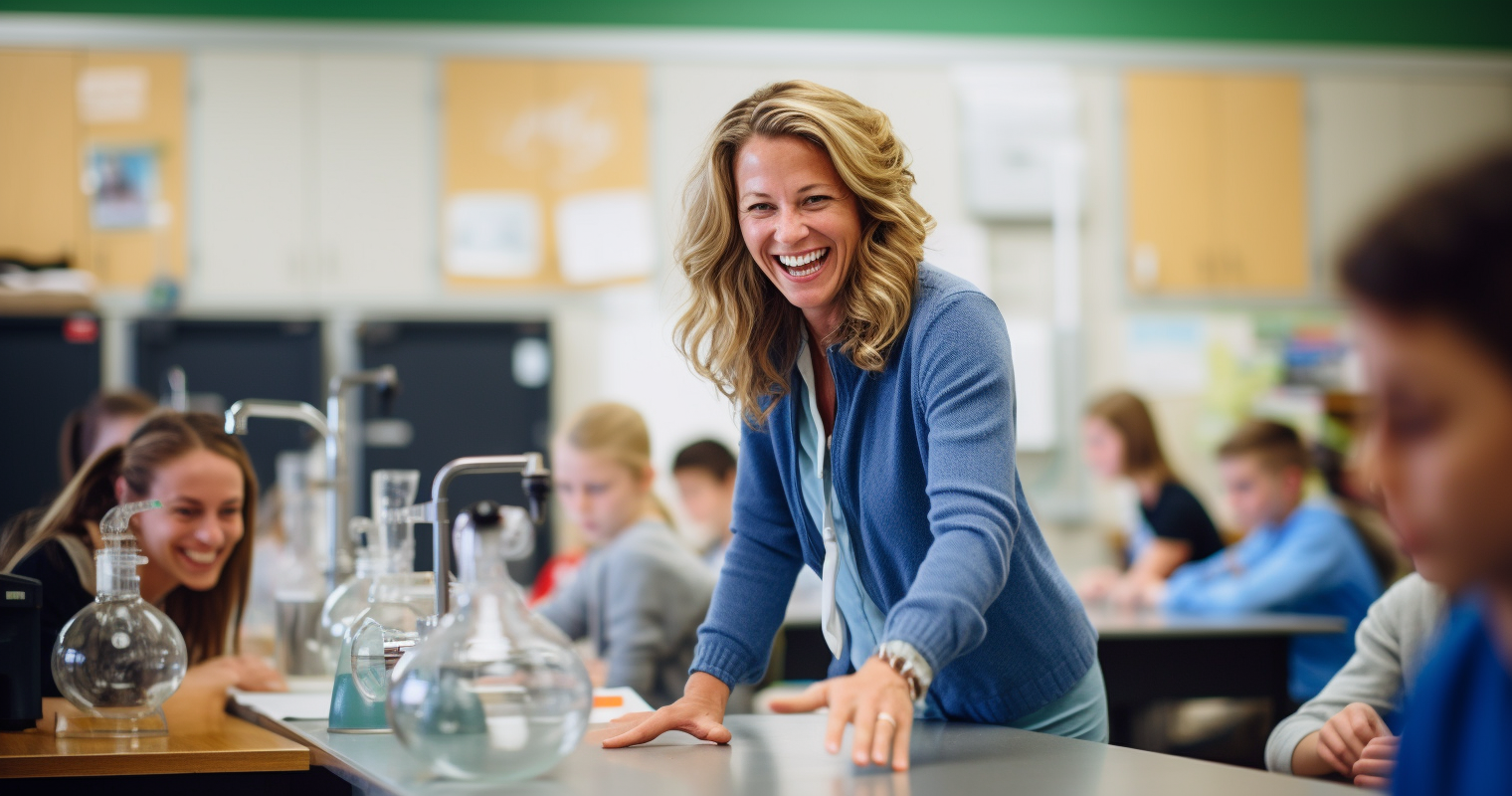
Barbados provides a highly regarded, publicly funded education system shaped by British traditions, offering free schooling from primary right through to university level. With a literacy rate exceeding 98%, a structured national curriculum leading to qualifications recognised across the region and beyond, and a selection of private and international school options, the island presents a welcoming and capable environment for expat families arriving with children.
| Item | Details |
|---|---|
| Compulsory education ages | 5 to 16 (as of 2025) |
| Literacy rate | Above 98% (as of 2025) |
| Primary school duration | Ages 4–11 (approx. 7 years) |
| Secondary school duration | Ages 11–18 (with compulsory attendance to 16) |
| State school tuition fees | Free at primary and secondary level (as of 2025) |
| Key international school | The Codrington School (IB World School); fees up to approx. US$22,660/year for senior levels (as of 2025–2026) |
| Academic year structure | Three terms: Sept–Dec, Jan–Apr, Apr–Jul (as of 2025–2026) |
| Main higher education institution | University of the West Indies (UWI), Cave Hill Campus |
How good is the education system in Barbados?
Barbados operates a school education system built along British lines, with tuition funded by the government from the earliest years through to university. This sustained investment in public education has yielded remarkable outcomes: literacy among young people and working-age adults exceeds 99%, with the figure dipping only marginally to 98.5% among older generations. These figures place Barbados among the most literate nations in the Caribbean and ahead of many developed countries in global comparisons.
As Barbados moves further into the twenty-first century, a series of significant educational reforms has focused on equipping the island to compete on equal terms in knowledge-based, skill-intensive global industries. The government has maintained a firm commitment to education spending. Beginning in 2000, a flagship initiative called the Education Sector Enhancement Programme (EduTech 2000) was launched — a USD$213 million project co-financed by the Government of Barbados, the Inter-American Development Bank, and the Caribbean Development Bank.
Quality assurance in higher education is overseen by the Barbados Accreditation Council (BAC), a statutory body established under Chapter 38A of the laws of Barbados. Operational since 2006, the BAC holds membership of the International Network for Quality Assurance Agencies in Higher Education and is recognised by the Council for Higher Education Accreditation. Barbados does not currently take part in the PISA (Programme for International Student Assessment), which is primarily designed for OECD member states, so direct performance comparisons of that kind are unavailable. Families seeking the most current assessments of educational standards are encouraged to consult the Ministry of Educational Transformation and UNESCO’s regional education reports.
The government continues to view educational investment as a driver of social, economic, and political development. For expat families, the system’s strong literacy outcomes, coherent curriculum, and steadily improving technology infrastructure offer a dependable foundation for their children’s schooling.
At what age is education compulsory in Barbados, and how is schooling structured by age?
Schooling is free and compulsory for all children between the ages of 5 and 16, and attendance requirements are actively enforced. In practice, many children begin their education before the age of 5 and continue well past 16 in pursuit of qualifications. The overall structure closely parallels the school systems of the UK and other Commonwealth nations, though secondary-level examinations are delivered through Caribbean-specific boards rather than those used in England or Australia.
The main stages of education are as follows:
- Early Childhood / Pre-Primary: Provision for young children typically begins from around age 3, encompassing both government-supported and privately run nursery and infant programmes. As of 2025, the regulation and quality assurance of this sector remains an active area of policy reform.
- Primary School: Children enter primary school at age 4 and continue through to age 11, at which point they have traditionally sat the Barbados Secondary School Entrance Examination (BSSEE) before moving on to secondary school.
- Secondary School: Secondary education covers ages 11 to 18. Attendance is legally required until the age of 16. Students follow a broad curriculum in the early secondary years before turning their focus towards examination preparation. Those who remain through to the final two years may sit the Caribbean Advanced Proficiency Examination, opening pathways to tertiary education.
It is important to note that Barbados is currently carrying out a substantial overhaul of its secondary education structure. Children completing primary school in 2025 are entering a newly established junior college model, with the BSSEE being phased out accordingly. Under the reform, secondary education is being reorganised into two stages — a Junior College of Excellence (broadly covering ages 12 to 14) and a Senior College of Excellence (ages 15 to 18) — beginning with the 2025 academic year. Since this transition is being rolled out in stages, families are strongly advised to check the latest details with the Ministry at mes.gov.bb before finalising any arrangements.
What types of schools are available in Barbados?
Families in Barbados can choose from state schools, private institutions, assisted schools, and home education arrangements. Understanding how these options differ is essential for making a well-informed decision on arrival.
Public (Government) Schools: State-run schools charge no tuition fees at either primary or secondary level. They follow the national curriculum and prepare students for Caribbean-based public examinations. Public schools are by far the most widely attended across the island and differ from one another in terms of academic profile and areas of specialism. An up-to-date list of public primary and secondary schools is maintained by the Ministry of Educational Transformation.
Private Schools: Unlike the state sector, private schools charge tuition fees that vary considerably depending on the institution and the year group. Private schools may follow the national Barbadian curriculum or offer internationally recognised programmes such as Cambridge International or the International Baccalaureate, and they frequently offer smaller classes and more tailored learning support. Some private schools operate according to religious principles — Providence School, for example, functions as a Christian institution.
Assisted Private Schools: A number of private schools receive a partial government subvention in return for meeting certain Ministry standards. These assisted schools typically charge lower fees than fully independent private schools, while retaining a degree of autonomy over their admissions procedures and curriculum choices.
Home Schooling: Home education is a recognised and lawful option in Barbados. The Ministry of Educational Transformation publishes the relevant process and application form on its website at mes.gov.bb. Families who wish to educate their children at home must register with the Ministry and demonstrate that their programme aligns with the required attainment standards for their child’s age.
What curriculum and qualifications do schools in Barbados follow?
Education in Barbados draws on the British model as its foundation, but students sit regional examinations rather than those used in England or other Commonwealth countries. While the structure and subject range will feel broadly familiar to anyone acquainted with Commonwealth education, the specific awarding bodies and credentials are Caribbean in origin.
There are three principal curriculum pathways in Barbados, and the school a child attends will determine which route they follow:
- Barbadian / Caribbean Curriculum: Aligned with Caribbean educational standards, this pathway prepares students for examinations set by the Caribbean Examinations Council (CXC). The Caribbean Secondary Education Certificate (CSEC) is the principal qualification at this level, broadly comparable in scope and standing to GCSEs or equivalent school-leaving certificates in other countries. Students sit CXC examinations that are analogous to GCE O-levels in structure and purpose.
- Cambridge International Curriculum: This pathway provides a British-aligned education leading to IGCSE and A-Level qualifications, which enjoy wide recognition among universities globally. The majority of schools in Barbados that offer this route follow the Cambridge International Education framework.
- International Baccalaureate (IB): The IB offers globally portable qualifications through its Primary Years, Middle Years, and Diploma Programmes. According to the IB organisation, one school in Barbados is officially authorised to offer the IB Diploma Programme.
Students who wish to progress to university after the age of 16 may sit the Caribbean Advanced Proficiency Examination (CAPE) — broadly equivalent to A-levels in level and purpose — or Cambridge A-levels, depending on which school they attend. A proposed Barbados National Secondary Diploma is also in development as part of the ongoing education reform process, intended to provide broader recognition of secondary attainment. The current status of this qualification should be verified directly with the Ministry.
What are typical school hours and holidays in Barbados?
Schools in Barbados operate on standard weekday schedules. Most primary and secondary schools open between 8:00am and 8:30am and close in the early afternoon, usually between 2:30pm and 3:30pm, though this varies slightly between schools and year groups. A break for lunch is built into the school day. A school meals programme has operated in government schools since 1963, providing nutritious meals to students — an initiative introduced by the late Prime Minister Errol Barrow that continues to the present day.
The academic year runs across three terms, with exact dates varying from one year to the next. As a reference, the Ministry of Education’s official 2025–2026 calendar designates Term 1 as running from 8 September to 11 December 2025, Term 2 from 6 January to 1 April 2026, and Term 3 from 21 April to 2 July 2026. Each inter-term break typically spans a few weeks, and a longer summer recess runs through July and August.
The official school calendar is published each year on the Ministry of Educational Transformation’s website at mes.gov.bb. Always confirm the precise dates with the school or Ministry directly, as they can shift slightly from year to year. Private and international schools may operate on schedules that differ slightly from the state system.
How do you enrol a child in school in Barbados?
The enrolment process varies between public and private schools, but in both cases it is strongly advisable to begin well ahead of your planned arrival date, especially if you are aiming for a September start to Term 1. Arriving at the beginning of the academic year reduces disruption to your child’s learning and improves the range of school options available to you.
Enrolling in a public school
- Contact the Ministry of Educational Transformation: The Ministry is responsible for managing placements at public schools. Reach them at mes.gov.bb or by telephone on (246) 535-0600 to initiate the process and identify a suitable school based on your child’s age and home address.
- Gather required documents: You will generally need your child’s birth certificate, proof of residence in Barbados (such as a rental agreement or a recent utility bill), school reports or transcripts from the previous school, up-to-date immunisation and vaccination records, and your child’s passport or another form of identification. Confirm the exact document requirements with the Ministry, as these may be updated.
- Submit the application: Primary school applications are submitted to the Ministry. Secondary school admissions have historically been tied to the BSSEE entrance examination, though this process is being reformed as of 2025. Contact the Ministry to confirm the current admissions arrangements.
- Await confirmation of placement: The Ministry will notify you of your child’s assigned school. Demand at popular schools can exceed capacity in some areas, so submitting your application as early as possible is highly recommended.
- Attend an induction or registration day: Once a place has been confirmed, the school will typically invite you to an orientation session to complete any remaining registration formalities in person.
Enrolling in a private or international school
- Research and shortlist schools: Identify institutions that suit your child’s age, curriculum preferences, and any particular learning needs. Most private schools publish their admissions criteria and fee structures on their own websites.
- Contact the school directly: Private schools manage their own admissions processes, which may include assessments or interviews. Providence School, for example, states that new applications must be accompanied by a processing fee, with a capital levy payable upon acceptance of a place.
- Submit documentation: Requirements are broadly similar to those for state schools: birth certificate, previous school records, proof of address, vaccination history, and passport.
- Confirm fees and contracts: Carefully review the school’s fee schedule and any contractual obligations before formally accepting the offer of a place.
For the most reliable and current guidance on enrolment procedures, always consult the Ministry of Educational Transformation directly. Processes and requirements are subject to change, and official Ministry guidance takes precedence over information from any other source.
What international schools are available in Barbados?
Barbados has a modest but well-established international school sector serving the expatriate community, returning Barbadian families, and those seeking qualifications with global portability. Internationally oriented institutions in Barbados typically offer pathways such as Cambridge International or the International Baccalaureate. Most schools of this type are concentrated in and around the St. Michael district and the southern and western coastal areas of the island.
The Codrington School is the island’s most prominent fully international school. It is an IB World School, listed by the IB as offering the Primary Years Programme (PYP), Middle Years Programme (MYP), and Diploma Programme (DP). Its official 2025–2026 fee documentation, quoted in US dollars, indicates that annual “Regular Fees” for non-Barbadian/CARICOM students reach approximately US$22,660 for MYP 1 through DP2 at the senior levels; fees for younger year groups are lower. Prospective families should request the full, current fee schedule directly from the school, as figures are revised each academic year.
Lockerbie College operates as a Cambridge pathway school, publishing 2025–2026 fee information in Barbados dollars (BBD) per term. It offers the Cambridge curriculum including IGCSE and AS/A Level options and is located in St. Michael. Contact the school directly for current per-term fee details.
Providence School is a private Christian institution that also incorporates internationally oriented content into its programme. The school states that new applications must include a processing fee and a one-time capital levy payable upon acceptance, with tuition rates varying by grade and division. Current fee schedules are available on the school’s website.
To identify accredited international schools in Barbados, the following directories are useful starting points:
- Council of International Schools (CIS) — a globally respected accreditation body for international schools
- International Baccalaureate (IB) school finder — a searchable directory of all authorised IB schools worldwide
- Cambridge International school finder — lists all Cambridge-affiliated schools by country
Always verify fees, curricula, and accreditation status with individual schools before making decisions. The fee figures cited above apply to the 2025–2026 academic year and must be confirmed directly with the relevant institution before any financial commitments are made.
What higher education options are available in Barbados?
Barbados offers a range of higher and further education institutions serving both domestic and international students. The principal institution is the University of the West Indies (UWI) at its Cave Hill Campus, situated five miles from Bridgetown. Widely regarded as the leading higher education provider in the Caribbean, Cave Hill offers undergraduate and postgraduate programmes across seven faculties, supported by numerous research centres and academic departments, with a catalogue of more than 350 programmes in total.
UWI Cave Hill accepts international students from a wide range of countries and provides full degree programmes at undergraduate and postgraduate level, as well as exchange and study abroad placements for a semester or academic year, and summer courses. Tuition fees differ between CARICOM nationals — whose home governments contribute to UWI’s funding model — and international students from outside the region. For the current fee schedule, consult the UWI Cave Hill student financing page, which releases a financial guide for international students at the start of each academic year.
Other government-operated tertiary institutions include the Barbados Community College, which provides Associate Degree programmes spanning academic, vocational, and technical disciplines; the Samuel Jackman Prescod Institute of Technology, which delivers technical and vocational training; and the Erdiston Teachers’ Training College, which trains educators at certificate and diploma level.
Barbados is also home to four offshore medical schools — the American University of Barbados, the American University of Integrated Sciences, Bridgetown International University of Medicine, and Ross University — as well as the Bellairs Institute, a teaching and research centre. UWI Cave Hill maintains academic partnerships with universities in the United States, Canada, Europe, and China.
The Barbados Vocational Board provides skills training for both employed and unemployed individuals, from short intensive courses through to five-year apprenticeships spanning a broad range of trades and disciplines. Fees for all institutions should be verified with the relevant institution directly or through the Higher Education Development Unit at hedu.edu.bb.
What should expat parents know about language of instruction in Barbados?
English is the language of instruction in all government schools and the vast majority of private schools in Barbados. Children who are already comfortable in English will encounter no language barrier in the classroom, and settling into the school environment is generally smooth from a linguistic standpoint. This stands in marked contrast to relocating to a country such as France or Portugal, where intensive language preparation before starting school would typically be necessary.
It is worth bearing in mind, however, that Barbadian English — sometimes referred to as Bajan Creole — is the language of everyday social life, and its cadences and expressions may initially sound unfamiliar to children used to other regional accents or dialects. Most children adjust naturally and quickly once they begin spending time with local peers, and this difference rarely poses a meaningful obstacle to learning or social integration.
For children who are not yet proficient in English — for instance, those from households where another language is primarily spoken — public schools do not at present offer structured English as an Additional Language (EAL) programmes of the kind found in certain European or Australian school systems. Parents in this situation should speak directly with the school about what support, if any, is available. International schools following the IB or Cambridge curricula may have greater experience working with multilingual learners and could be a more suitable fit.
Some private and international schools include instruction in additional languages or offer foreign language enrichment as part of their broader curriculum offer. The education reform programme has identified the aspiration that all students demonstrate competency in numeracy, literacy, and a foreign language as part of a redesigned secondary diploma. Families for whom bilingual or multilingual education is a priority should enquire specifically about language programmes when contacting individual schools.
What financial support or subsidies are available for education in Barbados?
Free education in Barbados was introduced by the late Prime Minister Errol Walton Barrow, who ensured that all children could access schooling regardless of their family’s financial circumstances. That commitment endures today. The government funds education from the earliest years of schooling right through to the tertiary level, an unusually expansive approach to public provision by international standards that includes university access.
There are no tuition fees at public primary schools, and the same principle holds at public secondary level. Expat families who are lawfully resident in Barbados — for example, those holding a work permit, a residency permit, or the Barbados Welcome Stamp visa — are generally able to access the state school system without paying tuition. Eligibility for free tertiary education at institutions such as UWI, however, may depend on residency status and nationality, since the UWI funding model is underpinned by contributions made by CARICOM governments on behalf of their nationals. International and non-CARICOM students are typically charged higher fees.
For families choosing private or international schooling, there is no general government subsidy available to expatriates. Assisted private schools do receive a partial government subvention that results in lower fees than those of fully independent institutions, but the benefit of this arrangement is primarily directed at Barbadian nationals. As of 2025, there are no publicly confirmed tax relief mechanisms for private school fees — families should verify the current tax position with a local accountant or the Barbados Revenue Authority.
The Ministry publishes information on scholarships and student loans, though these are primarily targeted at Barbadian nationals and CARICOM citizens. It is still worth checking current availability at mes.gov.bb. For the most up-to-date guidance on financial entitlements, contact the Ministry of Educational Transformation directly at [email protected] or on (246) 535-0600.
Frequently asked questions
Can my child join a Barbados state school mid-year?
In most cases, yes — enrolment at a public school outside the usual September start is possible, subject to the availability of places. Get in touch with the Ministry of Educational Transformation at mes.gov.bb as early as you can to check capacity at schools close to your home address. That said, beginning at the start of Term 1 in September is always the preferred option, as it minimises disruption to your child’s education and gives them the best chance of settling in smoothly.
Are foreign school qualifications recognised in Barbados?
Whether foreign qualifications are recognised depends on the type of credential and the stage of education. For school-age children entering the public system, placement decisions are typically based on age and demonstrated attainment rather than a direct match of qualifications. For admission to degree programmes at UWI Cave Hill, internationally recognised credentials such as A-levels, IB diplomas, and equivalent national school-leaving certificates are generally accepted — entry requirements for individual programmes can be checked at cavehill.uwi.edu. Professional qualifications may require assessment by the Barbados Accreditation Council (BAC).
Do children need to speak Barbadian English before starting school?
Instruction in state schools and most private schools is delivered in English, so children who are already English speakers will face no formal language barrier. Adjusting to local accents and colloquial expressions may take a short period of time, but most children find their footing quickly through day-to-day contact with classmates. The state school system does not currently provide structured EAL (English as an Additional Language) support, so parents of children whose first language is not English should enquire directly with the school about what assistance may be available.
What childcare options exist for children under school age?
Early childhood care and education is provided through a combination of government-supported nurseries and privately operated day-care centres and nursery schools. The regulatory framework and quality standards for this sector are currently undergoing reform in Barbados. For a list of registered early childhood facilities in your area, contact the Ministry of Educational Transformation or your local parish council. Fees and available places vary significantly between providers, so direct enquiries with individual nurseries are recommended.
Can expat adults study at the University of the West Indies, Cave Hill?
UWI Cave Hill accepts international students from many countries and offers undergraduate and postgraduate degrees and diplomas, semester-long exchange placements, and short courses. Students from outside CARICOM member countries are charged higher tuition fees than nationals from the contributing Caribbean states. Full details of the admissions process, available programmes, and the current international fee schedule (updated each academic year) are available at cavehill.uwi.edu.
Are there waiting lists for popular public secondary schools?
Historically, the BSSEE (11-Plus) entrance examination determined secondary school placements, meaning that the most academically selective schools were effectively competitive and required high scores for entry. From 2025, this examination is being phased out as part of the government’s wider education reform programme, with a new profiling and placement approach being introduced in its place. Families should contact the Ministry of Educational Transformation directly to confirm the current admissions arrangements, as the transition is still being implemented.
What vocational or technical training is available for young people and adults?
The Barbados Vocational Board delivers skills training for both employed and unemployed individuals, covering everything from short introductory courses to five-year apprenticeships across a wide range of trades and disciplines. The Samuel Jackman Prescod Institute of Technology similarly offers technical and vocational training with the goal of developing a highly skilled workforce. Both institutions are open to residents of Barbados. Current course offerings and entry requirements should be verified directly with each institution.
Is home schooling legal and practical in Barbados?
Yes, home schooling is a lawfully recognised option within the Barbados education framework. The Ministry of Educational Transformation provides guidance on the process together with an application form on its website at mes.gov.bb. Families must formally register their home education programme with the Ministry and demonstrate that it meets the attainment standards appropriate to their child’s age group. It is advisable to contact the Ministry before beginning any home education arrangement to ensure full compliance with current legal requirements.