
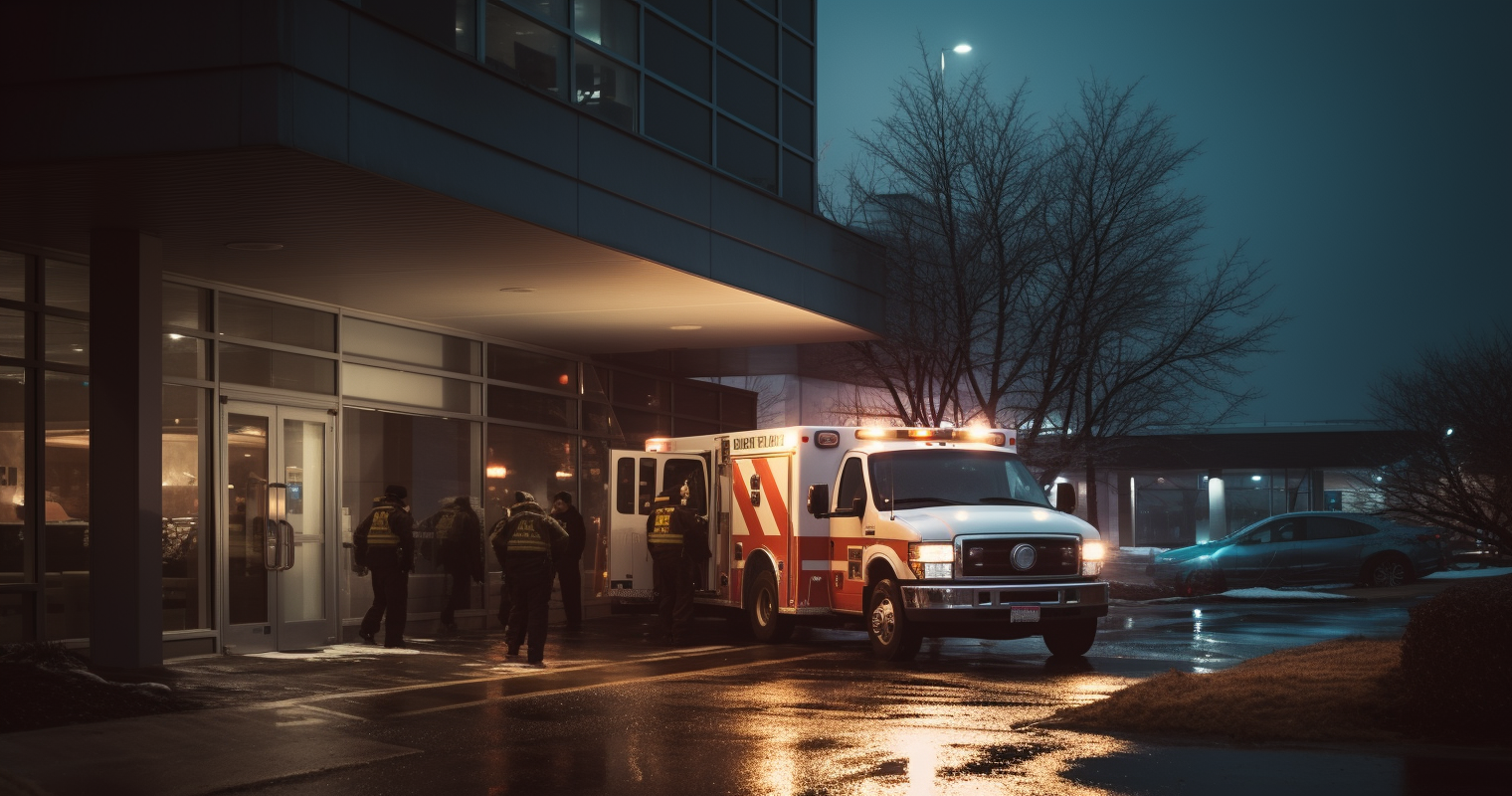
In Antigua and Barbuda, the main emergency number is 911 (also 999), which provides access to police, fire, and ambulance services. Dedicated direct lines also exist for the ambulance service and the coast guard. Emergency care is available at the public hospital, but it is not generally provided free of charge to non-residents — taking out comprehensive travel or health insurance before you arrive is strongly advised.
| Item | Details |
|---|---|
| Primary emergency number | 911 or 999 (police, fire, ambulance) — as of 2025 |
| Ambulance direct line | +1 (268) 462-0251 — verify with official sources |
| National hospital (public) | Sir Lester Bird Medical Centre (formerly Mount St. John’s Medical Centre), St. John’s — +1 (268) 484-2700 |
| Emergency treatment costs | Not generally free for non-residents; upfront payment or insurance typically expected |
| Hurricane season | June to November; peak risk mid-August to mid-September |
| Disaster management agency | National Office of Disaster Services (NODS) — +1 (268) 462-4206 |
What is the single emergency number in Antigua and Barbuda, and does it cover all services?
The numbers 911 and 999 both serve as primary emergency contact numbers in Antigua and Barbuda. Both are toll-free and reachable from landlines and mobile phones anywhere across the islands. The dual-number approach will be recognisable to people familiar with the UK’s 999 system or the 911 system used across North America — and in Antigua and Barbuda, either number will work interchangeably.
Calling 911 or 999 connects you to police and fire response. For search and rescue operations, you may also call (268) 562-1234 or use VHF Channel 16 if you are at sea. The ambulance service has a dedicated direct number at (268) 462-0251, and the Coast Guard can be reached on (268) 462-0671 or via Channel 16. These numbers are understood to be accurate as of 2025, but you should always confirm them through official sources before depending on them in an emergency.
Calls to 911 provide access to police, fire, and ambulance services and can be made at no cost from any telephone, including mobile phones with no credit remaining. Saving both 911 and 999 in your phone in advance ensures you can summon help regardless of which number you recall under pressure.
How do you call for emergency medical assistance in Antigua and Barbuda?
The Antigua and Barbuda Emergency Medical Services (ABEMS) is the organisation responsible for delivering urgent pre-hospital care and stabilisation for serious illness and injuries, and for transporting patients to definitive medical care. ABEMS responds at the scene to those requiring urgent intervention and, where necessary, arranges transfer to a higher level of care such as the Emergency Room at the Sir Lester Bird Medical Centre.
ABEMS can be activated by members of the public, healthcare facilities, other emergency services, businesses, and official bodies through an emergency telephone line that routes callers to a control centre, which then dispatches the appropriate resource. The number to call is 911. If you prefer to contact the ambulance service directly, the dedicated line is +1 (268) 462-0251.
When you place the call, provide your location as precisely as possible, describe the nature of the incident, and indicate how many people are involved. Unlike countries where GPS-integrated dispatch is highly developed, communicating a precise address or nearby landmarks is especially important in Antigua and Barbuda, as rural and coastal areas may have limited street signage. Do not hang up until the operator tells you it is safe to do so.
What should you do in a mental health crisis in Antigua and Barbuda?
Antigua and Barbuda does not currently have a nationally publicised dedicated mental health emergency hotline equivalent to crisis lines found in many other countries. If someone is in immediate danger as a result of a mental health emergency, calling 911 or 999 remains the correct first action — police and ambulance responders can assist with getting the individual to appropriate professional care.
The Mental Health Unit at the Sir Lester Bird Medical Centre provides psychiatric care, counselling, and therapeutic services for patients experiencing conditions including depression, anxiety, and schizophrenia. In an acute crisis, attending the Emergency Department at the main hospital directly is a practical option; staff there can carry out an initial assessment and arrange a referral to psychiatric services as needed.
The Belmont Clinic is a private psychiatric facility offering both inpatient and outpatient mental health services. It provides a calm setting for the treatment of a range of psychological conditions, with an emphasis on holistic care. For non-urgent mental health concerns, contacting a GP or a private clinic in the first instance is advisable. Expats should be aware that access to specialist mental health services may be more restricted than in countries with large urban health networks, and it is worth identifying relevant contacts before any crisis occurs.
Where can you go for emergency medical treatment in Antigua and Barbuda?
The Sir Lester Bird Medical Centre — formerly known as Mount St. John’s Medical Centre — is the country’s foremost healthcare institution and functions as the national referral hospital. This 185-bed facility delivers a broad range of services, including emergency care, surgical procedures, and specialist treatments. It is the primary destination for serious emergencies occurring on the main island of Antigua.
The hospital runs a round-the-clock emergency service, managing a wide spectrum of acute presentations including accidents, strokes, cardiac events, and other urgent medical situations. Its Emergency Department is equipped to handle trauma and provide immediate intervention. The hospital is situated on Michael’s Mount in St. John’s; the main telephone number is +1 (268) 484-2700.
A smaller satellite facility serves Barbuda, with eight beds available. The Codrington Medical Facility is the principal healthcare centre on Barbuda, offering essential medical services and emergency stabilisation prior to transfer to Antigua when more advanced care is required.
For private care, the Adelin Medical Centre operates on a 24-hour basis and provides services spanning general medicine, ENT, ophthalmology, obstetrics, gynaecology, paediatrics, endoscopic surgery, orthopaedics, dentistry, diagnostic imaging, and physiotherapy. The country is divided into six medical districts, each with its own medical officer, and health centres are situated within three kilometres of every major settlement for primary care needs. Where possible, call ahead to confirm that a facility is able to manage your specific condition.
Is emergency medical treatment free in Antigua and Barbuda, or is there a charge?
Healthcare in Antigua and Barbuda is delivered through a combination of public and private providers. The government funds public services through taxation and social contributions, while private providers offer more specialised options at greater expense. Unlike a fully tax-funded universal model — such as the National Health Service in the United Kingdom, where emergency treatment is free at the point of use for everyone — Antigua and Barbuda does not offer universally free emergency care to visitors or temporary residents.
Serious medical problems that require hospitalisation or medical evacuation can result in costs running into thousands of dollars. Physicians and hospitals frequently expect immediate cash payment for services. That said, charges at the public hospital are considerably lower than equivalent costs in the United States or Western Europe, meaning that a brief emergency consultation may not produce a catastrophic bill — though complex treatment, surgery, or medical repatriation can escalate costs rapidly.
Antigua and Barbuda operates a network of 25 community health facilities alongside the single public hospital. Both nationals and expats who hold Antigua permanent residency are able to access primary healthcare through this network, which is staffed using a team-based care model. Short-term visitors and tourists without residency status should plan to pay for any treatment received and should not assume that emergency care will be provided at no cost.
Do expats need travel or health insurance to access emergency care?
All expats and visitors to Antigua and Barbuda are strongly advised to take out comprehensive travel or international health insurance before arrival. People who travel abroad without insurance and then encounter a medical emergency frequently face severe financial hardship. Receiving medical treatment and hospital care in a foreign country can be enormously expensive, and arranging a medical evacuation back to your home country can cost in excess of $50,000.
The Sir Lester Bird Medical Centre works with a range of insurance providers, but it is important to confirm with your own insurer that the treatment you require is covered under your policy. Not all international insurance plans are automatically accepted, so carrying your policy documentation and contacting your insurer promptly after receiving emergency care is essential.
Your home country’s embassy may be able to help you locate appropriate medical services, notify family members or friends, and in some cases facilitate the transfer of funds from home — but the responsibility for settling hospital and medical bills lies entirely with you. If you arrive at a hospital without insurance or means of payment, you are unlikely to be turned away in a genuine emergency, but you should expect to receive a bill and be pursued for outstanding amounts. Selecting a policy that includes medical evacuation cover is particularly important, as some advanced treatments — including complex cancer care, organ transplantation, or highly specialised procedures — may not be available locally, and patients may need to be referred to hospitals in larger countries.
Are there bilateral health agreements covering emergency treatment?
Antigua and Barbuda does not appear to maintain reciprocal healthcare agreements comparable to those in place between EU member states through the European Health Insurance Card system, or between certain Commonwealth nations. No publicly documented arrangement appears to entitle foreign nationals to free or reduced-cost emergency care in Antigua and Barbuda purely on the grounds of their nationality.
Unlike the EHIC framework in Europe — which gives EU and EEA citizens access to state-provided healthcare at the same cost as local residents in other member states — there is no equivalent structure that extends to Antigua and Barbuda. CARICOM (the Caribbean Community) does not currently maintain a comprehensive reciprocal healthcare agreement that would reduce treatment costs for nationals of other member states seeking emergency care in Antigua and Barbuda. It is always worth checking directly with your home country’s embassy and the Antigua and Barbuda Ministry of Health, as bilateral arrangements may evolve over time.
Some private international health insurers offer global coverage plans that extend to Caribbean nations including Antigua and Barbuda. If you hold citizenship or residency in a country with a national health insurance scheme, you should verify with your insurer whether that coverage applies internationally — most national schemes do not travel, or provide only limited emergency cover abroad.
How does the emergency healthcare system compare to systems expats may be familiar with?
The healthcare system in Antigua and Barbuda draws on both public and private providers, with hospitals offering services ranging from general medicine to more specialised care. This mixed model places it closer to a dual public-private structure than to a fully universal system like the NHS or a purely insurance-based model such as that in the United States.
Public hospitals provide essential services, but constraints on funding and staffing mean that facilities can become stretched during periods of high demand, and the infrastructure may not match the standard found in private facilities. Highly specialised treatments are limited in availability, and patients requiring advanced care may need to travel abroad. This pattern is broadly similar to that seen in other small island nations in the Caribbean and Pacific, where the primary public hospital handles routine and emergency cases competently but complex specialist services require overseas referral.
Private hospitals in Antigua and Barbuda are generally better resourced and offer swifter access to care. They primarily serve those who are able to afford private health insurance or can pay out of pocket. Expats who are accustomed to a fully public system where emergency care is free at the point of use will need to adjust their expectations: in Antigua and Barbuda, payment or insurance coverage is the standard expectation rather than the exception, even for emergency treatment.
What emergency services exist beyond medical — how do police and fire services work?
The Royal Police Force of Antigua and Barbuda serves as the islands’ primary law enforcement body, with a formal mandate to deliver quality policing services to the community. The emergency number for police assistance is 911. The police headquarters in St. John’s can be reached directly on +1 (268) 462-0125, and there are local police stations distributed across the island, including at Bolans (Jolly Harbour) and English Harbour.
For fire emergencies, dialling 911 or 999 will connect you to the fire service. The principal fire station in St. John’s can also be contacted directly on +1 (268) 462-0044 (as of 2025 — confirm with official sources before relying on this number). Unlike in some countries where fire services operate at a municipal level with overlapping jurisdictions, emergency services in Antigua and Barbuda are nationally coordinated, which removes any ambiguity about which body to contact.
Additional agencies — including the Police Service, Fire and Rescue Service, Defence Force, and the Antigua Public Utilities Authority — each have defined responsibilities within the broader emergency response and risk management framework. If you are involved in a road traffic collision, you are legally required to report it to the police. When dealing with officers, always carry identification, remain composed, and cooperate fully. Policing in Antigua and Barbuda is community-focused in orientation, and expats should find that interactions are broadly consistent with those in other Commonwealth jurisdictions sharing similar legal traditions.
Are there country-specific emergency risks in Antigua and Barbuda?
Antigua and Barbuda faces significant exposure to a range of natural, social, and environmental hazards, including hurricanes, flooding, drought, earthquakes, and tsunamis. This vulnerability is compounded by the islands’ geographical position, existing patterns of development, and the intensifying effects of climate change. Given the limited landmass, a single severe storm has the potential to cause widespread devastation affecting the entire population.
Hurricanes may form between June and November, with the period from mid-August to mid-September historically representing the highest level of risk. On average, there is approximately a one-in-three chance of at least one hurricane affecting Antigua and Barbuda in any given year — roughly once every three years. The year 2017 was particularly severe, with Antigua and Barbuda impacted by three major storms: Irma, Jose, and Maria. Hurricane Irma was the most powerful storm ever recorded in the Caribbean Leeward Islands, reaching wind speeds of 155 knots when it made landfall on Barbuda on 6 September, destroying or severely damaging nearly all infrastructure and requiring the full evacuation of the island’s population.
The National Office of Disaster Services (NODS) is the lead agency for disaster risk management, encompassing risk reduction initiatives and multi-hazard early warning systems. The Common Alerting Protocol (CAP) has been adopted to strengthen the distribution of emergency information, with the Antigua and Barbuda Meteorological Service (ABMS) designated as the sole authorised alerting body. NODS can be contacted on +1 (268) 462-4206. During hurricane season, it is advisable to monitor local radio, the ABMS website, and the NODS Facebook page for official advisories.
Climate change also poses direct risks to public health, including water insecurity resulting from saltwater intrusion into freshwater aquifers, increased heat stress, and the expanded prevalence of vector-borne, waterborne, and foodborne illnesses. Mosquito-transmitted diseases such as dengue fever and chikungunya are present in the region. Use insect repellent consistently, ensure your accommodation has window screens or air conditioning, and seek prompt medical attention if you develop a fever following insect exposure.
What should expats do to prepare for emergencies before they arise?
- Register with your home country’s embassy or consulate. Most governments maintain a registration service — sometimes referred to as a traveller registration or citizens abroad scheme — enabling their embassy to reach you during a national emergency. Consult your foreign ministry’s website before travelling or relocating. The US State Department provides the STEP (Smart Traveler Enrollment Program), and comparable services are offered by the foreign ministries of most other nations.
- Obtain comprehensive international health insurance. Verify that your policy covers emergency hospitalisation, specialist treatment, and medical evacuation in Antigua and Barbuda. Review the policy terms carefully and keep a copy of the documentation and your insurer’s emergency contact number accessible at all times.
- Store key emergency numbers before you need them. Save 911/999, the direct ambulance number (+1 268 462-0251), NODS (+1 268 462-4206), and the contact for your nearest police station in your mobile phone. Keep a written copy at your home address as well.
- Familiarise yourself with hurricane season and make a plan. Given that climate change may require coastal communities in the Caribbean to be self-sufficient for up to three weeks after a severe storm, it is prudent to stockpile at least a fortnight’s worth of non-perishable food, drinking water, prescription medicines, and important documents in a waterproof bag before hurricane season begins in June.
- Locate your nearest healthcare facility. Learn the route to the Sir Lester Bird Medical Centre in St. John’s and identify your closest community health clinic. If you are based on Barbuda, bear in mind that serious cases will need to be transferred to Antigua.
- Enrol in official alert systems. Follow the Antigua and Barbuda Meteorological Service and NODS on their official social media channels for real-time warnings. Community Disaster Response Teams and Community Emergency Response Teams form an integral part of the national disaster management structure and coordinate preparedness and response activities at the local level — find out whether one operates in your neighbourhood.
- Maintain copies of your essential documents. Keep both digital and physical copies of your passport, residency permit, insurance policy, and relevant medical records stored securely in a location separate from the originals.
Where can expats find official and up-to-date emergency information?
For the most reliable and current information on emergency services and public health in Antigua and Barbuda, always refer to official government sources. Key resources include:
- Antigua and Barbuda Ministry of Health, Wellness and Environment — information on health services and ABEMS: health.gov.ag
- Royal Police Force of Antigua and Barbuda — policing contacts and updates: police.gov.ag
- National Office of Disaster Services (NODS) — disaster preparedness and alerts: search for NODS Antigua and Barbuda on official government channels; telephone +1 (268) 462-4206
- Antigua and Barbuda Meteorological Service (ABMS) — weather warnings and hurricane forecasts: antiguamet.com
- Ministry of Public Safety and Labour — police and public safety information: mpsl.gov.ag
- Sir Lester Bird Medical Centre (formerly Mount St. John’s) — main public hospital: msjmc.org — telephone +1 (268) 484-2700
- Your home country’s embassy or high commission in Antigua and Barbuda or the wider Caribbean region — for consular registration, emergency repatriation assistance, and country-specific travel advisories.
Contact details and procedures may be updated without notice. Always confirm current information directly with the relevant official body before placing reliance on any figures cited in this article.
Frequently asked questions
What number do I call in a life-threatening emergency in Antigua and Barbuda?
Call 911 or 999 — both numbers function and are free to dial from any telephone, including mobile phones with no credit. They provide access to police, fire, and ambulance services. If you need to reach the ambulance service directly, call +1 (268) 462-0251. Confirm these numbers with official sources, as they may be subject to change.
Will I be treated in an emergency if I don’t have insurance or money?
In a genuine life-threatening situation, you are unlikely to be refused entry to a public hospital. However, Antigua and Barbuda does not operate a universally free emergency care system for non-residents. You should anticipate receiving a bill for any treatment provided, and hospitals may request payment before discharging you. Without insurance, the costs can be substantial — particularly if hospitalisation, surgery, or medical evacuation becomes necessary.
Is there a dedicated number for mental health emergencies?
There is no widely promoted dedicated mental health crisis line in Antigua and Barbuda at present. In an acute crisis, call 911 or 999 for immediate assistance, or attend the Emergency Department at the Sir Lester Bird Medical Centre in St. John’s, which has a Mental Health Unit on site. Private psychiatric care is available at the Belmont Clinic. Always consult official health sources for the most current information on available services.
What is the main public hospital in Antigua and Barbuda?
The Sir Lester Bird Medical Centre (formerly known as Mount St. John’s Medical Centre) in St. John’s is the principal public hospital and the country’s national referral centre. It maintains a 24/7 Emergency Department with capacity to handle trauma, cardiac, surgical, and other acute presentations. The hospital can be contacted on +1 (268) 484-2700. On Barbuda, the Codrington Medical Facility offers basic emergency stabilisation and arranges transfer to Antigua for cases requiring higher-level care.
When is hurricane season in Antigua and Barbuda, and how will I be warned?
Hurricane season spans June to November, with the greatest risk concentrated between mid-August and mid-September. Official warnings are issued by the Antigua and Barbuda Meteorological Service (ABMS), which is the sole body authorised to issue alerts under the Common Alerting Protocol (CAP). The National Office of Disaster Services (NODS) leads the emergency response. Keep track of local radio broadcasts, the ABMS website, and official social media accounts for real-time updates during this period.
Does Antigua and Barbuda have a reciprocal healthcare agreement with any other country?
No documented reciprocal healthcare agreement comparable to the EU’s European Health Insurance Card scheme is known to exist that would give foreign nationals access to free or reduced-cost emergency care in Antigua and Barbuda on the basis of their nationality alone. Always verify the current position with your home country’s embassy and with the Antigua and Barbuda Ministry of Health before assuming any entitlement to free treatment.
What should I do if I need emergency medical evacuation from Antigua and Barbuda?
Medical evacuation to a country offering more advanced facilities can cost well in excess of $50,000. If your travel or international health insurance policy includes evacuation cover, contact your insurer’s 24-hour emergency line immediately — they will typically coordinate the evacuation on your behalf. If you are uninsured, you will need to arrange and finance the evacuation independently. Your embassy may be able to help identify providers or inform family members, but is not in a position to fund the evacuation for you.
Is it safe to drink the tap water during a normal period, and what about after a hurricane?
Under normal circumstances, tap water in Antigua and Barbuda is treated, but bottled or filtered water is widely recommended for visitors and new arrivals while they adjust. Following a hurricane or major storm, water infrastructure can sustain serious damage. The NODS and the Antigua Public Utilities Authority (APUA) issue guidance on water safety after natural disasters — the APUA water hotline is 211. Follow official advice closely and continue to use bottled water until authorities confirm the supply is safe.