
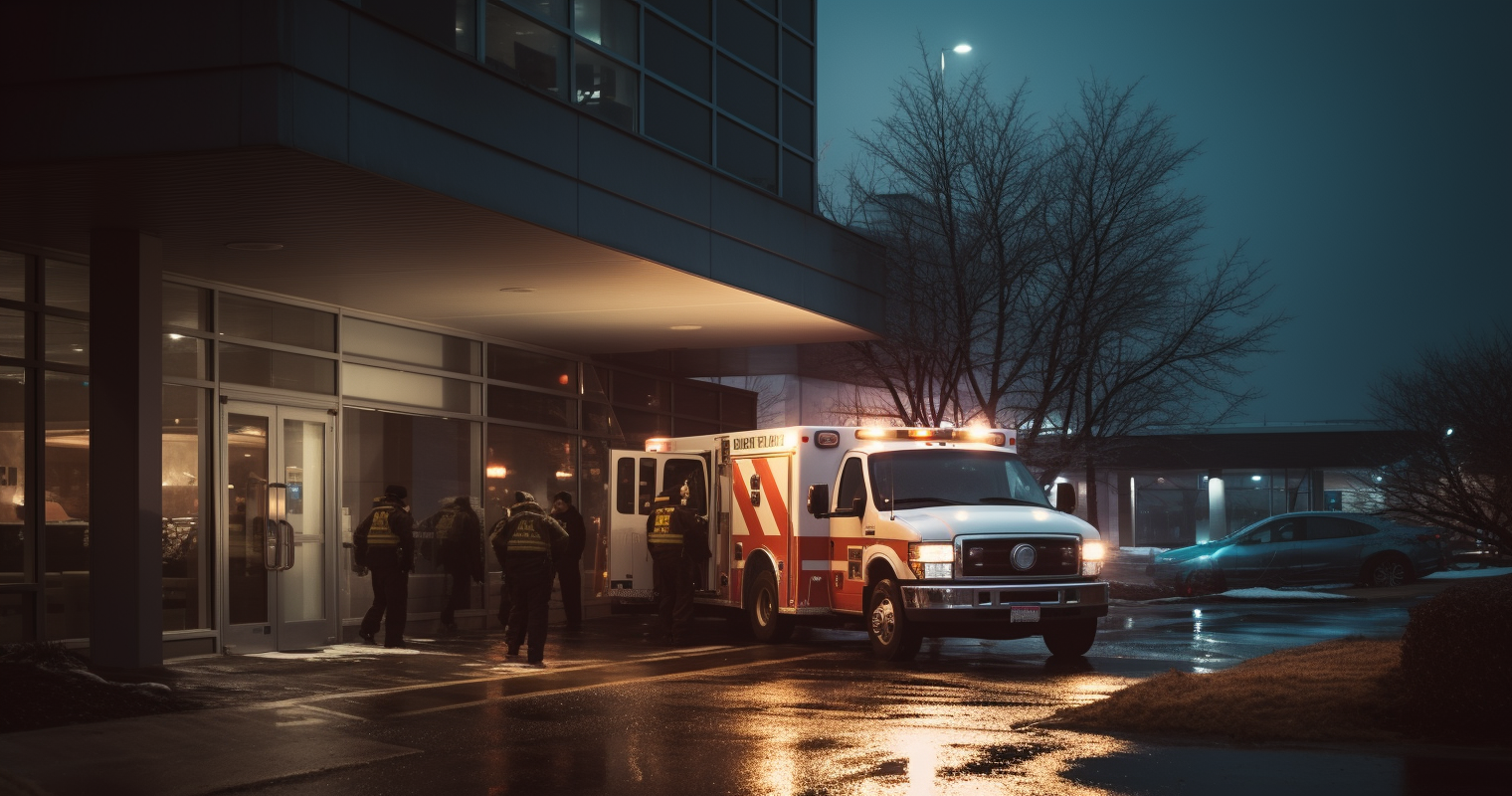
Belgium’s primary emergency number is 112, giving callers immediate access to medical, fire, and police services from any phone, at no cost. If you need the police urgently, you can also dial 101 directly. Emergency medical care is open to everyone, but it is not provided free of charge at the point of use — patients are billed, though residents enrolled in the Belgian health insurance system and eligible visitors holding a European Health Insurance Card (EHIC) can recover a portion of their costs through reimbursement.
| Item | Details |
|---|---|
| Primary emergency number | 112 (free, 24/7, all services — as of 2025) |
| Police direct line | 101 (urgent police assistance — as of 2025) |
| Non-urgent on-call doctor | 1733 (local rate — as of 2025) |
| Emergency treatment cost | Not free; costs apply. EHIC holders pay resident rates; non-EU visitors typically pay upfront. Residents claim reimbursement via mutualité/ziekenfonds (as of 2025) |
| Ambulance cost (residents) | Partially reimbursable; co-payment typically €50–€100 (as of 2024) |
| National alert system | BE-Alert (be-alert.be) — operational nationwide since 2017 |
What is the single emergency number in Belgium, and does it cover police, fire, and ambulance?
To reach the fire brigade, request an ambulance, or contact the police, dial 112. This is Belgium’s principal emergency number and the standard across all European Union member states. It can be dialled from any telephone — whether a landline, payphone, or mobile handset — completely free of charge. You do not need to determine in advance which service you require before placing the call.
Once connected, an automated menu will prompt you to select: press 1 for an ambulance or the fire brigade, or press 2 for the police. If no selection is made, the options are repeated once, after which the call is automatically routed to the territorially responsible emergency call centre.
The number 101 serves as a direct line to the police and remains available at all times, though it carries lower priority than 112. The number 100 is a legacy line for ambulance and fire brigade services that remains technically active but has been superseded by 112. In any genuine emergency, 112 is the only number you need to remember.
Belgium’s emergency system is supported by 21 call centres spread across the country, staffed by approximately 1,200 operators who collectively handle around six million emergency calls each year. Operators are trained to communicate in French, Dutch, German, and frequently English as well. A free official app — 112 BE — is also available for download: when you place an emergency call through the app, your location is automatically transmitted to the relevant services, a particularly useful feature if you cannot identify your precise whereabouts.
How do you call for emergency medical assistance in Belgium?
If you are faced with a medical emergency, dial 112 and clearly communicate your location and the nature of the situation to the operator. Depending on what you describe, an ambulance will be dispatched without delay. Remain on the line — do not hang up while waiting, as doing so will return you to the end of the queue.
Give the operator the precise address where help is needed — including the city, street name, house number, any nearby intersection, and details about access if relevant. If you are calling on behalf of someone at a different location from where you currently are, make this clear to the operator right away.
For situations that are medically urgent but not life-threatening — such as when you need professional guidance that cannot wait until your regular GP is available — you can call 1733, the dedicated out-of-hours doctor line. This number is charged at a local rate rather than being a free emergency line, and its purpose is to reduce unnecessary pressure on hospital emergency departments. Should you suspect a poisoning, whether from a chemical, medication, or another toxic source, call the Poison Control Centre on 070 245 245.
If an ambulance is sent to you, there will be a charge for the service. Residents covered by Belgian public health insurance can typically recover part of this cost, though a co-payment of roughly €50 to €100 (as of 2024) will generally remain your responsibility — an amount that can sometimes be offset by supplementary insurance. Those with private health insurance may be able to claim the full cost back depending on their policy terms.
What should you do in a mental health crisis in Belgium?
Belgium does not have a single dedicated national mental health emergency telephone line comparable to those found in some other countries. That said, several avenues of support exist. Where a mental health situation poses an immediate threat to life — for instance, if someone is in imminent danger of harming themselves or others — call 112, just as you would for any other life-threatening emergency. Operators can mobilise the appropriate response.
In an emergency, you are entitled to walk directly into any hospital emergency department without a referral, and this applies equally to mental health crises. Belgian hospital emergency departments are equipped to perform psychiatric assessments and can connect patients with specialist inpatient or outpatient mental health services when necessary.
Mental health conditions carry relatively less stigma in Belgium than in some other countries, and care can be sought through both public and private channels. It is possible to contact a mental health professional directly without first obtaining a GP referral, though consulting your family doctor first is advisable, as they can help identify the most suitable specialist. Charitable organisations such as the CHS Mental Health Services Centre can also provide guidance and support.
Outside of standard GP hours, the out-of-hours doctor line (1733) can also point callers towards appropriate mental health resources. Always verify the most current helpline numbers and availability through the official Belgian government portal (belgium.be) or your local municipal authority, as specialist services and their contact details are subject to change.
Where can you go for emergency medical treatment in Belgium?
Belgium’s public hospital network delivers a high standard of care and is represented in every major city and region. Each hospital contains an emergency department — referred to as “spoedeisende hulp” in Dutch, “urgences” in French, and “Notaufnahme” in German. Anyone may present at a hospital emergency department at any hour of the day or night, without prior appointment or referral.
Private clinics can offer quicker access and multilingual staff, but their fees are considerably higher than those at public hospitals. For serious or life-threatening emergencies, public hospital emergency departments remain the correct first destination — private clinics may lack the specialist equipment and capacity needed to manage major trauma cases.
To locate your nearest hospital or healthcare facility, the Federal Public Service Health portal (health.belgium.be) provides a searchable directory of public hospitals, GPs, and specialists. Outside standard opening hours, duty pharmacies — known as the pharmacie de garde in French-speaking areas or wachtapotheek in Dutch-speaking areas — remain open and can advise on whether your condition warrants a hospital visit or can be addressed with over-the-counter remedies. Pharmacies are identifiable by the large green cross displayed outside their premises.
Is emergency medical treatment free in Belgium, or is there a charge?
Healthcare in Belgium is not provided free of charge. You will be billed for treatment received in hospital, including a daily rate and potentially an admission fee. This distinguishes Belgium from fully tax-funded systems such as the NHS in the United Kingdom, where most emergency care is delivered free at the point of use. Belgium instead operates a co-payment and reimbursement model.
Even patients covered by public health insurance are expected to contribute a portion of their medical costs out of pocket. This patient contribution, known as the ticket modérateur, typically ranges from around €4 to €12 for a GP visit, with higher amounts applicable for specialist consultations or hospital stays (as of 2024). Public insurance generally reimburses between 50% and 75% of medical expenses, depending on the type of care received (as of 2024).
An emergency room visit — for example, for a suspected fracture requiring an X-ray — can be expected to cost in the region of €100 (as of the time of reporting). Fees are subject to revision, so it is advisable to confirm current charges with the hospital or your insurer. While attendance at an emergency department is always permitted, a small non-refundable fee may apply — a measure partly intended to discourage non-urgent use of these services.
Non-resident visitors who carry neither an EHIC card nor travel insurance will typically be required to pay the full cost upfront and then seek reimbursement through their own insurer. No patient will be turned away from emergency treatment on financial grounds, but without appropriate cover the costs can be substantial. Always retain every receipt and official medical certificate (attestation de soins donnés / getuigschrift voor verstrekte hulp) to support any subsequent insurance claim.
Do expats need travel or health insurance to access emergency care in Belgium?
Belgium’s healthcare framework requires all residents, including foreign nationals, to hold health insurance in order to access medical services. Once you have obtained a residency permit and become a legal resident, you are obliged to enrol with a health insurance fund. These funds — known as mutuelles in French or mutualiteiten / ziekenfondsen in Dutch — administer your entitlements under the national social health insurance system.
During the period between arrival and the activation of your Belgian public insurance, expat health insurance will cover emergency medical costs. This is especially important in the first weeks or months after relocating. You have 90 days from the date of arrival to complete your health insurance registration, so arranging interim private cover to bridge this gap is a prudent step.
Short-term visitors and tourists are not eligible to purchase temporary cover through the Belgian state system — they must obtain a private insurance policy from their country of residence before travelling. Without any form of insurance, a visitor could face substantial out-of-pocket medical bills. Comprehensive travel insurance is strongly advisable for anyone visiting Belgium who does not hold an EHIC or is not enrolled in the Belgian health system.
If you arrive at an emergency department with no insurance and no immediate means of payment, Belgian hospitals are legally required to provide emergency treatment regardless. However, a bill will be generated and pursued. A single surgical procedure can exceed €10,000 without insurance cover, and outstanding medical debts will be collected. Never assume costs will simply be waived — arrange your financial situation as promptly as possible following any emergency treatment.
- Register with a mutualité/ziekenfonds as soon as you have your residency permit and national registry number (NISS/NRN).
- Arrange interim expat health insurance to cover the period before your Belgian public insurance becomes active.
- Carry your EHIC card (if applicable) or your Belgian electronic ID (eID) or ISI+ card to every medical appointment.
- Store your insurer’s emergency contact number in your phone so you can notify them promptly upon receiving any treatment.
- Retain all receipts and medical attestations to support reimbursement claims from your mutualité or private insurer.
Are there bilateral health agreements entitling foreign nationals to reduced-cost emergency treatment?
The most significant arrangement covering Belgium is the European Health Insurance Card (EHIC) scheme, applicable across all EU member states as well as certain associated countries. An EHIC entitles the holder to medically necessary treatment during a temporary stay in Belgium — meaning treatment that cannot reasonably be deferred until the person returns to their home country, such as care following a sudden illness or accident.
It is important to understand that the EHIC does not guarantee free treatment. Holders pay the same share of costs as Belgian residents with equivalent insurance coverage. This is a meaningful distinction: the EHIC does not exempt you from charges, it simply places you on an equal financial footing with local insured patients. If you do not possess an EHIC or it is not accepted, you will be responsible for the full cost of your treatment.
Holders of the UK’s Global Health Insurance Card (GHIC) — introduced following the UK’s departure from the EU — also have access to medically necessary state-provided care in Belgium on terms broadly equivalent to those applying to EHIC holders, as of 2025. Neither the EHIC nor the GHIC provides access to treatment at private clinics.
Outside the EHIC/GHIC framework, Belgium does not maintain an extensive network of bilateral healthcare agreements equivalent to those found in some Pacific or Commonwealth nations. Nationals of countries outside the EU and the UK who are visiting Belgium on a temporary basis should assume they have no entitlement to subsidised care and should carry comprehensive travel insurance. For the most current information on any bilateral arrangements that may apply to your specific nationality, consult your home country’s embassy or the Belgian National Institute for Health and Disability Insurance (INAMI/RIZIV).
How does Belgium’s emergency healthcare system compare to systems expats may be familiar with?
The Belgian healthcare system combines two elements: mandatory social health insurance administered through INAMI/RIZIV, and a mixed landscape of public and private providers — many doctors practise in both sectors simultaneously. This structure differs considerably from purely tax-funded systems offering universally free care at the point of use, such as the NHS in the UK or Ireland’s public health service, and equally differs from systems where private upfront payment is the default.
The Belgian model bears closer resemblance to those operating in France, Germany, and the Netherlands: a social insurance framework in which contributions are compulsory, coverage is near-universal for residents, and costs are divided between the insurer and the patient through a system of co-payments. In contrast to countries where both ambulance dispatch and hospital treatment in a public facility are entirely cost-free, in Belgium some out-of-pocket expenditure will always apply, with the remaining share recoverable through your insurer.
The Belgian health insurance system operates on a co-payment and reimbursement basis. In principle, the maximum patient contribution is 25% for standard medical care and 40% for specialist services, meaning full reimbursement is not available. For those accustomed to systems like Australia’s Medicare — where bulk billing eliminates out-of-pocket costs for many services — the requirement to pay upfront and subsequently claim back expenses may require a period of adjustment.
The fees a provider may charge depend on whether they are “conventioned” or “unconventioned” (conventionné/geconventioneerd): conventioned providers charge the official government-regulated tariff, which your insurance will reimburse. Unconventioned providers may levy supplementary charges above this official rate, and such supplements fall outside the scope of compulsory insurance. If cost is a concern, always confirm a provider’s status before proceeding with treatment.
What emergency services exist beyond medical — how do police and fire services work in Belgium?
Belgium operates three emergency services: the medical service (Service médical d’urgence), the police (Police Fédérale), and the fire brigade (Pompiers). All three are accessible via 112, though each also maintains its own dedicated line.
For police emergencies, dial 101, which connects to the Police Fédérale from any telephone. Use this number if you are a witness to or victim of violence, assault, theft, or burglary. To identify your local police force, you can enter your postal code on the federal police website at police.be. Belgian policing operates on two tiers: the federal police (Police Fédérale / Federale Politie) handles serious crime, counter-terrorism, and border management, while local police zones manage day-to-day community policing. For non-urgent matters, contacting your local police zone directly is generally more appropriate than dialling 101 or 112.
The Belgian fire service employs approximately 18,000 professional and voluntary firefighters across 34 emergency rescue zones. In addition to tackling fires, the fire brigade provides a wide range of public safety services: vehicle extrication, road clearance, response to flooding and natural disasters, and a variety of everyday rescue operations. For non-urgent requests for assistance following storms or flooding, call 1722 or submit an online request at 1722.be — a system specifically designed to keep the primary emergency lines free for genuine crises.
Expats coming from countries with a single unified national police force may initially find Belgium’s dual-tier structure unfamiliar. The division of responsibilities between federal and local police is comparable to the arrangements found in federal systems such as those of Germany or Switzerland. In practice, dialling 112 or 101 in any emergency will put you through to the right authority, without needing to understand this distinction beforehand.
Are there country-specific emergency risks in Belgium?
Belgium is not exposed to the same scale of natural disaster risk as regions prone to earthquakes or hurricanes, but environmental hazards do exist. Flooding represents the most significant natural risk, particularly in the Walloon region — a fact starkly illustrated by the catastrophic floods of July 2021, which caused widespread devastation and loss of life along the Meuse and Vesdre river valleys. Heavy rainfall events, storms, and localised flooding can occur throughout the year and across the country.
In urban and tourist areas, crimes such as theft, pickpocketing, and bag-snatching are among the most commonly encountered hazards. Intercity and international trains are also frequently targeted by thieves, and passengers should exercise vigilance at transport hubs including metro stations, railway stations, and airports. These types of opportunistic crime represent the most statistically relevant risks for the majority of people living in or visiting Belgium.
As the host city of both the European Union’s principal institutions and NATO headquarters, Brussels faces a heightened terrorism threat compared to many smaller European capitals. Belgium’s National Crisis Centre (NCCN) coordinates national risk assessment and emergency planning. Operating under the authority of the Ministry of Home Affairs, the NCCN is responsible for overseeing emergency preparedness and crisis management, implemented at municipal, provincial, or federal level as required.
For public warnings and emergency alerts, Belgium uses the BE-Alert system. In operation nationwide since 2017, the system has already registered more than one million addresses. The Belgian government additionally disseminates emergency information through the Belgian Crisis Centre and via social media platforms including Facebook and X. To ensure you receive alerts relevant to your locality, register at be-alert.be.
What should expats do to prepare for emergencies before they arise in Belgium?
Taking practical steps in advance is the most effective way to minimise risk and manage stress in any emergency situation abroad. The following actions are strongly recommended for anyone relocating to or already living in Belgium.
- Register with your home country’s embassy or consulate in Belgium. As one of the homes of the European Union and a wide array of international organisations, Belgium is full of embassies, consulates, and representational offices to help people in need. Most governments offer registration schemes — such as the UK’s FCDO “living in” registration or the US Smart Traveler Enrollment Program (STEP) — that enable your embassy to reach you in the event of a national emergency or serious personal crisis. Consult your government’s official travel advice website for details.
- Register for BE-Alert. Enrol at be-alert.be so that your local municipality can contact you by phone, text message, or email if an emergency develops in your area.
- Register with a mutualité/ziekenfonds. All residents, including expats, are legally required to hold health insurance coverage. Once you have your residency permit, enrol with a Belgian health insurance fund without delay. You have 90 days from arrival to complete this registration.
- Register with your local commune (gemeente/commune). All newcomers to Belgium — whether from an EU country or elsewhere — must register at the local town hall within eight days of arrival. This step underpins your legal residency and your access to public services, including healthcare.
- Save key emergency numbers. Enter 112, 101, 1733 (on-call doctor), 070 245 245 (Poison Control Centre), and your insurer’s emergency contact into your phone before you have cause to use them.
- Download the 112 BE app. This free official app transmits your location automatically to emergency services when you call, which is invaluable when you are in an unfamiliar location or unable to describe your address clearly.
- Keep physical copies of key documents. Carry a copy of your eID, ISI+ card or EHIC, insurance policy information, and your GP’s contact details. Maintain separate digital and physical backups in a secure place in case your phone or wallet is lost or stolen.
Where can expats get official and up-to-date emergency information for Belgium?
For accurate and current information, always go directly to official sources rather than relying solely on secondary summaries. The key official resources for emergency information in Belgium are listed below:
- 112.be — The official Belgian emergency services portal, maintained by the Federal Public Service Interior. Covers how to call, what information to provide, and where to download the 112 BE app.
- crisiscenter.be — The National Crisis Centre, responsible for coordinating national emergency planning and issuing public alerts.
- be-alert.be — Belgium’s national public alert registration platform for local and regional emergencies.
- health.belgium.be — The Federal Public Service Health portal, offering information on healthcare facilities and the structure of the Belgian health system.
- inami.fgov.be — The National Institute for Health and Disability Insurance (INAMI/RIZIV), which administers and regulates the social health insurance system.
- police.be — The Belgian Federal Police website, featuring a postcode search function to locate your local police zone.
- belgium.be — The central Belgian government portal, covering residency requirements, commune registration, and a wide range of public services.
Your home country’s embassy in Brussels is another valuable point of contact. Most embassies publish country-specific emergency guidance and maintain 24-hour consular emergency telephone lines. The Belgian Government issues emergency communications through the Belgian Crisis Centre and via its official social media channels. Following the Crisis Centre on these platforms is a practical way to receive timely updates whenever a major incident is under way.
Frequently Asked Questions
What number do I call in any emergency in Belgium?
Dial 112 to reach the fire brigade, request an ambulance, or contact the police. This number is free of charge, available around the clock every day of the year, and functions from any phone — mobile or landline — across Belgium and throughout all EU member states. For urgent police matters specifically, you can also dial 101.
Will emergency services in Belgium help me if I don’t speak French, Dutch, or German?
Emergency call centre operators are trained to communicate in French, Dutch, German, and frequently English. In practice, staff fluent in English are generally available at major call centres. Speaking at a measured pace, and giving your location as the very first piece of information, will help the operator respond to you as efficiently as possible.
Can I walk into a hospital emergency department in Belgium without a referral?
Yes. Emergency care is the one area of the Belgian healthcare system where a GP referral is not required — you may present directly at any hospital emergency department at any time. Be aware that a charge will apply for the visit, and patients with non-urgent conditions may wait while more critical cases are treated first.
Does my EHIC cover emergency treatment in Belgium?
A European Health Insurance Card entitles you to medically necessary care during a temporary stay in Belgium — specifically, treatment that cannot be safely postponed until you return home. However, the EHIC does not entitle you to free treatment; you will pay the same patient contribution as a Belgian resident with equivalent insurance. UK nationals holding a GHIC benefit on comparable terms. Always bring your card and keep every receipt for reimbursement purposes.
What is the on-call doctor number in Belgium, and when should I use it?
Call 1733 for medical concerns that cannot wait until your regular GP’s next available appointment but do not constitute a life-threatening emergency. This local rate number operates outside standard GP hours. If your situation involves severe pain, breathing difficulties, loss of consciousness, or a suspected cardiac event or stroke, do not use 1733 — call 112 immediately.
What happens if I cannot pay for emergency treatment in Belgium?
No Belgian hospital will withhold life-saving emergency treatment solely on the basis of an inability to pay. However, a bill will be raised regardless and will be actively pursued. A single surgical procedure can cost €10,000 or more without insurance coverage, making adequate health or travel insurance an absolute necessity before you need it. If you encounter financial difficulty following emergency treatment, approach the hospital’s social services team, who can advise on instalment arrangements and other possible options.
How do I sign up for Belgium’s emergency alert system?
Registration for the national public alert system, BE-Alert, is available at be-alert.be. Once registered, local and national authorities can notify you by phone, text, or email if an emergency affects your area — including chemical incidents, flooding, or major infrastructure failures. Registration is free and is strongly recommended for all residents.
Is there a non-urgent fire brigade number for storm damage in Belgium?
Yes. When you need non-urgent assistance in the aftermath of a storm or flood, call 1722 or lodge a request online at 1722.be. This dedicated line is specifically designed to prevent the main emergency services from being overwhelmed with lower-priority calls. Note that 1722 is typically activated only during and following significant weather events — for fires, accidents, and all other rescue situations, always dial 112.