
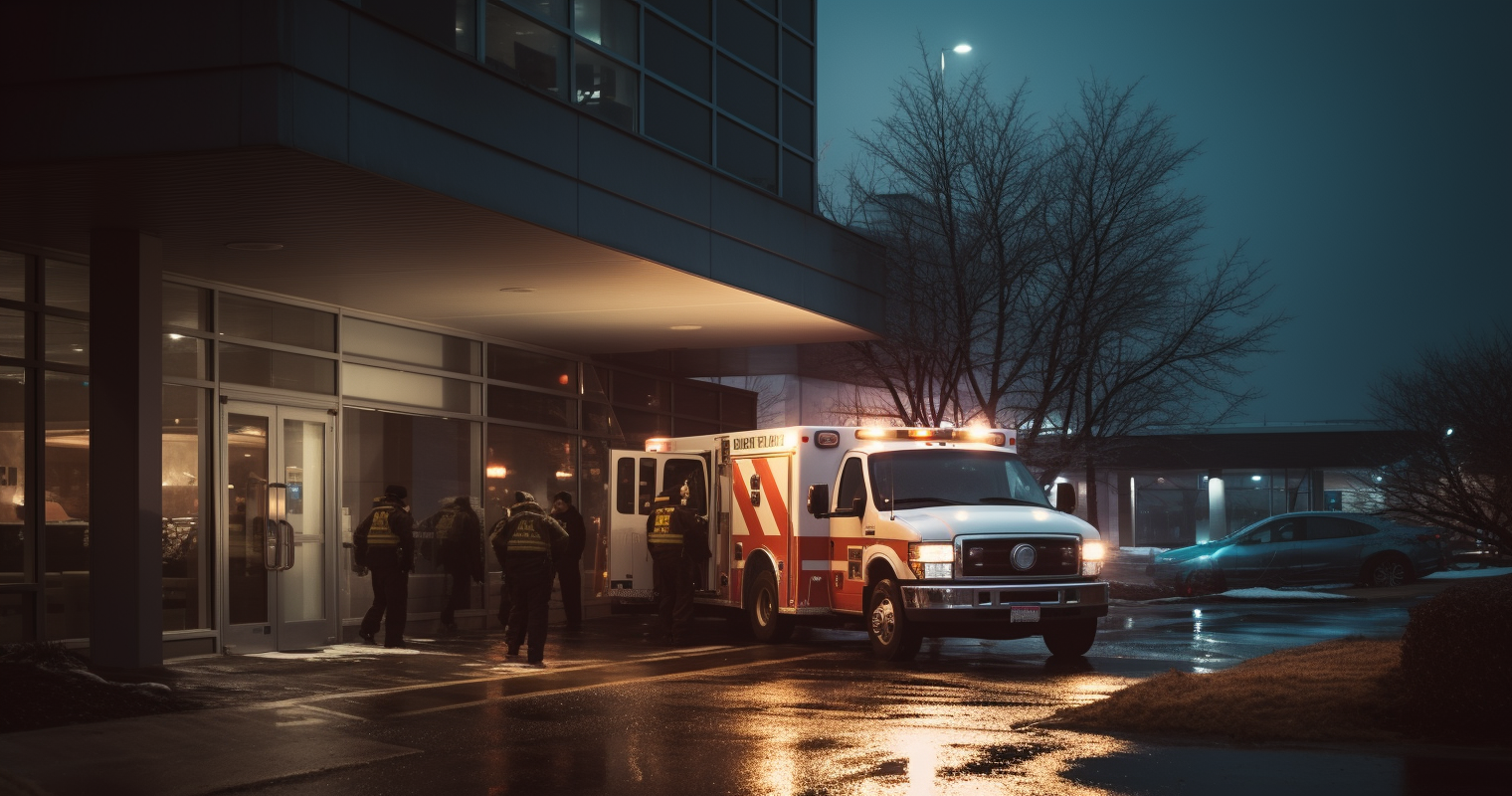
In the Cayman Islands, 911 is the universal emergency number covering police, fire, and ambulance services — identical to the number used in the US and Canada. While no one will be refused emergency treatment, care is not provided free of charge: every patient, whether a visitor or a resident, is required to pay or hold valid health insurance. Resident expats are legally obligated to maintain health insurance coverage.
| Item | Details |
|---|---|
| Emergency number | 911 (police, fire, and ambulance — all three islands, as of 2025) |
| A&E direct line | (345) 244-2796 — Cayman Islands Hospital (Anthony S. Eden Hospital), as of 2025 |
| Ambulance direct line | (345) 244-2659, as of 2025 |
| Emergency treatment cost | Not free — payment or valid insurance required for all patients |
| Mandatory health insurance | Required by law for all residents and employees (introduced 2003) |
| Crisis/domestic abuse hotline | (345) 943-2422 (CICC Crisis Centre), as of 2025 |
What is the single emergency number in the Cayman Islands?
The Cayman Islands shares its emergency number with the United States: dialling 911 from any of the three islands connects you to an emergency operator. All three services — police, fire, and ambulance — are accessible through this single number, with the police headquarters additionally reachable at (345) 949-4222. For the most current details, consult Cayman Prepared.
A number of additional lines exist for specific non-emergency purposes: the Hurricane Emergency Operations centre can be contacted at (345) 945-4624, while the Emergency Information Hotline is available at (345) 946-3333. On Cayman Brac and Little Cayman, 911 remains the primary emergency number; however, the non-emergency police station number for Cayman Brac is 948-0331, the non-emergency fire station line is 948-1245, and Faith Hospital can be reached directly at 948-2243.
How do you call for emergency medical assistance, and what should you expect?
For urgent medical assistance anywhere in the Cayman Islands, calling 911 will dispatch First Responders and Emergency Services. Emergency Medical Services are staffed by paramedics and Emergency Medical Technicians operating ambulances stationed in George Town, West Bay, and North Side on Grand Cayman, as well as in Cayman Brac. The government’s Health Services Authority manages these EMS operations.
Once 911 is called and medical intervention is required, patients are transported by ambulance to the Anthony S. Eden Hospital in George Town. You may also contact the ambulance service directly on (345) 244-2659 or reach the Accident & Emergency department on (345) 244-2796 (as of 2025 — confirm current details at hsa.ky).
Where a condition is potentially life-threatening and the required treatment is unavailable or rarely performed locally, patients are transferred by air ambulance to hospitals in Florida or Jamaica, or to their home country where medically practicable. The destination is influenced by the patient’s insurance coverage and financial capacity. A recompression chamber is also available for dive-related emergencies via 911 (as of 2025). Executive Air Ambulances can be contacted directly on (345) 949-7775.
What should you do in a mental health crisis in the Cayman Islands?
The CICC Crisis Centre Hotline is reachable at 943-CICC (2422), and Crime Stoppers operates on 800-TIPS (8477). The crisis hotline handles both domestic abuse situations and mental health emergencies. Where there is an immediate risk to life, 911 should always be the first call made.
For urgent mental health concerns that are not immediately life-threatening, the Health Services Authority delivers mental health services at the Cayman Islands Hospital. The HSA has also launched an adolescent mental health hub known as Alex’s Place. In East End, the Ponciana Rehabilitation Centre — a substantial inpatient mental health facility — opened at the close of 2025 after considerable delays, representing a meaningful step toward addressing a longstanding gap in the territory’s long-term mental health provision.
Anyone experiencing a mental health emergency may also attend the Accident & Emergency department at the Anthony S. Eden Hospital — reachable at (345) 244-2796 or via 911. Relocating abroad can intensify pre-existing mental health challenges; culture shock, feelings of isolation, language difficulties, and homesickness can all contribute to deteriorating wellbeing. It is advisable to establish a practical mental health management plan before relocating. Always confirm current service details with the Health Services Authority.
Where can you go for emergency medical treatment?
The Cayman Islands offer a broad spectrum of contemporary medical services, from specialist clinics to large, well-equipped hospitals. Grand Cayman alone is home to three advanced hospitals — two privately operated and one public. The Cayman Islands Hospital, commonly known as the George Town or Anthony S. Eden Hospital, is the principal government facility and is run by the Cayman Islands Health Services Authority from its George Town location.
The hospital spans two storeys, houses 124 beds and four operating theatres, and encompasses an accident and emergency department, a critical care unit, a dialysis unit, pharmacy, laboratory, and forensic unit, delivering care across most medical specialties. Doctors Hospital — formerly called the Chrissie Tomlinson Memorial Hospital — is a private institution in the heart of George Town offering high-quality, patient-centred healthcare.
Health City Cayman Islands is a cutting-edge tertiary care hospital situated in East End, Grand Cayman. It is renowned internationally for its cardiac surgery programme and has further extended its capabilities through a new 70,000-square-foot facility at Camana Bay, which includes an Emergency Room, Neonatal Intensive Care Unit, advanced diagnostic imaging, and a robotic surgery programme.
Cayman Brac is served by Faith Hospital, an 18-bed public facility that also covers residents of Little Cayman — though complex medical cases are typically referred to the main hospital in George Town. Little Cayman has a small clinic available for emergency situations.
For conditions that do not require emergency care, the HSA Urgent Care Walk-in Clinic at the George Town Hospital’s main entrance is open seven days a week — Monday to Friday from 8am to 8pm, and on weekends and public holidays from 11am to 8pm — offering an accessible alternative to the Accident and Emergency department for minor injuries and ailments. The Cayman Islands benefit from more than 200 registered healthcare facilities across the territory, including pharmacies, laboratories, physician practices, and therapy clinics, supported by over 700 registered practitioners.
Is emergency medical treatment free, or is there a charge?
Medical care will not be withheld from any person in the Cayman Islands, but patients are required to either hold overseas health insurance or be in a position to fund their own treatment. This applies equally to tourists and resident expats. The Cayman Islands does not operate a free-at-the-point-of-use emergency model as found in countries such as the United Kingdom under the NHS or Australia under Medicare; instead, all patients are expected to settle costs either through insurance or direct payment.
Healthcare providers typically expect prompt payment for services rendered. Costs can be substantial, and more serious cases are generally stabilised locally before onward transfer to the United States. For short-term visitors, travelling without adequate travel health insurance represents a considerable financial exposure. Specific fees vary by provider and procedure; contact the Health Services Authority directly for current tariff information, as these are subject to change.
Do expats need health or travel insurance to access emergency care?
Health insurance is a legal requirement for all residents of the Cayman Islands, including those who have moved there from abroad. The territory was among the earliest in the world to establish a universal health insurance requirement, ensuring that all residents have access to fundamental healthcare. In 2003, the Cayman Islands became the first country in the world to make health insurance compulsory for everyone living there.
Employed workers in the Cayman Islands must be enrolled by their employer in a Standard Health Insurance Contract (SHIC) from the first day of work, with employers obligated by law to contribute at least half the premium cost. Those who are self-employed must independently source health insurance through an approved provider. The SHIC encompasses GP visits, specialist consultations (by referral), inpatient hospital care, emergency medical services, maternity care, and essential prescribed medications.
The majority of residents supplement this with comprehensive private insurance to cover specialist appointments, elective procedures, and more extensive emergency treatment. Without additional coverage, private medical services carry a significant price tag. Visitors and tourists who do not qualify as residents must either hold health insurance providing full coverage abroad or be prepared to pay out of pocket. Travellers without insurance who face a medical emergency can encounter severe practical and financial difficulties.
It is equally important to verify that any policy includes provision for medical evacuation. Serious emergencies may require air transport to Miami or Jamaica — with common destinations including Jackson Memorial, Baptist Health, and Cleveland Clinic in Miami, as well as the University Hospital of the West Indies in Jamaica. The cost of medical evacuation without insurance coverage can be enormous.
The step-by-step process for getting insured as an expat resident is outlined below:
- Confirm your employment status: Determine whether you are employed, self-employed, or arriving without a work permit, as this affects which insurance route applies to you.
- Employer enrolment (if employed): Your employer must enrol you in a Standard Health Insurance Contract (SHIC) from your first day of employment. Confirm with HR that this has been done.
- Self-employed or independent: If you are self-employed, arrange your own health insurance with an approved provider and bear the full cost. Check the Cayman Islands Insurance Association (CIIA) for a list of approved providers.
- Consider top-up coverage: Many residents opt for private insurance plans to access enhanced coverage, faster specialist appointments, and additional benefits like dental and vision care.
- Review exclusions carefully: Common exclusions in health insurance policies include elective cosmetic procedures, alternative therapies, some mental health treatments, and experimental medical procedures.
- Check evacuation coverage: Ensure your policy covers emergency medical evacuation to the US or Jamaica, as this can otherwise be an uninsured expense running into tens of thousands of dollars.
Are there bilateral health agreements entitling some nationals to reduced-cost care?
Although the Cayman Islands is a British Overseas Territory, it does not benefit from the same reciprocal healthcare arrangements as the United Kingdom. It is not part of the European Health Insurance Card (EHIC) framework, nor does it share bilateral healthcare agreements of the kind that exist between certain Commonwealth nations. The Cayman Islands funds and administers its own healthcare system independently, with no known reciprocal arrangements that automatically grant foreign nationals free or discounted emergency treatment.
In limited circumstances, Cayman residents with particular medical conditions may be referred for treatment through the UK National Health Service (NHS) quota system. This is a referral pathway for qualifying local residents, not a reciprocal benefit for UK nationals visiting the islands. No equivalent of the EHIC or a Commonwealth reciprocal healthcare agreement currently applies to emergency treatment for visitors in the Cayman Islands. It is advisable to verify the current position with your home country’s embassy or foreign affairs ministry before travelling. The UK Foreign, Commonwealth & Development Office travel advice page for the Cayman Islands is a useful starting point for British nationals.
How does the Cayman Islands’ emergency healthcare system compare to other systems?
The healthcare framework of the Cayman Islands is best understood as a compulsory private insurance model underpinned by a public hospital safety net — distinguishable both from wholly state-funded systems such as the UK’s NHS or Canada’s provincial health plans, and from entirely deregulated markets. All residents must carry health insurance, and the territory was one of the earliest in the world to legislate universal health insurance coverage, guaranteeing access to essential services for everyone.
In practice, many residents favour private healthcare providers for their speed and direct access to specialists, though this comes at a premium. In contrast to countries where ambulance services are provided without charge at the point of use — as in the UK or New Zealand — or where a national health card entitles patients to emergency care regardless of means, patients in the Cayman Islands are always expected to hold insurance or demonstrate an ability to pay. The standard and structure of emergency response in the Cayman Islands are broadly comparable to those in the United States.
For expats accustomed to tax-funded universal health systems, the fundamental shift is recognising that even the public hospital in the Cayman Islands bills patients directly. The mandatory insurance obligation means that legal residents should never find themselves without coverage, but visitors and those between employment arrangements must take proactive steps to ensure they are protected.
What emergency services exist beyond medical — how do police and fire work?
As with medical emergencies, police and fire services are all reached by dialling 911. The Royal Cayman Islands Police Service (RCIPS) is the territory’s national police force, with operations spanning all three islands. Non-emergency station numbers are: George Town at 949-4222/649-2222, Bodden Town at 947-2220/649-2220, West Bay at 949-3999/649-3999, and on Cayman Brac at 948-0331.
The fire service operates on the same 911 structure, dispatching the nearest available station to the scene. The Cayman Brac fire station can also be reached on the non-emergency line (345) 948-1245. For expats from countries where separate numbers exist for different services — for instance, much of Europe where 112 is the standard across emergency types — the straightforwardness of a single 911 number for all emergencies in the Cayman Islands simplifies things considerably.
For crimes that are not in progress or require immediate response, it is more appropriate to contact a police station directly rather than using 911. Anonymous information can be reported to Crime Stoppers on 800-TIPS (8477). The Cayman Islands Red Cross, reachable at (345) 949-6785, provides disaster relief support (as of 2025 — verify with official sources for the most current information).
Are there country-specific emergency risks in the Cayman Islands?
The most prominent country-specific hazard in the Cayman Islands is hurricane season, which runs annually from June through November. Positioned in the western Caribbean, the islands lie in the path of powerful Atlantic storms. The catastrophic impact of Hurricane Ivan in 2004 remains a reference point for how seriously the local authorities approach storm preparedness.
Hurricane Emergency Operations are reachable at (345) 945-4624, and an Emergency Information Hotline at (345) 946-3333 is activated during major weather events. The government’s dedicated disaster preparedness portal, Cayman Prepared, provides evacuation procedures, shelter locations, and storm tracking resources. Hazard Management Cayman Islands (HMCI) is the government body responsible for disaster readiness and emergency coordination — contact details appear on the Cayman Prepared website.
In addition to hurricanes, tropical storms, storm surges, and flash flooding can also present risks during the wetter months. Mosquito-borne diseases such as dengue fever, the Zika virus, and chikungunya have been recorded across the Caribbean region, and the Cayman Islands are not entirely insulated from these threats. Both the UK FCDO and the US Department of State publish current health and safety advisories for the Cayman Islands; these should be consulted before arrival or relocation. The territory is politically stable and serious civil unrest is not considered a notable risk.
What should expats do to prepare for emergencies before they arise?
Taking steps to prepare well before an emergency occurs is the most effective safeguard for you and your household. The following measures are recommended for anyone living in or relocating to the Cayman Islands:
- Register with your home country’s embassy or consulate: Consular contacts in the Cayman Islands include Canada at (345) 949-9400, the United Kingdom at (345) 244-2434, and the US at (345) 945-8173 (as of 2025 — verify current details with official embassy websites). Many governments offer online registration services — for example, the UK’s LOCATE scheme or the US STEP programme — enabling authorities to contact you in the event of an emergency or evacuation.
- Save key emergency numbers: Store 911, the A&E direct line (345) 244-2796, the ambulance service (345) 244-2659, and the Crisis Centre Hotline (345) 943-2422 in your mobile phone.
- Ensure your health insurance is in place from day one: If employed, your employer must enrol you in a Standard Health Insurance Contract from your first day of employment — confirm this has happened before you need to use it.
- Understand your hurricane preparedness plan: Register with Cayman Prepared, identify your nearest hurricane shelter, and assemble an emergency kit containing water, food, medications, documents, and cash sufficient for a minimum of 72 hours.
- Keep important documents accessible: Maintain copies of your passport, visa or residency documentation, insurance policy, and emergency contacts both in a secure digital format and in a waterproof physical container.
- Know your nearest hospital or health centre: District Health Centres serve a pivotal function in the healthcare network, positioned across key areas on all three islands and providing accessible general healthcare for both residents and visitors.
- Check travel health advisories before arrival: Review your government’s official travel advisory for the Cayman Islands to stay informed of current health risks, recommended vaccinations, and any active alerts.
Where can expats get official and up-to-date emergency information?
The following official sources are essential for any expat seeking reliable, current guidance on emergencies in the Cayman Islands:
- Cayman Prepared (caymanprepared.gov.ky): The Cayman Islands government’s dedicated portal for disaster preparedness, covering emergency contacts, evacuation routes, and hurricane shelter locations.
- Health Services Authority (hsa.ky): The HSA delivers the widest range of inpatient, outpatient, and public health services across nine locations on all three islands. Current contact details for all facilities are listed on their website.
- UK FCDO Travel Advice: Regularly updated guidance for the Cayman Islands encompassing health, entry requirements, and emergency contacts for British nationals.
- US Department of State — Cayman Islands: Country-specific information, health advisories, and enrolment in the STEP (Smart Traveller Enrollment Program) for US citizens.
- Explore Cayman — Useful Telephone Numbers: A practical, regularly maintained directory of emergency and non-emergency contact numbers across all three islands.
- Your home country’s embassy or consulate in the Cayman Islands: Register online prior to arrival so that your government can reach you in the event of a significant emergency or evacuation scenario.
Frequently asked questions
What number do I call for any emergency in the Cayman Islands?
Like the United States, the Cayman Islands uses 911 as its universal emergency number. Calling 911 from any of the three islands — Grand Cayman, Cayman Brac, or Little Cayman — connects you to an operator who can despatch police, fire, or ambulance services. Always verify current arrangements with Cayman Prepared.
Will the hospital treat me even if I don’t have insurance?
No one will be turned away from emergency medical care in the Cayman Islands, but treatment is not free. Patients without insurance coverage are expected to pay for services out of pocket, and healthcare providers typically require prompt payment. Being uninsured will not result in denial of care, but it will result in a bill.
Is health insurance compulsory for expats living in the Cayman Islands?
Yes, health insurance is a legal requirement for all residents, including expats. Employed workers must be enrolled in a Standard Health Insurance Contract (SHIC) by their employer from the very first day of employment, with the employer required to fund at least half the cost. Those who are self-employed must independently obtain health insurance from an approved provider.
What happens if I need treatment that is not available in the Cayman Islands?
Where a patient’s condition is potentially life-threatening and the necessary treatment cannot be provided locally, they will be transported by air ambulance to a hospital in Florida or Jamaica, or to their home country if medically appropriate. The choice of destination is shaped by the patient’s insurance coverage and ability to pay, which is why emergency medical evacuation coverage is an essential feature of any health insurance policy taken out for the Cayman Islands.
Is there a dedicated mental health crisis line in the Cayman Islands?
Yes — the CICC Crisis Centre Hotline operates at 943-CICC (2422) and handles both mental health crises and domestic abuse situations. In any situation involving an immediate threat to life, 911 should be called first. The HSA has additionally established Alex’s Place, an adolescent mental health hub. Always confirm current details via the HSA website.
Do the Cayman Islands have reciprocal health agreements with other countries?
As a British Overseas Territory, the Cayman Islands does not participate in UK reciprocal healthcare arrangements or the EU’s EHIC system. No known bilateral agreements exist that entitle overseas nationals to free or reduced-cost emergency treatment in the islands. All patients, regardless of nationality, must pay or hold valid insurance. Check with your own government’s foreign ministry for the latest position before travelling.
What is the main risk of natural disaster in the Cayman Islands?
Hurricanes represent the primary natural disaster risk, with the season extending from June through November each year. During major weather events, Hurricane Emergency Operations can be contacted at (345) 945-4624. The Cayman Prepared website provides detailed guidance on evacuation procedures and shelter locations. Mosquito-borne illnesses also carry some risk in the wider Caribbean region; consulting a travel health specialist before relocating is advisable.
How do I find the nearest health centre or clinic in the Cayman Islands?
The Health Services Authority operates at nine locations spread across all three islands. District health centres include Bodden Town Health Centre at (345) 947-2299, East End Health Centre at (345) 947-7440, North Side Health Centre at (345) 947-9525, and West Bay Health Centre at (345) 949-3439 (as of 2025 — verify current details at hsa.ky). For conditions requiring prompt but non-emergency attention, the HSA Walk-in Urgent Care Clinic at George Town Hospital is open seven days a week.