
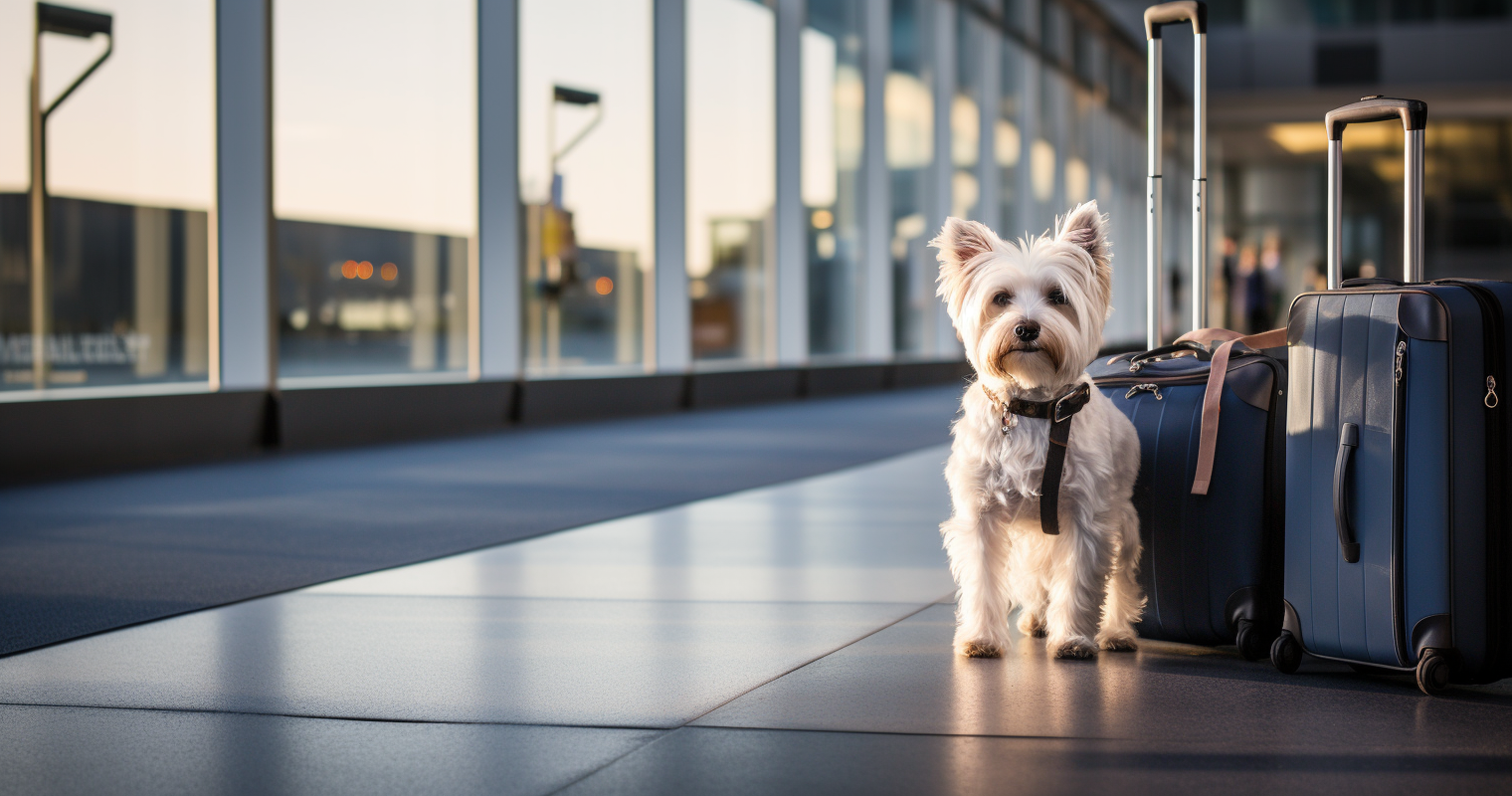
Singapore welcomes the import of domestic dogs and cats, as well as select other animals, though the level of regulation ranges from moderate to stringent depending on your pet’s country of origin. The Animal & Veterinary Service (AVS) oversees all incoming animals through a country-schedule framework built around rabies risk. Singapore operates entirely outside the EU Pet Travel Scheme and any comparable regional arrangement, meaning its own self-contained import process applies without exception.
| Item | Details |
|---|---|
| Regulating authority | Animal & Veterinary Service (AVS), National Parks Board (NParks) |
| Import licence fee (personal, as of 2024) | S$50 standard; S$100 express (via GoBusiness portal) |
| Import licence processing time (as of 2024) | 2 working days (standard); 1 working day (express) |
| Quarantine — Schedule I countries | None required if fully compliant with veterinary conditions |
| Quarantine — Schedule II countries | No quarantine by default; 10-day home quarantine may apply in specific circumstances |
| Quarantine — Schedule III countries | Minimum 30 days at the Animal Quarantine Centre (AQC) |
| Minimum age at export | 12 weeks |
| Microchip standard | ISO 11784 / ISO 11785 |
Does Singapore allow pets to be imported, and are there restrictions on which animals are permitted?
Singapore does allow pet imports, but the rules are precise and must be observed to the letter. The National Parks Board (NParks) Animal and Veterinary Service (AVS) is responsible for regulating all live animal importation. Dogs and cats follow the most clearly defined import pathway, while other species encounter considerably more complexity.
Standard import procedures apply only to dogs and cats. Other animals — rabbits, hamsters, birds, and similar pets — require special authorisation and fall outside standard procedures. All small mammals must spend two weeks in quarantine upon arriving in Singapore. Ornamental birds such as parrots, parakeets, and cockatoos each need a dedicated import permit and accompanying health certificate.
A number of dog breeds are flatly banned from entry into Singapore. Those prohibited from import, including all crosses, are: Pit Bull (encompassing the American Pit Bull Terrier, American Staffordshire Terrier, Staffordshire Bull Terrier, and American Bulldog), Neapolitan Mastiff, Tosa, Akita, Dogo Argentino, Boerboel, Fila Brasileiro, and Perro de Presa Canario. No documentation or permit will circumvent these prohibitions — if your dog belongs to one of these breeds or is a cross, entry to Singapore is not possible.
A second category of breeds is not prohibited but carries additional obligations and licensing requirements when living in Singapore. Breeds subject to these extra conditions include the Bull Terrier, Doberman Pinscher, Rottweiler, German Shepherd Dog and related breeds such as the Belgian Shepherd Dog and the East European Shepherd Dog, Mastiffs including the Bull Mastiff, Cane Corso and Dogue De Bordeaux, and any cross involving these breeds. These dogs may enter Singapore, but must undergo obedience training and be kept on a lead and muzzled whenever in public.
Cats are not exempt from breed-related restrictions. First through fourth generation Bengal and Savannah cat hybrids are prohibited from import. Fifth generation crosses and beyond may be eligible, provided paperwork confirming the lineage from the wild ancestor is available. Wolf hybrids face similar exclusions. Singapore’s Wildlife Act imposes serious penalties for keeping prohibited wildlife without authorisation — always verify eligibility before initiating the import process.
Your housing type in Singapore is another factor to consider. Residents of HDB flats (public housing) face tighter constraints on the breeds they may keep: a list of 62 approved small dog breeds exists for HDB living, and only one such dog may be kept at a time. Those living in private property may keep up to three dogs, cats, or a combination. Clarify your accommodation arrangements before beginning any pet import preparations.
What vaccinations and health requirements do pets need before entering Singapore?
Singapore is a rabies-free country, and its pre-travel health requirements are calibrated accordingly to the rabies risk of the originating country. The AVS assigns every country to one of three schedules based on that risk, and the applicable schedule dictates which veterinary preparations and quarantine conditions must be met.
Schedule I covers a small group of rabies-free countries — Australia, New Zealand, the Republic of Ireland, and the United Kingdom — and carries the lightest requirements. Schedule III applies to all countries not listed under Schedules I or II, imposing the strictest demands including both rigorous pre-travel testing and mandatory quarantine on arrival. The majority of countries fall under Schedule II, the intermediate tier.
Regardless of schedule, all dogs and cats must satisfy core microchip and vaccination requirements. Your pet must be implanted with a microchip conforming to ISO Standard 11784 or ISO Standard 11785 Annex A, and this microchip number must appear on all vaccination and treatment records. Your dog or cat must also be at least twelve weeks of age at the time of export.
AVS requires valid core vaccinations for dogs covering canine distemper virus, canine adenovirus type 1, and canine parvovirus type 2, evidenced by vaccination records presented upon arrival. Cats must be vaccinated against calicivirus, herpesvirus-1, and panleukopenia. All dogs and cats must additionally be treated against internal and external parasites shortly before travel by a licensed veterinarian in the country of origin.
Pets originating from Schedule II or III countries must receive a rabies vaccination and undergo a Rabies Neutralising Antibody Titre Test (RNATT). The blood sample for serology must be drawn at least 28 days after a valid rabies vaccination, at least 90 days before export, and within 12 months of export. Testing must be performed at a WOAH reference laboratory or an approved laboratory located in a Schedule I or II country. These timing requirements are non-negotiable — failing to meet any of them means the clock resets.
A veterinary health certificate prepared on the AVS-prescribed template is mandatory for all imports. This document must be issued within 2–7 days of the pet’s departure by a government-accredited veterinarian and subsequently endorsed by the relevant official veterinary authority in the country of origin. Requirements and timelines should always be verified directly with AVS prior to travel, as they are subject to revision.
What is the application process for importing a pet into Singapore, and what paperwork is required?
Importing a dog or cat into Singapore involves a sequence of steps that must be completed in a specific order. Much like the documentation-driven import processes used in countries such as Australia or New Zealand, Singapore’s system is governed by strict timelines — begin planning at least four to six months before your intended travel date, particularly if a rabies titer test is required.
- Confirm breed eligibility. Before any veterinary steps are taken, verify that your pet’s breed is not on the prohibited list and is suitable for the housing type you will be moving into. This check should come first.
- Microchip your pet. Your dog or cat must be fitted with a microchip meeting ISO Standard 11784 or ISO Standard 11785 Annex A, with the chip number recorded on all vaccination and treatment documents. The microchip should be implanted prior to any vaccinations to ensure it is referenced on every record from the outset.
- Complete vaccinations and rabies titer test. Arrange core vaccinations and, where your country’s schedule demands it, the rabies vaccination. The blood draw for rabies serology must occur at least 28 days after a valid rabies vaccination, at least 90 days before export, and within 12 months of the export date. Serology testing must be carried out at a WOAH reference laboratory or an approved laboratory situated in a Schedule I or II country.
- Apply for a dog or cat licence on PALS (for dogs, this step precedes the import licence). A licence through the Pet Animal Licensing System (PALS) must be obtained before an import licence application can be submitted. All dog owners must complete an online Pet Ownership Course of approximately 20 to 30 minutes before a licence is issued. As of September 2024, this course requirement extends to cat owners as well.
- Book quarantine space if required. If your pet is arriving from a Schedule III country, the owner or their agent must secure a space at the Animal Quarantine Centre via the Quarantine Management System (QMS). Availability is limited, so advance booking is essential — do not leave this until late in the process.
- Apply for the AVS import licence. Submit the import licence application through the GoBusiness portal. The fee is S$50 for standard processing or S$100 for express processing (as of 2024), with turnaround times of 2 working days and 1 working day respectively. The licence remains valid for 30 days from the date of issue.
- Obtain the veterinary health certificate. The treating veterinarian must complete the health certificate using the AVS template, after which it must be endorsed by the exporting country’s official government veterinary authority. The certificate must be issued within 2–7 days prior to departure.
- Obtain a Customs In-Payment (GST) permit. A Customs In-Payment (Goods and Services Tax) permit must be secured before your pet’s arrival in Singapore. Engage a forwarding agent from the approved list to arrange this. Owners relocating their primary residence to Singapore may qualify for GST relief — consult Singapore Customs for eligibility requirements.
- Book a border inspection appointment. No later than five days before arrival, schedule a border control inspection appointment for your pet. Turning up at the inspection point without a prior appointment will result in a fee of S$133 per hour or part thereof (as of 2024).
- Arrive with all original documents. On arrival, go directly to the Changi Animal and Plant Quarantine Station (CAPQ) at Changi Airfreight Centre with your pet’s original health certificate, vaccination records, rabies serology test result, airway bill, and captain’s declaration where applicable, for inspection and clearance.
Note: for pets arriving on or after 1 April 2026, AVS requires pet owners to appoint an AVS-recognised pet agent to manage import clearance procedures at CAPQ. If your pet is scheduled to arrive after that date, confirm the current agent requirement and updated CAPQ operating hours directly with AVS before making travel arrangements.
Does Singapore require pets to undergo quarantine on arrival?
Quarantine requirements in Singapore are entirely contingent on which schedule covers your pet’s country of origin. The tiered approach means outcomes differ substantially — in contrast to a system like Australia’s, which mandates facility quarantine for nearly all arriving animals regardless of provenance, Singapore’s framework can allow fully documented pets to bypass quarantine altogether.
Pets arriving from Schedule I countries — currently Australia, New Zealand, the Republic of Ireland, and the United Kingdom — face no quarantine requirement upon arrival in Singapore, provided every veterinary condition has been met in full.
For Schedule II countries, which includes most of Europe, North America, and parts of Asia, no quarantine applies by default. However, two specific circumstances trigger a mandatory home quarantine. The first is if the pet arrives in Singapore more than five days after the owner. The second is if the pet has been under the direct care of the owner or their immediate family for fewer than six months — covering recently adopted, purchased, or rescued animals. If neither of these applies and all veterinary requirements are satisfied, no quarantine is needed. Where one does apply, a 10-day home quarantine at the Singapore residence — not a government facility — is required.
Home quarantine is a formally structured AVS programme, not simply keeping the animal indoors. Approval must be obtained before the import licence is issued. To monitor compliance, AVS uses smart collar tags to confirm the pet remains at the designated quarantine address throughout the required period.
Pets originating from Schedule III countries face considerably more demanding conditions. A mandatory minimum quarantine of 30 days at Singapore’s Animal Quarantine Centre (AQC) applies, and rabies vaccination is also administered at the AQC upon arrival. A quarantine place must be reserved in advance through the Quarantine Management System (QMS), as capacity is limited and spaces are taken up quickly.
Small mammals such as rabbits and hamsters are subject to a uniform two-week quarantine on arrival regardless of their country of origin. For ornamental birds, quarantine conditions depend on the country of origin as well as any current avian disease restrictions in force at the time of travel — always check the latest AVS guidance before planning travel with birds.
Is Singapore part of any international pet travel scheme?
Singapore has no involvement in the EU Pet Travel Scheme or any comparable regional pet passport arrangement. What is sometimes informally described as a “pet passport” for Singapore is in reality simply the full set of documents assembled in accordance with Singapore’s own import requirements — it bears no resemblance to the official EU Pet Passport issued to resident animals within the European Union.
The documentation bundle your pet requires includes proof of residency, microchip records, rabies vaccination evidence, titer test results where applicable, the import permit, and the captain’s declaration issued by a licensed veterinarian in the originating country. This collection of records functions as your pet’s travel file and must be carried in original form for the entire journey.
In practical terms, even if you are relocating from a country covered by the EU Pet Travel Scheme — where standardised pet passports streamline movement within Europe — you must still comply with Singapore’s requirements in their entirety. There is no mutual recognition of documentation formats between Singapore and any external framework. The AVS health certificate template, for instance, is country-specific and must be used in place of any other format.
The same absence of regional arrangements applies to movement between Singapore and other ASEAN member states. No regional pet travel agreement is in place, and Singapore’s AVS requirements apply fully to all incoming animals regardless of where in the region they come from. Always consult the AVS website for current requirements well before your intended travel date, as country classifications and documentation standards are subject to periodic revision.
Do pet owners need to register or licence their pet after arriving in Singapore?
Licensing is a legal obligation in Singapore for both dogs and cats, and it must be in place before the import licence application can even be submitted. This is a meaningful distinction from the approach taken in many other countries, where registration typically follows arrival — in Singapore, the licence must precede the import licence.
Singapore imposes strict rules around dog licensing in addition to breed controls. Every dog owner is legally required to hold a licence issued by the Animal & Veterinary Service, and non-compliance can attract fines and other penalties. Under the Animals and Birds (Dog Licensing and Control) Rules, licensing is mandatory for all dogs without exception.
New dog licences can be applied for online through the Pet Animal Licensing System (PALS). From 1 September 2024, all first-time cat and dog licence applicants must complete an online pet ownership course before a licence will be granted. Covering the fundamentals of dog and cat care and the responsibilities of pet ownership, the course takes roughly 20 to 30 minutes to finish.
From 1 September 2024, licensing is equally compulsory for cat owners — cat licensing now carries the same legal standing as dog licensing. Licences must be renewed annually via the AVS website. Always check the PALS portal and the AVS website for current licence fees rather than relying on third-party sources, as figures are updated from time to time.
Beyond licensing, certain restricted dog breeds carry ongoing obligations once in Singapore. Dogs on the scheduled bigger dogs list — such as the Bull Terrier, Doberman Pinscher, and German Shepherd Dog — must be muzzled in all public areas. Failing to muzzle a dog that is required to be muzzled carries a fine of up to S$5,000 for a first offence, rising to up to S$10,000 for repeat offences.
If you subsequently export your dog from Singapore, remember to cancel the Singapore licence once the animal has departed. This can be done through PALS. Many owners who leave the country overlook this administrative step.
Are there any additional rules or costs expats should be aware of when bringing a pet to Singapore?
Beyond the principal import process, several practical factors can affect the overall cost, timing, and logistics of relocating a pet to Singapore.
Airline and carrier requirements. The majority of pets travelling to Singapore must do so as manifested cargo or as accompanied or excess baggage — very few airlines permit pets in the passenger cabin, and those that do typically limit this to very small animals in an approved carrier. All transport containers must comply with the latest International Air Transport Association (IATA) Live Animal Regulations. If your dog or cat travels in-cabin or as excess baggage, a rigid crate meeting IATA hard crate requirements is still needed for the transfer from the airport to CAPQ. Soft-sided bags are not permitted for this stage of the journey.
Port of entry. Dogs and cats arriving in Singapore by air are processed at the Changi Animal & Plant Quarantine Station (CAPQ), located at Changi Airfreight Centre. Those entering by land are inspected at Tuas Checkpoint. Flights arriving outside CAPQ’s operating hours may result in your pet being held by the ground handling agent until the following working day — always plan your arrival to fall within CAPQ’s operating window and verify current hours on the AVS website.
Number of pets. Singapore’s import framework operates on a per-consignment basis, with each animal requiring its own import licence. There is no absolute cap on the number of pets you may own, but housing regulations create effective limits — HDB flat residents may keep only one dog of an approved small breed and up to two cats, while private property residents may keep up to three pets in any combination of dogs and cats.
GST and customs costs. A Customs In-Payment (Goods and Services Tax) permit is required before your pet arrives in Singapore. Owners who are relocating their primary residence to Singapore may be eligible for GST relief — consult Singapore Customs for current eligibility criteria and application procedures, as conditions apply.
Overall timeline. For pets coming from Schedule II countries, the preparation timeline of three to four months begins from the first rabies vaccination. For Schedule III animals, where additional serology timing windows must be observed, a minimum of five to six months should be allowed. Starting the process late is among the most frequent and costly errors made by relocating owners.
Inspections and additional fees. As noted above, arriving without a pre-booked inspection appointment incurs an additional charge of S$133 per hour or part thereof (as of 2024). All pet transport containers with external dimensions exceeding 82cm (L) by 64cm (H) by 58cm (W) must be personally collected by the owner or their agent upon clearance at CAPQ or Tuas Checkpoint. Containers not collected will be transferred to private transport contractors designated by AVS, and additional charges will apply.
Where can expats find official information about importing a pet into Singapore?
Given how frequently import requirements, country schedule classifications, and fee structures are revised, consulting primary official sources is essential — rather than relying on third-party guides, including this one. The resources listed below should serve as your authoritative references throughout the entire process.
- Animal & Veterinary Service (AVS), National Parks Board: The principal authority for all pet import and export matters. The AVS website at avs.nparks.gov.sg contains official import conditions for dogs, cats, small mammals, and birds; country schedule lists; health certificate templates; quarantine booking information; and breed restriction guidance. This should be your primary point of reference throughout the process.
- GoBusiness Licensing Portal: The portal at licensing.gobusiness.gov.sg is the platform through which import licences are applied for and fees paid. It also lists current documentary requirements for each licence category.
- Pet Animal Licensing System (PALS): Used to apply for and renew dog and cat licences in Singapore. The PALS portal is accessible via the AVS website and must be used to secure a licence before an import licence application for a dog can be submitted.
- Singapore Customs: The Singapore Customs website at customs.gov.sg covers GST permit requirements, eligibility for GST relief when relocating, and the Declaration of Facts process for unaccompanied pets. This is essential reading for understanding the customs clearance aspect of the import.
- Quarantine Management System (QMS): If your pet requires quarantine at the Animal Quarantine Centre, reservations must be made through the QMS. Access this system via the AVS website.
Regulations in Singapore are reviewed and updated on a regular basis. The AVS country schedule — which determines your pet’s quarantine and testing obligations — was substantially revised in 2024, with further changes expected in 2026. Always confirm your pet’s classification and the current requirements directly with AVS before beginning preparations, and again shortly before your travel date.
Frequently asked questions
How long does the full process of importing a pet into Singapore take from start to finish?
For pets travelling from Schedule II countries, the preparation window of three to four months begins from the date of the first rabies vaccination. The overall timeline also encompasses applying for a pet licence, completing the pet ownership course, obtaining the import licence, and arranging a border inspection appointment. For Schedule III countries, where the rabies serology test window adds further waiting periods, most relocations require four to six months of advance preparation. Starting as early as possible is strongly recommended — compressing the timeline almost always creates complications.
What happens if my pet arrives in Singapore without the correct paperwork?
Pets failing to meet Singapore’s import requirements may be detained in quarantine at the owner’s expense, denied entry, or in serious cases returned to the origin country. AVS holds broad authority to detain and act upon non-compliant animals. Importing a prohibited breed, for instance, can attract fines of up to S$10,000 or a custodial sentence. Never assume that documentation gaps can be addressed upon arrival — all paperwork must be accurate and complete before the flight departs.
Can I import a rescue or recently adopted animal into Singapore?
Yes, but with an additional requirement. If the pet has been under the direct care of the owner or their immediate family for fewer than six months — for example, if adopted or rescued less than six months before the planned import date — a minimum 10-day home quarantine is required for pets imported on a personal import licence. Approval for home quarantine must be sought before submitting the import licence application. The animal must also satisfy all standard health and vaccination requirements.
Are the rules different for cats versus dogs?
The core health and documentation requirements — microchipping, core vaccinations, rabies titer testing where applicable, health certificate, and import licence — apply equally to both dogs and cats. The key distinctions are that dogs must have a PALS licence before the import licence application can proceed, and dogs are subject to broader and more detailed breed-specific prohibitions and restrictions than cats. For both cats and dogs, the import licence application must be submitted 30 days prior to the animal’s arrival in Singapore.
Does my pet need to travel as cargo, or can it travel with me in the cabin?
Whether your pet can travel in the cabin depends on your airline’s specific policy and your pet’s size and weight. Most airlines operating flights into Singapore require pets to travel as manifested cargo or accompanied baggage. Some airlines permit small dogs and cats in the cabin within approved carriers, while larger animals typically travel as checked baggage or cargo. Regardless of the travel arrangement, your pet will be directed to CAPQ at Changi Airport for inspection upon arrival. A rigid, IATA-compliant hard crate is required for the transfer to CAPQ — soft carriers are not accepted at this stage.
Are there restrictions on how many pets I can bring into Singapore?
Each animal requires its own individual import licence and must independently meet all applicable requirements. There is no single rule imposing a maximum number of pets that can be imported, but housing regulations establish practical limits. Private property residents may keep up to three pets — dogs, cats, or a combination. HDB flat residents face stricter constraints and may keep only one dog of an approved small breed at any time. Your accommodation type should factor into your planning if you intend to bring multiple animals.
Do I need a professional pet relocation agent, or can I manage the process myself?
There is currently no legal requirement to engage a professional agent for personal pet imports. The process can be handled independently using the AVS website and GoBusiness portal. However, from 1 April 2026, AVS will require pet owners to appoint an AVS-recognised pet agent to manage import clearance procedures at CAPQ. For relocations taking place before that date, the process is manageable independently — though given the complexity of the timelines and paperwork, particularly when a titer test and quarantine booking are involved, many owners elect to use an agent for reassurance.
Is Singapore’s pet import process stricter than other popular expat destinations?
Singapore occupies the middle ground in terms of global pet import complexity. Unlike Australia’s biosecurity regime — which mandates facility quarantine for virtually all arriving pets irrespective of origin — Singapore permits quarantine-free entry for fully compliant animals from Schedule I and II countries. At the same time, it is noticeably more demanding than many European destinations, where the EU Pet Travel Scheme allows relatively straightforward movement between member states. The combination of a country-schedule framework, mandatory pre-import licensing, titer test requirements for most countries, and strict breed prohibitions places Singapore above the average in regulatory terms — but the process is entirely achievable with sufficient advance planning.