
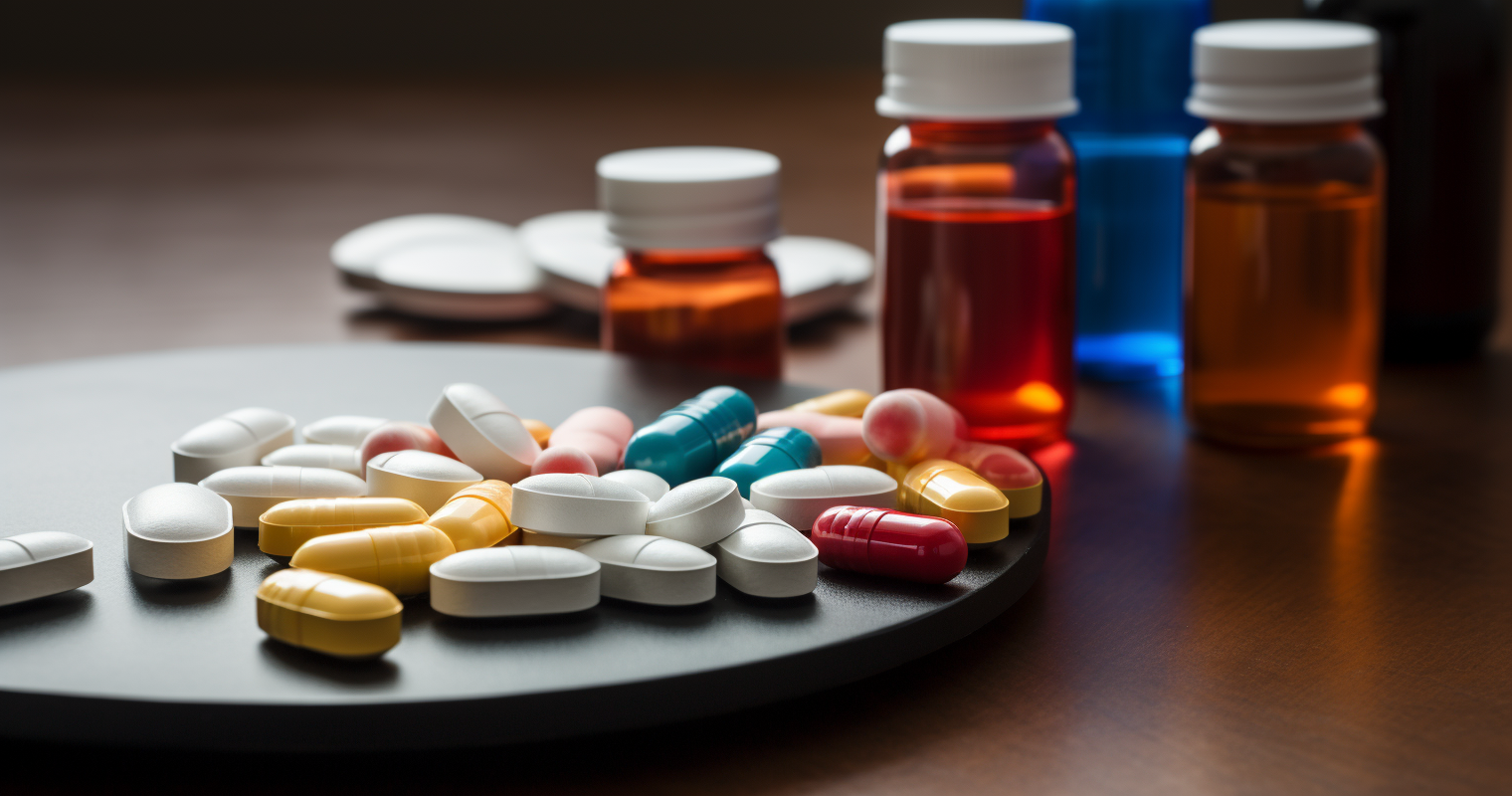
Dutch pharmacies are known as apotheken and are easy to spot thanks to their distinctive green cross signage. The vast majority of prescription drugs are covered under the Netherlands’ compulsory basic health insurance scheme (zorgverzekering), which every resident is legally required to maintain. GPs (huisartsen) generate prescriptions electronically and transmit them straight to your chosen pharmacy, creating a streamlined, near-paperless process.
| Item | Details |
|---|---|
| Word for pharmacy | Apotheek (plural: apotheken) |
| Standard opening hours | Monday–Friday, approximately 08:30–17:30; reduced or closed on weekends except duty pharmacies |
| Prescription system | Fully electronic (EVS); GP sends prescription directly to pharmacy |
| Mandatory insurance deductible (eigen risico) | €385 per year for adults (as of 2024); can be raised to €885 to reduce premium |
| Max. annual medication co-payment (eigen bijdrage) | Capped at €250 per patient annually on top of the deductible (as of 2025) |
| Medication import limit (personal use) | Up to 3 months’ supply; original packaging required; Opium Act substances need an official certificate |
What are pharmacies called in the Netherlands, and how do I recognise one?
The Dutch word for pharmacy is apotheek. When searching for one on the street, look out for a green cross on a white background displayed outside — this internationally recognised symbol makes it straightforward for newcomers to locate one at a glance.
There are two distinct types of outlets where you can purchase medicines in the Netherlands. A drugstore (drogisterij or drogist) — such as Kruidvat, DA, Etos, or Trekpleister — stocks non-prescription remedies alongside homeopathic products, toiletries, cosmetics, vitamins, and baby goods. An apotheek handles both prescription and non-prescription medicines, as well as vitamins, homeopathic preparations, and hypoallergenic skin care items. The distinction is important: if you need a prescription dispensed, you must go to an apotheek rather than a drugstore.
Pharmacists possess specialist knowledge and are well placed to advise on over-the-counter medications, potential drug interactions, and side effects. While they can dispense prescription medicines and recommend non-prescription products, Dutch pharmacists are not generally authorised to write prescriptions themselves. To locate your nearest pharmacy, visit apotheek.nl.
When you attend a pharmacy in the Netherlands for the first time, you will typically be asked to complete a registration. Staff will request your personal details, contact information, health insurance particulars, and the name of your GP. Once registered, the pharmacy will hold a record of your insurance details and your full medication history.
What are pharmacy opening hours in the Netherlands?
Pharmacy opening hours in the Netherlands vary according to the day. Most operate Monday to Friday between 08:30 and 18:00, while Saturday hours are generally shorter, with many closing around 17:00. Certain pharmacies may close briefly at lunchtime, so calling ahead is advisable if your visit is time-sensitive.
Outside standard hours, a duty pharmacy (dienstdoende apotheek) will be operating in your area on weekends, public holidays, and overnight. The contact details of the on-duty pharmacy are usually posted in the window of your regular apotheek. If you telephone a pharmacy after hours, you will typically hear a recorded message in Dutch directing you to the duty pharmacy’s name and number.
Certain pharmacies, particularly in major cities such as Amsterdam, Rotterdam, and The Hague, operate around the clock. For extra convenience, many pharmacies also have automated dispensing machines (automaten) outside their premises, allowing you to collect prescriptions at any hour without waiting in a queue.
In more rural parts of the country, the network of pharmacies can be sparser, so it is worth identifying your nearest duty pharmacy soon after you arrive. The apotheek.nl website lets you search by postcode and view up-to-date opening hours and duty rosters for your local area.
Which medications can I buy over the counter in the Netherlands, and which require a prescription?
A wide range of medicines can be purchased without a prescription in the Netherlands. Over-the-counter products are divided into three categories, and each category determines which types of outlet may legally sell them. Knowing this classification will help you find what you need in the right place.
| Class | Dutch term | Where sold | Examples |
|---|---|---|---|
| UA | Uitsluitend Apotheek | Pharmacy only | Higher-strength painkillers, larger pack sizes |
| UAD | Uitsluitend Apotheek en Drogist | Pharmacy or drugstore | Standard-dose ibuprofen, antihistamines |
| AV | Algemeen Verkrijgbaar | Any retailer (supermarket, petrol station) | Basic paracetamol, some vitamins |
Everyday items such as painkillers, cough preparations, and allergy remedies are generally available over the counter in pharmacies and drugstores. Medicines that carry a greater risk of misuse or that are more potent — such as strong analgesics or sleeping pills — require a prescription. You may find that drugs you could obtain freely in your home country need a prescription in the Netherlands, so it is always sensible to check with a pharmacist if you are uncertain about a particular product.
Online pharmacies are permitted to operate in the Netherlands and can be a practical option, especially for repeat orders. Several offer home delivery services. That said, it is essential to exercise caution: only use online pharmacies that are properly registered and authorised. You can verify a pharmacy’s status via apotheek.nl or through the Royal Netherlands Pharmacists Association (KNMP).
How does the prescription system work in the Netherlands?
Dutch healthcare is structured around a GP-first model: patients are treated initially by their huisarts and may only see a specialist following a GP referral. This gatekeeping principle extends to prescriptions, with the GP serving as the primary prescriber for most medicines.
All Dutch GPs use an electronic medical records system that incorporates a dedicated prescribing module called the Elektronisch Voorschrijf Systeem (EVS). Since 2014, prescribers have been required to use the EVS when generating prescriptions. Electronic prescriptions are now standard, meaning your GP transmits the prescription digitally to your chosen pharmacy — you do not ordinarily need to carry a paper document to collect your medicine.
During a GP consultation where medication is prescribed, the doctor will ask which pharmacy you would like to use, then send the prescription there directly. Just as you register with a GP, you effectively nominate a regular pharmacy so that all prescriptions are routed to that same location.
Dutch prescriptions are typically valid for a limited period, usually three months, after which a further GP consultation is needed for renewal. Between 70 and 80 per cent of all prescription volume consists of repeat prescriptions, which GPs generate routinely. For chronic conditions, repeat prescriptions can often be requested without an in-person appointment, via a GP practice’s online portal or by telephone — a system that shares similarities with repeat prescription processes elsewhere in Europe, though the precise workflow differs.
The Landelijk Schakelpunt (LSP) is the National Exchange Point through which GPs, hospitals, and pharmacists can securely access a patient’s medical history in the Netherlands. Rather than functioning as a single centralised database, it is a network allowing participating healthcare providers to view relevant records held in each other’s systems. Patient consent is required before records can be accessed through the LSP.
How much do prescriptions and medications cost in the Netherlands?
For most drugs prescribed by a Dutch GP, there is no direct out-of-pocket cost at the point of dispensing, as prescribed medication is covered under the compulsory basic health insurance that all residents must hold by law. This sets the Dutch system apart from countries where a flat prescription charge is levied regardless of the medicine’s actual cost.
The mandatory annual insurance deductible (eigen risico) stands at €385 for adults (as of 2024), and policyholders may elect to increase this to €885 in order to lower their monthly premium. This deductible applies to prescribed medicines and diagnostic procedures in primary care, though GP consultations themselves are exempt.
From 2025 onwards, there is a ceiling on the annual out-of-pocket co-payment (eigen bijdrage) for medicinal products, set at €250 per patient per year in addition to the insurance deductible. This cap offers meaningful financial protection for patients who require several medications or costly treatments. For the most current figures, consult the Zorginstituut Nederland (ZIN) website, as these thresholds are subject to periodic review.
Where a medicine is not fully reimbursed under the basic insurance package, a co-payment applies. A common example is when a prescription specifies a branded product that has a cheaper generic alternative — the patient is responsible for covering the price difference between the two. Service charges can also vary between pharmacies and according to the time of day; dispensing outside regular hours typically attracts a higher charge, as does the first time a medicine is issued to a new patient.
If meeting the standard insurance premium presents a financial hardship, you may be eligible for the healthcare allowance (zorgtoeslag), a government subsidy designed to assist lower-income residents. Visit belastingdienst.nl to check whether you qualify.
Will my home-country prescription be accepted in the Netherlands?
Whether a prescription issued abroad can be used in the Netherlands depends primarily on the country of origin. The rules differ considerably between EU and non-EU prescriptions, so it is worth clarifying your situation before you travel or relocate.
A prescription written by a licensed medical professional in another EU member state is valid in the Netherlands and can be filled at a Dutch pharmacy. If the prescribed medication is a branded product that is not available on the Dutch market, pharmacists will substitute the generic equivalent.
Prescriptions issued outside the European Union are not recognised in the Netherlands. If you have relocated or are visiting and your supply of a prescription medicine runs out, you will need to book an appointment with a Dutch GP (huisarts) for an assessment. The GP can then evaluate your condition and, if appropriate, issue a locally valid prescription.
For those arriving from outside the EU with ongoing medication requirements, the most practical course of action is to register with a GP as promptly as possible after arrival. GPs in the Netherlands frequently have waiting lists and may not be taking new patients, so early registration is strongly advisable. Bring copies of your medical records and existing prescriptions to your first appointment — this background information will help the GP understand your treatment history and issue suitable prescriptions without unnecessary delay.
Pharmacies can also provide a Medicijnpaspoort — a printed summary of a patient’s prescription medicine history — which can prove useful when travelling internationally. Requesting one before any trip abroad is sensible forward planning.
Can I bring my medications into the Netherlands?
You may bring most medicines into the Netherlands provided you can demonstrate that they are for your personal use. Specific rules govern how you do this, and these are set by the Customs Administration of the Netherlands (Douane).
For personal use, you may bring up to a three-month supply of medication. Keep medicines in their original packaging, accompanied by your prescription documentation. A prescription or doctor’s letter is particularly important when carrying controlled substances.
Medicines that fall under the Dutch Opium Act (Opiumwet) — including strong opioid painkillers, benzodiazepines, and certain sedatives — require an official statement or certificate. These categories of medication are treated as narcotics in many countries, including some within the EU. It is therefore important to check in advance whether a specific medicine is permitted for import. For controlled substances within the Schengen area, a Schengen certificate can be obtained from the relevant health authority in your home country prior to travel.
Purchasing medicines from an overseas online source and having them shipped to an address in the Netherlands is not permitted. Customs will confiscate such shipments unless the appropriate import licences — available through Farmatec, a department of the Ministry of Health, Welfare and Sport — have been obtained in advance.
Always transport medicines in their original packaging so it is immediately apparent that they are medicinal products. Keep them in your hand luggage so they are accessible for inspection if required. As regulations are subject to change, always verify the latest requirements with Dutch Customs at douane.nl or via the Government of the Netherlands medicines page before travelling.
How do expats access prescription medications through health insurance in the Netherlands?
Dutch basic health insurance is legally mandated to cover all services within primary care, including GP visits, emergency treatment, hospital admission, and prescription medicines. Because enrolment in this scheme is compulsory, once you are registered and insured you have immediate access to subsidised medications from the moment your cover begins.
Pharmacies in the Netherlands work in close coordination with health insurers to dispense prescription medicines. Most medications require a prescription from a GP or specialist. Once dispensed, pharmacies process insurance claims automatically. Depending on your specific plan and the medicine in question, you may pay a co-payment or nothing at all at the point of collection.
If your pharmacy is contracted with your insurer, you will typically not need to pay upfront — the pharmacy bills your insurer directly. If the pharmacy is not part of your insurer’s contracted network, you will be required to settle the cost yourself and may then apply to your insurance company for reimbursement.
Expats who have not yet secured Dutch basic insurance — for instance, those who have recently arrived or whose residency status is still being processed — will need to pay the full cost of medications out of pocket until their cover is in place, and may be able to claim reimbursement retroactively once insured. Insurance payments are backdated to the date of arrival in the country. For example, if you arrived on 1 May but did not purchase insurance until 1 June, you will still be liable for the May premium. This means gaps in coverage can generally be resolved retrospectively, but it is important to arrange insurance as quickly as possible after arriving.
Some expats maintain private international health insurance rather than Dutch statutory cover. The extent to which private policies reimburse Dutch pharmacy costs varies considerably from plan to plan. It is essential to confirm with your insurer whether Dutch pharmacy expenses are covered and whether prior authorisation is required for particular medications. For authoritative guidance on what the basic insurance package includes, consult Zorginstituut Nederland.
How do I register at a pharmacy in the Netherlands?
Enrolling at a local apotheek is one of the first practical steps to complete after moving to the Netherlands. It ensures your prescription history is on file, minimises the risk of medication interactions going unnoticed, and enables your GP to send prescriptions electronically to your pharmacy so they are ready for collection.
- Find a local pharmacy. Use apotheek.nl to search for pharmacies near your home address or postcode. Where possible, select one situated close to your GP practice for added convenience.
- Visit the pharmacy in person. When attending a Dutch pharmacy for the first time, you will usually be asked to complete a registration process.
- Provide your personal details. Staff will request your personal information, contact details, health insurance information, and the name of your GP.
- Present your health insurance card. Showing your Dutch health insurance card when collecting prescriptions allows the pharmacy to bill your insurer directly.
- Confirm your GP’s details. Supplying your GP’s name and practice address enables prescriptions to be sent to your pharmacy electronically, removing the need for you to act as an intermediary.
- Ask about collection options. Some pharmacies offer free home delivery of medications, while others provide secure dispensing machines that can be accessed with a personal code or key at any hour of the day.
- Keep your details updated. If you move to a new address, remember to inform your pharmacy so your records remain accurate.
Frequently asked questions: prescriptions and medications in the Netherlands
What should I do if I run out of medication in the Netherlands?
If your prescription medicine runs out, contact your registered GP (huisarts) as soon as you can. For non-urgent repeat prescriptions, many GP practices allow renewals to be requested by telephone or through their online patient portal without an in-person visit. If you have recently arrived in the Netherlands and have not yet registered with a GP, schedule an appointment with a Dutch doctor so they can assess your situation and issue a locally valid prescription. Outside normal GP hours and in urgent situations, you can attend the out-of-hours GP service (huisartsenpost), which is typically located at or adjacent to your nearest hospital.
Are brand-name drugs available in the Netherlands?
Brand-name drugs are available in the Netherlands, but pharmacists may dispense a generic alternative if one is available at a lower cost. Where a prescription specifies a branded product that also has a cheaper generic equivalent, the patient may be required to pay the price difference. If there is a clinical reason why you need a specific brand rather than a generic version, raise this with your GP, who can indicate the requirement on the prescription.
How do I find a pharmacist who speaks my language?
The Netherlands is widely recognised for its high levels of foreign language proficiency, and pharmacists in cities and larger towns are frequently able to assist in languages other than Dutch — especially in internationally oriented cities such as Amsterdam, Rotterdam, The Hague, and Eindhoven. The KNMP operates the apotheek.nl website, which provides a comprehensive index of all medicines available in the Netherlands, including details on whether a prescription is required. If language support is a priority, phoning ahead before your visit allows you to check in advance.
What happens if I need medication in a medical emergency?
For life-threatening emergencies in the Netherlands, call 112 to summon an ambulance. Patients in critical condition are transported to hospital emergency departments known as Spoedeisende Hulp. For urgent but non-life-threatening problems that arise outside normal GP hours, visit the huisartsenpost, which operates from locations at or near local hospitals. Duty pharmacies are also available throughout the day and night in most areas, providing access to urgent medications outside regular pharmacy hours.
Does the Netherlands have online pharmacies, and are they safe to use?
Online pharmacies operate legally in the Netherlands, and a number of them offer home delivery as a convenient alternative to collecting medications in person. However, it is important to exercise caution. Only use online pharmacies that are registered with the KNMP or that display the EU common logo for verified internet pharmacies — a logo that links directly to that pharmacy’s official registration record. Avoid buying prescription medicines from unregistered online sources, as these products may be counterfeit or otherwise unsafe.
What is the eigen risico and how does it affect my medication costs?
The eigen risico is the mandatory annual insurance deductible, set at €385 per year for adults as of 2024. It applies to prescribed medications and primary care diagnostic tests, but not to GP consultations themselves. Once your qualifying expenditure reaches €385 in a given calendar year, your insurer covers the remaining eligible costs. Current thresholds can be checked at rijksoverheid.nl.
Can I get a prescription from a specialist in the Netherlands without seeing a GP first?
The standard pathway in the Netherlands is to see a GP first and be referred to a specialist only if the GP considers it necessary. Specialists are able to prescribe medication, particularly for complex or chronic conditions falling within their field of expertise. However, accessing specialist care under the basic insurance package generally requires a GP referral. Without one, you may be required to pay for the specialist consultation out of your own pocket.
Do children need their own health insurance in the Netherlands?
Children under the age of 18 are covered at no cost under the standard health insurance package. Although they are legally required to have health insurance, no premiums are charged for children under the basic package. Prescription medications for insured children are subject to the same coverage rules as those for adults, but without any associated premium payments. The eigen risico annual deductible does not apply to minors.
Latest: Expat Focus International Healthcare Update August 2026 →