
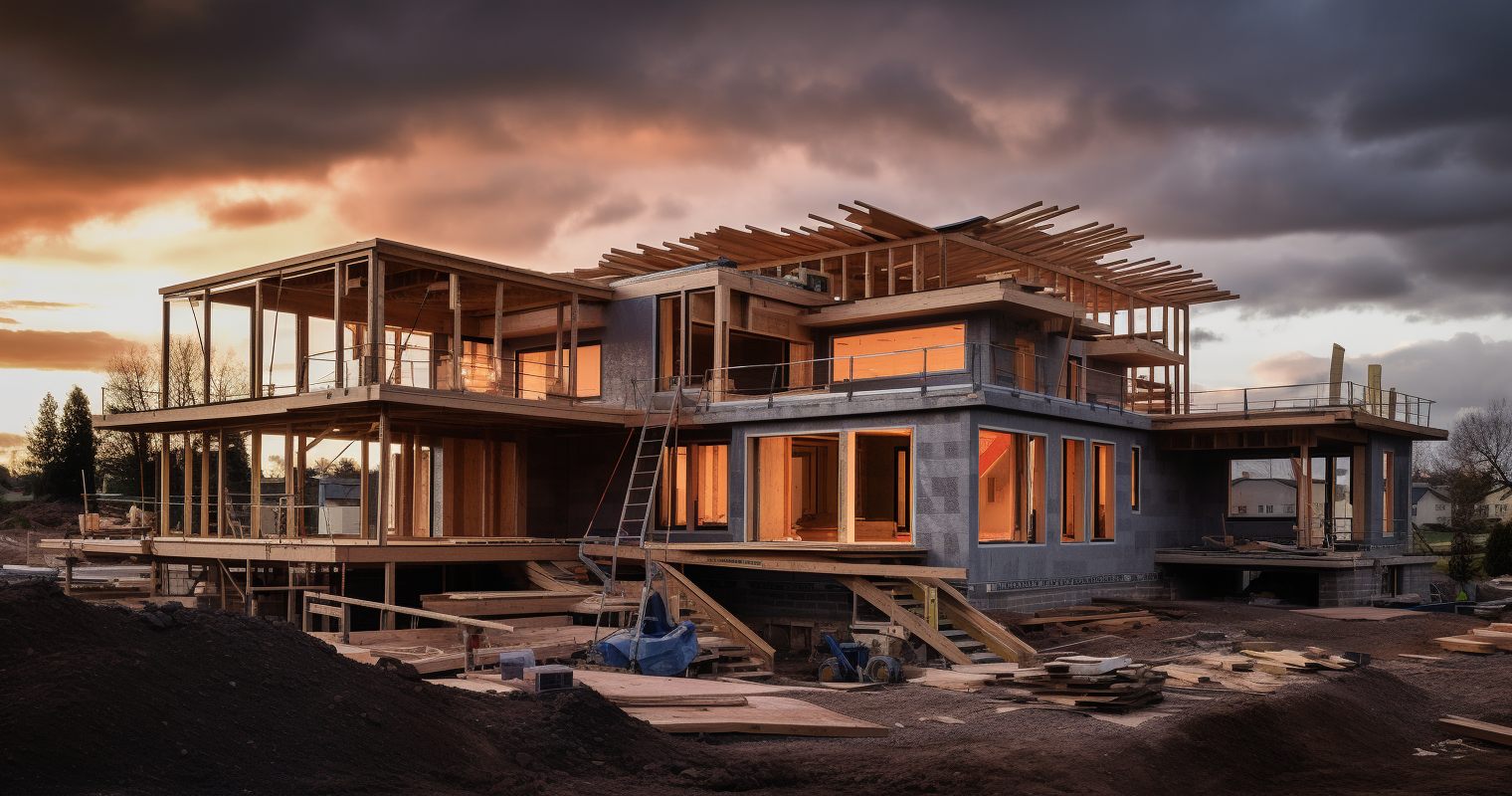
Construction and renovation activity in Australia operates within a tightly controlled framework shaped by individual state and territory planning legislation, local council regulations, and nationally applied building codes. Any substantial building or renovation project will almost certainly require a Development Application (DA) or a comparable formal approval. Foreign nationals must also navigate additional layers of obligation, including mandatory Foreign Investment Review Board (FIRB) approval and — effective from April 2025 — a temporary prohibition on acquiring established residential dwellings.
| Item | Details |
|---|---|
| Planning approval type | Development Application (DA) or state equivalent; fast-track CDC available in some states (as of 2025) |
| DA processing time | 6–12 weeks standard; up to 6+ months for complex projects (as of 2025) |
| Fast-track approval time | 5–15 business days where eligible (as of 2025) |
| FIRB approval (foreign buyers) | Required for all foreign persons acquiring residential land or vacant land for development; foreign purchase of established dwellings banned April 2025–March 2027 |
| FIRB application processing | Median approximately 30–34 days for residential/commercial approvals (as of 2024–2025) |
| Heritage protection | Operates at federal, state, and local levels; managed under state heritage acts and local planning schemes |
Do you need planning permission to build or renovate in Australia?
There is no single unified national planning system in Australia. Each state and territory administers its own planning regulations and schemes independently. The terminology applied to the approval process varies accordingly: New South Wales refers to a Development Application (DA), Victoria uses a Planning Permit, and Queensland, South Australia, and Western Australia each employ their own locally defined equivalents. Unlike countries that operate a single centralised planning framework, in Australia the starting point for any proposed development is invariably your local council.
A Development Application is a formal submission to the local council requesting consent to proceed with a proposed development — whether that involves constructing a new dwelling, undertaking substantial renovation work, or altering the designated use of land. A DA comprises a set of plans, technical reports, and supporting forms that ask the council to evaluate the proposed works against applicable state planning legislation and the local planning scheme, taking into account zoning rules, building controls, and potential environmental impacts.
Not every category of work demands a DA. Many states allow minor projects — small outbuildings, fences below a prescribed height, or purely internal alterations — to proceed without formal planning approval, on the condition that they satisfy pre-established development standards. In NSW, a Complying Development Certificate (CDC) offers an accelerated alternative pathway. A CDC combines planning and construction approval into a single process, designed for straightforward projects that fully meet strict pre-set planning and building criteria. CDCs are a mechanism specific to NSW; other states may apply different titles or procedures for similarly expedited approvals.
The governing legislation differs by jurisdiction: in NSW, development proposals are assessed under the Environmental Planning and Assessment Act 1979; Victorian planning permits are issued under the Planning and Environment Act 1987; Queensland DAs are lodged pursuant to the Planning Act 2016; and in Western Australia, each local government assesses DAs under the Planning and Development Act 2005.
How to apply — a step-by-step overview
- Check your zoning and requirements. Understand the zoning, overlays, and neighbourhood context of your site. Contact your local council or use their online planning portal to confirm whether a DA is required for your specific project.
- Prepare your documentation. You will typically need professionally prepared architectural drawings — plans and elevations — plus a Statement of Environmental Effects (SEE) or Planning Report addressing how the development meets planning controls.
- Lodge your application. Most states now accept applications online through their state planning portals. For example, in South Australia, you submit the application via the PlanSA portal.
- Verification. The relevant authority will verify your application to ensure it has been correctly submitted. Verification typically takes up to 5 business days, and this timeframe may be reset if additional information is requested.
- Pay the application fee. Fees vary by state, council, and project size. An invoice will be sent to the nominated contact, and assessment will not begin until payment has been made. Always check the current fee schedule with your local council or state planning portal, as fees change regularly.
- Assessment and decision. Your DA is assessed against zoning rules, building controls, and environmental impacts; in some cases, neighbour submissions may be invited. If you receive approval, it may come with certain conditions that become the rules of the project.
- Comply with conditions. It is crucial to abide by approval conditions, or you risk delays, fines, and stop-work orders.
Typical processing times (as of 2025)
A routine Development Application generally takes between 6 and 12 weeks to be determined, though complicated cases can extend to 6 months or beyond. A CDC or other fast-track pathway can be resolved in as few as 5 to 15 business days when documentation is complete and accurate. Targets differ across states: in NSW, the Planning Minister expects councils to issue a DA decision within 105 days of submission from 1 July 2025. In Victoria, timeframes vary considerably depending on application type; the current average processing time in 2025 is 134 calendar days, or 31 calendar days for a VicSmart application.
Once approval is granted, be mindful of any associated time constraints. In South Australia, for instance, once development approval is issued you have 2 years to commence works and 3 years to complete them. In Victoria, most permits lapse 2 years from the date of issue, although specific timeframes may be stipulated as conditions of the permit.
Where an application is refused or an applicant objects to attached conditions, a right of appeal is generally available. In Victoria, you may lodge an application for review with the Victorian Civil and Administrative Tribunal if your permit application is refused or if any conditions are unacceptable to you. This must be submitted within 60 days of the date on which the decision was issued.
What are the rules around listed buildings, conservation areas, and heritage protection in Australia?
Australia employs a multi-layered approach to recognising and safeguarding places of heritage value, with responsibility for managing these places distributed across laws at the federal, state, and local levels — all of which may apply concurrently to the same site or property. This stands in contrast to countries such as the UK, which operate a single national system of listed building protection.
At the federal level, the Environment Protection and Biodiversity Conservation Act 1999 provides protection for places of World Heritage, National Heritage, and Commonwealth Heritage significance. The Australian National Heritage List is a heritage register encompassing natural, historic, and indigenous places of outstanding heritage significance to the nation.
Each state maintains its own dedicated heritage register and governing legislation. Notable examples include: the Heritage Act 1977 (NSW), which provides for the conservation of environmental heritage items across New South Wales; the Queensland Heritage Register, a statutory list of protected places maintained under the Queensland Heritage Act 1992 by the Queensland Heritage Council; and Tasmania’s Historic Cultural Heritage Act 1995, which promotes the protection and conservation of places of historic cultural heritage significance and established both the Tasmanian Heritage Council and the Tasmanian Heritage Register.
Local heritage protections and overlays
At the local level, heritage protection generally takes one of two forms: a heritage listing that covers both the land and the buildings upon it, and a heritage overlay that regulates modifications to a building’s external fabric only. For properties of local heritage significance — including the majority of residential buildings on the heritage registers — these protections are embedded in local council planning schemes. Councils administer these controls by requiring permits for any proposed works that may affect the heritage significance of the place.
Heritage items are individual buildings, structures, or places valued in their own right. A heritage item listing extends to the entire property, encompassing the land, gardens, site features, and both the interior and exterior of the building. Within conservation areas, the focus is principally on the external envelope — including gardens and site structures. The constraints can be considerable: adding additional storeys to a heritage item is generally not supported, and subdivision or amalgamation of lots is similarly discouraged. Alterations to window openings and changes to fence heights may also be subject to restriction.
How to check heritage status before purchasing
Prior to purchasing or commissioning works, it is essential to examine all relevant registers. In NSW, the State Heritage Inventory is a searchable database of heritage items across the state. In South Australia, the South Australian Heritage Register lists protected places, areas, and associated objects of State heritage significance, maintained by the South Australian Heritage Council. Each state’s planning portal and local council website will additionally display heritage overlays that affect individual properties.
South Australia’s Heritage Places Act 1993 requires those responsible for a State Heritage Place to exercise “reasonable care” in its management. Undertaking unauthorised works on a heritage-listed property can attract severe penalties, including stop-work orders, mandatory reinstatement of the affected fabric, and substantial fines. Before commencing any work on or adjacent to a heritage-listed property or within a conservation area, always consult the relevant state heritage authority and your local council.
All heritage-listed properties are eligible for a reduction in land tax, and owners of heritage items and buildings within conservation areas can apply for a heritage restricted valuation to adjust their land tax liability. Owners of heritage properties that generate income may also be in a position to claim tax deductions for expenditure on maintenance and repair.
What permits and licences are required when building or renovating in Australia?
Obtaining planning consent through a DA or its equivalent is only one component of the approvals required to carry out construction work. A planning permit is distinct from a building permit — both may need to be secured. The building permit is a separate authorisation that confirms the proposed construction meets the technical standards set out in the National Construction Code (NCC) and the relevant state building regulations.
Building permits
Building permits are issued at the state or territory level and are needed for most structural construction work, including new dwellings, extensions, and significant renovations. They are generally issued by either a local council building surveyor or a registered private building surveyor. The building surveyor will inspect the works at prescribed stages — such as when foundations are laid, framing is completed, and upon final completion — and will issue a Certificate of Occupancy or equivalent certification once the works are finished and found to be compliant.
Other approvals and permits
Depending on the nature and location of your project, you may also be required to obtain:
- Environmental or bushfire-related approvals, where your site falls within a flood-prone, bushfire-prone, or ecologically sensitive zone. Many state planning portals feature mapping tools for flood and bushfire overlays to enable preliminary checks.
- Utility connection approvals, from the relevant water, sewerage, and electricity providers before connecting to mains services. Requirements and associated fees vary between states and providers — consult your local council or the relevant utility for current information.
- Demolition permits, which are required in most states before any existing structure is demolished, particularly where older buildings may contain asbestos materials.
- Tree removal permits, where the site contains trees protected under local or state legislation. Many councils keep registers of significant or protected trees, and removal without consent can attract heavy fines.
- Sustainability or energy efficiency certificates: in NSW, a BASIX Certificate represents the minimum building sustainability requirement for new homes, large-scale renovations, and swimming pools or spas. Other states have comparable energy efficiency requirements under the NCC.
For heritage-listed properties, additional consents will be needed. If a Development Application is required for work to a heritage-listed property, a Statement of Heritage Impact must generally be provided unless the council advises otherwise. A Conservation Management Plan may be required for major works to heritage items, particularly those of state or regional significance.
Always verify current fee schedules and assessment timeframes with the relevant state or local authority before starting any project, as these are subject to change. Your state’s planning portal — listed in the official sources section below — is the most reliable source of up-to-date information.
How do you find a reliable, trustworthy builder in Australia?
The building and construction industry in Australia is regulated at the state and territory level. In each jurisdiction, builders must hold a valid licence or registration before undertaking residential or commercial building work above a specified value threshold. The relevant licensing authority varies by state: in NSW it is NSW Fair Trading; in Victoria, the Victorian Building Authority (VBA); in Queensland, the Queensland Building and Construction Commission (QBCC); in Western Australia, the Building Services Board; and in South Australia, the Consumer and Business Services (CBS) office.
Before engaging any builder, always confirm that they hold a current licence in the state where the work is to be carried out. This can be verified through each state’s publicly accessible online licence register — for example, the VBA register in Victoria or the QBCC licence search facility in Queensland. Engaging an unlicensed builder exposes you to serious financial and legal risk and may render insurance claims void.
Professional bodies
Reputable builders in Australia may also hold membership of key industry associations, which require members to adhere to professional standards and offer access to dispute resolution services:
- Master Builders Australia (MBA) — the national peak body for the building and construction industry, with affiliated branches operating across all states and territories.
Website: www.masterbuilders.com.au
Phone: (02) 6202 8888
Address: 16 Bentham Street, Yarralumla ACT 2600 - Housing Industry Association (HIA) — Australia’s peak body for the residential building sector, with a “Find a Professional” directory available on its website.
Website: www.hia.com.au
Phone: 1300 650 620
Address: 79 Constitution Avenue, Campbell ACT 2612
Vetting a contractor
When selecting a builder, the following practical steps are strongly recommended:
- Verify their licence through the relevant state authority’s online register before entering into any contract.
- Request and check references from at least two recent projects of a comparable nature. Where possible, speak directly with former clients.
- Confirm they hold appropriate insurance, including home warranty insurance (mandatory for residential work above certain thresholds in most states), public liability insurance, and workers’ compensation insurance. Ask to inspect current certificates of currency.
- Use a written contract. All residential building work above a specified value (which varies by state) must be documented in a written contract under consumer protection legislation. Read all terms carefully before signing. Standard contract templates are published by both Master Builders Australia and the HIA.
- Structure payments in stages linked to completed phases of work, rather than paying large sums upfront. Requests for the majority of payment before commencement are a significant warning sign.
- Do not pay cash without receipts and avoid any “off-the-books” arrangements — these carry no legal protections whatsoever.
Common scams and risks for foreign property owners
Foreign nationals and expatriates should be alert to the fact that construction fraud is a recognised risk in Australia. Common schemes involve builders who collect sizeable deposits and subsequently abandon projects, contractors operating without a valid licence in the relevant state, and high-pressure tactics designed to rush the signing of contracts. Never pay more than the statutory deposit limit — typically 5 to 10% of the contract value, depending on the state — before work has commenced. If you are overseeing a project from outside Australia, engage a qualified project manager or building consultant who is physically based in Australia to supervise the works on your behalf.
How do you find a qualified local architect in Australia?
In Australia, architects must be registered to practise professionally and to use the protected title of “architect” — this protection is enshrined in legislation in each state and territory. Registration is administered by individual state and territory boards, and the broader standards framework is coordinated nationally through the Architects Accreditation Council of Australia (AACA).
The key national bodies are:
- Architects Accreditation Council of Australia (AACA) — the national body responsible for evaluating architectural qualifications and facilitating registration across jurisdictions.
Website: www.aaca.org.au
Phone: (02) 6262 9494
Address: Level 1, 16 Bentham Street, Yarralumla ACT 2600
Email: [email protected] - Australian Institute of Architects (AIA) — the peak professional association for architects in Australia, offering a searchable “Find an Architect” directory on its website.
Website: www.architecture.com.au
Phone: 1800 022 369
Address: Level 3, 11 National Circuit, Barton ACT 2600
Email: [email protected]
State and territory registration boards include the NSW Architects Registration Board (www.architects.nsw.gov.au), the Architects Registration Board of Victoria (www.arbv.vic.gov.au), and equivalent bodies in each remaining state and territory. These registers can be searched to confirm whether a particular architect currently holds valid registration to practise.
Considerations for expats engaging an architect
There is no language requirement specific to architects in Australia — the working language is English, and all official plans, permit applications, and documentation must be submitted in English. If English is not your first language, engage a qualified interpreter for important meetings and when reviewing contract documents. Overseas architectural qualifications are not automatically accepted in Australia; they must be assessed through the AACA’s Overseas Qualifications Assessment process before an architect can obtain registration to practise locally.
When choosing an architect, prioritise someone with proven experience in your particular project type — whether that is a new build, heritage renovation, or otherwise — and in your target state or council area. An architect with established relationships with your local council’s planning team and a detailed knowledge of the applicable planning scheme can considerably reduce the likelihood of delays or complications. Before signing any agreement, always request the architect’s registration number and cross-check it against the relevant state board’s register.
What are the common pitfalls when buying land to build on in Australia?
Acquiring land for construction in Australia requires careful navigation of an intricate set of legal, planning, environmental, and financial considerations. Errors made at the purchase stage can prove extremely expensive, making comprehensive due diligence before executing a contract absolutely essential.
Confirming planning and development potential
Do not assume that land available for purchase is automatically suitable for development. Always establish the zoning classification and the range of permitted land uses before proceeding. The onus is on you to determine whether a permit is required before you develop or change the use of your land. Contact the relevant local council to obtain a planning certificate — known as a Section 149 certificate in NSW or its equivalent in other states — which discloses zoning, heritage listings, flood risk, and other planning constraints affecting the property.
Checking titles, boundaries, and ownership history
Engage a licensed conveyancer or solicitor to undertake thorough title searches prior to exchanging contracts. In Australia, land title and ownership records are held in each state and territory’s land registry — for example, NSW Land Registry Services, Land Use Victoria, or Landgate in Western Australia. Title searches reveal encumbrances, easements, restrictive covenants, and caveats that could significantly limit your intended use of the land. Ensure that the boundaries depicted in sales materials correspond precisely with those recorded on the registered title.
Environmental and flood risks
Australia is exposed to a range of serious environmental hazards, including bushfire, flooding, and coastal erosion. Most state planning portals publish overlay mapping that identifies flood-prone and bushfire-prone land. Building on flood-affected sites commonly requires additional approvals, engineered foundations, and compliance with design standards that entail considerable additional cost. Land in designated bushfire-prone areas must comply with Australian Standard AS 3959 for construction in bushfire-prone areas, which can have a substantial bearing on the choice of building materials, the design of the structure, and overall costs.
Contamination and asbestos
Older industrial or agricultural sites may present contamination risks. Where a proposal involves a transition to a more sensitive land use — for instance, from industrial to residential — a qualified expert may be required to provide supporting evidence. Pre-purchase soil testing and a thorough investigation of the site’s land use history are strongly advised for any property with an unknown or industrial background.
Utility connections
Not all land in Australia has access to mains water, sewerage, electricity, or gas supply. Rural and semi-rural properties in particular may require the installation of septic systems, water storage tanks, or off-grid energy solutions — all of which carry significant costs and may necessitate additional permits. Before finalising any purchase, confirm the availability and cost of connecting to services with the relevant local utility providers.
Using a conveyancer or solicitor
Property contracts in Australia become legally binding on exchange and may include very brief cooling-off periods — or none at all in the case of auction purchases. Always engage a qualified licensed conveyancer or property solicitor before putting pen to paper. Unlike certain other legal systems where a notary oversees property transactions, in Australia conveyancers and solicitors are the appropriate professionals for property contract work. They can conduct title searches, review contractual terms, identify potential risks, and advise on any special conditions that should be included prior to exchange.
What are the rules around foreign ownership and financing for construction projects in Australia?
Australia’s Foreign Investment Review Board (FIRB) is responsible for examining foreign investment proposals and serving as an advisory body to the Treasurer. The Treasurer holds discretion to approve or reject applications, or to impose conditions on foreign investment proposals, in line with Australia’s foreign investment policy.
As a general rule, all foreign persons must submit an application for FIRB approval in respect of any proposed acquisition of Australian property — whether residential, commercial, or agricultural — subject to specified exemptions.
The 2025–2027 ban on purchasing established dwellings
From 1 April 2025 until 31 March 2027, foreign persons are prohibited from purchasing established dwellings in Australia, with limited exceptions. This prohibition encompasses temporary residents seeking to acquire an established dwelling as a principal place of residence. Temporary residents retain the ability to apply for approval to purchase vacant land or newly constructed dwellings. The measure is intended to relieve pressure on Australia’s housing market and improve the availability of existing homes for domestic purchasers. A government review will assess whether the ban should continue beyond 2027 — always verify the current position at the official foreign investment website listed below.
Buying vacant land to build on
All foreign persons are required to notify the FIRB of any proposed acquisition of residential real estate, including new houses, off-the-plan properties, or vacant land intended for development. Where FIRB approval is granted for the purchase of vacant land, it typically carries conditions: at least one residential dwelling must be constructed on the land; the interest in the land must not be sold, transferred, or otherwise disposed of before construction is finalised; and construction must be completed within 4 years from the date of FIRB approval.
Australia’s foreign investment policy actively encourages foreign nationals to purchase newly constructed properties, commonly referred to as “off-the-plan” acquisitions. This generally represents the most accessible pathway for foreign persons seeking to enter the Australian residential property market.
Fees and processing times
Fees are payable when lodging an application for FIRB approval. For business, commercial real estate, and agribusiness investments, application fees range from $1,000 to $1.1 million depending on the size of the investment and the relevant sector. Residential application fees are calculated based on the value of the property — consult the current fee schedule at foreigninvestment.gov.au, as these figures are periodically updated. The standard turnaround time for an approval is currently approximately 30 days, though more involved applications will take longer.
The FIRB process is a substantive legal obligation rather than a formality — failure to secure approval can expose you to significant financial penalties or even criminal liability. Always ensure that any contract you execute is made conditional upon the receipt of FIRB approval.
Financing a construction project as a foreign national
Obtaining finance for a property purchase or construction project in Australia as a foreign national is considerably more demanding than for Australian residents, owing to strict lending criteria and conservative treatment of overseas income. Lenders require extensive supporting documentation and typically apply lower loan-to-value ratios (LVRs) for applicants relying on foreign income — commonly requiring a deposit of 30% or more. Specialist mortgage brokers with expertise in non-resident lending can be enormously helpful in this context, as they understand individual lender policies, income assessment approaches, and can identify institutions that remain active in the non-resident market.
Construction loans in Australia are typically structured as progressive drawdowns corresponding to specified building milestones — slab, frame, lockup, fixing, and completion. While such loans are available from Australian banks, the eligibility criteria tend to be more stringent for non-resident borrowers. Independent financial and legal advice should always be sought before committing to any purchase or construction project.
What official sources should you consult when planning to build or renovate in Australia?
The regulatory landscape for building and renovation in Australia spans federal, state, and local government, making it essential to draw on multiple sources of information. Rules, fees, and procedures are subject to regular revision — always confirm current requirements directly with the relevant authority before proceeding.
| Body / Resource | Role | Website |
|---|---|---|
| Foreign Investment Review Board (FIRB) / ATO | Foreign investment approvals; residential land rules for foreign buyers | foreigninvestment.gov.au |
| NSW Department of Planning, Housing and Infrastructure | NSW planning approvals, ePlanning portal, zoning tools | planning.nsw.gov.au |
| Planning Victoria | Victorian planning permits, planning scheme maps, heritage overlays | planning.vic.gov.au |
| PlanSA | South Australia development applications and planning portal | plan.sa.gov.au |
| Queensland Development Assessment | QLD development applications under the Planning Act 2016 | planning.qld.gov.au |
| Department of Climate Change, Energy, the Environment and Water (DCCEEW) | National heritage law; EPBC Act; National Heritage List | dcceew.gov.au |
| Australian Institute of Architects (AIA) | Find a registered architect; professional standards | architecture.com.au |
| Architects Accreditation Council of Australia (AACA) | Architect registration; overseas qualification assessment | aaca.org.au |
| Master Builders Australia | Find a licensed builder; industry standards; contracts | masterbuilders.com.au |
| Housing Industry Association (HIA) | Find a builder or trade professional; residential building standards | hia.com.au |
| Victorian Building Authority (VBA) | Builder and building surveyor licences in Victoria | vba.vic.gov.au |
| NSW Fair Trading | Builder and contractor licences in NSW; home building contracts | fairtrading.nsw.gov.au |
| Queensland Building and Construction Commission (QBCC) | Builder licences and dispute resolution in Queensland | qbcc.qld.gov.au |
For state land registries — where title records can be searched and ownership confirmed — visit NSW Land Registry Services (nswlrs.com.au), Land Use Victoria (land.vic.gov.au), Landgate in Western Australia (landgate.wa.gov.au), or the equivalent authority in your target state or territory.
Frequently asked questions
How much does it typically cost to build a house in Australia?
Building costs in Australia are subject to considerable variation depending on the state, location, design complexity, and choice of materials. As a general indicator, construction costs for a standard new home typically fall in the range of AUD $1,500 to $4,000 or more per square metre, with specialist or heritage-sensitive projects attracting considerably higher costs. Beyond construction itself, you must account for land purchase costs, DA and building permit fees, utility connection charges, and professional fees covering your architect, surveyor, and other consultants. Always obtain a minimum of three detailed written quotations before committing to a builder, and set aside a contingency budget of at least 10 to 15% to cover unexpected costs.
How long does it typically take to build a new home in Australia from start to finish?
When measured from the initial planning stage through to handover, building a new home in Australia generally takes between 12 and 24 months, depending on the scale and complexity of the project, the jurisdiction in which you are building, and the speed at which approvals are obtained. Planning approval for a standard DA alone may take 6 to 12 weeks as of 2025, with construction thereafter commonly running for a further 6 to 12 months. Delays attributable to inclement weather, materials supply chain disruptions, or modifications to the approved design are not uncommon.
Do overseas building qualifications or standards transfer to Australia?
Overseas building qualifications are not automatically recognised in Australia. Builders and tradespeople holding qualifications from abroad must have them formally assessed by the relevant state licensing authority or through Skills Assessment Australia before they can obtain a local licence. For architects, the pathway runs through the AACA’s Overseas Qualifications Assessment process. Building standards from other countries — including those of the United States, United Kingdom, or European jurisdictions — have no standing in Australia; all construction must comply with the National Construction Code (NCC) and the applicable state building regulations.
What happens if planning rules are breached during construction?
Violations of planning approval conditions in Australia carry serious consequences. Local councils and state authorities are empowered to issue stop-work orders, compel the demolition or removal of unauthorised structures at the owner’s cost, impose substantial monetary penalties, and pursue prosecution before the relevant state planning tribunal or court. Unauthorised works can also create complications when the property is subsequently sold and may fall outside the scope of building insurance coverage. If you discover that construction has inadvertently deviated from the approved plans, contact your council or certifier without delay to explore available options for regularisation.
Can a foreign national take out a mortgage or construction loan in Australia?
Foreign nationals can access mortgage or construction finance in Australia, though the process is considerably more demanding than for residents. Most Australian lenders impose a higher deposit requirement — frequently 30% or more — apply elevated interest rates, and scrutinise overseas income with particular rigour. Extensive documentation covering income, employment history, and existing financial commitments is required. A mortgage broker with specialist expertise in non-resident lending can help you identify institutions that remain willing to lend to foreign buyers and guide you through the application process. Note that FIRB approval must be obtained before any loan can proceed in connection with a residential property purchase.
Is there a language barrier when dealing with planning authorities in Australia?
All planning documentation, development applications, and formal correspondence with authorities in Australia are conducted entirely in English. If your command of English is limited, you will need to arrange for an accredited interpreter to be present at key meetings, and all materials submitted to planning authorities must be provided in English. The Translating and Interpreting Service (TIS National), reached on 131 450, can assist with both translation and interpreting. For any project of meaningful scale, it is strongly advisable to engage a local architect or town planner who can communicate and negotiate with the council directly on your behalf.
How do I resolve a dispute with a builder in Australia?
Every state and territory provides a statutory mechanism for resolving building disputes. In NSW, matters can initially be referred to NSW Fair Trading and ultimately to the NSW Civil and Administrative Tribunal (NCAT). Victoria offers Domestic Building Dispute Resolution Victoria (DBDRV), a free conciliation service for residential building disputes that must generally be exhausted before proceeding to VCAT. In Queensland, the QBCC administers complaints and dispute resolution. Where a builder has walked away from a project or entered insolvency, home warranty insurance — which is compulsory for residential work above specified values in most states — may provide financial recourse. This is a further compelling reason to verify a builder’s insurance coverage before signing any contract.
Are there any restrictions on foreign nationals commissioning construction work in Australia?
Foreign nationals are not subject to any special permissions beyond the standard planning and building approvals that apply to all property owners when commissioning construction work in Australia. The principal restriction relates to property ownership: FIRB approval is required before acquiring any property, and the temporary ban on purchasing established dwellings remains in effect from April 2025 to March 2027. Once you have lawfully acquired land and secured the necessary planning approvals, there are no further restrictions based on nationality when engaging architects, builders, or other construction professionals — provided that all contractors hold current licences in the relevant state.