
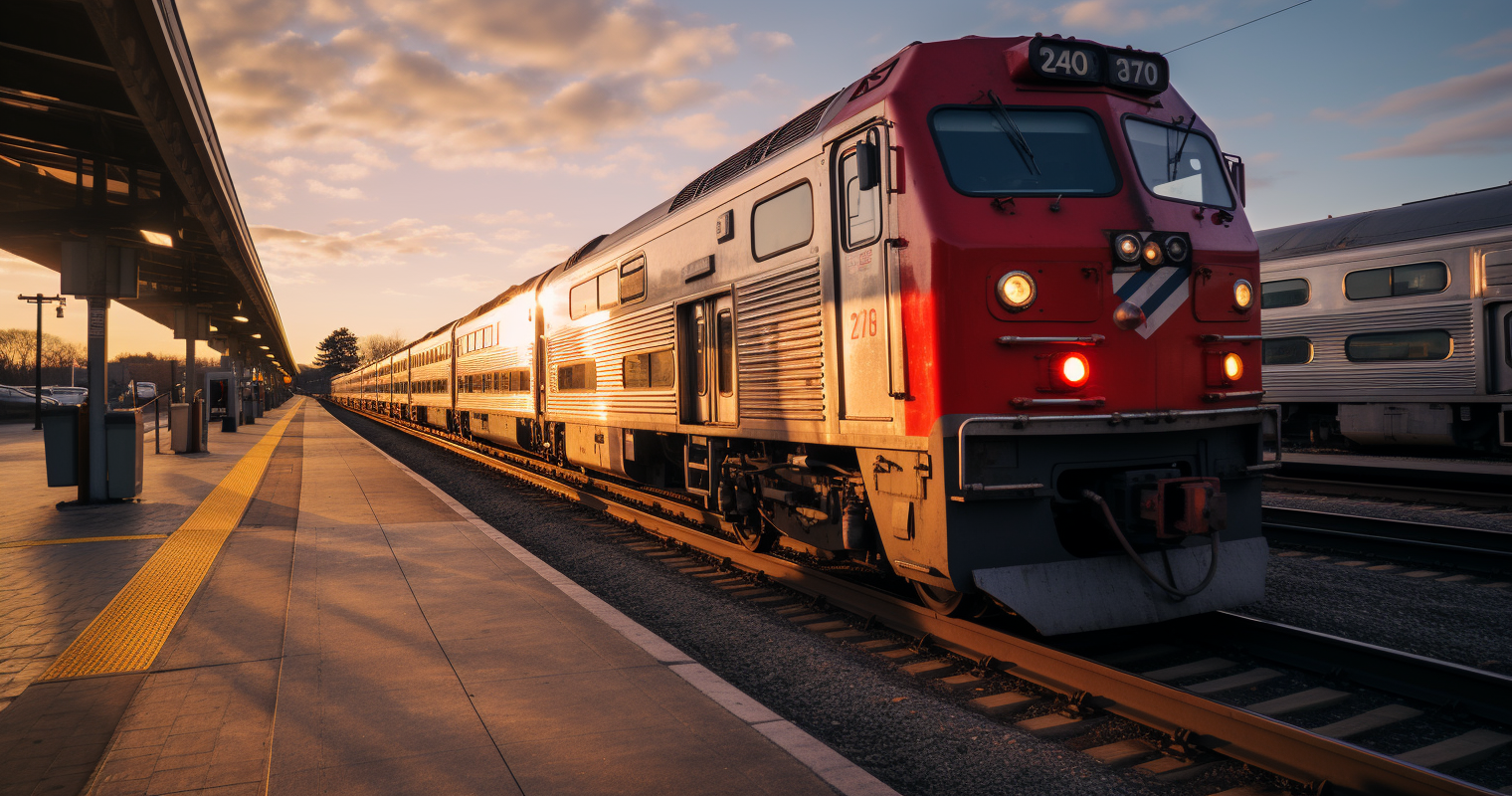
China’s rail network ranks among the most expansive and technologically sophisticated on the planet, combining a 162,000 km national system with a 48,000 km high-speed network that connects virtually every major city. For those living in China, it provides an exceptionally practical, cost-effective, and dependable means of getting around — whether for daily commutes or cross-country journeys — backed by contemporary stations, reliable scheduling, and widespread digital ticketing.
| Item | Details |
|---|---|
| Total rail network length (as of 2024) | 162,000 km, including 48,000 km of high-speed rail |
| High-speed train top speed | Up to 350 km/h (G-series trains); next generation targeting 400 km/h |
| Cities served by high-speed rail (as of 2024) | 97% of cities with a population over 500,000 |
| Advance booking window | 15 days via 12306 (official); up to 30 days via some third-party platforms |
| Official ticketing platform | www.12306.cn (English version available) |
| Annual passenger trips (as of 2024) | 4.08 billion — a record high |
What is the overall standard of rail travel in China?
By any meaningful measure, China’s rail network is a world-class achievement. By the close of 2024, the total length of China’s railway infrastructure had reached 162,000 kilometres, with 48,000 km of that dedicated exclusively to high-speed services — a figure that cements the country’s position as the undisputed global leader in this field. For context, the combined high-speed rail networks of Germany and Japan — two nations celebrated for their railways — each represent only a fraction of China’s total high-speed mileage.
China’s 48,000 km high-speed network, reached at the end of 2024, accounts for roughly 70% of all high-speed rail lines worldwide. Services now reach 97% of cities whose populations exceed 500,000. In practical terms, this means that virtually any expatriate living in or near a significant Chinese city will have direct access to high-speed rail.
According to 2024 railway operation figures, China’s high-speed rail achieved an on-time rate exceeding 99% — a punctuality standard comparable to Japan’s Shinkansen and considerably better than the performance of most European national rail systems. Trains depart and arrive on time with remarkable consistency, regardless of seasonal weather conditions.
The network is well suited to both commuters and long-distance travellers alike. Journeys between major cities typically take between one and three hours, enabling swift movement across vast distances. Stations are usually found in city centres, with metro lines and taxi ranks directly outside — a stark contrast to airports, which are frequently located 40–50 km from the urban core. This proximity makes rail a genuinely compelling alternative to flying for most trips under five hours.
Conventional (non-high-speed) trains continue to operate across the full 162,000 km network and remain invaluable for reaching smaller towns and rural communities not yet connected by high-speed lines. Ongoing infrastructure expansion has steadily improved connectivity to more remote parts of the country, including regions with challenging geography such as the rugged mountains of Sichuan and the Xizang autonomous region, where new rail corridors have opened up access to previously isolated communities.
China has announced plans to extend its high-speed rail network to approximately 60,000 km by 2030, up from 48,000 km at the end of 2024. For anyone contemplating long-term residence in China, the network will only grow more comprehensive in the years ahead.
What classes of rail travel are available in China, and what are the differences between them?
The range of travel classes on China’s railways is considerably broader than what passengers encounter on most European national networks. The options available to you will depend largely on the route and train type — high-speed services (G, D, and C series) offer different classes from conventional trains (Z, T, K, and similar series).
Second Class (二等座)
Second class seating is arranged five abreast — three seats on one side of the aisle and two on the other. The seats are broadly comparable to economy class on a commercial aircraft, featuring an adjustable backrest and a small folding table. Second class carries the lowest fare of all high-speed seat categories and is by far the most widely used option. Power sockets are provided at most seats. For the vast majority of everyday journeys, second class is entirely comfortable and represents outstanding value for money.
First Class (一等座)
First class cabins on C, D, and G trains seat four passengers per row, with two seats on either side of the aisle. The seats are noticeably wider and more generously cushioned than their second class equivalents, and each includes a small pillow and a folding footrest. Fares run approximately 20% to 40% higher than second class. The additional space, quieter environment, and complimentary snacks and drinks make first class a worthwhile upgrade for those who place a premium on comfort during longer journeys.
Business Class (商务座)
Business class represents the most luxurious — and most expensive — seating available on select high-speed services, though not all trains offer it. Arranged three across per row with a row pitch of around two metres (6.6 feet), the leather seats recline to a fully flat position of 180–190 cm, allowing passengers to sleep in genuine comfort. Fares are typically around twice those of first class and approximately three times those of second class. At major stations, business class passengers may also have access to dedicated waiting lounges.
Sleeper Classes
For journeys of five hours or less, seated classes are the go-to choice, but sleeper accommodation is strongly advisable for overnight or extended trips. On conventional trains, hard sleeper compartments are open-bay affairs with three tiered berths on each side, while soft sleepers provide greater privacy in an enclosed four-berth compartment. The deluxe soft sleeper takes this further, offering a private two-berth cabin with a lockable door, a sofa, and wardrobe space. Some overnight D-series high-speed trains also feature dedicated sleeper carriages.
Hard Seat and Conventional Train Classes
Hard seats represent the cheapest travel option on conventional services but tend to be crowded and are not particularly comfortable. Coaches can be poorly maintained, and this option is not recommended when alternatives are available — particularly during busy travel periods. For residents who commute regularly, second class on a high-speed train is a far more sensible daily choice than hard seat on a conventional service.
Where can you find rail timetables and ticket prices in China?
The official China Railway website, www.12306.cn, is the sole authoritative platform for ticket booking. Whether you are looking to travel on a high-speed service (G, D, or C trains) or a conventional train (T, Z, or K trains), this site allows you to browse the latest routes, departure times, available seat classes, and fares — and to complete your purchase directly.
In November 2020, China Railway formally launched an English-language version of the ticketing site, enabling foreign passengers unfamiliar with Chinese to register and book independently. Compared to the Chinese-language interface, the English version offers a streamlined set of functions: account registration and login, one-way ticket purchases, changes to the arrival station, refund requests, and order tracking. Station names are displayed in both Chinese and English throughout.
For residents who want access to a fuller range of features, the complete Chinese-language edition of 12306 — available via the same website or the 12306 mobile app — provides additional services such as in-journey catering orders, loyalty point accumulation, and tourism information. The app also supports English: open the 12306 app, tap “My” → “Settings” → “Language” → select “English”. On the website, click “English” in the upper-right corner to switch language.
Several reliable third-party platforms present timetable and pricing data in formats that are more accessible for international residents. Trip.com is a popular choice for those living abroad or new to China, offering a fully English-language interface that accepts foreign payment methods including PayPal and international credit cards. Other well-regarded third-party booking services include Klook and Ctrip. Bear in mind that third-party platforms typically charge a service fee on top of the face-value ticket price.
Fares differ considerably depending on the route, train type, and class of travel, and are subject to change. Always confirm current prices through the official 12306 website or app before making travel plans, as fares are dynamically priced and third-party sites may not always display the most up-to-date figures.
How do you buy rail tickets in China, and can you book in advance?
There are several methods available for purchasing rail tickets in China, and it is important to understand how the real-name ticketing system works before you begin. China’s railway operator requires that all ticket purchases be made under a valid identity, in accordance with applicable regulations. Foreign passengers may purchase real-name tickets using a valid passport. Both electronic tickets and physical paper tickets are available.
- Official 12306 website or app: www.12306.cn is the only authorised China Railway ticketing platform. It allows you to search routes, check schedules and seat availability, and buy tickets directly. Account registration requires your passport details. Payment is accepted via international credit cards or China UnionPay.
- Third-party apps and websites: Trip.com is tailored for international users, available in English and multiple other languages, and accepts international credit and debit cards as well as PayPal — making the payment process considerably more straightforward, albeit with a small booking fee applied.
- Station ticket offices: Purchasing tickets in person at a railway station is a dependable option, especially for same-day or last-minute travel, though you should be prepared for potentially lengthy queues. Bring your passport.
- Self-service ticket machines: The majority of large and medium-sized stations are equipped with self-service kiosks that verify identity documents electronically. These are faster than queuing at a staffed window and are increasingly available with English-language menus.
- Railway hotline: Tickets can also be purchased by calling the official hotline on 95105105. This service operates primarily in Mandarin Chinese but may serve as a useful last resort when other options are unavailable.
Advance Booking
The standard pre-sale window for train tickets is 15 days, meaning you can book today and for any of the following 14 days. Some third-party platforms such as Trip.com can accommodate bookings up to 30 days ahead on certain routes. Securing tickets well in advance is particularly important during the busiest travel periods: Chinese New Year (January–February), National Day (1–7 October), and popular holiday weekends. During quieter off-peak periods, booking 3–7 days ahead is generally sufficient to obtain your preferred seats on most routes.
Electronic tickets have largely superseded paper tickets on high-speed services. Because of the real-name system, every passenger must provide their passport or identity document at both the booking and boarding stages. At station gates, you scan your passport directly at automated readers — no separate ticket printout is required for the majority of high-speed journeys.
What types of rail tickets are available in China, and are there discount schemes?
China’s rail ticketing framework does not operate on the rail pass model familiar to travellers in Japan (the JR Pass) or those using interrail passes across Europe. Tickets are sold on a point-to-point basis, and no national unlimited-travel pass currently exists for the domestic rail network. Nevertheless, several discount categories are in place.
Standard Ticket Types
Single one-way tickets are the norm. Return journeys can be booked, but each leg is treated as a separate transaction under the real-name system — there is no discounted return fare. Every ticket is tied to a specific date, departure time, train number, and allocated seat. Standing tickets (无座) are issued on some routes when all seated places are taken, priced equivalently to a seated ticket, and are only advisable for short trips.
Children’s Discounts
Children between the ages of 6 and 14 are entitled to child tickets, while those aged 14 and above must purchase full adult fares. Children under 6 travelling with an adult may ride free of charge provided they do not occupy a seat; a child ticket must be purchased if a seat is needed. Child seat tickets are priced at half the full adult fare, while child sleeper tickets are charged at 75% of the full sleeper fare. These figures apply as of 2024 — confirm current rates via 12306.cn.
Student Discounts
Students enrolled at Chinese educational institutions may qualify for reduced fares on certain conventional (non-high-speed) routes, generally contingent on presenting a valid student card issued by a Chinese school or university. Discount availability and eligible routes vary, so consult the current policy via 12306 or enquire at your nearest station ticket office.
Senior and Disability Discounts
Reduced fares for older passengers and those with disabilities are available on conventional train services, with eligibility criteria and discount levels determined at a national level. Qualifying typically requires a valid Chinese-issued document. Residents travelling on a foreign passport should check directly with China Railway (12306) or their local station for up-to-date entitlement rules, as these may be subject to revision.
Price Comparison Context
While high-speed rail tickets are priced above conventional train fares, they remain cheaper than air travel for most comparable journeys. As one illustration, a second class high-speed ticket on the Beijing to Shanghai route costs around CNY 550, whereas a full-price economy airline ticket on the same corridor typically exceeds CNY 850. These are indicative figures based on recent pricing — always verify the current fare on 12306 before travelling, as prices fluctuate by service and season.
How accessible is the rail network in China for disabled passengers?
Accessibility provisions across China’s rail network have improved considerably in recent years, particularly on the high-speed network and at newly constructed or recently refurbished stations. That said, the experience can differ markedly between large, modern interchange stations and older or more rural facilities.
Passengers requiring assistance — including wheelchair users and pregnant women — are advised to arrange special services before arriving at the station. Those who do so are entitled to priority check-in, dedicated waiting areas prior to boarding, and hands-on help from trained staff. This assistance can be arranged in advance through the relevant station or via the 12306 platform.
Major high-speed stations in cities such as Beijing, Shanghai, Guangzhou, Chengdu, and Shenzhen are typically well equipped, featuring level boarding or boarding ramps, tactile paving for visually impaired travellers, accessible toilet facilities on board, and dedicated staff assistance. Modern high-speed trains provide both auditory and visual announcements, with displays indicating the next stop and estimated arrival time clearly in Chinese and English.
Older conventional train stations in smaller cities and rural areas are often less comprehensively fitted out. Lift access is not universal, and the width of corridors and passageways can vary considerably. If you depend on a wheelchair or other mobility equipment, it is strongly advisable to contact the station or China Railway in advance via 12306.cn or the railway hotline (95105105) to confirm what facilities are available and to arrange escort assistance before you travel.
Compared with networks such as those in Germany or the Netherlands — where accessibility requirements are standardised by legislation across the entire system — China’s provision is more inconsistent. The newest infrastructure generally meets high standards, while some legacy facilities remain below par. The overall direction of travel is clearly positive, with the latest stations and rolling stock designed with accessibility built in from the outset.
Are there metro or urban rail systems in China’s cities?
China operates one of the largest and most rapidly expanding urban metro and light rail systems anywhere in the world. Dozens of cities run underground or surface metro networks, and for day-to-day travel within a city, these are typically the most convenient transport option for residents.
The biggest urban networks include those in Shanghai, Beijing, Guangzhou, Shenzhen, Chengdu, Chongqing, Wuhan, and Xi’an, among many others. Shanghai’s metro holds the record as the world’s longest by total track length, while Beijing’s network serves the vast majority of the city’s major districts. In December 2024, Shanghai Metro launched its Airport Link Line connecting Shanghai Hongqiao and Pudong airports, slashing inter-airport travel time from more than 90 minutes to under 40 — a striking illustration of how rapidly the urban rail landscape continues to evolve.
Urban metro systems in China are generally modern, air-conditioned, frequent, and inexpensive. Fares are distance-based and typically fall between CNY 2 and CNY 10 for most journeys. Signage across the major city networks appears in both Chinese and English, and announcements on newer lines are often bilingual. Tickets can be bought at station vending machines — which usually carry an English-language option — or via contactless payment through Alipay or WeChat Pay, by far the most common method among regular commuters. Most cities also offer rechargeable transport cards (交通卡) that provide modest per-journey savings and are accepted across both metro and bus networks.
Connections between urban metro networks and the national rail system are generally well integrated at major interchange stations. High-speed rail hubs such as Beijing South, Shanghai Hongqiao, and Guangzhou South connect directly to metro lines, making onward travel seamless without needing a taxi or bus. Relevant urban transit authority websites include:
- Beijing Subway (Official English site)
- Shanghai Metro (Official site)
- Guangzhou Metro (English section)
- Shenzhen Metro (Official site)
For other cities, searching the city name followed by “地铁” (dìtiě, meaning metro) will typically locate the relevant official authority website.
What should expats know about using the rail network day-to-day in China?
Integrating China’s rail system into your daily life as a resident — rather than navigating it as a one-off tourist — involves developing a handful of practical habits that quickly become instinctive. Here is what to know before your first journeys.
Identity Documents
China’s real-name ticketing system requires that the name recorded on your ticket match your travel document exactly. Always carry your passport or foreign resident permit when using the rail network, as it is needed to pass through ticket gates at high-speed stations and may be checked by staff during the journey.
Station Navigation
Chinese rail stations are large but efficiently organised, with bilingual signage that makes navigation manageable even for newcomers. Most major high-speed stations operate along similar lines to airports — security screening takes place before you reach the platforms, so allow at least 20–30 minutes before departure to clear the checkpoint and locate your boarding gate. Gates close a few minutes ahead of the scheduled departure time.
Seat Reservations
Every seat on a high-speed train is reserved and assigned in advance. Unlike parts of the European rail system where intercity travel without a reservation is possible, China’s network always designates a specific carriage and seat number. Your ticket will show your carriage number (车厢号) and seat number (座位号), and corresponding markers run the length of the platform to guide you to the right boarding point.
Luggage
Luggage is carried free of charge on Chinese trains. Overhead racks and storage areas at the ends of carriages are provided for bags and cases. All luggage passes through a screening process at the station entrance — similar to airport security — before you enter the departure hall. Suitcases of standard size are manageable, though exceptionally large items may need to be checked at the station’s oversized luggage desk.
Food and Drink
High-speed trains are non-smoking throughout and are equipped with adjustable seating, 220V power sockets, Western- and Chinese-style toilets, complimentary boiling and cold water dispensers, a dining car, onboard Wi-Fi, and a canteen bar. Bringing your own food is common practice and entirely acceptable. The dining car sells hot meals and snacks, although prices are higher than you would pay outside the station.
Language
Station signage at major high-speed stations and on-board displays are presented bilingually in Chinese and English. Announcements on high-speed services are typically delivered in both Mandarin and English. At smaller conventional train stations, English signage may be sparse or absent, so it is handy to have your destination written in Chinese characters — easily obtained from Google Maps or Baidu Maps — to show to station staff if needed.
Payment and Apps
Alipay and WeChat Pay are the dominant payment methods in China, used for everything from metro fares to street food. Both platforms now support linking foreign Visa and Mastercard cards, making them accessible to newly arrived expats. Setting up at least one of these apps before you begin using the rail and urban transit network will make day-to-day travel considerably smoother.
Peak Travel Periods
The rail network faces its greatest pressure during China’s major public holidays — above all Spring Festival (Chinese New Year), the May Day Golden Week, and National Day Golden Week in October. Tickets on popular routes sell out rapidly during these periods. On the busiest services at peak times, standing tickets may be the only class remaining. Book at the earliest possible opportunity during holidays to secure a seat.
Frequently Asked Questions
Do I need a Chinese bank account to buy train tickets in China?
Not necessarily. The official 12306 platform accepts international credit and debit cards including Visa, Mastercard, and UnionPay. Third-party platforms such as Trip.com and Klook similarly accept international cards and PayPal. That said, linking a payment app such as Alipay or WeChat Pay — both of which support foreign cards — will give you the most seamless experience for regular travel purchases.
Can I use my foreign passport to board trains in China?
Yes. Foreign passengers are able to purchase real-name tickets using a valid passport, which is scanned at the automated boarding gates found at high-speed stations. Once you obtain a Chinese foreign residence permit (居留许可), that document can also be used in place of your passport.
How far in advance should I book tickets for the Beijing–Shanghai route?
The standard pre-sale window is 15 days. Given that the Beijing–Shanghai corridor is one of the busiest in the country, you should aim to book the moment tickets become available — particularly for popular morning or early afternoon departures, and without exception during public holidays and Golden Week. The journey spans more than 1,300 km and takes between 4.5 and 6 hours depending on the service.
Is there Wi-Fi on Chinese high-speed trains?
G-series trains are fitted with onboard Wi-Fi. Connection reliability can be inconsistent in tunnels or through remote stretches of the route. Many residents find mobile data (4G/5G) a more dependable alternative for staying connected during the journey. Power sockets at seats allow you to keep devices charged throughout.
Are there monthly or weekly passes for commuters in China?
No national weekly or monthly rail pass exists for the mainline network. However, most major Chinese cities’ metro systems offer rechargeable transport cards (交通卡) that deliver discounted fares for frequent travellers. Check with the metro authority in your specific city — links for Beijing, Shanghai, Guangzhou, and Shenzhen are listed in the metro section above.
What is the real-name ticketing system, and how does it affect me?
The real-name system requires every passenger to provide a passport or identity document at both the booking stage and when boarding. In practice, this means registering your passport details when creating a 12306 account or booking through a third-party platform, and presenting your passport at the automated boarding gate. Because tickets are bound to your identity, they cannot be transferred or resold to another person.
How do I get a refund if I need to cancel a train ticket?
Refunds can be requested online via the 12306 website or mobile app, or in person at a station ticket counter. The fee charged for cancellation depends on how much notice you give before the scheduled departure. As a general rule, cancellations made more than 48 hours ahead attract minimal or no fees, while those made closer to departure result in a percentage deduction from the ticket price. Check the current refund schedule on 12306, as the precise thresholds are subject to change.
Do high-speed trains run on public holidays in China?
Yes — services are typically augmented during major public holidays to manage the surge in passenger numbers. China’s railway network carried a record 4.08 billion passenger trips in 2024, a 10.8% increase on 2023. The challenge during holidays is not whether trains operate, but securing a ticket: demand is enormous, and it is essential to book the moment the 15-day window opens for popular routes during Golden Week and Spring Festival.