
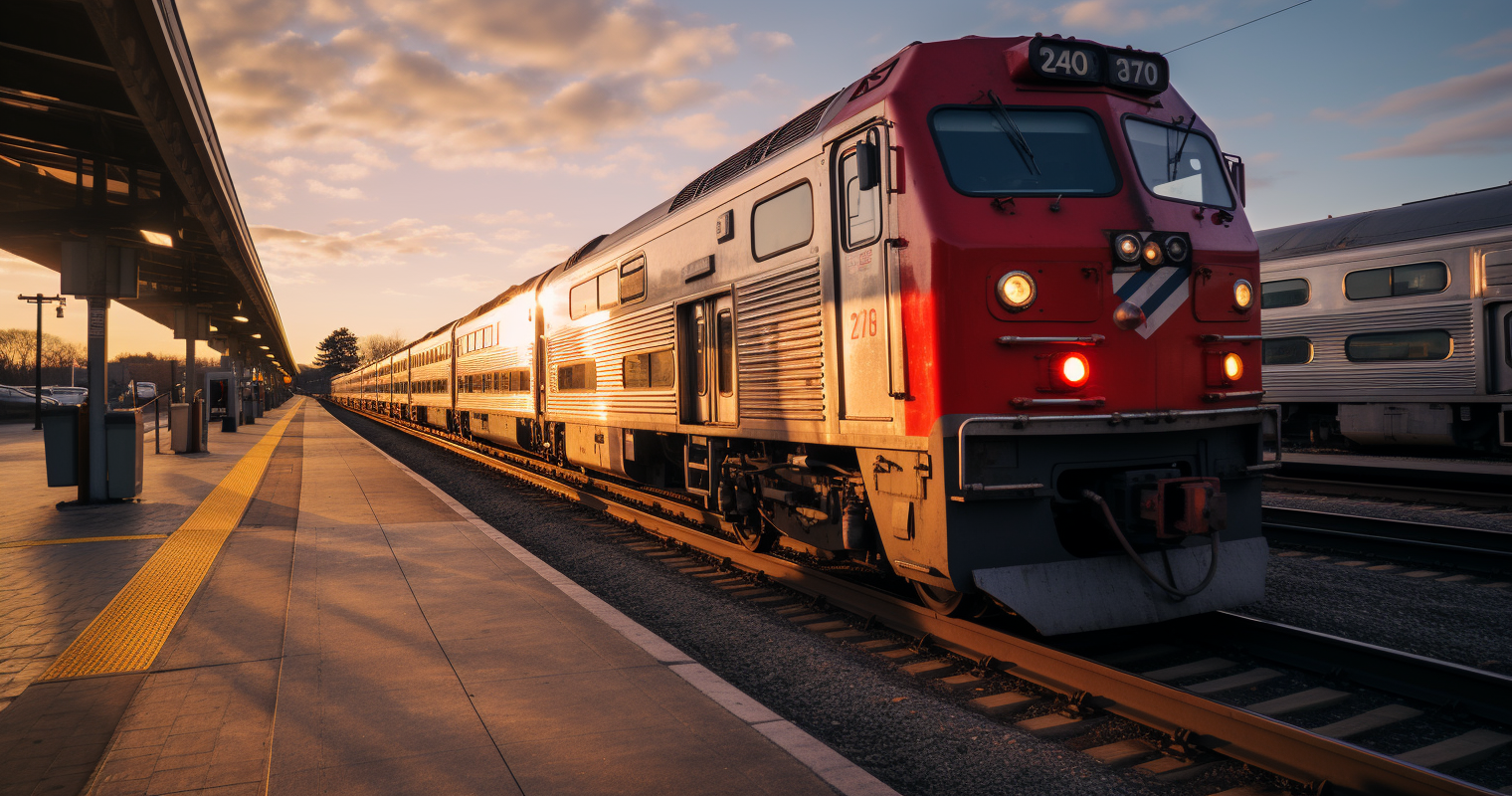
With over 9,400 route kilometres stretching across the country, the Czech Republic boasts one of the most extensive rail networks anywhere in Europe. The system links cities, smaller towns, and remote communities alike, with České dráhy (ČD) serving as the principal national carrier. Whether you’re commuting to work each day or making occasional long-distance trips, the network serves a wide range of needs — and continued investment in modernisation is making it an ever more appealing choice for residents.
| Item | Details |
|---|---|
| Network size | 9,463 route kilometres of mainline (as of 2024) |
| Primary operator | České dráhy (ČD) — cd.cz |
| Travel classes | 2nd class (all trains), 1st class (most long-distance), Business (Railjet only) |
| Advance booking window | Up to 60 days ahead via ČD e-shop and Můj vlak app |
| Key discount card | In Karta — offers up to 25%, 50% or 100% prepaid discounts |
| Prague metro operator | DPP — dpp.cz |
| Seniors (65+) in Prague | Free travel on Prague public transport (as of 2025); verify current eligibility at pid.cz |
What is the overall standard of rail travel in Czech Republic?
The Czech rail network extends across 9,463 route kilometres of mainline track, roughly a third of which is electrified. In terms of coverage relative to the country’s geographic size, this places it among the densest rail networks in Central Europe, with routes reaching virtually every major town and region. České dráhy (Czech Railways) stands as the largest national carrier, and by passenger volume it ranks fourth in Europe.
Setting aside the disruptions caused by the COVID-19 pandemic, ridership figures have climbed consistently over recent years. This growth is largely attributable to upgrades in both infrastructure and rolling stock, which have brought down journey times on numerous routes. The introduction of new international connections to Austria and Slovakia, combined with greater competition among rail operators, has further fuelled interest in travelling by train.
In 2024, České dráhy undertook a major renewal of its fleet, bringing in more than 50 new trains — among them RegioPanter, RegioFox, and Vectron locomotives — alongside the debut of its first ComfortJet high-speed units. The carrier transported in excess of 82 million passengers during the first half of the year alone, illustrating the mounting appetite for environmentally friendly and efficient rail travel.
When measured against rail networks in countries such as Germany or Japan — where high-speed services, extensive electrification, and a strong culture of punctuality are taken for granted — the Czech system is more modest in scope and speed. That said, it functions well for practical everyday purposes. Key intercity corridors linking Prague, Brno, Ostrava, and Plzeň are well served and comparatively fast, while branch lines in rural areas tend to be slower and operate less frequently. The state infrastructure company Správa železnic is currently upgrading the main corridors that radiate outward from Prague, enabling train speeds of between 160 km/h and 230 km/h on these routes.
The Czech Government’s longer-term vision involves building a high-speed rail network consistent with EU Regulation 2024/1679 on the Trans-European Transport Network (TEN-T) and the national “Rapid Rail Services Development Programme” adopted in 2018. In 2025, the Railway Administration has earmarked a record CZK 62.7 billion for line renewals and station upgrades. For expats settling in the country, the rail network is well suited to regular city-to-city commuting and to travel between major urban centres.
What classes of rail travel are available in Czech Republic, and what are the differences between them?
České dráhy runs a variety of services spanning local, regional, and long-distance routes, including InterCity (IC), EuroCity (EC), and high-speed Railjet trains. Second Class seating is available across the entire network, while First Class is offered on the majority of long-distance and select regional services.
Second Class carriages come equipped with comfortable 2+2 seating arrangements, free Wi-Fi, power sockets, air conditioning, and designated spaces for bicycles. For most everyday journeys, this represents the practical and cost-effective choice. Free Wi-Fi and charging points are standard across both classes on many České dráhy trains, keeping passengers connected throughout their trip.
First Class delivers wider seats, more generous legroom, and an elevated level of on-board service. On international Railjet and Pendolino trains, First Class passengers are treated to complimentary refreshments, bottled water, daily newspapers, and attentive at-seat service from dedicated staff, making it an appealing option for longer journeys.
Business Class sits above First Class and exists exclusively on Railjet trains, with limited availability on a handful of other routes. Where Business Class is not offered, the ticketing system will automatically assign First Class instead. Railjet trains operate three distinct comfort tiers — Economy, First, and Business — and additionally feature a dining car, on-board Wi-Fi, and passenger information screens throughout.
České dráhy’s latest addition to its fleet, the ComfortJet — developed jointly by Siemens and Škoda — entered service in 2024. Capable of reaching 230 km/h, these trains are set to replace ageing rolling stock on the busiest intercity routes, bringing improvements in accessibility, passenger capacity, and overall ride quality. For those commuting regularly, Second Class is more than adequate; the benefits of First Class are most apparent on longer intercity journeys. Always confirm class availability for your specific route on the official cd.cz website before booking.
Where can you find rail timetables and ticket prices in Czech Republic?
The official České dráhy website at cd.cz is the definitive starting point for timetables and fare information. Available in both Czech and English, it allows users to search connections, compare pricing options, and purchase tickets directly. Since fares and timetables across the national network are updated periodically, it is always advisable to consult the official source for the most current details.
The ČD booking website packs in a wealth of features and supporting information. Once users become familiar with the layout, it is widely regarded as one of the more straightforward train booking platforms available in Europe. The site lets you filter results by departure time, travel class, and train category, and presents the terms and conditions for each fare type clearly.
For journey planning that extends beyond national rail to include regional bus services and Prague’s urban transport network, the IDOS.cz portal — operated by CHAPS, a Czech public transport information company — is the go-to resource and covers the entire country. It draws together schedules from virtually all Czech transport operators in one place. The Prague Integrated Transport authority (PID) also publishes timetables for rail services falling within Prague’s integrated fare zone at pid.cz.
It is worth noting that only one third-party retailer — Omio.com — has integrated directly with ČD’s ticketing system. This means that discounted advance fares are available exclusively through ČD directly or via Omio. Other retailers such as The Trainline or Rail Europe do not have access to these fares and may charge considerably more for the same journey. For the best prices, booking through ČD’s e-shop or via Omio is the recommended approach.
Private operators Leo Express (leoexpress.com) and RegioJet (regiojet.com) also serve key routes and manage their own independent booking platforms. While České dráhy operates across all the principal Czech corridors, it does not hold a monopoly. Both Leo Express and RegioJet run competing express services, particularly on the Praha–Olomouc–Ostrava corridor, and tickets for these operators are not sold through the ČD website.
How do you buy rail tickets in Czech Republic, and can you book in advance?
Tickets for Czech rail services can be purchased through a variety of channels, from digital platforms to traditional ticket windows. The following step-by-step breakdown covers the main options available to travellers:
- Online via the ČD e-shop: Visit cd.cz/en/eshop to search for connections, choose your travel class and ticket type, and pay by card. Tickets are issued electronically and delivered to your email inbox or directly to the app. The website accepts overseas credit cards.
- Via the Můj vlak (“My Train”) app: The advance purchase of electronic tickets and seat reservations for long-distance České dráhy services can be handled through the Můj vlak (“My Train”) app, which is available for both iOS and Android devices.
- At station ticket offices (pokladna): Tickets for České dráhy connections — including advance purchases — can be bought in person at ČD ticket counters. Staff at the larger stations frequently have a working knowledge of English.
- At ticket machines: Certain stations are equipped with ticket machines for purchasing integrated transport system (IDS) tickets. Depending on the machine, payment may be accepted in cash (CZK or EUR) or by payment card.
- From the conductor on board: Buying a ticket directly from the conductor is permitted without any additional surcharge, provided you are boarding from a station where the ticket office was closed at the time of departure. If you board at a staffed station without having purchased a ticket beforehand, a surcharge will be applied.
- By phone: By calling 221 111 122, ČD’s team can process a ticket purchase on your behalf through the e-shop, with the ticket then sent to your email address. This TeleTicket service carries a fee of CZK 50 (as of 2024).
The advance booking window for most ČD services extends up to 60 days before the travel date, with tickets typically going on sale approximately two months ahead. Booking early is particularly worthwhile for long-distance intercity routes during busy travel periods, as advance “First Minute” fares can be significantly lower than tickets purchased closer to departure.
On the majority of train categories — including EC, IC, Ex, and Railjet services — seat reservations are optional and can be added during the booking process. Reservations are not available on OS (local) and SP train types, while on IC and SC services a reservation is mandatory. For all other categories, it is possible but not required to reserve a specific seat.
What types of rail tickets are available in Czech Republic, and are there discount schemes?
České dráhy provides a range of ticket categories designed to suit different travel habits and budgets. Knowing the key differences between them will help you make the most of your journey spend.
- First Minute (advance purchase): First Minute is České dráhy’s branded advance-purchase fare — comparable to Germany’s Sparpreis or Austria’s Sparschiene. These tickets are tied to the specific departure you book, with no amendments to travel plans permitted, though a refund may be available up to the day before travel minus a service fee.
- Bound ticket (Vázaná jízdenka): This fare type is linked to a particular train and date, sitting at a mid-range price point with a degree of built-in protection. If you hold a Bound ticket for a journey involving a connection and your first train is delayed by more than 30 minutes, causing you to miss the onward service, you will not be required to purchase a replacement ticket.
- Flexi ticket: A Flexi ticket entitles you to travel on any departure on your selected date, making it the most flexible option available. Tickets purchased at the last minute from a station window will typically be Flexi tickets. While the freedom to board any service is convenient, this flexibility commands the highest price of any Czech train ticket type.
- Commuter tickets (time tickets): For those making regular journeys to work or school, unlimited-travel season tickets are available on selected routes. These can be purchased through the ČD e-shop and loaded onto an In Karta card.
The In Karta is ČD’s combined loyalty and discount card and is especially valuable for frequent rail users. It enables holders to prepay for a discount of up to 25%, 50%, or 100% on future journeys with Czech Railways, and can also store train tickets, e-shop purchases, and commuter season tickets for Integrated Transport Systems. For the most up-to-date In Karta pricing and terms, refer to cd.cz, as conditions are subject to change.
Prague’s Integrated Transport system (PID) administers its own fare concessions, which apply across trains, the metro, trams, and buses within Prague and the surrounding region. Children under the age of 6 travel free of charge throughout the entire PID network. Children aged 6 to 10 travel free within the Prague city zone, and at a 50% discount anywhere else in the PID area.
Students can access discounted season tickets in Prague up to the age of 26, though this concession applies exclusively to season tickets — no student discount is available on short-term single tickets. The discount is restricted to full-time students and requires proof of eligibility in the form of a valid International Student Identity Card (ISIC).
Passengers aged 65 and over travel free within the Prague city zone upon presenting proof of age. Seniors from 65 years of age are also entitled to a 50% discount across the broader PID area outside Prague, and must show a valid passport or national ID. All figures cited above apply as of 2025; always confirm current thresholds at pid.cz/en/discounts.
Statutory fare reductions on ČD national long-distance and regional train services are available to children, students, and senior citizens. Importantly, these discounts are open to both Czech nationals and foreign residents. The concession applies to second-class seating only on train services, and is also valid on national regional bus lines. Consult the current fare schedule at cd.cz for the applicable rates.
How accessible is the rail network in Czech Republic for disabled passengers?
Accessibility across the Czech rail network has been steadily improving, though the picture varies considerably depending on where you travel. Stations on modernised intercity corridors and major urban interchanges are generally well equipped for passengers with reduced mobility, while some older rural halts and branch-line stations continue to present genuine practical challenges.
Station improvements to enhance access for people with reduced mobility and for travellers with young children are included within the current infrastructure investment programme. České dráhy’s newest ComfortJet trains — the product of a collaboration between Siemens and Škoda, which entered service in 2024 — deliver meaningfully better accessibility standards alongside increased passenger capacity and improved ride comfort compared to the older rolling stock they are replacing.
České dráhy offers a dedicated assistance service for travellers with disabilities or limited mobility. Passengers who require help boarding or alighting from trains, or navigating their way around stations, can arrange this support in advance by contacting ČD’s Central Customer Service. Full details on requesting this service are available at cd.cz. It is strongly recommended to give at least 24 hours’ notice, particularly when travelling to or from smaller stations.
Accessibility within Prague’s urban transport network is managed more proactively. The Prague Public Transit Company (DPP) has made barrier-free public transport a central long-term priority, committing tens of millions of Czech crowns annually to improving access for passengers with disabilities and other special needs across its metro, bus, and tram services.
Every station on Prague’s metro is fitted with tactile paving strips designed to assist visually impaired passengers, while trams and buses are equipped with audio and electronic systems that announce route numbers and directions of travel. Low-floor trams and city buses across Prague are fitted with wheelchair ramps, making the city’s surface transport network substantially more navigable for wheelchair users.
By comparison with certain Western European networks — such as the UK’s National Rail, which offers a centrally coordinated Passenger Assist booking service at most staffed stations — the Czech accessibility framework is functional and in a period of active development, though the level of provision outside major cities may be less consistent. Passengers with specific mobility requirements are advised to research station-level facilities in advance via Správa železnic at spravazeleznic.cz. Further information on barrier-free travel across Prague’s network is available at dpp.cz/en/travelling/barrier-free-travelling.
Are there metro or urban rail systems in Czech Republic’s cities?
Prague is the only city in the Czech Republic to operate a full underground metro network. All other major cities depend on tram networks, urban bus services, and regional train connections for getting around.
Prague’s metro is run by the Prague Public Transit Company (DPP) and comprises three lines — A (green), B (yellow), and C (red) — threading through key districts from the outer suburbs to the city centre. The system is clean, dependable, and runs at high frequency. Services operate from around 05:00 until midnight, with trains arriving every two to four minutes during peak hours. The metro is fully integrated with Prague’s tram and bus networks under the Prague Integrated Transport (PID) umbrella, meaning a single ticket or pass covers all three modes of travel.
Tickets for the Prague Metro, trams, city buses, and the Airport Express can be bought at electronic kiosks inside metro stations, at public transit information centres, and from certain tobacco shops (trafiky). Regular Prague residents often rely on the Lítačka app or card, which enables seamless travel across all PID modes. Schedules and journey planning tools for Prague’s public transport are accessible via the DPP website at dpp.cz, or through the Lítačka app — both of which are available in English.
Brno, the second-largest city in the country, has a well-developed tram network and urban bus system operated by DPMB (Dopravní podnik města Brna). Ostrava similarly maintains a tram network under DPMO. Neither city has a metro, but their tram systems serve urban commuters efficiently. Plzeň likewise operates a city tram network. In all cases, urban tram and bus services are coordinated with national rail timetables, making onward connections from train stations to final destinations straightforward.
Time-limited electronic tickets in Prague can be activated on a card — whether the Lítačka, a contactless bank card, or an IN Karta ČD — or within the mobile app, giving residents the convenience of a single card for both national rail and urban travel. For comprehensive information on Prague’s metro, tram, and bus services, visit dpp.cz or the PID information portal at pid.cz.
What should expats know about using the rail network day-to-day in Czech Republic?
Travelling by rail in the Czech Republic is generally a smooth and uncomplicated experience, though there are several practical considerations that newcomers will benefit from knowing before setting out for the first time.
Finding your way around stations: Major stations — including Praha hlavní nádraží (Prague Main Station), Brno hlavní nádraží, and Ostrava-Svinov — are well signposted and have staff on hand to assist. At larger hubs, departure boards (odjezdy) and arrival boards (příjezdy) display real-time train information in Czech, including platform numbers and any delays. Announcements at Prague Main Station and other major interchanges are commonly made in both Czech and English on intercity services. On regional and rural routes, however, announcements and station signage are almost exclusively in Czech.
Seat reservations: Reservations are not available on OS (local) or SP train types, and on all other categories they are optional — with the exception of IC and SC services, where a reservation is compulsory. If you are travelling on a Flexi or open ticket without a reservation and the train is busy, you will need to locate an unreserved seat, identifiable by the absence of a reservation card or digital indicator above it.
Ticket checks and validation: On national ČD services, your ticket is inspected by a conductor during the journey — there is no barrier or gate system as found in some other European countries. On Prague’s metro, however, you must stamp your ticket in the yellow validation machines before passing through the turnstiles. Travelling without a validated ticket risks an on-the-spot fine from inspectors.
Luggage and bicycles: Standard luggage can be carried free of charge on ČD national trains. Bicycles are permitted on most services with the purchase of a bicycle supplement ticket, though spaces are limited and advance reservation is recommended on busier routes. Small pets may travel on board but are not permitted in First Class, restaurant, or bistro cars.
Buying tickets at the last minute: If you board at a staffed station without a valid ticket, a surcharge will be levied when you pay the conductor on board. To avoid this cost, always purchase your ticket before boarding at any station with an open ticket office. Boarding without a pre-purchased ticket is permitted without surcharge only at unmanned stations where no ticket sales facility exists.
Social etiquette: Czech train travel is characterised by a quiet, reserved atmosphere. While mobile phones are used openly, loud conversations tend to attract disapproval, particularly in designated quiet-zone carriages. Priority seats near doors are conventionally given up for elderly passengers, pregnant women, and people with disabilities. In general, Czech rail travel reflects the country’s efficient, low-key approach to public life — practical, comfortable, and hassle-free for passengers who arrive prepared.
For the latest information on the national rail network, the official Správa železnic (Czech rail infrastructure manager) website at spravazeleznic.cz and the Czech Ministry of Transport at mdcr.cz/en are authoritative resources.
Frequently asked questions about rail travel in Czech Republic
Is the Czech rail network reliable enough for a daily commute?
For the majority of urban and intercity commuters, the answer is yes. The key corridors connecting Prague, Brno, Ostrava, and Plzeň are served by regular trains and are subject to ongoing infrastructure upgrades. Branch lines in rural areas may be less punctual. Making use of the real-time train status function in the Můj vlak app is a sensible habit for anyone commuting regularly.
Do I need to speak Czech to use the trains?
For travel on major routes, a knowledge of Czech is not essential. Larger stations and long-distance trains commonly feature English signage and bilingual announcements, and both the ČD website and Můj vlak app have full English-language versions. On local and rural services, Czech is the working language. Installing the IDOS.cz journey planner app before you travel is a useful practical measure regardless of your language level.
Can I use a contactless bank card on trains and the Prague metro?
Contactless bank cards are accepted at ticket machines on the Prague metro and across some urban transport infrastructure, and in certain cases can be used directly at validators. For national ČD train tickets purchased online through cd.cz, major international payment cards are accepted. Payment options vary by machine and route, so it is always worth confirming what is accepted at the point of purchase.
Are there monthly or annual passes available for regular commuters?
Yes. Unlimited-travel season tickets for regular commutes to work or school are available on selected routes, and the best value is achieved by pairing them with an IN 25 or IN 50 discount on an In Karta card. Prague residents additionally have access to the PID Lítačka monthly pass, which provides coverage across the metro, tram, bus, and PID-zone train services.
Can I take my bicycle on Czech trains?
Bicycles are welcome on most ČD national train services, subject to the purchase of a bicycle supplement ticket. Capacity for bikes is limited, and advance reservation is advisable on longer intercity journeys. When booking at cd.cz, check whether your chosen service accommodates bicycles, as availability varies and certain peak-time restrictions may apply.
How do I get a student or senior rail discount in Czech Republic?
Statutory fare concessions on national long-distance and regional train and bus services are available to both Czech nationals and foreign residents. Students must carry a valid ISIC card as proof of eligibility, while seniors need to present a passport or national ID confirming their age. Concessions for Prague’s urban transport are administered separately through the PID system — visit pid.cz/en/discounts for current qualifying criteria and age thresholds (as of 2025).
Are overnight trains available in Czech Republic?
Sleeper and couchette accommodation is available on selected ČD international routes. EuroNight (EN) services — which include sleeping cars and couchette compartments — connect Prague with neighbouring countries. Early booking through cd.cz is strongly recommended, particularly during the summer travel season when demand is highest.
What happens if my train is delayed or cancelled?
Passengers holding a Bound ticket who miss an onward connection because of a ČD delay of more than 30 minutes are entitled to continue their journey on the next available service without needing to purchase a new ticket. Where delays are significant, passengers may also have grounds for financial compensation under EU Regulation 1371/2007 on rail passengers’ rights. Claims can be submitted through ČD’s customer service team, and the relevant process is outlined at cd.cz.