
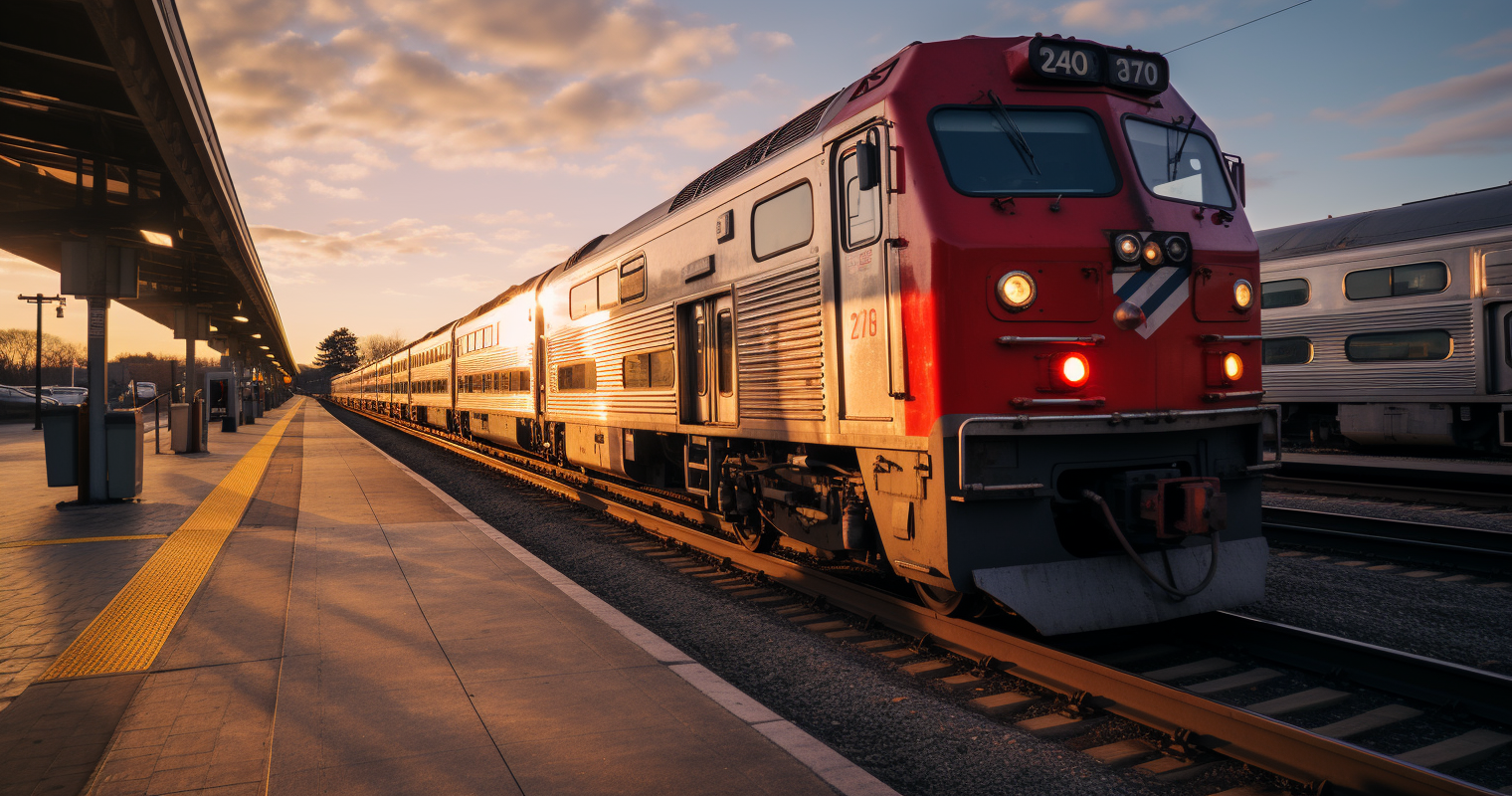
Indian Railways ranks among the largest rail networks anywhere on earth, linking more than 6,800 stations across an enormous and remarkably varied country. For those who make India their home, it functions as the essential backbone of both everyday commuting and long-distance journeys — cost-effective, far-reaching, and woven into the fabric of daily life. Getting to grips with the network’s travel classes, ticketing options, and unspoken customs will make a real difference to how you navigate life and movement in India.
| Item | Details |
|---|---|
| Network size | Approx. 63,000 km of routes and 6,800+ stations — third largest in the world (as of 2024) |
| Main booking platform | IRCTC (irctc.co.in) — official government-operated ticketing portal |
| Advance booking window | Up to 60 days before travel (as of 2024) |
| Senior citizen discounts | 40% for men (60+), 50% for women (58+) on most Mail/Express trains (as of 2024; verify via IRCTC) |
| Tatkal (last-minute) booking | Opens 1 day before travel: 10 AM for AC classes, 11 AM for non-AC classes |
| Vande Bharat Express | 160+ services operational as of February 2026; max speed 130–160 km/h |
What is the overall standard of rail travel in India?
India’s passenger rail system is the third largest on the planet, surpassed only by Russia and China, spanning 63,000 km of track and more than 6,800 stations. This places it among the most extensive and ambitious rail operations in existence — yet sheer scale does not guarantee uniformity of quality. What you experience when travelling by train in India depends greatly on the route you choose, the type of train you board, and the class in which you travel.
Measured against the punctual, high-speed rail networks found in Germany, Japan, or France, Indian Railways operates according to a quite different set of priorities. Rather than emphasising speed above all else, the network is built around connectivity and affordability — the challenge of serving a population of over 1.4 billion people spread across an extraordinarily diverse landscape. Delays are a genuine feature of the experience, especially on long-distance routes where trains originating at distant points can accumulate lateness along the way. Trains arriving from other origins carry a higher risk of running behind schedule.
That said, the pace of change has been impressive. The Vande Bharat Express — also known as Train 18 — was launched by Indian Railways in 2019 as the country’s first stride towards a modern semi-high-speed rail service. By February 2026, more than 160 Vande Bharat services were in operation across the country, linking major metropolitan centres, state capitals, and key regional destinations with faster journey times, contemporary seating, and improved safety technology.
For residents, the rail network is well suited to both day-to-day commuting and long-haul travel. Urban metro systems manage the daily commute in the country’s biggest cities, while the intercity and express train network handles everything from overnight cross-border journeys to scenic multi-day expeditions. Trips such as Mumbai to Delhi or Delhi to Jaisalmer can be handled efficiently by overnight sleeper services, travelling city centre to city centre and saving the cost of a hotel night.
Making the most of Indian Railways comes down to understanding the available train types and classes — and booking with enough foresight. The network rewards forward planning and can make things difficult for those who leave arrangements to the last moment, particularly on popular routes during public holidays and major festivals.
What classes of rail travel are available in India, and what are the differences between them?
Indian trains offer nine distinct seating and sleeping categories, split broadly between seated carriages and sleeper carriages. This class structure is considerably more detailed than what most travellers from Europe or the Americas will be accustomed to — familiarising yourself with it before you travel will save both money and unnecessary discomfort.
General / Unreserved Class (UR or 2S): UR stands for Unreserved. The Unreserved General Class is the option of last resort — chosen when a reserved ticket was unavailable or when saving money is the overriding concern. The trade-off is a significant drop in both comfort and convenience, as no specific seat is guaranteed. For a short hop under an hour, this class is manageable; for anything longer, it is best avoided wherever alternatives exist.
Sleeper Class (SL): Sleeper Class is the most widely used category for long-distance travel across India. It provides reserved berths but has no air conditioning. More comfortable than General Class but considerably less refined than the AC options, it suits overnight journeys where keeping costs down is important. Bedding is not supplied in this coach, so passengers should bring their own for lengthy trips. Facilities in this class are basic, and bathroom cleanliness can be inconsistent.
AC 3-Tier (3A): Third AC is an air-conditioned sleeping carriage. Six berths are arranged in three tiers facing each other in a single bay, with fold-down middle berths, alongside two-tier side berths running along the corridor — giving a total of 64 to 72 berths per coach. Simple bedding including a blanket and pillow is supplied. This class is the popular choice for budget-aware travellers who still want air conditioning, costing roughly a third of what First AC charges.
AC 2-Tier (2A): The air-conditioned 2-tier class is a common feature of long-distance express trains. Each compartment contains two upper berths and two lower berths, with two additional side berths across the aisle. It provides more space and a greater sense of privacy than AC 3-Tier, with curtains screening off each bay. Bedding is included in the fare.
First AC (1A): Air-conditioned First Class consists of two-berth or four-berth sleeping compartments fitted with lockable doors. The compartments are spacious, well maintained, and clean, each equipped with a washbasin. Toilets are located at either end of the carriage, and each berth comes with a pillow, sheet, blanket, and towel. This is the most expensive sleeper category, offering the highest level of privacy and comfort on the mainline network. Some trains provide shower facilities, and these coaches often have a dedicated attendant as well as a separate menu for meals.
AC Chair Car (CC) and AC Executive Class (EC): Both of these are day-travel seated categories, used mainly on shorter intercity routes. The AC Chair Car is a fully air-conditioned class designed primarily for short to medium daytime journeys, with cushioned reclining seats arranged in a 2+3 configuration. Executive Class steps things up further: with a 2×2 seating arrangement and no sleeping provisions, it resembles the business cabin of a domestic flight, offering greater legroom and a wider central aisle.
Executive Anubhuti (EA): Available on a select number of premium trains, Executive Anubhuti represents the top tier of the chair car experience. Air-conditioned coaches seat 56 passengers in a 2×2 layout with retractable seats. Wide windows, large cushioned seats with leg and armrests comparable to aircraft business class, LCD entertainment screens, generous luggage compartments, dedicated reading lights, power sockets, and call buttons are all standard features.
Vande Bharat Express: India’s flagship semi-high-speed train offers a noticeably distinct journey. Built entirely in India, it was designed to deliver faster intercity travel alongside enhanced safety systems and an airline-style passenger experience — including fully air-conditioned seating throughout, automatic doors, onboard catering, GPS-driven passenger information displays, and quicker acceleration between stops.
Where can you find rail timetables and ticket prices in India?
The definitive official source for all Indian Railways schedules, train timings, and fare information is the IRCTC (Indian Railway Catering and Tourism Corporation) portal at www.irctc.co.in. As the official online ticketing platform of Indian Railways, IRCTC provides current schedule data, real-time seat availability, and pricing across all classes and routes. Fares are set by the Ministry of Railways and are subject to revision; always confirm current pricing directly through the official portal rather than relying on figures from third-party sources.
For comprehensive timetable data and platform-specific train listings, the National Train Enquiry System (NTES) — run by Indian Railways — is accessible at enquiry.indianrail.gov.in. This tool lets you check live train running status, detailed schedules, and platform allocations, making it an invaluable resource once you are settled and navigating the network on a regular basis.
A number of well-regarded third-party platforms are routinely used by residents for journey planning and fare comparison. ixigo (ixigo.com) and MakeMyTrip (makemytrip.com/railways) are both authorised IRCTC partners that display live availability, fare data, and timetable information. Trainman (trainman.in) is widely used among residents for estimating the likelihood of a waitlisted ticket being confirmed and for checking coach positions along the platform. At trainman.in/coach-position, entering a train number or name brings up a diagram of the entire train formation and a seat map for each individual carriage.
All fares and timetable details are subject to change, particularly around major festival seasons when special trains are added and ordinary schedules are modified. Always consult the official IRCTC website for the most up-to-date fares and timings before making any booking.
How do you buy rail tickets in India, and can you book in advance?
Purchasing train tickets in India has become steadily more straightforward thanks to a robust digital infrastructure. The most widely used method for residents is online booking through the IRCTC portal or its authorised applications. The following is a step-by-step overview of the booking process:
- Create an IRCTC account: Register as an individual on the IRCTC portal — registration is free. Log in with your username and password to access the “Plan my travel” page. You will need a valid mobile number and email address to register.
- Search for your train: Enter your origin and destination stations, select your travel date, and choose a class. The results display all trains available on that route; to view the route and timings in detail, click on the relevant train name under the “List of Trains” section.
- Select your class and check availability: Review seat availability for your preferred class. You can also check for RAC (Reservation Against Cancellation) or waitlisted berths if all confirmed berths have been taken.
- Enter passenger details: Add the names, ages, and ID proof details for every passenger travelling. All passengers are required to carry valid ID during their journey. The Travelling Ticket Examiner (TTE) will verify both your ticket and your identification in the coach.
- Choose your berth preference: You may indicate a preference for an upper, middle, or lower berth, though the final allocation is confirmed at charting, which typically takes place around four hours before departure.
- Pay and receive your e-ticket: You can complete your IRCTC train ticket booking using credit or debit cards, net banking, or UPI. Once payment is made, the e-ticket is generated immediately and delivered by both SMS and email. No printed copy is required — your e-ticket displayed on a mobile device is fully valid for travel.
Advance booking: Online booking is available up to 60 days before your planned travel date. Securing tickets well in advance is strongly recommended, particularly during periods of high demand. On the most popular routes — especially around Diwali, Holi, or the summer school holidays — seats can be fully booked weeks before departure.
Tatkal (last-minute) tickets: For passengers who need to travel at short notice, the Tatkal scheme provides a route to booking at a premium price. Tatkal tickets can be booked one day ahead of the journey date, with online booking opening at 10 AM for AC classes and 11 AM for non-AC classes, calculated excluding the day of travel itself.
Station counters and agents: Tickets can also be purchased in person at railway station reservation counters throughout India. Passengers can visit any computerised PRS (Passenger Reservation System) counter, provide their journey details, and book a confirmed ticket subject to availability. Authorised travel agents and third-party platforms such as ixigo and MakeMyTrip can also process bookings using your IRCTC login credentials.
The IRCTC Rail Connect app (available on Android and iOS) is the official mobile application for booking reserved tickets. The IRCTC UTS (Unreserved Ticketing System) app handles general and unreserved tickets for shorter journeys. For enquiries, the national rail helpline is available on 139.
What types of rail tickets are available in India, and are there discount schemes?
Indian Railways provides a range of ticket types catering to different travel needs. As a resident making regular journeys, understanding these categories is important both for comfort and for managing travel expenditure effectively.
Confirmed (CNF) tickets are the standard reserved ticket, guaranteeing a specific berth or seat. When your PNR (Personal Name Record) status shows CNF, a particular seat or berth on that train has been allocated to you. These are what most residents aim to secure when booking ahead of time.
RAC (Reservation Against Cancellation) tickets entitle you to board the train but require you to share a lower berth with another passenger until a full berth becomes available through cancellations. Once all seats in a given class have been sold, a limited number of RAC tickets are released. Holding an RAC ticket guarantees your right to board, but does not give you an exclusive reserved berth. RAC tickets are only issued for AC2, AC3, and Sleeper class.
Waitlisted (WL) tickets are issued when even RAC allocations have been exhausted. Passengers on a waitlist may automatically progress to RAC or CNF status as cancellations come through. If a ticket remains waitlisted at the time the chart is drawn up — roughly four hours before departure — the holder is not permitted to board the reserved coaches.
Tatkal tickets are last-minute tickets available at a surcharge, as described in the booking section above. The minimum Tatkal surcharge is 30% of the base fare (as of 2024; verify current rates at irctc.co.in).
Discount schemes for residents: Indian Railways maintains a wide-ranging structure of fare concessions. The principal discounts include:
- Senior citizens: Male passengers aged 60 and above, and female passengers aged 58 and above, are entitled to the Senior Citizen concession — 40% for men and 50% for women. Concession tickets are not available on Garib Rath, Gatimaan, Vande Bharat, Suvidha, and Humsafar trains. (As of 2024; verify current eligibility at irctc.co.in.)
- Children: Children under 5 years of age travel free of charge on IRCTC train tickets. Children aged 5 years and under 12 years are charged the full adult fare if a separate berth or seat is requested at the time of reservation. If no separate berth or seat is required, half the adult fare applies.
- Students and persons with disabilities: Indian Railways provides concessions for students travelling for educational purposes and for passengers with specified disabilities. The full and current list is maintained by the Ministry of Railways — consult indianrailways.gov.in for current eligibility categories and discount percentages, as these are periodically updated.
- Ladies Quota: Women travelling alone, or accompanied by children aged under 3 years, may access the Ladies Quota, which is available in Sleeper class.
There is no widely available multi-journey rail pass for domestic residents comparable to the rail pass schemes that exist across Europe. Monthly season tickets are available for suburban commuter rail in major cities. For long-distance intercity travel, residents typically purchase individual tickets on a journey-by-journey basis. Always verify current concession rates and eligible train categories directly via the official IRCTC portal, as eligibility conditions are subject to change.
How accessible is the rail network in India for disabled passengers?
Accessibility across Indian Railways is a field of active and ongoing development, and the experience differs substantially between modern, high-frequency corridors and older infrastructure serving rural areas. When compared with the largely step-free, tactile-guided environments found in Japan or the accessibility standards that are legally required across European rail networks, India’s mainline rail accessibility is more uneven — but meaningful provisions are in place, and the standard is rising.
Indian Railways designates specific lower berths for passengers with disabilities within each reserved class. There is also a dedicated Divyaang (persons with disabilities) quota for ticket booking, accompanied by significant fare concessions — the precise percentage varies according to the category of disability and the class of travel. These concessions can be applied when booking through IRCTC by selecting the relevant disability category during the reservation process. For current concession rates, visit indianrailways.gov.in or enquire at your nearest Passenger Reservation System (PRS) counter.
Many of the principal stations, particularly those in large cities, have been progressively upgraded with ramps, lifts, accessible toilets, and tactile paving as part of the “Accessible India Campaign” (Sugamya Bharat Abhiyan). However, older and smaller stations — especially in rural regions — may lack step-free access or may present significant platform height differences that make boarding difficult for wheelchair users. Gaps between platforms and train floors, and the absence of automated boarding bridges, remain a practical obstacle across much of the mainline network.
On board, modular bio-toilets with automated taps, hand dryers, and soap dispensers are fitted in newer rolling stock, including Vande Bharat Express trains, which also feature larger toilet cubicles, USB charging ports, and automated doors. Older rolling stock tends to have less spacious facilities that may present difficulties for wheelchair users.
For passengers requiring assistance at stations, the railway operates a Sahayata helpline (dial 139), and several major stations offer porter services and wheelchair assistance on request. It is advisable to contact the station superintendent in advance of travel to arrange any support needed. For the most current accessibility information and available services, consult indianrailways.gov.in.
Are there metro or urban rail systems in India’s cities?
India has built an extensive and rapidly expanding network of urban metro rail systems across its major cities. These systems are generally modern, climate-controlled, and operate to a considerably more reliable timetable than the broader mainline network — in many respects offering an experience comparable to metro systems in Singapore, Dubai, or London.
Key urban rail systems currently in operation include:
- Delhi Metro (DMRC): One of the largest metro networks in Asia, covering more than 390 km of route with 285 stations across multiple colour-coded lines. Operating hours run from approximately 5:30 AM to 11:30 PM. Smart cards (Metro Cards) and tokens are both accepted. Visit delhimetrorail.com for maps and fare details.
- Mumbai: Mumbai is served by both the Mumbai Metro and the older Mumbai Suburban Railway (local trains), operated by Central Railway and Western Railway. The suburban rail network is among the busiest on the planet and forms the essential commuting artery for millions of the city’s residents. Visit mumbaimetro1.com and the Central Railway portal for further information.
- Bengaluru Namma Metro (BMRCL): A rapidly growing two-line system that continues to expand. Visit english.bmrc.co.in.
- Chennai Metro Rail: Connecting key parts of Tamil Nadu’s capital city. Visit chennaimetrorail.org.
- Hyderabad Metro Rail: One of the longest metro systems in India, operated by L&T Metro Rail. Visit ltmetro.com.
- Kolkata Metro: India’s oldest metro system, now extended across multiple lines. Visit kolkatametro.co.in.
- Kochi Metro, Pune Metro, Jaipur Metro, Ahmedabad Metro (METRO Neo), Nagpur Metro: A number of other cities have fully or partially operational metro systems, with additional networks currently under construction.
Most urban metro systems operate on a smart card or token-based ticketing model. Integration between these networks and the IRCTC-based mainline ticketing system remains limited — metro fares and tickets are generally administered independently by each city’s transit authority. The National Common Mobility Card (NCMC), sometimes referred to as the “One Nation One Card” initiative, is being progressively rolled out to allow a single prepaid card to function across multiple cities’ transit systems, though complete interoperability across all networks is still being implemented as of 2025.
For day-to-day commuting as a resident, the metro or suburban rail in your city will most likely be your primary point of contact with rail travel. These systems are clearly signposted in both Hindi and English, intuitive to navigate, and supported by apps for fare calculation and route planning.
What should expats know about using the rail network day-to-day in India?
Station navigation and signage: India’s major railway stations — including New Delhi, Mumbai CST, Chennai Central, and Bengaluru City — are large, busy environments that can feel daunting on a first visit. Signage at major stations is generally bilingual in English and the relevant state language, plus Hindi, so finding your way on arrival in a large city should be manageable even without knowledge of local languages. Platform announcements are typically made in both Hindi and English. Smaller and rural stations may offer more limited English-language signage.
Carry valid ID at all times: All passengers must carry valid ID throughout their journey. The Travelling Ticket Examiner (TTE) will check identification when verifying tickets in the coach and may also assist with seat allocation queries. Accepted documents include a passport, Aadhaar card, PAN card, or driver’s licence. For residents, linking your Aadhaar card to your IRCTC profile simplifies this process considerably.
Seat reservations and berth rules: On overnight trains, sleeping in your berth is conventionally permitted only between 10 PM and 6 AM. During daylight hours, the lower berth serves as shared seating, and the middle berth should be folded away. This is a firmly observed social norm that often surprises new residents. Be ready to share the lower berth as a seat during the day, even if you have booked it for sleeping.
Food and catering: Indian Railways does not have restaurant or buffet cars, but on long-distance services an attendant will pass through the coach and take meal orders — typically offering a choice of “veg” or “non-veg.” IRCTC’s e-catering service also allows passengers to pre-order meals for delivery to their seats at selected stations along the route. Platform vendors offering chai, snacks, and freshly prepared food remain a beloved and quintessentially Indian part of any long train journey.
Luggage: The permitted luggage allowance in Sleeper class is 80 kg per passenger, rising to 150 kg per person in First AC. In practice, luggage is stored beneath the lower berths and on overhead racks. Using a chain lock — available cheaply at most station concourses — to secure bags to the metal rings under the berth is standard overnight practice and widely recommended.
Cultural norms: Train travel in India is inherently social. Fellow passengers frequently share food and conversation, and you may well find yourself warmly invited to join a family group for a meal. Removing footwear before sitting on berths is considered basic courtesy. On women-only carriages and in the reserved sections of metro cars, norms around gender-specific seating are observed seriously — look out for signage indicating which sections are reserved.
PNR tracking: Every booking generates a PNR (Passenger Name Record) number. This number is used to check booking status, monitor whether a waitlisted ticket has been confirmed, and track live train running status through the NTES portal or the IRCTC Rail Connect app. Your PNR is essential for all dealings with station staff or the TTE, so keep it readily accessible.
Frequently Asked Questions
Do I need an IRCTC account to buy train tickets in India?
Yes, for online booking of reserved tickets, you need a registered IRCTC account at irctc.co.in or via the IRCTC Rail Connect app. Registration is free and requires a valid mobile number and email address. Authorised partner platforms like MakeMyTrip and ixigo also require you to log in with your IRCTC credentials to complete a booking. Unreserved (general class) tickets can be bought without an account at station counters or via the IRCTC UTS app.
How far in advance should I book train tickets in India?
Booking opens 60 days before travel (as of 2024). For popular routes — especially during major festivals such as Diwali, Holi, and Durga Puja — tickets sell out extremely quickly, sometimes within hours of the booking window opening. For long-distance journeys or travel around holidays, booking as soon as the window opens is strongly advised. If you miss out, try the Tatkal quota (available one day before travel at a premium) or check for cancellation-based availability closer to the date.
What is a waitlisted ticket, and should I accept one?
A waitlisted ticket places your booking in a queue — if other passengers cancel, your status may advance to RAC (a shared partial berth) or CNF (a fully confirmed reserved berth). If your ticket is still showing as waitlisted when the chart is prepared, roughly four hours before departure, you are not permitted to board the reserved coaches. Keep a close eye on your PNR status in the days leading up to travel. During peak periods, it is sensible to have a contingency plan in case your waitlisted ticket does not convert to a confirmed booking.
Is it safe to travel on Indian trains?
For the vast majority of residents and regular users, Indian Railways is regarded as a safe way to travel. The AC classes — particularly 1AC, 2AC, and 3AC — are generally considered more secure. Locking luggage to the berth ring beneath the seat using a chain lock, especially on overnight journeys, is standard practice and broadly recommended. Keep valuables close while sleeping. Women travelling alone have access to Ladies Quota berths in Sleeper class, as well as ladies-only compartments on certain services and metro systems.
Are e-tickets valid without printing?
Yes. An e-ticket displayed on your smartphone is entirely valid for travel. The Travelling Ticket Examiner (TTE) will check your e-ticket alongside a valid photo ID. No printed copy is required, though keeping a backup on hand is sensible for long overnight journeys where a low phone battery could become an issue.
Can foreigners and non-resident expats buy Indian train tickets?
Yes. Foreign nationals can book tickets through IRCTC or at station reservation counters. A Foreign Tourist Quota exists on many trains, reserving a small number of berths specifically for international visitors. These can be booked at the Foreign Tourist Bureau (FTB) counters at major city stations and at certain international airports, with payment accepted in foreign currency or by international credit or debit card. Once you are resident in India, you can set up a standard IRCTC account using an Indian mobile number and book tickets in exactly the same way as any other resident.
Which is the best class for an expat new to long-distance train travel in India?
AC 3-Tier (3A) is widely regarded as the ideal starting point for those new to Indian rail travel. It provides air conditioning, included bedding (pillow, blanket, and sheet), a reserved berth, and a reasonable level of comfort at a fraction of the price of First AC. It also offers a genuine taste of Indian rail culture. If you are travelling for professional purposes or prefer greater privacy, AC 2-Tier (2A) or First AC (1A) represent a worthwhile upgrade for long overnight journeys.
Do Indian metro systems accept the same ticket or card as mainline trains?
Not yet fully. Mainline Indian Railways tickets, booked through IRCTC, are entirely separate from city metro ticketing. Each urban metro system operates its own smart card or token arrangement. The National Common Mobility Card (NCMC) is being progressively introduced to allow a single card to work across multiple transit systems, but full interoperability across all metro and mainline services is still being implemented as of 2025. Check the website of the metro authority in your specific city for the latest information on accepted payment methods and card types.