
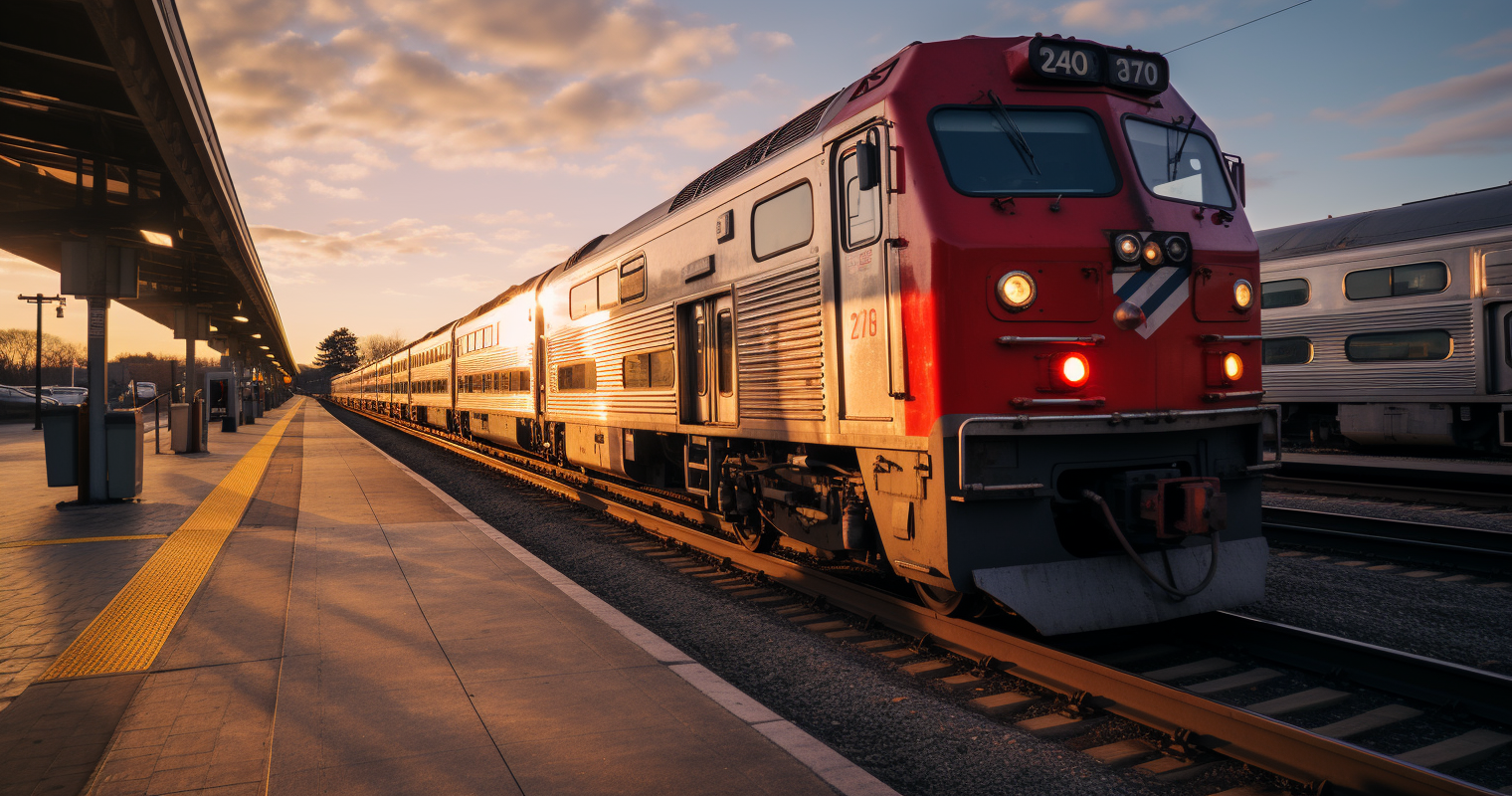
For anyone hoping to use trains as a convenient way to get around Jordan, the reality is sobering. The country’s only functioning passenger railway is the historic Hejaz Jordan Railway (HJR), which provides a short and sporadic service connecting Amman with a handful of nearby destinations. No metro, tram, or suburban rail network exists anywhere in the country. Day-to-day movement depends overwhelmingly on road transport.
| Item | Details |
|---|---|
| Main passenger operator | Hejaz Jordan Railway Corporation (JHR) — government-owned |
| Operational passenger routes (as of 2025) | Amman–Al Jizah (approx. 35 km); limited heritage/tourism service Amman–Mafraq launched April 2025 |
| Classes available | First class and second class |
| Metro / urban rail | None currently operational in any Jordanian city |
| Ticket purchase | Station ticket office; check jhr.gov.jo for current information |
| Future development | Jordan National Railway Project and UAE/Etihad Rail freight network planned; construction not expected before 2030 |
What is the overall standard of rail travel in Jordan?
For someone relocating to Jordan from a country with a well-established rail system — Germany, Japan, or France, for instance — the difference will be immediately apparent. Jordan’s passenger railway is extremely narrow in scope and bears no resemblance to the dense, high-frequency networks found throughout Europe or East Asia. Rail simply cannot be considered a realistic option for everyday commuting or intercity travel for the vast majority of residents.
Rail transport in Jordan traces its origins to two railways, both descended from the Ottoman Hejaz Railway of 1908. The main line is the Hejaz Jordan Railway, which still carries passengers. The second, the Aqaba Railway, shut down in 2018, leaving the country with a single operational passenger railway.
The Hejaz Jordan Railway connects Jiza, Amman, Zarqa, and Mafraq. Cross-border services into Syria were suspended after the onset of conflict there, and the primary active route today is a diesel-hauled daily service between Amman and Al Jizah — a trip of around 35 km. In practical terms, this is more of a heritage experience than a meaningful transport link.
April 2025 saw the JHR introduce a limited heritage train service running from Amman to Mafraq, targeted at domestic tourists. There are also tentative plans to reinstate symbolic services toward Daraa in Syria, subject to coordination with Syrian authorities. These initiatives are aimed firmly at tourism and heritage promotion rather than meeting the everyday travel needs of residents.
Jordan’s government recognises this shortfall and has set out ambitious long-term goals. The Jordan National Railway Project envisions a modern 897 km standard-gauge network stretching from the Syrian border to the Port of Aqaba, passing through Amman and Zarqa, and linking with Iraq and Saudi Arabia. Even so, the Jordanian government has indicated that construction is unlikely to begin before 2030, with comprehensive feasibility studies to be completed first. For anyone living in Jordan today, rail is not a practical mode of transport, and road-based alternatives remain the cornerstone of everyday movement.
What classes of rail travel are available in Jordan, and what are the differences between them?
The class structure on the Hejaz Jordan Railway is unpretentious, in keeping with the heritage-focused and small-scale nature of the operation. There is nothing here comparable to the multi-tiered systems found on European intercity services, where business or first class might include meal service, wide reclining seats, and onboard Wi-Fi. The distinctions in Jordan are considerably simpler.
Two classes exist: first class and second class. First class costs more and provides more comfortable seating along with air conditioning. Second class is more rudimentary and lacks air conditioning. Given that the main operational route spans only around 35 km between Amman and Al Jizah, the real-world significance of the difference between the two classes is modest.
On heritage and tourism services — including the Amman–Mafraq route introduced in 2025 — carriages tend to have a historical character. Trains can also be privately chartered, with steam haulage available on certain sections of the line. For charter passengers such as tour groups, the standard of carriage may differ from what regular scheduled service passengers experience, with arrangements typically determined by the organising party rather than the operator’s standard fare structure.
Because the network is so restricted and services so infrequent, the choice of travel class matters far less than it would on a full national rail network. Anyone planning to use the service should consult the official JHR website at www.jhr.gov.jo for up-to-date information on carriage types and class availability, as these details can vary between routes and individual trains.
Where can you find rail timetables and ticket prices in Jordan?
Obtaining reliable, current information on Jordanian rail schedules and fares requires going straight to official sources. Given the sparse and intermittent nature of these services, details appearing on travel blogs or third-party booking platforms may well be out of date or incorrect.
The definitive official resource is the Jordan Hejaz Railway Corporation (JHR). Timetables and fare information can be found on the JHR website at jhr.gov.jo, which covers schedules, prices, and routes for the various services the railway offers. Bear in mind that the site is primarily in Arabic; those who do not read the language will need to use a browser translation tool to navigate it.
The Jordanian Ministry of Transport (www.mot.gov.jo) is the government body responsible for rail policy and infrastructure development. The Jordanian Railway Network project falls under its oversight, and its website outlines the railway entities operating within the ministry’s remit as well as providing context for forthcoming projects.
For background context from third-party sources, the Man in Seat 61 website (seat61.com/Jordan.htm) offers useful historical notes and practical observations about the Hejaz Railway, though the operator’s own website remains the authoritative source for live schedules and fares. The Visit Jordan tourism portal (visitjordan.com) also provides background on the railway, particularly with regard to its historical and tourism dimensions. Always cross-check timetables and prices directly with JHR before travelling, as services are liable to change without much advance notice.
How do you buy rail tickets in Jordan, and can you book in advance?
The process of purchasing tickets for Jordan’s passenger rail services is uncomplicated but decidedly old-fashioned. In contrast to high-volume networks where passengers can choose from apps, self-service machines, and third-party websites, Jordan’s minimal rail operation relies on a much simpler approach.
- Visit the station ticket office: The principal point of sale for Hejaz Jordan Railway tickets is the station counter. The main departure point is Amman’s Hejaz Railway Station, situated in the Mahatta district of downtown Amman, approximately 2.5 km east of the Roman Theatre.
- Check availability in advance: Because services run infrequently, it is wise to confirm current schedules either at the station or through the JHR website (jhr.gov.jo) before committing to a journey. On heritage or tourism-oriented trains, seat availability may be restricted.
- Contact JHR directly: To confirm whether a particular service is running or to make general enquiries, the Hejaz Railway in Amman can be reached by telephone at +962 6 489 5413.
- Charter bookings: Groups seeking to charter a train — including those wanting steam-hauled excursions — must make arrangements directly with JHR. Trains may be privately chartered, including the possibility of steam haulage on sections of the line.
- Collect and travel: Tickets are issued on paper at the station counter. There is currently no confirmed digital ticketing or mobile app system available for JHR services.
There is no national online booking platform for JHR passenger services equivalent to Deutsche Bahn’s DB Navigator app or Japan Rail’s web booking systems. Advance reservation in the conventional sense is not part of the current service model. Passengers should plan to arrive at the station with sufficient time before departure. As schedules and operating days are subject to change, always confirm the latest position directly with JHR before travelling.
What types of rail tickets are available in Jordan, and are there discount schemes?
The ticketing offer on Jordan’s railway is straightforward, reflecting the network’s very limited scale. There are no complex products such as open-jaw tickets, flexible passes, or multi-operator rail cards of the kind found in countries with extensive rail networks. Available ticket types and any associated concessions are basic, in keeping with the heritage character of the service.
Standard single tickets for the available routes — primarily Amman to Al Jizah, and the newer Amman–Mafraq tourism service — form the core product. Return travel is possible given the out-and-back nature of the routes, and on day excursion services the return leg is typically bundled into the excursion fare. There are no known weekly or monthly commuter passes, since the railway does not operate as a commuter service.
On the subject of concessions, discounts are available for children and for groups of ten or more passengers. These are the primary known categories of reduced-fare travel. There is no widely documented senior railcard, student reduction, or means-tested fare scheme comparable to those offered on larger national rail networks elsewhere. Given that base fares have historically been very low — the now-suspended Damascus–Amman service, for example, cost just $4 per journey — JHR tickets are generally inexpensive. That said, all pricing should be verified directly with JHR, as fares may have been revised. Consult the official website at jhr.gov.jo or enquire at the station for current figures (as of 2025, detailed fare schedules were not consistently available in English online).
For charter and group journeys, pricing is negotiated directly with JHR on an individual basis. Tour operators and heritage railway enthusiasts frequently arrange bespoke rates for steam excursions. Anyone organising a group trip should contact JHR at +962 6 489 5413 to explore the available options.
How accessible is the rail network in Jordan for disabled passengers?
Accessibility on the Hejaz Jordan Railway is severely limited, and passengers with mobility impairments or other disabilities should approach this network with grounded expectations. The infrastructure dates back to the Ottoman period — the original Hejaz Railway was constructed between 1900 and 1908 — and has not undergone the systematic modernisation needed to meet contemporary accessibility requirements.
In countries where legislation has compelled significant investment in accessible rail travel — such as the UK’s Equality Act 2010, which requires operators to provide step-free access and passenger assistance programmes, or comparable EU-wide mandates — standards have improved substantially. Jordan’s heritage railway was not conceived with these considerations in mind. There are no confirmed reports of dedicated wheelchair ramps at stations, audio announcement systems for visually impaired passengers, tactile paving on platforms, or accessible toilet facilities either on the rolling stock or at Amman’s main station.
The carriages operated by JHR are older vehicles, some of considerable historical age, and boarding at smaller or rural stations along the route can involve uneven surfaces and high step heights. The infrastructure and rolling stock are in need of maintenance and renovation, which is relevant context for all passengers, and especially for those with limited mobility or sensory impairments.
There is no publicly documented pre-journey assistance booking service for JHR, unlike services such as Passenger Assist in the UK or those mandated under EU Regulation 1371/2007 on rail passengers’ rights. Passengers with specific needs are strongly encouraged to contact JHR in advance at +962 6 489 5413 to discuss their individual requirements. For the most current information on accessibility provisions, visit jhr.gov.jo or contact the Ministry of Transport at www.mot.gov.jo.
It is worth noting that future rail infrastructure developed under the Jordan National Railway Project is likely to incorporate modern accessibility standards. However, this remains a long-term prospect. For immediate accessibility needs, road-based transport using appropriately adapted vehicles is the more practical solution for residents with disabilities.
Are there metro or urban rail systems in Jordan’s cities?
No metro, underground railway, light rail, or suburban commuter rail network currently exists in any Jordanian city, including the capital, Amman. This stands in notable contrast to many cities of comparable size elsewhere in the region and around the world, where urban rail typically forms the backbone of public transport provision.
As of 2025, there are no underground or metro lines operating in any urban area in Jordan. Plans to construct a metro system in Amman have nonetheless been under discussion for some years, and academic work has explored their feasibility in considerable depth. Research has been published presenting detailed analyses of designing an urban railway linking Zarqa and Amman, with the goals of supporting urban development, enhancing public transport, and improving connectivity across different parts of Jordan. No such system has yet been built or entered construction.
The absence of urban rail in Amman — a metropolitan area home to more than four million people — means that buses, minibuses, and private cars dominate city travel. The Amman Bus Rapid Transit (BRT) system offers a more structured public transport option, but it is road-based rather than rail. Ride-hailing platforms such as Careem and local taxi apps are widely used by residents for urban journeys.
For newcomers arriving from cities with well-developed metro networks — Cairo, Istanbul, Dubai, or Paris, for example — the lack of urban rail in Amman will require a meaningful rethink of how daily travel is organised. Private vehicles and ride-hailing services dominate, and this will remain the practical reality for the foreseeable future. The Jordan Ministry of Transport website at www.mot.gov.jo is the place to watch for any announcements relating to urban transit development.
What should expats know about using the rail network day-to-day in Jordan?
The single most important piece of information for any new arrival is that Jordan’s railway is not a day-to-day transport tool. The network is operated by the Jordan Hejaz Railway Corporation, a state-owned entity, and the level of service is widely regarded as basic and far less developed than equivalent systems in most other countries. For ordinary daily requirements — getting to work, travelling between cities, running errands — residents turn to buses, shared minibuses (known locally as servees), taxis, ride-hailing apps, and private vehicles.
That said, the following practical points are worth keeping in mind for those who do intend to use the available services:
- Language: Station signage and official JHR communications are predominantly in Arabic. Passengers who cannot read Arabic should use a translation app and, wherever possible, confirm journey details verbally with station staff. There is no confirmed bilingual Arabic/English signage at Amman’s Hejaz Railway Station.
- Amman station location: The Amman Hejaz Railway Station is located in the Mahatta district, roughly 2.5 km east of the Roman Theatre on the edge of downtown Amman. It can be reached by taxi or ride-hailing service.
- Museum at Amman station: The Amman Railway Station Museum houses restored locomotives and original Ottoman railway archives, making it a genuinely worthwhile stop for anyone interested in the history of the line, regardless of whether they intend to travel.
- Scheduling and reliability: Train services are sparse. While the journey offers scenic vistas of the Jordanian countryside and historically significant terrain, it is not an option around which tight connections should be built. Always confirm departure times with JHR on the day of travel.
- Luggage: There are no formally published luggage policies comparable to those on European intercity services. Given the heritage nature of the rolling stock and the short distances covered, travelling light with manageable hand luggage is advisable.
- Cultural norms: Jordan is a predominantly Muslim country, and social norms applicable to public spaces extend to train travel. Modest dress is appropriate, and consideration for fellow passengers is expected — particularly during periods such as Ramadan, when eating or drinking in public may be sensitive.
- Heritage and tourism context: Most people using JHR services are tourists or railway enthusiasts rather than regular commuters. Heritage services travel through countryside and landscape closely connected to the Arab Revolt of 1917 and the broader Ottoman era, making the journey of genuine historical interest.
- Future changes: In September 2025, Turkey, Syria, and Jordan agreed on a draft memorandum aimed at restoring rail connections along the historic Hejaz Railway corridor between the three countries. If realised, this could eventually lead to reinstated cross-border services, though it remains a long-term prospect. Stay informed through the Ministry of Transport at www.mot.gov.jo.
Frequently asked questions about rail travel in Jordan
Is there a passenger train service in Jordan?
Yes, but the service is extremely limited. The Hejaz Jordan Railway (JHR) runs a short scheduled service between Amman and Al Jizah (roughly 35 km), and introduced a heritage tourism service between Amman and Mafraq in April 2025. There is no long-distance passenger rail network connecting major Jordanian destinations such as Amman, Aqaba, Irbid, or Petra.
Can I commute by train in Jordan?
No. The existing rail network is entirely unsuitable for regular commuting. Services are infrequent and only cover very short distances. Residents of Amman and other Jordanian cities depend on buses, shared taxis (servees), ride-hailing apps, and private cars to meet their daily transport needs.
Is there a metro system in Amman?
No. As of 2025, Amman and every other Jordanian city is without a metro, underground railway, or light rail system. Urban rail proposals have been studied and debated for a number of years, but no construction has commenced. Amman does have a Bus Rapid Transit (BRT) network, though this operates on road rather than rail.
Where do I buy tickets for the Hejaz Jordan Railway?
Tickets are purchased at the station ticket counter. The principal station is the Amman Hejaz Railway Station in the Mahatta district. There is no confirmed online ticketing or mobile booking system. JHR can be contacted directly at +962 6 489 5413, and schedule and fare details are also available at jhr.gov.jo.
Are there discounts on rail tickets in Jordan?
Documented concessions include reduced fares for children and for group bookings of ten or more passengers. There is no widely available senior railcard, student discount, or monthly commuter pass, as the railway does not function as a commuter service. Fare and discount information should always be verified directly with JHR, as published figures may be out of date.
Is the Jordanian rail network accessible for passengers with disabilities?
Accessibility is very limited. The Hejaz Jordan Railway operates using ageing heritage infrastructure and rolling stock that was never designed to meet modern accessibility standards. There are no confirmed wheelchair ramps, audio announcement systems, or formal passenger assistance booking services. Anyone with specific accessibility requirements should contact JHR directly before travelling at +962 6 489 5413 to discuss what support may be available.
Will Jordan build a modern rail network?
Jordan has substantial long-term rail ambitions. These include the Jordan National Railway Project — a proposed 897 km standard-gauge passenger and freight network — and a $2.3 billion freight line connecting inland mines to the Port of Aqaba, developed in partnership with Etihad Rail (UAE). Construction is not, however, anticipated to begin before 2030. The Ministry of Transport at www.mot.gov.jo is the best source for ongoing updates.
Can I take a scenic or heritage train trip in Jordan?
Yes — and for most visitors, this is the most rewarding way to experience Jordan’s railway. The Hejaz Jordan Railway operates heritage and tourism-focused services, including the Amman to Mafraq route launched in 2025. Steam-hauled charter trains are also available for private groups. The Amman Railway Station houses a museum featuring restored locomotives and Ottoman-era railway archives that is well worth a visit independently of any train journey.