
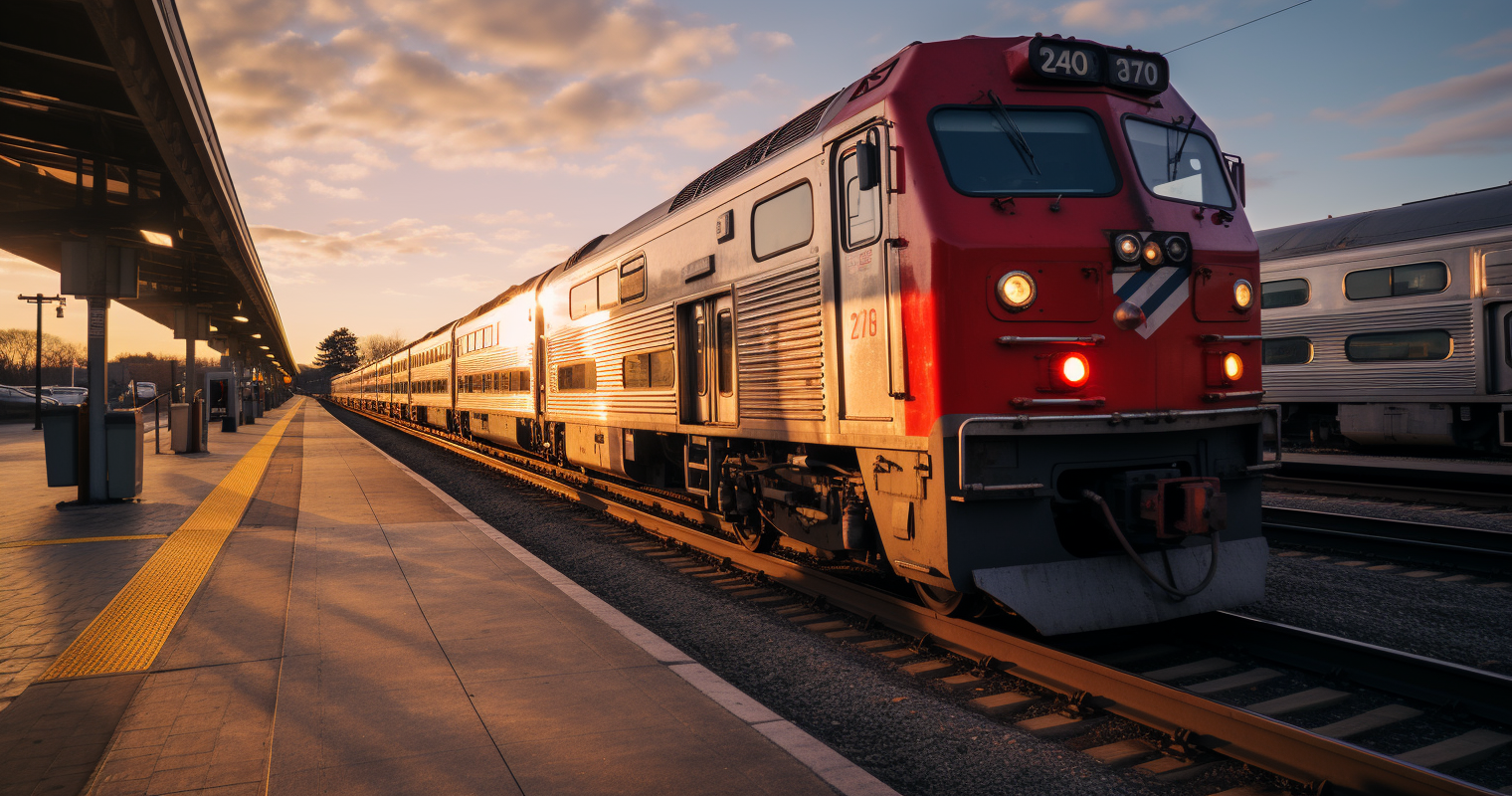
Amtrak, the national intercity passenger railroad, is the backbone of rail travel in the United States, connecting more than 500 destinations across 46 states. Although the network is vast in geographic reach, it falls short of the frequency and speed offered by high-density systems in Europe or East Asia. Rail travel in the US is best suited to leisure trips, occasional journeys between cities, and daily commuting in the northeast corridor, rather than as a universal solution for everyday travel nationwide.
| Item | Details |
|---|---|
| National rail operator | Amtrak (National Railroad Passenger Corporation) |
| Network coverage (as of 2025) | Over 500 stations, 21,400 miles of track across 46 states |
| Annual ridership (FY2025) | 34.5 million passengers — an all-time record |
| Advance booking window | Up to 11 months in advance |
| Senior discount (as of 2025) | 10% off for passengers aged 65+; 15% on some California routes |
| Disability discount (as of 2025) | 10–15% off rail fare depending on route; up to 50% on some services |
| Main booking channels | Amtrak.com, Amtrak app, phone (1-800-USA-RAIL), station ticket offices and kiosks |
What is the overall standard of rail travel in the United States?
Amtrak’s system spans more than 500 stations across 21,400 miles (34,000 km) of track, placing it among the world’s largest rail networks by geographic footprint — though size and service density are two very different measures. While Germany’s Deutsche Bahn and Japan’s Shinkansen deliver high-frequency, reliably punctual services between cities, the US network operates far fewer daily trains on most routes, and some long-distance services run only once a day or even less often.
Train speeds across much of the network are capped at 79 mph (127 km/h) or below, though a number of corridors have been upgraded to permit speeds of up to 110 mph (180 km/h). The most advanced infrastructure is found on the Northeast Corridor, where sections allow trains to reach 160 mph (260 km/h). Travellers living and working between Boston, New York, Philadelphia, and Washington D.C. therefore benefit from the most frequent and quickest services available anywhere on the national network. Outside that corridor, trains generally run slower and less often.
A significant portion of Amtrak’s routes run on tracks that are owned, maintained, and controlled by freight railroad companies — referred to as “host” railroads. Federal law requires these operators to give Amtrak trains priority over freight movements, but non-compliance is widespread and is officially identified as the leading cause of delays to Amtrak passengers. This structural issue explains why long-distance journeys can arrive substantially behind schedule, a persistent source of frustration for those who rely on the network.
Ridership reached 32.8 million in FY2024, surpassing the previous record, before climbing further to 34.5 million in FY2025 — a new all-time high. On the investment side, the 2021 Infrastructure Investment and Jobs Act set aside $66 billion for rail improvements, representing the largest commitment of federal funds to passenger rail since Amtrak’s founding. The effects of this spending will unfold gradually over many years.
Amtrak’s long-distance routes serve as the framework for a broader national passenger network that also includes state-supported regional services, the Northeast Corridor, and Amtrak Thruway bus connections — through-ticketed coach services that extend the reach of the rail network to communities without train stations. For anyone new to the country, this combination matters: trains alone do not reach every destination, but pairing them with connected bus services substantially broadens access.
What classes of rail travel are available in the United States, and what are the differences between them?
Amtrak divides its onboard offering into four service categories: Coach Class, Business Class, First Class, and First Class Sleeper Service. The options available on any given journey depend on the route and train type, so what you can book varies considerably depending on your origin and destination.
Coach Class is the most widely accessible and budget-friendly choice, offered on all Amtrak services with the exception of the Acela. Seats are spacious by most standards, with reclining functionality, free Wi-Fi, and power outlets included. Food and drink are available for purchase onboard. Seating in coach is typically unreserved, with passengers choosing their own seats upon boarding on a first-come, first-served basis.
Business Class operates in a separate car or designated section of the train on many routes. It provides extra legroom and, on a number of services, a complimentary non-alcoholic drink, though the specific amenities differ by route. One practical advantage is that non-Acela Business Class fares are fully refundable and can be changed without any fees — a flexibility not always available on lower Coach fares.
First Class (Acela only) is the top-tier seated option, offered exclusively on the Acela service running along the Northeast Corridor. Passengers enjoy priority boarding, complimentary meals and beverages served at their seats, a calm and refined onboard atmosphere, generous seating space, and complimentary hot towels. First Class ticket holders also gain entry to Metropolitan Lounges at selected major stations.
Sleeper Class (First Class Private Rooms) is offered on overnight long-distance routes and represents one of the more distinctive aspects of American rail travel. Roomettes convert between two daytime seats and upper and lower sleeping berths at night, and include a large window, fresh linens, and shared access to restroom and shower facilities. Bedrooms are more expansive — roughly double the size of a Roomette — with a sofa and armchair arrangement by day that transforms into berths overnight. Meals are included with all private room bookings, with dining car menus covering breakfast, lunch, and dinner. This overnight experience has more in common with the classic European sleeper train tradition than with anything typically found on short-haul services.
Where can you find rail timetables and ticket prices in the United States?
The definitive source for Amtrak schedules and fares is the official website at www.amtrak.com. The site lets you search by route, view departure times, compare fare categories, and complete bookings directly. Both timetables and pricing are subject to change, so it is essential to verify information through this official channel before making any travel plans.
The Amtrak app, available for both iOS and Android, replicates the website’s core functionality and serves as the most practical tool for everyday travel management — from checking live schedules and reviewing reservations to accessing mobile tickets while on the move.
For those who prefer to compare options across different transport modes, third-party platforms such as Wanderu allow users to search Amtrak routes alongside buses and other services. That said, always cross-check any fare or availability information on the official Amtrak website or app before purchasing, since third-party platforms may not reflect the most up-to-date promotions or scheduling changes.
The Federal Railroad Administration (FRA), the federal body responsible for rail safety oversight and investment planning, publishes research and policy documents at www.fra.dot.gov. This is a useful resource for understanding the broader direction of the network and planned infrastructure changes, though for day-to-day journey planning, Amtrak remains the primary reference.
For urban and commuter rail, each city or regional transit authority maintains its own website — details are provided in the urban rail section below. The Northeast Corridor, spanning Boston through New York City and Philadelphia to Washington D.C., recorded over 14 million riders in 2024 — a 15.9 percent rise on the previous year — underscoring its role as the most heavily used and comprehensively scheduled part of the entire network.
How do you buy rail tickets in the United States, and can you book in advance?
Tickets for Amtrak services can be purchased up to 11 months ahead of travel. Booking early is strongly advisable on popular and long-distance routes, where fares rise as departure approaches and sleeping accommodation in particular tends to sell out well in advance.
Here is a step-by-step overview of how to buy Amtrak tickets:
- Visit Amtrak.com or open the Amtrak app. Enter your origin, destination, travel date, and passenger type. The system will display available services, classes, and live prices.
- Select your service and fare class. Compare Coach (Value or Flex), Business, and where applicable, First Class or Sleeping Accommodations. Note that fare flexibility (refundability and changes) differs between fare types.
- Apply any discounts. Passenger discounts such as Child and Senior are applied automatically when you select them at the beginning of your travel search. Any promotion code discounts also need to be added during this step.
- Choose your seat (where applicable). Seat selection is available on Acela and in Business Class on Northeast Regional, Carolinian, Palmetto, and Vermonter services. During booking, passengers can review and change their pre-selected seats before completing their reservation.
- Complete payment and save your ticket. Tickets can be accessed digitally via the Amtrak app or downloaded as a PDF. A mobile or printed ticket is accepted on board.
- Collect or use at the station. Many stations offer self-service kiosks where you can purchase, edit, or pick up tickets. Staffed ticket offices are available at larger stations during operating hours.
To book by telephone, Amtrak’s reservations line is reachable at 1-800-USA-RAIL (1-800-872-7245). An automated system handles many enquiries, or you can press 0 to be connected to a live agent.
Upgrades from Coach to Business class, First Class, or Sleeping Accommodations are possible via Amtrak.com, the Amtrak app, at a staffed station, or over the phone at 1-800-USA-RAIL. Amtrak also runs an upgrade bidding system called BidUp, which gives passengers the opportunity to submit an offer or instantly purchase an upgrade to premium categories including Business Class, Acela First Class, and private Roomette or Bedroom accommodation.
What types of rail tickets are available in the United States, and are there discount schemes?
Amtrak streamlined its fare structure in autumn 2023, reducing Coach class options to two fare types: Value and Flex. The principal distinction between them lies in how cancellations and modifications are treated after a booking is made. Flex fares generally permit cancellations and changes with a full refund, while Value fares come with restrictions or penalties. Current terms can be verified at amtrak.com/guide-to-fares.
The Acela operates on a slightly different structure: there is no Coach class on Acela trains, and instead passengers choose from three options — Business Value, Business Flex, and First Class.
Amtrak provides a range of standing discounts, as of 2025:
- Senior discount: Amtrak travellers aged 62 and over receive a 15% discount off the lowest available Value or Flexible fare on most Amtrak trains. Verify the current age threshold and percentage at amtrak.com/everyday-discounts, as these can vary by route.
- Student discount: Students aged 13–25 with a valid student ID are eligible for 15% off the lowest Value or Flexible fare when travel is booked at least three days in advance.
- Disability discount: Amtrak offers a 10% rail fare discount to adult passengers with a disability. Higher discounts apply on certain routes — see the full accessibility section below.
- Veterans Advantage discount: Veterans Advantage members holding a valid VetRewards Card receive a 15% discount off the lowest available Value or Flexible adult rail fares on most Amtrak service.
- Group travel (Share Fares): Share Fares provide a group discount of up to 60% off tickets for 8 passengers travelling together on the same reservation.
- AAA members: AAA members and their immediate family receive a 10% discount off the lowest available Value or Flexible fare when travel is booked at least three days in advance.
- Children: Up to two children aged 2–12 travelling with an adult are typically eligible for a 50% discount on the accompanying adult’s fare. Always confirm current child fare rules on the Amtrak website, as terms vary.
Amtrak runs a frequent traveller loyalty scheme called Amtrak Guest Rewards, through which members accumulate points on every journey and redeem them for discounts, complimentary tickets, or other benefits. The programme has grown to more than 20 million members, accounting for over half of all Amtrak riders. Enrolment is free and well worth completing for anyone who intends to use Amtrak on a regular basis.
Multi-ride passes are offered on selected regional services. The Cascades network, for example, provides options such as a “Ten Trips in 45 Days” pass or an “Unlimited Monthly Pass” — products that bear some resemblance to the season ticket arrangements common on European commuter networks. Availability differs markedly by region. The official Amtrak website or the reservations line at 1-800-USA-RAIL can provide current pass options for specific routes.
How accessible is the rail network in the United States for disabled passengers?
Amtrak has put in place accessibility provisions across its network, catering to wheelchair users, passengers with visual or hearing impairments, and those requiring assistance during their journey. Accessibility standards tend to be strongest on the Northeast Corridor and on newer rolling stock, while older stations and rural routes can present more limitations as infrastructure modernisation continues.
Amtrak offers rail fare discounts to passengers with disabilities and up to one travelling companion. The standard reduction is 10% off the adult rail fare for passengers with a disability. On certain services the saving is greater: passengers with a disability travelling on Downeaster trains between Boston, MA and Portland, ME qualify for a 50% discount. Several California routes also carry enhanced reductions — adult passengers with a disability travelling on Pacific Surfliner, Capitol Corridor, and Gold Runner services can receive a 15% saving year-round.
Passengers who require boarding assistance or specialist equipment are strongly encouraged to give advance notice. Contact Amtrak at 1-800-USA-RAIL (1-800-872-7245) or via the online chat facility. TTY/TDD users should call 711 to connect through a Telephone Relay Service operator. Between 7am and 11pm ET, SMS contact is also supported on 1-800-872-7245, and web chat is available at Amtrak.com.
All Amtrak trains include designated spaces for passengers with disabilities and mobility needs, including seating for those who transfer from a wheelchair, use a walking aid, or travel with a large service animal. Accessible bedrooms on long-distance trains are reserved for passengers with disabilities and are only opened to general sale within 14 days of departure, provided all other bedroom types are already fully booked. Amtrak recommends reserving as far ahead as possible to secure the most appropriate accommodation.
When measured against fully step-free systems — such as newer sections of the London Underground or major Swiss intercity stations — the US network offers less uniform accessibility, especially at smaller, older station buildings. However, all Amtrak services are legally required to meet minimum accessibility standards under the Americans with Disabilities Act (ADA). Comprehensive guidance on travelling with a disability is available at amtrak.com/passengers-with-disabilities.
Are there metro or urban rail systems in United States cities?
Separate from the national Amtrak network, many large American cities operate their own metro, light rail, or commuter rail systems. These local networks are often the mainstay of daily commuting and cover the urban gaps that Amtrak does not serve. An overview of the principal systems is provided below:
| City / Region | System | Website |
|---|---|---|
| New York City | MTA Subway (24/7 metro) + Metro-North + Long Island Rail Road | new.mta.info |
| Chicago | CTA ‘L’ train (metro/elevated rail) | transitchicago.com |
| Washington D.C. | WMATA Metro | wmata.com |
| Boston | MBTA (subway + commuter rail) | mbta.com |
| San Francisco Bay Area | BART (Bay Area Rapid Transit) + Caltrain | bart.gov |
| Los Angeles | LA Metro Rail (light/heavy rail) | metro.net |
| Philadelphia | SEPTA (subway + regional rail) | septa.org |
| Atlanta | MARTA (metro rail) | itsmarta.com |
| Seattle | Sound Transit Link Light Rail | soundtransit.org |
| Miami | Metrorail + Tri-Rail commuter rail | miamidade.gov/transit |
Each urban system operates its own fare structure, payment cards, and apps. New York’s OMNY contactless card, Washington D.C.’s SmarTrip card, and San Francisco’s Clipper card are all reloadable travel cards that streamline day-to-day commuting — functioning on a similar principle to London’s Oyster card or Sydney’s Opal card. Most major urban networks now also accept contactless bank card and mobile wallet payments at fare gates.
The degree of integration between urban rail and Amtrak services differs from city to city. At the largest hub stations — such as New York’s Penn Station and Moynihan Train Hall, Chicago’s Union Station, and Washington D.C.’s Union Station — national and local rail services connect within the same building or via short walking routes. In smaller cities, the transition between systems tends to be less convenient.
Brightline, a privately operated intercity rail service, launched revenue services between Miami and Orlando, Florida in 2023. The company is also developing Brightline West, a high-speed rail line between Los Angeles and Las Vegas, with an anticipated opening in late 2029. These private ventures are expanding the options available to travellers in specific corridors beyond what Amtrak currently covers.
What should expats know about using the rail network day-to-day?
Getting around by rail as a newcomer to the United States is generally uncomplicated, but a few practical details are worth knowing before your first trip. All Amtrak services and urban transit systems conduct announcements, display signage, and communicate in English. In cities with substantial Spanish-speaking communities — including Los Angeles, Miami, and New York — Spanish-language signage and announcements are common. However, multilingual support should not be assumed outside of major metropolitan areas.
On Amtrak long-distance trains, seat reservations are mandatory and are included within your ticket fare. On shorter “unreserved” routes, passengers select their own seats upon boarding on a first-come, first-served basis — arriving at the platform a few minutes early is a sensible precaution on busier services. Only passengers holding Business or Acela fares can designate a specific seat prior to departure; all others choose when they board.
Amtrak’s baggage allowance is considerably more generous than most airlines. Coach and Business class passengers may bring two carry-on items and two personal items onboard, and checked baggage is accepted at staffed stations on many routes. There are no security screening queues to contend with, which many frequent travellers regard as one of the most tangible practical benefits of choosing the train over flying.
Many experienced Amtrak travellers find that Tuesday and Wednesday afternoons offer the best opportunity to secure discounted fares. Fares are demand-driven — much like airline pricing — so purchasing well ahead of travel is the most reliable way to find lower prices. Booking on the day of departure generally means paying a premium.
On urban metro systems, the behavioural norms broadly mirror those of other major cities around the world: keep noise at a reasonable level, yield priority seating to those who need it, and stand to the right on escalators where that convention is observed — Washington D.C. being a notable example. Eating on metro trains is generally frowned upon, and in some systems, such as Washington D.C.’s Metro, it is formally against the rules.
For newcomers to the country, the most useful first step is to download the Amtrak app for intercity travel and the dedicated transit app for your local city — most urban systems offer apps with real-time service information. Both Google Maps and Apple Maps provide dependable public transport routing across US cities and are widely relied upon for planning journeys involving multiple legs or connections.
Frequently Asked Questions
Is Amtrak a reliable way to commute daily in the United States?
The answer depends considerably on your location. Along the Northeast Corridor — linking Boston, New York, Philadelphia, and Washington D.C. — Amtrak and commuter rail services run often enough to support regular daily use. Across the rest of the country, however, most Amtrak intercity routes operate only once or twice per day, which makes them unsuitable as a commuting option. For everyday journeys, urban metro systems in major cities are the practical choice for most residents.
Do I need to book Amtrak tickets in advance?
Fares are typically higher closer to the departure date, so purchasing tickets ahead of time is advisable whenever possible. Amtrak allows bookings to be made up to 11 months before travel. For sleeper accommodation on long-distance overnight trains, advance reservations are especially important — private rooms are in limited supply and are frequently fully booked during busier travel periods.
Can I use a contactless bank card on US metro systems?
A growing number of major US urban transit networks now support contactless bank card and mobile payment at fare gates. New York’s MTA, Washington D.C.’s Metro, and Chicago’s ‘L’ are among those that offer tap-to-pay functionality. Some systems, however, still require a dedicated travel card or a prepaid option. It is worth checking the relevant city transit authority’s website before travelling, as payment policies are continuing to evolve.
What is the Amtrak Guest Rewards programme and is it worth joining?
Amtrak Guest Rewards is a loyalty scheme through which members earn points on every booking and redeem them for fare reductions, free travel, or other rewards. Joining is free and can be done quickly at amtrak.com. Even passengers who travel by Amtrak only a handful of times a year can benefit, as accumulated points carry over and can be put toward future journeys.
Are there discount rail passes for travelling around the whole country?
Amtrak offers USA Rail Passes that provide a fixed number of trips within a set timeframe — for instance, 10 journeys within a 30-day window. These can represent good value for travellers intending to visit several regions. Availability, pricing, and conditions are reviewed periodically, so consult amtrak.com/rail-passes for the most current details. As of 2025, passes are open to both US residents and international visitors.
How does the Acela differ from other Amtrak trains?
The Northeast Corridor, running from Massachusetts to Virginia, is the busiest rail line in the country. The Acela is Amtrak’s flagship high-speed service on this corridor, delivering faster journey times alongside Business and First Class seating, complimentary in-seat dining in First Class, and access to Metropolitan Lounges at key stations. Tickets are priced considerably higher than those for the Northeast Regional — which serves the same route — but the combination of speed, frequency, and onboard quality puts it in direct competition with short-haul air travel in that corridor.
What happens if my Amtrak train is significantly delayed?
Amtrak operates a service guarantee on certain routes: passengers whose train arrives more than 30 minutes late on the Northeast Corridor, or more than 60 minutes late on other services, may be entitled to receive compensation as a future travel credit. Full details are set out on the Amtrak website. The most common source of delays on Amtrak — particularly on long-distance routes — is interference from freight railroad operations, so it is advisable to build contingency time into any plans that involve onward connections.
Is rail travel in the United States safe?
Travelling by rail in the United States is widely regarded as safe. Amtrak operates under the close safety oversight of the Federal Railroad Administration (FRA), which establishes and enforces regulations applicable across the national network. Urban transit systems are similarly monitored and regulated by their respective local authorities. As is the case with any form of public transport, passengers are advised to remain aware of their surroundings and keep an eye on their belongings, particularly at busy city-centre stations.