
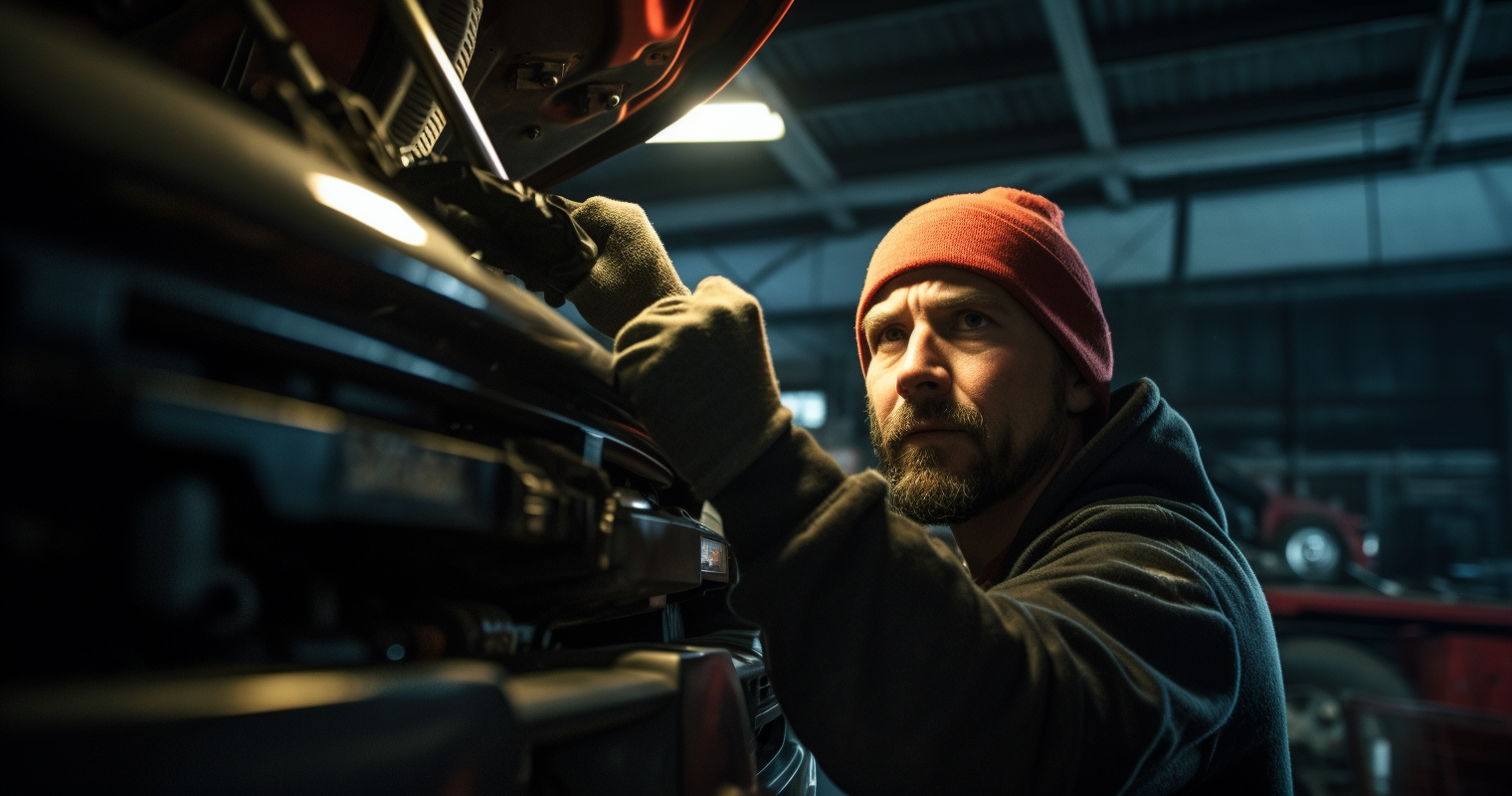
Austria operates a thoroughly regulated, high-quality system for vehicle roadworthiness and upkeep. Every vehicle registered in the country must complete the compulsory §57a inspection — widely known as the “Pickerl” — at prescribed intervals. The two principal national motoring organisations, the ÖAMTC and the ARBÖ, deliver extensive breakdown and roadside assistance cover. Winter tyres are a legal requirement between 1 November and 15 April whenever road conditions are wintry.
| Item | Details |
|---|---|
| Inspection scheme name | §57a inspection (“Pickerl”) |
| Passenger car test intervals | First test after 3 years, then every 2 years, then annually (the “3-2-1 rule”) — as of 2024 |
| Winter tyre requirement | Mandatory in wintry conditions, 1 November–15 April — as of 2024 |
| ÖAMTC breakdown number | 120 (24/7) |
| ARBÖ breakdown number | 123 (24/7) |
| ARBÖ standard membership fee | €102 per year (as of 2024); check arboe.at for current rates |
| Key official source | oesterreich.gv.at |
What is Austria’s mandatory vehicle inspection scheme and how does it work?
Every vehicle in Austria is required to undergo a periodic roadworthiness check officially designated as “Wiederkehrende Begutachtung nach § 57a KFG”. Once a vehicle passes this assessment, a small sticker is affixed to the windscreen — typically in the upper left corner as viewed from outside the car — giving rise to the informal name “Pickerl”, which translates roughly as “little sticker”.
Rather than requiring an annual inspection from the vehicle’s third year onwards as is the case with the UK’s MOT, Austria applies a graduated testing schedule. This is known as the 3-2-1 principle: a newly registered car must have its first inspection three years after initial registration, its second inspection two years after that, and then every year from that point forward. While this shares similarities with the German TÜV system for newer vehicles, it transitions to annual testing more quickly.
The colour of the decal indicates the vehicle category — white is used for cars fitted with a catalytic converter, green for those without one, and red for vehicles registered as historic. Punched holes in the sticker indicate the month and year of the next required inspection, calculated from the vehicle’s first registration month.
An inspection may legally be conducted up to one month before the date shown on the decal or as late as four months after it; the vehicle is considered roadworthy throughout this window. That said, drivers should be aware that this domestic grace period is frequently not acknowledged by authorities in other countries, so overseas travel should only be undertaken while the Pickerl is still current.
Category M1 vehicles operating as taxis or ambulances, and vehicles in categories M2, M3, N1, N2, N3, O3, and O4, are subject to annual inspections with no comparable flexibility window. Following a regulatory update in 2020, motorcycles and mopeds now follow the same 3-2-1 schedule as passenger cars.
The inspection evaluates all safety-critical components, encompassing the braking system, steering mechanism, lighting and reflectors, electronic systems, axles, wheels, tyres, suspension, chassis and fittings, and other mandated equipment. Exhaust emissions and environmental impact are assessed as well.
If a vehicle does not pass the Pickerl, the identified faults must be rectified before the vehicle can be considered roadworthy. Authorised technicians can carry out the required repairs efficiently, and most licensed inspection centres are equipped to perform both the remedial work and the subsequent re-test on the same premises. Since May 2023, the §57a inspection has also included a mandatory recording of mileage and consumption data for vehicles first registered on or after 1 January 2021.
Inspections may be carried out by various authorised bodies. TÜV AUSTRIA is among the most prominent providers of §57a vehicle assessments. Both the ÖAMTC and ARBÖ motoring organisations also run authorised testing facilities across the country. For up-to-date fees and to locate your nearest approved inspection centre, refer to the Austrian government’s official information portal: oesterreich.gv.at.
What is the standard of vehicle maintenance and repair in Austria?
Vehicle servicing and repair in Austria is broadly regarded as being of a high standard. Across the country, garages and workshops of varying sizes offer services ranging from routine oil changes to complex mechanical overhauls. The sector is governed by Austrian trade licensing regulations, which stipulate that mechanics must hold recognised professional credentials in order to operate independently.
Austria’s well-developed vocational training framework — the Lehrberuf, or apprenticeship system — produces qualified automotive technicians who work throughout the country, both in urban centres and more remote locations. Major international franchised dealerships and independent repair shops operate side by side, and finding a reputable workshop is generally uncomplicated in cities such as Vienna, Graz, Salzburg, Innsbruck, and Linz.
In more remote or mountainous areas, the number of available workshops tends to be smaller, and obtaining specialist parts or completing complex repairs may take longer. Expats whose vehicles were originally manufactured for non-European markets — such as Japanese domestic-market models or makes not formally distributed in Austria — may find it more difficult to source original components. Pan-European parts suppliers or specialist importers are often the solution in such cases, though delivery times and costs may be elevated.
The language barrier can be a real practical challenge for expats who have not yet acquired proficiency in German. The overwhelming majority of mechanics in Austria conduct business in German, and while some workshops in larger cities may employ multilingual staff, this cannot be assumed. Familiarising yourself with basic terminology for common vehicle problems — or making use of a translation application — will make workshop visits considerably smoother. Both the ÖAMTC and ARBÖ (discussed further below) can occasionally assist members in communicating with garages.
The ARBÖ provides a broad range of technical vehicle services nationwide, including §57a inspections, pre-purchase checks, and seasonal assessments, across its current network of 91 testing centres throughout Austria. For expats seeking confidence in service quality and, in some cases, assistance in a language other than German, using a club-affiliated service centre can be a sensible option.
Who are the main breakdown recovery and roadside assistance providers in Austria?
Austria is served by two dominant national motoring organisations that provide membership-based breakdown cover, broadly comparable in structure to the AA or RAC in the United Kingdom or the ADAC in Germany. Both operate countrywide around the clock, every day of the year.
ÖAMTC — Österreichischer Automobil-, Motorrad- und Touring Club
The Austrian Automobile, Motorcycle and Touring Club, known by its acronym ÖAMTC, is one of Austria’s most prominent motoring bodies. Its famous “Yellow Angels” have been coming to the aid of drivers across Austria since 1954, evolving from modest beginnings into a highly organised service that responded to 687,500 call-outs in 2023 alone.
ÖAMTC membership brings access to round-the-clock roadside assistance, complimentary loan vehicles, coverage across Europe, repair services, insurance consultation, §57a inspection facilities, travel planning support, and vignette services. The majority of these benefits are available to members at no additional charge.
In 2025, the ÖAMTC saw a slight uptick in demand for its roadside services, recording 700,881 deployments across Austria, with cold weather and battery failures cited as the leading causes. To reach ÖAMTC breakdown assistance, dial 120. Full membership details and current fees can be found at oeamtc.at.
ARBÖ — Auto-, Motor- und Radfahrerbund Österreichs
The Auto-, Motor- und Radfahrerbund Österreichs, or ARBÖ, is Austria’s second-largest motoring club, with approximately 400,000 members, and offers a wide spectrum of services including roadside breakdown assistance and travel-related support.
ARBÖ structures its membership in several tiers. The standard individual membership, which covers cars, motorcycles, mopeds, and bicycles, is priced at €102 per year as of 2024. A discounted partner membership is also available for another adult in the same household. Always consult arboe.at for the most current pricing information.
ARBÖ’s breakdown service operates throughout Austria and can be reached on the short number 123. With 450 in-house technicians deployed across the road network, the ARBÖ’s priority is to get drivers back on the road in their own vehicle wherever possible.
Both organisations will dispatch breakdown assistance to anyone in Austria, including non-members — but those without membership will be charged a call-out fee, which can be considerable. For expats who have recently arrived and have not yet enrolled in either club, it is strongly advisable to join promptly rather than waiting until an emergency arises.
Beyond these two primary clubs, international travel assistance providers such as Europ Assistance are also active in Austria, offering towing, battery assistance, and general breakdown recovery services. These are frequently included as part of motor insurance or travel insurance packages.
Can you use international breakdown cover or bring existing membership from another country?
If you have recently relocated to Austria and hold membership of a motoring club affiliated with the Fédération Internationale de l’Automobile (FIA) or the Alliance Internationale de Tourisme (AIT), you may be eligible for reciprocal roadside assistance through either the ÖAMTC or ARBÖ. Both Austrian clubs are FIA members, so members of affiliated organisations elsewhere — including the AA or RAC in the UK, the ADAC in Germany, the AAA in the United States, or the NRMA in Australia — may be entitled to a degree of assistance while visiting or temporarily residing in Austria.
The word “degree” is important here: reciprocal arrangements typically cover emergency attendance at the roadside and, where unavoidable, towing to the nearest workshop. More extensive services — such as vehicle repatriation, overnight accommodation cover, or provision of a replacement car — are ordinarily reserved for full club members. Reciprocal access is generally limited to overseas members holding a current road service product with their home club, and entitlement is restricted to standard basic roadside assistance.
For those making a permanent move to Austria, it is advisable to sign up with the ÖAMTC or ARBÖ as soon as possible after arrival, rather than depending indefinitely on reciprocal cover from a home-country club. Such reciprocal arrangements are designed with travellers and short-term visitors in mind, not long-term residents. Before travelling, contact your existing motoring club to confirm the precise scope and duration of any cover applicable in Austria.
Some international motor insurance policies incorporate Europe-wide breakdown assistance — commonly delivered through partners such as Europ Assistance, AXA Assistance, or Allianz Partners. Review your insurance documents thoroughly to verify whether Austria is included in the coverage territory and to note the correct procedure for making a call-out request.
What do expats need to know about driving a foreign-registered vehicle in Austria?
Whether or not you need to re-register a foreign-plated vehicle in Austria depends primarily on your residency situation. If you are visiting or have only just arrived, you may continue driving on foreign registration plates without any immediate obligation to re-register. Once you establish permanent residence, however, Austrian law obliges you to register the vehicle locally within a specified timeframe.
Once a vehicle receives Austrian registration, you must hold valid Austrian third-party liability insurance — Haftpflichtversicherung. Insurance policies issued abroad typically cease to be valid once the vehicle is given Austrian registration. In Austria, every vehicle owner is legally required to carry third-party liability cover.
Registration also triggers the requirement for a technical inspection. In Austria, this means the §57a Pickerl, and the applicable intervals and standards may differ from those in your country of origin. Some vehicles are required to undergo an immediate technical inspection following registration. It is worth clarifying in advance whether a recent inspection certificate from another country will be recognised, or whether a completely new inspection must be arranged.
While EU rules permit the free movement of goods, Austria maintains specific provisions regarding the registration and taxation of vehicles imported from abroad. Overlooking these requirements can lead to unexpected financial penalties. A notable additional cost is the NoVA (Normverbrauchsabgabe) — a one-time standard consumption tax levied on vehicles being registered in Austria for the first time. The applicable rate is determined by the vehicle’s CO₂ emissions profile. For current NoVA rates, which change with budget legislation, consult the Austrian Federal Ministry of Finance at bmf.gv.at or seek advice from a tax professional.
Missing the vehicle registration deadline can attract significant fines. If you are uncertain about when your deadline falls, the official government portal at oesterreich.gv.at sets out the relevant procedures and obligations. Consulting a local legal or tax adviser when importing a vehicle is strongly recommended.
The step-by-step process for bringing a vehicle into compliance in Austria is as follows:
- Confirm your residency status and timeline. Determine from which date you are treated as an Austrian resident — this is what triggers the vehicle registration deadline. Your local district authority (Bezirksverwaltungsbehörde) and the Austrian government portal can both provide guidance.
- Arrange Austrian motor insurance. A valid Austrian Haftpflichtversicherung must be in place before you can complete vehicle registration. Request quotes from Austrian insurers early, as premiums can differ considerably between providers.
- Book a §57a Pickerl inspection. Have your vehicle assessed at an authorised centre — TÜV AUSTRIA, ÖAMTC, ARBÖ, or a licensed independent garage are all options. Establish in advance whether a valid inspection certificate from your previous country of residence is acceptable or whether a fresh Austrian inspection is necessary.
- Prepare documentation. Collect the vehicle registration certificate, proof of ownership (such as a purchase contract, invoice, or deed of gift), personal identification, proof of insurance, and the Pickerl inspection report.
- Calculate and pay NoVA. If you are importing the vehicle into Austria for the first time, arrange a NoVA assessment through the Austrian tax authority (Finanzamt). This consumption tax liability must be settled prior to registration.
- Attend the vehicle registration office. Present all of your documentation at your local Zulassungsstelle (vehicle registration office). Austrian registration plates and documentation will then be issued for your vehicle.
How do Austria’s road conditions and climate affect vehicle maintenance?
Austria’s landscape encompasses flat plains in the east and an extensive stretch of Alpine terrain across the west and south. This geographical variety means that the demands placed on a vehicle — and the maintenance schedule it requires — can differ substantially depending on where you are based and the routes you regularly travel.
During the summer months, driving conditions on Austrian roads and motorways are generally very good, with major routes well-surfaced and properly maintained. Winter is a different matter entirely: from December through to March, drivers must be prepared for snow and ice on all Austrian roads, particularly at higher elevations and on mountain passes.
Winter tyres: a legal and practical necessity
Passenger vehicles and goods vehicles with a maximum permitted total weight of up to 3.5 tonnes may only be driven in wintry road conditions between 1 November and 15 April if all four wheels are fitted with winter tyres. Wintry conditions are defined as the presence of snow, slush, or ice on the road surface. This requirement applies to every vehicle on Austrian roads, irrespective of where it is registered.
Winter tyres on passenger cars and goods vehicles up to 3.5 tonnes must have a minimum tread depth of 4 millimetres for radial tyres and 5 millimetres for cross-ply tyres. Driving in winter conditions without appropriate winter tyres or snow chains carries a fine of €35; where other road users are put at risk as a result, penalties of up to €5,000 may be imposed.
This rule extends to vehicles registered abroad as well as those registered in Austria. Expats whose cars were originally purchased in warmer climates must ensure they fit proper winter tyres well ahead of 1 November. Austrian tyre retailers and service workshops are thoroughly equipped for seasonal tyre changeovers, and many garages offer tyre storage at an annual flat rate.
Alpine driving and vehicle wear
Driving in mountainous terrain subjects brakes, cooling systems, and transmissions to considerably greater stress than flat road driving. If you regularly use alpine routes — including demanding passes such as the Großglockner, Arlberg, or Brenner — it is worth having your brake pads, brake fluid, and coolant inspected more frequently than standard service intervals would normally require. Brake fade caused by overheating during prolonged descents is a genuine hazard for poorly maintained vehicles.
High altitude also affects tyre pressure and the efficiency of fuel combustion. Turbocharged engines generally manage the reduced air density at altitude more effectively than their naturally aspirated counterparts. If you drive an older non-turbocharged vehicle, anticipate a noticeable drop in performance on steep ascents.
Emergency equipment requirements
Austrian law requires that drivers carry a first aid kit and a warning triangle inside the passenger compartment of the vehicle — not in the boot. A high-visibility vest conforming to EN 471 standard is also mandatory and must be accessible; police may issue a fine if one is not present during a roadside check. These requirements apply to all vehicles driven in Austria, regardless of where they are registered, and must be met from your very first day on Austrian roads.
In summer, increasingly frequent heatwaves in recent years have placed cooling systems and air conditioning units under strain, particularly in older vehicles. Between June and August in a recent year, the ÖAMTC assisted members with over 159,000 breakdowns, with heatwaves and severe storms being the primary contributing factors. Keeping your coolant level topped up, your radiator in good condition, and your battery health monitored regularly will help reduce the risk of a summertime breakdown.
Frequently asked questions
How much does a §57a Pickerl inspection typically cost in Austria?
The fee for a §57a inspection is not set by central government and varies between authorised testing centres. Typical prices for a standard passenger car fall roughly in the range of €60–€100, though costs may differ by region and provider. Contact your chosen inspection centre directly for current pricing. TÜV AUSTRIA (tuv.at), the ÖAMTC, and the ARBÖ all run authorised testing facilities and publish their fee schedules on their respective websites.
What happens if I miss my Pickerl renewal date?
You have a window of one month before and up to four months after the date shown on the decal during which the vehicle remains legally roadworthy. If you continue driving once this grace period has elapsed, your vehicle is treated as failing to meet roadworthiness requirements, which may void your insurance cover and expose you to a police fine. It is therefore important to schedule your inspection as the due date draws near.
Can I join the ÖAMTC or ARBÖ as soon as I arrive in Austria?
Yes — both the ÖAMTC (oeamtc.at) and the ARBÖ (arboe.at) welcome new members of any nationality, and Austrian residency is not a prerequisite. Cover begins immediately upon joining, so you can call on their breakdown services from the moment your membership is confirmed. Since both organisations charge non-members a call-out fee that can be substantial, registering before you ever need assistance is highly advisable.
Do I need to re-register my vehicle if I am only staying in Austria for a few months?
If your stay is short-term and you have not taken up formal residence, you are generally free to continue driving on foreign plates. The obligation to register your vehicle locally is triggered by the establishment of a primary residence in Austria. If your stay extends beyond six months or you formally register as a resident, you should seek clarification from your local district authority (Bezirksverwaltungsbehörde) or consult oesterreich.gv.at for the applicable rules, which may vary depending on your nationality and EU or non-EU status.
Are all-season tyres acceptable in Austria, or do I specifically need winter tyres?
All-season tyres are legally acceptable as winter tyres provided they carry an “M+S”, “M.S.”, or “M&S” marking, or are additionally marked with a snowflake symbol. Tyres bearing these designations comply with Austrian winter driving regulations. That said, dedicated winter tyres typically provide meaningfully better performance in severe alpine conditions. A tyre specialist can advise on the most appropriate option for your driving environment.
What should I do if my vehicle breaks down on an Austrian motorway?
Move your vehicle onto the hard shoulder as far as practicable and activate your hazard warning lights. Exit the car from the passenger side when it is safe to do so, put on your high-visibility vest before stepping out, and position your warning triangle at a suitable distance behind the vehicle. Then contact either ÖAMTC on 120 or ARBÖ on 123 for breakdown assistance. Austria’s general emergency number is 112. If you hold membership with a foreign motoring club affiliated with the FIA, verify whether reciprocal assistance entitlements apply before making your call.
Is it easy to find garages that can service electric or hybrid vehicles in Austria?
The ÖAMTC is actively investing in readiness for the growing prevalence of electric vehicles, including specialist staff training and the introduction of electric-powered breakdown vehicles. EV-capable service and repair facilities are becoming increasingly widespread in Austria’s main cities, particularly at franchised dealerships. In more rural parts of the country, specialist EV servicing remains less accessible. If you own an electric or plug-in hybrid vehicle, it is advisable to identify an authorised service partner for your make and model before completing your move.
Does the NoVA tax apply to all imported vehicles, and how is it calculated?
The Normverbrauchsabgabe (NoVA) is a one-time registration levy applied when a vehicle is registered in Austria for the first time, or when a vehicle transitions from foreign to Austrian registration. The rate is calculated according to the vehicle’s CO₂ emissions, with heavier-emitting vehicles subject to a higher charge. Zero-emission vehicles, including battery electric cars, are currently exempt from NoVA. Because the applicable rates and thresholds are adjusted with each budget cycle, always verify the current NoVA schedule with the Austrian Federal Ministry of Finance at bmf.gv.at or seek guidance from a qualified local tax adviser.