
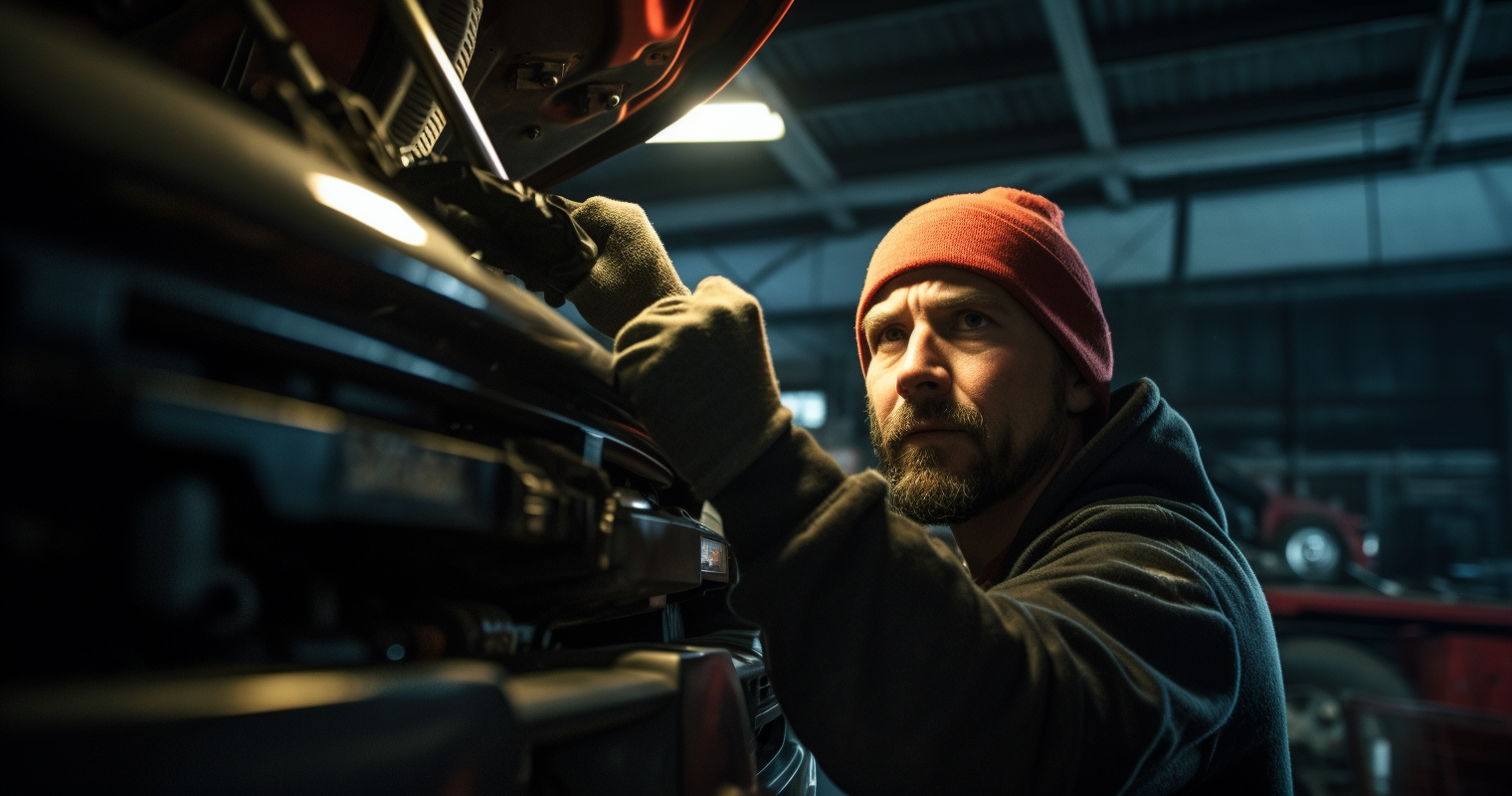
Every vehicle on the Cayman Islands must undergo a compulsory roadworthiness check administered by the Department of Vehicle and Drivers’ Licensing (DVDL) before its licence can be renewed. These checks can be completed at official DVDL sites or through a network of authorised private workshops. While Grand Cayman has dedicated roadside assistance services, coverage on the Sister Islands is sparse — and the year-round tropical conditions make consistent vehicle upkeep essential for all drivers.
| Item | Details |
|---|---|
| Inspection authority | Department of Vehicle and Drivers’ Licensing (DVDL) — dvdl.gov.ky |
| Inspection frequency | Annually for vehicles over 10 years old; up to 3 years for newer vehicles; up to 5 years for brand-new vehicles (as of 2024) |
| Inspection fee (cars/light vehicles) | CI$35 per inspection (as of 2024 — verify current fees at dvdl.gov.ky) |
| Annual licence fee (cars up to 2500cc) | From CI$215 including inspection (as of 2024 — verify current fees at dvdl.gov.ky) |
| Primary breakdown provider (Grand Cayman) | AutoShield — membership from CI$99/year (as of 2024) |
| Driving side | Left (same as the UK and Australia) |
Does the Cayman Islands operate a mandatory vehicle inspection programme?
Yes. The Cayman Islands enforces a compulsory vehicle roadworthiness programme administered by the Department of Vehicle and Drivers’ Licensing (DVDL). Under the Traffic Law, every vehicle owner must submit their vehicle to an authorised inspector prior to the due date of licence renewal, so that the inspector can assess whether the vehicle meets roadworthiness and legal compliance standards. In everyday terms, obtaining or renewing a vehicle licence requires a current inspection certificate.
How frequently a vehicle must be inspected depends on its age. A vehicle being registered in the Islands for the first time as a brand-new model may receive a licence covering up to 5 years. A previously registered vehicle that is less than 10 years old may be licensed for a period of up to 3 years. Once a vehicle reaches the 10-year mark, however, it must be inspected and licensed annually without exception.
In contrast to the UK’s MOT system — which becomes mandatory from the third year of a vehicle’s life and operates as a standalone test entirely separate from the vehicle excise duty process — the Cayman Islands scheme links the inspection directly to licence renewal. Owners may present their vehicle for inspection and have their registration renewed up to 30 days before the current licence expires. While many Caribbean territories operate roadworthiness schemes of some kind, the Cayman Islands’ tiered approach to inspection intervals based on vehicle age is a noteworthy characteristic of the local system.
After the inspection is completed, the vehicle owner will receive either a Certificate of Road Worthiness (indicating a pass) or a Certificate of Defects (indicating a fail), both of which must be attached to the Certificate of Vehicle Licence and Roadworthiness — commonly referred to as the log book. A failed inspection means all identified defects must be corrected before the vehicle can be licensed. It is also worth noting that failing to keep a vehicle licence current could affect the validity of the owner’s motor insurance, so allowing an inspection to lapse carries real consequences.
Inspections take place at official DVDL sites as well as at government-approved private garages. On Grand Cayman, DVDL inspection services are available at the Crewe Road and Breakers locations; the West Bay DVDL office does not carry out inspections. Approved private garages listed on the DVDL website also provide this service, and many vehicle owners conveniently combine an annual service with their roadworthiness check at these facilities.
Regarding costs, the standard inspection fee is CI$35 for private cars, trucks not exceeding 4,000 lbs, vans with up to 15 seats, and trailers not exceeding 2,000 lbs. Larger trucks, public transport vehicles, rental vehicles, taxis, and limousines attract a fee of CI$40, while public transport vehicles, buses, and heavy trucks over 10,000 lbs are charged CI$50. These figures reflect the position at the time of research — the DVDL website should always be consulted for up-to-date rates. The minimum combined outlay for inspection and one year’s licensing for a standard four-seater car or SUV with an engine up to 2500cc is CI$215 (comprising CI$180 for registration and CI$35 for the inspection). Vehicles with engines above 2500cc attract a total of CI$235.
One practical point worth remembering: DVDL inspection facilities will not process vehicles during rain, so it pays to monitor the weather forecast before heading in. Queues also tend to build up at the start and end of each month, so visiting mid-month when possible is advisable. Those whose licences fall due during the rainy season — which runs from June to November — should plan ahead accordingly. On Cayman Brac, the DVDL office is situated at the District Administration Building and can be contacted on (345) 948 2222; it is open Monday to Friday, 8:30am to 4pm. The Little Cayman office operates on alternate Thursdays only, from 9am to 2:30pm.
What standard of vehicle servicing and repair can expats expect in the Cayman Islands?
The quality of vehicle maintenance available on Grand Cayman is generally sufficient for day-to-day purposes. The island supports a reasonably competitive market of repair workshops, franchised dealerships, and independent mechanics that serves a substantial vehicle population. The DVDL’s Private Garage Programme — the scheme through which certain workshops are authorised to conduct official roadworthiness inspections — offers a practical reference point when searching for reputable garages, given that participation requires adherence to government inspection standards.
Vehicles can be inspected at a range of automotive repair shops operating under the approved private garage programme. Once inspected, the garage issues a Certificate of Roadworthiness, which the owner then presents to the Vehicle and Licensing Department when renewing their licence. A directory of approved private garages is available on the DVDL website, making it straightforward to locate an authorised facility in your area.
There is no nationally recognised certification or formal accreditation body for automotive technicians in the Cayman Islands comparable to the IMI (Institute of the Motor Industry) in the UK or ASE certification in North America. That said, franchised dealerships representing major international brands — including Toyota, Honda, and Kia, among others — generally employ factory-trained technicians and maintain stocks of genuine manufacturer parts, meaning routine servicing for these makes is typically uncomplicated.
Parts availability can present a more significant challenge, especially for vehicles originally produced to European, Japanese, or other non-North American specifications. Because the majority of vehicles on the island are sourced from the United States or purchased locally as used cars, the mechanical expertise available tends to be most attuned to North American-specification vehicles. If you are importing a vehicle, verifying that it carries a recognised safety rating is important. Components for less common European models or grey-market imports may need to be ordered from overseas, potentially adding days or weeks to repair timelines and substantially increasing costs.
Expats coming from countries with densely concentrated garage networks should keep in mind that the Cayman Islands is a compact island territory. While service quality at established workshops is generally solid, the sheer range of choices is inevitably more limited than in a large metropolitan area. Establishing a working relationship with a trustworthy mechanic shortly after arrival is a sensible priority. Seeking recommendations from the local expat community — through online forums, Facebook groups, or neighbouring residents — remains one of the most dependable ways to identify reputable service providers.
Who provides breakdown recovery and roadside assistance in the Cayman Islands?
AutoShield is the Cayman Islands’ sole dedicated roadside assistance operator, providing a round-the-clock service across Grand Cayman every day of the year. Beyond AutoShield, some local insurers also extend roadside assistance to policyholders as part of their motor cover.
Unlike countries with large national motoring organisations — such as the AA or RAC in the UK, or CAA in Canada — the Cayman Islands does not have an equivalent body. AutoShield fills this role through a subscription-based model that broadly mirrors the concept of motoring club membership. Annual membership starts at CI$99 as of 2024, making it a reasonably affordable option for residents. There is no publicly advertised short-term or visitor membership tier, so newly arrived expats should contact AutoShield directly to arrange coverage promptly after settling in.
Several local insurance companies also incorporate roadside assistance within their motor policies. ICWI, for instance, automatically provides 24-hour roadside assistance to customers holding comprehensive cover. Saxon Insurance is another provider that includes roadside assistance within its motor policies — specifically for customers who have opted for collision cover. Saxon’s 24-hour Customer Support Service Package encompasses four principal benefit categories, and assistance can be requested at any hour by calling (345) 949-1613 or (345) 926-0358.
Typical roadside assistance services available in the Cayman Islands include battery jump-starts, tyre changes using the vehicle’s own spare, towing to a garage of the customer’s choosing, and support in arranging alternative transport. In circumstances where a jump-start proves insufficient, the vehicle can be towed to a preferred destination, with towing costs covered under the assistance package. Any costs associated with a replacement battery, however, remain the customer’s responsibility.
A significant limitation that all residents should be aware of: Grand Cayman has only one dedicated roadside assistance provider, and the Sister Islands — Cayman Brac and Little Cayman — have none at all. Residents living on the Sister Islands must factor this into their planning and ensure they have an established contact with a local mechanic who can be called upon in an emergency situation.
The following providers are worth contacting directly to confirm current membership options, pricing, and the precise scope of coverage:
- AutoShield — Grand Cayman’s dedicated roadside assistance provider. Search online for current contact details and membership options.
- ICWI (Insurance Company of the West Indies) — icwi.com — roadside assistance included with comprehensive motor insurance.
- Saxon Insurance — saxon.ky — roadside assistance included with collision cover; helpline (345) 949-1613 or (345) 926-0358.
Can expats rely on international breakdown cover in the Cayman Islands?
In the vast majority of cases, breakdown cover arranged through organisations based in other countries does not extend to the Cayman Islands. UK membership of the AA, RAC, or Green Flag, for example, applies within the United Kingdom and — depending on the specific product — parts of Europe, but does not reach Caribbean territories. Likewise, AAA membership in North America applies across the continental United States, Canada, and Mexico, with no provision for the Cayman Islands.
There are no widely documented reciprocal arrangements between the principal international motoring organisations and any providers in the Cayman Islands. In Europe, travellers benefit from inter-club agreements facilitated through bodies such as the Alliance Internationale de Tourisme or the FIA network, enabling members to access local club services abroad. No comparable infrastructure exists for the Caribbean region.
The practical guidance for expats relocating to the Cayman Islands is to put local coverage in place as soon as possible. Taking out a comprehensive motor insurance policy — which, with providers such as ICWI or Saxon, may include roadside assistance as a standard benefit — addresses both the legal requirement for vehicle insurance and the need for breakdown cover simultaneously. Enrolling in AutoShield’s membership programme is an equally sensible measure. Waiting until a breakdown actually occurs is not a workable approach, especially on the Sister Islands where no dedicated service provider is available.
If you believe your existing breakdown or travel insurance policy might contain any provision for vehicle recovery in the Caribbean, it is worth scrutinising the policy wording closely before travelling or relocating, and following up directly with your insurer. Certain premium travel insurance products and some credit card benefits do include a degree of motor-related overseas assistance, but these rarely offer the breadth of coverage required by long-term residents.
What do expats need to know about driving a foreign-registered vehicle in the Cayman Islands?
Expats intending to drive in the Cayman Islands — whether immediately on arrival or while getting settled — should understand the distinction between the rules that apply to visitors and those applicable to residents. Short-term visitors may drive using a valid overseas driving licence for a limited period, but those who take up permanent or long-term residence are expected to obtain a Cayman Islands driving licence and to register any vehicle they own locally.
The Traffic (Amendment) Act 2024 introduces a licence exchange mechanism: a resident of the Islands who holds a domestic driving licence issued by an approved qualifying country may swap it for the corresponding Cayman Islands licence. This avoids the need to sit a full driving test for those coming from eligible countries — though you should verify whether your country of origin appears on the approved list by checking directly with the DVDL.
Any vehicle being brought into the Cayman Islands on a permanent basis must be registered locally. This involves completing an Application to Register a Vehicle — a form supplied by the DVDL inspector — which covers both new and used vehicles that have not previously been registered in the Islands. This form, together with proof of insurance and a Certificate of Roadworthiness, must be submitted to a Licensing Officer before registration can be finalised.
If you are importing a vehicle, it is essential to confirm that it carries a recognised safety rating. All vehicles must satisfy the DVDL’s local roadworthiness requirements to obtain a Certificate of Roadworthiness, which is a prerequisite for registration. If your imported vehicle has features that fall outside Cayman regulations — for example, window tinting darker than the permitted level — these must be corrected before the registration process can be completed.
Among the inspection criteria, glazing in all windows must be undamaged — free from holes, breaks, and cracks — and must not be tinted beyond the limits set out in Regulation 23(3) of the Traffic Regulations (2021 Revision). Window tinting is a frequent issue for vehicles brought in from countries where darker tints are legally permitted. All vehicles must additionally carry valid motor insurance — every driver in the Cayman Islands is required to be insured on the vehicle they are operating, a requirement that applies to learner drivers as well, for whom most insurers offer appropriate specialist policies.
For those who have recently arrived and are driving a temporarily imported vehicle — for instance, one brought over on a short-term basis while longer-term arrangements are being made — it is vital to confirm the applicable customs and immigration requirements with the Cayman Islands Customs and Border Control, as time limits and import duty obligations will be in force. The official authority responsible for vehicle registration matters remains the DVDL.
How do local roads and the environment influence vehicle maintenance in the Cayman Islands?
The road network across the Cayman Islands is generally of a good standard for a territory of its size. The islands are served by approximately 488 miles of roads, virtually all of which are surfaced and well maintained. The terrain is consistently flat and low-lying, so drivers will not encounter the steep gradients or sharp switchbacks that characterise mountainous Caribbean destinations such as Jamaica or St Lucia. Roundabouts are common throughout the road network, and traffic entering them must give way to vehicles already circulating.
Despite the generally favourable road conditions, several environmental factors have a direct bearing on how vehicles should be cared for:
- Salt air and coastal corrosion: Situated in the western Caribbean, the Cayman Islands has a distinctly saline atmosphere. Exposure to salty air significantly accelerates the deterioration of metal components, including brake lines, exhaust systems, bodywork panels, and undercarriage sections. Regularly washing the vehicle — including the underside — and applying corrosion-inhibiting treatments is strongly recommended, particularly for vehicles habitually parked near the seafront.
- Heat and humidity: The Cayman Islands experiences a hot, humid tropical climate throughout the year, with somewhat cooler conditions from late November through to mid-April. Sustained heat speeds up the deterioration of rubber components such as tyres, drive belts, hoses, and seals. Air conditioning units are placed under considerable strain and should receive regular servicing. Engine coolant levels and radiator integrity are also worthy of particular vigilance in these conditions.
- Rainy season: The rainy season extends from June to November, during which roads can become slippery. Maintaining adequate tyre tread depth is especially critical during this period. Drivers should also bear in mind that the DVDL suspends vehicle inspections on wet days, so timing an inspection visit to avoid rainy conditions is an important practical consideration.
- Wildlife on roads: Road surfaces are generally excellent across the islands, but drivers venturing away from main urban areas should remain alert to wildlife crossing the road. Iguanas and turtles are not uncommon on island roads, and collisions with these animals can cause unexpected tyre and bodywork damage.
- Night driving: Street lighting in some parts of the Cayman Islands can be insufficient after dark. Anyone who regularly commutes or travels in the evening hours should ensure that their vehicle’s headlights are correctly aligned and in full working order.
- Fuel costs: Petrol in Grand Cayman costs approximately CI$5.50 (USD $6.60) per imperial gallon as of 2025, which is considerably higher than typical North American prices. Keeping your engine properly tuned and maintaining correct tyre pressures are straightforward ways to maximise fuel efficiency and keep running costs in check.
Given these cumulative environmental pressures, expats are well advised to carry out routine maintenance tasks more frequently than they may have been accustomed to in cooler or less corrosive climates. Arranging a thorough inspection of the cooling system, tyres, brake components, and air conditioning unit shortly after arrival provides a sound baseline from which to manage the vehicle through its first year on the island.
How do I register and inspect a vehicle in the Cayman Islands — step by step?
Whether you are bringing a newly imported vehicle onto the island for the first time or renewing an existing licence, dealings with the DVDL follow a clearly defined sequence. The following steps outline the process for registering and inspecting a vehicle that has not previously been registered in the Cayman Islands:
- Arrange motor insurance: No vehicle may be inspected or registered without a valid Cayman Islands motor insurance policy or cover note already in place. Reach out to a locally licensed insurer such as ICWI, Saxon, or another approved provider to obtain cover before proceeding.
- Book or attend an inspection: Bring your vehicle to a DVDL inspection facility — either the Crewe Road or Breakers location on Grand Cayman — or to an authorised private garage from the list published on the DVDL website. Bear in mind that inspections are not conducted on rainy days, so check the weather forecast before you travel.
- Present your documentation: Bring your Certificate of Vehicle Licence and Roadworthiness (log book) along with your insurance documentation, whether that is a cover note or a full policy certificate.
- Receive your inspection result: Once the inspection is complete, you will be issued either a Certificate of Road Worthiness (pass) or a Certificate of Defects (fail). If your vehicle fails, the defects identified must be repaired before the vehicle is presented again for re-inspection.
- Complete the registration application (first-time registrations only): Obtain and complete the Application to Register a Vehicle form, which is provided by the DVDL inspector. This document applies to both new and used vehicles being registered in the Cayman Islands for the first time.
- Present documents to a Licensing Officer: Your completed application form, insurance documentation, and Certificate of Road Worthiness must all be submitted to a Licensing Officer at any DVDL location to progress the registration.
- Pay the applicable fees: The fees payable will be calculated according to the licence period, the category of vehicle, and the inspection charge, which will be added to the total.
- Collect your licence plates and coupon: Under the electronic licence system, the coupon must be affixed to the windshield — centrally, at the top, directly below the rear-view mirror — where it is readily visible and scannable by law enforcement officers.
Frequently asked questions
How often does my car need to be inspected in the Cayman Islands?
Inspection frequency is determined by the age of the vehicle. A brand-new vehicle being registered in the Islands for the first time may be licensed for up to 5 years. Vehicles less than 10 years old that have been previously registered may be licensed for up to 3 years. Any vehicle more than 10 years old must be inspected and licensed every year. Always verify the current requirements directly with the DVDL at dvdl.gov.ky.
What happens if my vehicle fails the roadworthiness inspection?
A failed inspection results in the issue of a Certificate of Defects rather than a Certificate of Road Worthiness. This document must be kept with the vehicle’s log book. All defects detailed on the certificate must be repaired before the vehicle is brought back for a further inspection and can be licensed. Driving a vehicle with a lapsed or invalid licence may also compromise the validity of your motor insurance.
Is there a national motoring club in the Cayman Islands like the AA or RAC?
AutoShield is the Cayman Islands’ primary roadside assistance provider, offering a 24-hour service across Grand Cayman and operating as the Islands’ sole dedicated roadside assistance company. It runs on a membership subscription model that is broadly analogous to a motoring club, though there is no large national organisation comparable to the AA, RAC, or CAA. Some local motor insurance policies also include bundled roadside assistance as a standard benefit.
Will my breakdown cover from my home country work in the Cayman Islands?
In most cases, it will not. Breakdown cover provided by organisations such as the AA, RAC, Green Flag, or AAA typically does not extend to the Cayman Islands. There are no well-known reciprocal arrangements between major international motoring clubs and local providers in the Islands. Expats should arrange local coverage promptly on arrival — either through a comprehensive motor insurance policy that incorporates roadside assistance, or by taking out AutoShield membership.
Can I drive on my foreign driving licence after relocating to the Cayman Islands?
The Traffic (Amendment) Act 2024 establishes a licence exchange mechanism whereby a resident holding a domestic driving licence from an approved qualifying country may exchange it for the equivalent Cayman Islands licence. Whether your home country qualifies for this direct exchange should be confirmed with the DVDL. Those whose licences are not covered by the qualifying list may be required to sit a local driving test before being issued with a Cayman Islands licence.
Are there any specific things my vehicle needs before it can pass the Cayman Islands inspection?
The inspection assesses roadworthiness and compliance with local traffic legislation. Frequent reasons for failure include window tinting that exceeds the limits permitted under Regulation 23(3) of the Traffic Regulations (2021 Revision), as well as faults with lighting, tyres, brakes, or bodywork. Having any vehicle checked over by a mechanic or the DVDL prior to purchase is advisable. If you are importing a vehicle, confirming that it holds a recognised safety rating is equally important.
What is the situation for vehicle maintenance on Cayman Brac and Little Cayman?
Neither Cayman Brac nor Little Cayman has any dedicated roadside assistance provider. The number of garages and mechanics available on the Sister Islands is also considerably smaller than on Grand Cayman. Residents there are strongly encouraged to keep their vehicles in good condition through regular preventive maintenance, to establish a working relationship with a local mechanic who can assist in emergencies, and to accept that specialist repairs or sourcing of unusual parts may necessitate the vehicle being transported across to Grand Cayman.
How does the tropical climate affect my vehicle in the Cayman Islands?
The combination of heat, humidity, and salty sea air creates a demanding environment for any vehicle. Salt air hastens the corrosion of metal parts including brake lines, exhausts, and bodywork, while sustained heat degrades rubber components such as tyres, hoses, and seals far more rapidly than in temperate climates. Air conditioning systems are put under particular strain and require regular attention. During the rainy season from June to November, adequate tyre tread depth becomes especially important. Scheduling preventive maintenance more frequently than you would have in your previous home country is strongly advisable.