
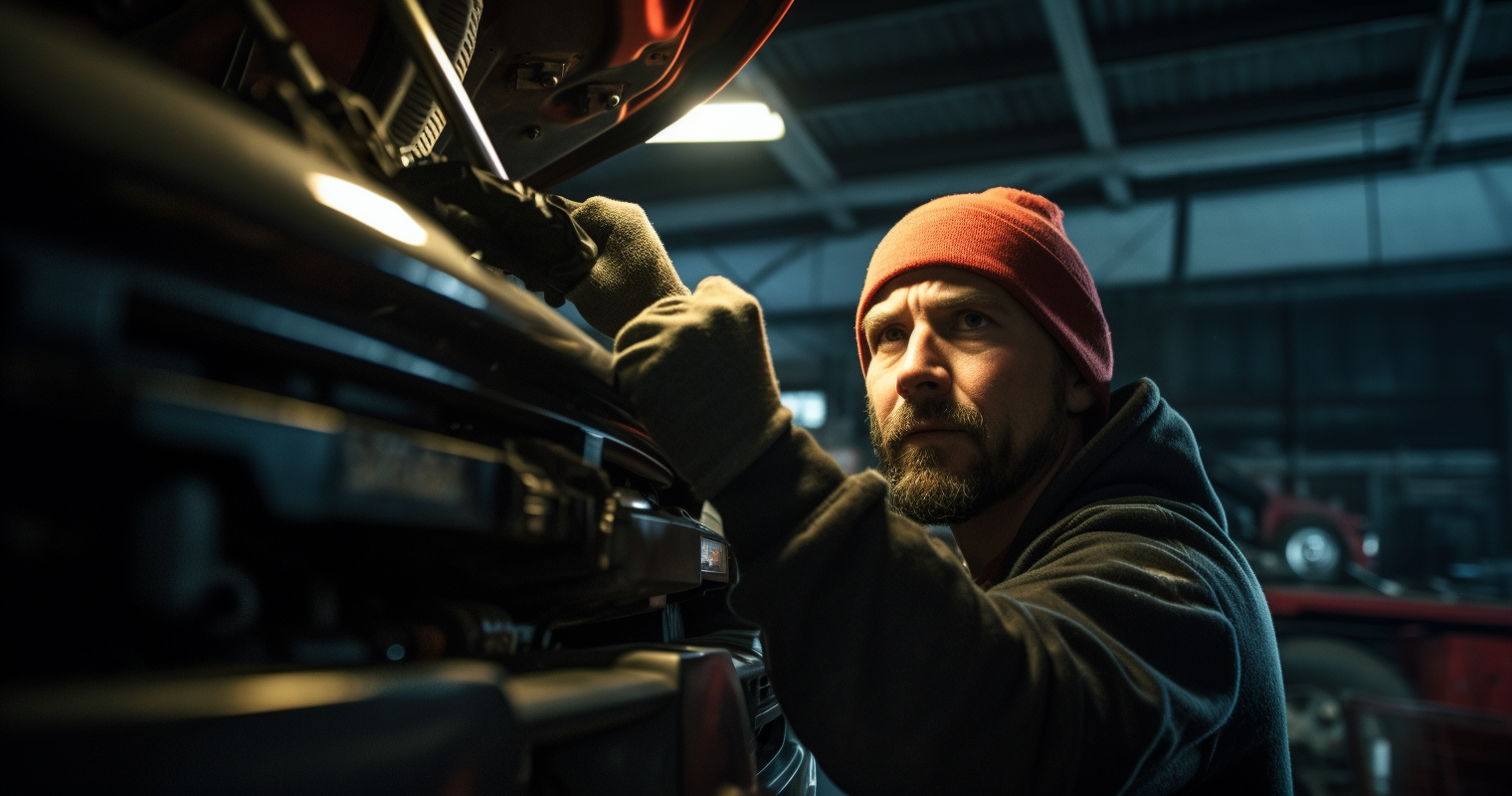
Keeping a vehicle roadworthy in the Czech Republic means engaging with the country’s mandatory technical inspection system, the STK (Stanice technické kontroly), which functions similarly to the UK’s MOT or Germany’s TÜV. Most passenger cars must be inspected every two years, though brand-new vehicles enjoy a four-year exemption from their first inspection. Roadside and breakdown assistance is readily accessible through established motoring organisations, and newcomers who bring foreign-plated vehicles into the country have a 180-day window before local re-registration becomes a legal obligation.
| Item | Details |
|---|---|
| Inspection scheme name | STK – Stanice technické kontroly (Vehicle Technical Inspection) |
| Inspection frequency (passenger cars) | Every 2 years; new cars exempt for first 4 years (as of 2025) |
| STK inspection fee (approx.) | 1,100–1,700 CZK, plus 1,000–1,500 CZK for emissions test (as of 2024) |
| Foreign vehicle re-registration deadline | Mandatory after 180 days of residence in Czech Republic |
| Main breakdown providers | ÚAMK (tel: 1230), ABA (tel: 1240), Global Assistance (tel: 1220) |
| Winter tyre period | 1 November – 31 March (compulsory when snow/ice present or below 4°C) |
What is the STK vehicle inspection and how does it work?
For a vehicle to be permitted on Czech public roads, it must hold valid proof of having passed both a roadworthiness test (TK) and an emissions inspection (EK), unless it falls within a specifically exempted category. The system responsible for these inspections is known as the STK — an abbreviation of Stanice technické kontroly, or Vehicle Technical Inspection Station — and it draws comparison with the UK’s MOT, Germany’s TÜV, and Ireland’s NCT, though the testing intervals and procedures differ between these national schemes.
Passenger cars are generally subject to inspection every two years, with newly purchased vehicles given a four-year grace period before their first mandatory check. Inspections are conducted exclusively at authorised testing stations, designated as STK, of which approximately 350 are distributed throughout the country. Unlike the UK system, where vehicles must be tested annually from their third year, the Czech STK follows a biennial cycle, placing it closer to arrangements found in countries such as Spain with its ITV scheme.
The cost of obtaining a roadworthiness certificate currently falls in the range of approximately 1,100 to 1,700 CZK (as of 2024). An emissions test, which is carried out separately but forms part of the same compliance requirement, adds a further 1,000 to 1,500 CZK to the overall cost. Fee levels can change, so it is advisable to verify the latest figures with your nearest STK station or through the Czech Ministry of Transport (md.gov.cz).
Once a vehicle has passed its inspection, a red sticker is issued and must be affixed to the vehicle’s rear registration plate. Perforations in the sticker indicate the month and year when the certificate expires. All inspection data is recorded in the Technical Inspection Station Information System, a public administration database linked directly to the national road vehicle register.
Even vehicles purchased brand new are subject to at least a basic technical inspection before they can be formally entered into the register. A successful Czech inspection is represented by the red rear-plate sticker and confers a two-year period of validity. Should a vehicle fail its STK test, it cannot be registered — and in the case of an existing vehicle, it may not legally be used on Czech roads — until the identified faults have been corrected and the vehicle passes a re-test. The Czech Ministry of Transport and the Czech Government Transport Portal remain the definitive references for current inspection requirements.
Since 1 January 2024, the vehicle documentation system has been simplified: drivers now hold a single registration document in place of the previous two-document arrangement. This consolidated document contains the vehicle’s most important technical parameters. From the same date, Czech-registered cars no longer require a physical large technical certificate (Technický průkaz); all technical data, inspection history, and ownership records are maintained digitally within the Czech Ministry of Transportation database.
What is the standard of vehicle repairs in Czech Republic?
The quality of vehicle servicing and repair work in the Czech Republic is broadly high, especially in and around the country’s principal cities of Prague, Brno, and Ostrava. The nation has deep roots in the automotive sector — Škoda Auto is based here — and as a result, trained mechanics and well-appointed workshops are plentiful. International inspection and certification organisations such as DEKRA are present in the country, and DEKRA is specifically recognised as a suitable body for carrying out technical examinations prior to the formal registration of an imported vehicle.
There is no overarching national licensing body that regulates every independent garage, but franchise workshops affiliated with major manufacturers — including those in the Volkswagen Group — operate to brand-approved standards. Authorised STK stations are subject to state oversight and periodic auditing, which provides a dependable quality reference for roadworthiness testing. The EU’s roadworthiness directive, which applies to the Czech Republic as a member state, sets a common baseline for periodic technical inspections across the bloc.
For expatriates, a recurring practical difficulty is the language barrier. Administrative processes, forms, and much day-to-day interaction are conducted in Czech, and many mechanics and garage staff outside the major urban centres do not speak other languages. It is worth arranging for a Czech-speaking contact to accompany you, or engaging an expat-oriented service, when dealing with more complex administrative matters. In larger cities, some franchise dealerships and internationally minded workshops do have staff capable of communicating in English or German, but this cannot be assumed, particularly in smaller towns or rural settings.
Sourcing replacement parts for vehicles that are relatively uncommon in central Europe can occasionally present difficulties, especially for unusual marques or models not originally marketed within the EU. For mainstream European brands, however, parts availability is strong and pricing is competitive. EU-wide online parts suppliers can bridge any remaining gaps. Since Czech STK standards align with EU requirements, a vehicle maintained to Czech standards is road-legal throughout the rest of Europe.
Who provides breakdown recovery in Czech Republic?
The Czech Republic is served by several long-established breakdown and roadside assistance organisations, which operate in a manner comparable to the AA or RAC in the UK or the ADAC in Germany. These services — sometimes nicknamed žlutí andělé (yellow angels) because of the distinctive yellow livery on their vehicles — provide nationwide coverage around the clock every day of the year.
The main providers are:
- ÚAMK – Ústřední automotoklub ČR (Czech Central Automobile Club): The country’s largest and most established motoring organisation. ÚAMK provides emergency assistance to drivers 24 hours a day, 365 days a year, via SOS number (+420) 1230. Both road assistance and towing are available at any hour, and operators are able to communicate in German and English. Website: www.uamk.cz
- ABA – Autoklub Bohemia Assistance: A major provider offering round-the-clock roadside assistance, reachable on 1240. Website: www.aba.cz
- Global Assistance: Covers the whole of the Czech Republic as well as other European countries. Global Assistance is the only Czech assistance company to have equipped its contractor network with approximately 700 rescue and assistance vehicles fitted with GPS tracking units. Contact number: 1220. Website: www.globalassistance.cz
- Eurocross Assistance: Offers roadside assistance both within the Czech Republic and beyond its borders. Website: www.eurocross.cz
- Generali Assistance: Reachable on +420 221 586 666.
Calling on breakdown services without the backing of a membership plan or insurance-included assistance can prove extremely costly — even something as routine as a tyre change may run to several thousand CZK, with all charges added to your final bill. Joining a motoring club or ensuring that your motor insurance policy incorporates roadside assistance cover is therefore a sensible priority for anyone planning to drive regularly in the country.
Some compulsory liability insurance policies include an assistance component, though this varies from contract to contract — it is essential to read your policy terms carefully to establish exactly what is and is not covered. Both ÚAMK and ABA offer tiered membership plans that provide discounted or fully covered breakdown assistance; visit their respective websites for current membership pricing, as these are subject to periodic revision.
A single unified telephone number, 1224, exists for clients of all insurance companies; dialling it connects you to the assistance service linked to your vehicle’s insurer. This helpline — sometimes referred to as the “Drivers’ Help Line” — is particularly useful if you are uncertain which provider your policy is associated with.
Emergency SOS telephones are installed at roughly 2 km intervals along Czech motorways, offering an additional option in situations where mobile phone coverage is unreliable.
Can I use international breakdown cover in Czech Republic?
If you have recently arrived in the Czech Republic and already hold breakdown cover with a motoring organisation in your previous country of residence, there is a good chance that cover can be used for an initial transitional period. Many of the world’s major motoring clubs are linked through the Fédération Internationale de l’Automobile (FIA) or the Alliance Internationale de Tourisme (AIT), and these international federations facilitate reciprocal assistance arrangements between member organisations.
ÚAMK operates its own fleet of yellow vehicles bearing the logos of both ÚAMK and ARC Europe, along with the emergency contact number. ARC Europe is a pan-European motoring club network, which means that members of affiliated organisations — including Germany’s ADAC, Austria’s ÖAMTC, or the AA in Ireland — may be able to call upon ÚAMK for reciprocal assistance. ADAC and ÖAMTC members who are travelling through or temporarily living in the Czech Republic can generally access assistance through affiliated Czech clubs under these arrangements.
If your existing policy covers European breakdown assistance, it will typically extend to the Czech Republic during the early months following your arrival. However, the precise scope, territorial extent, and permissible duration of reciprocal cover differ between clubs and between individual policies. Before placing any reliance on your existing membership for Czech Republic cover, contact your motoring organisation directly to confirm whether the country is included, for how long the cover applies, and whether re-registering your vehicle in the Czech Republic will affect the policy’s validity.
As a minimum precaution until local cover is in place, it is worth noting the contact details for one of the main Czech assistance providers. Short-term and pay-as-you-go assistance options are available through organisations such as Global Assistance and Eurocross.
What are the rules for driving a foreign-registered vehicle?
Among the first practical questions for any expatriate arriving in the Czech Republic by car is how long foreign registration plates may legally remain in use. The answer is that re-registration becomes compulsory once you intend to remain in the country for more than 180 days. This threshold mirrors the approach taken by many other EU countries — including France and the Netherlands — when dealing with incoming residents who bring vehicles from abroad.
Once residence exceeding 180 days is established, re-registering your vehicle involves a structured sequence of steps. The vehicle must first undergo and pass a Czech STK inspection, following which it is issued a certificate valid for three months — allowing sufficient time to complete the formal registration process.
For vehicles previously registered in another EU member state, the date of the next required roadworthiness test is calculated from the date of the most recent periodic inspection conducted in that member state, meaning a recent foreign test is taken into account rather than ignored entirely. Vehicles originating from outside the EU may be subject to additional individual inspection requirements.
Among the basic technical requirements for Czech registration are acceptable emissions levels and sound mechanical condition. A number of specific requirements also apply: mirrors must be present on both sides of the vehicle, the fuel cap must be lockable, and only left-hand-drive vehicles are eligible for registration. Right-hand-drive vehicles are therefore not generally registrable in the Czech Republic. Before attempting to import a vehicle, it is strongly advisable to contact the Transport Inspectorate in the relevant city for guidance specific to your situation.
Registration also requires valid Czech compulsory motor third-party liability insurance. Applicants must hold permanent residence, a long-term residence permit, a temporary residence of not less than six months, or another qualifying residence permit in the Czech Republic. Compulsory motor third-party liability insurance is a legal requirement for all vehicles driven on Czech roads.
The step-by-step process for registering an imported vehicle in Czech Republic is as follows:
- Gather your documents: Collect the vehicle’s original registration documents from the country of origin, proof of your Czech residence permit, and proof of identity.
- Arrange Czech motor third-party liability insurance: You will need a contracted and paid Czech motor third-party liability insurance policy; once contracted, this automatically shows in the vehicle register system.
- Book and pass the STK technical inspection: A technical examination must be carried out by a Czech STK vehicle examination centre before registration. Proof of a roadworthiness test and a vehicle registration inspection report not older than 30 days is required at the time of registration.
- Submit your registration application: You can register your vehicle online on the Czech Transport Portal, and the application can be processed at any local authority regardless of where you live in Czech Republic.
- Attend the office in person: You must visit the office in person to pay the administrative fee and collect the vehicle documents and registration plates.
- Collect your plates and certificate: You will be issued a Czech registration plate and a certificate of vehicle registration, after which you can drive your vehicle in the Czech Republic without any concerns about foreign registration status.
Driving a vehicle that has not been entered into the Czech road vehicle register is an offence for both natural and legal persons and is punishable by a fine of up to CZK 50,000. Once the 180-day threshold is reached, re-registration should not be delayed.
How do road conditions and climate affect vehicle maintenance?
The Czech Republic experiences a continental climate characterised by cold winters and warm summers. Temperatures in winter can fall well below freezing, particularly in upland regions and overnight, with significant direct consequences for vehicle upkeep and tyre requirements.
Winter tyres are legally required between 1 November and 31 March whenever compacted snow or ice is present on the road surface, and also whenever the outside temperature drops below 4 degrees Celsius with the possibility of icy or snowy conditions. Studded tyres are banned, including for foreign-registered vehicles, although snow chains may be fitted and used where adequate snow coverage exists on the road.
In mountainous areas such as Krkonoše, Šumava, Jeseníky, and Beskydy, winter tyres are a practical necessity from November through to March. All-season tyres carrying an M+S rating are an accepted alternative to dedicated winter tyres, and snow chains remain permitted and occasionally indispensable on mountain passes. If you are moving from a warmer country where winter tyres are not part of normal motoring practice, set aside budget in your first autumn here for a suitable set — they are widely stocked at Czech tyre outlets and are priced broadly in line with the rest of central Europe.
Every vehicle on Czech roads must carry a reflective warning triangle and a first-aid kit (lékárnička). Since 2023, a high-visibility vest is also mandatory and must be worn whenever the driver exits the vehicle on a road. A spare tyre or tyre repair kit is additionally required. All of these items are subject to inspection during the STK, so verifying that your vehicle is properly equipped before presenting it for testing is essential.
Dipped headlights must be used at all times when driving anywhere in the Czech Republic, including during daylight hours and throughout the year. This requirement means your vehicle’s lighting system must always be fully functional, and checking bulbs forms a worthwhile part of regular routine maintenance.
Road quality is not uniform across the country. Motorways (D-roads) and the main national road network are generally well kept. Secondary and rural roads — particularly in parts of eastern Bohemia and rural Moravia — tend to have less consistent surfaces, with potholes and frost-related deterioration more prevalent. These conditions increase wear on tyres, suspension components, and wheel alignment, and more frequent checks of these systems than you might carry out in countries with uniformly high road quality are advisable. Winter road salting, while necessary for safety, accelerates corrosion of a vehicle’s underbody; annual underbody inspections and the application of protective wax coatings represent a worthwhile investment for anyone planning to keep their vehicle in good condition over the longer term.
The Czech Republic enforces a zero-tolerance policy regarding driving under the influence of alcohol or other substances. Traffic flows on the right, with overtaking on the left — standard practice across continental Europe, though worth bearing in mind for those arriving from countries where driving on the left is customary, not least because it also affects the orientation of headlight beams.
Frequently asked questions
How often does a passenger car need to be inspected in Czech Republic?
The STK inspection is required every two years for the majority of passenger cars. Newly purchased vehicles are not required to undergo their first inspection until four years after purchase. It is worth checking the current schedule with your nearest STK station or the Czech Ministry of Transport, as intervals may vary for older vehicles, commercial vehicles, and other specialist categories.
What happens if my vehicle fails the STK inspection?
A vehicle that does not pass the STK cannot be registered. For vehicles already on the road, a failed inspection means the vehicle may not be driven legally until the identified defects have been corrected and the vehicle successfully passes a re-test. Minor faults may attract a short window in which to carry out repairs, while serious safety-related defects will typically result in an immediate ban on use. Your STK station will advise on the specific outcome and the timeframe within which re-testing must take place.
Can I drive my foreign-registered car in Czech Republic after moving there?
You may continue to use foreign registration plates, but re-registration in the Czech Republic becomes compulsory once you intend to remain in the country for more than 180 days. Failing to re-register within this period can attract a substantial fine. If there is any likelihood that your stay will extend beyond 180 days, it is advisable to begin the re-registration process without delay.
Does my existing motoring club membership cover me for breakdowns in Czech Republic?
This depends on your club’s affiliations. If your organisation is a member of ARC Europe, the FIA, or the AIT, you may benefit from reciprocal assistance through ÚAMK, the Czech Central Automobile Club, which operates within these networks. ADAC and ÖAMTC members, for example, can access assistance from affiliated Czech clubs. Always verify the specific terms, geographical scope, and duration of any reciprocal cover directly with your home motoring organisation before depending on it.
Is breakdown assistance expensive if I’m not a member of a Czech motoring club?
Calling on breakdown services without a membership plan or insurance-provided assistance can be very expensive — a tyre change alone may cost several thousand CZK, with all charges billed directly to you. Joining ÚAMK or ABA, or arranging a motor insurance policy that incorporates roadside assistance cover, is strongly recommended as soon as you are settled in the country.
Are winter tyres compulsory in Czech Republic?
Winter tyres are legally required between 1 November and 31 March when compacted snow or ice is on the road, and also whenever the temperature drops below 4 degrees Celsius with the prospect of icy or snowy conditions. Studded tyres are prohibited, including on foreign-registered vehicles. All-season tyres meeting the M+S standard are accepted as a valid alternative to dedicated winter tyres.
What mandatory safety equipment must my vehicle carry in Czech Republic?
Every vehicle must carry a reflective warning triangle and a first-aid kit. Since 2023, a high-visibility vest has also been mandatory for use whenever a driver leaves the vehicle on any road. A spare tyre or tyre repair kit is required as well. All of these items are inspected during the STK. While not legally mandated for private cars, carrying a fire extinguisher is widely recommended.
Where can I find an official STK inspection station?
Czech technical inspections are performed at approximately 350 authorised STK stations distributed across the country. Your nearest station can be located via the Czech Ministry of Transport website (mdcr.cz) or through the Czech Government Transport Portal (portal.gov.cz), both of which are the authoritative sources for up-to-date requirements and fee information.