
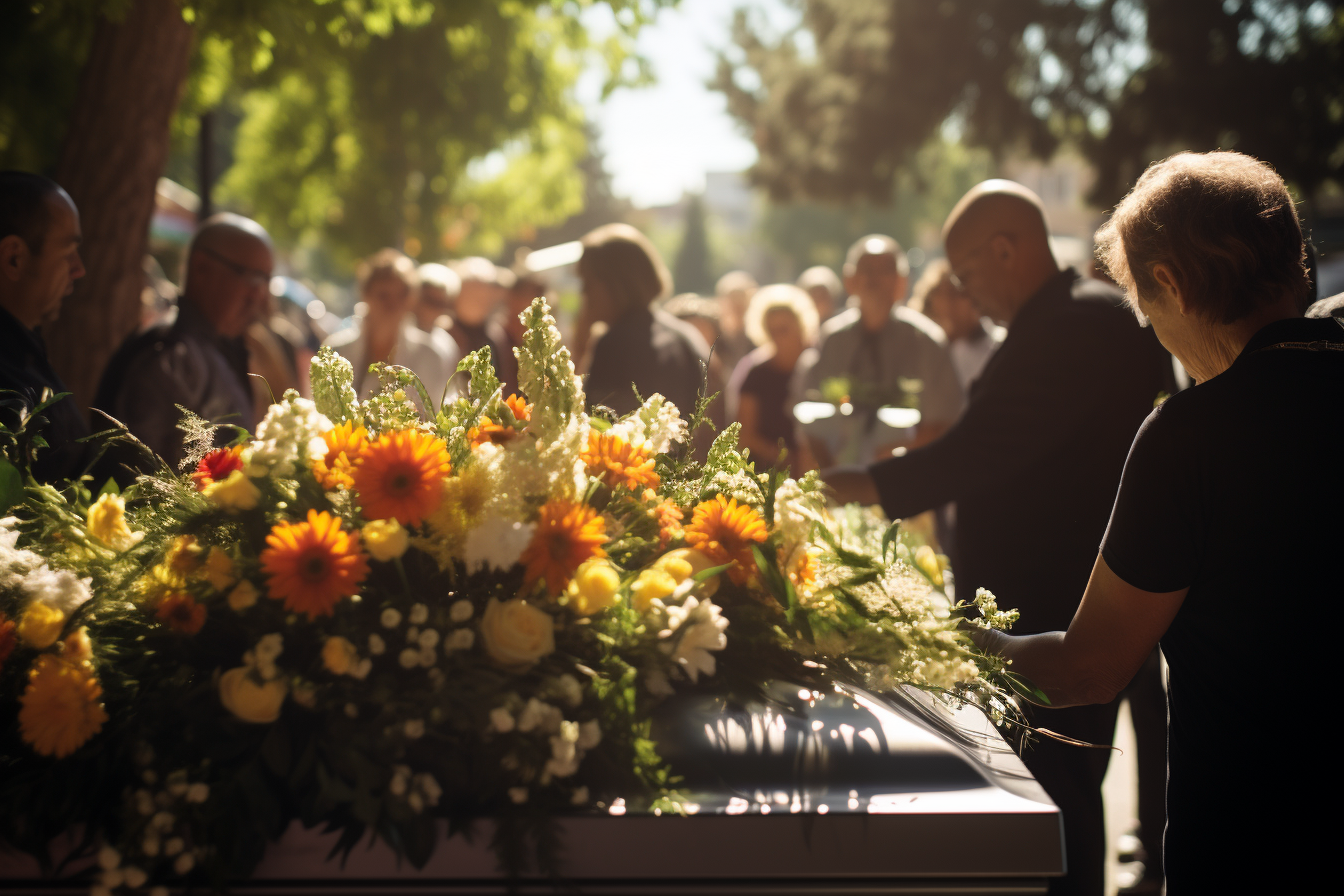
Chile operates a structured public palliative care programme for cancer patients, an expanding network of end-of-life services, and well-established legal procedures governing death registration and estate administration. Expats need to know that euthanasia is still forbidden under Chilean law (as of 2025), that there is no fully enacted national framework for advance directives, and that the death of a foreign national triggers obligations toward both Chilean authorities and the deceased’s home country consulate.
| Item | Details |
|---|---|
| Public palliative care programme | National Programme for Pain Relief and Palliative Care for Cancer; guaranteed public funding since 2014 (as of 2025) |
| Euthanasia/assisted dying | Currently prohibited; bill stalled in Senate as of 2025; passive euthanasia (right to refuse treatment) legal since 2012 |
| Advance directives (living will) | No fully codified national law; patient autonomy recognised under the 2012 Patients’ Rights Law |
| Death registration | Must be registered with the Civil Registry (Registro Civil) — typically within 48 hours |
| Inheritance tax | Chile levies inheritance tax under Law 16.271; heirs must pay before transferring assets (as of 2025) |
| Forced heirship | 50% of estate reserved for forced heirs (spouse, direct descendants or ascendants) |
What end of life care options are available in Chile, and how does the system work?
Healthcare in Chile is delivered through a mixed model that combines public and private provision. Financing is split between FONASA (Fondo Nacional de Salud), the public fund that covers approximately 76% of the population, and ISAPREs — private insurance entities that cover around 18% of Chileans. End-of-life services are delivered through both channels, though the breadth and quality of care can differ considerably between them.
For people nearing the end of life, the available options include hospital-based palliative care units, specialist outpatient clinics, community home care teams, and — in a smaller number of cases — dedicated hospice-type facilities. Chile introduced its National Programme for Pain Relief and Palliative Care for Cancer in 1994, with guaranteed public financing secured in 2014. This makes Chile a regional frontrunner in organised end-of-life care, even though meaningful service gaps persist outside major urban centres.
The AUGE plan — also referred to as GES (Garantías Explícitas en Salud) — guarantees access to timely, quality, and financially protected care for 80 high-mortality conditions. Palliative care for cancer is among these guaranteed conditions, so both FONASA and ISAPRE members are entitled to it. That said, palliative care for non-cancer diagnoses such as advanced heart failure, dementia, or severe chronic respiratory disease is not yet covered under GES, leaving a substantial gap for many patients.
Significant disparities in access remain, especially in areas served only by primary care — most notably in rural parts of the country. Expats living beyond Santiago or other major cities should plan accordingly and may find that private care is the more practical route.
What is palliative care in Chile, and who is eligible for it?
Palliative care in Chile (cuidados paliativos) centres on relieving pain, controlling symptoms, and supporting the psychological and social needs of people living with life-limiting conditions. Chile has recently introduced legislation extending universal access to palliative care for patients with severe and terminal illnesses — including those without a cancer diagnosis — moving beyond the original cancer-focused programme. This legislation, enacted in 2022, marks a significant step toward more inclusive care.
Thanks to the national programme, Chile achieved palliative care coverage of over 90% for cancer patients by 2019. However, patients with non-cancer conditions are not covered under the older GES framework, meaning those living with advanced dementia, heart failure, or COPD may need to access private care or wait for the full rollout of the newer law.
Chile also stands out regionally for its provision of opioid pain relief, with a Distributed Opioid Morphine Equivalent (DOME) of 2,404 mg per patient, which covers 114% of the estimated population need. This relatively strong availability of pain relief medicines — including morphine — within the public system is an important consideration for anyone managing advanced illness in Chile.
All legal residents enrolled in FONASA — including registered expats — are in principle entitled to access the cancer palliative care programme through the public health network. Those covered by a private ISAPRE plan should review their specific policy’s palliative care provisions, as benefits differ from one plan to another.
Are there hospices in Chile, and how do you access them?
Standalone hospice facilities of the kind familiar in countries such as the UK or Ireland are relatively rare in Chile. Inpatient end-of-life care is more commonly provided through specialist palliative care units within hospitals or through home-based visiting clinical teams. Chile has the highest number of palliative care services in absolute terms (277 services) and by proportion (30%) of any country in the Latin American region, though not all services have dedicated palliative care specialists on staff.
Home care teams are the most frequently identified type of service across the region, and Chile — alongside Mexico and Cuba — has the greatest number of these. In practice, this means that for many patients in Chile, palliative and end-of-life care is delivered at home by visiting clinical professionals, an approach that emphasises dignity and the involvement of family members.
Access to public palliative services typically begins with a referral from a primary care physician (médico de cabecera) or a hospital specialist. FONASA patients are directed through the relevant Local Health Service (Servicio de Salud), while those with ISAPRE cover follow referral pathways set by their insurer. Expats who have not yet enrolled in either system should contact the nearest public hospital or community health centre (Centro de Salud Familiar, or CESFAM) to find out what local options exist.
There remains an urgent need to strengthen palliative care at the local level — through collaborative care networks and sustained professional training — in order to give terminally ill patients the possibility of being cared for at home, surrounded by family and supported by healthcare professionals from their own community. Some charitable and faith-based organisations also offer supplementary end-of-life support; the social work department of a local hospital can advise on what is currently available in your area.
Is palliative or hospice care covered by public health insurance or the national health system in Chile, or does it need to be funded privately?
Since 1 September 2022, public healthcare services have been provided free of charge to all FONASA beneficiaries. For cancer patients receiving palliative care under the GES guarantee, this means treatment — including pain medications, specialist appointments, and home visits — is covered at no cost through the public system. Under GES, copayments may not exceed 20% of the cost of treatment, subject to an annual ceiling equivalent to one month of family income, giving meaningful financial protection even within private ISAPRE plans.
The 2022 legislation extending palliative coverage to non-cancer conditions is still being implemented, and access in practice may be uneven. While cancer patients in Chile enjoy relatively high rates of palliative care access, this does not guarantee consistent service quality or regularity of provision. In rural and remote areas, the full range of services nominally available under the law may not yet be present on the ground.
Expats with private international health insurance should verify before they need it whether their policy covers palliative or terminal care in Chile. A number of international policies exclude end-of-life care or impose significant coverage limits. It is equally important to confirm with your ISAPRE — if you are enrolled in one — what your specific plan covers for palliative services beyond those mandated under GES, as obligations for private insurers in this area can be limited. A Chilean healthcare lawyer or a specialist insurance broker can help you understand your situation clearly.
What legal documents should expats have in place before the end of life in Chile — such as a living will, advance directive, power of attorney, or healthcare proxy — and how do these work?
Chile’s legal framework for advance end-of-life planning is still evolving. While active euthanasia and assisted suicide remain prohibited, passive euthanasia has been permitted since 2012, when the Ley de Derechos y Deberes de los Pacientes (Law 20.584) gave terminal patients the right to refuse or withdraw from medical treatment. This law establishes patient autonomy as a guiding principle, including the right to decline life-prolonging interventions.
The Chilean equivalent of a living will is known as a testamento vital or declaración de voluntad anticipada. Although such a document is recognised in some jurisdictions, it has no formal standing under Chilean legislation — there is no national registry or standardised process for its registration. Even so, preparing a written statement of your treatment preferences is strongly advisable: healthcare professionals are encouraged to respect patient autonomy, and a clearly worded document can meaningfully guide both clinical and family decision-making.
A power of attorney (poder notarial) is a legally recognised instrument in Chile and must be executed before a Chilean notary (notario público). For healthcare decisions, expats should consider granting a trusted individual specific authority to make medical choices on their behalf in the event they become unable to do so themselves. A general power of attorney can also encompass financial and legal matters. This document should be prepared well ahead of any health crisis and ideally stored alongside the patient’s medical records.
It is strongly advisable for expats to have both a Chilean power of attorney and an up-to-date will (testamento) prepared with a Chilean notary. Estate planning specialists and international law firms operating in Santiago can assist in drafting documents that account for assets held across multiple countries. Always engage a qualified Chilean lawyer (abogado) for any formal legal documentation.
Are documents such as advance directives or powers of attorney made in another country legally recognised in Chile?
Chile is party to several international conventions governing the recognition of foreign legal instruments. A power of attorney issued abroad can be recognised in Chile provided it has been properly authenticated — typically by apostille under the Hague Apostille Convention (to which Chile is a signatory) or by legalisation through the issuing country’s consulate and the Chilean Ministry of Foreign Affairs.
Foreign wills may be admissible in Chile in certain circumstances. Chilean law distinguishes between solemn wills and less solemn wills, and for foreign nationals with assets in Chile, it is generally advisable to prepare a Chilean-format will in addition to any will executed abroad, as doing so substantially simplifies the estate administration process.
Because Chile does not yet have a fully codified advance directive law, foreign advance directives carry no specific legal weight within the Chilean healthcare system. However, a translated copy presented to treating clinicians — particularly when accompanied by a power of attorney conferring healthcare proxy authority on a named individual — may be taken into consideration by medical staff. Always consult a Chilean lawyer to establish the current recognition status of any particular foreign document.
Documents in any language other than Spanish must be accompanied by a certified translation (traducción jurada) produced by an official translator recognised by Chilean authorities. Contact the nearest Registro Civil or a Chilean notary to confirm current requirements, as procedures can vary by document type and location.
What are the laws around euthanasia or assisted dying in Chile?
Euthanasia remains prohibited in Chile. The subject is, however, the focus of sustained and active legislative debate. In April 2021, the Chamber of Deputies passed a bill that would permit euthanasia and assisted suicide for individuals over 18 suffering from a terminal or “serious and incurable” illness — but the legislation has since been stalled in the Senate. The bill includes strict conditions and multiple safeguards designed to ensure that any such decision is free, fully informed, and made only in circumstances of exceptional suffering. President Boric has assigned the bill legislative urgency, and it is expected to come before the full Senate for general debate. As of early 2025, the bill had cleared the Senate Health Committee but had not yet been put to a vote by the Senate as a whole.
Recent polling reflects strong public backing for change. A 2024 survey by the Chilean polling organisation Cadem found that 75% of respondents supported euthanasia, while research by the Center for Public Studies found that 89% of Chileans believe euthanasia should be permitted either in all cases or in specific circumstances. Despite this widespread public sentiment, euthanasia and assisted dying remain deeply contested — including among health professionals.
What is already lawful under the 2012 Patients’ Rights Law is the right of any patient to refuse or withdraw medical treatment, including life-sustaining measures — a practice sometimes referred to as passive euthanasia. Expats should be aware that any active measures to end life remain illegal in Chile. This is a rapidly changing area of law; consult current official sources for the most up-to-date position.
What are the local customs, traditions, and religious practices around death and dying in Chile?
Chile is a predominantly Catholic country, and while formal religious affiliation has been declining, Catholic customs continue to shape how death and dying are experienced and observed. The Church’s historical influence has meant that Chile has traditionally been among the more conservative Latin American countries on end-of-life matters. Attitudes are nonetheless shifting, particularly in younger generations and in urban centres.
As a person approaches death, it is customary for family members — often the extended family — to gather at the bedside. The presence of a priest and the administration of last rites (los últimos sacramentos) remains significant for many families. Following the death, a wake (velorio) is typically held — either at a funeral home (casa funeraria or funeraria) or at the family’s home. The velorio generally lasts one night, during which relatives, friends, and neighbours gather to pay their respects, pray together, and share food.
Mourning (duelo) is taken seriously within Chilean culture. Black or dark clothing at funeral services is expected. Flowers — especially white varieties such as lilies and white carnations — are commonly brought to the velorio or sent to the family home. It is respectful to sign a condolence book if one is provided and to offer personal words of sympathy to the immediate family.
Burial has traditionally been the preferred option in Catholic families, though cremation is growing in acceptance and practice. The Catholic Church permits cremation as long as it is not chosen for reasons that contradict Church teaching. Indigenous communities in Chile — particularly the Mapuche people of the south — maintain their own distinct funeral and mourning traditions, which may include ceremonies led by a machi (spiritual healer) and rituals observed at specific moments. Expats living in regions with significant indigenous populations should approach these practices with sensitivity and respect.
1 and 2 November — All Saints’ Day (Día de Todos los Santos) and All Souls’ Day (Día de los Difuntos) — hold deep significance in Chile. Families visit cemeteries to clean and adorn graves with flowers and to honour those who have died. These occasions carry cultural as well as religious weight.
What must you do when someone dies in Chile? Who do you notify, how quickly, and in what order?
Chilean law requires that deaths be registered promptly with the Registro Civil e Identificación (Civil Registry). The following step-by-step process outlines what must happen after a death occurs in Chile.
- Obtain a medical death certificate (certificado de defunción médico). When a death occurs in a hospital or clinic, the attending physician issues this document. If the death takes place at home, a doctor — either the person’s GP, an emergency physician, or a public health service doctor — must attend and certify the death. The certificate states the cause of death.
- Contact a funeral home (funeraria). In practice, this step is often taken at the same time as notifying family. A reputable funeral home can guide relatives through the administrative requirements, act as an intermediary with the Registro Civil, and arrange transport and temporary storage of the body while paperwork is completed.
- Register the death at the Registro Civil e Identificación. Registration must take place — typically within 48 hours — at the Registro Civil office in the district where the death occurred. The person registering must present the medical death certificate and the identity document of the deceased (RUN/RUT card, passport, or Chilean ID card).
- Obtain official death certificates (certificados de defunción oficiales). Once the death is registered, the Registro Civil issues official civil death certificates. Request several certified copies at this point — they will be required for insurance claims, estate administration, cancellation of pensions, and a range of other official purposes. Copies can also be requested later at any Registro Civil office or online via registrocivil.cl.
- Notify the deceased’s employer, pension fund, and bank. If the deceased was employed or receiving a pension in Chile, the relevant institution should be notified promptly. Banks will typically freeze accounts upon notification of death, pending estate administration.
- Notify the home country’s embassy or consulate (for foreign nationals). If the deceased held foreign nationality, their country’s embassy or consulate in Chile should be contacted as soon as possible — ideally within 24–48 hours of the death. See the dedicated section below for full details on this process.
- Apply for effective possession (posesión efectiva) to commence estate administration. This is the formal procedure through which heirs are legally recognised as the deceased’s successors. Full details are provided in the estate section below.
How is a death officially registered in Chile, and what documents are needed?
Official death registration in Chile is the responsibility of the Registro Civil e Identificación, the authority charged with maintaining vital statistics records. Unlike some jurisdictions — such as England and Wales, where a family member must attend in person within five days — Chile’s system is more flexible about who may present the registration, which means a funeral home representative can often handle this step on the family’s behalf.
To register a death at the Registro Civil, the following documents are normally required:
- The medical death certificate (certificado de defunción médico), signed by the certifying physician
- The identity document of the deceased: their Chilean RUT/ID card, or — for foreign nationals — their passport or foreign national identity card (cédula de identidad para extranjeros)
- The identity document of the person presenting the declaration
Once registered, the Registro Civil issues an official civil death certificate (certificado de defunción civil). This document is required for all subsequent legal and administrative steps, including estate administration, insurance claims, and the cancellation of official registrations. Multiple certified copies should be requested at the time of registration. Additional copies can be ordered at any later stage through the Registro Civil’s online portal at www.registrocivil.cl.
When a death is sudden, unexplained, or violent, the body will be referred to the medical examiner (Servicio Médico Legal) for an autopsy before any death certificate is issued. In such circumstances the process may take considerably longer, with the Servicio Médico Legal responsible for the initial medical certification. Family members must not move the body and should contact Carabineros (the Chilean national police) immediately in cases of sudden or suspicious death.
What happens if a foreign national dies in Chile — what are the specific steps for notifying their home country’s embassy or consulate, and what role does the consulate play?
When a foreign national dies in Chile, the family or next of kin should reach out to the deceased’s home country embassy or consulate in Chile as soon as possible — ideally within 24–48 hours. Most major embassies operate an emergency or consular services line around the clock. Contact details for consular services can generally be found on the official website of the relevant country’s foreign ministry.
The consulate’s role in these circumstances typically includes:
- Issuing a consular death report — an official record of the death by the sending state, which may be required to obtain a death certificate that is recognised in the home country
- Notifying next of kin who are abroad and have not yet been informed of the death
- Providing a list of local funeral homes, lawyers, and translators with experience in international cases
- Assisting with repatriation documentation, including liaising with Chilean authorities for the necessary permits (see the repatriation section below)
- Liaising with local authorities when complications arise — for instance, if an autopsy is required or questions arise regarding the cause of death
- Providing limited emergency financial assistance in some cases, subject to each country’s consular policy — this is not universally available
The consulate cannot take legal decisions about the estate, arrange or pay for funeral services, or intervene in Chilean legal proceedings. It functions as an administrative and liaison body, not a legal representative. Families managing an international death should also contact the deceased’s travel or international health insurer at the earliest opportunity, as many policies include repatriation assistance services that can handle much of the logistical coordination.
How are funerals typically arranged in Chile, and what are the usual options for burial or cremation?
Funerals in Chile are typically organised through a private funeral home (funeraria or empresa de servicios funerarios). A well-developed funeral industry operates across Chilean cities, offering services that range from basic packages to comprehensive arrangements covering the velorio, a religious or civil ceremony, burial or cremation, and transport. Options may be more limited in rural areas, where costs can also be lower.
The funeral home generally takes on the bulk of administrative coordination — collecting and preparing the body, registering the death with the Registro Civil on the family’s behalf, and arranging the cemetery or crematorium. Many funeral homes also provide grief support and can put families in contact with priests, civil celebrants, or other officiants.
Burial is the traditional and most widely practised option in Chile. Interment takes place in municipal or private cemeteries. Grave plots may be purchased outright or leased for a fixed period — typically five years or more — after which remains may be transferred to a communal ossuary if the lease is not renewed. When arranging a burial, it is essential to establish clearly whether a plot is held in perpetuity or on a renewable lease.
Cremation is increasingly available across Chile, particularly in Santiago and other larger cities. It is lawful and growing in popularity. Ashes may be kept in a family urn, placed in a columbarium niche at a cemetery, or scattered in designated areas. Note that scattering ashes in public spaces or at sea may require prior authorisation — confirm requirements with local authorities or the relevant cemetery administration before proceeding.
What are the approximate costs of a funeral in Chile, and are there any state or insurance-based funds that can help cover them?
Funeral costs in Chile vary considerably depending on the level of service chosen, the location, and the funeral home. As of 2024–2025, a basic funeral package — covering preparation of the body, transport, a simple velorio, and burial in a municipal cemetery — typically starts at around CLP 500,000–800,000 (approximately USD 500–800). A mid-range package with a private cemetery plot, a more substantial casket, and a full velorio can cost CLP 1.5–3 million (approximately USD 1,500–3,000) or more. Cremation packages are often modestly less expensive than burial. These figures are indicative; verify current pricing directly with funeral homes, as costs move with inflation.
Chilean residents who contributed to the social security system may be entitled to a funeral assistance benefit (cuota mortuoria) through their AFP (pension fund administrator) or through certain employer benefit programmes. The AFP-managed funeral benefit is typically calculated as a set multiple of monthly contributions and is paid to the person who covered the funeral expenses. Contact the relevant AFP directly for current entitlement thresholds and payment amounts.
FONASA does not fund funeral costs directly, but lower-income families may qualify for reduced-cost municipal cemetery plots through their local municipality (municipalidad). Some mutual aid societies (mutualidades) and trade unions provide funeral subsidies to the families of their members.
For expats, international travel and health insurance policies often include a funeral benefit or repatriation assistance provision. Examine your policy carefully, as coverage structures differ considerably between providers. If you hold a Chilean ISAPRE plan, check whether it includes any funeral-related benefit — this is not standard across all private plans.
What is the process for repatriating the remains of a foreign national from Chile to another country?
Repatriating a foreign national’s remains from Chile is a multi-stage process involving both Chilean authorities and the receiving country’s authorities. It typically takes between one and three weeks from the date of death, though timelines can lengthen if an autopsy is required or documentation complications arise. Moving quickly and engaging a funeral home with established international repatriation experience is strongly advised.
The principal steps in the repatriation process are as follows:
- Obtain the official Chilean death certificate from the Registro Civil, as this document underpins all subsequent steps.
- Contact the home country’s embassy or consulate in Chile, who will issue a consular death certificate and advise on the documentation required by the destination country.
- Engage a funeral home with international repatriation experience. Many international funeral directors maintain partner relationships in Chile who can manage the local end of the process. The funeral home will handle embalming (usually required for international transport), encoffining in an approved zinc-lined coffin, and liaison with cargo authorities at Santiago airport.
- Obtain a sanitary transport permit (autorización sanitaria de traslado internacional) from the relevant regional health authority (SEREMI de Salud) — this is Chile’s official authorisation to move human remains across an international border.
- Obtain a “no obstacle” certificate (libre tránsito) if required by the destination country, confirming that Chilean authorities have no objection to the departure of the remains.
- Arrange international air freight. Human remains are transported as air cargo rather than passenger baggage. The funeral home or a specialist repatriation company coordinates this with the airline, which must accept the consignment in accordance with its own regulations.
- Ensure all documentation accompanies the remains, including the Chilean death certificate, consular death certificate, embalming certificate, and any import permits required by the destination country. These documents must travel with the coffin.
International repatriation costs can be substantial — typically ranging from USD 5,000 to USD 15,000 or more, depending on the destination and complexity of the case. Many international health or travel insurance policies include repatriation of remains as a covered benefit; contact your insurer at the earliest opportunity to activate this provision, as insurers frequently have preferred partner funeral homes that can simplify the process considerably.
What happens to the estate of someone who dies in Chile — how does probate or estate administration work, and are there inheritance taxes?
Estate administration in Chile begins with a procedure called posesión efectiva (effective possession), through which heirs are formally recognised as the legal successors of the deceased. This procedure allows heirs to establish their standing and to legally deal with the property left by the deceased. There are two principal routes: the administrative route, used for intestate estates without a will, is processed through the Civil Registry and is generally faster and less costly; the judicial route, used when a will exists, requires a voluntary court process and must be managed with the assistance of a lawyer, making it more involved and expensive.
The estate passes to the heirs after the relevant legal procedure is completed. Heirs must formally accept or renounce the inheritance, since no one can acquire rights against their will. The place of death determines which jurisdiction’s laws govern the succession. Accordingly, for an expat who dies in Chile, Chilean law will govern the administration of assets located in Chile regardless of the deceased’s nationality.
Chile imposes an inheritance tax (impuesto a las herencias y donaciones) under Law 16.271, administered by the Servicio de Impuestos Internos (SII, Chile’s Internal Revenue Service). Heirs must calculate and pay the applicable inheritance tax to the SII before any property can be formally transferred. Tax rates and exemptions depend on the relationship between the deceased and the heir and on the total value of the estate — closer relatives such as spouses and children benefit from lower rates and higher exemptions. Consult the SII website for current rates, as thresholds are revised periodically.
Once effective possession is granted, the estate must also be published in a regional newspaper and registered with the appropriate property registries. The process concludes with registration of the effective possession decision at the Real Estate Conservator (for real property) and fulfilment of all formal requirements — including tax payments and the required publications — which then enables heirs to sell, lease, or transfer the inherited assets. Engaging a Chilean lawyer (abogado) to manage the posesión efectiva process is strongly recommended for expat families, particularly where the estate includes Chilean real estate.
If an expat dies without a will in Chile, what happens to their assets under local intestacy laws?
When a person dies intestate — without a valid will — in Chile, their Chilean assets are distributed in accordance with the intestacy provisions of the Chilean Civil Code. The basic order of heirs runs from surviving spouse and children through to parents, grandparents, siblings, and then cousins. The Chilean state is the heir of last resort if no eligible relatives can be identified.
Fifty percent of the estate must pass to the forced (rightful) heirs — the spouse and direct descendants or ascendants. A further twenty-five percent, known as the “quarter of improvement,” may in principle be directed to any of the forced heirs at the testator’s discretion. The remaining twenty-five percent is the “quarter of free disposition” and may be left to anyone the testator chooses. In intestacy, however, this entire structure is governed by statute, and assets are divided among legal heirs according to their category without any element of testamentary choice.
The place of death determines which jurisdiction’s laws govern the succession. For an expat who dies in Chile, Chilean law applies to their Chilean assets regardless of nationality — even where assets held in other countries are subject to the laws of those countries. This can give rise to complex cross-border estate situations, particularly when the intestacy rules of different countries produce conflicting outcomes.
Unmarried partners — including long-term de facto partners — have no automatic inheritance rights under Chilean intestacy law, even if the couple lived together for many years. Only partners registered under the Acuerdo de Unión Civil (AUC) enjoy legal standing comparable to that of a spouse. Expats in long-term relationships should be acutely aware of this and ensure a valid Chilean will is in place. Legal specialists strongly advise engaging a qualified Chilean attorney on all matters of Chilean inheritance law, particularly for foreign nationals whose estate planning may extend to assets in other countries.
Frequently Asked Questions
Is international private health insurance accepted for palliative care in Chile?
This depends on your insurer and the specific facility or care provider involved. Many Chilean private hospitals and clinics will accept patients with international insurance, but you may be required to pay upfront and seek reimbursement afterwards. Some international insurers have direct billing arrangements with major clinics in Santiago. Always confirm the position with both your insurer and the care provider before treatment begins. Be aware that certain international policies exclude or significantly restrict coverage for terminal or palliative conditions — read your policy carefully before you need it.
Are documents in English (or other languages) accepted in Chilean hospitals and by the Registro Civil?
All official administrative and legal processes in Chile operate in Spanish. Any document in another language must be accompanied by a certified translation (traducción jurada) produced by a translator recognised by Chilean authorities. In a medical emergency, hospital staff may draw on bilingual colleagues or interpreters to communicate, but formal legal documents — including powers of attorney and death registration paperwork — must be presented in Spanish or together with an official certified translation.
How long does the process of repatriating remains from Chile typically take?
Provided no autopsy is needed and all documentation is in order, the process generally takes one to three weeks from the date of death. If an autopsy is required — as in cases of sudden, unexplained, or violent death — this can add one to two weeks or more to the timeline. Engaging an experienced international funeral director and activating any insurance repatriation benefit as promptly as possible are the most effective ways to minimise delays. The home country consulate can often help expedite documentation requests.
What support is available to bereaved family members in Chile?
Bereaved family members can access psychological support through FONASA-affiliated mental health services within the public health system, or through private therapists and counsellors. Hospital palliative care teams frequently include psychologists and social workers who can offer grief support in the period around the death. Some faith communities and charitable organisations in Santiago and larger cities run bereavement support groups. The Chilean Association for Palliative Care (Asociación Chilena de Cuidados Paliativos) may be able to direct families to suitable resources. For family members who are temporary visitors to Chile, the home country’s embassy may be able to provide a list of local support contacts.
Does Chile recognise same-sex partnerships for inheritance purposes?
Chile introduced the Acuerdo de Unión Civil (AUC) in 2015, which grants same-sex and opposite-sex registered civil partners legal rights broadly equivalent to those of married spouses — including inheritance rights. If you are in a same-sex relationship and wish your partner to inherit your Chilean assets, you should either register an AUC in Chile or ensure that a valid Chilean will explicitly names your partner as a beneficiary. Without one of these two measures, your partner will have no automatic inheritance entitlement under Chilean intestacy law.
Can an expat be buried in Chile permanently, or are there restrictions on foreign nationals?
There are no restrictions on foreign nationals being buried or cremated in Chile. Both municipal and private cemeteries are open to all, irrespective of nationality. When purchasing a grave plot, it is important to establish clearly whether the plot is held in perpetuity or is subject to a lease requiring periodic renewal. If the plot is on a lease, ensure that a family member or designated representative in Chile can manage its renewal — otherwise consider cremation and repatriation of ashes as an alternative.
What happens to a Chilean pension or social security benefit when a foreign resident dies?
If the deceased was contributing to or receiving a Chilean AFP (pension fund) or held state benefits through the Instituto de Previsión Social (IPS), the family or estate administrator must notify the relevant institution promptly. A surviving spouse and dependent children may be entitled to a survivor’s pension (pensión de sobrevivencia) calculated on the basis of the deceased’s contributions. This must be claimed through the AFP or IPS and is governed by Chilean social security law. Contact the deceased’s AFP directly for current eligibility criteria and benefit amounts, as these are updated over time.
Does Chile have inheritance tax, and does it apply to foreign nationals’ assets?
Yes. Chile levies inheritance tax (impuesto a las herencias) under Law 16.271, administered by the SII. This tax applies to assets located in Chile regardless of the nationality of the deceased or the heirs. The rate is progressive and depends on the relationship between heir and deceased and the total value of the estate; closer relatives are taxed at lower rates. Heirs must pay the tax before assets can be formally transferred. Expats with assets in both Chile and another country may face inheritance or estate tax obligations in more than one jurisdiction simultaneously — specialist cross-border estate planning advice is strongly recommended. Consult current rates on the SII official website.