

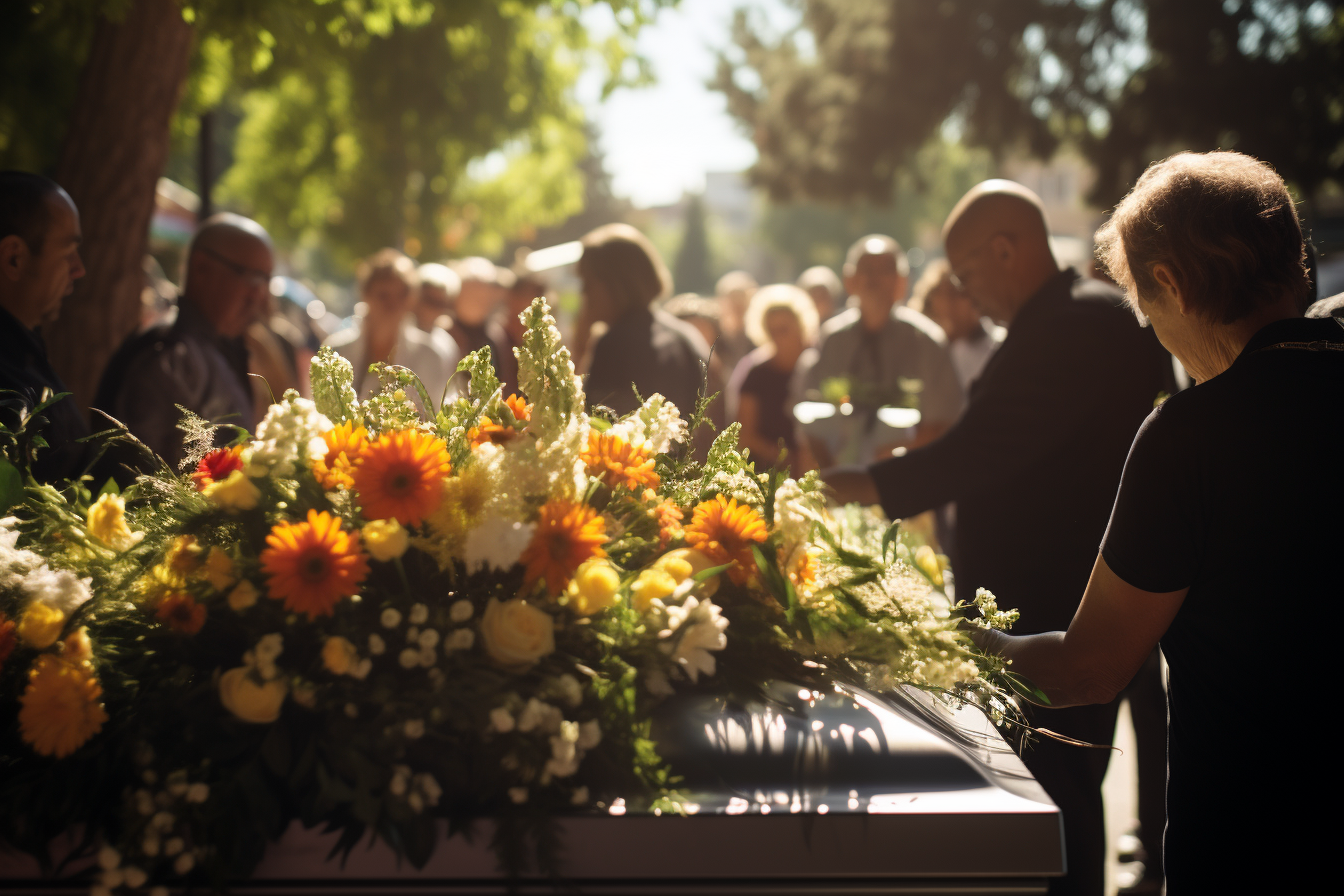
The Czech Republic maintains a comprehensive end of life care framework encompassing inpatient hospice facilities, mobile palliative teams, and hospital-based support — the majority of which is funded in whole or in part through the country’s public health insurance system. Following a death in the Czech Republic, a physician must certify the death, it must be formally registered at the local registry office, and the deceased person’s documents must be surrendered to the police. Foreign nationals living in the country should familiarise themselves with the procedures for informing their home country’s consular office and making arrangements for either repatriation or local interment within the timeframes set by Czech law.
| Item | Details |
|---|---|
| Inpatient hospices (as of 2025) | Approximately 17 nationwide, around 500 beds across all 14 regions |
| Mobile palliative care insurance coverage | Covered by all Czech health insurance funds since 2018 |
| Death certificate issuance deadline | Up to 30 days from submission of required documents (registry office) |
| Burial time requirement | Within 96 hours of death under Czech law; extensions available for repatriation |
| Inheritance tax (as of 2024) | Abolished — no inheritance tax in Czech Republic |
| Notary fee for probate (as of 2023) | 2% on first CZK 500,000 (min. CZK 2,000); sliding scale above that |
What end of life care options are available in Czech Republic, and how does the system work?
The Czech Republic provides end of life care across multiple levels, from general palliative support delivered by GPs and hospital teams through to specialised inpatient hospices and mobile care services. The country’s Social Health Insurance (SHI) system, overseen by the Ministry of Health, underpins this provision. Because end of life care spans both the healthcare and social care sectors, coordination between the two systems is frequently necessary.
Specialised palliative services, home-based care, and hospital palliative teams are all part of the intended care continuum, designed to function in a complementary way. In reality, however, the majority of chronically ill patients — more than 60% — die in acute or post-acute hospital settings. This reflects the fact that, despite the expansion of hospice and home-based services, death in hospital remains the most frequent outcome.
The development of palliative care in the Czech Republic stretches back over thirty years. The first inpatient palliative medicine ward was established in 1992, followed by the country’s inaugural hospice in 1995. Additional hospices and home-based palliative services followed in subsequent years. Although the system has matured considerably, disparities in provision between regions persist.
What is palliative care in Czech Republic, and who is eligible for it?
In the Czech Republic, palliative care is understood as a form of care focused on enhancing the quality of life for individuals living with serious, life-limiting conditions. It addresses needs across physical, psychological, social, and spiritual dimensions. Services are delivered at two distinct levels: general palliative care, which is provided by GPs, community nurses, and non-specialist hospital staff; and specialised palliative care, delivered by dedicated multidisciplinary teams with targeted training.
Available data indicates that more than 70,000 people require palliative care in the Czech Republic each year, a figure projected to grow as the population ages. Eligibility for specialised services is determined on clinical grounds. Mobile specialised palliative care (MSPC) is indicated for patients whose functional status, as assessed on the Palliative Performance Scale (PPS), is rated at 40% or below, accompanied by the presence of severe symptoms.
Patients are usually referred through a GP or treating specialist. Expats enrolled in the Czech public health insurance system are entitled to access these services on the same terms as Czech citizens. Those holding private insurance should contact their insurer to confirm whether palliative services are included, since coverage differs between policies.
Are there hospices in Czech Republic, and how do you access them?
The country has roughly 17 inpatient hospices, with at least one facility in each of the 14 regions, together providing approximately 500 beds. Alongside these inpatient units, a growing network of mobile and home-based hospice providers dispatches multidisciplinary teams — comprising doctors, nurses, social workers, and psychologists — directly to patients in their homes.
The hospice movement in the Czech Republic took root in the 1990s, led by Dr. Marie Svatošová, widely recognised as the founder of hospice care in the country. Drawing on the model of St. Christopher’s Hospice in London, she worked to secure funding for the first inpatient hospice, which opened in 1995.
A referral from a GP or specialist is required to access a hospice. The referring physician will assess whether inpatient or home-based hospice care is more suitable for the patient. In earlier years, obtaining such referrals was uncommon and often relied on informal word-of-mouth channels. Integration and awareness have improved, but patients and families are encouraged to ask their GP or hospital team directly about hospice options in their area. The Czech Society of Palliative Medicine serves as a useful resource for identifying local providers.
Is palliative or hospice care covered by public health insurance in Czech Republic, or does it need to be funded privately?
Until 2015, specialised palliative care was included within the statutory health insurance benefit package only for inpatient hospice settings. The landscape has improved considerably since then. All Czech health insurance funds have recognised the cost-effectiveness of mobile palliative care and incorporated it into their benefit packages. A dedicated medical specialisation code — “926: home palliative care for terminal patient” — was introduced to enable reimbursement of home-based palliative services.
From 2018, mobile palliative teams have been funded through per-bed-day lump sum payments, on the condition that home hospices commit to taking over the entire provision of all necessary medical care for their patients, with both medical and nursing care available on a continuous 24/7 basis. Inpatient hospice beds are also at least partly covered by public insurance — public health insurance expenditure on special hospice-type inpatient facilities was CZK 198.8 million in 2017, rising to CZK 362 million by 2022.
Despite this progress, hospices continue to depend substantially on donations and charitable fundraising to supplement insurance payments. Patients may still encounter co-payments or additional charges for accommodation and social care components. Expats covered by Czech public health insurance can access these services on the same basis as Czech nationals. Those with private or international insurance should verify their coverage with their insurer before care begins, as policies vary considerably. Regional availability of palliative care wards and hospice services also varies and should be checked in advance.
What legal documents should expats have in place before the end of life in Czech Republic?
Arranging key legal documents well before they are needed is strongly advisable for anyone living in the Czech Republic, including foreign nationals. The Czech Civil Code (Act No. 89/2012 Coll.) provides the legal basis for several important instruments.
- Will (Testament): A will enables you to set out how you wish your assets to be distributed upon death. It may be handwritten entirely in your own hand and signed, or prepared before a notary. A notarially certified will is generally the more reliable option and easier to enforce.
- Advance Healthcare Directive (Living Will): Czech law allows patients to decline specific medical interventions in advance. Under the Health Services Act (Act No. 372/2011 Coll.), individuals have the right to refuse treatment, including life-sustaining measures, through a written and witnessed declaration. The document must be signed before a notary or in the presence of two witnesses. It should be lodged with your GP and, where possible, kept on your person or stored somewhere accessible to medical staff.
- Power of Attorney: A power of attorney (plná moc) authorises a trusted individual to act on your behalf in financial and property matters. For significant transactions — such as the sale of real estate or management of bank accounts — a notarially certified power of attorney is required.
- Healthcare Proxy: Czech law permits patients to formally designate a person to make healthcare decisions on their behalf in the event that they lose decision-making capacity. This should be formalised with a healthcare provider or notary. In the absence of such a document, next of kin may be consulted, but their authority is not guaranteed to the same legal standard.
Expats are strongly encouraged to consult a Czech notary or lawyer to ensure all documents are correctly executed under Czech law, particularly where assets or family connections span multiple countries. Further information on notarial services is available through the Notarial Chamber of the Czech Republic.
Are documents such as advance directives or powers of attorney made in another country legally recognised in Czech Republic?
Whether a foreign legal document is recognised in the Czech Republic depends on the nature of the document, the country in which it was issued, and whether it has been appropriately apostilled or legalised. The Czech Republic is a party to the Hague Convention Abolishing the Requirement of Legalisation for Foreign Public Documents, which means that documents originating from other signatory countries generally require only an apostille rather than full consular legalisation.
Powers of attorney executed abroad may be recognised in the Czech Republic provided they meet the legal requirements of the issuing country and are accompanied by a certified Czech translation. Nevertheless, for significant matters — such as property transactions or healthcare decision-making — Czech institutions and authorities may insist on documentation that satisfies Czech formal requirements. Even where a foreign equivalent exists, preparing a Czech-law version may therefore be the more practical course of action.
Advance healthcare directives from other countries are not automatically incorporated into Czech medical records. If you hold such a document, provide a Czech translation to your GP and request that it be recorded in your Czech medical file. In an emergency or critical care scenario, healthcare staff may be unable to locate or interpret a document written in a foreign language within the time available. Anyone residing in the Czech Republic on a long-term basis is strongly advised to prepare a Czech-law version of any advance directive.
What are the laws around euthanasia or assisted dying in Czech Republic?
Neither euthanasia nor assisted dying is lawful in the Czech Republic in any form. Active euthanasia — in which a doctor or another person deliberately brings about a patient’s death — constitutes a criminal act under Czech law, irrespective of the patient’s consent. Assisted suicide, which involves providing a person with the means to end their own life, is equally prohibited.
Unlike countries such as the Netherlands or Belgium, which have legalised euthanasia subject to strict conditions, or Switzerland, which permits assisted dying under specific circumstances, the Czech Republic has not enacted any legislative framework for these practices. Public and parliamentary debate on the subject of end of life choice has occurred periodically, but as of 2025, no bill permitting assisted dying has been adopted.
Czech law does, however, allow for the withholding or withdrawal of life-sustaining treatment at a patient’s request, including through a valid advance directive. Palliative sedation — the administration of medication to alleviate refractory suffering during the final stages of life — is also legally and ethically sanctioned within the palliative medicine framework. Patients wishing to decline treatment should ensure their wishes are clearly documented and communicated to their care team.
What are the local customs, traditions, and religious practices around death and dying in Czech Republic?
The Czech Republic ranks among the most secular societies in Europe, with a significant proportion of the population identifying as non-religious or agnostic. Even so, many longstanding customs associated with death and mourning endure, rooted in a mixture of pre-Christian traditions, Catholic heritage, and broader Central European cultural influences.
Czech funerals tend to be quiet and restrained affairs. Both cremation and burial are practised, though cremation rates have climbed markedly over recent decades. A funeral service (pohřeb) may take place in a crematorium hall, a church, or at the graveside. For families without religious affiliation, secular ceremonies conducted by a civil celebrant are becoming increasingly common.
All Souls’ Day (Dušičky), observed on 2 November, is widely honoured even by non-religious Czechs. Families traditionally visit cemeteries to light candles and lay flowers on graves, and throughout this period cemeteries are beautifully illuminated. For expats, this occasion offers a meaningful window into local mourning traditions.
Black remains the conventional colour of mourning, and sombre attire is expected at funerals. Flowers — especially white chrysanthemums or carnations — condolence cards (kondolence), and brief personal expressions of sympathy to the immediate family are all customary. After the funeral, a modest gathering with refreshments may follow, though lavish post-funeral celebrations are not a firmly embedded tradition in the Czech context.
For Catholic families — particularly in Moravia, where religious practice is more prevalent — the last rites (poslední pomazání) may be administered by a priest, and requiem masses and burial in a Catholic cemetery are important for observant communities. Prague has well-established Jewish and Muslim communities with their own dedicated burial grounds, each maintaining distinct practices. Expats from specific religious traditions are encouraged to contact their faith community in the Czech Republic for guidance on relevant customs and arrangements.
What must you do when someone dies in Czech Republic? Who do you notify, how quickly, and in what order?
The procedures following a death in the Czech Republic are governed primarily by Act No. 372/2011 Coll. on Health Services and Act No. 193/2017 Coll. on funeral services. Acting without delay is essential: under Czech law, a deceased person must be buried within 96 hours of death. This deadline may be extended where the body is being transported or where relatives require additional time to complete arrangements; however, the body must be placed in a hygienic capsule (coffin) for periods of up to two weeks, or a zinc capsule for periods of up to one month.
- Call a doctor to certify the death. If the death occurs at home, contact a GP or the emergency services (112 or 155). A physician must attend to confirm the death and issue a death report (List o prohlídce zemřelého). Deaths occurring in hospitals or care facilities are handled automatically by the relevant staff.
- Contact the police if the death is sudden, unexplained, or unwitnessed. In the Czech Republic, it is the police who determine whether a death warrants further investigation. Where this applies, a post-mortem examination is required, conducted under the supervision of the Chief Detective of the state prosecutor.
- Arrange temporary storage of the body. Where death occurs in a medical facility, the institution covers the cost of storing the body for 48 hours following the death or completion of an autopsy. Costs beyond this period are the responsibility of the person organising the funeral.
- Engage a funeral director. Contact a licensed funeral director (pohřební služba) as promptly as possible. The funeral director will manage all necessary arrangements on behalf of the next of kin and liaise directly with Czech authorities to ensure all legal requirements are met.
- Register the death at the local registry office. The death must be formally registered with the matrika (registry office) of the municipality in which the death took place. A funeral director can carry out this step on your behalf.
- Surrender the deceased’s identity documents to the police. In the case of a foreign national, documents including the passport, residence permit card, and any Czech residence documentation must be delivered to the nearest police station.
- Notify the deceased’s home country embassy or consulate. Where the deceased was a foreign national, their home country’s embassy or consulate in Prague should be contacted as quickly as possible. Consular staff can offer guidance, assist with registering the death in the home country, and help coordinate repatriation where needed.
- Inform relevant institutions. Notify employers, pension providers, banks, insurers, and any pertinent Czech government bodies (such as the Ministry of the Interior’s foreigners department, where applicable). Inheritance proceedings are triggered automatically once the registry office notifies the court of the death.
How is a death officially registered in Czech Republic, and what documents are needed?
Official documentation of deaths, including the issuance of death certificates, falls within the remit of the Office of Vital Records that has jurisdiction over the municipality in which the person died. In practice, the funeral director typically handles the submission of the required documents to the registry office on behalf of the family.
The registry office has up to 30 days from the receipt of all necessary documentation to issue the death certificate. Documents required include the birth certificate, marriage certificate where applicable, and the deceased’s passport or residence permit. If you require the death certificate urgently — for example, to begin repatriation arrangements — make sure to communicate your timescale clearly to both the registry office and the funeral director.
For a foreign national, the registrar will need the deceased’s passport or identity document (prior to its surrender to the police), together with the doctor’s death report. Relevant personal details — including the full name, date of birth, and passport number of the deceased — will need to be provided. The local authorities must also be informed if the deceased had an infectious condition such as hepatitis or HIV, so that appropriate precautions can be taken.
The official Czech death certificate (úmrtní list) is a legally recognised document for most purposes and can generally be used in many countries. If it is to be used for official purposes abroad, an apostille and a certified translation into the relevant language may be required.
What happens if a foreign national dies in Czech Republic — what are the specific steps for notifying their home country’s embassy or consulate, and what role does the consulate play?
When a foreign national dies in the Czech Republic, their home country’s embassy or consulate takes on a significant practical and administrative function. Notification should be made as early as possible — ideally within 24 to 48 hours of the death occurring.
The consulate’s role typically encompasses: issuing a consular death certificate or registering the death within the home country’s civil records system; assisting with the repatriation process by liaising with Czech authorities and airlines; helping to identify and contact next of kin; advising on documentation requirements; and in some cases facilitating travel visas for family members travelling to attend the funeral. The Embassy in Prague can provide a list of funeral directors upon request and offer practical support with arrangements.
EU citizens benefit from additional protections under EU law. Citizens of countries with bilateral consular agreements with the Czech Republic may also be entitled to supplementary assistance. It should be noted that the consulate cannot meet funeral or repatriation costs, but can advise on applicable insurance, pension entitlements, or government support programmes.
To satisfy home country administrative requirements, most consulates will need: a copy of the Czech death certificate (with apostille and translation where required), the deceased’s passport, and details of the next of kin. Some countries additionally require a dedicated consular death certificate in order to initiate pension cancellations, estate administration, and other downstream processes domestically.
How are funerals typically arranged in Czech Republic, and what are the usual options for burial or cremation?
Funerals in the Czech Republic are organised through licensed funeral service companies (pohřební služby). The next of kin will usually need to decide between local burial, cremation, or repatriation. The funeral director will explain the available options, outline associated costs, and assist with all practical arrangements.
Cremation is widely practised and has become the increasingly preferred choice across the country. Prague alone has 70 cemeteries offering a broad range of options, including burial in a grave, interment of an urn, placement of an urn in a columbarium, or scattering of ashes. Woodland burials and natural burial sites are less prevalent than in some other European countries, though ash scattering with the appropriate permissions is possible.
For members of religious communities, burial in a faith-appropriate cemetery can be arranged through the relevant religious body. The Catholic Church, the Jewish community, and the Muslim community all have established burial arrangements in major cities. Funeral directors can advise on the appropriate procedures and liaise with religious authorities on request.
Mortuary facilities in the Czech Republic are comparable in standard to those found across much of Western Europe, situated at hospitals and funeral homes. Czech law stipulates that there is no charge to the next of kin for keeping the deceased at a mortuary.
What are the approximate costs of a funeral in Czech Republic, and are there any state or insurance-based funds that can help cover them?
The cost of a funeral in the Czech Republic depends on the choice between cremation and burial, the location, and the scale of the ceremony selected. As a general guide (as of 2024–2025), a straightforward cremation with a simple ceremony typically costs from approximately CZK 15,000–25,000 (roughly €600–€1,000). A more elaborate burial with a grave plot in a city cemetery can cost CZK 50,000–100,000 (approximately €2,000–€4,000) or more, with prices in Prague and other major cities generally exceeding those in rural locations. An itemised quote from the funeral director should always be obtained before proceeding.
A limited state funeral grant (pohřebné) is available. A grant of CZK 5,000 is payable to the person who arranged the funeral of a stillborn child, a dependent child, or a person who was a parent. The deceased must have held permanent residence in the Czech Republic at the date of death. The entitlement lapses if an application is not submitted within one year of the date of burial — applications are made through the Ministry of Labour and Social Affairs at www.mpsv.cz. This grant is modest and will not cover the full cost of a funeral in most cases.
Certain life insurance and comprehensive private health insurance policies include a death benefit or funeral cost provision. Expats should review their insurance documentation carefully. Where the deceased was enrolled in Czech public health insurance, any remaining social insurance entitlements should be verified with the appropriate authority. The primary financial obligation arising from a death is typically funeral expenditure, which heirs are expected to share in proportion to their respective inheritance shares.
What is the process for repatriating the remains of a foreign national from Czech Republic to another country?
Repatriating remains — whether a body or ashes — from the Czech Republic is legally permissible and is coordinated by specialist funeral directors working alongside Czech authorities. Where relatives opt for repatriation, the process is somewhat more involved. They must contact both the Czech registry office with jurisdiction over the area where the death occurred and a licensed funeral director.
The key steps in the repatriation process are as follows:
- Appoint a funeral director with experience in international repatriation. They will manage the Czech-side documentation and coordinate with the relevant authorities.
- Obtain the official Czech death certificate from the registry office (matrika), together with an apostille if the destination country requires it.
- Obtain a freedom from infection certificate or embalming certificate as specified by the receiving country’s authorities. Zinc capsules must be procured if the body is to be transported.
- Obtain a transit permit (laissez-passer mortuaire) as required under the Strasbourg Agreement (1973), to which the Czech Republic is a signatory.
- Liaise with the deceased’s home country embassy or consulate in Prague to confirm the documentation and procedural requirements at the destination end.
- Arrange transport — by hearse for neighbouring countries, or by air freight for more distant destinations. International transportation of human remains is available throughout the year, 365 days a year.
- Where the body has been cremated, transporting ashes is generally a simpler and less regulated process, though documentation requirements still apply depending on the destination country.
In cases involving foreign nationals, Czech authorities generally allow as much time as is necessary to complete repatriation arrangements. The overall timeframe depends on documentation processing, transport logistics, and the outcome of any investigations — typically ranging from one to several weeks. Your home country’s embassy can provide specific guidance on requirements at the receiving end.
What happens to the estate of someone who dies in Czech Republic — how does probate work, and are there inheritance taxes?
The judicial stages of probate proceedings in the Czech Republic are carried out by a notary acting as a court commissioner appointed for that purpose by the court. Succession proceedings are typically initiated by the competent court acting on its own motion, once notified of the death by the registry office.
Probate is conducted under the direction of a court-appointed notary and aims to equitably distribute the deceased’s estate among the heirs. The primary tasks are to establish the full extent of the estate — including its valuation — and to identify any outstanding debts. An inheritance may be accepted, declined, or accepted subject to a full inventory. Heirs may agree among themselves on the division of the estate; where agreement cannot be reached, the notary will determine distribution in accordance with the applicable legal shares.
The notary’s fee is calculated as a proportion of the estate’s value, and the costs of proceedings are apportioned according to inheritance shares. Importantly, inheritance tax has been abolished in the Czech Republic — no tax is levied on inherited assets, regardless of the relationship between the deceased and the beneficiary (as of 2024). The notary’s fee (as of 2023) is set at 2% on the first CZK 500,000 (minimum CZK 2,000), 0.9% on the portion between CZK 500,000 and CZK 1,000,000, and lower rates apply to larger amounts.
For expats, the applicable law is determined by where the deceased was habitually resident at the time of death. Where no will was left and the deceased had established habitual residence in a foreign country, succession is governed by the inheritance law of that country. EU residents are also subject to the EU Succession Regulation (Brussels IV), which generally applies the law of the country of habitual residence. Cross-border estates can be legally complex, and specialist advice from a Czech lawyer is strongly recommended. The Czech government’s official portal provides further detail on probate proceedings.
If an expat dies without a will in Czech Republic, what happens to their assets under local intestacy laws?
Czech inheritance law is governed by the Civil Code (Act No. 89/2012 Coll.), specifically Sections 1475 to 1720, within the law of property. Where a person dies intestate — that is, without having left a valid will — Czech law applies a system of inheritance classes (dědické skupiny) based on the degree of kinship to the deceased.
The four principal classes of heir under Czech intestacy rules, in order of priority, are:
- Class 1: Children and the surviving spouse or partner (each inheriting equal shares)
- Class 2: Surviving spouse or partner, parents, and cohabitants of at least one year (where there are no children)
- Class 3: Siblings and cohabitants (where there is no spouse or parent)
- Class 4: Grandparents (where no one from classes 1–3 is available)
Where no heirs can be identified in any class, the estate passes to the state. The closeness of the relationship to the deceased is the determining factor in establishing legal succession. Children are protected by an obligatory minimum share: a child heir is entitled to receive at least three-quarters of their legal share. This obligatory share does not necessarily have to be met in monetary form and may instead be satisfied through a share of the estate or a legacy.
The statutory matrimonial property regime in the Czech Republic is the community of property between spouses, as set out in the Civil Code. Under this regime, spouses jointly acquire ownership of property from the date of their marriage. This means that a surviving spouse may already hold ownership of half of all jointly acquired marital assets before inheritance proceedings even begin. Expats with complex international family circumstances or property holdings across multiple jurisdictions should seek specialist legal advice without delay.
Frequently Asked Questions
Will my foreign health insurance be accepted for palliative or hospice care in Czech Republic?
This depends on the type and terms of your insurance policy. EU/EEA citizens holding a European Health Insurance Card (EHIC) can access Czech public healthcare, including palliative services, on the same basis as Czech nationals. All EHIC holders have access to the Czech Republic’s public healthcare system. Those with international private health insurance should review their policy with care, as commercial insurance is not equivalent to public health insurance and typically contains exclusions for chronic conditions or pre-existing medical issues. It is always worth confirming palliative and hospice coverage with your insurer before care commences.
Are documents in English (such as advance directives or powers of attorney) valid in Czech Republic?
Documents written in a foreign language, including English, do not automatically carry legal weight with Czech authorities or healthcare providers. They must be accompanied by a certified Czech translation and, where they are official foreign public documents, may additionally require an apostille. For healthcare decision-making purposes, preparing a Czech-law version of any advance directive or power of attorney is strongly recommended, even where a foreign equivalent already exists. A Czech notary can provide assistance with this process.
How long does repatriating remains from Czech Republic typically take?
The timescale varies according to the specific circumstances. In straightforward cases where no police investigation is required and documentation is assembled promptly, the process may be completed within one to two weeks. If a police investigation is initiated, it may delay the release of the deceased for burial, cremation, or repatriation. Czech authorities generally allow as much time as is needed where foreign nationals are involved. Engaging an experienced repatriation funeral director and notifying your embassy promptly will help to reduce delays.
What support is available to bereaved family members in Czech Republic?
A range of support options is available to bereaved families in the Czech Republic. Funeral directors routinely assist with practical and administrative matters. Hospices and palliative care providers typically extend bereavement support to the families of former patients, and some hospitals also offer counselling. Psychological support can be accessed through GPs and mental health professionals. For foreign nationals, embassies and consulates may be able to direct families towards suitable services or support networks. Expat community groups in Prague and other cities can also provide valuable informal support during a difficult period.
Does Czech Republic have a death certificate in English, or does it need to be translated?
The official Czech death certificate (úmrtní list) is produced in Czech only. If you need to present it in another country — for example, to administer an estate, cancel a pension, or re-register a death — a certified translation by a sworn translator (soudní překladatel) will be required. For use in countries that are party to the Hague Apostille Convention, an apostille stamp from the relevant Czech authority will also be needed to authenticate the document. Your funeral director or the registry office can advise on the steps involved.
Can a foreign national be buried in a Czech cemetery?
Yes. There are no restrictions preventing foreign nationals from being buried in Czech public cemeteries. Prague alone has 70 cemeteries offering a wide range of options, including interment in a grave, placement of an urn, storage in a columbarium, and scattering of ashes. Faith-specific cemeteries are available for Jewish, Catholic, and other religious communities. A funeral director can advise on the relevant administrative steps and fees associated with grave plots.
What happens to a foreigner’s Czech residence permit after they die?
Following the death of a foreign national, the passport, residence permit card, temporary residence permit, permanent residence card, or residence card issued as a family member of an EU citizen must be handed over to the nearest police station. The police will then formally cancel these documents. Health insurance acquired upon obtaining permanent residence in the Czech Republic also ceases automatically upon the insured person’s death. Employers, landlords, and any other relevant Czech authorities should be notified as promptly as circumstances allow.
Is there inheritance tax in Czech Republic, and does it apply to foreign heirs?
Inheritance tax has been abolished in the Czech Republic — as of 2024, no tax is imposed on inherited assets regardless of the heir’s nationality or their relationship to the deceased. That said, inherited income may in certain circumstances subsequently become subject to income tax. Foreign heirs should also consider whether their own country of residence or citizenship imposes any tax obligations on assets inherited from abroad, since rules differ considerably between jurisdictions. Legal advice from a specialist familiar with both Czech law and the relevant home-country legislation is advisable for cross-border estates.