











The following transcript was generated by AI and may contain inaccuracies.
Carlie: Hello there. It’s Carlie with the Expat Focus Podcast. Are you subscribed to our monthly newsletter? It is packed full of news and information designed to help make your move abroad that little bit easier. You can head over to expatfocus.com/newsletter to sign up.
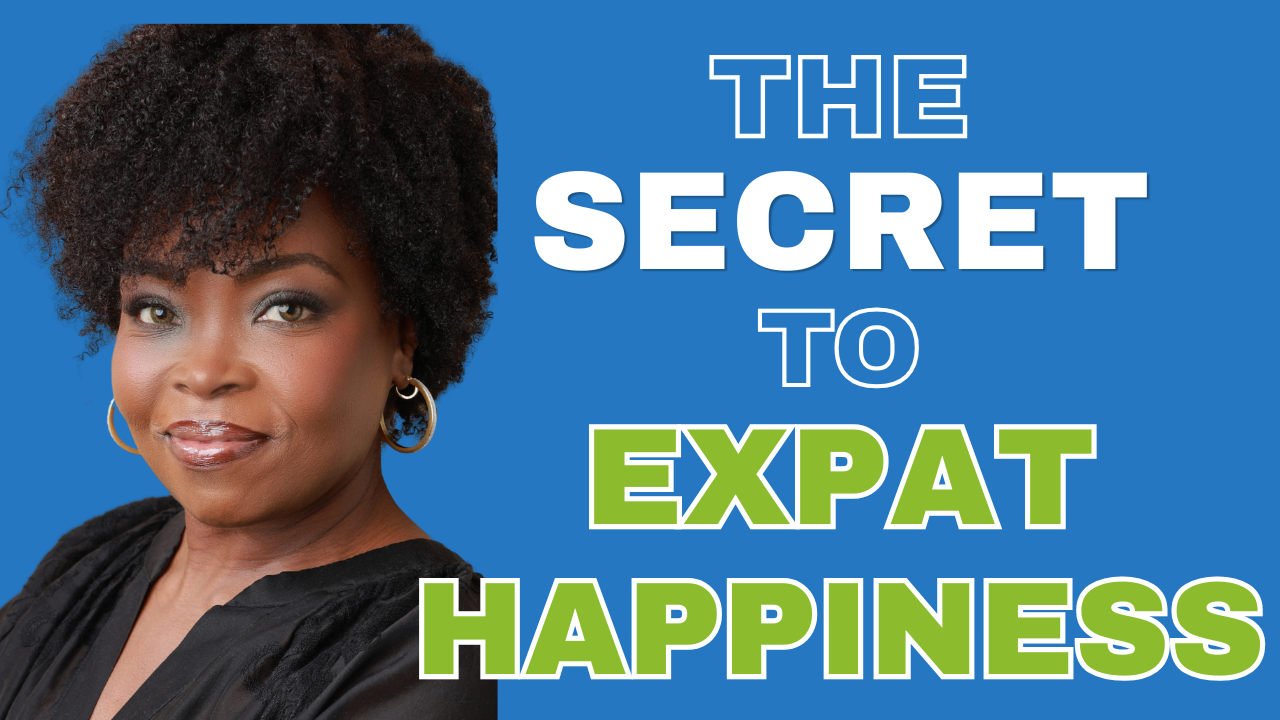
Founder and entrepreneur Yolanda Reshemah first moved abroad at just 10 years old when she left the Caribbean for the UK. A bit of a contrast there, but she didn’t stop there. Yolanda joins me to dive into her experiences later moving to France and then the USA, and she speaks about what she believes every woman needs to know about how to thrive and build an authentic community when you’re starting over in a new country.
Yolanda, you are living in the USA, but this was not your first move. Can we start with you telling me a bit about your expat journey, to be cliche?
Yolanda: Oh my goodness, yes, of course. Hi, good morning. It’s so lovely to be here. I am delighted to be on your show. As you said, I now live in California, but I would say my expat journey began at age 10. That was my first relocation.
I moved from the Caribbean to England at a time in my life where I didn’t have the words to express the excitement and joy, but also the grief that I had in my little chest at that time. I moved to England from a place that’s very sunny, where all of the houses are built to reflect the character and to reflect nature. The character of the people who live in them — colours of muted blues and whites — and then you move to England and it’s not at all sunny and it’s not at all colourful.
Carlie: I can only imagine that would’ve been such a shock on so many levels.
Yolanda: Three years. It took me that long, but it worked out fine because I had my family with me. And from there I moved to France as a student, studying in French. I lived in Paris and that was wonderful. I experienced for the first time connectivity and community and love and being held by people who were not blood relatives.
People I didn’t really know, but the people I worked with who took such good care of us. And I think I became a Parisian. I was there for quite a while. I moved back to England and years later, moved back to France as a young adult. This time, all of these moves at these junctures in my life were very significant because they took place at key points in my life where my identity was being shifted and shaped.
All of these moves have carved the woman that I am today, but my second stint in France — I then became a Parisian. They taught me how to dress like the Parisian, and I was happy with the way I looked, but they taught me, no, we don’t really walk around in trainers, not so much. And we sit down for our teas and our coffees and we have lunch for two hours. And we don’t rush it and we don’t sit and eat sandwiches at our desk. The whole culture is so very different, but I love it.
Now, in returning back to England, that was my first experience, I would say, of culture shock, being disoriented, feeling like I really didn’t belong, and having to readjust myself to fit back into life in England where I grew up. I learned a lot from that lesson.
I moved again a few times back and forth to the US, and I moved at a significant point when I first got married. I don’t recommend that. If you are a new wife moving abroad with your new husband, that’s just too much change.
But we had each other. And that was about learning that when you move, you are no longer a tourist. You are learning, you are practising to become a local. And you’ve got to get out of the tourism mindset, and it took us a while to get out of that. The whole emotional rollercoaster of trying to connect with people and all of that — all of those emotional and psychological impacts really started carving me, seeing the world in a different way.
Carlie: It’s funny we’re speaking today, Yolanda, because just earlier I was listening to a podcast where the host mentioned that moving abroad as a young person, as a teenager, is one of the most disruptive things you can do. And you moved at 10 years old. I wonder if that really shaped you as a person, moving from the sunny Caribbean at that time to somewhere so juxtaposed like the UK, and how that impacted your development and the person you are.
Yolanda: I would say yes, it did, because it taught me about courage. I think the fundamental thing is the fact that our parents wanted us to be brought up, raised in the Caribbean in the first place so that we understood our heritage and our culture and the significance of who we are as a people and the strength that comes with all of that.
Moving to England and seeing a different culture where the morals and norms were so very different — it was jarring. And it did shape me because it taught me courage. It taught me about resilience, and these are things that I didn’t really know existed within me. And I guess you won’t know how much you have until it’s tested.
At a young age, I had to assert myself, be present, and be happy with being me amongst a sea of people who are so very different in so many different ways. Not just visually — the way people eat and the way they interact with each other within families, how kids speak to their parents. What was permissible for them was definitely not permissible for me. So many different levels of change, yes, but it taught me also that I could do almost anything within reason, that I could go anywhere and learn to adjust and be happy without losing myself.
Carlie: And going to France — I mean, having moved to France myself, I experienced all those culture shocks of you don’t go to the gym in your activewear, you go to the gym, you change into your activewear, and then you leave changed again, back into street clothes. No eating at your desk. I lived in London. I ate at my desk all the time. I got the worst looks when I did it in France. And the two-hour lunches, I can completely relate.
So you added that extra layer of yet another cultural learning when you were quite young.
Yolanda: Yes, absolutely. And I loved it. I don’t want to say that it was a refining because I was not going to France to go to finishing school.
Carlie: Was that the case?
Yolanda: No. It was just different. It was just a different perspective. I think that was more about self-care, respecting the humanity, that we are not built for rush, rush, rush and dash. Just apply a little bit of substance. In France, for me, it was about substance. It was about treating yourself nicely, slowing down, being mindful about the quality of food that you eat, and being mindful about how you dress and just how you walk. Just slow down and take time, and that’s what I really loved about it. I will forever be changed by that.
Carlie: All of these experiences — I do want to acknowledge you’re also a podcaster. The Places We Call Home is the name of your podcast. I can only imagine you were inspired to start that podcast by your own experiences and the lessons you’ve learned.
Yolanda: Yes, most definitely. But I think, to be honest, I was quite resistant to podcasting because it’s not my area of expertise. It is becoming so — I’m learning it now and it’s a steep learning curve — but it’s not the place that I started off in. I’m familiar with law and I’m familiar with corporate strategies and mergers and all that sort of stuff, and employee communications and stakeholder engagement.
I’m used to bringing people together to fix situations and fixing problems. And this really started when some girlfriends and I, who always took journeys to spas and different events and activities, would have these rich, deep conversations. And they kept saying to me, Yolanda, you should record. And I would be resistant. Why would I record? Why don’t you do it?
In 2022, 2023, it just started getting a little bit weird. I would go to a supermarket, strike up a conversation, which is what I do, with an absolute stranger. And we would talk about the weather and all these things and where I’m from because of the accent. And they would ask, do you record? Do you do voiceovers? Do you do podcasts? And all this sort of stuff.
I started hearing the same sort of message from different groups of friends, but also different people that I just didn’t know. And I thought —
Carlie: Was that a sign?
Yolanda: Is this a sign? Yeah. And so one day I said, okay, I’m going to try it. And I prayed about it and that was it. That was the end of it. I mentioned it to a friend and he said, oh, I’ve got a studio. Somebody else who overheard said, oh, you can talk to my mum. She’s got a really strange story that’s really exciting and she’s from Brazil and she came here and she was trafficked and all these things.
And that was the start of it. I was in a whirlwind. It was all happening around me. I literally felt like everything was beginning to change, things were happening, and I was in the middle of it and I didn’t know what to do. So I tried to hold on and said yes. Here we are.
Carlie: That’s great. Well, that’s how some of the best things in life happen, when you just hold on and say yes.
I want to ask about your approach to establishing yourself in a new place and how that’s evolved over time. Obviously you do it differently as a grownup than you did when you were 10 years old, but when you move to France as an adult, and then when you move to the UK, do you have a formula now, or do you have a process that you know works for you to ground yourself and find community?
Yolanda: Do I have a process? Back then, in those other situations, I didn’t have a process because it was just so very new. And over time I really learned what was happening to me. Most recently, when we left two years ago — when we left California, went back to England, taking my husband, myself, and our daughter — it was a little bit of a panic. How is she going to do, is she going to like it?
Going with somebody else whom you have so much responsibility for adds another layer. And so I think where I am now, everything that I have learned is because of experience. And now I’m beginning to pull out many, many relocations.
For me, I have learned that the first thing is to really find out what feeds you. What are the things that you need in your life to make you feel happy and anchored? Because I have learned that belonging isn’t really about the place or the other people. Belonging really starts here. You have to be at ease with yourself and be happy to be yourself in every situation.
When I moved to the US with my husband, I realised within about six or seven months something was missing, and I couldn’t quite figure out what it was. For weeks I couldn’t work it out — something fundamental, but I didn’t know what it was. I had to stop everything. I had to sit and figure it out, and I realised what I was missing from England. The things that I didn’t know were really important to me.
I enjoyed the sounds of different voices, seeing people dressed in so many different ways, some very elaborate and some very muted. Suits and kitten heels. I miss the smell of perfume. I miss different foods. I miss different music because of different cultures and people from different cultures, and the sight of groups of people who all look so very different, just walking down the street together. I miss that richness of the real world. Well, in England, that’s the real world, right?
As I started joining various groups of people looking for connections here, I realised I wasn’t getting that and I didn’t know where to find it. I realised part of the process in moving abroad, outside of what is so fundamental that we pay so much attention to — getting the passport, moving your pots and pans, the dogs and the cats — it’s finding out where should I live? In what sort of village, town, city? What can I find there? What is it that’s in me that I’m going to find in that particular location?
Carlie: I’ve had a bit of an epiphany about that recently, myself actually.
Yolanda: Pardon? Say that again. I’m sorry, I didn’t hear you.
Carlie: I’ve had a bit of an epiphany about that myself recently. I moved to France for my now husband and we live in a small town in France, and what I realised is I moved for the person and not the place. Didn’t really consider the place, and now I’m at the point where I’m like, I don’t know if this is my forever town. I don’t know if this town is what feeds and fuels me, if it’s actually giving me what I need to thrive.
Yolanda: Yes. Are you able to build what you need to thrive? And there’s the other two questions. I know you’re interviewing me, but I’m so impressed. Are you able to build, and what does thrive mean for you? I’m so intrigued by that.
Carlie: I think I’m looking at that now and what I need, how I can be proactive in making this place satisfying for me, but also creating the life that satisfies me. And part of that, frankly, is not being here.
Yolanda: Oh, okay.
Carlie: Leaving regularly, having opportunities to travel and to go to bigger cities regularly to fill my cup, so that when I come back I am satisfied.
Yolanda: Yes, I do. I completely understand. And we do that as well. We travel a lot. Our daughter’s just turned 13, so in 12, almost 13, 14 years, we’ve probably been here for half that amount of time because of how much we travel, because we still want to be able to see the rest of the world and everything else that’s out there.
Thriving. Having what you need. That’s what I have realised. It’s really fundamental — the psychological, emotional yearning that just quietly bubbles away when the right job is in place, you’ve found somewhere to live. The soul yearns for something that is authentic. And friendship here is a big challenge.
Carlie: I absolutely understand. I think the biggest challenge for me with authentic friendships has been making them and keeping them, because a lot of friendships end up being with fellow foreigners who ultimately leave. So how do you find those authentic friendships that are going to last and be physically in your life?
Yolanda: For me, I have learned that looking for proximity of shared experience is not enough. Looking for the people who are in the same boat as you does so much and you need far more. And so I have learned that again, I need to do the work. And that’s also what I had to do a second time — do the work of figuring out what do I need in friends? What do they look like? How do they treat me? How do I want to show up in their lives?
I need authenticity, so I need a degree of vulnerability. I needed friends on a spiritual level, vulnerable and relatable to what’s at core about how I live and my morals.
I also realised I needed friends with whom I could share some kind of learning experience, where I can continually learn. So I went back to Berkeley University and I did some classes there. And I also realised that I needed a deeper, cerebral stimulation, something similar to my career trajectory. I wanted to keep that spontaneity and that drive and that sense of achievement.
So I started doing some work for an organisation here called Taproot Foundation. And you work within groups of women — I ended up in groups of women who are highly learned, highly skilled, really bright people — and we worked in teams to provide solutions for nonprofits across the Bay Area. I was part of that and I liked the excitement and the learning and working and being able to contribute. Those sort of things fed me deeply and helped me feel anchored.
Within all of those different environments, I would find at least one person who would be a good acquaintance, or who then later became a friend because we were able to be vulnerable. She allowed me to pour into her and she poured into me. That’s what I’ve learned, and that’s a good way of starting.
Don’t just look for the people who are so very like you, because what you search for and what your spirit actually needs, what you need to feed you, make you feel grounded, might not be the same thing.
Carlie: I posted in my girl gang group chat the other day, Expat Girl Gang, that I wanted to go and see this Bride of Frankenstein new film that’s come out.
Yolanda: Mm-hmm.
Carlie: And that is my kind of film — a little bit dark, a little bit monsters, feminist — and crickets.
Yolanda: Oh, nobody else wanted to go?
Carlie: And sometimes just because you are together having the same expat experience doesn’t mean you have the same interests, the same personalities. It doesn’t actually truly make you friends. Are these people really my people, or are they just people in my situation?
Yolanda: Yeah, absolutely. And I definitely saw that, because when I moved here as well, I kept saying to my husband, I’m going to these mother and toddler groups and something is not working. Something’s really strange. And I kept complaining week after week, and he said to me, it’s not working for you. You’ve got to stop.
And I realised it’s because they were having a level of conversation that was very surface, and they were happy with that. And then I would come in and I would talk about, oh, so what do you want for your future? And it’s like, what are you talking about? No one was having these sort of conversations, but that’s what I needed. And so I had to stop. I realised just because I’m a parent and they’re a parent doesn’t mean that we are going to click.
Carlie: That you’re compatible. Yeah.
Yolanda: Not at all.
Carlie: And it’s okay. It’s totally okay.
Yolanda: Yes, it’s completely okay. And learning that it’s okay and doing the work of finding what you need and spreading your net wide — that is another thing that I find is so important. So many different things. Book clubs, open mics, volunteering, joining the board of something or other, going back to schools. Try so many different things to find different people, because what you need might not look like you, sound like you, but definitely feeds you and helps make you happy.
Carlie: I should say, just because a bunch of my girl gang are not so into the macabre and the more dark and twisted kind of stuff doesn’t mean we don’t have other interests. But it was just one of those really stark points in my social interactions where I’m like, yeah, they’re my people, but they’re not my people.
Yolanda: Yeah.
Carlie: I’m curious, Yolanda, as a fellow anglophone from an anglophone country — UK, Australia — you move to the US, and there’s a lot of assumptions that we just have a lot of similar points of common culture. What really struck me when I was in New York last year, and what was unexpected to me as one of my first times in the States, was how direct their communication style is. On public signs, for example, whereas I feel like in Australia, maybe we take a bit more after the Brits, where it’s a little bit more polite and passively kind. Whereas in the States, it’s like, don’t do this, don’t do that, or do this.
As someone who’s moved from the UK to the USA, are there any cultural quirks that you had to get used to, even though you speak the same language?
Yolanda: Oh yes. Something we noticed early on in this particular side of California — you would find, and I don’t want to generalise, but I think even Americans in this part would say, yes, that’s true — there seems to be this uniform and it looks like a coffee or some kind of drink from a well-known chain, and the whole yoga outfit all the time. I very rarely see people on the street dressed in normal clothes.
Carlie: In slacks. They’re always wearing activewear.
Yolanda: Yes. The men are always in their shorts and t-shirts as if they’re just going running or coming back. The women have the yoga mats rolled up, the drink, and the yoga outfit on. It’s like early in the morning to nighttime, and my husband and I were like, don’t people work? Do they not? Where’s the work stuff? What’s going on?
We spoke to a couple of Americans and they said to us, it’s because in this area many people are able to work from home and they have the flexibility. We didn’t know that, but that was — I still see it to this day. It’s very, very prominent. And it’s something that I decided I did not want to do. I like dressing up.
Carlie: That’s very Parisian of you.
Yolanda: It is, but I think it’s also a Brit thing. I think it’s been a vein throughout my culture, even in the Caribbean. We do like to dress smartly.
But the other thing that I’ve noticed here is an allergic reaction to perfume. When you wear perfume and you walk into a room, within 10 minutes, somebody will say, oh, I can smell such and such. And then the windows will open. There’s that thing. So whenever I go back to England, Italy, wherever, I really like to douse myself in it, and nobody says anything because it smells delightful. And we love it.
People here are very, very friendly. They mean well. They are so very willing to help and open up to help you make life lovely. And so they promise things that they’re not able to deliver. “Oh, let’s meet up next week,” because they’re so intrigued by your accent and they want to be around you. But then next week at the appointed time, they don’t show up. There’s a terminology here called flaking.
Carlie: Right.
Yolanda: It’s very common here, and it’s very odd. It takes a lot of getting used to. I’m not used to it still, but I don’t encounter it as much as I used to because the people who are in my life — these are all people who I’ve built a community with.
Carlie: They’re more reliable. They are going to show up to that coffee date.
Yolanda: Yes, they do. Yes.
Carlie: I’m curious, you mentioned that you travel quite a bit. What does the future hold for you and your family? Do you see yourself staying in the USA, maybe spending more time in the UK, or possibly moving the family to the Caribbean for a bit?
Yolanda: Oh, all of the above. I don’t know. I think it comes down to three or maybe four questions I tend to ask myself. Do I feel like I belong here? Can I belong here? Do I feel safe? And do I matter here?
And now with a child, for myself and my husband, we ask the same thing for her. We ask her directly, and we ask on behalf of her. We sit and we think about it, we discuss what are the pros, what are the cons. We think about how many passports do we have, where can we go.
I think for us, we are grounded. This is home, but I’m not married to it. If we need to move for whatever reasons — we have our parents back in Europe, God forbid anything should happen — and if we need to move back, then we’ll do it. But right now we are grounded here. For the moment, this feels like home.
Carlie: But you have not yet adopted the activewear and yoga mat.
Yolanda: No, I have not. And I’m not going to, absolutely not.
Carlie: Just when you do, Yolanda, that’s when you know you’re really home. This has been such a pleasure, and I wish we could keep talking. I understand why you are such a magnet for conversation. Where can listeners find you if they would like to hear more from you?
Yolanda: The Places We Call Home is on Spotify and Apple Podcasts. I have just moved from one hosting platform to another, so there are some changes and I feel like I’m beginning again, and that’s okay. But all of the episodes so far are there.
You can also find me on our website. Go to theplaceswecallhome.com and you’ll see direct links to various episodes. You can find out a little bit more about me, why I started the podcast and get involved. I’m looking now to build a community. I would encourage you to share your story, get involved. It’s a rich, beautiful conversation over tea and scones. That’s what I like to do.
Carlie: I’ve got my tea, so I’m halfway there.
Yolanda: Oh, lovely.
Carlie: Yolanda, it’s been a pleasure. Thank you so much for sharing some of yourself on the Expat Focus Podcast.
Yolanda: Oh, it’s been beautiful. Thank you so much. Thank you.
Carlie: That’s it for today. How have you made authentic connections and community in a new place? You can let us know in the comments on our YouTube channel. Just search for Expat Focus. Don’t forget to like, follow, subscribe to this podcast however you like to listen, and I will catch you in the next one.