
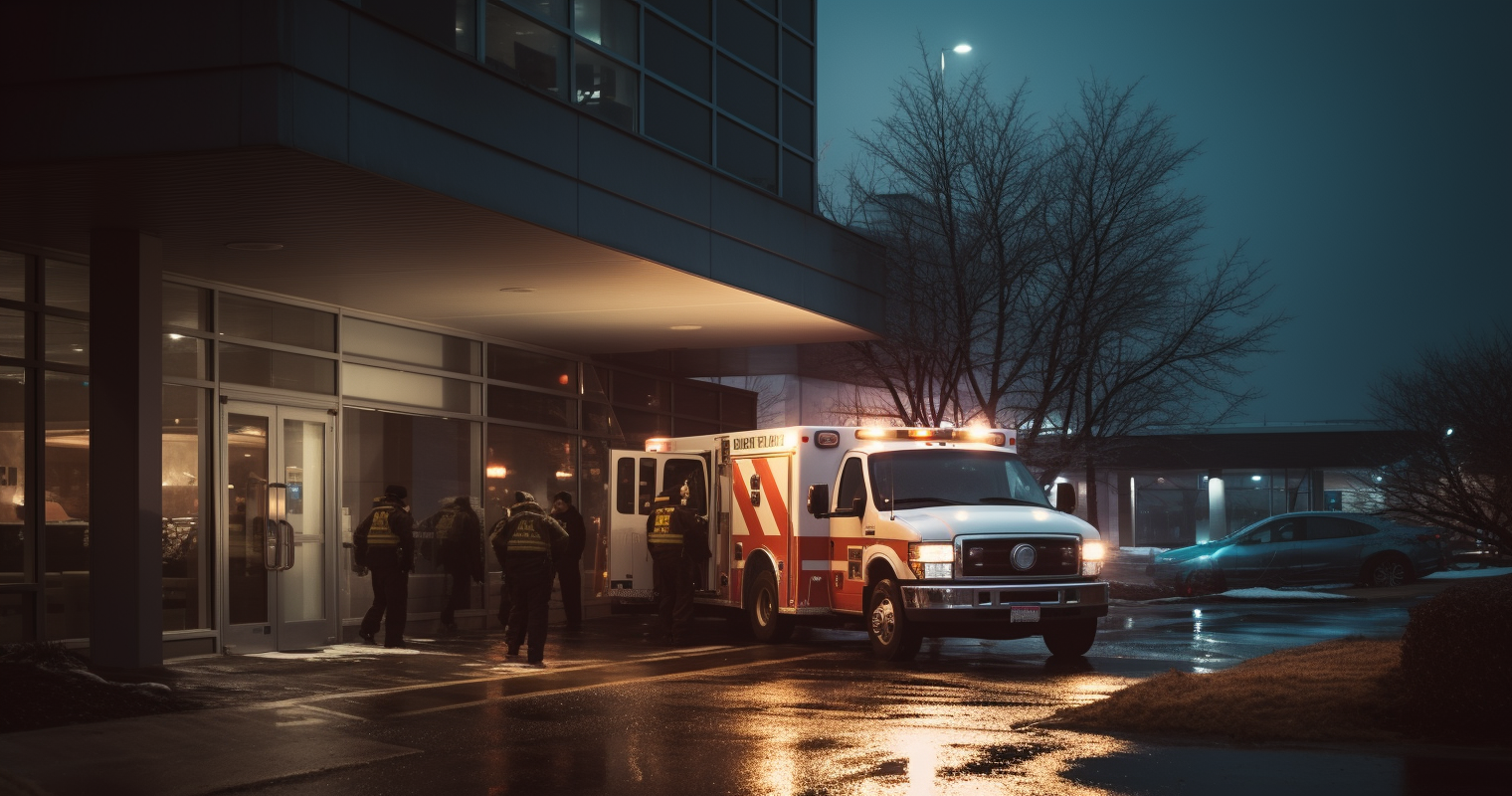
Argentina maintains a comprehensive and well-organised network of emergency services. The nationwide emergency number is 911, covering police, fire, and medical emergencies in every province. Alongside this universal line, dedicated numbers provide direct access to specific services: 101 for police, 107 for ambulance, and 100 for fire services. Public hospitals extend emergency medical care to all, regardless of nationality, though fees and conditions differ — and from 2025 onwards, every foreign visitor to Argentina must carry valid travel medical insurance.
| Item | Details |
|---|---|
| Universal emergency number | 911 (all provinces, all services — as of 2025) |
| Ambulance (dedicated) | 107 (SAME service; available in Buenos Aires, Córdoba, Tierra del Fuego, Jujuy and others) |
| Police (dedicated) | 101 |
| Fire (dedicated) | 100 |
| Civil Defence | 103 |
| Tourist emergency line | 0800 999 5000 (free, some multi-language support) |
| Travel insurance requirement | Mandatory for all foreign visitors as of 1 July 2025 |
| Public emergency care cost | Broadly free at point of use; verify current policy with official sources |
What is the single emergency number in Argentina?
Argentina’s approach to emergency telephony differs from countries that rely on a single universal number — such as 999 in the United Kingdom or 112 across the European Union. Instead, Argentina combines a universal entry point with individual dedicated lines for each service. Dialling 911 works across all 23 provinces and connects you to a police call centre, which then routes your call to whichever emergency provider is most appropriate for your situation.
In addition to 911, each service has its own direct line: 101 for police, 107 for ambulance, and 100 for the fire brigade. Civil Defence — the body responsible for responding to earthquakes, tsunamis, floods, landslides, and chemical incidents — operates on 103. Every one of these numbers is free to call from any telephone, including mobile phones with no credit remaining. It is strongly advisable to store all of these numbers before you ever find yourself needing them.
A further option is the dedicated tourist emergency line, 0800 999 5000, which provides some support in languages other than Spanish. This can be especially valuable if you find yourself unable to communicate adequately in Spanish during a crisis. Check for the latest details at argentina.gob.ar.
How do you call for emergency medical assistance in Argentina, and what should you expect when you call?
Argentina’s state ambulance service is called SAME (Sistema de Atención Médica de Emergencias) and is reachable directly on 107 in Buenos Aires, Córdoba, Tierra del Fuego, and Jujuy. If you are located in another province, dialling 911 will direct your call to the appropriate local medical responders. The number 107 functions as Argentina’s primary emergency medical services line and can be called for free from any local or public telephone without the need for credit.
When the call connects, the operator will ask for your exact location and a description of what has happened. Having some command of basic Spanish is a distinct advantage, though the tourist helpline (0800 999 5000) may be able to offer limited assistance in other languages. In Buenos Aires, SAME staff — including doctors, drivers, and communications personnel — receive training through the University of Buenos Aires School of Medicine and affiliated institutions. In provinces beyond Buenos Aires, training is typically delivered by the Red Cross, Civil Defence, and the fire service.
Other bodies that may respond to medical emergencies include the fire department, civil defence units, and the Argentine Red Cross. When in doubt about which number to call, 911 is always the safest choice — the dispatcher will determine the correct service and connect you accordingly.
What should you do in a mental health crisis in Argentina — is there a dedicated mental health emergency line?
Argentina does not currently operate a single nationally publicised mental health crisis line comparable to the 988 Suicide and Crisis Lifeline in the United States or Samaritans in the UK and Ireland. That said, mental health emergencies are fully recognised within the broader emergency healthcare framework. If there is immediate risk to life, calling 911 or 107 is the appropriate first action — both services are able to dispatch emergency medical teams to attend psychiatric crises.
When urgent clinical attention is needed, going directly to the nearest hospital emergency department is frequently the most practical course of action, and this holds as true for mental health emergencies as it does for physical ones. Public hospitals throughout Argentina include psychiatric services, and emergency departments are equipped to assess and triage patients presenting in a mental health crisis.
Certain provinces maintain their own local crisis support lines, and various non-governmental organisations also run helplines. The Argentine Ministry of Health (argentina.gob.ar/salud) is the most reliable starting point for checking which national helplines are currently active, as these can change over time. Individuals in crisis who do not speak Spanish are advised to seek assistance through their nearest embassy or consulate, or to use the tourist emergency line on 0800 999 5000.
Where can you go for emergency medical treatment in Argentina?
Argentina’s health services are widely regarded as among the finest in Latin America. In Buenos Aires and major cities such as Córdoba and Mendoza, hospitals and clinics are well equipped and staffed by highly trained medical professionals. In more rural areas, particularly in the poorer northern provinces, standards of care can vary considerably, and some facilities may face shortages of equipment or personnel.
The public health sector delivers free or heavily subsidised services to approximately 50% of Argentina’s population, encompassing both nationals and foreigners. Medical, hospital, dental, and palliative care are all provided without charge through the public system. Public GPs operate within hospital settings rather than in standalone community clinics, so patients seeking a consultation in private practice must arrange an appointment directly with a private physician.
Roughly 70% of the country’s hospitals are privately operated. Private clinics and hospitals in Argentina are well-resourced, and in the major cities you can expect an excellent standard of facilities and care. Public hospitals extend free emergency treatment to all — visitors included — though waiting times can be considerable. Private clinics offer quicker access and are more likely to have English-speaking staff, generally at a cost of approximately USD 40–100 per visit as of 2025, though fees shift frequently and should be confirmed directly with the provider.
To locate the nearest public hospital in Buenos Aires, the Buenos Aires City Government maintains a hospital finder at buenosaires.gob.ar/salud. For other provinces, contact the relevant provincial health ministry, or ask your hotel, accommodation host, or embassy for guidance.
Is emergency medical treatment free in Argentina — and does this differ for residents versus tourists?
The answer to this question is more nuanced than a simple yes or no, and depends on whether you are accessing the public or private system and what your residency status happens to be. Within the public system, emergency ambulance response and in-hospital care are provided without charge to both Argentine nationals and foreign visitors at the point of initial stabilisation.
Tourists may access public hospitals for urgent stabilisation, but charges for non-residents covering non-emergency services vary from province to province and facility to facility. In practical terms, this means that while no one in genuine need will be turned away from emergency treatment, follow-up care, specialist referrals, and non-urgent treatment within the public system may carry costs for those without residency. The main charges within the public system typically relate to prescription medication; pharmacies in Argentina require a prescription for most medicines, with patients paying 30% of the cost for chronic conditions and 60% for everyday prescriptions.
Private hospitals invariably require upfront payment unless you hold travel insurance that covers medical costs, in which case you can claim reimbursement after the event. If you present at a private hospital without funds, you may be turned away for non-emergency care. This represents a meaningful practical distinction from countries — notably many European nations — where emergency treatment is delivered first and billed retrospectively without regard to a patient’s ability to pay at the time.
Do expats in Argentina need travel or health insurance to access emergency care?
Since 1 July 2025, Argentina has required all foreign tourists to hold valid travel medical insurance prior to entry. The policy must cover medical treatment, hospitalisation, repatriation, and emergency evacuation for the full duration of the stay. Travellers must present both proof of insurance and a sworn declaration of their travel purpose at border entry points. Airlines may decline to board passengers who cannot produce the required documentation. Always confirm the current requirements at argentina.gob.ar/migraciones before departure.
Although the public healthcare system is free and of a generally high standard, waiting times for appointments and procedures in the public sector can be lengthy. For this reason, many expatriates opt for private health coverage. It is worth noting that Argentine health insurance policies are highly localised — a plan taken out in one city may not be valid in other parts of the country. International health insurance therefore tends to suit expatriates far better than a local Argentine policy.
Several global insurers — including Aetna International, Allianz Care, Bupa Global, and Cigna Global — provide expat health plans that cover long-term stays in Argentina as well as travel elsewhere. For anyone planning to spend time in remote or rural areas, it is strongly advisable to select a plan that includes emergency evacuation, since some regions can be very distant from the nearest hospital.
If you arrive at a public hospital with neither insurance nor money, you should still receive emergency stabilisation — but accessing non-emergency follow-up care may prove considerably more difficult. Always carry your passport, as hospitals will request identification.
Are there bilateral health agreements between Argentina and other countries?
In contrast to arrangements within the European Economic Area — where the European Health Insurance Card (EHIC) entitles holders to state-provided healthcare in other member countries — or the reciprocal Medicare agreements Australia holds with a number of nations, Argentina does not maintain a widely publicised network of bilateral healthcare agreements that routinely grant foreign nationals access to reduced-cost or free treatment.
Argentina has concluded various bilateral cooperation agreements with other countries in the areas of health and social security, but these primarily address workers’ entitlements under social security arrangements for people formally employed in both signatory nations, rather than emergency care access for tourists or expatriates. There is no Mercosur equivalent of the EHIC for general healthcare access by visitors.
Specific bilateral arrangements may exist for certain nationalities, and the most reliable way to verify whether any such agreement covers you is to contact your home country’s embassy or consulate in Buenos Aires. A comprehensive directory of embassies in Argentina is available through the Argentine Foreign Ministry at cancilleria.gob.ar. In the absence of a relevant bilateral agreement, travel or international health insurance remains essential.
How does Argentina’s emergency healthcare system compare to other systems?
Argentina operates a mixed public-private healthcare model — distinct from a fully centralised system like the NHS in the United Kingdom, where treatment is free at the point of use for all residents irrespective of insurance status, and equally distinct from a predominantly private, insurance-based system such as that in the United States.
The public sector delivers free or heavily subsidised care to around 50% of Argentina’s population, including both nationals and foreign nationals, with medical, hospital, dental, and palliative services all provided without charge. The social security layer — known as Obras Sociales — is funded through fixed-rate contributions from employers and employees, administered through trade unions, with care itself outsourced to private providers. On top of this, a private sector functions through conventional insurance policies that any individual may choose to purchase; approximately 5% of the population takes this route.
Extended waiting periods in the public system mean that a substantial proportion of Argentines turn to the private sector for their healthcare needs. This structure is broadly comparable to systems in countries such as Brazil or Colombia, where public and private tiers coexist but the private system is widely preferred by those who can afford it. Most expatriates in Argentina gravitate towards private healthcare on the assumption that it delivers higher quality care and significantly shorter waiting times. While the quality argument is not universally true, the waiting time advantage is generally well founded; private clinics and hospitals are well-resourced and offer an excellent standard of care in the country’s major cities.
What emergency services exist beyond medical — how do police and fire services work in Argentina?
The direct number for police is 101, connecting you immediately to law enforcement capable of responding to a broad range of incidents. In Buenos Aires, dialling 911 also routes through to the police call centre. A dedicated tourist police line operates on 0800-999-5000 / 0800-999-2838, where some staff are able to assist in languages other than Spanish. For incidents involving theft, assault, or other crimes, you will typically need to file a formal police report (denuncia) at a local station for both insurance claims and legal proceedings.
For fire emergencies, the number to call is 100. The fire service responds to fires, explosions, and other hazardous incidents. Argentine firefighters are trained to deal with fires in residential properties, apartment buildings, commercial premises, and industrial facilities. Outside the major cities, however, much of Argentina’s fire-fighting capacity relies on volunteers (bomberos voluntarios), which can affect response times in rural and remote locations.
Argentine Civil Defence, reached on 103, responds to earthquake victims, tsunami survivors, flood-affected communities, and those impacted by landslides or chemical incidents, providing medicines, clothing, shelter, and medical support. Unlike some countries where a single national police body operates uniformly, Argentina’s police forces are organised on a provincial basis, meaning procedures and response capabilities may differ significantly depending on which province you are in.
Are there country-specific emergency risks in Argentina?
Argentina’s remarkable geographical diversity — ranging from subtropical rainforest in the north to near-Antarctic conditions in Patagonia — brings with it a wide spectrum of natural hazard risks. Civil Defence is equipped to respond to earthquakes, tsunamis, floods, landslides, and chemical spills, all of which are genuine threats in various parts of the country. The Andean western regions are seismically active, flooding is a recurrent hazard across the Pampas and north-eastern provinces, and wildfires have grown into an increasingly serious threat, particularly in Patagonia and Córdoba province.
Disaster management falls under the Directorate of Civil Protection. Argentina’s National Plan for Disaster Risk Reduction establishes the policy framework and guiding principles for both public and private organisations working to reduce disaster risk. The principal legislation governing this field is Ley 27287 — the National System for the Integral Management of Risk and Civil Protection. The national civil protection authority can be found at argentina.gob.ar/proteccioncivil.
On the health side, the CDC notes that yellow fever presents a risk in certain areas of Argentina and recommends the vaccine for travellers aged nine months and older visiting those regions. No vaccinations are compulsory for entry into Argentina, but keeping up to date with diphtheria, tetanus, and polio immunisations is advisable. Depending on which parts of the country you intend to visit, protection against yellow fever, rabies, and typhoid may also be recommended. Consult the CDC’s Argentina travel page or your own country’s official travel health advisory for the most current guidance. Social unrest and street protests — known locally as piquetes or manifestaciones — occur from time to time, particularly in Buenos Aires; keeping an eye on local news and steering clear of large gatherings when demonstrations are anticipated is prudent.
How should expats prepare for emergencies before they arise in Argentina?
Taking proactive steps before an emergency occurs is by far the most effective way to protect yourself. The following measures will substantially improve your safety and your ability to access help quickly in Argentina:
- Register with your home country’s embassy or consulate. Most governments provide a voluntary registration service — such as the UK’s FCDO registration system, the US STEP programme, or comparable schemes offered by other nationalities — allowing consular staff to reach you in the event of a major incident or natural disaster. Find your country’s embassy in Argentina at cancilleria.gob.ar.
- Secure comprehensive health and travel insurance. From 1 July 2025, travel medical insurance encompassing medical care, hospitalisation, repatriation, and emergency evacuation is a legal entry requirement for all foreign visitors. Expats on extended stays should take out international health insurance rather than depending on a local Argentine policy alone.
- Save all emergency numbers. Programme 911, 107 (ambulance), 101 (police), 100 (fire), 103 (civil defence), and 0800 999 5000 (tourist line) into your phone well in advance of any emergency.
- Learn basic Spanish emergency phrases. Emergency call operators may have limited capacity in languages other than Spanish. Being able to communicate your location, describe what has happened, and indicate whether someone requires urgent medical attention can make a critical difference to response times.
- Identify your nearest hospital. Find out in advance whether public or private hospitals are closest to where you live or are staying. Your embassy in Buenos Aires can recommend appropriate facilities for your particular circumstances.
- Keep key documents accessible. You do not need to register formally in order to use Argentina’s public healthcare system, but hospitals will ask for identification. Carry your passport and any relevant prescriptions or medical records, and keep both digital and physical copies of your passport, insurance policy, and essential medical information.
- Plan ahead for remote travel. If your itinerary includes visits to remote areas, select an insurance plan that explicitly covers emergency evacuation and transport to the nearest hospital, which in some regions can be a considerable distance away.
- Monitor official alert channels. Keep track of updates from the Argentine Civil Protection Directorate and the Argentine Meteorological Service (SMN) for weather-related warnings. Subscribe to alerts from your home country’s foreign affairs ministry for the latest security guidance.
Where can expats get official and up-to-date emergency information for Argentina?
When it comes to emergency procedures and contact numbers, always turn to official government sources in preference to blogs or community forums, as information in this area can change without notice. The following are the principal authoritative resources:
- Argentine government emergency portal: argentina.gob.ar/tema/emergencias
- Ministry of Health (Ministerio de Salud): argentina.gob.ar/salud
- Civil Protection Directorate: argentina.gob.ar/proteccioncivil
- Argentine Meteorological Service (for severe weather alerts): smn.gob.ar
- Argentine Foreign Ministry (embassy contacts): cancilleria.gob.ar
- Argentine Migration Directorate (for entry and visa requirements): argentina.gob.ar/migraciones
- Your home country’s travel advisory service — for example the UK FCDO, US State Department, Australian DFAT, French MEAE, or equivalent national authority — all of which publish regularly updated safety and emergency guidance specifically covering Argentina.
- Argentine Red Cross: cruzroja.org.ar — provides humanitarian assistance and supports communities affected by major disasters.
Review all official sources on a regular basis and always before significant travel within Argentina, as regional conditions and alert levels can shift rapidly.
Frequently asked questions
What is the most important emergency number to remember in Argentina?
Dialling 911 from anywhere across all 23 Argentine provinces connects you to a police call centre, which will then transfer your call to the most appropriate emergency service. Where possible, also save the dedicated lines: 107 for ambulance, 101 for police, and 100 for fire services.
Will I be turned away from an Argentine public hospital if I have no money or insurance?
Public hospitals are obligated to provide emergency care to all patients, including visitors, free of charge, though waiting times may be lengthy. You will not be refused emergency stabilisation. Private hospitals, however, routinely require payment upfront unless you hold travel insurance. For non-emergency and follow-up care, costs for non-residents within the public system vary by province and facility.
Is travel insurance now compulsory for visiting Argentina?
From 1 July 2025, Argentina introduced a requirement that all non-resident foreign travellers carry valid travel medical insurance for the duration of their stay. The policy must cover medical treatment, hospitalisation, repatriation, and emergency evacuation. Verify the current requirements at argentina.gob.ar/migraciones before travelling.
What is SAME and how does it work?
SAME (Sistema de Atención Médica de Emergencias) is Argentina’s government-run ambulance service, reachable on 107. It operates directly in Buenos Aires, Córdoba, Tierra del Fuego, and Jujuy; in other provinces, calling 911 connects you to the nearest available ambulance provider. SAME dispatches trained medical teams and, once a patient has been attended to, arranges transfer to the nearest hospital with available capacity.
Are there natural disaster risks I should be aware of in Argentina?
Argentine Civil Defence is equipped to respond to earthquakes, tsunamis, floods, landslides, and chemical incidents. Seismic risk is concentrated in the Andean west; flooding occurs regularly across the north and Pampas; and wildfires are a growing threat in central regions and Patagonia. Stay informed through the Argentine Meteorological Service at smn.gob.ar and the Civil Protection Directorate.
What vaccinations do I need for Argentina?
No vaccinations are mandatory for entry into Argentina, though keeping immunisations against diphtheria, tetanus, and polio up to date is recommended. A yellow fever vaccine is advisable for certain regions, and protection against rabies and typhoid may be suggested depending on where you plan to travel within the country. Always consult your own country’s travel health authority or the CDC for the latest recommendations before departing.
Can I call the Argentine emergency services if I don’t speak Spanish?
A general tourist emergency line — 0800 999 5000 — offers some multi-language support and is a useful option if you are struggling to communicate in Spanish. Operators on 107 and 911 may have limited capacity in other languages, so familiarising yourself with a handful of key Spanish phrases before you need them is a worthwhile precaution. Your embassy or consulate can also provide emergency consular assistance.
Should I use a public or private hospital in an emergency?
When urgent medical care is required, the priority is reaching the nearest emergency department as quickly as possible, whether that facility is public or private. Argentina’s health services are among the strongest in Latin America, particularly in Buenos Aires, Córdoba, and Mendoza, though standards can be more variable in remote areas. If you hold insurance, a private hospital will typically offer shorter wait times and a greater likelihood of English-speaking staff. If you have no insurance, a public hospital emergency department will treat you.