
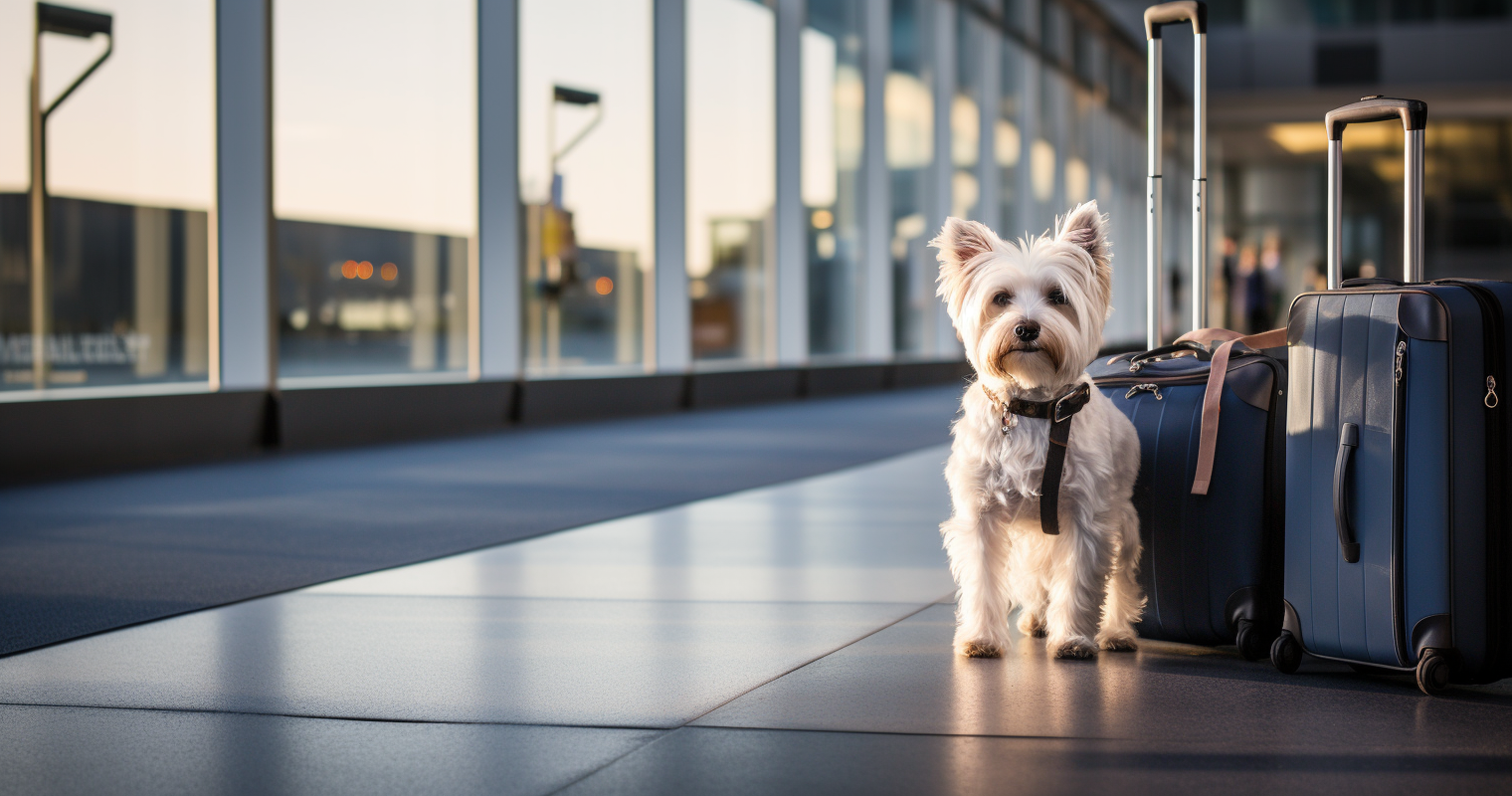
Bringing a pet to the Bahamas is a straightforward process for those who prepare carefully. The country welcomes the import of dogs and cats, operates without a blanket quarantine requirement for animals that meet all conditions, and has no involvement in any international pet travel scheme. The entire process revolves around securing an official import permit from the Bahamas Agricultural Health and Food Safety Authority (BAHFSA) before your departure date.
| Item | Details |
|---|---|
| Permit required? | Yes — import permit from BAHFSA, applied for online via Click2Clear |
| Government permit fee (as of 2025) | US $10.00 + 12% VAT = US $11.20 per dog or cat |
| Permit processing time (as of 2025) | Approximately 2 business days (official); apply at least 4 weeks before travel |
| Veterinary health certificate | Required; must be dated within 48 hours of embarkation |
| Quarantine on arrival? | No — if all import conditions are met |
| Minimum age for import | 6 months for both dogs and cats |
| Banned breeds (dogs) | Pitbull, Presa Canario, Cane Corso, American Bulldog, Staffordshire Terrier, Dogo Argentino, and their mixes |
| Dog licence required in the Bahamas | Yes — all dogs aged 3 months+ must hold a dog licence |
Does the Bahamas allow pets to be imported, and are there restrictions on which animals are permitted?
The Bahamas Agricultural Health and Food Safety Authority (BAHFSA) oversees the importation of animals and animal products under the Animal Contagious Diseases Act and the Wildlife Conservation and Trade Act, both of which mandate a permit before any animal may enter the country. For expats with companion animals, dogs and cats are the primary domestic pets that may be brought into the Bahamas, subject to the relevant conditions being fully satisfied.
Pets from Cuba or Haiti are not permitted to enter the Bahamas under any circumstances. Additionally, both dogs and cats must be at least six months old before they can be imported. This age threshold applies equally to both species, so owners travelling with a young puppy or kitten will need to postpone the journey until the animal reaches that milestone.
Several dog breeds are prohibited from entry entirely. Pitbulls, Presa Canarios, Cane Corsos, American Bulldogs, Staffordshire Terriers, and Dogo Argentinos are all barred from importation — as are any purebred examples of those breeds and any mixed-breed dogs containing those bloodlines. This approach echoes dangerous dog legislation in countries such as the UK and Germany, which similarly restrict the entry of breeds considered to pose a higher public safety risk. If your dog is of mixed heritage and could be mistaken for one of these breeds on appearance alone, ask your veterinarian to document the breed clearly and thoroughly in the animal’s records ahead of travel.
Certain cat breeds face equivalent restrictions. The Savannah Cat, Bengal Cat, and Chausie are all prohibited. These are hybrid breeds descended in part from wild cat species, and their exclusion reflects the Bahamas’ commitments under international wildlife conservation frameworks. The Bahamas is a party to the Convention on International Trade in Endangered Species of Wild Plants and Animals (CITES) and the Convention on Biological Diversity (CBD), and as a consequence any exotic or wild-derived animal — regardless of how it may be classified as a pet in another jurisdiction — is very unlikely to receive entry approval.
What vaccinations and health requirements do pets need before entering the Bahamas?
The diseases assessed through the Bahamas’ import risk analysis include Rabies, Distemper, Hepatitis, Leptospirosis, Parvovirus, Adenovirus, Feline Leukemia, Feline Rhinotracheitis, Feline Calicivirus, Feline Panleukopenia, and Feline Pneumonitis. Vaccination against the relevant diseases on this list is compulsory, and the precise requirements vary between dogs and cats.
Dogs must be vaccinated against Rabies, Distemper, Hepatitis, Leptospirosis, Parvovirus, and Adenovirus. Cats must be vaccinated against Rabies, Leukemia, Rhinotracheitis, Calicivirus, Panleukopenia, and Pneumonitis. These obligations are considerably more extensive than those in many European countries, where only rabies vaccination is typically required for travel between low-risk nations, so owners should draw up their vaccination schedule well ahead of the travel date.
The timing rules around rabies vaccination deserve particular attention. As of 2024, where a one-year duration rabies vaccine is used, it must have been administered no more than ten months and no less than one month before importation. Where a three-year duration vaccine is used, it must have been administered no more than thirty-four months and no less than one month before importation. A booster given at the last moment will therefore not be accepted — a minimum gap of one month between vaccination and travel is required in all cases.
A rabies titre test is not a requirement for entry to the Bahamas from any country of origin. This sets the Bahamas apart from destinations such as Australia and New Zealand, where a demonstrated antibody titre result is a firm prerequisite. The Bahamas approach is considerably less burdensome in this respect.
Both dogs and cats must be confirmed free of internal parasites through a negative stool sample test, and must also be free of external parasites. Treatments for both internal and external parasites must be carried out before entry, using products that are approved in the country of origin. The administering veterinarian may record these treatments directly on the health certificate or provide a separate written record of treatment.
The preferred form of identification is a 15-digit microchip compliant with ISO Standard 11784 or Annex A to ISO Standard 11785, and all accompanying documents must reference the microchip number. If a pet carries a chip that does not conform to these ISO standards, the importer may provide a compatible reader capable of scanning it. Always confirm current requirements directly with BAHFSA before travelling, as these details are subject to change.
What is the application process for importing a pet into the Bahamas, and what paperwork is required?
BAHFSA holds full responsibility for processing pet import permits into the Bahamas. On 1 September 2024, this responsibility transferred to BAHFSA, which now issues permits through the Customs Department’s online Click2Clear platform. Any guide or information source predating September 2024 that refers to the former Department of Agriculture paper-based process is therefore no longer accurate.
The following outlines the step-by-step procedure for obtaining a pet import permit and completing the necessary documentation, as of 2025:
- Register with Click2Clear. Begin by creating an account on the Click2Clear platform. Once registered, send an email to [email protected] requesting that your username and password be activated so that you can submit a pet permit application through BAHFSA.
- Activate your account. You will receive an email containing a temporary password. Navigate to the BAHFSA e-permitting portal for imports, log in, and set a new password using the temporary credentials provided.
- Submit the import application form. Log in to the portal and complete the Application to Import Domestic Animal Form. You will need to upload proof of your pet’s vaccinations and a photograph of the animal at this stage.
- Pay the application fee. The government processing fee is US $10.00 plus 12% VAT, giving a total of US $11.20 per dog or cat as of 2025. Confirm the current fee on the official BAHFSA portal before submitting your application.
- Receive your import permit. Processing takes approximately two business days. Official guidance recommends applying a minimum of four weeks before your planned travel date in case of any complications. The permit is valid for a single entry within one year of the date of issue.
- Take the permit to your veterinarian. Once the permit has been issued, present it to your vet and request an accompanying veterinary certificate. This certificate must be signed and dated within 48 hours of your departure.
- Present documents at the port of entry. On arrival, hand the import permit and the completed Veterinarian Form to an Agricultural Officer and a Customs Officer at the port of entry.
The documents you must carry when entering the Bahamas are: the official BAHFSA import permit, the international veterinary health certificate completed by a licensed vet in your country of origin within 48 hours of departure, and evidence of all required vaccinations. The import permit must physically accompany the animal at the time of arrival. If all permit conditions are not satisfied, the animal may be refused entry or confiscated and treated as a disease risk.
Does the Bahamas require pets to undergo quarantine on arrival?
An animal that fully satisfies all import conditions will not be placed in quarantine on arrival in the Bahamas. For expats moving with pets, this is one of the most reassuring aspects of the country’s system. Unlike destinations such as Australia, New Zealand, or Japan — which impose mandatory quarantine periods lasting several weeks irrespective of vaccination history — the Bahamas operates on a compliance-based model: fulfil all the requirements, and your animal proceeds with you.
If an animal is found to be non-compliant with the import regulations, it will face quarantine, repatriation to the country of origin, or euthanasia, with all associated costs borne by the owner. This makes it absolutely clear that arriving with incomplete or incorrect documentation is not a minor oversight — the potential outcomes are severe. There is no opportunity to resolve missing paperwork on arrival.
There is no publicly designated approved quarantine facility available for voluntary use, of the kind that exists in some other countries as a means of completing a shortened preparation period. The Bahamas system operates in essentially binary terms: the animal either meets all entry conditions and proceeds freely, or it does not, with serious consequences. Meticulous preparation and adequate lead time are essential, particularly if your pet’s vaccination schedule requires updating before travel.
Is the Bahamas part of any international pet travel scheme?
The Bahamas does not participate in any international pet travel scheme, such as the EU Pet Travel Scheme or any comparable regional arrangement. The EU Pet Travel Scheme, for instance, allows dogs, cats, and ferrets to cross between participating member states using a standardised pet passport, with mutually recognised microchipping and health standards. No such multilateral framework encompasses the Bahamas.
This means that regardless of which country you are travelling from — whether an EU member state, a country operating its own national pet passport, or one that has bilateral animal health agreements with other jurisdictions — none of that existing documentation carries automatic recognition in the Bahamas. Every owner must complete the BAHFSA permit process independently of any prior paperwork held in another country.
All preparatory steps must be completed in your pet’s country of origin before departure. There is no mechanism for resolving documentation gaps after arrival. In practical terms, the import permit, the veterinary certificate, the full vaccination schedule, and all required parasite treatments must all be in place before you travel. Before initiating any export procedure, confirm that your veterinarian holds accreditation from the relevant veterinary authority in your country and is authorised by the government body responsible for the movement of live animals.
BAHFSA’s Veterinary Services division is currently reviewing and updating all import requirements, associated fees, and conditions. This review is partly driven by evolving technology and recommendations from international standard-setting bodies including the World Animal Health Organization (WOAH), and is also connected to the Bahamas’ pursuit of WTO membership. Because this review process is ongoing, requirements may change; always verify current conditions directly with BAHFSA before finalising any travel plans for your pet.
Do pet owners need to register or licence their pet after arriving in the Bahamas?
Once your pet has cleared entry into the Bahamas, there are ongoing legal obligations to be mindful of — especially for those with dogs. Any dog three months of age or older must hold a valid dog licence in the Bahamas. This licence may be issued annually or on a periodic basis and is administered through the relevant government authority, entirely separately from the import permit obtained before travel.
As of 2025, the penalty for keeping an unlicensed dog is BS$40.00. Always consult the official government portal for current licensing fees and renewal schedules, as these figures can be updated over time. The dog licensing requirement is conceptually similar to annual dog registration systems in many other countries — for instance, it parallels the local council registration obligations found in Australia and New Zealand — though in the Bahamas the system is administered at a national rather than municipal level.
No equivalent formal licensing regime for cats has been publicly documented at a national level. That said, cat owners should verify with local authorities in their specific island or district, as by-laws may differ across the archipelago’s many islands. Keeping your pet microchipped and maintaining up-to-date documentation throughout your stay is strongly advisable, both to remain compliant with import conditions and to improve the chances of recovering a lost animal.
Expats settling on the Family Islands — those outer islands beyond Nassau and Grand Bahama — should reach out to the local administrator or contact the BAHFSA helpline to clarify any island-specific obligations, as enforcement practices and supplementary local rules can differ from those applicable on New Providence.
Are there any additional rules or costs expats should be aware of when bringing a pet to the Bahamas?
Each airline and shipping company maintains its own policies for transporting animals, so it is essential to contact your carrier well in advance to understand their specific requirements. Rules differ significantly between operators: some carriers allow small dogs and cats to travel in the cabin in an approved under-seat carrier, while larger animals are typically required to travel as checked baggage or as cargo. Pet transport fees charged by carriers will be an additional cost on top of the government permit fee.
For those arriving by sea — a route commonly taken given the Bahamas’ close proximity to Florida — the process is fundamentally identical to arriving by air. The BAHFSA import permit and veterinary certificate are required regardless of whether you arrive on a commercial flight or a private or commercial vessel. Historically, port officials have applied the 48-hour veterinary certificate window with somewhat more flexibility for boaters, acknowledging that sea crossings take longer than flights, but the 48-hour requirement is considered strictly important for air travellers. With the online permit system having been in operation since September 2024, it is advisable to adhere as closely as possible to all stated requirements regardless of your chosen mode of transport.
There is no nationally stated cap on the number of pets a single person may bring into the Bahamas, but every animal must have its own separate import permit and individual veterinary health certificate. The government processing fee of US $11.20 (as of 2025) is charged per animal, so costs scale with the number of pets. Always check the BAHFSA portal for the latest fee schedule.
Compared to destinations such as Hawaii — which enforces a strict 120-day preparation period and carries a risk of quarantine — or Singapore, which mandates stays in government-approved quarantine facilities, the Bahamas represents a relatively accessible destination for pet owners. The principal costs to account for are: the government permit fee, veterinary consultation and health certificate fees, the cost of any required parasite treatments, and carrier pet transport charges. No import tax is levied specifically on pets beyond the permit processing fee itself.
Where can expats find official information about importing a pet into the Bahamas?
The principal authority for all pet import matters is the Bahamas Agricultural Health and Food Safety Authority (BAHFSA). BAHFSA oversees the importation of pets into the Bahamas, and their official e-permitting portal is where owners must register, apply for an import permit, and review the current entry conditions for dogs and cats. The portal is accessible at bahfsabahamas.com/epermitting-for-imports. The BAHFSA helpline can be reached on 1-242-424-1826, 1-242-424-8296, and 1-242-422-3920.
The official Government of the Bahamas website provides a summary of the pet import permit application process and links to the relevant forms. The guide can be found at bahamas.gov.bs/service/application-for-permit-to-import-domestic-animals, where the step-by-step procedure and all required documentation are listed.
The Click2Clear customs clearance platform at click2clear.gov.bs is the online system through which import permits are now processed. Registration on this platform is the first step before accessing the BAHFSA e-permitting module. After registering, email [email protected] to have your account activated for pet permit applications.
For dog licensing following your arrival, the relevant service is available through the government portal at bahamas.gov.bs/service/dog-licence-application. The full technical health and vaccination requirements are set out in the BAHFSA import conditions document (Appendix 1), which can be accessed through the BAHFSA website at bahfsabahamas.com.
Regulations, fees, and processing procedures in the Bahamas are subject to revision, and updates may not always appear simultaneously across all official web pages. Always confirm current requirements directly with BAHFSA before making any bookings or travel arrangements involving your pet.
Frequently asked questions
What happens if my pet arrives in the Bahamas without the correct paperwork?
If the import permit does not travel with the animal at the point of entry, or if any condition listed on the permit has not been met, the animal may be denied entry or confiscated and treated as a disease risk. In the most serious scenarios, the animal can be sent back to its country of origin or euthanised, and every cost incurred falls to the owner. No grace period exists — all documentation must be complete and correct before you leave your home country.
How long does the full process take from start to finish?
The official permit processing time through Click2Clear is approximately two business days as of 2025. However, the preparation required before you can even submit the application — bringing vaccinations up to date, completing parasite treatments, arranging a stool sample test, and obtaining the veterinary health certificate — extends the overall timeline considerably. It is recommended to begin the process at least four weeks before your intended departure to absorb any unforeseen delays.
Do the rules differ for cats versus dogs?
The fundamental process is the same for both species — each requires an import permit, a compliant microchip, and an international veterinary health certificate. The key differences lie in the vaccination schedules: dogs must be protected against Rabies, Distemper, Hepatitis, Leptospirosis, Parvovirus, and Adenovirus, while cats must be protected against Rabies, Leukemia, Rhinotracheitis, Calicivirus, Panleukopenia, and Pneumonitis. Breed restrictions apply to both species, though the specific breeds prohibited differ. Dog owners also face the additional ongoing requirement of obtaining a local dog licence after settling in the Bahamas; no equivalent national licence exists for cats.
Can I bring a rescue animal into the Bahamas?
The Bahamas makes no provision for a separate exemption or simplified pathway for rescue animals. A rescued pet must satisfy exactly the same entry requirements as any other animal: a valid import permit, ISO-compliant microchipping, a complete vaccination history, parasite treatment records, and a veterinary health certificate issued within 48 hours of departure. The practical difficulty with rescue animals is that their health histories may be patchy or hard to substantiate. Work with an accredited veterinarian well in advance to compile and verify the animal’s records before applying for a permit.
Can I bring my pet on a cruise that calls at the Bahamas?
Anyone travelling with a pet or support animal on a cruise must satisfy the entry requirements of every country or port at which the animal disembarks. If your pet leaves the vessel while docked at a Bahamian port, the complete set of import documentation — permit, health certificate, and vaccination evidence — must be in place. Bear in mind that the majority of cruise lines do not allow pets on board in the first place, so confirm your carrier’s policy thoroughly before making any arrangements.
Is there a restriction on how many pets I can bring?
No nationally published limit exists on the number of pets per person, but each animal requires its own individual import permit and its own veterinary health certificate. The government processing fee of US $11.20 per animal (inclusive of VAT, as of 2025) applies to every pet you bring. Individual airlines and shipping operators may also impose their own limits on the number of animals per passenger, so check directly with your carrier when planning a multi-pet relocation.
Do I need to do anything differently if I am arriving by private boat rather than by air?
The document requirements are the same whether you arrive by air or by private or commercial vessel — the BAHFSA import permit and the veterinary health certificate are required in both cases. The 48-hour validity window on the veterinary certificate was conceived primarily for air travel. In practice, port officials have historically shown more flexibility with boaters on this point, recognising that sea crossings take considerably longer than flights. With the new online permit system now in use, however, it is best to comply as closely as possible with all stated timelines regardless of how you make the crossing.
Are requirements the same across all Bahamian islands?
The import permit and health entry requirements set by BAHFSA apply nationwide across all islands of the Bahamas, the Family Islands included. That said, practical enforcement and any supplementary local by-laws can vary from one island to another. The dog licensing obligation is in effect throughout the country. Expats relocating to one of the smaller outer islands — such as Exuma, Abaco, or Eleuthera — are advised to contact the relevant local administrator and BAHFSA directly to identify any island-specific considerations before their arrival.