
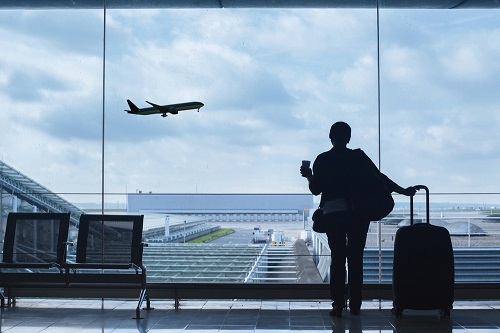
Bahrain is served by a single international airport — Bahrain International Airport (BAH) in Muharraq — which functions as the nation’s only point of entry and departure by air. Domestic flights do not exist here: as a compact island nation, Bahrain can be crossed by road in a matter of minutes, making internal air services entirely redundant. For expats, aviation means international travel, and on that front Bahrain delivers impressive connectivity through a steadily expanding network of full-service and budget airlines.
| Item | Details |
|---|---|
| Main airport | Bahrain International Airport (BAH/OBBI), Muharraq |
| Passenger capacity | 14 million passengers per year (as of 2021, following new terminal opening) |
| Passengers handled | 9.74 million in 2025 (record high, up 4.2% on 2024) |
| International destinations served | 74 destinations across 6 continents (as of 2025) |
| Airlines operating from BAH | 39 airlines (as of 2025) |
| Domestic flights | None — Bahrain has no domestic air network |
| National carrier | Gulf Air (flag carrier of the Kingdom of Bahrain) |
| Airport to Manama city centre | Approximately 20 minutes by taxi, 30 minutes by bus |
What is the standard of domestic air travel in Bahrain like, and which routes are served?
Anyone looking into domestic aviation in Bahrain will quickly find the same answer: it does not exist. There are no internal flights operating within Bahrain, and this is not the result of any shortcoming in infrastructure or planning — it is simply a consequence of the country’s geography. Bahrain is the Persian Gulf’s smallest nation and the only island state in the Middle East.
In contrast to sprawling countries like Australia, the United States, or India — where aircraft are essential for bridging vast distances between cities — Bahrain’s entire territory can be crossed by road in less than an hour. The Kingdom’s 33 islands are connected by causeways, and Manama, the capital, is reachable from essentially any part of the country with just a brief drive. Road transport meets the everyday needs of all residents, rendering a domestic aviation network both impractical and superfluous.
Expats relocating to Bahrain should therefore set aside any expectation of using flights for internal travel. Every aviation service based at the airport is international, and the entire facility is oriented toward linking Bahrain with destinations across the region and the globe. For those arriving from countries with well-developed domestic aviation sectors, this requires a shift in thinking — though in reality, Bahrain’s small footprint makes it a non-issue when it comes to getting around day to day.
Which airlines operate in Bahrain, and are any low-cost carriers available?
Gulf Air is Bahrain’s national flag carrier and occupies the dominant position at Bahrain International Airport by a considerable margin. The airline accounts for roughly 499 scheduled weekly departures — approximately 15 times the number operated by the second-largest carrier at the airport, flydubai. Gulf Air provides direct services from Bahrain to 48 cities, with its most frequently operated routes running to Dubai, Najaf, Riyadh, Doha, and Dammam.
In 2025, Bahrain Airport extended its reach to 74 destinations spanning six continents through 39 operating airlines. Gulf Air played a central role in this growth, adding a second London service — this time to Gatwick, complementing its established Heathrow route — and inaugurating its first transatlantic service to New York’s John F. Kennedy International Airport. These additions position Gulf Air as a genuinely competitive option for passengers seeking long-haul travel.
A diverse mix of international and regional carriers rounds out the airline offering at BAH. Airlines with scheduled services from Bahrain include Air Arabia, Air Arabia Abu Dhabi, Air India Express, AirAsia X, British Airways, EgyptAir, Emirates, Ethiopian Airlines, Etihad, flydubai, flynas, IndiGo, Iraqi Airways, Jazeera, Kuwait Airways, Oman Air, Pegasus, PIA, Qatar Airways, Royal Jordanian, Saudia, SunExpress, and Turkish Airlines.
For expats mindful of travel costs, the presence of low-cost carriers (LCCs) at BAH is a welcome feature. Budget and hybrid operators including Air Arabia, flydubai, flynas, IndiGo, Jazeera Airways, and AirAsia X all fly from Bahrain and provide cheaper alternatives to full-service travel. Saudi LCC flynas has grown its BAH operations to 12 weekly flights and introduced Jeddah as a new destination, strengthening links between Bahrain and Saudi Arabia. With several LCCs competing on high-demand routes — especially to the UAE, Saudi Arabia, and other Gulf states — affordable fares are frequently available on the most popular short-haul corridors.
How do you book flights in Bahrain — what are the options and platforms available?
Booking flights from Bahrain is a straightforward process that mirrors the approach taken in most parts of the world. The most direct route is to purchase tickets through individual airline websites — Gulf Air’s official website, for example — where fares are often most competitive and bookings can be managed easily. For those who want to compare prices across different carriers simultaneously, well-known global platforms such as Google Flights, Kayak, Skyscanner, and Booking.com all cover BAH routes and are widely used by residents.
Regional online travel agencies including Almosafer and Wego are popular throughout the Gulf and offer solid coverage of Bahrain’s routes, including services operated by regional carriers that may receive less prominence on platforms designed primarily for Western markets. These tools are especially handy when planning journeys with connections through major Gulf hubs like Dubai, Abu Dhabi, or Doha.
Traditional travel agencies remain active in Bahrain and continue to attract certain expats, particularly those arranging complex multi-leg itineraries or group bookings. For simple point-to-point trips, however, online platforms generally deliver faster results and more transparent pricing comparisons. The majority of airlines serving BAH also offer mobile apps through which passengers can book tickets and handle their reservations.
Because Bahrain is a sought-after short-break and transit destination within the region, last-minute seat availability on many routes — especially to nearby Gulf cities — is often reasonable. That said, for high-demand travel windows such as Eid holidays, the Ramadan period, and the Bahrain Grand Prix (typically held in March), early booking is highly advisable. Fares can climb steeply and popular routes can sell out entirely during these periods.
What do flights typically cost from Bahrain, and what should expats budget for?
The cost of flying from Bahrain varies widely based on the destination, carrier, cabin class, and how far ahead of travel the ticket is purchased. On short regional routes — such as those to Dubai, Riyadh, Kuwait, or Doha — budget carriers can offer highly affordable fares when booked in advance. These one-hour journeys can cost as little as BHD 20–50 one-way with low-cost operators (as of 2025), though prices fluctuate and checking airline websites directly is always advisable for current figures.
On medium-haul corridors to South and Southeast Asia — destinations like Mumbai, Kochi, Manila, or Kuala Lumpur — carriers such as Air India Express, IndiGo, and AirAsia X tend to price competitively, benefiting from the high passenger volumes these routes generate. For long-haul travel to Europe or North America, fares are naturally higher, though Gulf Air’s expanded network and competition from airlines like British Airways and Turkish Airlines ensure that passengers have meaningful choices across a range of price points.
Several factors shape what you will pay for flights out of Bahrain. Routes with limited competition — those served by just one carrier — typically command premium fares. Significant price increases occur during peak travel periods, particularly Eid al-Fitr, Eid al-Adha, the summer school holidays, and the Formula 1 Grand Prix season. When flying with LCCs, it is essential to account for baggage charges: a headline fare that appears attractively low may become far less competitive once checked luggage fees are added. Always calculate the total cost inclusive of bags before concluding that a budget airline is cheaper than a full-service alternative. For the most accurate and up-to-date pricing, consult airline websites or fare comparison platforms directly.
What is the main international airport in Bahrain, and what do expats need to know about it?
Bahrain International Airport (BAH) is the sole airport in the Kingdom and its primary connection to the outside world. Situated in Muharraq, just north of the capital Manama, the airport is roughly 20 minutes from Manama’s city centre by taxi and around 30 minutes by bus. Taxis are readily available at the arrivals area, and ride-hailing services such as Uber operate in Bahrain, offering a convenient and transparently priced alternative. Car rental facilities are also located within the terminal.
A brand-new terminal, representing an investment of $1.1 billion, opened on 28 January 2021. Spanning 210,000 square metres, the facility raised Bahrain International Airport’s annual capacity to 14 million passengers and 130,000 aircraft movements, with baggage-handling capacity of 4,700 bags per peak hour. The terminal encompasses check-in halls and desks, passport control booths, E-gates, security lanes, a 9,000 m² duty-free retail area, lounges, dining zones, 24 departure gates, and 7,000 new parking spaces.
BIA welcomed a record 9.74 million passengers in 2025, representing a 4.2% increase on the 9.35 million recorded in 2024, while total aircraft movements reached 97,740. The airport’s network now spans 74 destinations across six continents through 39 airline partners, covering both passenger and cargo services. New routes added in 2025 include London Gatwick, Nairobi, New York, Bucharest, and Ashgabat, further cementing Bahrain’s place on the global aviation map.
BIA has earned recognition as the World’s Best Airport for Baggage Delivery — a distinction with real practical value for expats, for whom delayed or missing luggage is one of the most frustrating aspects of frequent travel. The airport operates around the clock, supported by 24 self-check-in kiosks, 44 immigration counters, and 104 arrival-processing counters to keep passenger flows moving smoothly.
Dubai, Abu Dhabi, and Riyadh consistently rank as the three most popular departure destinations from Bahrain, underscoring the centrality of Gulf regional travel for both work and leisure. Expats heading back to Europe can take advantage of direct flights to London (Heathrow via Gulf Air and British Airways; Gatwick via Gulf Air), Paris, Frankfurt, Munich, and other major European cities. Those with ties to South or Southeast Asia benefit from strong direct connections to numerous Indian cities, Pakistan, the Philippines, Malaysia, and further afield.
The airport’s official website is bahrainairport.bh, providing live flight information, terminal maps, and ground transport guidance.
Are there any rules, restrictions, or practicalities at Bahrain’s airport that expats should know?
Because every flight departing Bahrain is international, all passengers must hold a valid passport — a national identity document alone is not an acceptable travel document when leaving the country. Expats should confirm that their passport remains valid throughout their trip and, where applicable, satisfies the minimum passport validity requirements imposed by their destination country, which is generally at least six months beyond the planned travel date.
As a general rule for check-in timing, passengers are advised to arrive at least three hours before their scheduled international departure, though specific airlines may publish their own requirements. The airport runs continuously on a 24/7 basis, with 44 immigration counters and 104 arrival-processing counters helping to manage passenger volumes efficiently even during peak periods. Expats should always verify check-in deadlines with their specific airline prior to travel.
Baggage allowances differ considerably between carriers and between fare types. Gulf Air, as the national carrier, typically builds checked luggage into its ticket prices, whereas budget operators such as Air Arabia and flydubai usually sell base fares with hand baggage only, charging separately for checked bags. Always confirm your allowance when booking to avoid surprise fees at the check-in desk.
Travellers arriving into Bahrain from abroad are subject to customs regulations. Standard restrictions cover items such as alcohol (permitted in limited quantities for non-Muslims), pork products, firearms, and undeclared large sums of currency. Some medications that are freely available or legal in other countries may be classified as controlled substances in Bahrain. Expats carrying prescription medicines should bring supporting documentation from their physician and, where uncertain, seek guidance from Bahrain’s Civil Aviation Affairs (CAA) or the relevant Ministry of Interior. Customs rules are subject to change, so verifying current requirements through official Bahraini government sources before travel is always prudent.
The Civil Aviation Affairs (CAA), operating under the Ministry of Transportation and Telecommunications, is the Kingdom of Bahrain’s aviation regulator. It oversees all aspects of civil aviation, including air transport regulation, airworthiness, navigation, and technical directives governing aircraft flying into or out of Bahrain. The CAA is the appropriate body to approach for authoritative and up-to-date regulatory guidance.
How does air travel connectivity in Bahrain affect day-to-day expat life?
For expats living in Bahrain, the country’s air links represent one of its most tangible practical advantages. A contemporary airport, a well-established national airline, and an ever-growing selection of international carriers make travelling home or hopping across the region both straightforward and, on many routes, reasonably priced.
Regional connectivity stands out in particular. A one-hour flight is all it takes to reach Dubai, Abu Dhabi, Riyadh, or Kuwait, making it entirely feasible for expats whose professional or personal networks extend across the Gulf Cooperation Council to travel regularly. Weekend escapes to Dubai, Muscat, or Doha are realistic rather than aspirational, and the competition between multiple carriers on core routes helps keep ticket prices within reach.
Expats maintaining close ties with South Asia, Southeast Asia, or East Africa will find that BAH’s route network has grown considerably in recent years. The five destinations recording the fastest growth in passenger numbers compared with 2024 were Singapore, Bengaluru, Abu Dhabi, Najaf, and Sharjah, illustrating rising demand across both regional and longer-haul markets. European travel is similarly well catered for through Gulf Air’s own route map and the services of carriers including British Airways and Turkish Airlines, whether for home visits, business trips, or onward connections.
For movement within Bahrain itself, air travel plays no role whatsoever. The Kingdom’s compact dimensions mean that every expat, regardless of where they live, is within easy driving or taxi distance of the airport — and equally close to virtually every other part of the country. There are no remote corners that aviation is needed to reach, as might be the case in vast nations like Canada or Indonesia. Road transport is the default for all internal movement, and Bahrain’s road network is generally of a good standard.
One consideration worth noting is that, with only a single airport serving the entire country, any disruption at BAH — whether caused by adverse weather, regional security developments, or operational difficulties — affects every departing and arriving passenger simultaneously, with no alternative airport to fall back on. Expats who travel regularly for work are well advised to build flexibility into their schedules for this reason.
What should expats know about travel insurance and passenger rights when flying in Bahrain?
Bahrain operates a formal passenger rights framework under its Civil Aviation Law. Rights pertaining to flight cancellations and delays are set out in the Implementing Regulations of the Civil Aviation Law, issued under Decision No. 21 of 2013. A dedicated chapter within the Aviation Implementing Regulations addresses passenger rights and applies to passengers both departing from and arriving into Bahrain, aircraft operators, Bahrain International Airport, and all other relevant parties.
In practical terms, this framework gives passengers flying from Bahrain legally enforceable entitlements when their flights are delayed, cancelled, or when they are denied boarding — broadly comparable in spirit to the EU’s Regulation 261/2004, though with distinct thresholds and compensation structures. Where the revised departure time cannot be confirmed, passengers are entitled to compensation of 15 Special Drawing Rights (SDR) per hour of delay, up to a maximum of 100 SDR. Additionally, where the new departure time is unknown, the airline must provide refreshments from the start of the first hour of delay, and a hot meal if the delay is expected to extend to three hours or more.
A particularly notable feature of Bahrain’s Aviation Implementing Regulations is that they extend compensation rights to passengers even in force majeure situations — a stronger level of protection than that offered by certain other international frameworks, under which extraordinary circumstances can entirely release airlines from their compensation obligations.
In the case of flight cancellation, termination of the contract entitles the passenger to a full refund of the total ticket value, encompassing any supplementary fees paid in completing the booking, such as charges for seat selection, checked baggage, and other add-ons.
Despite these statutory protections, comprehensive travel insurance remains strongly advisable for all expats travelling from or through Bahrain. Passenger rights regulations address defined circumstances and may require active effort to enforce, whereas a thorough travel insurance policy provides broader coverage — including medical emergencies overseas, trip interruption, lost or damaged luggage, and cancellation events that fall outside the parameters of airline liability. Expats should seek policies that cover both their country of residence in Bahrain and the destinations they plan to visit. For regulatory enquiries, the Civil Aviation Affairs at the Ministry of Transportation and Telecommunications is the designated authority.
Frequently asked questions: air travel in Bahrain
Are there any domestic flights within Bahrain?
No. Bahrain has no domestic air network. The country is entirely connected by road, and Bahrain International Airport in Muharraq operates international flights exclusively. Given the Kingdom’s small size, domestic aviation is unnecessary, and road or taxi transport is the standard means of getting around.
How far is Bahrain International Airport from central Manama?
The airport is roughly 20 minutes from central Manama by taxi and around 30 minutes by bus. Ride-hailing services such as Uber are also widely used and provide a convenient, clearly priced option. Car rental counters are located inside the terminal building.
Which airlines fly directly from Bahrain to Europe?
Gulf Air runs direct services to London Heathrow, London Gatwick, Paris, Frankfurt, Munich, and a number of other European destinations. British Airways operates direct flights between London Heathrow and Bahrain. Turkish Airlines connects Bahrain to Istanbul, with extensive onward options across Europe and beyond. Pegasus and SunExpress also operate seasonal European services. Always check individual airline websites for the most current schedules, as routes are updated regularly.
Is there a low-cost carrier option from Bahrain?
Yes. A number of budget and hybrid carriers serve Bahrain International Airport, including Air Arabia, flydubai, flynas, IndiGo, Jazeera Airways, and AirAsia X. These airlines offer more affordable fares across regional and medium-haul routes. Expats should verify the total cost of travel — including any checked baggage charges — before assuming a low-cost fare is cheaper than an equivalent full-service ticket.
What is the best way to travel from Bahrain to Saudi Arabia?
The King Fahd Causeway, which links Bahrain directly to Saudi Arabia’s Eastern Province, is the most commonly used route and typically takes between 30 and 60 minutes by car, depending on conditions at the border crossing. Regular flights also operate between Bahrain and Riyadh, Jeddah, and Dammam. For travellers heading to the Eastern Province, the causeway is usually the more practical choice; for Riyadh, Jeddah, or more distant Saudi cities, flying makes considerably more sense.
Do I need a passport for all flights from Bahrain, or is an ID sufficient?
Since every flight from Bahrain is an international departure, a valid passport is required for all journeys. A national identity card (CPR card) is not sufficient as a travel document. Make sure your passport covers the full duration of your travel and meets any minimum validity requirements imposed by your destination country — generally at least six months beyond the date of travel.
What are my rights if my flight from Bahrain is delayed or cancelled?
Bahrain’s Aviation Implementing Regulations include a dedicated chapter on passenger rights covering those departing from and arriving into Bahrain. If your flight is delayed and the new departure time is unknown, you are entitled to refreshments, meals depending on the duration of the delay, and financial compensation. If your flight is cancelled, you are entitled to a full refund of the ticket price including any supplementary fees paid. For the complete text of the regulations, refer to the Ministry of Transportation and Telecommunications (Civil Aviation Affairs).
Is travel insurance necessary for expats flying from Bahrain?
While Bahrain’s passenger rights regulations provide legal recourse in certain delay and cancellation scenarios, comprehensive travel insurance is still strongly recommended. A solid policy will cover medical emergencies while abroad, trip interruptions, lost or damaged baggage, and cancellation events that may not fall within the scope of airline liability. Expats should look for policies that extend coverage to both Bahrain as their country of residence and all intended travel destinations.