
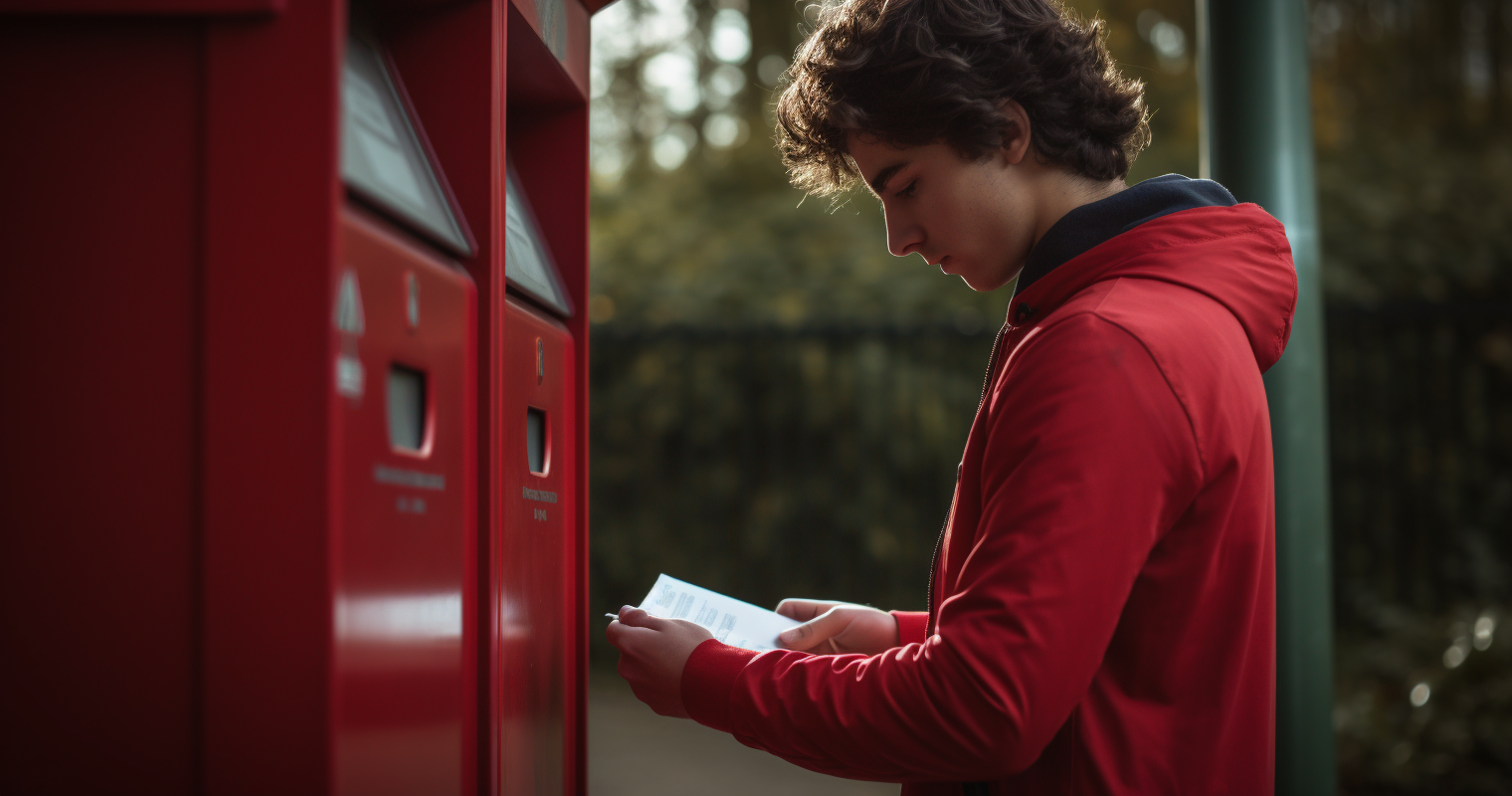
Belgium’s national postal operator is bpost (the Belgian Post Group), which is responsible for mail and parcel delivery to every address in the country under a government-backed universal service obligation. The market operates on a partially liberalised basis, with private courier companies working alongside bpost. Postcodes consist of four digits, delivery standards are generally strong, and post offices provide a broad range of financial and public services that go well beyond standard mail handling.
| Item | Details |
|---|---|
| National postal operator | bpost (Belgian Post Group) |
| Domestic letter delivery (standard) | 2–3 business days (as of 2025) |
| Domestic parcel delivery (bpack 24h) | Next business day (as of 2025) |
| International parcel transit time | 2–10 business days depending on destination (as of 2025) |
| Postcode format | 4 digits (e.g. 1000 for central Brussels) |
| Parcel locker network | Planned 2,500+ locations by end of 2025 |
| Regulator | BIPT (Belgian Institute for Postal Services and Telecommunications) |
What is the postal service in Belgium and who are the main providers?
Bpost, trading as the Belgian Post Group, is the company entrusted with mail delivery across Belgium. Its operations span postal and courier services, direct marketing, banking, insurance, and electronic solutions within a highly competitive European marketplace. The company’s headquarters are situated in Brussels at the Monnaie Center. In structural terms, bpost is broadly comparable to Deutsche Post in Germany or La Poste in France — a formerly state-controlled operator that has undergone partial privatisation while continuing to fulfil a public service mandate.
The second management contract designating bpost as the universal service provider runs from 1 January 2024 to 31 December 2028, obliging bpost to deliver universal postal services across the entire Kingdom of Belgium at a defined level of quality and at a reasonable price. The body responsible for overseeing this obligation is BIPT (the Belgian Institute for Postal Services and Telecommunications), which monitors delivery performance and approves tariff structures.
Other operators may also provide universal postal services, though companies wishing to handle items of correspondence — whether registered or not — within the universal service framework must first obtain a licence from BIPT. In practice, major private courier operators including DHL, FedEx, DPD, and UPS are all active in Belgium, primarily serving business customers and the e-commerce sector. Unlike fully state-monopolised postal systems, Belgian consumers and businesses genuinely benefit from a choice of carriers, particularly for parcel delivery.
The Belgian Post Group ranks among the largest civilian employers in Belgium. With a workforce exceeding 37,000 employees and a turnover of 4.3 billion euros in 2024, the parent group is a significant player in European logistics.
How fast and reliable is postal delivery in Belgium?
Domestic delivery timescales for bpost shipments vary considerably depending on the service selected. Standard parcel services such as bpack 24h typically achieve delivery within 1–2 business days. For ordinary letters and small packages sent via the standard mail service, customers can generally expect arrival within 2–3 business days. This compares reasonably well with first-class domestic letter speeds in comparable Western European countries, though it is slower than the same-day or overnight letter options available in some larger markets.
For international letters dispatched from Belgium, the indicative transit time to neighbouring countries is 2 to 3 working days. Within Belgium, an international letter or registered mail item is handled as priority mail until it crosses the border — though this priority status is not necessarily replicated by the postal service in the receiving country. International parcels generally take between 2 and 10 working days in transit, while express services can deliver a parcel within 5 days for urgent requirements.
For parcels heading further afield, neighbouring countries such as the Netherlands, France, Germany, and Luxembourg typically receive shipments within 2–4 business days; the remainder of Europe generally takes 3–7 business days; North America usually requires 5–10 business days via standard services; and destinations in other parts of the world can take anywhere from 7 to more than 20 business days.
All bpost deliveries — whether to a home address, a business, or a parcel locker — are fully trackable online. It is not unusual for one or more days to pass between tracking updates, particularly for international shipments moving between countries or awaiting customs clearance. On the whole, bpost’s domestic reliability is regarded as good, although delays are more common during busy periods such as the December holiday season or around national public holidays.
What additional services are available at post offices in Belgium?
Belgian post offices serve a far wider purpose than simply selling stamps or accepting parcels. Customers can access postal banking, international money transfers, and parcel services under one roof. Through postal banking, account holders can open savings accounts, make deposits and withdrawals, and settle bills. Money transfer services allow customers to send funds abroad or receive payments from other countries.
bpost delivers a comprehensive range of postal, courier, direct marketing, banking, insurance, and electronic services. Its banking division, bpost bank (now integrated into BNP Paribas Fortis), has long leveraged the post office network as a distribution channel. For many residents — especially those in smaller towns — the local post office effectively doubles as a bank branch. This arrangement closely mirrors models seen at the Post Office in the UK or Banque Postale in France, and it is particularly valuable for newly arrived expats who have not yet established a local bank account.
Beyond banking, bpost post offices handle stamp sales, registered and insured mail dispatch, parcel drop-off and collection, and the top-up of prepaid mobile phone cards. From 1 August 2025, a change to Belgium’s vehicle number plate cancellation procedure now allows people to return official number plates through bpost — no packaging is required, tracking is available online, and proof of drop-off is provided immediately. This development highlights bpost’s expanding role as a one-stop hub for public services. For the most current details of services offered at your nearest post office, visit the official bpost website at bpost.be.
The network encompasses post offices alongside post points (retail partners offering postal services), parcel points (retailers where parcels can be collected), and parcel lockers — with bpost represented at more than 3,500 locations in total, including over 650 post offices, more than 670 post points, more than 900 parcel points, and over 1,260 parcel locker installations.
Does the postal service deliver to every address in Belgium?
bpost is legally obliged to provide the universal postal service across the entire Kingdom of Belgium at a defined standard of quality and at a reasonable price. In practice, home delivery extends to virtually every residential address in the country, including rural and semi-rural locations. Belgium’s compact geography and well-developed transport infrastructure make universal coverage achievable in a way that poses challenges for larger countries with extensive remote regions.
The postal service reaches the vast majority of homes in Belgium, though a small number of particularly isolated properties may not receive direct doorstep delivery. In such situations, customers have the option of using a post office box or collecting their mail from the nearest post office. Expats settling in rural parts of the Ardennes or other sparsely populated areas are unlikely to encounter coverage difficulties, but it is sensible to confirm the delivery arrangements applicable to a new address before moving in.
bpost’s parcel locker rollout reached a record pace in 2024, with installations growing to more than 1,260 — an increase of 40% in a single year. Expansion is set to continue through 2025, with plans to add more than 1,200 new locker installations, effectively doubling the national total to 2,500. The newer locker units are larger and more efficiently configured, meaning the total number of individual doors will triple from approximately 50,000 to 150,000 by the end of 2025. Parcel lockers are accessible around the clock, a feature that Belgian customers clearly value — the proportion of people opting for parcel locker delivery grew by 44% in 2024, and this delivery method consistently achieves the highest customer satisfaction scores of all options bpost offers.
If nobody is at home when a parcel arrives, bpost will ordinarily leave a notification card and retain the item at a nearby pickup point or parcel locker. You can also use the My bpost app to redirect anticipated deliveries to a location of your choice before the delivery is even attempted.
How do you write a postal address in Belgium?
Belgian addresses follow a well-defined, standardised layout. The correct structure is as follows: Line 1 — the recipient’s full name; Line 2 — the street name followed by the house number and, where applicable, a box or bus number (format: Street Name N, or Street Name N bus X); Line 3 — the four-digit postal code followed by the locality name; Line 4 (optional, for international mail only) — the country name written in uppercase.
A typical Belgian address appears as follows:
Marie Dupont
Rue de la Loi 16
1000 Bruxelles
BELGIUM
A valid Belgian postal code is always placed before the municipality or section name — for example, “8500 Kortrijk”. Although it is a common error, bpost’s own guidelines explicitly advise against inserting a country code before the postal code — writing “B-8500” rather than “8500” is incorrect, and this position aligns with the Universal Postal Union’s S42 address standard. This differs from the conventions used in certain other countries where a country prefix is considered standard practice.
Addresses should be written in the official language of the relevant locality — Dutch in Flanders, French in Wallonia, and German in the Eastern Cantons. In bilingual Brussels, either French or Dutch is acceptable. No commas or additional punctuation should be inserted — omit commas between the street name and the number, and between the postal code and the locality name. For international mail arriving in Belgium, writing “BELGIUM” in capital letters on the final line is both sufficient and preferred.
In certain rural areas, streets lack a formal name and number. In these cases, the name of the village or hamlet should be written, followed by the nearest significant town or city, then the postcode and country.
How do you find or look up a postcode in Belgium?
Belgian postcodes are always four-digit numbers, and as a general rule the opening digit indicates the province. Codes beginning with 1, for instance, cover the Brussels-Capital Region and the Brabant provinces, while codes beginning with 2 correspond to the province of Antwerp, and so on across the country. Every city and town has its own designated postcode.
Postcodes can be looked up via the official bpost website, where users can search by entering a street address or the name of a city or town. The site also provides details of post office locations and their opening hours. The postcode lookup tool is available free of charge and without registration at bpost.be.
The bpost postcode lookup tool and the official Belgian postcode database can both be used to confirm the correct four-digit code and the official locality name for any specific street address. A range of third-party websites also provide postcode information for Belgium, which can be a useful resource for customers needing to identify codes or verify addresses for business or personal purposes.
It is important to note that several major cities — including Brussels, Antwerp, and Ghent — have multiple postcodes assigned to different districts or communes within their boundaries. Always check the precise postcode for the specific street you are addressing, rather than assuming that a single code applies across an entire city.
What should expats know about sending and receiving international mail and parcels in Belgium?
bpost provides a range of domestic and international parcel delivery services covering Belgium and more than 200 countries worldwide, including express options for individuals sending letters and parcels weighing up to 30 kg. Items can be dropped off at any post office, post point, or parcel locker location, or you can arrange a home collection. bpost offers home collections for both parcels and letters, with pick-ups carried out between 8 am and 5 pm Monday to Friday.
When dispatching parcels to destinations outside the European Union — for example, to friends or relatives in non-EU countries — you will need to complete a customs declaration form (CN22 or CN23, depending on the item’s value and weight). These forms declare the contents and value of the shipment and are required to comply with the customs regulations of the receiving country. Staff at bpost post offices can assist with completing these forms, and the process is broadly similar to sending internationally from other EU postal services. Always consult the bpost website or contact bpost directly for the latest guidance and any country-specific restrictions before dispatching an item abroad.
For incoming international parcels, EU customs rules govern the receipt of goods originating from outside the EU. Items sent as gifts or purchases from non-EU countries may attract import VAT and customs duties if their declared value exceeds the applicable threshold — consult the Belgian Federal Public Service Finance website or the Belgian Customs and Excise Administration for current thresholds, as these are subject to change. Since 2021, the EU has abolished the former €22 de minimis threshold for VAT on imported goods, meaning all commercial goods brought in from outside the EU are now liable for VAT irrespective of their value.
Actual transit times for international shipments can be influenced by factors such as customs processing, weather disruptions, public holidays, peak periods like Christmas, and the operational efficiency of the destination country’s postal network. If an incoming parcel is held at customs, bpost will ordinarily contact you with instructions on how to settle any duties before the item is released. The charges involved vary depending on the nature of the goods and their declared value — always verify the current rates with the relevant official authorities.
From December 2024, residential customers in Belgium were once again able to send parcels to the United States, following bpost’s adoption of a new procedure to meet updated US customs requirements. This serves as a timely reminder that international shipping regulations can shift rapidly — always check the current status on the bpost website before sending to any country.
Are there any known issues or practical tips for using the postal service in Belgium?
Although bpost generally delivers a dependable service, expats do come across certain recurring practical difficulties. Being aware of these ahead of time can help avoid unnecessary delays and frustration.
- Language of the address: Addresses should be written in the official language of the locality — Dutch in Flanders, French in Wallonia, and German in the Eastern Cantons. Using an alternative language version of a place name is typically understood, but employing the official local form of the municipality name associated with the postcode ensures the most efficient automated processing.
- Parcel delivery when you are not at home: The My bpost app lets you designate a preferred pickup point in advance, so you are not required to wait in for a delivery. Configuring your preferences in the app before you expect any parcels is strongly advised.
- Mail redirection: If you are moving to a new address within Belgium, or arriving from overseas, bpost offers a mail redirection service (doorstuurservice/renvoi postal) that forwards correspondence from a previous address to your new one. This is particularly valuable during the first few weeks following a move. Consult the bpost website for current fees and the application process.
- Parcel lockers for flexibility: Parcel lockers are accessible around the clock, making them an excellent choice for people with unpredictable schedules or those living in apartment buildings without a concierge. The network is growing at a significant pace across Belgium.
- Registered mail for important documents: For government correspondence, legal notices, or any item requiring confirmed proof of delivery, bpost’s registered mail service (aangetekend / recommandé) is the appropriate choice, as it provides a signed receipt on delivery along with a full tracking record. This is especially relevant when communicating with Belgian public authorities, many of which require or strongly prefer registered mail.
- Post office queues: Post offices in Belgium — particularly those in city centres and during the run-up to public holidays — can have lengthy queues. Preparing labels and completing payment online via the bpost website or app in advance, or making use of parcel lockers and post points, can substantially cut down waiting times.
- Customs charges on incoming parcels: If you receive a parcel from outside the EU, be ready for bpost to reach out requesting payment of import VAT or customs duties before the item is released for delivery. This process can extend the delivery timeline by several days, so allow for this when expecting time-sensitive goods from abroad.
- Language of bpost communications: bpost sends delivery notifications and other correspondence in Dutch, French, or German according to your region. The My bpost app and the bpost website are available in multiple languages including English, which makes managing deliveries considerably more convenient for newly arrived expats.
For the most up-to-date information on fees, available services, and any modifications to international shipping arrangements, always refer to the official bpost website at bpost.be or get in touch with bpost’s customer service team directly.
Frequently Asked Questions
What is the name of Belgium’s national postal operator?
bpost, also known as the Belgian Post Group, is the company responsible for delivering mail throughout Belgium. It operates under a government management contract as the designated universal service provider, with its current mandate running from 2024 to 2028 under the regulatory supervision of BIPT.
How long does standard domestic mail take to arrive in Belgium?
Letters and small packages sent via the standard mail service can generally expect delivery within 2–3 business days. For standard parcel services such as bpack 24h, delivery is typically achieved within 1–2 business days. As of 2025, these remain the standard timeframes in operation; check bpost.be for the latest service details.
Can I receive parcels at a parcel locker in Belgium?
Yes — parcel lockers are accessible at any hour of the day or night, and the proportion of customers opting for locker delivery grew by 44% in 2024. bpost plans to double its parcel locker network to 2,500 installations across Belgium by the end of 2025. You can designate a parcel locker as your preferred delivery location through the My bpost app.
What format should I use to write a Belgian address?
The correct format is: Line 1 — the recipient’s full name; Line 2 — the street name and house number (with box or bus number if applicable); Line 3 — the four-digit postal code followed by the locality name; Line 4 (for international mail) — the country name in uppercase. bpost’s guidelines specify that no country prefix should be placed before the postal code — writing “B-1000” instead of “1000” is incorrect, in accordance with Universal Postal Union address standards.
How do I look up a postcode in Belgium?
Postcodes can be searched on the official bpost website by entering a street address or the name of a town or city. Belgian postcodes are always four digits. In major cities such as Brussels, several different postcodes may cover different districts, so it is important to verify the exact code for the specific street rather than assuming a single code applies to the whole city.
Are there customs charges on parcels received from outside the EU?
Yes. Since 2021, all goods imported into Belgium — and the EU more broadly — from non-EU countries are subject to VAT regardless of their value. Customs duties may also apply depending on the nature and declared value of the goods. bpost will typically notify you if a parcel is held pending payment of these charges. Consult the Belgian Customs and Excise Administration website for current thresholds and rates, as these are subject to change.
What additional services are available at a bpost post office?
Belgian post offices offer postal banking services (including savings accounts, deposits, withdrawals, and bill payments), international money transfers, parcel delivery, registered mail, stamp sales, and a growing range of government-related administrative services — including vehicle number plate returns from August 2025. The bpost bank partnership with BNP Paribas Fortis means post offices also function as banking access points, which is particularly useful for newly arrived expats.
Does bpost deliver to rural addresses in Belgium?
bpost is legally required to provide universal postal services across the entire Kingdom of Belgium at a defined quality and at a reasonable price. Delivery reaches the overwhelming majority of homes in the country, though a small number of particularly remote properties may not receive doorstep delivery. In those cases, post office boxes and collection from the nearest post office or parcel point are the principal alternatives.