
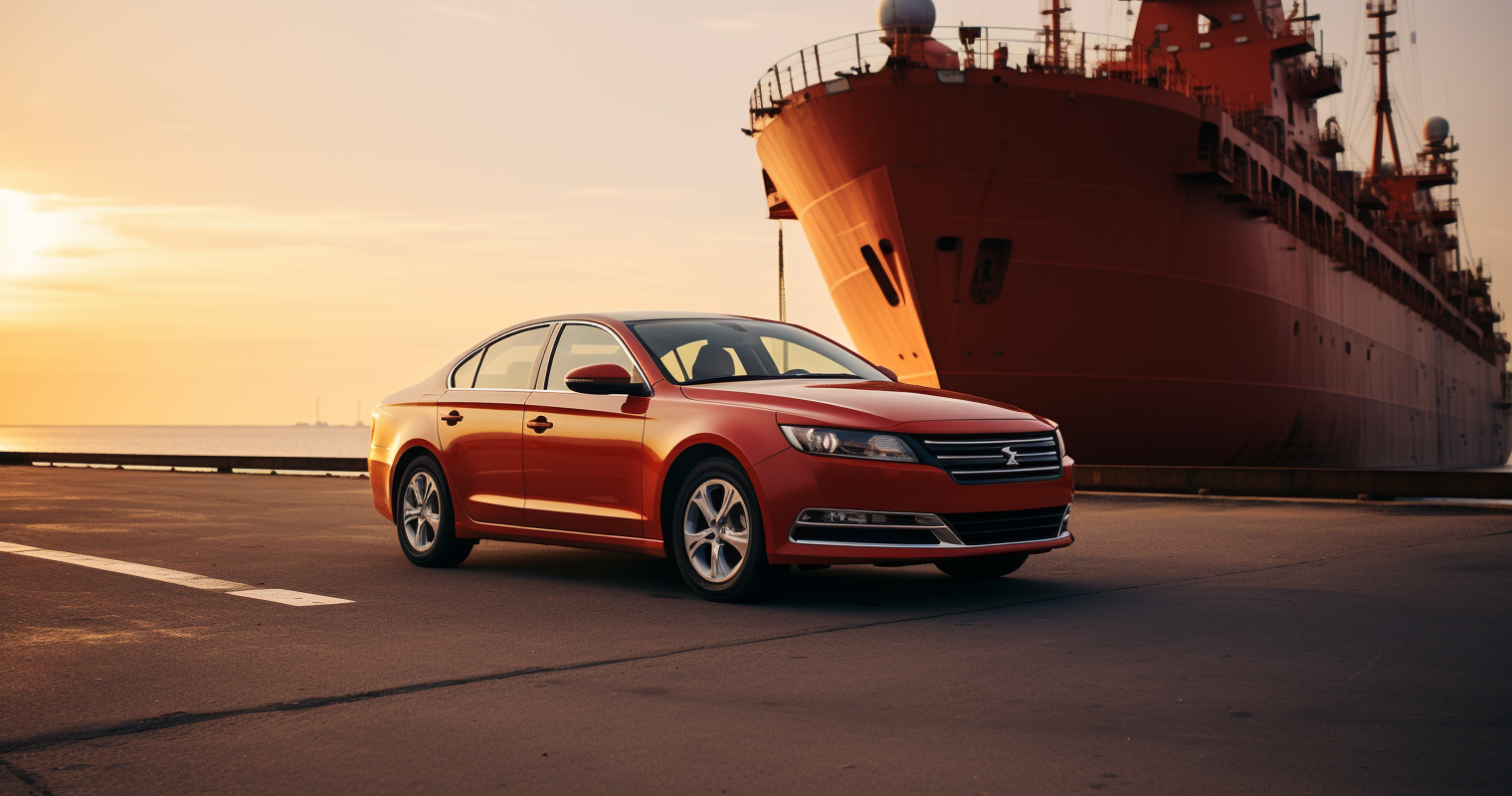
Purchasing or importing a vehicle in Belize is open to foreign nationals, though it involves notable costs and several administrative requirements. Import duties, General Sales Tax, and an Environmental Tax are all levied on imported vehicles, and the combined financial burden can be considerable. Belize follows right-hand traffic, welcomes both left- and right-hand drive vehicles, and mandates that every vehicle be registered with the Department of Transport before it may be driven on public roads.
| Item | Details |
|---|---|
| Import duty on vehicles (as of 2024) | Typically around 35% of CIF value; varies by engine size and vehicle type |
| General Sales Tax (GST) on imports (as of 2024) | 12.5%, applied on CIF value plus import duty |
| Environmental Tax (as of 2024) | 2% on imported goods; additional levies may apply to vehicles |
| Annual vehicle registration fee (as of 2024) | BZ$135–BZ$325 (~US$67–US$161), depending on vehicle weight |
| Foreign licence validity | Up to 3 months; local licence required after that |
| Vehicle age limit for import | Generally 5–10 years depending on vehicle type; verify with Belize Customs |
How do I buy a new car in Belize as a foreigner?
Foreign nationals wishing to purchase a car in Belize are broadly expected to hold a valid work permit or residency permit before doing so. Once those conditions are satisfied, the search for a vehicle can begin. There is no special “expat buyer” category to navigate — what matters is demonstrating a lawful basis for your presence in the country and a confirmed address.
Purchasing a brand-new car through a dealership is relatively uncomplicated. You visit the showroom, select your model, and the dealer draws up a sales contract. A deposit of around 10% of the purchase price is typically expected at this point. You will need to show a valid passport and evidence of your address in Belize.
Finance options for expats tend to be limited. Belizean banks generally want to see proof of income, a local credit history, and in many cases permanent residency before they will approve a vehicle loan. Cash purchases are therefore far more common among newcomers. If you do wish to explore financing, approach institutions such as Belize Bank or Atlantic Bank directly for their current lending criteria, since requirements are subject to change.
Once a purchase is agreed, the vehicle must be registered with the Department of Transport, which operates under the Motor Vehicles and Road Traffic Act, Chapter 230. The Department of Transport website publishes current registration requirements and fee schedules.
How do I buy a used car in Belize?
The second-hand vehicle market in Belize is served by a mix of private sellers and dealerships. Private listings appear in local newspapers and on online classifieds platforms. As with any used car transaction, thorough checks before signing anything are indispensable — verify the vehicle identification number (VIN), confirm that the seller is the registered owner, and establish that no unpaid road tax arrears or fines are attached to the vehicle.
Under the Motor Vehicles and Road Traffic Act (Chapter 230), every vehicle owner must register with the Department of Transport, obtaining a certificate of registration and displaying the prescribed identification mark (the registration plate) before the vehicle may be used on public roads. When buying second-hand, ask for a copy of the current registration certificate to confirm ownership and to check that no caveats are recorded against the vehicle.
Both the buyer and the seller are required to attend the relevant Traffic Department office together, each presenting valid identification such as a social security card or driver’s licence. Where the vehicle is registered in a different district, both plates must be handed in. This ensures the transfer of ownership is properly captured by the relevant authority before the new owner drives away.
For any vehicle manufactured after 2000, a copy of the Customs Entry documents must be produced when completing a transfer of ownership. It is therefore important to establish that these records exist before committing to a purchase. The Department of Transport’s BMVRALS portal enables vehicle record searches and can be used to confirm a vehicle’s registration status.
Can I import a vehicle into Belize, and how does the process work?
Unlike most Caribbean nations, Belize shares land borders with both Mexico and Guatemala, meaning a vehicle can be driven into the country rather than exclusively arriving by sea. Regardless of the entry route, clearing customs is the first significant hurdle.
The maximum permitted age for an imported vehicle depends on its type, with differing rules for passenger cars, commercial vehicles, and salvage vehicles. As a general guide, used vehicles are typically subject to age limits of between five and ten years, though the specifics can shift over time. It is vital to confirm the applicable restrictions directly with the Belize Customs and Excise Department before committing to an overseas purchase, as regulations can and do change.
The standard steps for permanently importing a vehicle into Belize are as follows:
- Assemble the necessary documents. You will need the original vehicle title or certificate of ownership, a bill of sale or commercial invoice clearly stating the purchase price, and an import permit from the Belize Ministry of Finance.
- Arrange transportation to Belize. Select a reputable shipping company or freight forwarder with experience handling vehicles destined for Belize. Choose between containerised shipping and roll-on/roll-off (RoRo) and coordinate delivery to a Belizean port, or plan your overland route.
- Complete customs clearance on arrival. When the vehicle reaches the Belize border, it must be cleared through customs. The original title is required, and engaging a licensed customs broker to manage the documentation is strongly advisable.
- Undergo customs valuation. A customs official will assign a value to the vehicle based on its book value and physical condition. An experienced broker may be in a position to negotiate the valuation if there are legitimate grounds to do so. Belize uses the CIF method, meaning duties and taxes are calculated on the combined value of the vehicle, shipping, and insurance.
- Pay import duties and taxes. The assessed value drives the calculation of import duty and General Sales Tax (GST). Once payment is made, the vehicle is cleared to enter Belize. Retain the customs duty payment receipt, as it will be required during registration.
- Arrange Belizean insurance before driving. Insurance must be in place before the vehicle is driven anywhere in Belize. Driving without insurance is a jailable offence, so obtaining a policy before leaving the customs area is essential.
- Register the vehicle. Proceed to the Department of Transport office in your district of residence to complete registration and obtain Belizean plates.
Belize does not offer a widely publicised “personal effects” or “removal goods” exemption for vehicles in the way that some countries — such as EU member states or Australia — provide duty concessions on household goods for relocating residents. Expats who qualify as retirees under the Qualified Retired Persons (QRP) programme should enquire with the Belize Tourism Board / Investment Promotion Service about whether any customs relief applies to their vehicle, since programme benefits can include duty exemptions. Always confirm the current position with the Customs and Excise Department directly, as exemptions may carry conditions and can change over time.
What are the costs involved in importing a car to Belize?
Importing a vehicle into Belize involves multiple layers of duty and tax that accumulate on top of one another. Careful financial planning before committing to a purchase is essential. All figures below are indicative as of 2024–2025 and should be confirmed with the Belize Customs and Excise Department before proceeding.
| Cost Component | Rate / Estimate | Notes |
|---|---|---|
| Import Duty | ~35% of CIF value | Varies by engine size; some vehicles attract up to 45% |
| General Sales Tax (GST) | 12.5% | Applied on CIF value plus import duty |
| Environmental Tax | 2%–5% | Levied on imported goods; vehicle-specific rates apply |
| Revenue Replacement Duty (RRD) | Varies | May apply to certain vehicle categories |
| Customs broker fee | Varies | Required for commercial-value imports |
| Shipping (from USA, as of 2024) | ~US$1,000–US$3,000 | Varies by origin port, vehicle size, and method (RoRo vs. container) |
| Port storage fees | Variable | Accrue if clearance is delayed |
| Annual registration fee | BZ$135–BZ$325 (~US$67–US$161) | Depends on vehicle weight |
As noted above, Belize applies the CIF method when calculating import charges — meaning all duties and taxes are computed on the aggregate of the vehicle’s declared value, freight costs, and insurance. Import duty typically runs at around 35% of this figure, with GST at 12.5% and an Environmental Tax of between 2% and 5% layered on top. These charges compound: a vehicle with a declared value of US$15,000 could attract total import-related taxes in excess of US$7,000 even before registration or compliance expenditure is considered.
Belize’s customs tariff is structured around the Harmonized Description and Coding System (HS) and draws on the Caribbean Community’s (CARICOM) Common External Tariff (CET). A 2% Environmental Tax applies to all goods imported into Belize. Compared with countries that maintain dedicated “removal goods” or “returning resident” duty-free allowances for vehicles, Belize’s import tax regime is relatively burdensome and provides limited relief — a factor worth weighing carefully when comparing relocation costs.
When all charges are tallied, the total cost of bringing a vehicle into Belize commonly falls between US$3,000 and US$9,000. Shipping companies frequently quote only for the freight leg and omit to mention other charges. Port storage fees, for instance, can accumulate quickly if customs paperwork is slow to clear. Always obtain written quotations that itemise every charge before authorising a shipment, and engage a customs broker to help you anticipate the full liability.
How do I register a vehicle in Belize?
First-time registration of a vehicle in Belize, and the formal transfer of ownership when a vehicle changes hands domestically, are both administered by the Department of Transport. For an imported vehicle, customs clearance and the purchase of insurance must be completed before registration can take place.
To register a vehicle, the owner must present valid insurance, valid identification (a passport or social security card), and the customs duty payment slip. A valid driver’s licence is also required. For a locally purchased used vehicle manufactured after 2000, the customs entry documents must additionally be produced.
Once insurance has been secured, registration is the final step. You must visit the Department of Transport office in your district of residence, bringing proof of insurance, your passport, the customs duty payment receipt, and your driver’s licence. The annual registration fee ranges from BZ$135 to BZ$325 (approximately US$67 to US$161), scaled according to the weight of the vehicle. These figures are indicative as of 2024 — current fees should be confirmed with the Department of Transport.
The Traffic Department in each municipality is responsible for issuing and renewing both driver’s licences and vehicle licences for individuals and vehicles registered in that area. It also carries out mandatory inspections of all vehicles requiring a licence under the law. Registrations in Belize City are handled by the Belize City Council’s Traffic Department. For all other districts, visit the local Department of Transport office — the national portal is available at bmvrals.gov.bz.
What insurance do I need to drive legally in Belize?
Valid Belizean car insurance is a prerequisite for driving any vehicle in Belize. Operating an uninsured vehicle carries the risk of imprisonment, making it imperative to arrange cover before moving the vehicle from a customs facility or dealership. Enforcement is more rigorous than in many comparable countries — police run daily roadside checkpoints specifically to check insurance documents.
RF&G Insurance and Atlantic Insurance Company are the two principal insurers operating in Belize. The market is small, which limits pricing competition but makes it straightforward to compare what is available. Two main levels of cover are on offer: fully comprehensive and third-party liability. Comprehensive cover, which protects both the policyholder and any third party in the event of a claim, is available for vehicles less than seven years old.
To take out a policy you will need the vehicle title, your home country driver’s licence, your passport, and evidence of your address in Belize. No formal scheme exists for recognising foreign no-claims history, though individual insurers may consider prior driving records — it is worth asking explicitly when requesting quotes.
If you are temporarily bringing a foreign-registered vehicle across the border into Belize, your existing policy from another country is unlikely to provide valid cover. Temporary insurance can be arranged at the border. Residents planning to stay longer term should take out a full Belizean policy. Before driving, always verify with your insurer that the policy satisfies the statutory minimum requirements.
What driving licence do I need in Belize as an expat?
A valid licence issued in your home country allows you to drive in Belize for up to three months. Beyond that point, a Belizean licence is required for continued lawful driving. This approach — granting a transitional period before requiring a local licence — mirrors the practice of many other countries, including most European Union member states, which give non-EU licence holders a defined window before they must exchange or retest.
In principle, an International Driving Permit (IDP) is required to drive in Belize. In day-to-day experience, this requirement is seldom enforced, but it remains on the books. Carrying an IDP alongside your national licence can prove valuable when dealing with authorities, particularly if your domestic licence is not in a script that is easily read locally.
Belize has no reciprocal licence exchange agreements with any other country. Foreign nationals cannot simply swap their existing licence for a Belizean one — a driving test is required. This sets Belize apart from jurisdictions that have negotiated mutual recognition arrangements, such as the reciprocal exchange scheme between the United Kingdom and Australia.
The process for obtaining a Belizean driver’s licence as a foreign national is as follows:
- Check your existing licence. Confirm that your home country licence is current and not expired. Carry the original with you whenever you drive in Belize.
- Complete the application form. Obtain the application form from any transport department office. It must be fully completed, signed, and stamped by a registered medical practitioner.
- Submit your documents. Bring the completed form, your passport, proof of a Belizean address (such as a utility bill), and your existing foreign licence to the Traffic Department in your district.
- Sit the required test or tests. Depending on current regulations, you may be required to pass a written examination, a practical driving test, or both.
- Pay the fee and collect your licence. The fee for first issue is BZ$70 and BZ$40 for renewal (based on available data). The licence is valid for one year. Verify current fees with the Department of Transport.
Expatriates in Belize are eligible only for Class A and Class D driver’s licences. Classes B, C, and E are restricted to Belizean residents and citizens. It is also worth noting that traffic in Belize moves on the right-hand side of the road.
The national licensing authority is the Department of Transport Belize (bmvrals.gov.bz). In Belize City, licences are also handled by the Traffic Department under the Belize City Council. Always consult the Department of Transport for the most up-to-date requirements, as rules may be revised.
How do I sell a car in Belize?
Selling a vehicle in Belize requires following a defined set of steps. The process begins with arranging a technical inspection of the car, which remains valid for one year. This roadworthiness certificate gives prospective buyers assurance about the vehicle’s condition and forms part of the documentation that must be handed over at the point of sale.
The general procedure for selling a vehicle in Belize is as follows:
- Arrange a technical inspection. Have the vehicle formally assessed and keep the resulting report — it is part of the required handover paperwork.
- Advertise the vehicle. List the car through local newspapers, online classified platforms, or via a dealership.
- Agree terms and sign a sales contract. The contract should record the full names and addresses of both parties, the vehicle’s details, the agreed sale price, and the payment terms.
- Complete the ownership transfer at the Traffic Department. Both seller and buyer must attend the relevant Traffic Department office in person, each with valid identification. Where the vehicle is registered in another district, both sets of plates must be surrendered.
- Hand over the required documentation. Provide the buyer with the certificate of registration and the current technical inspection report.
- Cancel the insurance policy. Once the sale is finalised, notify your insurer to cancel the policy so that you are not continuing to pay premiums on a vehicle you no longer own.
Until the change of ownership is formally recorded at the Traffic Department, the seller may retain legal liability for the vehicle — including in respect of outstanding fines or road tax obligations. It is therefore important to complete the transfer promptly and to keep documentary evidence of the transaction. Belize does not currently impose a capital gains tax on the private sale of vehicles, but tax legislation is subject to revision; a local tax adviser or the Belize Tax Service can confirm the latest position. The Ministry of Finance is the relevant government authority for tax matters.
Are there any ongoing costs or obligations for vehicle ownership in Belize?
Annual registration carries a fee of between BZ$135 and BZ$325 (approximately US$67 to US$161), scaled according to the weight of the vehicle (as of 2024 — confirm current rates with the Department of Transport). This is conceptually similar to the annual vehicle excise duty or road tax levied in many other countries, though the Belizean fee sits at the lower end of the international spectrum.
All vehicles that require a licence under Belizean law are subject to inspection by the relevant Traffic Department. A technical inspection must be completed annually, and the resulting certificate remains valid for one year. This periodic roadworthiness check serves the same essential function as the MOT test in the United Kingdom or the Contrôle Technique (CT) in France — a mandatory assessment that must be passed before a vehicle can continue to be licensed. Vehicles that do not meet the required standard must be brought up to compliance before a certificate can be granted.
Beyond registration and inspection, vehicle owners should also budget for:
- Insurance renewal: Annual third-party liability insurance is a legal requirement. Comprehensive cover is available for vehicles under seven years old.
- Fuel costs: Fuel in Belize is sold by the US gallon. Prices fluctuate, so check current rates locally.
- Maintenance and repairs: Parts availability can be restricted for less common makes, particularly European vehicles. Japanese and American brands tend to be well-supported by local workshops.
- Port and district levies: Some municipalities may apply additional local charges. Verify what applies with your district’s Traffic Department.
There is no emissions testing programme separate from the general technical inspection — unlike the periodic smog-check regimes found in certain US states or the emissions component of Australian roadworthy certificates. For the most current obligations, consult the Department of Transport and your local Traffic Department office.
Frequently asked questions
Can I buy a car in Belize without being a resident?
Foreign nationals looking to purchase a car in Belize are generally expected to hold a valid work permit or residency permit. Short-stay visitors are likely to encounter difficulties completing a purchase and registering the vehicle without evidence of residency. If your application for residency is still pending, seek advice from a local legal professional before going ahead.
How old can an imported vehicle be?
Permissible age limits vary according to vehicle type. As a general guide, used cars imported into Belize are typically subject to a maximum age of between five and ten years, depending on type and condition. Always check the current rules with the Belize Customs and Excise Department before purchasing a vehicle overseas for importation.
Is it cheaper to buy locally or import a vehicle into Belize?
For the majority of expats, purchasing a vehicle that is already registered in Belize is more straightforward and tends to be more economical than importing, given the cumulative weight of import duty (~35%), GST (12.5%), and Environmental Tax (2%–5%) as of 2024–2025. If you own a vehicle you particularly want to keep, or require a specialised model, importation may still make sense — work with a customs broker to produce accurate cost projections before making a decision.
Do I need a customs broker to import a vehicle?
Once your vehicle arrives at the Belize border, customs clearance must be completed. Using a licensed customs broker to manage the paperwork is strongly recommended, as the process involves numerous forms, a formal valuation, and payment of several distinct duties and taxes. A customs brokerage is formally required when the commercial value of imported goods exceeds BZ$200 (approximately US$100).
How long does vehicle registration take in Belize?
Provided all documents are in order — valid identification, proof of insurance, the customs duty payment slip, and any required customs entry documents — registration at the local Department of Transport or Traffic Department office is generally completed on the day of application or within a few days. Contact your local office before attending to confirm opening hours, noting that most offices close for an hour at midday. Timescales can vary between districts.
Can I drive in Belize with my foreign driving licence?
A valid home country licence permits you to drive in Belize for up to three months. After that, you must obtain a Belizean licence to continue driving lawfully. Because Belize has no licence exchange arrangements with any country, foreign nationals must pass a driving test to qualify for a local licence. Carrying an International Driving Permit alongside your national licence is recommended as a precaution.
What happens if I drive without insurance in Belize?
Driving without insurance in Belize is a criminal offence that can result in imprisonment. Police operate daily roadside checkpoints throughout the country to verify insurance documents. Make certain you hold valid Belizean insurance before driving any vehicle, whether it has been purchased locally or has just cleared customs after importation.
Are there any tax implications when I sell my car in Belize?
At present, Belize does not impose a capital gains tax on private vehicle sales, so the proceeds of selling a personal car are generally not subject to a specific capital gains charge. However, tax law can change, and the position for vehicles used partly or wholly for business purposes may differ. Always confirm the current tax treatment with a qualified local accountant or the Belize Ministry of Finance before completing a sale.