
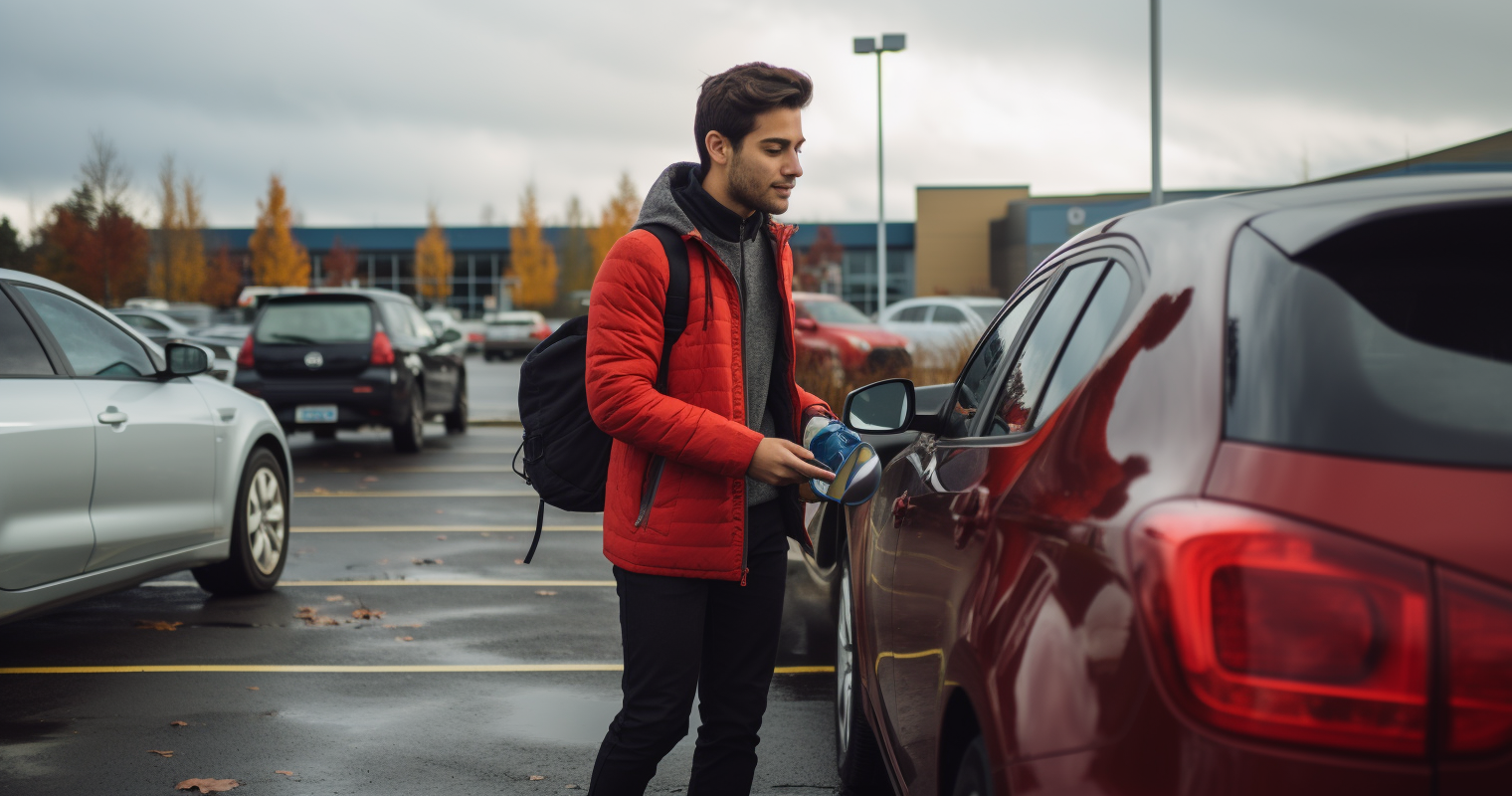
Hiring a car in Chile is a relatively uncomplicated experience for visitors and newly arrived residents, provided you familiarise yourself with the relevant rules before you take the wheel. Foreign tourists can generally drive using their home-country licence, a credit card is obligatory for the security deposit, and renters must typically be at least 21 to 25 years of age depending on the operator. Chile’s remarkable landscapes — stretching from the Atacama Desert in the north to the gravel tracks of Patagonia in the south — make your choice of vehicle and the level of insurance you carry genuinely important decisions.
| Item | Details |
|---|---|
| Minimum rental age (as of 2025) | 21 years with most companies; 23–25 for some categories. Young driver surcharges may apply. |
| Licence requirement | Valid home-country licence accepted for tourists. IDP recommended but not universally mandatory. |
| Mandatory insurance | SOAP (personal accident insurance) — included by law in every rental vehicle. |
| Credit card requirement | A major credit card in the renter’s name is required for the security deposit. |
| Speed limits (as of 2025) | 50 km/h urban; 100 km/h paved highways; 120 km/h on some motorways. |
| Alcohol limit (as of 2025) | 0.3 g per 1,000 g of blood — effectively a near-zero-tolerance policy. |
| Cross-border travel | Argentina: permitted with advance authorisation. Peru and Bolivia: not permitted by rental companies. |
What are the rules and requirements for renting a car in Chile?
The minimum age to hire a car in Chile is 21 with the majority of rental operators, though the exact threshold can differ depending on the vehicle category and the company’s own policies. Specialised or premium vehicles — particularly 4x4s intended for routes such as the Carretera Austral — often carry a higher minimum age requirement. Drivers who have not yet reached 23 years of age may find themselves restricted to specific tiers of insurance coverage, and applicable guarantees and deductible amounts may be set at double the standard rate. It is essential to review the precise conditions of your chosen company’s booking terms, as these thresholds are determined individually by each operator rather than through any single national regulation.
At the point of collection, you will be required to present a valid driving licence and either a passport or national ID document. Chilean nationals and foreign residents living in Chile must hold a valid Chilean licence, whereas tourists visiting from abroad may drive using a valid licence issued in their home country. The distinction between tourist and resident status has important practical consequences, which are discussed in more detail in the expats section later in this article.
A major credit card registered in the renter’s name is compulsory. When you collect the vehicle, the card must hold sufficient available funds to cover both the rental security deposit and the total cost of the hire, and must remain valid for a minimum of three months beyond the rental return date. Cash is not accepted as a substitute for a credit card deposit — only a recognised major card will be accepted. Cards typically accepted include Visa, Mastercard, American Express, and Diners Club.
Chile enforces a national seatbelt requirement, and using a mobile phone while driving is also prohibited by law. Under Chilean legislation, a driver is considered to be under the influence of alcohol when blood alcohol concentration reaches or exceeds 0.3 grams per thousand grams of blood at the time of an incident — a considerably stricter standard than those applied in many other countries. The national road safety body, CONASET (Comisión Nacional de Seguridad de Tránsito), publishes the current legal framework governing road users in Chile and serves as the most reliable official reference for traffic rules.
Turning right on a red light is not permitted in Chile unless road signage explicitly allows it — this differs from the default rules in a number of other countries. The give-way-to-the-right convention is largely not observed in Chile, so extra caution is required at intersections. Vehicles entering from side streets are generally controlled by a stop sign (“PARE”) or a yield priority sign rather than by right-of-way rules.
Which major car rental companies operate in Chile, and where can I find them?
The major international car hire brands with a presence in Chile include Hertz, Avis, Budget Rent A Car, Europcar, and Sixt. All of these maintain desks at Santiago’s Arturo Merino Benítez International Airport as well as at city-centre locations. Most also have branches in regional hubs including Punta Arenas (the gateway to Patagonia), Puerto Montt, Antofagasta, and Iquique.
- Hertz Chile — www.hertz.cl. One of the most extensive fleets in the country, with vehicles ranging from economy to luxury and extras such as GPS units, child seats, and roadside assistance.
- Avis Chile — www.avis.cl. A long-established operator in Chile with a broad branch network. Some local offices rent the same vehicles under a local brand name alongside the Avis banner.
- Budget Chile — www.budget.cl. Competitively priced across a wide range of vehicle classes, with a focus on economy options.
- Europcar Chile — www.europcar.cl. A popular choice among international visitors, with a strong airport presence throughout the country.
- Sixt Chile — www.sixt.cl. A solid selection spanning economy to premium categories.
- Chilean Rent-A-Car — www.chileanrentacar.cl. A well-regarded local operator founded in 1986, with comprehensive nationwide coverage.
- Econorent — A locally well-known company frequently cited for competitive rates. Worth comparing alongside the major international chains.
- LYS Rent a Car — www.lys.cl. A specialist local operator with particular expertise in Patagonia and remote-region rentals, including authorised cross-border trips to Argentina.
As a general rule, collecting a vehicle at the airport will cost more than picking one up from a branch in the city centre. If you need a car for a longer period, comparing rates from agencies located away from the terminal can yield meaningful savings. If you are travelling to Patagonia during the peak summer season (December to March), availability can be exhausted quickly, so booking several months ahead is strongly advisable.
How does car rental pricing work in Chile, and what should I watch out for?
The pricing structure for car hire in Chile follows a broadly similar model to that used in Europe and North America — a base daily rate to which a variety of optional extras are added. There are, however, several Chile-specific elements that are easy to miss if you are not aware of them in advance.
Collision Damage Waiver (CDW) and the excess (franquicia): Purchasing a CDW does not mean you face zero financial exposure. The deductible — known locally as the franquicia — is the amount you remain personally liable for, and it can easily exceed USD $1,500. Before signing anything, ask “¿Cuál es el monto de la franquicia?” (What is the deductible amount?) and insist on receiving the answer in writing. Unlike some markets where CDW eliminates your liability entirely, in Chile it places a ceiling on it rather than removing it.
Standard exclusions from CDW: A range of items are commonly excluded from CDW coverage, including windows, windscreens, tyres, accessories, optional equipment, the radio, underbody damage, upholstery damage, lost or broken ignition keys, and the loss of vehicle documents or licence plates. You remain financially responsible for these items even if you have purchased CDW.
Toll charges and the TAG system: As of 2025, all rental vehicles in Santiago are equipped with TAG electronic transponders, following VíasChile’s rollout of a fully barrier-free toll system on all roads entering and leaving the capital. There are no toll plazas on Santiago’s motorways — only overhead gantry readers — so driving without a functioning TAG transponder can attract substantial fines. Since rental companies are required to include transponders with all Santiago vehicles, you can use city tollways without any additional action on your part. Outside Santiago, however, many intercity toll booths do not accept card payments, so you should ensure you have an adequate supply of Chilean pesos in cash before travelling between cities.
Fuel policy: The majority of Chilean rental operators use a full-to-full fuel policy — you collect the car with a full tank and are expected to return it full. If you return the vehicle below the agreed level, you will be charged a top-up fee, typically at a rate above what you would pay at the pump. Confirm the fuel policy when you collect the vehicle and take a dated photograph of the fuel gauge as a record. In remote regions such as Patagonia, petrol stations can be widely spaced, so topping up whenever an opportunity arises is a sensible precaution.
One-way fees: Dropping the vehicle at a different location from where it was collected usually incurs a one-way surcharge. These fees vary considerably between companies and routes and can be substantial for long-distance drops — for example, collecting in Santiago and returning in Punta Arenas. Always confirm the surcharge in writing at the time of booking.
Additional driver charges: If more than one person will be driving, each additional driver must be formally added to the rental contract and must be present at pick-up with their own valid licence. A per-day fee typically applies for each additional driver registered.
For guidance on your rights in rental disputes, Chile’s national consumer protection agency SERNAC (Servicio Nacional del Consumidor) handles complaints about unfair commercial practices and provides guidance to consumers. Chile’s national tourism authority, SERNATUR, can also direct travellers towards accredited rental operators.
Do I need an International Driving Permit (IDP) to rent a car in Chile?
This is among the most frequently asked — and genuinely complicated — questions about driving in Chile. The answer turns on both the country that issued your licence and the policies of the specific rental company you choose.
According to the policies of many rental operators, an IDP is not a prerequisite for driving in Chile, and foreign tourists are entitled to drive using a valid licence from their country of origin. In practice, most major rental agencies will accept a photographic home-country licence without requiring an IDP. There are, however, meaningful exceptions worth understanding.
If your licence is not printed in a Latin script, or if it does not carry a stamped photograph, an IDP becomes necessary. It is important to remember that an IDP functions solely as a certified translation — you are required to carry your original licence alongside it at all times. An international driver’s licence is only required when your home country does not use Latin characters on its driving licences.
Even when an IDP is technically optional, travelling without one can complicate matters considerably if you are involved in an incident and need to deal with police officers, insurers, or border officials. An IDP is therefore strongly recommended as supplementary documentation, even where the rental company does not formally require it. If your licence does not include a photograph, carrying an IDP is effectively essential for practical purposes.
An IDP can only be issued in the country where your domestic driving licence was obtained, so it is not possible to arrange one after arriving in Chile. Applications must be submitted to your national automobile association or the relevant issuing authority before you depart. If you are planning a trip to Chile, the safest course of action is to contact the appropriate body in your home country and secure an IDP well ahead of travel.
Always confirm current requirements directly with your rental company before your journey, as policies differ between operators. The CONASET website is the authoritative Chilean government source for road traffic legislation. As of 2025, Chile’s alignment with the 1968 Vienna Convention on Road Traffic means that licences issued in signatory countries are generally recognised, but verifying your own country’s status before travelling remains the safest approach.
What types of roads and driving conditions should I be prepared for in Chile?
Road infrastructure in Chile is generally of a high standard — even unsealed dirt roads are regularly graded and maintained to a reasonable condition. Most highways are well-signed, and navigating the country with a map or GPS application is fairly straightforward. That said, Chile’s extraordinary length and geographic diversity mean that driving conditions can differ dramatically from one region to the next.
The Panamericana (Route 5): Route 5 is the longest road in Chile at 3,364 kilometres and forms part of the Pan-American Highway. It carries the highest concentration of concessioned toll sections in the country. The northern segment between La Serena and Arica narrows to a single carriageway in places, which can cause delays — particularly in areas where heavy freight trucks are travelling to and from mining operations in the Atacama region around Vallenar and Copiapó.
The Carretera Austral (Route 7): Stretching roughly 1,240 kilometres from Puerto Montt south to Villa O’Higgins through remote Patagonian countryside, the Carretera Austral is partially sealed but predominantly a gravel road with a number of narrow and challenging sections. While it ranks among the most breathtaking drives anywhere in the world, it demands a capable 4×4 rather than a standard passenger car. Many rental operators will not permit standard vehicles to be taken onto this route.
Patagonia generally: Road quality across Patagonia can be poor in places, which is why most operators recommend at minimum a mid-size SUV or pickup truck for the region. Night driving in Patagonia’s rural areas is best avoided — roads are poorly illuminated and wildlife crossings are common, making daytime travel significantly safer.
Speed limits and traffic regulations: The maximum permitted speed within towns and cities is 50 km/h. On paved open highways, the standard limit is 100 km/h, with some motorways allowing up to 120 km/h. Speed enforcement is active throughout the country, and law enforcement officers do not routinely overlook violations by visiting foreign drivers.
Tolls: Chile operates the most expensive toll road network in Latin America, with charges varying between Santiago’s urban routes and intercity highways. Carry Chilean pesos in cash for intercity travel, as numerous manual toll booths accept only cash payment.
Police checks: Roadside stops are a regular occurrence in Chile. The Carabineros (national police force) frequently establish checkpoints for routine document checks. Provided you are carrying all required documentation and have not been drinking, these encounters are entirely routine — however, you should never attempt to offer a bribe under any circumstances. Always keep the vehicle registration document provided by your rental company with you in the car, together with your driving licence and passport.
Gearbox: In Patagonia in particular, the bulk of available rental vehicles are manual (stick-shift) transmission. With some companies and on certain travel dates, there may simply be no automatic option on offer — so it is important to be comfortable driving a manual vehicle before making your booking.
What insurance do I need when renting a car in Chile?
The insurance framework for rental vehicles in Chile works differently from the systems that many visitors will be accustomed to at home, and gaining a clear understanding of each layer of cover before you reach the rental desk can save considerable expense and stress.
SOAP — the compulsory foundation: The only form of insurance that Chilean law requires every vehicle to carry is SOAP (Seguro Obligatorio de Accidentes Personales) — a mandatory personal accident policy. This compulsory cover applies to every vehicle on Chilean roads and addresses medical costs, disability, and death arising from a road accident, irrespective of which party was at fault. Rental companies are legally obliged to carry this policy on all their vehicles, so it is almost always included within the base rental price. It is, however, an extremely narrow form of protection — it does not cover any damage to the rental car itself, to other vehicles, or to property of any kind.
CDW — Collision Damage Waiver: CDW is technically a waiver rather than an insurance policy. By purchasing it, the rental company agrees to waive its right to charge you for the full cost of repairing or replacing the vehicle in the event of damage or theft. In the majority of cases, however, this waiver still carries a significant deductible (known as the deducible or franquicia) — the portion of any claim for which you remain liable before the waiver takes effect. Furthermore, certain categories of damage are routinely excluded from CDW — commonly windscreens, tyre damage, headlight damage, and damage to the vehicle’s underbody.
Third-party liability (DAT/SLI/TPL): This is one of the most important and most frequently misunderstood elements of rental car coverage. SOAP covers personal injuries to other people but does not extend to damage caused to their property. Third-party liability cover — also referred to as SLI or TPL — protects you against the cost of damage you cause to other people’s vehicles, buildings, or other property. Without it, you could face a substantial personal liability for repair costs if you are responsible for an accident.
Supplementary and optional covers: Most operators offer tiered insurance packages that can add roadside assistance, reduce the CDW deductible, or increase third-party liability limits. As one example, a reduced deductible cover (RDD) can bring the CDW excess down to around CLP 350,000, while a supplementary liability protection (SLP) upgrade can increase civil liability coverage from UF 500 to UF 1,000 (approximately CLP 38,500,000). These figures are as of 2024 and should be verified directly with your rental company at the time of booking.
Credit card insurance: A number of premium credit cards include rental car insurance among their cardholder benefits, but using this in Chile requires thorough pre-trip research. You must contact your card provider before travel and obtain written confirmation that the policy covers rentals specifically in Chile (some policies contain country-level exclusions), and whether the coverage is primary or secondary. Credit card policies generally address damage to the rental vehicle only — they typically do not include third-party liability, which is a significant gap given the potential exposure involved. Verify your card’s precise terms before relying on it.
Unpaved road exclusions: Some rental insurers do not cover pickup truck rentals, or include explicit exclusions for damage sustained on unsealed roads. If your itinerary includes gravel tracks, mountain routes, or the Carretera Austral — all common in Patagonia and the Atacama — read the exclusions section of your rental contract with great care before signing.
Are there any specific rules for expats or long-term residents renting cars in Chile?
The rules that apply when renting a car in Chile are meaningfully shaped by your immigration status — specifically, whether you are in the country as a tourist or have taken up residency.
Tourist status: While you remain in Chile on a tourist visa or tourist entry, you may drive legally using your foreign licence. Foreign licences are fully valid for the duration of your authorised tourist stay. Most visitors enter on a 90-day tourist card, throughout which their foreign licence is entirely sufficient without any need to exchange it.
Residents must obtain a Chilean licence: Once you become a resident of Chile, you are required to obtain a Chilean driving licence. Continuing to drive with only a foreign licence after acquiring resident status could invalidate your insurance coverage in the event of a serious accident. Applications for a Chilean licence must be submitted to the municipal office in the district where you are registered as a resident. No single nationally fixed grace period applies, but it is strongly advisable to start the application process as soon as you receive resident status.
Licence exchange agreements: Chile maintains bilateral driving licence exchange agreements with a limited number of countries, which may allow residents from those countries to convert their existing licence without having to sit the full Chilean driving examination. Japan was added to the list of countries covered by such an agreement as of 2025. For an up-to-date list of eligible countries — which is subject to periodic revision — check with your local Chilean consulate or the relevant municipal authority.
The Chilean licence process: Notable updates for 2025 include the introduction of a new online theory examination system (Nexteo) administered by CONASET, updated cost ranges of CLP 29,000–50,000, and clarified educational requirements for foreign nationals. The process requires completion of a theory exam, a medical and psychophysical assessment, and a practical driving test. Applications are lodged at the motor vehicle department within your home district’s municipal building. The official Chilean government portal ChileAtiende provides step-by-step guidance on the procedure in Spanish.
If you are a long-term resident who needs to rent a car before your Chilean licence has been issued, it is advisable to speak with the rental company directly about your situation, as individual operators may have their own policies regarding residents driving on foreign licences. Always verify current requirements with both the rental company and CONASET before proceeding.
Step-by-step: How to rent a car in Chile
- Choose a vehicle class suited to your route. A standard saloon or hatchback is perfectly adequate for Santiago and major urban areas. For Patagonia, the Carretera Austral, or the Atacama, reserve a 4×4 or high-clearance SUV well in advance.
- Compare companies and book early. Use the official websites of operators such as Hertz, Avis, Europcar, Sixt, Budget, Chilean Rent-A-Car, and local specialists like LYS. Early booking is particularly important during the Patagonian peak summer season from December to March.
- Gather required documents. You will need your valid home-country driving licence (held for at least one to two years), your passport or national ID, and a major credit card in your own name. If your licence uses a non-Latin script or does not carry a photograph, also arrange an IDP from your home country’s automobile association before you leave.
- Arrange your IDP if needed. If your licence is not printed in a Latin-script language or lacks a photograph, apply for an IDP through your national automobile association before departure — it cannot be issued once you are in Chile.
- Review your insurance options before arrival. Understand what SOAP, CDW, and third-party liability each cover, confirm whether your credit card offers any supplementary rental cover, and decide in advance what level of protection suits your needs.
- Inspect the vehicle thoroughly at pick-up. Walk around the car alongside a member of staff and confirm that all pre-existing damage is recorded on the rental agreement. Take date-stamped photographs and video of every panel, including the roof, tyres, and underside of the vehicle.
- Confirm toll and fuel arrangements. Check that the TAG transponder is included with the vehicle (obligatory in Santiago). Confirm the fuel policy — usually full-to-full — and whether any credit is pre-loaded on the TAG. Obtain the emergency assistance contact number from the rental agent before driving away.
- Carry all documents throughout your trip. Keep your licence, passport, rental agreement, and vehicle registration document in the car at all times. The Carabineros may conduct routine checks and will ask to see these documents.
- Return the car on time and in the agreed condition. Return the vehicle with the fuel level matching what was noted at collection, and photograph both the car and the fuel gauge at drop-off as a safeguard against any subsequent dispute.
Frequently asked questions about renting a car in Chile
What is the minimum age to rent a car in Chile?
The minimum age requirement at most car hire companies in Chile is 21, though this varies by operator and vehicle category. Some companies set a higher threshold of 23 or 25 for larger or premium vehicles, and young driver surcharges are commonly applied to renters under 25. Always review the terms of your specific reservation. As of 2025, no single nationally mandated minimum age exists — each rental company determines its own policy.
What happens if I have an accident in a rental car in Chile?
If you are involved in an accident, contact the Carabineros (Chilean police) immediately. You will need to provide the full name of any injured person, the vehicle’s licence plate number, and the date, time, and precise location of the incident. A police report is required before an insurance claim can be filed. You must also contact your rental company without delay using the emergency number on your rental agreement. Unless there is a safety reason to do so, do not move the vehicle until the police have attended and the incident is formally documented.
Can I drive a rental car from Chile into Argentina?
Travel across the border into Argentina is possible but must be arranged in advance. It is only permitted when you hold comprehensive collision and liability insurance that is valid in Argentina, along with a specific border crossing permit issued by the rental company. Unplanned trips across the border without these documents are not allowed. Request the Argentina permit explicitly at the time of booking and allow at least 72 hours for processing. No rental company authorises their vehicles to cross into Peru or Bolivia.
Do I need to carry cash for tolls in Chile?
Rental companies in Santiago are required to include TAG transponders with all vehicles, so Santiago’s city tollways are covered. Outside the capital, however, many intercity toll booths accept only cash, so you should ensure you have enough Chilean pesos on hand before leaving Santiago. A supply of small-denomination notes is useful for manual toll booths throughout the country.
Can I return a rental car with less fuel than when I collected it?
Most Chilean rental companies apply a full-to-full fuel policy, meaning you must return the vehicle with the same fuel level — typically a full tank — as when you collected it. Returning with less will result in a top-up charge levied by the rental company, usually at a rate above the standard pump price. Photographing the fuel gauge at both collection and return provides useful protection against any later dispute over fuel levels.
Is my credit card insurance enough to cover a car rental in Chile?
A number of premium credit cards include rental car insurance as a benefit, but relying on this in Chile requires careful verification before your trip. Contact your card provider and obtain written confirmation that cover explicitly applies to car rentals in Chile, as some policies contain country-specific exclusions. Credit card cover typically extends only to damage sustained by the rental vehicle itself — third-party liability, which can represent a significant financial exposure in Chile, is generally not included. Supplementary cover purchased from the rental company is strongly advisable regardless of your card’s benefits.
Do I need to exchange my foreign driving licence for a Chilean one if I move to Chile?
All residents of Chile are legally required to obtain a Chilean driving licence. Continuing to drive on a foreign licence once you have acquired resident status may render your insurance invalid in the event of a serious accident. The application process is handled at the municipal office of your home district and involves theory, medical, and practical assessments — unless your country of origin has a bilateral licence exchange agreement with Chile. Requirements differ by country, so consult your local Chilean consulate or municipal authority for details specific to your situation.
Is an automatic car available in Patagonia?
In Patagonia, manual transmission vehicles make up the large majority of the available rental fleet. For certain companies and travel dates, no automatic option may be available at all. If an automatic vehicle is essential for you, book as far in advance as possible and confirm availability in writing with your chosen company. Even with advance planning, automatic cars are considerably harder to find in remote southern regions than in Santiago or other major cities.
Are there any areas of Chile where certain vehicles are not allowed or not insured?
Rental insurance typically excludes damage arising from driving through water, travelling on roads that are unsuitable for normal transit, or driving in conditions that do not allow for safe passage. Certain insurers may also exclude pickup truck rentals or include exclusions for damage occurring on unsealed roads. If your plans involve gravel tracks, mountain routes, or the Carretera Austral, read the exclusions section of your rental contract with particular care before you sign.