

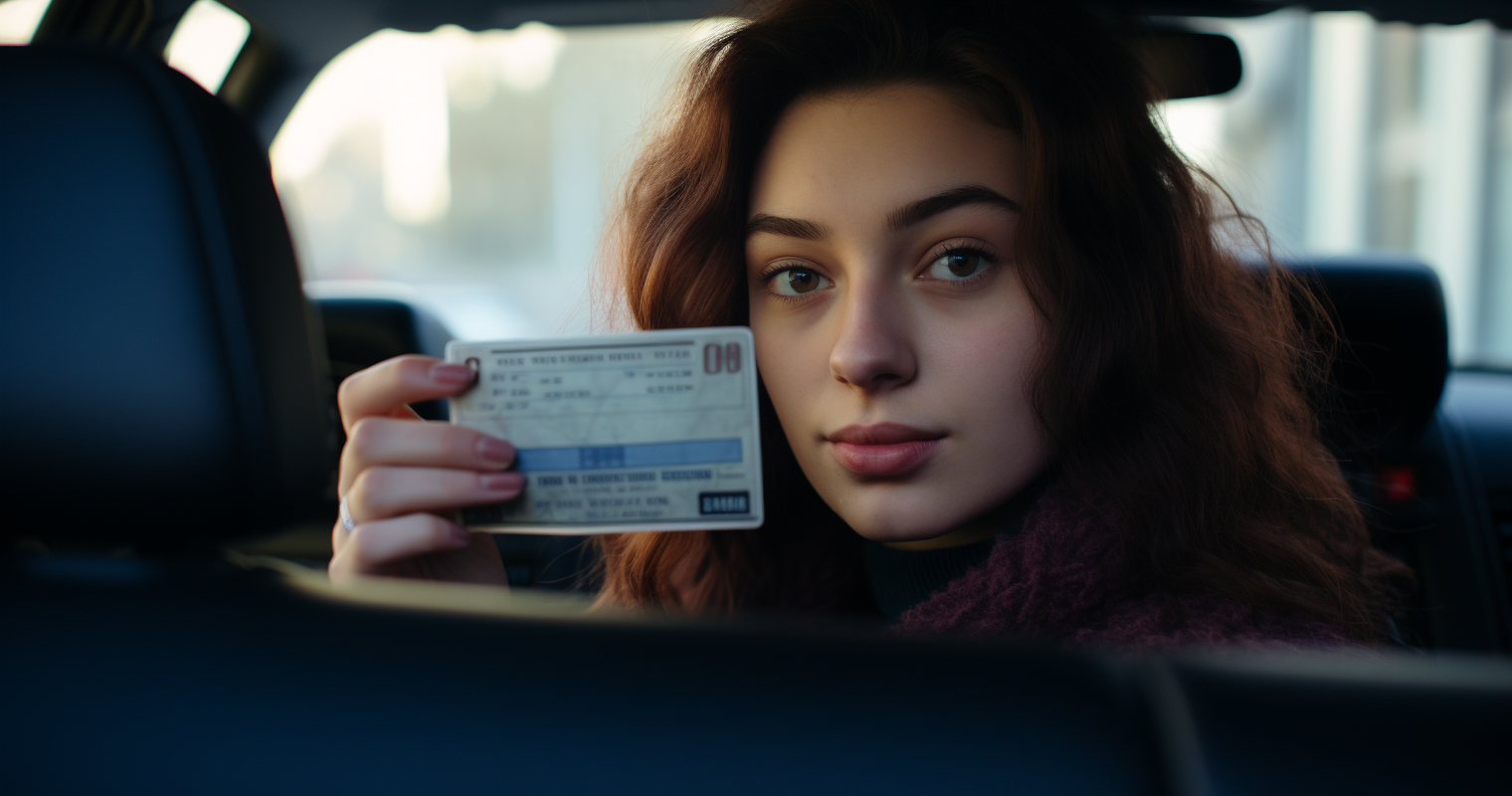
Foreign nationals who wish to drive in Denmark need to navigate a layered framework that depends on both their country of licence issue and their residency status in the country. Tourists and short-stay visitors can generally drive on a valid foreign licence for up to 180 days, whereas residents are obliged to exchange their licence — or acquire a new Danish one — within a set grace period. The rules governing exchanges, applicable fees, and whether tests are required differ considerably depending on where the original licence was obtained.
| Item | Details |
|---|---|
| Grace period for new residents (non-EU/EEA) | 180 days from date of establishing residence (as of 2025) |
| Grace period for EU/EEA licence holders | Licence valid until expiry; no mandatory exchange deadline |
| Licence exchange fee | DKK 370 (as of 2025) |
| Photo fee at Citizen Service | DKK 130 (as of 2025) |
| Category B (car) licence validity | 15 years |
| Theory test format | 25 multiple-choice questions; maximum 5 errors to pass |
| Key official authority | Færdselsstyrelsen (Danish Road Traffic Authority) — danishroadtrafficauthority.dk |
Can foreign nationals drive in Denmark on their home country licence, and for how long?
Whether you are permitted to drive on a foreign licence in Denmark depends primarily on whether you are a visitor passing through or a person who has established residency in the country. The extent to which you are required to exchange a foreign driving licence for a Danish one hinges on whether Denmark is your place of normal residence. Clarifying your status before taking the wheel is therefore essential.
Tourists visiting Denmark may generally drive on their valid foreign licence for up to 90 days from the date of entry, as long as the licence is recognised by Denmark. The licence must carry a photograph and be printed in Latin characters, or be accompanied by an International Driving Permit (IDP). This approach aligns with practice in most other European countries, where short holiday visits do not trigger any exchange obligation.
The situation changes once you become a resident. As soon as you establish residency in Denmark — typically marked by the allocation of a CPR number — you enter a 180-day window during which you must either exchange your foreign licence for a Danish one (if you are eligible) or commence the process of obtaining a new Danish licence. The CPR number is Denmark’s civil registration number, equivalent to a national insurance or social security number in other countries, and is assigned when you register your address with the local authorities.
If your licence was issued by an EU or EEA country (which includes Iceland, Norway and Liechtenstein), you are permitted to continue using it in Denmark until it reaches its expiry date. You may also exchange it for a Danish licence at any time without being required to sit any additional driving examination. This reflects the principle of mutual recognition applied across EU member states.
Regardless of your licence’s country of origin, you may only operate the category of vehicle for which that licence is valid. A standard car licence from another country does not authorise you to ride a motorcycle or drive a heavy goods vehicle in Denmark.
Danish regulations permit the use of foreign licences written in English or French using Latin letters. Licences not meeting this standard must be accompanied by a translation into Danish, English or French. Where this requirement is not satisfied, an international driving permit should be obtained prior to driving in Denmark.
Does Denmark have licence exchange agreements with other countries?
Denmark has concluded exchange agreements with a number of countries outside the EU and EEA. Nationals of these states who relocate to Denmark can swap their existing licence for a Danish one without having to sit written or practical driving examinations. That said, specific documentation and declarations are still required, so the process is not entirely straightforward.
Denmark divides countries into two broad groups for licence exchange purposes. The first group encompasses EU and EEA countries, the Faroe Islands, and a defined set of non-EU partners with full reciprocal arrangements. Licences issued in Australia (the Capital Territory only), Brazil, Japan, Taiwan, South Korea, Russia, Switzerland and Ukraine may all be exchanged for a Danish licence without any additional testing.
A second group covers a wider range of non-EU countries. Australia (excluding the Capital Territory), Bosnia and Herzegovina, Canada, Chile, the Isle of Man, Israel, New Zealand, North Macedonia, Serbia, Singapore and the USA are all included, but subject to an important additional requirement: the applicant must have driven within the past two years and must have held their foreign licence for more than two years following their 18th birthday. Applicants who do not satisfy these conditions will be required to complete both a theory and a practical driving test once their application has been reviewed.
The United Kingdom occupies a distinct position in this framework as a result of Brexit. Whether your UK licence can be exchanged under EU rules depends on when it was issued. Licences issued before the UK’s departure from the EU may be treated accordingly, but UK licences issued on or after 1 January 2021 — including those from Gibraltar, Guernsey and Jersey — are classified as third-country licences and fall within the non-EU exchange group.
It is important to note that exchange agreement provisions apply only to category B licences — the standard car driving category. For all other categories, such as motorcycles or heavy goods vehicles, an additional test is required regardless of whether your issuing country has an agreement with Denmark.
Expats from countries not featured in either group face the most demanding route. Their foreign licences are not eligible for exchange, which means they must complete the full Danish licensing process — including all theory and practical elements — irrespective of their experience or the validity of their original licence. Always verify the current list of exchange agreements with Færdselsstyrelsen (the Danish Road Traffic Authority), as this list is subject to change.
How do you exchange or convert a foreign driving licence in Denmark?
Licence exchanges in Denmark are administered at the local level, through the Borgerservice (Citizens’ Service) office of your municipality. Rather than being managed by a single national body, the exchange process is distributed across Denmark’s 98 municipalities, so your first task is to identify your nearest Borgerservice office. The steps below apply to applicants who are entitled to exchange their licence without sitting a full driving test.
- Check your eligibility. Establish which group your issuing country belongs to by consulting the Danish Road Traffic Authority’s guidance or the interactive tool available on the City of Copenhagen’s international residents page. Requirements differ by country of issue and, in certain cases, by the licence category you hold.
- Gather your documents. You will need to present your existing foreign licence, your passport and a passport photograph at the time of submission. Your Danish residence permit is also required. You will additionally need to provide a medical declaration from your GP and a signed declaration confirming that your licence has not been revoked or disqualified in the preceding five years. Your licence must not be subject to any restrictions or special conditions.
- Obtain a medical certificate if required. A medical certificate from your own doctor is necessary if your licence was issued outside the Faroe Islands, Greenland or an EU/EEA country. This must be submitted in a sealed envelope, still unopened when you attend your appointment. The certificate must have been issued within the past six months and may cost up to DKK 500. Confirm the current cost with your GP or consult official sources.
- Arrange a translation where necessary. If your licence is not printed in the Latin alphabet, you must supply a translation into Danish, English or French. This translation must be produced by a public authority in the country where the licence was issued, or by that country’s embassy or consulate in Denmark.
- Book an appointment at Borgerservice. Your completed application must be submitted in person at your local municipal Borgerservice office. Visit your municipality’s website to find the relevant office and confirm whether an advance appointment is required.
- Attend your appointment and submit your licence. Upon attending, your application will be forwarded by Borgerservice to the Danish Road Traffic Authority (Færdselsstyrelsen) for processing. If your foreign licence is still valid or expired fewer than three years ago, you may be issued a temporary Danish licence valid across the Scandinavian countries while your application is under review.
- Wait for processing and collect your new licence. The time required to receive your Danish licence can vary considerably, as the police must verify the authenticity of your original licence. The process may take anywhere from a few weeks to several months. Submitting your application promptly within your grace period is strongly advisable.
An exchange fee of DKK 370 (as of 2025) applies. If you do not bring your own photograph, a photo can be taken at Citizen Service for DKK 130 (as of 2025). Always verify the most up-to-date fees at the official Færdselsstyrelsen website, as charges may be revised.
When your foreign licence is surrendered as part of the exchange, it is retained by the authorities. If you subsequently move back to the country where the licence was originally issued, you may apply in writing to the Danish Road Traffic Authority to have it returned.
While the overall process resembles licence exchange procedures in countries such as France or Germany — where a local authority visit and document submission are also required — Denmark’s tiered country groupings and the police verification step make it difficult to predict exact processing times with confidence.
How do you apply for a driving licence in Denmark from scratch?
For anyone who cannot exchange an existing licence, or who is learning to drive for the first time, obtaining a Danish driving licence is a thorough, structured and, by international standards, relatively costly undertaking. Denmark’s training system is built around mandatory stages that must be completed in sequence — a requirement that applies even to experienced foreign drivers whose home country has no exchange agreement with Denmark.
If you have never previously held a driving licence, or if you wish to add a new category to an existing one, you must complete a course of lessons with an approved driving instructor for the relevant vehicle category. Both a theory test and a practical driving test must be passed. Normal residency in Denmark is also a prerequisite for obtaining a licence.
Theory instruction covers Danish traffic regulations, road signs, hazard perception, defensive driving principles and environmental awareness. Practical training introduces progressively more demanding driving situations, from basic vehicle handling through to complex urban environments and motorway driving.
The theory test comprises 25 multiple-choice questions, with candidates permitted a maximum of 5 incorrect answers to achieve a pass. Before a licence can be issued, completion of a mandatory first aid course is also required. The theory examination is available in both Danish and English.
For those required to sit a control driving test (kontrollerende køreprøve) as part of a licence exchange from a country without an agreement, the process differs somewhat. According to the Danish Road Traffic Authority, this test includes both a theory and a practical component, but completion of a mandatory course of driving lessons is not required — unlike the full licensing route for new drivers. This is a significant distinction: experienced drivers from non-agreement countries must pass both elements but are not obliged to work through the entire curriculum of structured lessons beforehand.
The total cost of obtaining a full Danish licence from scratch varies depending on the driving school and the number of lessons required. Contact driving schools directly for current pricing, as fees are set independently by each private school and are subject to change. In general, the full cost — covering all lessons, tests and materials — is considerably higher than in many comparable countries, commonly running to several tens of thousands of Danish kroner. Consult individual schools and the Færdselsstyrelsen website for current test fees and a directory of approved schools.
Driving schools in Denmark are privately operated, and you are free to choose whichever school suits you. Most schools in larger cities provide instruction in Danish, and some also offer tuition in English — it is worth confirming available languages when making your initial enquiry.
How do you renew a driving licence in Denmark?
Danish driving licences are issued for a fixed period and must be renewed before their expiry date. The applicable validity period depends on the vehicle category the licence covers.
Category A (motorcycle) and category B (car) licences are valid for 15 years. Category C and D licences (covering lorries and buses respectively) and professional licences are valid for 5 years. In some circumstances — such as when a medical condition is noted — a licence may be issued with a shorter validity period than the standard term.
Renewal must always be carried out in person at a Borgerservice office. Unlike some countries where the entire renewal procedure can be completed online, Denmark requires applicants to attend in person, although you can prepare your application and make payment from home. When completing and submitting a digital application, payment may be made by Dankort or Visa/Dankort.
A current passport photograph and your expiring or expired licence are typically required at the time of your visit. Older drivers, particularly those holding commercial licence categories, may be subject to age-related medical requirements. The fee for renewing a licence for medical reasons is published on the Færdselsstyrelsen website (fstyr.dk). For standard category B renewals, the current fee can be confirmed at your local Borgerservice or via danishroadtrafficauthority.dk, as charges may change.
For expats who hold a Danish licence, the renewal procedure is identical to that followed by Danish citizens — residency status does not affect the process, provided you remain registered as normally resident in Denmark. If you relocate abroad before your licence expires, you will generally need to exchange your Danish licence in your new country of residence rather than renewing it in Denmark. Those moving to another Nordic country will typically be required to exchange their Danish licence for one issued by their new country of residence before the Danish licence lapses.
Is an International Driving Permit valid in Denmark?
An International Driving Permit (IDP) is a standardised translation of your national driving licence that enables you to drive in foreign countries. It must always be carried alongside your original national licence — it has no independent legal standing and cannot be used without the underlying licence it accompanies.
The IDP presents key information from your driving licence in multiple languages and was established through a series of United Nations Conventions on Road Traffic (1926, 1949 and 1968). It is currently recognised in more than 150 countries worldwide. Denmark, as a signatory to both the 1949 and 1968 Vienna Conventions, accepts IDPs issued under either framework.
The IDP is most relevant in Denmark for visitors and tourists whose national licence is not in a Latin-script language — for instance, licences printed in Arabic, Chinese, Japanese, Korean or Cyrillic. Danish rules permit foreign licences written in English or French using Latin characters; where a licence does not meet this standard, an accompanying translation or an IDP may be required before you are lawfully permitted to drive.
Although an IDP is valid for one year, holding one does not extend your entitlement to drive in Denmark beyond the applicable limits. The 180-day exchange window for new residents applies regardless of whether you hold an IDP. If you are residing in Denmark permanently or for an extended period, you are bound by Danish licensing law and must exchange or obtain a local licence within the required timeframe. The IDP must be obtained in your country of residence before you travel, as it cannot be issued abroad.
In summary, the IDP serves a practical purpose for tourists — particularly where a language barrier exists with the original licence — but it is not a substitute for complying with Denmark’s licence exchange requirements once you have taken up residency.
What are the penalties for driving licence offences in Denmark?
Denmark enforces its road traffic laws rigorously. Driving without a valid licence carries serious consequences, with penalties that can include substantial fines, vehicle confiscation for repeat offenders, and in extreme cases even a custodial sentence. Danish law requires drivers to carry their licence at all times while behind the wheel and to ensure it remains valid throughout.
Continuing to drive on a foreign licence after the permitted grace period has elapsed is unlawful and may expose you to fines. Beyond the legal penalties, there are significant practical risks: if you are involved in a road traffic accident while driving without lawful authorisation, your insurance policy may be invalidated, leaving you personally responsible for any damages that arise.
Denmark operates a penalty points system referred to as the klip system. A klip (point) is recorded on your licence if you are caught driving at more than 30 percent above the posted speed limit. Accumulating a sufficient number of klip within a specified period results in automatic licence suspension, a consequence that applies equally to Danish citizens and foreign nationals driving on a Danish licence.
Driving at more than 30 percent above the speed limit in a 130 km/h motorway zone can result in a conditional driving ban, as can driving at 60 percent or more over any limit, or exceeding 160 km/h on any road. A conditional ban does not mean the immediate loss of your licence, but requires you to pass a new theory and practical test in order to retain your driving privileges.
For offences specifically relating to licence status — such as failing to exchange a foreign licence within the required timeframe — fines are levied by the police. Exact penalty amounts vary according to the nature and circumstances of the offence. The Danish Road Traffic Authority or a qualified legal adviser can provide up-to-date information on current fine levels, which are periodically reviewed. The fundamental principle remains clear: driving without a valid licence in Denmark carries risks that are simply not worth taking.
Which government departments or agencies handle driving licences in Denmark?
A number of organisations play distinct roles in Denmark’s driving licence system. Understanding which body is responsible for each aspect of the process will help you direct your enquiries to the right place.
- Færdselsstyrelsen (Danish Road Traffic Authority) — The principal national authority for driving licences in Denmark. Færdselsstyrelsen establishes the rules for licence issuance, exchange and renewal, and is responsible for approving applications forwarded from municipal offices. Their official English-language website is danishroadtrafficauthority.dk. A dedicated page on foreign driving licences is available at danishroadtrafficauthority.dk/driving-license.
- Borgerservice (Citizens’ Service) — The municipal citizen service centre is where applications are submitted in person. You can find guidance on the documentation required for your appointment on the Danish Road Traffic Authority’s website. Denmark’s 98 municipalities each operate their own Borgerservice. Locate yours through your local municipality’s website or via lifeindenmark.borger.dk.
- Borger.dk / Life in Denmark — The Danish government’s official portal for residents, accessible in English at lifeindenmark.borger.dk. The platform provides useful information about application requirements and allows some parts of the process to be completed online. More detail on the application process is also available via the Danish citizens and residents’ platform Borger.dk.
- The Police (Politiet) — After your Borgerservice appointment, your application is forwarded to the police for approval. The police play a key role in authenticating foreign licences, particularly during the exchange process. You do not need to contact the police directly — this stage is managed by Borgerservice on your behalf.
- Nordic Co-operation / Info Norden — For those relocating between Nordic countries, the Nordic Co-operation information service at norden.org/en/info-norden/driving-licence-denmark provides a helpful summary of licence rules across the region.
Frequently asked questions
Can I drive in Denmark immediately after arriving on a non-EU licence?
Tourists and short-stay visitors may generally use a valid foreign licence for up to 90 days from the date of entry, provided the licence is recognised by Denmark and either printed in Latin characters or accompanied by an International Driving Permit. Once you register your address and receive a CPR number, the 180-day window within which you must exchange or obtain a Danish licence begins to run.
Do I need to retake my driving test in Denmark?
This depends on the country where your licence was issued. If your licence is from a country that has a full exchange agreement with Denmark, you can swap it for a Danish licence without sitting any written or practical examination. If your country of issue is not covered by an exchange agreement, you will need to pass both a theory and a practical driving test.
How long does it take to get a Danish driving licence via exchange?
Processing times can range from a few weeks to several months, as the police are required to verify the authenticity of your original licence. Variability in processing time depends on the country of origin and the specifics of each application. It is advisable to submit your application as early as possible within your grace period to avoid any gap in your authorisation to drive.
What documents do I need to exchange my foreign driving licence?
You will generally need your existing foreign driving licence, a valid passport, evidence of Danish residency (CPR registration or a residence permit), a passport photograph, a signed declaration confirming your licence has not been revoked in the past five years, and — for licences issued outside the EU/EEA — a medical certificate from your doctor dated within the last six months. If your licence is not printed in the Latin alphabet, a translation into Danish, English or French produced by a public authority or embassy in the issuing country is also required.
How much does it cost to exchange a foreign driving licence in Denmark?
The exchange fee is DKK 370 (as of 2025). If you do not supply your own photograph, one can be taken at the Citizen Service office for DKK 130 (as of 2025). There may be additional costs, such as the fee for a medical certificate. Always confirm the most current charges with your local Borgerservice or on the Færdselsstyrelsen website.
Can I drive in Denmark with a US, Canadian or Australian licence?
Yes, within the applicable grace period after registering as a resident. Once that period expires, you must exchange your licence. For Australia (excluding the Capital Territory), Canada and the USA, exchange is permitted under the non-EU agreement group, subject to the conditions that you have driven within the past two years and have held your foreign licence for more than two years since your 18th birthday. Where these conditions are met, no driving test is required for a category B exchange.
How long is a Danish category B driving licence valid for?
Category A (motorcycle) and category B (car) licences are valid for 15 years. Category C and D licences (covering lorries and buses) are valid for 5 years. A licence may be issued with a shorter validity period in certain circumstances, such as where a medical condition is recorded.
Is an IDP enough to drive in Denmark long-term?
No. While an IDP is a helpful document for visitors whose original licence is not in a Latin-script language, it does not extend your right to drive in Denmark once you become a resident. Danish licensing law requires you to exchange or obtain a local licence within the 180-day grace period, and this obligation applies regardless of whether you hold an IDP. The permit must also be obtained in your country of residence before you travel to Denmark.