
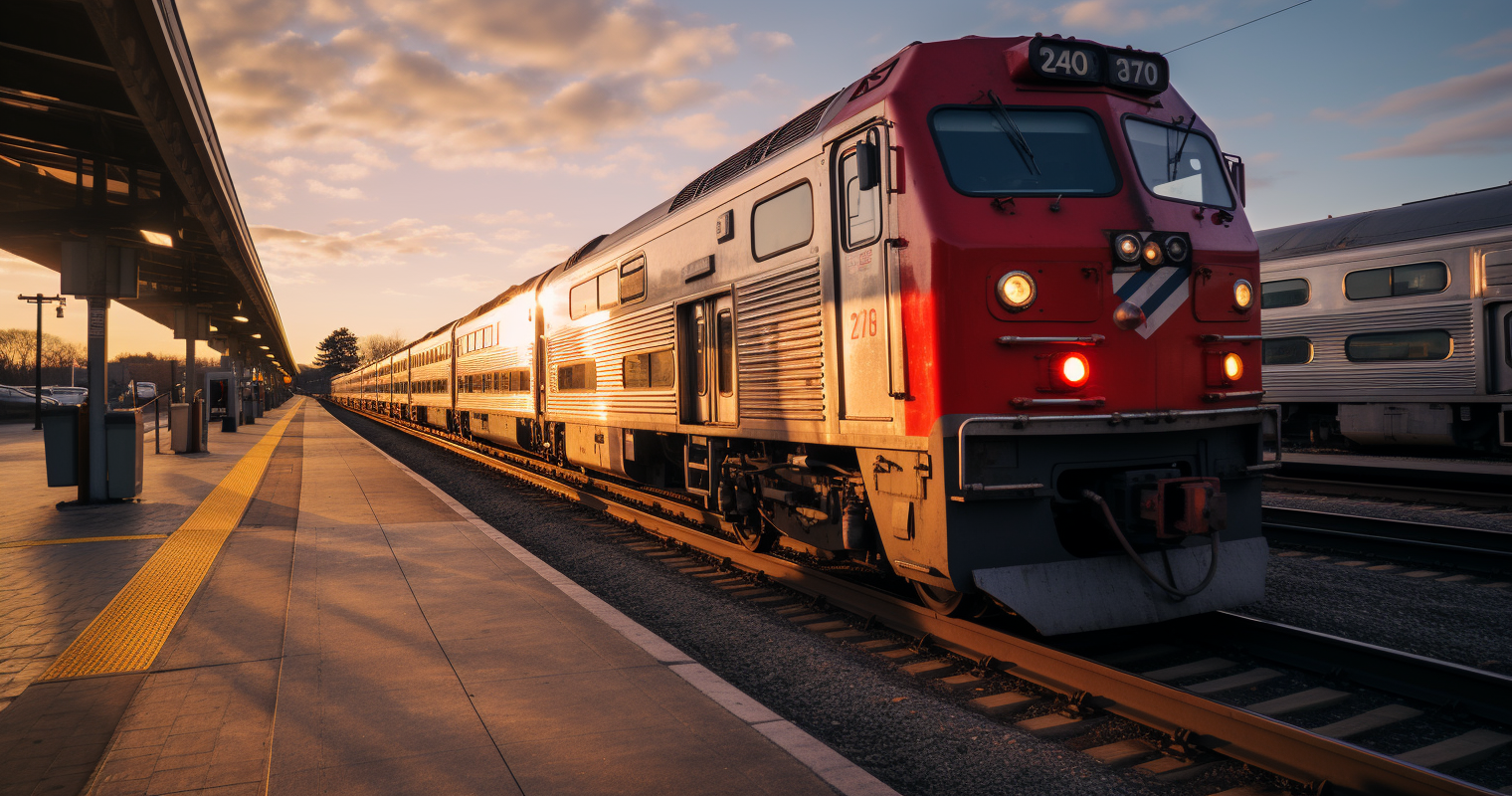
Estonia’s railway network is run entirely by the state-owned operator Elron and links the country’s principal cities and commuter corridors through a central hub at Tallinn’s Baltic Station. Though smaller in scale than the sprawling rail systems of major European nations, it benefits from contemporary rolling stock, reasonably priced fares, and an ambitious programme of expansion and electrification — all of which make it a genuinely useful choice for both daily commuters and intercity travellers.
| Item | Details |
|---|---|
| Main operator | Elron (AS Eesti Liinirongid) — state-owned |
| Network size | Approx. 1,200 km of railway lines; ~900 km in public use (as of 2025) |
| Classes available | Standard class and First Class |
| Ticket booking window | Tickets go on sale up to 10 days before departure |
| Tallinn–Tartu fare (approx.) | Around €10 standard class (check elron.ee for current prices) |
| Rail Baltica (new high-speed line) | Planned for operation from 2030 |
What is the overall standard of rail travel in Estonia?
AS Eesti Liinirongid, trading under the name Elron, is Estonia’s government-owned passenger rail operator. The country’s railway infrastructure extends to roughly 1,200 kilometres in total, of which approximately 900 kilometres are currently active for passenger services. While this footprint is far more compact than the dense rail networks of countries such as Germany, France, or Japan, the system covers Estonia’s key population centres effectively.
Elron runs intercity services out of Tallinn’s Baltic Station across several routes: Tallinn–Tartu–Valga, Tallinn–Tartu–Koidula, Tallinn–Narva, and Tallinn–Viljandi. The Tallinn commuter rail network is electrified and fans out both east and west from Baltic Station across a total corridor length of 132 km.
The overwhelming majority of trains in operation today are modern units; older rolling stock was largely retired by around 2020. Between 2024 and 2026, Elron is channelling a total of 146.8 million euros into expanding the fleet, with Škoda Group contracted to deliver 11 electric long-distance trains and 5 electric suburban trains. This represents the most significant upgrade to Estonian rail capacity since the network was overhauled in the 2010s.
Estonia has set an ambitious target of growing domestic rail passenger numbers from roughly 8 million today to 20 million by 2035, partly driven by a broader goal of cutting carbon emissions from the transport sector. The top operating speed of Elron’s trains is set to rise to 160 kilometres per hour, which will meaningfully shorten journey times on key routes. The Tallinn–Tartu trip currently takes around two hours, but once electrification and the new fleet are fully deployed, this is expected to fall to approximately 90 minutes.
A major infrastructure project — the Tallinn–Warsaw high-speed corridor known as Rail Baltica — is currently under construction, with an operational target of 2030. When complete, it will connect Estonia to the wider European standard-gauge network for the first time, fundamentally changing the possibilities for long-distance rail travel from the country.
For everyday use, the network works well for people living along its principal routes — especially those in Greater Tallinn and on the Tallinn–Tartu corridor. Residents of smaller towns or rural areas that fall outside the rail network will continue to rely primarily on bus services.
What classes of rail travel are available in Estonia, and what are the differences between them?
Estonian trains offer two classes of travel: standard and first class. The distinction between them comes down to comfort, amenities, and the question of seat allocation. Both classes are available on Elron’s intercity and longer-distance diesel services.
A standard class ticket is only valid on the specific date and train shown, and crucially, it does not come with a guaranteed seat. Passengers travelling on a standard class ticket may find themselves standing if the service is heavily loaded — something worth bearing in mind on busy routes or during peak commuting periods.
First class tickets, by contrast, include a numbered, pre-assigned seat. The seating environment in first class also tends to be slightly more spacious and quieter than standard class, which appeals to regular commuters on longer routes. It is important to note, however, that discounted fares are not available in first class — any concession entitlements you may have only apply to standard class tickets. Pets and bicycles are also restricted to standard class; neither is permitted in the first class section.
Season tickets are issued exclusively for standard class, but passengers who hold one can purchase an upgrade to first class directly from staff on board the train. This arrangement offers useful flexibility for regular travellers: you can hold a standard season pass and pay for a guaranteed seat only on the occasions when you need one.
Where can you find rail timetables and ticket prices in Estonia?
The definitive source for schedules and fare information is the official Elron website. Timetables, route details, and ticket prices are all accessible through a straightforward interface at elron.ee/en, which is available in both Estonian and English.
For ticketing within and around Tallinn — including zoned fares and integrated passes — the key platform is pilet.ee. This portal covers joint tickets combining Tallinn city transport and Elron train services in Harju County, making it particularly valuable for residents who combine multiple modes of transport on their daily commute.
As of autumn 2025, Latvian Railways operates up to three daily train services linking Valga in southern Estonia with Riga, one of which continues onward to Vilnius in Lithuania. Passengers can make the full Tallinn–Riga–Vilnius journey on a single ticket, changing trains once at Valga, with the timetables designed to facilitate this connection. For the Latvian and Lithuanian portions of any international journey, the relevant booking platform is LTG Link at ltglink.lt.
One feature of the Estonian system that differs from many Western European rail networks is the booking window: ticket sales open only 10 days before departure. There is no equivalent of the months-in-advance cheap advance fares found in Germany or Sweden. Prices are relatively consistent, and the main savings come from choosing your purchase channel rather than booking early. Always consult the official Elron site or pilet.ee for the latest fares before travelling, as prices are subject to change.
How do you buy rail tickets in Estonia, and can you book in advance?
Elron provides multiple purchasing channels, so whether you’re planning ahead or buying at the last moment, there are convenient options available. The following is a step-by-step guide to each method:
- Online at elron.ee: Head to elron.ee/en, enter your journey details, choose your class and ticket type, and pay by bank card or credit card. Your ticket can be delivered to an email address or loaded directly onto your Elron farecard. E-tickets are fully accepted on board.
- At the on-board ticket machine: Machines inside the trains sell standard class single tickets only, accepting payment by bank card or Elron farecard. This option carries a 10% discount over purchasing from on-board staff or at a ticket office, and is handy for unplanned trips.
- From on-board staff: Train staff can sell you single tickets, 24-hour tickets, 30-day tickets, and farecards. Payment is accepted by bank card or cash.
- At station ticket offices: Staffed ticket offices operate at Tallinn Baltic Station (Balti Jaam), open Monday–Sunday 07:30–21:30, and at Tartu station, open Monday–Sunday 07:00–19:45.
- Via the pilet.ee portal: For zoned travel around Tallinn and for integrated tickets that combine Elron trains with Tallinn city transport services, use pilet.ee. This requires an Ühiskaart (Public Transport Smartcard) onto which e-tickets are loaded.
Tickets become available for purchase 10 days before the date of travel. Standard class tickets are train-specific but do not include an assigned seat, while first class tickets are equally train-specific but do include a reserved numbered seat.
If your plans change, single tickets can be refunded provided you do so more than 60 minutes before the scheduled departure. Season passes can be refunded by contacting Elron’s support team by email.
What types of rail tickets are available in Estonia, and are there discount schemes?
Estonia’s rail ticketing offer is relatively uncomplicated. The principal categories are single tickets, monthly season passes, day tickets, and family tickets.
For infrequent travellers, a single ticket is the simplest approach. Fares on routes such as Tallinn–Narva are available for around €9.95, while the Tallinn–Tartu journey costs approximately €10 in standard class (as of 2024; always check elron.ee for up-to-date pricing). These prices compare favourably with equivalent distances in countries like Germany or the Netherlands.
A season ticket provides unlimited travel between the stations or within the zones printed on the pass, at any time of day, on any train — commuter or long-distance — that stops within the relevant area. Season tickets must be loaded onto an Elron farecard and are the most practical solution for daily commuters.
A family ticket gives a group of up to five people access to a dedicated family seating section on longer journeys. It covers 1–2 adults and 1–4 children aged up to and including 19, with five reserved seats. Family tickets are offered on direct services including Tallinn–Viljandi, Tallinn–Rapla, Tallinn–Türi, Tallinn–Narva, and Tallinn–Rakvere.
Several discount arrangements are in place for specific passenger groups:
- Children under 7: Children below the age of 7 travel free of charge. One child per paying adult may travel without a ticket, though as no ticket is issued, no seat is reserved — on a busy service the child will be expected to sit on the adult’s lap.
- Young people and students: Passengers aged up to and including 19 are entitled to a discounted fare on presentation of an identity document. Students may use a standard ISIC card (including a virtual version) or an Estonian student identification card.
- Seniors: Passengers aged 65 and over qualify for a 50% reduction on standard class fares (as of 2024; current eligibility should be confirmed at elron.ee/en/piletiinfo/piletid).
- Registered residents with a Public Transport Smartcard (Ühiskaart): Holders of a personalised Ühiskaart with a registered address can purchase reduced-price tickets for zoned travel around Tallinn through pilet.ee. Local authority concession schemes exist in Tallinn, Raasiku, Saue, Saku, and West Harju, with some applicable to all residents and others targeted at pupils specifically.
- Passengers with disabilities: Companions travelling with passengers who have a profound disability ride free of charge. Additional provisions — ranging from free to discounted travel — apply to passengers with moderate, severe, or profound disabilities; the full details are set out on the official Elron ticketing page.
Purchasing tickets online through elron.ee delivers a 15% saving on single fares and 10% off season tickets compared with buying from on-board staff or ticket offices. Using the on-board ticket machine with an Elron farecard brings a 10% discount on single tickets. (Figures correct as of 2024; verify current rates at elron.ee.)
How accessible is the rail network in Estonia for disabled passengers?
Every Elron train is wheelchair accessible. Passengers using wheelchairs should board at section C, which provides both standard seats and dedicated spaces fitted with safety belts for wheelchairs. The toilet in section C is also designed for wheelchair users. This provision is broadly comparable to the accessible rail standards found in countries such as the Netherlands or Sweden, and ahead of older European networks where step-free access is still inconsistently available.
Forward planning is strongly recommended for wheelchair users. Passengers are encouraged to email [email protected] at least 3 working days before their planned journey, setting out their travel arrangements. This gives Elron staff the time needed to put appropriate arrangements in place and ensure a smooth boarding experience.
Station platforms and modern Elron rolling stock are designed with the needs of passengers with mobility, visual, and hearing impairments in mind. For passengers who are visually impaired, trains provide audio announcements stating the route, the next stop, the stop after that, and any special circumstances. An audible warning also sounds each time the doors open or close.
For passengers who are deaf or hard of hearing, on-board screens continuously display route information, the next stop, the one following it, and any special notices. Guide dogs accompanying their owners are not required to wear a muzzle on Elron services.
During engineering works or service disruptions, replacement buses are accessible to passengers who are able to board independently. Wheelchairs must be folded and stored in the luggage compartment. If remaining in your wheelchair throughout the journey is a necessity, contacting Elron at least 3 working days in advance enables staff to arrange a wheelchair-accessible vehicle as an alternative.
Travel companions of passengers with a profound disability travel at no charge. Full eligibility details for free and discounted travel for passengers with disabilities are published at elron.ee/en/piletiinfo/piletid. The Visit Estonia accessibility guide also offers broader information on accessible travel within the country.
Are there metro or urban rail systems in Estonia’s cities?
Estonia has no underground metro. Tallinn is the sole Estonian city ever to have operated trams and trolleybuses, and no light metro or subway system exists in Tartu, Narva, or any other Estonian city. Urban mobility is served instead through a combination of trams, trolleybuses, buses, and Elron commuter trains.
Public transport within Tallinn comprises bus, tram, trolleybus, train, and ferry services. Tram and bus routes are run by Tallinna Linnatranspordi (TLT), Elron operates train services, and Spinnaker OÜ provides the ferry link to Aegna Island.
The Elron commuter services are formally classified as regional trains. They extend through the Greater Tallinn Area in Harju County and pass through the Kristiine, Nõmme, and Lasnamäe districts of the city, serving primarily residents of Harju County and the Nõmme district of Tallinn.
Tallinn’s tram network spans 19.7 kilometres, covering the city centre and adjacent areas. Twenty-three new PESA Twist trams entered service between 2024 and 2025, steadily modernising the fleet. Trams offer a convenient way to navigate the central city and reach Baltic Station, from which Elron’s intercity departures operate.
New Škoda 7Ev electric commuter trains began running from December 2025 on the Tallinn–Kloogaranna line, with the reopened Tallinn–Tapa line following from January 2026. New trains introduced on the Tallinn–Tartu intercity route also serve the eastern commuter corridor within Tallinn.
For urban transport in Tallinn, the main ticketing portal is pilet.ee and TLT’s website is at tlt.ee. The Northern Estonia joint ticket, purchased through the e-ticket system, is valid for 30 days across all Tallinn city public transport vehicles, Harju County bus lines in zones 1–5, and Elron trains in zones 1–5. This makes it one of the most economical and practical options for newly arrived residents commuting into Tallinn from suburban locations.
What should expats know about using the rail network day-to-day in Estonia?
Rail travel in Estonia is generally uncomplicated, but a handful of practical details are worth getting to grips with before you start commuting or travelling regularly.
Language: Station signs at the main stations are in Estonian, though Tallinn’s Baltic Station and Tartu station are straightforward to navigate. The Elron website, on-board ticket machines, and passenger information screens all operate in Estonian and English. Note that in late 2023, following complaints, Elron discontinued Russian-language announcements; all audio information is now provided in Estonian and English only.
Seats and reservations: As detailed above, standard class tickets come without a reserved seat. If you need to be certain of sitting down — particularly on busy Friday evening services or popular intercity departures — either purchase a first class ticket or plan to travel outside the peak period. A standard class ticket alone provides no guarantee that a seat will be available.
The Elron farecard: Anyone planning to use the trains with any regularity will find an Elron farecard well worth having. Season tickets can only be issued onto a farecard, and the card also enables you to use the on-board ticket machines to purchase discounted single tickets. Cards can be ordered and managed through elron.pilet.ee/en.
Pets, luggage, and bicycles: Pets may only travel in carriage C. Dogs not housed in a transport cage or bag must wear a muzzle and be kept on a short lead. Neither pets nor bicycles are permitted in first class. There is no specified weight limit for ordinary personal luggage, but bulky items should be placed in the storage areas at carriage ends.
Punctuality and reliability: Elron’s services have a generally solid reputation for reliability given the scale of the network. Some delays are inevitable, particularly during the ongoing electrification and modernisation works that are expected to continue through the mid-2020s, but the operator keeps passengers informed through its website and on-board staff. It is worth checking elron.ee for service updates before setting off.
Cultural norms: Estonian train journeys tend to be quiet affairs. Passengers typically keep conversations subdued and phone calls short. Priority seating for elderly and disabled passengers is clearly indicated and consistently respected. On-board staff check tickets during the journey, so always have yours ready to show — whether as a print-out, displayed on a smartphone screen, or stored on a farecard.
Frequently Asked Questions
Does Estonia have a national rail pass for unlimited travel?
No open-ended “rover” style pass exists for Estonia. The nearest equivalent is Elron’s monthly season ticket, which grants unlimited travel between designated stations or within specified zones over a 30-day period. Season tickets must be loaded onto an Elron farecard. Current pass options and pricing are listed at elron.ee/en/piletiinfo/piletid.
Can I use a Eurail or Interrail pass on Estonian trains?
Neither Eurail nor Interrail passes are valid for rail or bus travel within Estonia. Separate Elron tickets must be purchased for any domestic journeys. For the Latvian and Lithuanian portions of an international trip toward Riga or Vilnius, ticketing is handled through the LTG Link platform at ltglink.lt.
How far in advance can I book an Elron train ticket?
Elron opens ticket sales just 10 days before the date of travel. This differs from rail systems in countries such as Germany or the UK, where purchasing weeks or months in advance can unlock significantly cheaper fares. In Estonia, the primary way to save on fares is through your choice of purchasing channel — buying online or using the on-board machine — rather than through advance booking.
Is there a train from Tallinn to Pärnu?
The Tallinn–Pärnu rail service was discontinued in December 2018. The infrastructure on that route required extensive investment that was not considered justifiable given that Rail Baltica will eventually deliver a much faster connection to Pärnu. The route is currently served by buses. A fast rail link to Pärnu is anticipated once the Rail Baltica high-speed line opens, currently scheduled for 2030.
Can I travel by train from Estonia to Latvia or Lithuania?
As of autumn 2025, Latvian Railways operates up to three daily train services linking Valga in southern Estonia with Riga, with one of those continuing to Vilnius in Lithuania. The full Tallinn–Riga–Vilnius journey is available on a single ticket with one change at Valga, and timetables are coordinated accordingly. Purchase the Estonian portion at elron.ee and the Latvian and Lithuanian legs at ltglink.lt.
Are trains in Estonia suitable for daily commuting into Tallinn?
Elron’s commuter trains serve the Greater Tallinn Area across Harju County, passing through a number of the city’s districts, and are heavily used by residents of Harju County and the Nõmme district. The Northern Estonia joint ticket provides 30 days of unlimited travel on all Tallinn city public transport, Harju County bus lines in zones 1–5, and Elron trains in zones 1–5 — making it a highly cost-effective solution for people commuting from suburban or outer-city locations.
What is Rail Baltica and how will it affect travel from Estonia?
Rail Baltica is a new high-speed rail corridor running from Tallinn to Warsaw, currently under construction with an operational target of 2030. The Ülemiste terminal in Tallinn is being built as Estonia’s primary Rail Baltica hub. Elron’s first high-speed trains are planned to begin running on the Rail Baltica tracks in Estonia from December 2030. Unlike the existing Russian-gauge network, Rail Baltica uses standard European gauge, and when operational it will dramatically cut travel times between Tallinn, Riga, Vilnius, and Warsaw.
What should I do if I need wheelchair assistance on an Elron train?
Passengers travelling with a wheelchair are advised to contact Elron by email at [email protected] at least 3 working days before their journey, providing full details of their travel plans. All Elron trains are wheelchair accessible: section C features dedicated spaces with wheelchair safety belts and a wheelchair-accessible toilet, and it is the recommended boarding point for wheelchair users.