Read the full transcript
The following transcript was generated by AI and may contain inaccuracies.
Carlie: Hey there, it’s Carlie back with another episode of the Expat Focus podcast. Are you the type who really leans into the administrative elements of setting up somewhere new – securing a lease, registering for healthcare, transferring your driver’s license, enrolling the kids in school? Or are you like me and would prefer to be doing anything else?
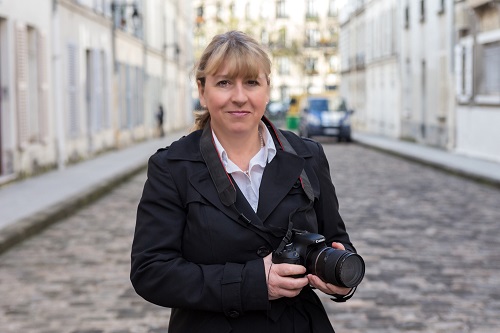
Ashley Sourci is a relocation concierge, and she helps foreigners moving to France navigate that infamous French bureaucracy without the usual headaches. Ashley, it’s a pleasure to have you on the Expat Focus Podcast, and I’m especially tickled because not only are you in the same country as me – France – but you’re in my region of Alsace. Welcome to the show.
Ashley: Thank you so much, Carlie, for having me on the show. I actually live in a little village right next to Strasbourg.
Carlie: Can I ask first off, what brought you from California to France, and particularly the Alsace region?
Ashley: Sure. I originally came to France to study abroad for just one semester at the University of Bordeaux in 2012. That semester, I fell in love with France – but not the typical things about France, like wine and cheese. I fell more in love with how the culture really aligned with my personal values and how I wanted to live my life. It was mainly a lifestyle thing at first, and I really felt like I had found my home in France.
So that semester turned into a year abroad, and then my visa expired and I had to go back to the US temporarily. But I was so determined to come back and build my life here. Having to go back to the US was more of a temporary roadblock than anything. So I found a way to come back through hard work and determination, and I haven’t looked back.
Four years ago I was really looking for a change of scenery, and I moved to Strasbourg because it has that international vibe. It’s got the Council of Europe, proximity to the rest of Europe – you can go anywhere from here. The landscapes, especially the Vosges Mountains right next to us. Since then I’ve felt more at home here than ever, and I love helping other Americans and English speakers from all over the world find their dreams and make them come true.
Carlie: I find it really interesting because for me it wasn’t necessarily a choice. It was where my now husband happened to live in France. We just got married recently.
Ashley: Congratulations!
Carlie: Oh, thank you. So actually before I visited Strasbourg on a fateful girls weekend, I’d never even heard of the place. I didn’t know it was in France – as many of my relatives say, “Oh, in Germany then?” So it was by pure accident that this is the part of France I ended up in. It’s really interesting to hear you talk about all the reasons why you were particularly attracted to and chose this region intentionally for your life in France.
Ashley: I’ll tell you a secret – I had never seen Strasbourg when I came here with my suitcases ready to go.
Carlie: Oh wow.
Ashley: It was the first time I’d ever seen it. I had heard good things about it. I had friends that had told me wonderful things about it. I had researched it thoroughly, but I didn’t actually set foot in the city until I had my bags packed.
Carlie: Goodness. It’s like a blind date, but a blind relocation.
Ashley: Yeah. And after being in the south, I was also looking for a different climate. It really checked all my boxes and I thought, why not? Give it a try. See if it’s the right place, if it’ll stick. And it most certainly did. I love it here.
Carlie: It’s really funny because I often say to my husband, if we’re not in Alsace, I want to go to the south. I want to go to Bordeaux, around that area. With climate change, though, I don’t know – sometimes it gets really hot down there. This is what a lot of people say to me. Just wait – Alsace will be as good as the south. Although in summer here it gets crazy hot sometimes.
Ashley: Sometimes it does. We have our… yes. It’s the six weeks of the year that I petition really hard for air conditioning.
Carlie: Oh yes. We have one. We installed one in our master bedroom.
Ashley: So jealous. I know. I had to fight the French guy on that, but I won.
Carlie: I feel like we’re relating so hard right now.
Ashley: Absolutely.
Carlie: Ashley, what do you recall being one of your biggest challenges when you were setting up your new life abroad?
Ashley: I think the most underrated and least talked about issues are the little things that seem so second nature in your home country. For example, setting up an insurance plan or a phone plan, utilities, renting or buying an apartment or a house – it’s a huge challenge even if you speak French. So I thought I’ll be good to go, I have a decent level of French. But that wasn’t the case.
I really thought the visa would be the worst of it, and I was wrong. I had a decent grasp of French at the beginning – I wasn’t anywhere near fluent, I am now after this long. But those things were really confusing and frustrating and took 10 times longer than they would in the US.
Prime example is the three months it took to set up my bank account because every time I would go in, they would lose my dossier. Basically, I think they were secretly hoping that I was just going to go away and go back to the US.
Those things made me wish that I had someone to be my advocate, to guide me and really be by my side and explain things in a way that I could not only relate to, but understand fully. It’s not just the language, it’s the processes. It’s how things are done in France – they’re really different than what I was used to back in the US. It’s not talked about enough, but those cultural differences and expectations need to be adjusted accordingly.
I think just setting up life in any new country in a new language that wasn’t my own, and having to do it blindly via trial and error was really frustrating. Those experiences really stuck with me, and that’s a huge part of why I do what I do now. I really want to offer others what I never had the chance to have and to be that go-to person that can make the whole process feel more human and manageable and much less stressful.
Carlie: I always think people who choose to do what you do – relocation concierge, they can also be called handholding services – these people like yourself must really love administration or figuring out the puzzle of bureaucracy because it’s my worst nightmare. And you’re choosing to do it not just for yourself now, but for other people?
Ashley: Yes, I actually like it. It’s a puzzle to me – just a puzzle to solve. Before I did relocations, I was actually working in HR, so I’d had experience with paperwork and I find it’s my strong point. So I’ll tackle the administration for you so you don’t have to.
Carlie: So let’s dig down into the definition. What is a relocation concierge?
Ashley: I differentiate concierge from relocation service because, like you were saying with the handholding, most relocation services will help you with the paperwork – visa documents, admin. But what I noticed is a real lack of that hands-on support that I was missing when I arrived. I wish I had that.
The idea of a concierge is that I’ll be your go-to person when it comes to questions. I’ll walk into the bank with you, go to the prefecture with you, go on apartment tours with you, translate, even do it via video – I’ve done that for clients who are still back in the states. Help negotiate leases, contracts, with a personalized focus.
It’s a very client-focused role about making them feel confident and not letting them ever get to the point where they’re feeling lost and frustrated. So it’s getting all that housekeeping taken care of quickly, efficiently, and especially correctly so that you’re not going to have to be wrestling with paperwork for two years or have to go back and get another visa because you got the wrong visa.
My clients or concierge service in general brings people who like that high-touch handholding experience. I love being that cultural translator as well. Having lived in both places, I’ve got a good grasp on the major differences. So I’d say that high-touch handholding is really the biggest difference between a concierge and just a… service.
Carlie: I like that phrase “high touch” because when I was going through my administration, the last thing that my husband wanted to do was line up in a healthcare office with me or go to the mairie and figure that out. He’s got the advantage of being French – it’s not his problem. He would have done it, but really not his idea of a good time.
Ashley: But it’s even tough for them sometimes. Locals, even locals can get lost in it. Sorry, I interrupted. You can keep going.
Carlie: No, I was going to say, and what I find often online are fellow expats, foreigners, not looking for someone to just give them a to-do checklist, but physically be there with them exactly – to walk them through it or to be able to do it for them. Which sounds really lazy, but let’s be real – for some people, this kind of stuff is not my husband’s strength, not even for his own administration, let alone somebody else’s. And there are so many people who have the same attitude.
Ashley: Absolutely. And it’s so easy to get lost along the way. Even the best intention DIY can go off the rails sometimes, and that’s why I really offer the service that I would want. I think that’s what I was going for in the beginning.
Carlie: Ashley, I want to drill down into some specifics because you and I have both gone through the process of setting up a life in France, although I have to acknowledge it is infinitely easier when you have a soft landing. In my experience, I got to move in with my now husband, which meant I had proof of address. I could sign a lease pretty quickly. And that unlocked a lot of doors because when you move to a new country, you have that hamster wheel of need – a phone number, but need an address; need a bank account, but need an address and a phone number.
And you can’t get one thing without the other – the endless catch-22s. Unless you do have that advantage of moving in with someone who can provide an address, a guarantee, whatever you need, you’re really starting from zero. So where do services like yours really help on the ground with those essential pieces?
Ashley: Absolutely, yes. And you hit the nail on the head – it’s exactly those catch-22s that keep you going in circles. And I didn’t have a soft landing – I was going to say, was there a partner? There was not. I did it completely solo. I did it really on my own when I first came here. I didn’t know a soul. So it was a huge challenge from start to finish.
But I think these services like relocation concierge can make all the difference in the world when it comes to building that soft landing for you and not letting you wrestle with it all yourself. People can really underestimate how difficult the transition is to another country, another culture, another language. It’s a huge shock to the system, and having a go-to person to help you decode and untangle all of those endless catch-22s can make all the difference in the world.
It helps with stress levels, fully comprehending what’s going on – which is another big problem I had – and all the other details that come up when you’re rebuilding your life from zero. These services really offer that sense of security and confidence to help with the transition and also save a ton of time that you can spend enjoying your new life instead of having to be in the mud wrestling with the prefecture, for example.
Carlie: And it can be the stupidest things that you overlook that set you back. My exchange of a foreign driver’s license to a French one took 18 months. 18 months! And there was a point where they needed another piece of paperwork from me. You would think that maybe they would set my file aside, send me a quick email. No, they posted it all back to me and said, “Hey, you’re missing this one thing. Start again.”
Ashley: Yeah. Or even when you bring all the papers that are on the checklist, you need one that you didn’t know you needed, that they just told you today that you needed, so now you have to take another appointment and come back. It’s really endless in France, and this isn’t just for foreigners – this is for French people as well. They wrestle with these same ridiculous deadlines and paperwork messes.
Carlie: I bought a filing cabinet for the first time in my life after I moved here – a physical filing cabinet. I thought I was crazy, but I saw my husband’s system was literally to pile folders of paperwork on top of his desk. I thought, I don’t need that for myself. I need something more organized.
And I read this great tip online, which was when you go to any administrative office, take a portable file with you of all your essential documents – even ones that they didn’t request.
Ashley: Absolutely. Just to have them ready when they try to turn you away because you don’t have it. “Nope, actually I do.” And I will say, as far as technology is concerned here, everything’s about 20 years behind what I was used to back in the US – and maybe Australia, it’s the same. Everything’s pretty digitalized at this point. But in France, they’re still really heavy on the paperwork. They’re very old-fashioned in their administrative processes as well.
Carlie: Yeah, I was so excited when I saw the national health card, the Carte Vitale, was going through an app and I contacted them. I was like, “How can I use my Carte Vitale on the app?” And they said, “Sorry, it’s only open to French citizens right now.” There it is – the catch-22. Even when France makes progress with its administration and technology, it’s not for everybody.
I want to get real and talk about pricing because I feel like it’s in the name a little bit – it’s luxury administrative services, relocation concierge. It’s not a service you offer for free – obviously this is your business. So it is something that you need to budget into your relocation if you are going to make use of these services. What could someone typically expect to pay for help like this?
Ashley: I think that it all depends on your personal situation. There are some people that are making the move from end to end – they want end-to-end service where they don’t want to get their hands dirty at all, starting from zero and ending at they’ve got their apartment, everything perfectly set up.
I’d say a package for a couple that really wanted that end-to-end service from visa to comfortable in their new home ranges anywhere from $5,000 to $7,000, depending. That includes a ton of services – we’re talking housing search, contract review, the whole gamut. You don’t have to touch a thing. It’s all done for you.
I also have families that I help relocate. That can go a bit higher depending on if they have children that they’d like to enroll in local schools. But I also offer a self-guided option for those who are budget conscious who are looking to do a lot themselves, but just with guidance.
Most of my clients are somewhere in the middle where they need some services and not others. So I work with them to create custom packages with just the services they need. Those can really vary in price based on what services are included. I always start with a free consultation to discuss options and tailor that quote based on their needs, the level of involvement that they want. I’m very flexible working with clients, but I would budget for a couple anywhere in the range of $5,000 to $7,000 for an end-to-end service.
Carlie: You mentioned that it’s a really hands-off approach and you handle everything, but there needs to be some client involvement, right? Some administrative offices do need to see you in person. I’m guessing if you’re enrolling their kids in school, might need to have the kids in the picture at some point.
Ashley: Of course, but I’m there to really guide you along the way, so if you do need to be there, I’ll be there with you. That’s the idea – that you’ve got someone to come along with you, help you understand what’s going on, translate in real time.
But of course, I’m going to need information from a client in order to do their driver’s license exchange and in order to sign them up for CPAM. So there is some level of involvement for sure. You do need to get involved in your own admin, at least at the start, in order to provide me with what I’ll need to do your admin as well.
We have a setup where we have a mutual email address – what I see is the same as what you see. So we have all that communication open all the time and we can essentially use that email address to help you get all set up on the administrative end of things.
I will need basic documents to get started. And of course you might need to be there for some of the appointments, but I never want you to be at that appointment lost and alone with no one who speaks English, and feeling frustrated. That’s never a position I would want my clients to be in.
Carlie: It’s been a little while since I’ve had to do French admin, but in saying that, because we got married in Australia, I did just have to order my birth certificate and marriage certificate. I think I’ve ordered 10 copies of my birth certificate from Australia over the last decade just for administrative purposes, because every time they require a new one.
What was my question? I was going somewhere with this…
Ashley: I know in France they do that because birth certificates change. They are edited with marriages and all sorts of other life events, and so your recent birth certificate will show updated things. But at least in the US – I’m not sure in Australia if it’s the same – your birth certificate is a static document.
Carlie: It is definitely more static. But they need six months of validity, for example. So I can’t use the birth certificate I ordered 10 years ago. I have to order a fresh one that says it’s only less than six months old. But has any information on it changed? No. Not at all. I was still born where I was born. Same parents, and my name hasn’t changed since I was born, so yeah, it’s pretty hilarious.
Oh, here we go. Found it. Documentation. Yes. Official French translations. Now, when you go into an office in France these days to get anything done, how amenable are they to accepting your documents in English and speaking English with you? Because I know from experience, it’s a bit hit and miss.
Ashley: Hit and miss is optimistic. I would say most of those folks who are working in government offices – they’re doing the minimum that they need to for their jobs. It’s just the mentality there, which is fine. That’s their French thing. I respect it. But I would not go in expecting them to be able to speak fluent English with you.
They’re not going to accept English documents. You’re going to need an official translation. I have a translator I use for that too – assermenté translator is what they’re called in French. Those will be required for essential documents for most administrative procedures. So I would never plan on being able to get away with just English when you’re visiting some of these government offices.
Carlie: When I was in Australia recently, my brother-in-law brought out these new Meta glasses and he was playing around with my husband. My husband was speaking to him in French, and he is just listening and being like, “Oh, so this is what you said.” He is listening to the almost live translation. And I thought, wow, that’s crazy. Like in a few years, are we going to have the same motivation to learn another language or are there going to be so many ways around it? And I almost felt sad because I’m not fluent in French yet, and I thought, oh God, is this going to be another block?
Ashley: I actually know about those too. They also have earbuds. We tried to use them for my partner’s family and my family to communicate at a family event because my family only speaks English, his family only speaks French. The issue with those was there was such a delay, so you weren’t really getting this live conversation. It was this uncomfortable delayed reaction, delayed laugh. And I feel like that really detracts from the experience.
I encourage clients to learn French, but of course there’s no expectation that they’re going to become fluent either. It’s a very tough language. And Strasbourg specifically, there’s a huge expat community too, where you don’t really need French. You still need it for the parts, the integrative parts of living here – getting signed up for things, going to the prefecture like we just talked about.
So although those technological advancements will probably make communication easier, I don’t think they’ll ever replace… the human connection. And also if you really do want to integrate into a French life – let’s say you want to go live in a French village instead of in the center of Strasbourg, which is actually what a lot of my clients come to do, they love the villages in Alsace – in that case, you’re probably going to want to sign up for a French course. I recommend that to my clients as well.
Because the honest truth is that in the movies and shows like Emily in Paris, we get this impression that all French people secretly speak English and they’re just hiding it. But that’s not the reality. It really isn’t. French is really the primary language, and I feel like if you want to really dive into the culture, it pays to learn it. Even if it takes 10 years.
Carlie: It does feel like you’re unlocking another level of your life abroad when you need to speak the local language too.
Ashley: Absolutely. I think it really gets you on that local level and you can really immerse yourself in your community at that point. And I think that if you can get there, that’s awesome. If you prefer not to though, that’s fine too. It’s up to the client and what they’re really looking for in an experience here. But it is a key to unlock the next level France – the France you don’t see as a tourist.
Carlie: Ashley, can I ask – handholding services in France, relocation concierges, administrative concierges – is this a regulated industry?
Ashley: So yes it is. There’s a regulating body for relocation professionals called EuRA. It’s the world’s first accreditation program for relocation providers in general. And while accreditation is important, I also encourage people to look at testimonials, experience, and how much you click with the person you’re going to be working with because it’s a really personal journey.
But it does exist. Yes, it’s called EuRA and it’s been around since 1998.
Carlie: That’s amazing. It’s the first I’ve actually heard about it. But I have a feeling we stalk the same expat forums, Reddit groups, things like that. And there are a few suspicious operators, I would say, that people warn each other about in this community. So if you have a bad experience with a relocation concierge, you’ll likely find out about it.
Ashley: Yes. They say people are more likely to give negative feedback than positive feedback anyway. If you’re really unhappy with an experience, you’re going to go on and talk about it much more openly than if everything went according to plan. But absolutely – definitely listen to your fellow expats, the service providers they’ve used, that’s important as well. The word-of-mouth recommendation is huge.
Carlie: So obviously forums and reviews are a great way to nut out if a relocation concierge is all that they say they are. But how do you figure out if an administrative person is the right fit for you and your move to France?
Ashley: Apart from definitely knowing their track record – personally, I’ve been working in the international mobility sector for a decade and I’ve helped hundreds of people make this leap. But you also need to have an idea of how much assistance you’ll want.
You’re going to want to find a professional who’s the right fit for you in the level of assistance that you want. If you only want help with a visa application, that’s one thing. If you want a full end-to-end service, like what I offer, that’s another thing. So I would say that’s a huge part of deciding what service might be the best fit for you.
I also often work with people who started out with a DIY move and then ended up getting stuck and needing some guidance, getting someone to unravel all the mess… Sometimes they’re right in the middle of it and they didn’t know they needed help until a bit later.
Carlie: So you don’t mind doing that either? Not starting at the start of someone’s journey, but maybe jumping in midway and being like, “Okay, what have you done here?”
Ashley: I love that. I love that part because I think that I completely get the “I’m going to do it myself” attitude. In fact, I have the same kind of DIY attitude. I think it’s actually courageous to admit like, “Oh, no, actually this is – I’m in over my head. I need help.” And they’ve arrived in France, for example, and they had the visa in hand, but now everything else is way more complicated than they think.
So I think any advice I would give is to preemptively seek out professional guidance and to get started on the right foot instead of trying to fix it while you’re flustered and frustrated. But I do find particular pleasure in helping – it’s like saving people out of the hole that they’ve dug for themselves, which I’ve done quite a few times. And no judgment ever, no judgment there.
Carlie: Coming in with a shovel again.
Ashley: Yeah, absolutely. I will dig you out of the hole, no matter where you’re at. And then make sure that everything going forward is lined up and correct and ready so that you don’t have to do any more digging.
Carlie: Yeah. Ashley, you’ve got so much experience, as you mentioned, over a decade doing this type of work. You’ve managed your own move to France twice. Looking back at everything you’ve learned, is there anything that you would have personally done differently?
Ashley: When I arrived I really had stars in my eyes and I was a bit naive, I think, on how difficult the full settling-in process would be. It took me a lot longer than it could have, especially not being fluent in French at first.
I had my visa in hand, so I had my visa sorted, which I thought was the biggest challenge, and it was not the biggest challenge. So if I could talk to myself back in the day, I think that I would recommend trying to get help, like what I offer now. I’m not sure what existed back then if there were concierge like me who could help you.
But looking back, I think that would probably be my biggest – I wouldn’t say regret because I did get through it – but I would have actually reached out for help had I really known that was something that was available to me and not been quite so naive going into it, knowing that it’s going to be a bigger challenge than anticipated.
So looking back at starry-eyed Ashley, she didn’t know what was headed for her, but in the end it all worked out absolutely. And all the hair pulling was absolutely worth it, I think, in the end.
Carlie: Ashley, where can people find you if they do want to find out more about your services and maybe book that introductory call to see if you’re a good fit for what they need?
Ashley: Absolutely. So they can find me on my website, www.chezmoialsace.com. And you’re free to book a 20-minute intro call with me. There’s absolutely no obligation or pressure. I just would love to learn more about your unique situation, why you’re looking for help, what you’re looking for help with, and really get to know if we’re a good fit to work together.
So feel free to book that free 20-minute call. And we can get started that way.
Carlie: And can I just say free introductory calls are like a hidden gem. I’ve been shopping around for a few different services lately. And just being able to get on a video chat with someone and see if you click, whether that’s for therapy or for a fitness goal or for administrative services, is so valuable.
Ashley: Absolutely. And I love it too. It’s my pleasure. I love meeting new people and I love hearing their stories, where they’re headed, and helping them dream big and make the real concrete plans that can help them get where they want to go.
It’s amazing. So free 20-minute call is just the start.
Carlie: Ashley, thanks so much again for coming on the Expat Focus podcast and I’ll catch you around Alsace.
Ashley: Yes, absolutely. See you later. Carlie, thank you so much for having me.
Carlie: That’s it for today. If you love listening to the show, be sure to like and subscribe, rate and review us on your podcast app of choice and get involved in the conversation over on our YouTube channel.
We’d love to hear from you in the comments if you’ve moved to France – did you choose to go it alone or get some help for the administrative elements? Sign up to our monthly newsletter for all the latest updates over at expatfocus.com/newsletter and I will catch you in the next one.