
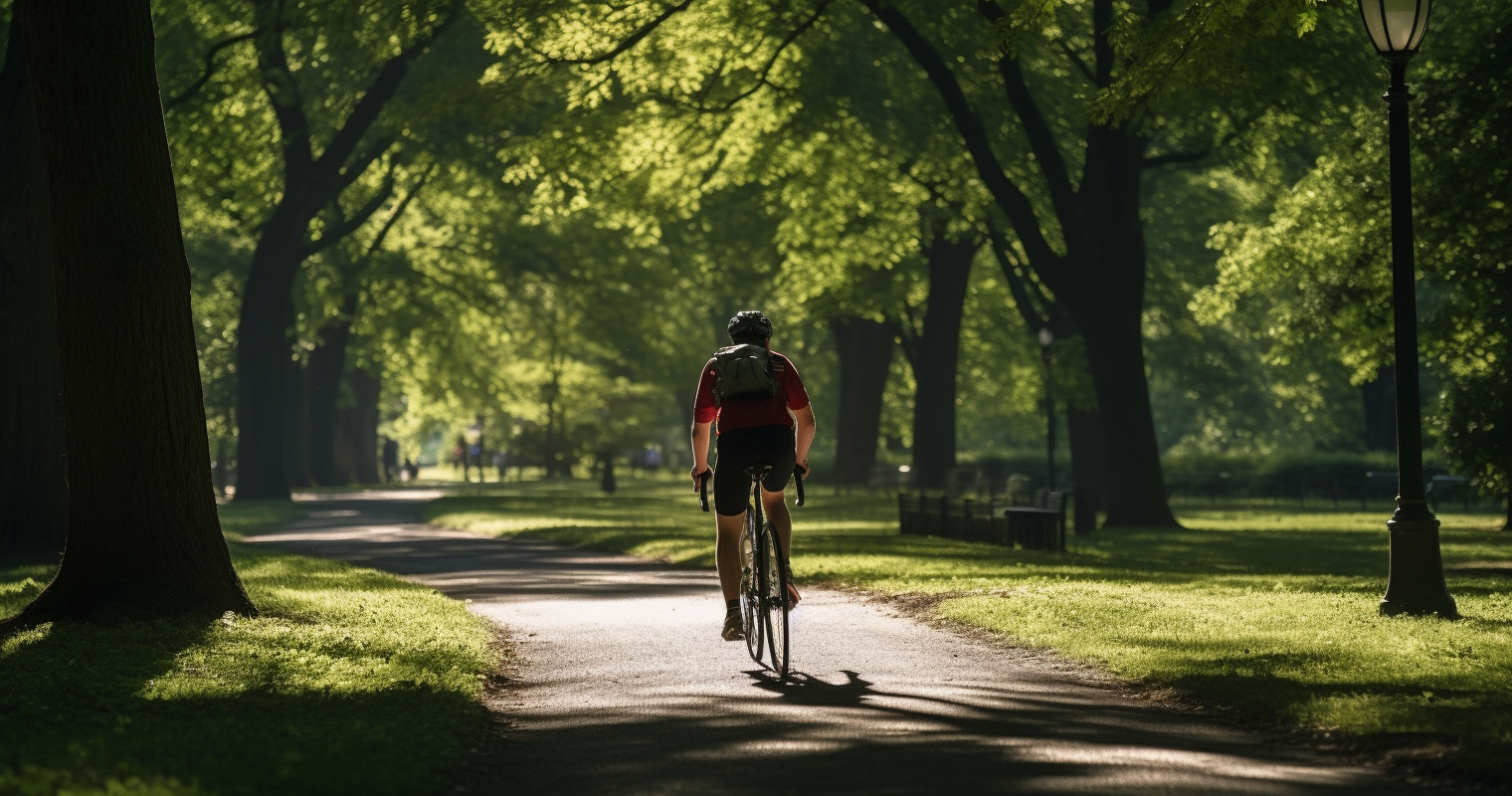
Germany ranks among the most bicycle-friendly nations in Europe, boasting a firmly rooted cycling culture, an extensive web of dedicated cycle paths and long-distance touring routes, and tens of millions of people who rely on bikes for both daily travel and recreation. Although it does not quite match the Netherlands or Denmark in terms of infrastructure density or cycling modal share, it provides a genuinely welcoming and functional environment for everyday riders that most newcomers will find easy to embrace.
| Item | Details |
|---|---|
| Weekly cycling rate | Around 43% of Germans cycle at least once per week (as of 2022) |
| Cyclist fatalities | 441 cyclists killed in traffic accidents in Germany (as of 2024) |
| Helmet law | No legal requirement — helmets are strongly recommended but not mandatory |
| Average new bike cost | Over €1,600 on average (as of 2024) |
| Bike registration | Not mandatory; voluntary registration is strongly recommended |
| National cycling body | ADFC (Allgemeiner Deutscher Fahrrad-Club) — adfc.de |
How popular is cycling in Germany — is it a common way to get around?
After walking, cycling stands as the leading form of active travel in Germany, and bike-lending stations are a familiar sight in urban centres throughout the country. Bicycles serve as a practical means of getting around in towns and cities as much as in rural settings, and teaching children to ride is considered an entirely normal part of growing up here. For those arriving from abroad, this means encountering well-established cycling norms — from purpose-built lanes to covered bike parking — in virtually every settlement of any size.
In 2021, 9.1 percent of Germany’s population cycled every day, while a further 17.1 percent did so several times each week. Overall, roughly 43% of Germans take to their bikes at least once a week. When it comes to commuting, close to one in ten employed people ride to work by bicycle. That said, the car continues to dominate: a 2024 survey found that 62 percent of German respondents relied on a private vehicle as their main mode of travel to and from work.
According to the ADFC’s Bicycle Travel Analysis, 37 million people — representing more than half of German adults — cycled during a holiday or day excursion in 2023. This highlights the dual nature of cycling in Germany: it serves both as an everyday transport mode and as a major leisure pursuit. The contrast with the Netherlands and Denmark remains notable, where cycling accounts for 25–30% of all journeys nationally; Germany’s modal share sits considerably lower. Certain cities are clear outliers — Münster in North Rhine-Westphalia, for instance, is widely celebrated as a cycling city, with a modal share of around 47%.
E-bikes accounted for 53 percent of all new bicycles sold in Germany in 2023, surpassing conventional bicycle sales for the first time. Since e-bikes are legally treated as ordinary bicycles, their widespread availability has reshaped usage habits and made cycling appealing to a broader demographic by enabling longer journeys with less physical effort. For expats arriving from countries where cycling is mainly recreational or where e-bikes are a novelty, this represents a meaningful cultural change worth leaning into.
What is the cycling infrastructure like in Germany?
Germany has built up an extensive network of cycling paths and benefits from strong public appetite for sustainable travel options. Riding through the country, cyclists encounter well-signed, well-maintained routes that span a diverse range of landscapes, often passing through areas that motor vehicles simply cannot reach. Even so, the quality and completeness of infrastructure differs markedly from one region or city to another.
Berlin’s cycling plan sets a target network of 2,400 km, with 850 km forming a priority network where lanes must be at least 2.5 metres wide. In Hamburg, both spending on cycling and the physical extent of cycling facilities grew substantially in 2020, with 60 km of new cycling infrastructure completed each year in 2021 and 2022. Despite these advances, many older cycle paths — particularly those laid down during the 1980s and 1990s — remain narrow and in some cases are damaged by frost or encroaching tree roots.
One of the most ambitious infrastructure initiatives in recent years is the concept of the cycling highway. Politicians and cycling advocates gathered to mark the opening of the first 11 kilometres of a planned 100-kilometre cycle highway linking Hamm to Duisburg through the Ruhr Valley. These routes differ fundamentally from ordinary cycle lanes: they are approximately 4 to 5 metres wide — roughly double the width of a standard bike path — laid with premium asphalt and engineered to minimise intersections and traffic light stops.
The German government’s National Cycling Plan (NCP) sets out the vision of “Germany as a cycling nation 2030,” with a federal target to raise the bicycle’s share of local journeys from 11 per cent in 2017 to 15 per cent by 2030. For up-to-date route maps and details of planned infrastructure projects, visit the Federal Ministry for Digital and Transport (BMDV) and the ADFC (German National Bicycle Club), which produces comprehensive maps, guides, and route quality certifications.
Is cycling safe in Germany?
In 2024, 441 cyclists lost their lives in road traffic accidents in Germany — a modest decrease from 474 in 2022, but still representing an 11.4% rise compared with 2014. Cyclists make up 15% of all road fatalities in Germany, a figure above the EU average of 9%. While this partly reflects the sheer number of people who cycle, it underscores how important road awareness is, especially in busy urban environments.
In urban settings, pedestrians and cyclists together account for 62 percent of traffic deaths, with 292 people killed on foot and 278 on bicycles in 2024. Older road users face a disproportionate risk: 63.5% of cyclists who died in 2024 were aged 65 or over. Those new to cycling in Germany should also be mindful of physical hazards on older infrastructure, including tree roots breaking through surfaces, raised kerbs, and tram tracks capable of catching a wheel.
More than 60% of cyclists in Germany say they feel safe when riding on dedicated cycle lanes. Motorist attitudes differ across the country — in cities with a long cycling tradition such as Münster or Freiburg, drivers tend to be more attentive to cyclists, whereas in areas where cycle infrastructure is sparse, some riders encounter vehicles passing at insufficient distances. The ADFC’s bicycle climate survey found that 80% of respondents preferred to ride separated from motor traffic, favouring a protected lane for greater peace of mind.
Wearing a helmet is strongly advised when cycling on public roads, though it is not required by law — a notable difference from countries such as Australia and New Zealand where helmet legislation is strictly enforced for all ages. In Germany the decision is a personal one, though helmet use is growing steadily. Pedelec25 riders — those on standard e-bikes limited to 25 km/h — face no legal obligation to wear a helmet, yet research indicates that pedelecs are typically ridden at higher average speeds than traditional bicycles. For the latest official road safety data, refer to the Federal Statistical Office (Destatis) and the German Road Safety Council (DVR).
What are the rules of the road for cyclists in Germany?
Cycling on German roads is governed by the Straßenverkehrsordnung (StVO), the national highway code. Cyclists are regarded as full road users, carrying both rights and obligations under this legislation. While the broad principles will be familiar to riders from other European countries, several specific rules are worth understanding before you set off.
- Helmet: Not legally required for any age group, though strongly recommended — particularly for e-bike users and children.
- Lighting: A white front light and red rear light are compulsory when cycling in darkness or reduced visibility. Reflectors on pedals and wheels are also a legal requirement.
- Bell: Every bicycle ridden in Germany must be fitted with a functioning bell — this is a legal requirement.
- Brakes: The law mandates two independent braking systems on all bicycles.
- Alcohol limit: The legal blood alcohol threshold for cyclists is 1.6 per mille for a first offence not involving an accident. However, cyclists can face penalties for impaired riding at lower blood alcohol levels if they are involved in a collision.
- Pavements: Riding on footpaths (Gehwege) is generally forbidden unless a sign expressly allows it. Where cycle paths exist and are designated as mandatory — marked with a blue round sign — cyclists must use them.
- Mobile phones: Operating a handheld mobile phone while cycling is illegal and subject to a fine.
- Age restrictions: Children younger than 8 are required to ride on the pavement; those aged 8–10 may choose to do so. An adult accompanying a young child on the pavement is also permitted to ride there.
Specific rules can differ at the municipal level — for instance, shared pedestrian and cycling zones (Gemeinsamer Geh- und Radweg) are indicated by local signage. For the full and current legal text, consult the official Federal Ministry of Justice, which publishes the StVO, and the Federal Ministry for Digital and Transport (BMDV).
Do I need to register my bike or have insurance to cycle in Germany?
Bicycle registration is not a legal requirement in Germany. Nonetheless, voluntary registration is actively encouraged as a theft deterrent and to improve the odds of police recovering a stolen machine. Local police stations, cycling clubs, and the ADFC all offer registration services, typically for a modest fee. Online databases — including the ADFC’s own registration platform — allow you to log your bike’s frame number digitally. Whatever approach you take, keeping a photograph of your bicycle and a record of its frame number somewhere safe is a sensible habit.
Third-party personal liability insurance (Privathaftpflichtversicherung) is not legally compulsory for cyclists in Germany, but it is widely recommended and the majority of residents hold some form of cover. Most standard household contents insurance policies (Hausratversicherung) in Germany include a personal liability component that extends to damage caused to others while cycling. If you do not have such a policy in place, a standalone personal liability plan is affordable and available through any major insurer. The German Financial Market Supervisory Authority (BaFin) provides a list of regulated insurance providers.
Separately, dedicated bicycle insurance — covering theft and damage to your own bike — is not compulsory but is becoming increasingly sought after, particularly given that the average new bicycle in Germany cost over €1,600 as of 2024. For high-value bikes or e-bikes, specialist cycle cover is well worth exploring. Premiums depend on the bike’s value, your location, and your chosen insurer — current offers are available from providers such as ADAC, R+V, and specialist cycle insurance companies. It is worth noting that Pedelec25 e-bikes — those assisting up to 25 km/h with a maximum continuous motor output of 250W — are classified as bicycles under German road traffic law and therefore require neither motor vehicle insurance nor registration plates.
Are there public bike-sharing or rental schemes in Germany?
Bike-lending stations are a familiar feature of urban life across Germany, and the country has a mature bike-share ecosystem encompassing both national operators and city-level schemes, offering docked and dockless options for short-term hire.
The most broadly available service is Deutsche Bahn’s Nextbike (which trades under the Call a Bike brand in many cities), providing dockless and station-based bike hire across dozens of German cities. Pricing typically operates on a per-minute basis or a flat-rate day ticket — check the current tariffs on the Call a Bike official website, as these are subject to change. Many schemes integrate with public transport ticketing, meaning a monthly DB or local transport pass can unlock discounted rates or free initial minutes (as of 2024 — verify current offers directly with the operator).
A number of cities also run their own or partnership schemes. Munich operates MVG Rad in conjunction with the city’s public transport authority; Hamburg provides StadtRAD Hamburg; and Berlin is served by several dockless operators including Nextbike and Lime. The growth of e-bikes has extended into the hire market, with e-bike rental now available through most major schemes at a premium over standard bike rates — consult the relevant municipal transport authority for current pricing. Visitors and tourists will also find a broad selection of independent hire shops, particularly near railway stations and in popular tourist destinations.
Where can I buy or service a bike in Germany?
Given that cycling is woven into the fabric of daily life in German towns and cities, the country supports a well-developed market for both buying and maintaining bicycles. Most settlements of any real size have at least one dedicated cycle shop, while larger cities are home to specialist retailers covering road, mountain, cargo, and e-bike categories.
The average price of a new bicycle in Germany exceeded €1,600 as of 2024, reflecting the strong market for e-bikes and premium trekking models. E-bikes account for 53 percent of sales revenue as of 2024, with trekking and mountain bikes also among the top-selling categories. For those cycling on a tighter budget, good-quality second-hand bikes are readily available through platforms such as eBay Kleinanzeigen (now rebranded as Kleinanzeigen.de), local Facebook Marketplace listings, and weekend flea markets (Flohmärkte). The appeal of the used market extends beyond cost savings — many buyers are motivated by sustainability considerations as well.
Bike repair workshops (Fahrradwerkstätten) are a common feature of cities and many suburban areas. Major retail chains including Decathlon, Rad-Net, and ROSE Bikes operate alongside independent local dealers. Germany also has a strong tradition of community repair cafés (Fahrrad-Selbsthilfewerkstätten), where cyclists can work on their own bikes using shared tools and expert guidance for a small fee or membership contribution — an excellent way to cut costs while getting to know fellow riders. Consumer protections are robust: new bicycles purchased from retailers carry the standard EU two-year statutory warranty, offering meaningful redress if a defect appears soon after purchase.
Can I bring my bike when I move to Germany, and are there any import rules?
If you are relocating to Germany from outside the European Union, your bicycle — along with other personal belongings — may qualify for duty-free import as part of your Übersiedlungsgut (household removal goods or personal effects). Under EU customs regulations, individuals transferring their primary residence to Germany from a non-EU country may bring in personal effects, including sports equipment and vehicles intended for personal use, free of import duties and VAT, provided certain conditions are satisfied.
The principal conditions for the personal effects exemption (as of 2024) generally include: the items must have been in your ownership and regular use for at least six months prior to the move; they must be imported within 12 months of establishing your new residence in Germany; and they must not be sold or otherwise transferred to another party for at least 12 months after importation. A bicycle used for personal transport would ordinarily qualify, though a visibly new or high-specification machine may attract additional scrutiny from customs officials. All applicable conditions should be confirmed directly with German Customs (Zoll) before shipping, as regulations and thresholds are subject to change.
If you are moving from another EU member state, no customs duties apply since bicycles circulate freely within the single market. If your bike is travelling as freight or accompanying you on a flight or ferry, check with your carrier regarding any specific carrier rules or supplementary charges. For the most up-to-date import requirements and any applicable duty rates, always go directly to the official German Customs authority (Zoll).
What are the best cycling routes or destinations in Germany?
Germany’s standing as one of Europe’s most enthusiastic cycling nations is backed up year after year by compelling statistics. The country shares the distinction of having more EuroVelo routes passing through it than any other nation, with ten international routes crossing German territory. Whether you are looking for a demanding multi-day tour or a relaxed ride alongside a river, well-signposted and varied routes are available in abundance.
The Weser-Radweg claimed the title of Germany’s most popular long-distance cycling route in the 2024 ADFC poll. Starting in the scenic Weserbergland uplands, it winds through the broad lowlands of Lower Saxony before reaching the Wadden Sea coast. At approximately 520 km in length, the route is considered accessible for families and touring cyclists of all experience levels, with more than 90 e-bike charging stations positioned near restaurants and tourist attractions along the way.
Second place in the ADFC rankings goes to the Elbradweg, which forms part of both EuroVelo 7 and EuroVelo 13, while the Ostseeküstenradweg (Baltic Sea Coastal Route), tracing EuroVelo 10 and EuroVelo 13, comes in third. The Donauradweg (Danube Route, EuroVelo 6) and the Rheinradweg (Rhine Route, EuroVelo 15) share joint fourth place. Each of these routes has been assessed and certified by the ADFC against quality criteria covering surface condition, signage consistency, and the availability of supporting facilities.
Germany’s regional landscapes offer a wealth of further options for cyclists, with the Allgäu and Emsland among many areas celebrated for scenic riding, in addition to a wide selection of long-distance thematic tours. For urban cycling, cities such as Freiburg im Breisgau, Münster, and Leipzig are consistently recognised among Germany’s most rider-friendly environments. For thorough route planning, the ADFC publishes maps, guides, and quality-certified route data, while Germany Tourism (DZT) maintains a dedicated cycling tourism section covering themed trails and regional highlights.
How do I get started with cycling after arriving in Germany? — Step-by-step guide
- Acquire a bike: Buy a new bicycle from a local dealer or major retailer, or explore second-hand options on platforms such as Kleinanzeigen.de or at local flea markets. Ensure any bike you purchase is fitted with working lights, a bell, and two functioning brakes — all of which are legal requirements.
- Record your frame number: Write down and photograph your bike’s frame number, which is usually stamped on the metal beneath the bottom bracket. Registering it with the ADFC or through a local police scheme is a worthwhile step to discourage theft and support recovery if your bike goes missing.
- Arrange insurance: Check whether your existing household or personal liability cover extends to damage you cause to others while cycling. If it does not, take out a standalone Privathaftpflichtversicherung. For higher-value bicycles, look into dedicated bicycle insurance covering theft and accidental damage.
- Familiarise yourself with the StVO rules: Work through the cycling-related sections of the German Highway Code (Straßenverkehrsordnung). The essentials are: use mandatory cycle paths where marked, do not ride on pavements unless signed, ride with working lights after dark, and always carry a functioning bell.
- Plan your local routes: Use the ADFC’s online route planner, the komoot app (widely used by German cyclists), or your local authority’s cycling map to chart safe connections between home, workplace, and everyday destinations.
- Get a good lock: Bicycle theft is a real concern in German cities. Invest in a quality D-lock or heavy-duty chain lock with strong independent test ratings — look for assessments from Stiftung Warentest, Germany’s leading consumer testing body. Always lock the frame — not just a wheel — to a fixed, immovable object.
- Connect with the local cycling community: Becoming a member of the ADFC (membership fees start from approximately €6 per month as of 2024 — check the current rate at adfc.de) brings access to third-party liability insurance, legal assistance, and a nationwide network of cycling events and advocacy.
Frequently asked questions about cycling in Germany
Do I need a licence or any permit to cycle in Germany?
No licence or permit is needed to ride a standard bicycle or a Pedelec25 e-bike (limited to 25 km/h with a 250W motor) in Germany. Higher-powered speed pedelecs (Pedelec45, capable of up to 45 km/h) fall under the moped category and consequently require a moped licence, registration plates, and insurance. There is no minimum age to ride a standard bicycle, though children younger than 8 must ride on the pavement rather than the road.
Is it safe to cycle in German cities as a newcomer?
More than 60% of cyclists in Germany say they feel safe riding on dedicated cycle lanes. The level of safety varies considerably depending on the city and the specific route. Places such as Freiburg, Münster, and large parts of Berlin and Munich offer well-protected cycling infrastructure. Where networks are older or less complete, it pays to remain vigilant at junctions, take care around tram tracks, and wear a helmet. Riding during daylight hours on signed cycle routes is generally considered safe and entirely practical for new arrivals.
Can I take my bike on trains in Germany?
Yes. Deutsche Bahn (DB) and most regional rail operators permit bicycles on board, though a separate bicycle ticket must be purchased. Space on long-distance ICE services is restricted and must be reserved ahead of travel. Regional trains (RE/RB) typically include dedicated bicycle areas and offer more flexibility. Check current prices and the booking procedure on the Deutsche Bahn website, as availability and fares differ by route and service type.
What happens if my bike is stolen in Germany?
Report the theft to your local police (Polizei) and supply the frame number — which is precisely why noting it down when you first acquire the bike is so important. If you hold bicycle insurance, notify your insurer promptly. The rate of recovering stolen bikes in urban areas is relatively low, making high-quality locks and secure parking the most effective protective measures. Voluntary registration with the ADFC or a local scheme modestly improves the chances of getting your bike back.
Are cargo bikes and e-bikes treated the same as regular bicycles legally?
Pedelec25 e-bikes — those providing assistance up to 25 km/h with a maximum continuous motor output of 250W — are classified as bicycles under the German Road Traffic Act. They may use cycle paths, require no licence to ride, and do not need registration plates. Human-powered cargo bikes are also treated as bicycles. Sales of cargo bikes in Germany climbed to 235,000 units in 2023, accompanied by 206,000 new bicycle trailers, demonstrating that cargo cycling is a firmly established and well-supported element of German cycling culture.
Is cycling in Germany practical in winter?
A great many Germans ride throughout the year, especially in cities where cycle paths are gritted and kept clear. Winter conditions differ substantially by region: the north and west of Germany tend to experience mild, wet winters that allow cycling to continue without great difficulty, while Bavaria and the eastern states can endure extended periods of snow and ice. Studded tyres, insulated gloves, and dependable lighting are essential purchases for cold-weather riding. Mudguards and waterproof panniers or bags are standard equipment for year-round commuters braving the autumn and winter months.
What is the ADFC and should I join as an expat?
The ADFC — the General German Bicycle Club — is Germany’s largest cycling organisation, dedicated to improving infrastructure, road safety, and cycling tourism across the country. It produces an annual analysis of the most-travelled cycling routes, publishes detailed maps and guides, and certifies routes against established quality standards. For expats, membership offers tangible benefits: personal liability insurance while cycling, access to legal advice following an accident, discounts on maps and guides, and entry into a welcoming nationwide community. Monthly membership fees start from around €6 — check current rates at adfc.de.
Do employers in Germany offer any cycling incentives for commuters?
Germany does not operate a direct equivalent of the UK’s Cycle to Work salary sacrifice scheme for tax-free bike purchases. However, a popular alternative exists in the form of the Dienstfahrrad (company bike) leasing arrangement, through which an employer leases a bicycle on an employee’s behalf and the employee covers the lease cost from gross salary — thereby reducing their taxable income. This arrangement has grown considerably in popularity in recent years. Ask your employer’s HR team whether they participate in such a scheme. Tax implications apply, so it is worth consulting a Steuerberater (tax adviser) for specifics that are current at the time.