

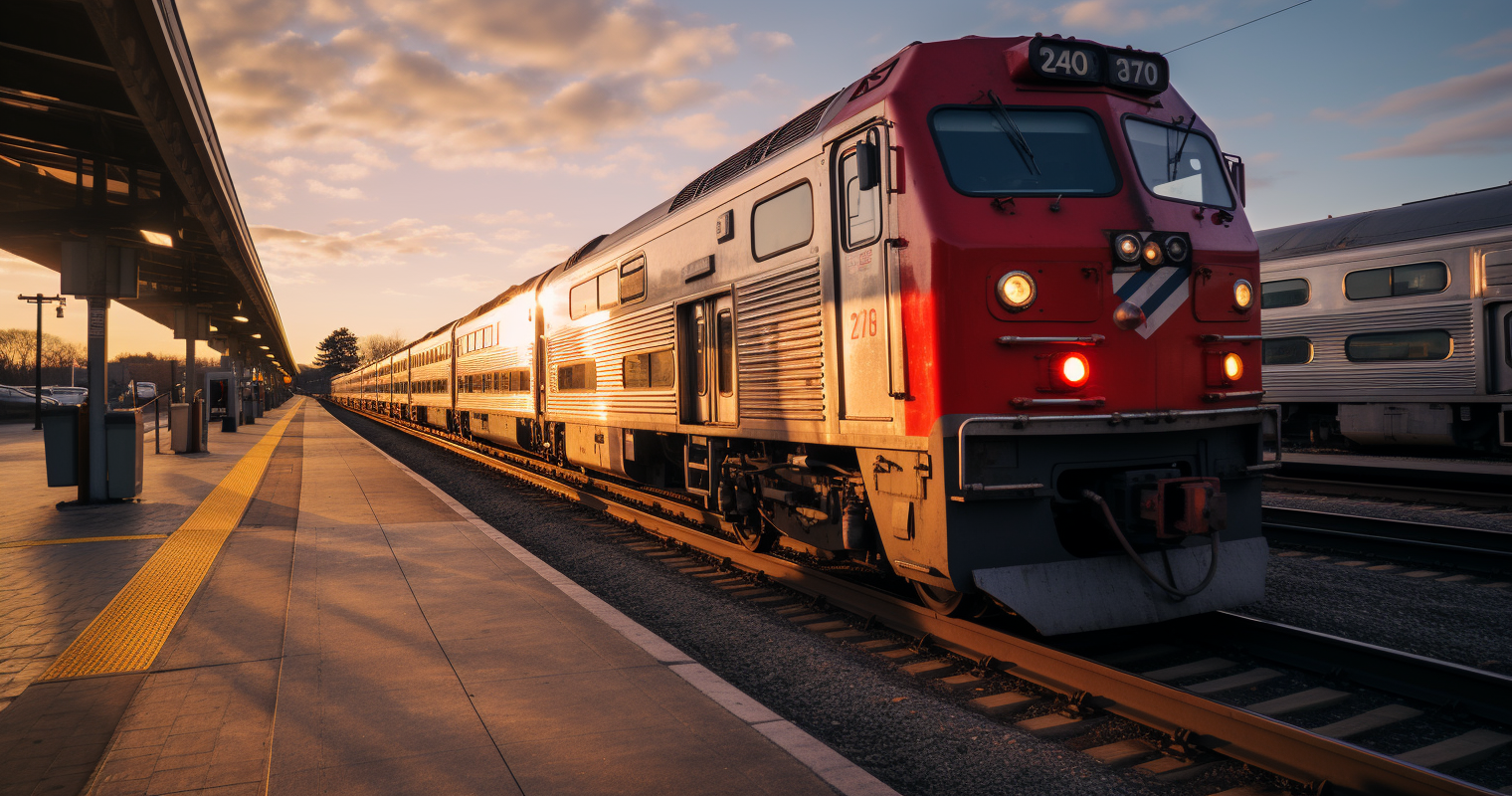
Monaco’s rail infrastructure centres on a single underground station — Monaco-Monte-Carlo — run by French national operator SNCF. Regional TER trains call here approximately every 15 minutes, supplemented by TGV and other long-distance services, giving residents strong connections along the Côte d’Azur and across Europe. For daily commuting and wider regional travel alike, the station punches well above its weight for such a tiny territory.
| Item | Details |
|---|---|
| Number of stations | 1 — Monaco-Monte-Carlo (underground), as of 2025 |
| Rail operator | SNCF (French state railway) |
| Service frequency | Approximately every 15 minutes (TER regional services) |
| Key routes | Grasse–Cannes–Nice–Menton–Ventimiglia (TER); Paris (TGV) |
| Reservation required? | Not for TER regional trains; required for TGV |
| Season passes | Pass SudAzur and other SNCF passes available — check sncf-connect.com for current prices |
What is the overall standard of rail travel in Monaco?
Monaco operates no railway of its own; every train service passing through the principality is run by SNCF, France’s national carrier. This means residents enjoy the rolling stock and infrastructure of one of Europe’s largest and most sophisticated rail networks, rather than a modest standalone system scaled to Monaco’s diminutive footprint.
Monaco-Monte-Carlo is the principality’s only railway station, though a portion of it extends into the neighbouring French commune of Beausoleil. Trains serve it on the Marseille–Ventimiglia line, and the entire stretch of track running through Monaco — together with the station itself — sits underground. This subterranean arrangement is one of the principality’s most striking engineering features, a deliberate choice that freed the land above for development.
Throughout the day, SNCF trains depart Monaco-Monte-Carlo roughly every 15 minutes, with services tapering off in the very early morning and late evening. For a principality covering barely 2 square kilometres, that frequency is remarkable and makes the train a genuinely competitive choice for commuters, especially those travelling to and from Nice.
On a typical day, approximately 100 trains call at Monaco’s railway station. The majority are TER regional services, complemented by a daily return TGV connecting Paris with Ventimiglia, various long-distance passenger trains, and freight movements into Italy. While Monaco’s rail access is geographically limited compared with sprawling networks like Germany’s Deutsche Bahn or Switzerland’s SBB — each serving hundreds of stations — its single well-placed stop opens up a broad stretch of the Riviera corridor efficiently.
The wider SNCF network spans more than 32,000 kilometres of track throughout France, a substantial portion of which carries high-speed TGV trains averaging around 320 km/h. Services cross into Spain, Italy, Switzerland, and Belgium, meaning that Monaco residents with access to just one local station can still reach Paris, Milan, Marseille, and other major European cities with relative ease by rail.
What classes of rail travel are available in Monaco, and what are the differences between them?
The travel classes available to passengers at Monaco-Monte-Carlo depend on the type of service being used. The most frequent trains — TER regional services — operate without meaningful class distinctions, while TGV and long-distance trains carry the full range of SNCF class options.
TER regional trains, which handle the bulk of everyday journeys through Monaco, effectively offer a single standard of travel. Carriages are clean, air-conditioned, and reliable, with no seat reservation system in place. The overall experience is similar to well-maintained regional rail in Switzerland or the Netherlands — functional, comfortable, and efficient.
TGV trains, which travel at up to 320 km/h between cities across France, provide a noticeably higher level of comfort: generous seat spacing, free Wi-Fi on selected services, power sockets at every seat, and bar and buffet facilities. Dedicated family areas and enhanced provisions for wheelchair users are also available on the modern TGV fleet.
On TGV and Intercités long-distance services, SNCF provides both 2nd class (standard) and 1st class. First-class seating is wider, carriages are quieter, and legroom is more generous. On certain premium routes, business-style configurations are also offered. The fare gap between classes fluctuates considerably depending on the route and how far ahead you book — early-bird standard tickets often represent outstanding value, while 1st class comes into its own on long runs such as Monaco to Paris. For up-to-date fare comparisons between classes, visit SNCF Connect.
Where can you find rail timetables and ticket prices in Monaco?
The definitive source for schedules and fares is SNCF Connect (sncf-connect.com), which covers both TGV and TER services and serves as the principal booking and information hub for all SNCF trains, including those stopping at Monaco-Monte-Carlo.
Regional TER services are operated by SNCF-TER, and the PACA (Provence-Alpes-Côte d’Azur) section of the SNCF-TER website carries current timetables for this area. The regional TER portal can be accessed directly at ter.sncf.com/paca.
SNCF Gares & Connexions publishes real-time departure and arrival information for Monaco-Monte-Carlo station, viewable at garesetconnexions.sncf. This resource is especially handy for checking live train movements on the day of travel.
The Monaco government’s public services portal offers transport guidance for residents, including announcements about new service timetables. For instance, the 2025 timetables took effect from Sunday 15 December 2024 and run through to Saturday 13 December 2025. The latest transport news and schedule updates can be found at monservicepublic.gouv.mc.
Third-party aggregator platforms such as Trainline and Omio bring together fares and timetables from multiple operators and can be helpful for comparing prices. That said, official SNCF sources should always be the final reference point for current schedules and fares, as both change regularly.
How do you buy rail tickets in Monaco, and can you book in advance?
Rail tickets for travel through Monaco-Monte-Carlo are available through several channels, from in-person options at the station to fully digital alternatives. The method you choose can affect what you pay — particularly for TGV journeys, where advance purchasing can deliver substantially lower fares.
- Online via SNCF Connect: The main booking platform, sncf-connect.com, lets you search, compare, and purchase tickets for all SNCF services including TER and TGV. The lowest fares — typically non-refundable and non-exchangeable — can be reserved up to 90 days before departure.
- Via the SNCF app: The free SNCF smartphone app provides both live timetable information and full booking capability. E-tickets bought through the app can be used digitally — present them on your phone when boarding or during ticket inspection.
- At the station ticket office: A staffed ticket desk is located in the concourse at Monaco-Monte-Carlo station. Staff can help with purchases, answer queries, and assist with complex multi-leg itineraries.
- At ticket machines: Blue self-service ticket machines are installed at every station entrance and are well suited to quick purchases of TER tickets for same-day or imminent travel.
- Through third-party platforms: Sites such as Trainline and Omio sell SNCF tickets with mobile ticketing support. Available formats include M-tickets, E-tickets, and printed paper tickets.
TER regional services at Monaco-Monte-Carlo operate without a reservation requirement, so passengers can buy a ticket and board any train on the relevant route without selecting a specific departure in advance. TGV services are different — a seat reservation is mandatory and is usually bundled into the ticket price when you book.
TGV Leisure fares allow a degree of flexibility, and fully exchangeable tickets can be refunded even after the journey has begun. For regular commuting on TER services, most residents opt for a season pass or travel card rather than purchasing separate tickets for each trip.
TER customer service can be reached on 0800 11 40 23, a free number accessible from any landline or mobile, available every day between 7am and 8pm.
What types of rail tickets are available in Monaco, and are there discount schemes?
TER regional trains serving Monaco-Monte-Carlo require no reservation, and fares vary by journey length. A number of season tickets and passes — most notably the Pass SudAzur — provide unlimited travel across Monaco and the Riviera, making them particularly appealing for residents who commute regularly between Monaco and destinations such as Nice, Menton, or other coastal towns.
For TGV and long-distance SNCF services, the principal ticket categories are as follows:
- TGV MAX / OUIGO: Heavily discounted, low-flexibility fares best suited to those who can commit to travel dates well in advance. Booking early yields the lowest prices.
- Loisir (Leisure): A mid-flexibility option permitting exchanges and refunds within certain conditions.
- Flex: Fully exchangeable and refundable, ideal for travellers whose plans may change.
- 1st class / 2nd class: Available on most long-distance trains, with 1st class attracting a price premium that reflects its additional comfort.
TGV tickets should be purchased ahead of travel, and a wide variety of promotional fares for families, seniors, and groups are offered throughout the year. SNCF also operates a range of discount cards (cartes de réduction) that can meaningfully cut the cost of regular travel:
- Carte Avantage: Designed for passengers aged 27–59, providing a percentage reduction on TGV and Intercités fares.
- Carte Jeune: Available to travellers aged 12–27, offering significant savings on bookings.
- Carte Senior+: For passengers aged 60 and above, delivering discounts on TGV and long-distance services.
- Carte Famille Nombreuse: Aimed at families with three or more children, with tiered reductions based on family size.
Card prices and applicable discount levels are reviewed periodically. Always consult sncf-connect.com for current card pricing, as figures are subject to change. Regional discount schemes in the PACA area may also apply to TER services — visit ter.sncf.com/paca for the latest offers. Residents on lower incomes may additionally wish to enquire about France’s Carte Solidarité Transport, which is accessible through social services.
How accessible is the rail network in Monaco for disabled passengers?
Passengers with reduced mobility can access Monaco-Monte-Carlo station via lifts at several exits, including the Monte-Carlo exit, the La Condamine exit, and the Fontvieille/Le Rocher exit — the last of which also provides convenient access to Monaco-Ville and the surrounding area. These multiple lift-equipped entry and exit points mean that wheelchair users and those with mobility challenges are not confined to a single point of access within the underground station.
The station’s subterranean layout connects to various parts of the principality through a network of passages, escalators, and staircases. While this configuration is architecturally distinctive, the provision of lifts at key exits ensures that passengers with mobility needs can navigate it without being disadvantaged.
SNCF provides a dedicated assistance scheme — known as Accès Plus — for passengers with disabilities or reduced mobility. This service allows travellers to pre-arrange personalised support for boarding, alighting, and moving through the station. Assistance can be booked via the SNCF Gares & Connexions portal at garesetconnexions.sncf or through the SNCF Connect app.
Modern TGV rolling stock incorporates dedicated wheelchair spaces alongside companion seating. Passengers requiring these spaces are advised to reserve in advance, particularly during busy travel periods, to guarantee availability.
Set against other systems — such as the London Underground, where accessibility on older lines remains patchy, or fully step-free networks like Copenhagen’s Metro — Monaco-Monte-Carlo occupies a broadly solid middle position: a contemporary underground station with lift access at multiple exits. Passengers with specific requirements should nonetheless always pre-book support through SNCF’s Accès Plus service to ensure a seamless journey.
Are there metro or urban rail systems in Monaco’s cities?
Monaco has no metro, tram, or urban rapid transit system of its own. Given that the principality occupies just 2.02 square kilometres, a standalone urban rail network would be wholly impractical. Instead, Monaco’s internal mobility relies on a single underground train station, a comprehensive bus network run by the Compagnie des Autobus de Monaco (CAM), and an extensive system of public lifts and escalators that navigate the principality’s varied terrain.
For urban rail connections beyond Monaco’s borders, the nearest and most significant network is in Nice, France — accessible by a brief TER train journey. Nice operates a modern tramway with multiple lines serving the city and surrounding suburbs, including Tram Line 2, which links the city centre with Nice Côte d’Azur Airport. Tram lines 2 and B offer a free connection between Terminal 1, Terminal 2, and Grand-Arénas station, a short walk from the SNCF station at Nice Saint-Augustin.
Nice’s tram and bus services are managed by Lignes d’Azur; maps, schedules, and ticketing information are available at lignesdazur.com. The Zou! brand used by TER PACA also encompasses regional bus routes that supplement train services along the Riviera corridor.
Local bus services within Monaco are coordinated by CAM and integrate with arrivals and departures at Monaco-Monte-Carlo station. Timetables, maps, and service information can be found at the CAM website (cam.mc). There is no unified travel card combining Monaco buses with SNCF rail, so residents typically manage the two separately — though the Pass SudAzur covers TER journeys across the entire PACA region.
What should expats know about using the rail network day-to-day in Monaco?
Thanks to its central location and six separate entrances, Monaco-Monte-Carlo station gives access to all parts of the principality. New arrivals will benefit from taking time to identify which entrance is most convenient for their home or workplace, since the underground passageways lead to different neighbourhoods above ground.
Station signage at Monaco-Monte-Carlo is principally in French, Monaco’s official language, and platform announcements follow suit. Travellers who are not yet fluent in French will find that the visual information systems — digital departure boards, route maps, and ticket machines — follow the same familiar format used throughout the SNCF network in France, making them relatively straightforward to use. Free Wi-Fi is available within the station, which is useful for accessing live timetable apps or online translation tools on the go.
For everyday TER commuting, no advance reservation is needed. TER tickets are valid throughout the day on all trains operating on the relevant route, so you are free to board any service without being locked into a particular departure. Before boarding, however, it is essential to validate your ticket using one of the composteur machines positioned near the platform entrances. Travelling with an unvalidated ticket is treated as a fare offence even when the ticket itself is legitimate, so this step must not be overlooked.
Luggage rules on TER trains are relaxed by most standards — there are no enforced weight limits for personal bags, though passengers are expected to handle their own luggage. Pets weighing under 6 kg may travel at no charge provided their carrier does not exceed 45 cm x 30 cm x 25 cm; larger animals may be carried for an additional fee. Accredited guide dogs travel free of charge.
The social norms of train travel in Monaco and France closely resemble those elsewhere in Europe: keep noise to a minimum, avoid taking phone calls in quiet carriages on long-distance services, and be ready to vacate a reserved seat if asked. On TGV trains, seating assignments are fixed, so always occupy your allocated place. For newcomers curious about what Monaco has to offer once they step off the train, a Monaco Tourist Office information point on the station’s second floor provides a helpful starting point.
The station itself offers a range of additional services, including a car park, taxi ranks, and luggage storage. Car hire is available from operators including Hertz and Avis, and the Tourist Office information point on the second floor can assist visitors and new residents in finding their feet in the principality.
Frequently Asked Questions
Does Monaco have its own railway?
No. Monaco runs no railway of its own. All train services within the principality are provided by SNCF, France’s national operator. The sole station — Monaco-Monte-Carlo — functions under a concession arrangement, and trains travel on French-owned infrastructure that passes beneath Monaco underground.
How often do trains run through Monaco-Monte-Carlo station?
TER regional trains operate roughly every 15 minutes throughout the day along the Grasse–Cannes–Nice–Menton–Ventimiglia corridor. Across all service types, around 100 trains call at Monaco-Monte-Carlo daily, though frequencies drop considerably in the early morning and after late evening. Check the SNCF or Gares & Connexions websites for precise departure times.
Can I travel from Monaco directly to Paris by train?
Yes. A daily TGV service operates between Monaco-Monte-Carlo and Paris Gare de Lyon, with a journey time of roughly 5.5 to 6 hours. Seat reservations are compulsory on TGV trains and are normally included when you book. For the best fares, book ahead at sncf-connect.com.
Do I need to validate my train ticket before boarding at Monaco?
Yes, for TER regional tickets, validation (composting) is required before you step on board. Validation machines — typically yellow or orange in colour — are positioned near the platform entrances. Carrying an unvalidated ticket is treated as a ticketing infringement regardless of its validity. TGV e-tickets displayed on a smartphone or printed with a QR code do not require composting in the traditional sense, but must be produced for inspection on request.
Is there a season pass for regular commuters using the Monaco train station?
Yes. The Pass SudAzur, along with other SNCF travel passes, offers unlimited travel on TER services throughout the PACA (Provence-Alpes-Côte d’Azur) region, covering the Monaco–Nice–Menton corridor. It is the most economical choice for frequent commuters. Current pass prices are listed at ter.sncf.com/paca and are updated periodically.
Is Monaco-Monte-Carlo station accessible for wheelchair users?
Yes. Lift access is available at several exits, including the Monte-Carlo, La Condamine, and Fontvieille/Le Rocher exits. SNCF’s Accès Plus scheme enables passengers to pre-arrange personalised assistance for boarding and alighting. To organise this support, contact SNCF or visit garesetconnexions.sncf.
Can I buy a train ticket at Monaco station on the day of travel?
Yes. Self-service ticket machines are located at every entrance to Monaco-Monte-Carlo station, and a staffed ticket office operates in the main concourse. TER regional services require no advance booking. For TGV long-distance trains, however, purchasing ahead of travel is strongly advisable — both to secure your seat and to benefit from lower fares, which tend to climb as the departure date draws closer.
Does Monaco have a tram or metro system?
Monaco has neither a metro nor a tram network of its own. The principality’s small footprint means that buses, public lifts, and the single train station collectively meet most mobility needs. The closest urban rail network is Nice’s tramway, reachable by a short TER journey. Timetables and maps for Nice’s services are provided by Lignes d’Azur at lignesdazur.com.