
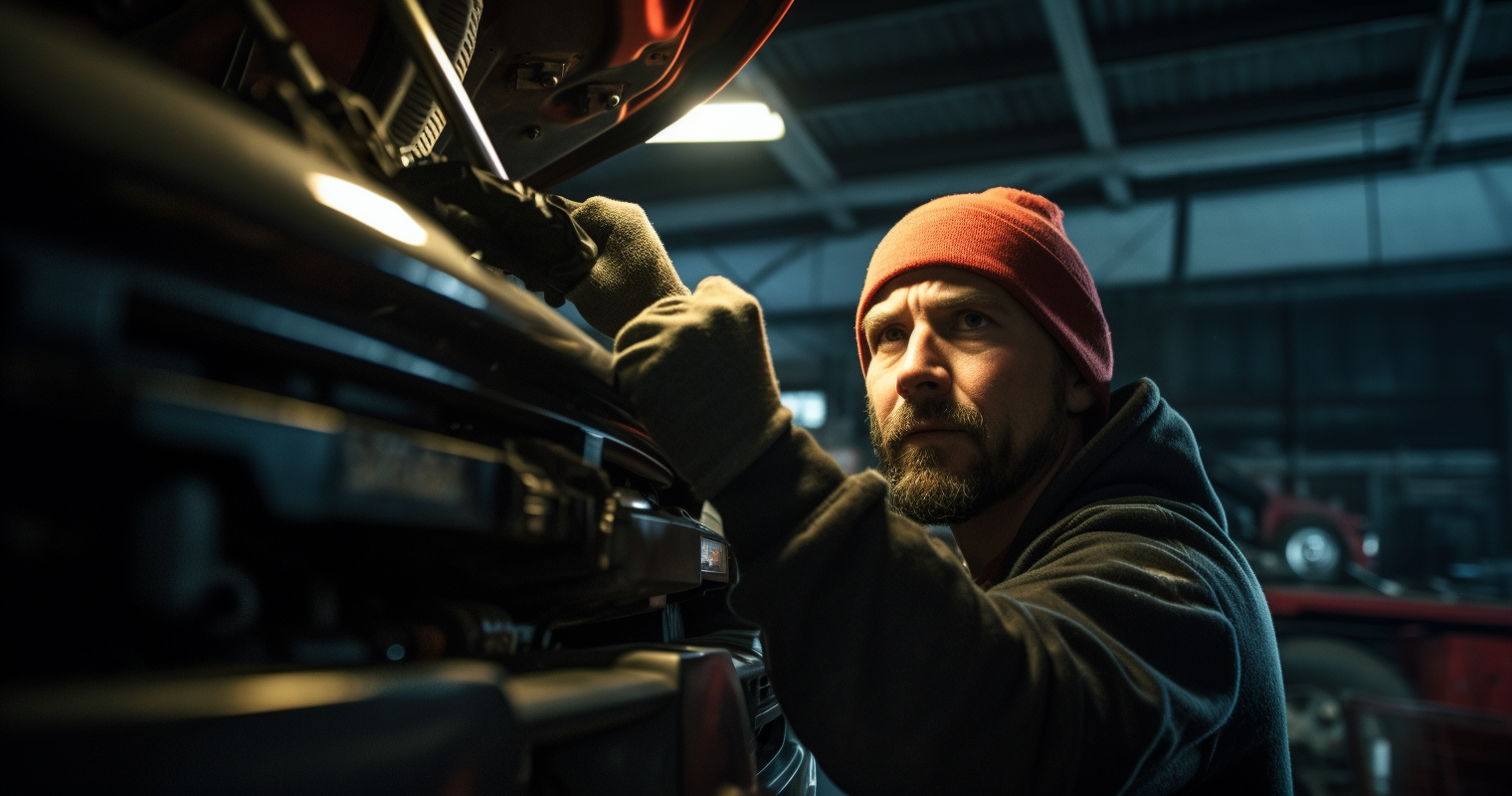
New Zealand enforces a compulsory vehicle safety inspection programme known as the Warrant of Fitness (WoF), which is overseen by NZ Transport Agency Waka Kotahi (NZTA). Depending on a vehicle’s age, inspections are required either annually or every six months. Roadside assistance is readily accessible through the AA and several other organisations, and the quality of mechanical work across the country is generally strong, with the Motor Trade Association (MTA) providing professional accreditation to workshops.
| Item | Details |
|---|---|
| Inspection scheme name | Warrant of Fitness (WoF) — mandatory for most light vehicles |
| WoF frequency (current, as of 2025) | Annually for vehicles manufactured from 2000 onwards; every 6 months for pre-2000 vehicles; annually for vintage vehicles over 40 years old (from September 2025) |
| Typical WoF inspection cost (as of 2025) | NZD $50–$100, varying by region and provider |
| Fine for no valid WoF (as of 2024) | Up to NZD $200 for the driver; fines for driving without a valid WoF can reach NZD $750 (from October 2024) |
| Main breakdown provider | AA New Zealand — 0800 500 222 — aa.co.nz |
| Overseas driving licence validity | Up to 18 months for car licences; 12 months for motorcycle/truck licences (as of 2025) |
What is the Warrant of Fitness and how does it compare to vehicle inspection schemes elsewhere?
The Warrant of Fitness (WoF) is a legally mandated roadworthiness check that applies to most vehicles in New Zealand. Its purpose is to confirm that vehicles on public roads are safe for drivers, passengers, and pedestrians. The scheme is administered by NZ Transport Agency Waka Kotahi (NZTA), which oversees roughly 3,200 authorised inspection agents operating throughout the country.
The WoF differs from systems such as the UK’s MOT test, which becomes compulsory from the third year of a vehicle’s life and is carried out annually thereafter. New Zealand instead applies a tiered frequency model tied to a vehicle’s age and category. As of 2025, vehicles built from 2000 onwards must undergo a WoF annually, while those manufactured before 2000 are subject to inspection every six months. From 1 September 2025, the required frequency for light vintage and veteran vehicles aged over 40 years shifted from every six months to once a year.
New Zealand’s inspection regime is among the most frequent in the OECD, though this may be subject to revision: significant reforms to the WoF system are anticipated between 2025 and 2026, potentially including extended inspection intervals, digital licensing, and new checks for modern safety technology. As these changes remain under active consultation, it is essential to consult the NZTA WoF page for up-to-date requirements.
Light vehicles within the scope of the WoF include cars, motorcycles, vans, people-movers, trailers, taxis, and rideshare vehicles such as those used by Uber. Inspections focus on fundamental safety components — tyres, brakes, lights, steering, and seatbelts. It is important to note that a WoF is not a comprehensive mechanical assessment; it does not evaluate the condition of the engine, clutch, gearbox, or differential.
The fee for a WoF inspection depends on the location and the provider, but typically sits between NZD $50 and $100 (as of 2025). A vehicle that passes will have the WoF label affixed to the inside of the front windscreen on the driver’s side. A vehicle that fails cannot be driven on public roads unless it is being transported for repair or a re-inspection — and only if it is safe to do so.
In October 2024, the government raised the penalty for operating a vehicle without a current WoF by 400%, increasing the fine from NZD $150 to NZD $750. Beyond financial penalties, insurance providers may decline to pay out on claims involving vehicles deemed unroadworthy, making a valid WoF an important safeguard well beyond simple legal obligation.
Heavier vehicles including trucks and buses fall under a separate Certificate of Fitness (CoF) regime with its own distinct requirements. The NZTA warrants and certificates page provides a full breakdown of vehicle categories and their corresponding inspection obligations.
What is the standard of vehicle maintenance and repair in New Zealand?
Vehicle repair standards across New Zealand are broadly on a par with those found in other advanced economies. The Motor Trade Association (MTA) serves as the principal industry body for vehicle repairers, retailers, and related trades. Workshops holding MTA approval operate under a defined code of ethics and technical standards, giving motorists a useful benchmark when selecting a garage — look for the MTA emblem when choosing where to take your vehicle.
With approximately 3,200 WoF agents spread across the country, most towns of reasonable size will have at least one workshop available. In the main urban centres — Auckland, Wellington, and Christchurch — both franchised dealership networks and independent repairers are plentiful. Expats choosing to live in more rural or remote locations, however, may find the availability of qualified mechanics more limited and should take this into account when deciding where to settle.
A large proportion of vehicles in New Zealand are second-hand imports from Japan, a consequence of both countries sharing right-hand-drive conventions. As a result, local mechanics tend to be very familiar with Japanese marques, and spare parts are generally straightforward to source. Expats who bring vehicles from left-hand-drive countries or with unusual specifications — particularly non-mainstream European models — may face longer waits and higher costs for parts. Consulting a specialist before importing a non-standard vehicle is worthwhile.
Language is not usually an obstacle — all workshops conduct business in English. In larger cities with multicultural communities, some multilingual assistance may be available, but it cannot be assumed. If technical terminology presents a challenge, it may help to have a trusted contact accompany you or communicate the fault in advance on your behalf.
Authorised inspection organisations are required to maintain a quality management system that satisfies NZTA standards, encompassing vehicle inspector records such as training documentation, equipment records, and control sheets. NZTA carries out site reviews of inspection stations to verify compliance, providing motorists with confidence that formal inspections are subject to meaningful regulatory oversight.
Who provides breakdown recovery and roadside assistance in New Zealand?
In addition to dedicated breakdown organisations — the AA and NZRA — a number of car insurance providers incorporate roadside assistance as a policy feature or optional extra. For newly arrived expats, gaining a clear understanding of the breakdown cover landscape before driving is an important first step.
AA New Zealand (Automobile Association)
The Automobile Association (AA) is New Zealand’s leading motoring organisation. It operates through a nationwide network of more than 300 contractors and over 1,000 staff members, supporting members wherever they travel. The AA offers personal membership plans — conceptually similar to the AA or RAC in the United Kingdom, or the AAA in the United States — that cover the individual rather than a specific vehicle. As of 2025, personal membership begins at NZD $99 for Auckland residents and NZD $89 for those living elsewhere in New Zealand. Membership protects the individual whether they are the driver or a passenger in another person’s car.
Should you break down before joining, you can arrange immediate roadside assistance by signing up on the spot for NZD $209 (as of 2025), or NZD $159 if a partner or spouse already holds membership. In the majority of cases, the AA will resolve the issue at the roadside; where this is not possible, they will tow the vehicle to the nearest safe location or repair facility. Their services encompass battery jump-starts and replacements, lockout assistance, and emergency fuel delivery. Reach the AA on 0800 500 222 or at aa.co.nz.
NZ Roadside Assist (NZRA)
NZ Roadside Assist (NZRA) has been providing automotive assistance since 2008, serving individuals, businesses, insurers, and fleet operators with services including breakdown response, towing, tyre assistance, and lockout help. NZRA offers three personal membership tiers, each allowing six callouts per year. Unlike the AA’s person-based model, NZRA membership is linked to a specific vehicle rather than an individual, meaning cover travels with the car regardless of who is driving it. Reach NZRA toll-free around the clock on 0508 697 623 or visit nzra.co.nz.
Insurance-bundled breakdown cover
Multiple insurers — including AMI, Vero, ANZ, and others — include roadside assistance as a bundled feature or optional upgrade with comprehensive car insurance policies. All providers offer comparable core services, covering situations such as flat tyres, flat batteries, fuel emergencies, mechanical and electrical failures, and vehicle lockouts. From 31 May 2025, AMI Roadside Rescue is included at no additional cost with AMI Comprehensive Car policies at renewal, and new AMI Comprehensive Car policies quoted on or after 18 May 2025 also qualify.
The AA Roadservice receives around half a million calls annually, with more than half attended to within 45 minutes. Response times in remote or rural areas may be longer, so expats in less-populated regions should weigh this when deciding on the appropriate level of cover.
Can I use international breakdown cover or bring my existing membership to New Zealand?
If you currently hold membership with a motoring organisation in your home country, it is worth making enquiries with both your existing provider and AA New Zealand before you arrive, as reciprocal arrangements do exist in some cases. The AA maintains reciprocal agreements with a number of overseas motoring clubs and may be able to offer certain services to visiting members of affiliated organisations. That said, the benefits available under such arrangements are typically narrower than those enjoyed by full local members — assistance may be provided on a per-callout basis rather than under standard membership terms.
International breakdown policies purchased in other countries are generally not designed to extend to New Zealand, and most carry explicit geographical limitations. If you are in transit or arriving for the first time, review your policy documents thoroughly. For anything beyond a short introductory period, taking out local membership or cover is strongly recommended.
AA New Zealand is affiliated with the Fédération Internationale de l’Automobile (FIA), a body that links motoring clubs across more than 140 countries. If your home club holds FIA affiliation, you may be entitled to certain services. Contact AA New Zealand directly at aa.co.nz ahead of your arrival to establish precisely what reciprocal entitlements apply and whether short-term visitor cover is available to bridge the gap before you arrange full local membership.
What should I know about driving a foreign-registered vehicle in New Zealand?
The majority of expats moving to New Zealand will buy or lease a locally registered vehicle rather than bring one from overseas. Nevertheless, it is important to understand the rules governing overseas licences and local vehicle registration from the moment you arrive.
Driving licence
The permitted period for driving on an overseas car licence in New Zealand has been extended from 12 months to 18 months — you may drive on your foreign car licence for 18 months from the date of your most recent arrival in New Zealand. For overseas motorcycle or truck licences, the allowable period remains 12 months from arrival. If your overseas licence is not printed in English, you must carry either an accurate English translation or an international driving permit (IDP) at all times when driving.
Registering a vehicle you bring into New Zealand
Any vehicle must be registered before it can be used on New Zealand roads. Registration involves paying a one-time fee to record the vehicle’s details on the Motor Vehicle Register, after which number plates are issued. This process typically occurs once, at the point when an imported vehicle is first put into use on local roads.
All vehicles undergo safety and identification checks at the point of registration to confirm they meet New Zealand’s road safety standards. An imported vehicle must therefore pass a compliance inspection before it can be registered and issued with New Zealand plates. Depending on the country of origin and the vehicle’s specifications, modifications may be necessary — for example, changes to lighting arrangements or emissions systems. Consulting a licensed vehicle compliance workshop before committing to an import is strongly advised.
Once registered, the vehicle joins the standard WoF inspection cycle applicable to all vehicles on New Zealand roads. While comprehensive car insurance is not a legal requirement in New Zealand, all registered vehicles attract an Accident Compensation Corporation (ACC) levy collected through vehicle licensing, which funds injury-related claims arising from road accidents. Separate private insurance — at minimum third-party cover — is highly recommended.
How do New Zealand’s road conditions and environment affect vehicle maintenance?
New Zealand’s landscape is extraordinarily varied, and that variety has direct and practical consequences for vehicle upkeep. The country stretches approximately 1,600 kilometres from north to south, taking in subtropical coastal zones, active volcanic terrain, and the heavily glaciated ranges of the Southern Alps. Vehicles — and their drivers — encounter markedly different conditions depending on where they operate.
Mountainous and rural roads
Roads beyond the main urban areas are frequently narrow, winding, and unsealed. Gravel surfaces are common in rural districts and contribute to accelerated tyre and suspension wear. In the South Island, high mountain passes including the Haast Pass and Lewis Pass become icy and snow-covered in winter, making winter tyres or chains necessary and regular brake and suspension checks essential. Snow and ice also pose a hazard along State Highway 1 on the Desert Road — the stretch between Waiouru and Turangi that traverses the central volcanic plateau and sees heavy traffic. Always check road conditions in winter before travelling this route.
Coastal and salt air environments
As an island nation, New Zealand has an extensive coastline, and many expats settle in seaside communities where salt-laden air accelerates corrosion of bodywork, brake components, and the vehicle’s underside. Washing the undercarriage regularly and applying rust-prevention treatments are sensible precautions, especially in the upper North Island.
Heat and UV exposure
New Zealand records some of the world’s highest levels of ultraviolet radiation, attributable to the thinner ozone layer above the Southern Hemisphere. Sustained UV exposure degrades rubber components — including tyres, hoses, and seals — more rapidly than in many other countries. Rubber parts should be inspected more frequently than may be your habit elsewhere, and be aware that tyre deterioration can outpace what the odometer might suggest.
Logging trucks and heavy vehicles
The central North Island is home to extensive forestry operations, generating large volumes of truck traffic as logs are hauled to pulp mills and the ports of Tauranga and Wellington. Sharing rural roads with these heavy vehicles creates additional hazards, and the passage of heavily laden trucks can contribute to the deterioration of road surfaces in certain areas.
Fuel and electric vehicle infrastructure
Petrol and diesel are available throughout both islands, though prices tend to be higher in remote locations. Electric vehicle (EV) charging networks are growing, but rural coverage remains inconsistent — careful journey planning is essential if you drive an EV over longer distances. AMI Roadside Rescue covers electric as well as petrol and diesel vehicles, towing EVs to the nearest charging point, approved repairer, or place of safety where required.
How do I get my vehicle through a Warrant of Fitness inspection in New Zealand?
- Locate your vehicle’s WoF expiry date. The WoF label is affixed to the inside of the front windscreen on the driver’s side. Your next inspection must be completed before the date shown on that label.
- Identify an authorised WoF inspection station. Approximately 3,200 WoF agents operate across New Zealand. Use an online search or the Yellow Pages to find the nearest one. VTNZ (Vehicle Testing New Zealand) is among the largest dedicated inspection providers nationwide.
- Perform a pre-inspection review. Check the main WoF criteria yourself: tyres (minimum tread depth of 1.5mm), brakes, lights, indicators, windscreen wipers, seatbelts, and steering. Addressing any obvious faults in advance can help you avoid a failed result.
- Make a booking and attend. Many inspection stations accept walk-in appointments; others operate by booking only. A standard inspection on a light vehicle typically takes between 30 and 60 minutes.
- Collect your result. If the vehicle passes, the inspector will place the WoF label on the inside of the front windscreen on the driver’s side. If it fails, you will be given a written list of defects requiring attention.
- Arrange repairs without delay if the vehicle fails. A vehicle that has failed a WoF cannot be driven on public roads unless it is being transported to a repairer or for a re-inspection — and only when it is safe to do so. You have 28 days from the date of the failed inspection to rectify the defects and present the vehicle for a recheck.
- Return for a recheck once repairs are complete. Take the vehicle back to the same inspection station. Many stations offer a complimentary recheck within the 28-day window provided the repairs were carried out in their own workshop.
Frequently asked questions
Do I need a WoF for a vehicle I have just imported into New Zealand?
All vehicles undergo safety and identification checks at the point of registration to confirm they meet New Zealand road safety standards. Any imported vehicle must pass a compliance inspection before it can be registered and used on public roads. Once registered, the vehicle enters the standard WoF inspection cycle. Contact a licensed compliance workshop for specific guidance on what your vehicle will require.
How much does a WoF inspection cost in New Zealand?
WoF inspection fees vary by location and provider but generally fall between NZD $50 and $100 (as of 2025). Dedicated inspection centres such as VTNZ or VINZ may charge differently from franchised dealerships or independent garages. Always confirm the price when making your booking.
What happens if I drive without a valid WoF?
In October 2024, the government increased the penalty for driving without a current WoF by 400%, raising the fine from NZD $150 to NZD $750. In addition to this financial penalty, your insurer may refuse to honour any claim arising from an accident if the vehicle was not roadworthy at the time, potentially leaving you personally liable for all associated costs.
Can I join the AA in New Zealand if I am newly arrived and immediately get breakdown cover?
Immediate roadside assistance is available by joining the AA at the scene of a breakdown for NZD $209, or NZD $159 if a partner or spouse already holds membership — simply call 0800 500 222 and they will process your membership over the phone and dispatch assistance straight away. Roadside sign-ups include immediate cover. Note that standard personal memberships carry a 24-hour stand-down period before callout services become available.
Are there reciprocal agreements between the AA New Zealand and motoring clubs abroad?
AA New Zealand holds reciprocal arrangements with a number of overseas motoring organisations and may extend certain services to visitors who are members of affiliated clubs. The scope of these benefits varies depending on the agreement in place. Contact AA New Zealand directly at aa.co.nz before travelling to establish what entitlements are available under any reciprocal arrangement.
How long can I drive on my overseas driving licence before I need a New Zealand licence?
As of 2025, the period during which you may drive on an overseas car licence in New Zealand has been extended to 18 months from the date of your most recent arrival. For overseas motorcycle or truck licences, the permitted period remains 12 months from arrival. Visit NZTA’s driving on NZ roads page for current requirements.
Is car insurance compulsory in New Zealand?
Comprehensive car insurance is not a legal requirement in New Zealand, unlike in many other countries. However, every registered vehicle is subject to an Accident Compensation Corporation (ACC) levy collected through the vehicle licensing process, which funds personal injury claims resulting from road accidents. Taking out private vehicle insurance — at a minimum, third-party cover — is strongly advisable to protect against property damage and liability exposure.
Are there any proposed changes to the WoF system I should be aware of?
Final decisions on proposed amendments to WoF inspection frequencies are expected around May 2026. The most significant proposals concern how often vehicles are required to be inspected — currently one of the most frequent regimes in the world. Changes under consideration include deferring the first WoF to four years for new vehicles and moving to two-yearly inspections for vehicles between four and ten years old. These proposals are not yet confirmed — refer to the NZTA WoF page for the latest information.