

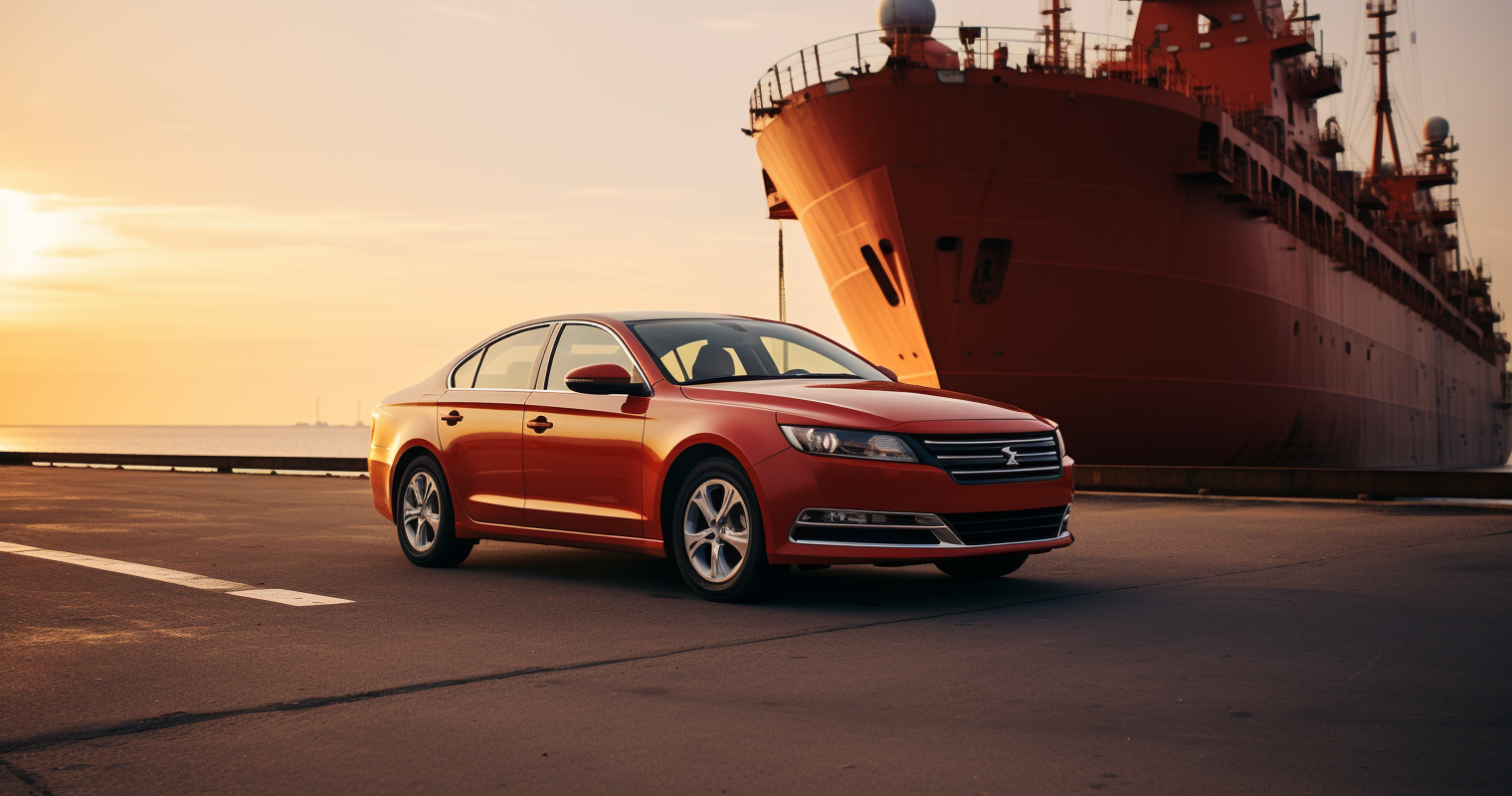
Foreign nationals are permitted to purchase or import a vehicle in Russia, though the process involves considerable administrative complexity, steep import costs, and strict regulatory obligations. Russia is a right-hand-traffic country, which creates compliance difficulties for right-hand-drive vehicles. Among the most important requirements are mandatory OSAGO third-party liability insurance, vehicle registration through the traffic police authority (GIBDD), and a significant regulatory shift in 2025 that now obligates all resident expatriates to hold a Russian driving licence.
| Item | Details |
|---|---|
| Import duty (new car, under 3 years old) | Up to 48% of vehicle value, depending on price bracket (as of 2024); verify current rates with the Federal Customs Service |
| VAT on imports | 20% of vehicle value including customs duties (as of 2024–2025) |
| Registration fees | Approximately 1,000–3,000 rubles for registration; 1,200 rubles for vehicle passport (PTS) (as of 2025) |
| Mandatory insurance | OSAGO (compulsory third-party liability) required for all drivers; CASCO optional comprehensive cover |
| Driving licence rule (as of April 2025) | Foreign licences no longer valid for residents; Russian licence required after passing full exams |
| Technical inspection (Tekhnicheskiy Osmotr) | Required for cars over 3 years old; necessary to obtain OSAGO insurance |
How do I buy a new car in Russia as a foreigner?
Acquiring a new car in Russia is a manageable process for foreign nationals. Authorised dealerships operate in all major urban centres, and widely used platforms such as Auto.ru and Avito list new and used vehicles alike. One important consideration is that all vehicle registration procedures are conducted exclusively in Russian, meaning that those without Russian language ability will need the assistance of a bilingual interpreter or a specialist agency throughout the process.
When completing a purchase, you will generally be required to present a valid passport, a current visa or residence permit, documentation confirming your registered address within Russia, and in certain cases a Russian tax identification number (INN). One administrative obligation that distinguishes Russia from most other countries is that your vehicle registration must be updated each time your visa or residence permit is renewed — immigration status and vehicle registration are directly linked.
Finance arrangements are available through Russian dealerships and banks, although in practice access to credit is restricted for non-residents and those holding short-term visas. Most expatriates find that purchasing outright via cash or bank transfer is the more practical option. Upon completing a cash or transfer payment, ownership is formally conveyed and you will need to provide proof of ownership, identification, insurance documentation, and a technical inspection certificate. Always verify the exact documentation requirements with the dealership before proceeding, and consider consulting a local legal adviser or customs broker if there is any uncertainty.
All vehicles sold in Russia must comply with UNECE technical standards, and new cars are additionally required to be fitted with the ERA-GLONASS emergency call system. In the case of a new vehicle purchased through an authorised dealer, the dealership typically manages this compliance requirement — but it is wise to confirm this before signing any purchase agreement.
How do I buy a used car in Russia?
Purchasing a second-hand vehicle follows much the same path as buying new. A written sale-and-purchase agreement — known in Russian as a dogovor kupli-prodazhi, or DKP — must be drawn up in Russian and signed in three copies, with both parties’ passport details and full vehicle particulars recorded. Standard templates for this contract are freely available online in Russian.
Before transferring any funds, it is essential to conduct thorough checks on the vehicle’s status. These should include:
- Reviewing the vehicle’s history for accident records and odometer discrepancies
- Checking for outstanding fines and unpaid road tax via the GIBDD website or the Gosuslugi government services portal
- Confirming the vehicle is not encumbered as loan collateral or subject to any court-imposed restrictions
- Ensuring the PTS (vehicle passport) is available for transfer, as its absence will prevent registration
When dealing with a private seller, you should request proof of identity and confirm that the name on the seller’s documents corresponds with the name recorded in the PTS. Where the seller is not the registered owner, they must hold a notarised General Power of Attorney granting them the right to sell the vehicle.
In a private sale transaction, both buyer and seller are typically required to attend a GIBDD office together, where mechanics will compare the engine and chassis numbers against those recorded in the PTS. The GIBDD (State Traffic Safety Inspectorate) website at gibdd.ru provides a tool for checking a vehicle’s registration history and any active restrictions. Following the sale, the new owner must complete registration in their own name within ten days.
Can I import a vehicle into Russia, and how does the process work?
Importing a vehicle to Russia has its own distinct characteristics, primarily because Russia is a member of the Eurasian Economic Union (EAEU), which also includes Armenia, Belarus, Kazakhstan, and Kyrgyzstan. Customs regulations are harmonised across the EAEU, though from 1 April 2024 additional fees became applicable to cars brought in from within the union. Always verify the current position with the Federal Customs Service of Russia (Федеральная Таможенная Служба, FTS) at customs.gov.ru.
Since Russia uses right-hand traffic, right-hand-drive vehicles encounter substantial regulatory barriers — they are not covered by formal type-approval for Russian roads and are extremely difficult to register for permanent use. Anyone relocating to Russia who intends to import a vehicle should bring a left-hand-drive model. All vehicles must comply with applicable UNECE technical standards.
There are two principal routes available to individuals wishing to import a vehicle:
- Temporary import (up to one year): The vehicle may remain in Russia for a period not exceeding one year. Prior to the expiry of this period, the owner must either arrange for the vehicle to be exported or declare it for permanent release into free circulation. During temporary import, full customs duties and the recycling fee are not collected; instead, a security deposit equivalent to the customs duty amount is lodged, and this deposit is returned when the vehicle departs Russia.
- Permanent import: To bring a vehicle into Russia on a permanent basis, it must be declared for release into free circulation within the customs territory of the EAEU. Once this declaration is made, the vehicle may remain in Russia indefinitely, but full customs duty, VAT, and the recycling fee all become payable.
The complete step-by-step process for permanent importation is as follows:
- Research the applicable duty rates and confirm eligibility at customs.gov.ru
- Arrange shipping to a Russian port or land border crossing
- Assemble all necessary documents: vehicle title/PTS, purchase invoice, passport, proof of Russian residence, compliance certificates, and freight insurance
- Submit a customs declaration and pay the relevant customs duty and utilisation (recycling) fee; the goods declaration must be lodged within 10 days of the vehicle’s arrival
- Obtain a type-approval or compliance certificate (OTCS) from an accredited certification centre — the OTCS is issued following verification at these centres
- Have the ERA-GLONASS emergency call system installed, which is mandatory for new vehicles
- Present the vehicle and the complete documentation package to the GIBDD, including the compliance certificate and customs receipt, undergo the mandatory technical inspection, and receive Russian licence plates together with a registration certificate
Individuals taking up permanent residence in Russia may be eligible for an exemption from import duties on a single vehicle, except in the case of new vehicles with an engine displacing more than 1,800 cubic centimetres. This “personal effects” or “removal goods” type exemption is conditional and subject to revision — always confirm your eligibility with the Federal Customs Service before relying on it.
Take note of any temporary restrictions or newly introduced regulations currently in force, and compare the overall cost of importing against the local market price to assess whether it makes financial sense.
What are the costs involved in importing a car to Russia?
Russia imposes some of the steepest vehicle import costs in Europe, and the total financial burden can easily equal or surpass the original purchase price of the car. An individual importing a vehicle must pay customs duty, a customs processing fee, and a recycling fee, with the combined total sometimes exceeding what was paid for the vehicle itself. All charges are assessed in Russian rubles at the Central Bank’s official exchange rate on the day the declaration is submitted.
The principal cost components are set out in the table below:
| Cost item | How it is calculated |
|---|---|
| Customs duty (new cars, under 3 years old) | Based on vehicle price; for cars costing over €10,000, the duty rate is 48% of the vehicle’s value. Verify current rates with the Federal Customs Service. |
| Customs duty (3–5 years old) | Engine volume is the basis; for example, for a car aged 3–5 years with 1,500 cc engine capacity, a rate of approximately €2.5 per cc applies. |
| Recycling fee (utilisation fee) | A recycling fee guarantees free future disposal of the vehicle. For a car older than 3 years with an engine over 3.5 litres, this fee can reach approximately 1,600,000 rubles even for personal-use imports. Rates have increased significantly since 2024, rising 2–3 times for older, larger-engined vehicles. |
| VAT | A general tax of 20% is applied to the total value of the import, including the customs duty. |
| Customs processing fee | Typically around €300 for most passenger vehicles (as of 2024); verify current figures |
| Compliance / type-approval (OTCS) | Issued after certification centre inspection; costs vary by vehicle and centre |
| ERA-GLONASS installation | Required for new vehicles; costs vary by installer and region |
| Shipping | Varies significantly by origin country and shipping method |
To illustrate the scale of these costs: for a 2018 Toyota Land Cruiser with a 4.5-litre engine valued at €45,000, customs duty alone comes to approximately €25,000, the customs processing fee around €300, and the recycling fee approximately €17,000 — bringing the total additional charges to around €43,000 on top of the purchase price. As of June 2024, buying the equivalent vehicle locally within Russia at approximately €70,000 was actually less expensive than importing one from abroad.
A reasonable starting point for budgeting purposes is to allow for import duties of around 30% of the vehicle’s value, and engaging an experienced customs broker is advisable to ensure your declaration meets current requirements. Always confirm the latest rates directly with the Federal Customs Service at customs.gov.ru, as duty schedules are periodically revised. A customs broker’s fee typically starts from around 10,000 rubles (as of 2025).
How do I register a vehicle in Russia?
Vehicle registration in Russia falls under the authority of the GIBDD (Государственная инспекция безопасности дорожного движения — State Traffic Safety Inspectorate), which operates as part of the Ministry of Internal Affairs. Official information and appointment booking are available at gibdd.ru. Whether you are importing a vehicle or bringing a foreign-registered car into Russia for personal use, registration with the GIBDD must be completed within 10 days of arrival.
The registration procedure for a locally purchased or imported vehicle proceeds as follows:
- Obtain a valid OSAGO insurance policy before attending the GIBDD, as insurance must be in place before registration can be finalised
- For vehicles older than three years, obtain a technical inspection card (diagnosticheskaya karta) from an accredited inspection operator. Cars under three years of age are not required to undergo this inspection as a condition of obtaining insurance.
- Attend a GIBDD centre with your documents — foreign nationals in Moscow are advised to use specialist centres for foreigners, such as the one located at Lobnenskaya Ulitsa. Submit proof of ownership (PTS), valid identification, your OSAGO policy, the technical inspection certificate, proof of address, and a notarised translation of your passport.
- For imported vehicles, additionally submit the customs declaration and the compliance certificate (OTCS)
- Pay the applicable state fees
- Once your documentation has been processed, you will be issued a vehicle registration certificate and number plates
Registration fees amount to approximately 1,000–3,000 rubles, with an additional PTS fee of 1,200 rubles (as of 2025). The technical inspection costs around 1,000 rubles. With all documentation in order, the full registration process at the GIBDD typically takes one to two working days, though imported vehicles may require additional time due to customs clearance formalities.
Unlike the vehicle registration systems in certain other countries — where a vehicle can change hands between private buyers without either party needing to visit a government office — Russia’s system requires active participation at the GIBDD for every change of ownership. All documentation is in Russian, so professional translation support is strongly recommended.
What insurance do I need to drive legally in Russia?
OSAGO (Obyazatelnoye Strakhovanie Avtograzhdanskoy Otvetstvennosti) is the mandatory third-party liability insurance that all vehicle owners in Russia must hold, providing cover for harm or loss caused to third parties in a road accident. OSAGO has been a legal requirement since July 2003, when it was introduced to establish a framework of financial protection for accident victims. Operating a vehicle without a valid OSAGO policy is unlawful and carries financial penalties.
A notable feature of OSAGO is the direct involvement of the Russian state in setting both the regulatory framework and the applicable tariff ranges — unlike many countries where insurance pricing is determined entirely by market competition between private providers. The Central Bank of Russia has supervisory oversight of these policies. OSAGO can be purchased from any authorised insurer, and electronic policies have seen rapid growth, representing 73.5% of all compulsory motor insurance sales as of 2025.
Given that OSAGO cover is relatively limited in scope, it is advisable to arrange supplementary insurance as well. Foreign drivers in Russia are particularly encouraged to take out comprehensive “avtokasko” (CASCO) insurance, which is offered by all major insurance companies and typically covers theft and accidental damage, and may also include roadside assistance. Foreign-registered vehicles may be subject to certain restrictions under CASCO policies.
If you are importing a vehicle, insurance can be arranged at the border upon entering Russia. Your OSAGO certificate must be carried in the vehicle at all times. Foreign no-claims histories are not currently formally recognised within Russia’s OSAGO tariff calculation framework, though the Russian Union of Auto-Insurers has begun compiling data in a shared database with a view to implementing a bonus/malus system. Check the current status of this arrangement and any eligible discounts when taking out a new policy.
What driving licence do I need in Russia as an expat?
Russia introduced a major change to its driving licence rules in 2025. With effect from 1 April 2024, all resident expatriates became required to exchange their foreign licence for a Russian one, and from 1 April 2025, foreign and international driving licences ceased to be valid for use on Russian roads. This represents a substantial departure from the previous framework, under which foreign licences could be used for extended periods without conversion.
From 1 April 2025 onwards, obtaining a Russian driving licence requires sitting the relevant examinations in full. The process involves the following steps:
- Register with the Ministry of Internal Affairs at your place of residence.
- Undergo a medical examination at an accredited facility, which typically includes assessments of vision and hearing.
- Pass a theoretical examination covering Russian traffic regulations, which is conducted in Russian.
- Pass a practical driving assessment, consisting of a closed-circuit exercise and an on-road component in live traffic.
- Pay the relevant administrative fee and submit the complete documentation package to the GIBDD.
- Once your application has been reviewed — normally within 10 to 15 days — a Russian driving licence will be issued, valid for 10 years.
Attendance at a Russian driving school, which typically involves around 50 hours of instruction, is often necessary for preparation, particularly for those without Russian language proficiency. Courses taught in foreign languages may be available in larger cities such as Moscow and Saint Petersburg.
All matters relating to obtaining or exchanging a driving licence are handled by the GIBDD — the official website is gibdd.ru. Citizens of certain countries, including some EU member states, may have benefited from simplified conversion procedures under bilateral agreements between Russia and those countries, though the specific terms vary from one agreement to another. Confirm the current status of any such arrangement with the GIBDD or your country’s consular services before taking any action.
How do I sell a car in Russia?
Selling a vehicle in Russia is a structured process that involves both parties and, in most cases, a visit to the GIBDD. Before proceeding with a sale, the seller should confirm that all outstanding fines, road tax liabilities, and registration obligations have been settled. The sale agreement — a dogovor kupli-prodazhi — must be prepared in Russian in three copies, containing the complete personal details of both parties as well as full particulars of the vehicle.
Transferring ownership requires presenting documentation broadly similar to what is needed for initial registration, and both buyer and seller are generally expected to attend the local GIBDD office together so that mechanics can verify the engine and chassis numbers against those recorded in the PTS.
The key steps the seller must complete are as follows:
- Prepare three copies of the sale-and-purchase agreement (DKP) in Russian
- Hand the original PTS (vehicle passport) and any available service records over to the buyer
- Attend the GIBDD together with the buyer to complete de-registration and the ownership transfer
- Retain a signed copy of the DKP as documentary evidence that the transaction has occurred
- Verify that the vehicle has been removed from your name in the GIBDD database
The seller remains liable for fines and any other obligations linked to the vehicle until the ownership transfer has been formally entered into the GIBDD records. Should the buyer delay re-registration, any traffic fines issued in the interim may initially be directed at the former owner. It is therefore important to hold onto the signed DKP and to confirm with the GIBDD that the de-registration has been duly processed.
From a tax perspective, if you have held the vehicle for fewer than three years, any financial gain arising from the sale may be subject to Russian personal income tax (NDFL). Ownership lasting three years or more generally entitles the seller to an exemption from this obligation. Confirm the current rules with a Russian tax adviser or the Federal Tax Service (Федеральная налоговая служба) at nalog.gov.ru.
Are there any ongoing costs or obligations for vehicle ownership in Russia?
Vehicle ownership in Russia brings with it a range of recurring financial and administrative obligations. Familiarising yourself with these in advance will help you plan your budget and avoid inadvertent non-compliance.
Transport tax (transportny nalog): A transport tax is levied on all vehicle types, including passenger cars and SUVs. The annual amount due varies both by region and by engine output. Unlike the flat-rate annual duty structures seen in some other countries, Russia’s transport tax is calculated on the basis of engine power measured in horsepower and differs considerably between regions — Moscow and St Petersburg, for example, tend to apply higher rates. Current regional rate tables are published by the Federal Tax Service at nalog.gov.ru.
Technical inspection (Tekhnicheskiy Osmotr): Federal Law No. 170, which came into force in January 2012, governs the technical roadworthiness inspection of vehicles. For cars more than three years old, a current diagnostic card (diagnosticheskaya karta) issued following a successful inspection is a prerequisite for renewing OSAGO insurance. Vehicles under three years of age are not subject to this requirement. The system is broadly analogous in concept to roadworthiness inspection schemes found in other countries — such as the UK’s MOT or Germany’s TÜV — though the applicable frequency and threshold conditions differ. Inspections are carried out by commercially operated, licensed inspection centres, for which a fee is charged. The cost is approximately 1,000 rubles (as of 2025).
OSAGO insurance renewal: Your OSAGO policy must be renewed on an annual basis. If your vehicle is more than three years old, a valid diagnostic card is required as a condition of renewing your OSAGO cover.
Registration renewal: Each time your visa or residence permit is renewed, you are also required to renew your vehicle registration. This is a particularly important obligation for expats and reflects the direct link between immigration status and vehicle registration in Russia — a connection that is uncommon in most other countries.
Excise duty is also payable on vehicles, calculated at rates of 0–1,302 rubles per horsepower depending on engine output (as of 2024). Confirm the current excise rate applicable to your vehicle with the Federal Tax Service. For all ongoing ownership obligations, the most authoritative sources of information are the GIBDD at gibdd.ru and the Federal Tax Service at nalog.gov.ru.
Frequently asked questions
Do I need a Russian residence permit to buy and register a car in Russia?
A permanent residence permit is not strictly required in order to purchase a vehicle, but you will need a valid registered address in Russia along with a current visa or temporary residence registration to complete the GIBDD registration process. Your vehicle registration is linked to the validity of your immigration status and must be renewed whenever your visa or permit is updated. Consult the GIBDD at gibdd.ru for the current documentation requirements.
Can I drive a right-hand-drive vehicle in Russia?
Russia is a right-hand-traffic country, and right-hand-drive vehicles do not hold formal type-approval for permanent use on Russian roads. Although such vehicles are encountered in parts of the Russian Far East, obtaining full registration for one is extremely challenging. Anyone relocating to Russia who plans to import a vehicle should strongly consider bringing a left-hand-drive model instead.
Is my foreign driving licence valid in Russia?
From 1 April 2025, foreign and international driving licences are no longer recognised as valid for driving in Russia. All resident expatriates are now required to obtain a Russian driving licence by completing the full theoretical and practical examination process. Contact the GIBDD for details of the current procedure.
How long does vehicle registration take at the GIBDD?
Where all documentation is in order, the GIBDD registration process generally takes one to two working days. Imported vehicles may require additional time due to the need to satisfy customs clearance requirements. Making use of the GIBDD’s online appointment booking system can help to minimise waiting times.
What is the recycling fee and do I have to pay it?
The recycling fee, also referred to as the utilisation fee, is levied on vehicles imported into Russia on a permanent basis to finance their eventual environmentally compliant disposal. It applies to all permanently imported vehicles, and the applicable rates have risen substantially since 2024, increasing two to three times for older vehicles with larger engines. Before finalising any import decision, verify the current rate for your specific vehicle with the Federal Customs Service at customs.gov.ru.
What is OSAGO and is it the same as standard third-party insurance?
OSAGO is the compulsory third-party liability insurance that all vehicle owners in Russia are required to hold, covering losses and damages caused to other parties in a road accident. It is conceptually comparable to mandatory third-party motor insurance in other countries, but with one significant distinction: in Russia, the state prescribes both the regulatory framework and the tariff ranges, rather than leaving premium pricing to open market competition between insurers. OSAGO cover limits are relatively modest, which is why taking out supplementary voluntary CASCO insurance is widely recommended.
Can I temporarily import my car to Russia without paying full customs duties?
Temporary importation of a vehicle for up to one year is permitted. Before that period expires, you must either export the vehicle or place it under permanent declaration for free circulation. Throughout the temporary import period, full customs duties and the recycling fee are not collected; instead, a security deposit equivalent to the customs duty amount is lodged and is returned to you once the vehicle leaves Russia.
Are there tax implications when selling a car in Russia?
Yes. Where a vehicle has been in your ownership for fewer than three years, any profit realised on the sale may attract Russian personal income tax (NDFL). If ownership extends to three years or more, the sale is generally exempt from this tax. As the rules in this area may change, it is advisable to seek guidance from a Russian tax adviser or consult the Federal Tax Service directly at nalog.gov.ru.