
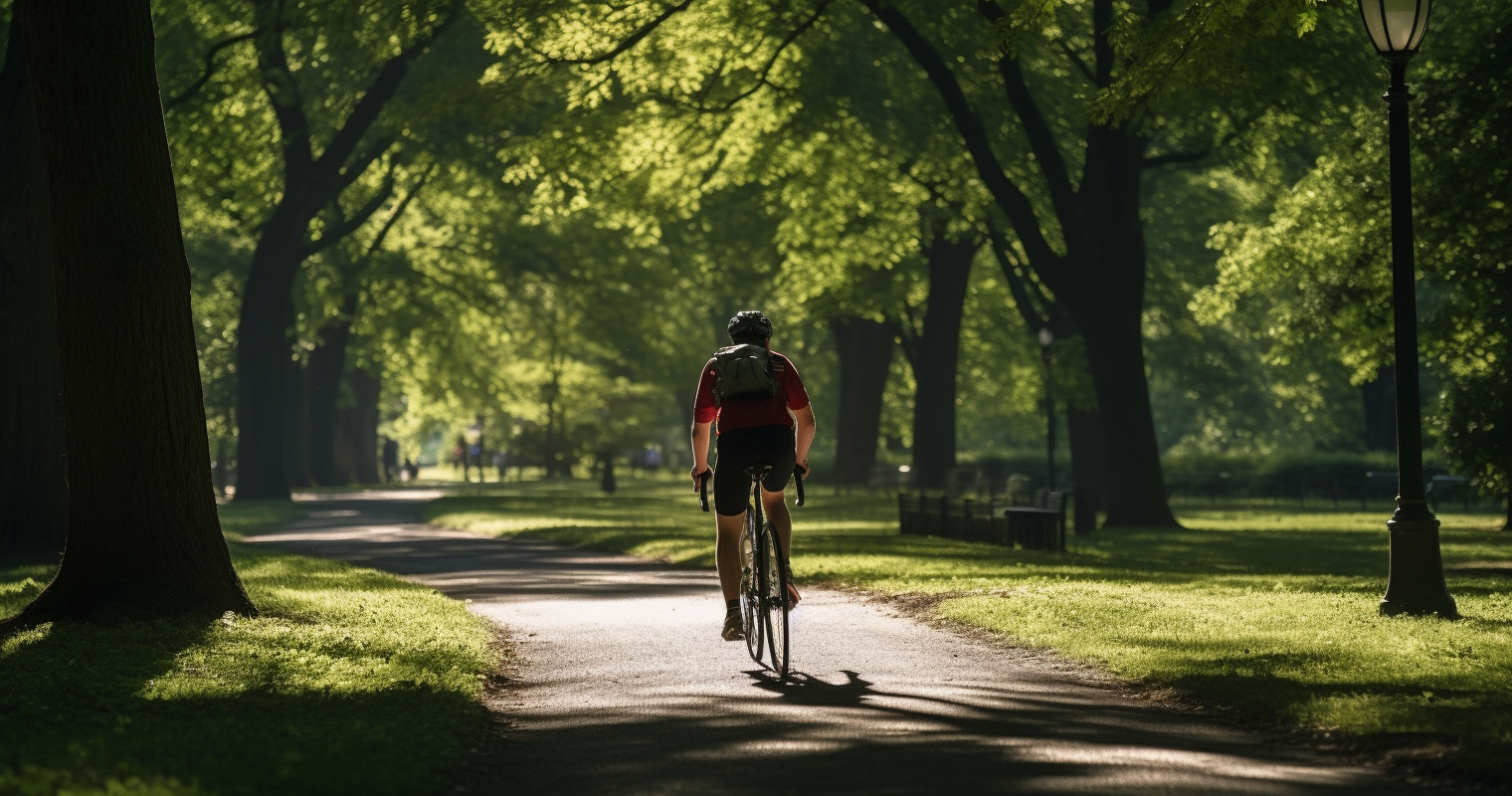
Singapore stands out as a genuinely bike-friendly city-state, boasting a steadily growing web of dedicated cycling paths, park connectors, and shared mobility schemes. While it has yet to reach the deeply ingrained cycling culture found in the Netherlands or Denmark, it presents a viable and rewarding choice for short commutes, first-and-last-mile connections, and recreational rides — all backed by sustained government commitment to embedding cycling into daily urban life.
| Item | Details |
|---|---|
| Total cycling path network (as of 2025) | Over 730 km of cycling paths and park connectors island-wide |
| Planned network expansion | ~1,300 km target by 2030 (LTA Islandwide Cycling Network) |
| Helmet law | Mandatory on roads; strongly recommended on all paths |
| Speed limits on paths | 10 km/h on pedestrian paths; 25 km/h on Park Connector Network routes |
| Bike-share cost (as of 2025) | From S$1 per 30 minutes (Anywheel / HelloRide) |
| Pedestrian-only path enforcement | From 1 July 2025; fines up to S$2,000 or up to 3 months’ jail for riding on designated pedestrian-only paths |
How popular is cycling in Singapore — is it a common way to get around?
Cycling in Singapore occupies a distinctive middle ground: it is more widely embraced than in many South-East Asian cities, yet has not achieved the mass-transit significance it holds in the Netherlands or Denmark, where bicycles account for a substantial proportion of all journeys made. In Singapore, cycling is most frequently associated with leisure pursuits and weekend family outings, though its standing as a commuting option is rising steadily in line with ongoing improvements to infrastructure.
The Singapore government regards cycling as “a sustainable and convenient way to get around” and “a great form of exercise to keep active and healthy.” This dual framing — balancing transport utility with personal wellbeing — captures how cycling is positioned in national policy: well-suited to shorter journeys, though not yet the default mode for most residents.
Through the National Cycling Plan, the Land Transport Authority (LTA) is building out cycling path networks within residential towns. These connect to the Park Connector Network (PCN), enabling riders to travel both within a town — for instance, between home and an MRT station — and between towns on longer rides. This “first and last mile” model, whereby cyclists pedal to and from public transport hubs, is becoming increasingly routine among commuters.
Unlike Germany, where utility cycling on roads is mainstream across all age groups, or the Netherlands where separated infrastructure is the norm, Singapore’s cycling culture is still finding its footing. That said, active government investment and an expanding community of recreational and commuter cyclists mean the landscape is evolving rapidly, making cycling a compelling option for newly arrived expats to explore.
What is the cycling infrastructure like in Singapore?
Singapore currently has over 730 km of cycling paths and park connectors stretching across all HDB towns and estates as well as the Central Area. The LTA continues to extend the cycling path network in support of greener travel choices, with routes linking homes to MRT stations, bus interchanges, shopping malls, schools, and local amenities.
The backbone of Singapore’s cycling infrastructure is the Park Connector Network (PCN) — an interlinking system of 380 kilometres of paved recreational trails managed by the National Parks Board (NParks). The PCN links parks, nature areas, and green spaces across the island and is shared by walkers, joggers, and cyclists alike. Speed restrictions are enforced along these routes: cyclists must stay within 25 km/h on PCN paths, while the entire Rail Corridor carries a stricter 10 km/h limit.
Launched in 2020, the LTA’s Islandwide Cycling Network (ICN) programme sets out to accelerate active mobility connectivity and infrastructure development across Singapore, with an ambition to extend the cycling path network to around 1,300 km by 2030. This target is broadly comparable in scale to the network expansions undertaken in cities such as Paris and Brussels over the past decade.
Ang Mo Kio holds the distinction of being Singapore’s first walking and cycling town, with a cycling network that connects residents to Ang Mo Kio MRT station and bus interchange — making it safe and seamless to cycle the first and last mile of a daily commute. The network also improves access to key destinations such as AMK Hub and Bishan-Ang Mo Kio Park.
Singapore’s first bicycle crossing was installed in 1994 along Bishan Road. Since then, dedicated bicycle crossings have been constructed at 120 pedestrian crossings, providing separate crossing spaces for cyclists and pedestrians. From 2013 onwards, bicycle wheeling ramps have been added at various locations to help cyclists navigate pedestrian overhead bridges more easily.
That said, the network has limitations for those accustomed to fully segregated infrastructure. PCN cycling routes can feel disjointed in places, and some park connectors begin and end without clear guidance on connecting to the next section. Certain stretches also feature kerbs that require negotiation. The LTA’s cycling infrastructure page and the NParks PCN website remain the most reliable official sources for up-to-date route maps and planned developments.
Is cycling safe in Singapore?
Singapore’s roads are generally well-maintained, well-lit, and subject to rigorous traffic regulations — all of which contribute positively to cycling safety. Nonetheless, riding alongside motor traffic on busy arterial roads remains challenging in areas lacking dedicated cycling lanes. For sports cyclists, the 10 km cycling lane along Tanah Merah Coast Road is a one-way facility featuring updated markings and design features to enhance rider safety along a stretch that also sees frequent heavy vehicle use.
Cyclists are barred from riding on expressways and through road tunnels. The Singapore Police Force has repeatedly reinforced this restriction, urging cyclists to stay off expressways because of the significantly higher vehicle speeds involved. Anyone new to cycling in Singapore should be aware of this prohibition from the outset.
Singapore’s hot and humid climate is another factor worth considering. While not a safety hazard in itself, intense heat and sudden tropical downpours can make road surfaces slippery and substantially reduce visibility. Riding in the early morning or after sunset is common practice among both recreational and commuter cyclists as a result.
New path separation rules introduced in 2025 aim to enhance safety for vulnerable users. From 1 July 2025, the LTA began enforcement action against cyclists using footpaths that have been reclassified as Pedestrian-Only Paths, specifically to protect more vulnerable pedestrians such as elderly residents and young children. For the most current road safety statistics, consult the Singapore Police Force and the Ministry of Transport, taking note of the publication year for any figures you review.
What are the rules of the road for cyclists in Singapore?
Singapore’s cycling regulations are established under the Active Mobility Act (AMA) and enforced by both the LTA and Traffic Police. The rules are notably comprehensive, covering where cyclists may ride, applicable speed limits, and required equipment. Enforcement is active — fines are regularly issued. This approach differs from countries where cycling regulations are loosely applied; the spirit of the framework is closer to Australia’s comparatively strict cycling laws.
- Helmets on roads: Wearing a helmet is a legal requirement in Singapore for anyone cycling on roads. Helmets are also strongly recommended when riding on pavements or park connectors.
- Pedestrian-only paths: From 1 July 2025, the LTA has applied stricter enforcement to rules governing where bicycles may be used in public spaces. Cyclists are prohibited from using footpaths designated as “Pedestrian Only.” Anyone found riding on these designated paths may face a fine of up to S$2,000, imprisonment of up to three months, or both.
- Speed limits: To protect pedestrians, cyclists must observe strict speed limits according to the type of path they are using. On pedestrian walkways, the maximum speed is 10 km/h. On PCN routes, the limit rises to 25 km/h.
- Lighting at night: Cyclists are legally required to use lights during hours of darkness. A white front lamp is mandatory, while a red rear reflector satisfies the minimum requirement for the rear.
- No mobile devices: Under the Active Mobility Act, all riders of active mobility devices — including conventional bicycles — are prohibited from using mobile communication devices while in motion.
- No expressways or tunnels: Riding on expressways or through designated road tunnels is prohibited. Cycling on expressways is among the offences subject to a composition fine.
- Group riding: Cyclists who breach the group size rule face a fine of S$150, a composition fine amount that was raised with effect from 1 January 2022 to strengthen road safety.
- Single file on single-lane roads: While riding abreast is permitted in some circumstances, cyclists travelling on the road must ride in single file when using single-lane roads.
Always refer to the LTA’s official Rules and Code of Conduct page for the full and current legal requirements, as the regulatory framework is subject to periodic updates.
Do I need to register my bike or have insurance to cycle in Singapore?
Standard pedal bicycles do not require registration in Singapore. Registration obligations apply to motorised devices such as e-scooters and Power-Assisted Bicycles (PABs), not to conventional human-powered bikes. This mirrors the position in most countries, where registration is reserved for motorised vehicles.
Before riding a PAB on cycling paths or roads, riders must first pass the mandatory theory test for PABs. If you intend to use a power-assisted bicycle rather than a conventional model, it is important to review the LTA’s requirements carefully, as the regulatory framework is considerably more involved.
Cycling insurance is not a legal requirement for conventional bicycle riders in Singapore. However, given the proximity of cyclists to motor traffic on many roads, personal accident insurance is widely recommended by financial advisers. With cyclist-motorist accidents on the rise in Singapore, having a personal accident plan in place is particularly sensible for those who cycle on roads. Many general personal accident and travel insurance products can be extended to include cycling cover; providers such as AXA, NTUC Income, and MSIG — all active in Singapore — can be consulted for current product details. For guidance on insurance regulation, refer to the Monetary Authority of Singapore (MAS).
Are there public bike-sharing or rental schemes in Singapore?
As of 2025, Anywheel and HelloRide are the only bike-sharing operators licensed by the Land Transport Authority (LTA). Former operators including GBikes, oBikes, SG Bike, and ShareBikeSG have all wound up operations. Singapore’s bike-share market underwent significant turbulence in the late 2010s when an oversupply of unregulated dockless bikes led to congestion and widespread abandonment, prompting a licensing regime that has since consolidated the market to its current two operators.
Anywheel and HelloRide together operate a combined fleet of around 40,000 bicycles across Singapore. To hire a bike, users download the relevant app and set up a payment method, then locate a bicycle at a designated parking spot, ride to their destination, and return it to another designated parking area.
Anywheel pricing is notably affordable, starting at just S$1 per 30 minutes for ad-hoc rides as of 2025. New account holders must make a minimum top-up of S$10 upon registration. Regular users can also opt for the Anywheel Pass for further savings. HelloRide charges S$1 for the first 30 minutes, with an additional 50 cents for every 10 minutes beyond that as of 2025.
Both platforms offer loyalty programmes and pass options that lower costs for frequent riders. Each operates a similar pricing structure based on ride duration, with a pass option providing free trips of up to 30 minutes. For current pricing, availability maps, and subscription details, visit Anywheel’s website or the HelloRide website.
For traditional bike rentals — particularly at popular leisure destinations — options are readily available. East Coast Park, with its 11 km stretch of coastal park connectors, is among Singapore’s most frequented cycling spots and is well served by bicycle rental outlets. Prices begin at approximately S$10 per hour for adults as of 2025.
Where can I buy or service a bike in Singapore?
Singapore has a robust retail market for bicycles, spanning everything from mass-market and foldable models to high-end road and mountain bikes. Both international chains and independent local retailers are well represented, giving Singapore a level of access and variety broadly comparable to major cities in Europe or Australia.
Major retailers such as Decathlon — with several outlets spread across the island — stock entry-level to mid-range bicycles at competitive price points, along with accessories and servicing options. For performance road or mountain bikes, specialist shops are concentrated in areas including Geylang, Toa Payoh, and Bukit Timah, as well as various suburban HDB towns. Leisure bicycle rentals are relatively easy to find; more specialised options such as road bikes require more dedicated searching. Many expats living in Singapore own road bikes, and there is no shortage of retail and rental outlets catering to this segment.
Second-hand bicycles are widely available through online platforms such as Carousell and Facebook Marketplace, both popular with locals and newcomers alike. Consumer protection in Singapore falls under the Consumer Protection (Fair Trading) Act, and standard statutory warranties apply to new purchases from registered retailers — broadly comparable to EU consumer protection standards. Mobile bike mechanics, who visit homes or workplaces, have grown in popularity alongside more traditional workshop-based repair services.
To support active commuting, the LTA is rolling out additional cycling support infrastructure. There are currently 254,000 bicycle parking spaces across the island, with a further 3,000 parking lots planned at MRT stations by 2025.
Can I bring my bike when I move to Singapore, and are there any import rules?
Bringing a bicycle to Singapore as part of a household relocation is generally a straightforward process for most personal bicycles. Singapore Customs administers import regulations, and personal effects — including sports equipment such as bicycles — brought in as part of a residential move are typically exempt from Goods and Services Tax (GST) under the personal effects relief scheme, subject to certain conditions being satisfied.
Singapore’s GST rate stands at 9% as of 2024. However, personal effects imported by individuals taking up residence in Singapore are ordinarily granted GST relief, provided the items were owned and in use prior to the move and are not intended for resale or commercial purposes. This relief is not granted automatically — an application must be submitted to Singapore Customs at the point of importation. Singapore is broadly a free-trade port, so no specific customs duty is levied on bicycles as goods, but GST may apply if your belongings do not qualify for personal effects relief.
If you are shipping a high-value or specialist bicycle — such as a carbon-fibre road bike worth several thousand dollars — it is essential to declare it accurately and ensure your documentation clearly identifies it as a personal item. For electric or power-assisted bicycles, additional LTA type-approval requirements apply, and you should confirm compliance before shipping your bike.
Always review the Singapore Customs website for the latest GST relief eligibility criteria and any revised thresholds before shipping your belongings, as both rules and GST rates are subject to change.
What are the best cycling routes or destinations in Singapore?
Compact as it is, Singapore offers a surprisingly varied range of cycling experiences — from scenic coastal stretches and peaceful green corridors to urban trails winding through historic neighbourhoods. NParks has developed several island-wide routes combining multiple park connectors and trails, giving cyclists the opportunity to explore natural spaces and cover meaningful distances. These routes complement and extend the existing Park Connector Network.
- East Coast Park (ECP): Featuring an 11 km coastal park connector, East Coast Park is one of Singapore’s best-loved cycling destinations, with rest stops including Coastal Playgrove, Bedok Jetty, and a range of water sports facilities. It is particularly well suited to families and casual riders.
- The Rail Corridor: This continuous 24 km green passage follows the former Keretapi Tanah Melayu (KTM) railway line from Woodlands in the north to Tanjong Pagar in the south. It supports wildlife movement between major green spaces while offering one of Singapore’s most atmospheric cycling experiences.
- Round Island Route: For the more adventurous cyclist, a longer loop roughly circumnavigating Singapore can be pieced together by combining multiple PCN sections. Community-maintained resources such as the PCN Cycling Singapore platform chart the full route.
- Punggol Waterway and Coney Island: Punggol is blessed with abundant green space, from the tranquil channels of Punggol Waterway Park to the sweeping waterfront views of Coney Island. The North Eastern Riverine Loop PCN ties these areas together into a much-enjoyed leisure circuit.
- Ang Mo Kio Town: As Singapore’s first walking and cycling town, Ang Mo Kio features a purpose-built cycling network connecting residents to transport nodes and parks, making it a flagship example of integrated urban cycling design.
NParks is introducing a colour banding system on PCN directional signage and lampposts to improve wayfinding and encourage users to discover different sections of the network, with a pilot along the Eastern Corridor running from November 2025 to February 2026. For route planning, visit the NParks PCN website or browse the Visit Singapore tourism portal. The Singapore Cycling Federation is the national governing body for competitive cycling and a valuable resource for those interested in club or race cycling.
Frequently asked questions
Do I need to wear a helmet when cycling in Singapore?
Helmet use is a legal requirement for cyclists riding on roads in Singapore. Wearing a helmet is also strongly advised when using pavements or park connectors. Those arriving from countries where helmets are optional — as is the case across much of continental Europe — should note that Singapore’s road law takes a position closer to that of Australia, where helmets are compulsory on roads.
Can I cycle on the pavement in Singapore?
This is not an outright ban on cycling on footpaths. Cyclists may still legally ride on shared paths and footpaths, provided those paths are not marked “Pedestrian Only.” The restriction targets high-pedestrian-traffic zones to improve safety for those on foot. Pay careful attention to signage, and use the MyTransport.SG app to verify the current designation of any path you intend to use.
Is cycling a practical option for commuting to work in Singapore?
Cycling paths connect residents’ homes to MRT stations, bus interchanges, shopping malls, schools, and neighbourhood amenities, while also providing enhanced access to parks and recreational spaces. For those living close to an MRT station or within a well-connected HDB town, cycling as part of a mixed-mode commute — combining cycling with the MRT — is genuinely practical. End-to-end cycling commutes across the city are more demanding but achievable using the PCN and available road lanes.
Are there any cycling routes specifically for mountain biking or off-road riding?
Yes. Singapore has purpose-built mountain bike (MTB) trails, with Chestnut Nature Park in the northwest being among the most popular. It is important to note that cycling is not permitted within the four gazetted nature reserves: Bukit Timah Nature Reserve, Central Catchment Nature Reserve, Sungei Buloh Wetland Reserve, and Labrador Nature Reserve. Always check current NParks and LTA guidance before visiting, as individual trail sections may be closed for maintenance.
Can I take my bike on the MRT or bus?
Folding bicycles, when folded and placed in a bag or cover, are permitted on MRT trains at all times and on buses outside peak hours, subject to the operator’s specific conditions. Non-folding bicycles are generally not allowed on MRT trains or buses. Foldable bikes are consequently very popular among Singapore commuters who want to integrate cycling with public transport — a practical consideration worth bearing in mind when choosing what type of bike to purchase.
Is there a culture of cycling clubs or group rides for expats?
The OCBC Cycle is one of Singapore’s most inclusive mass-participation cycling events, offering categories ranging from competitive races to community rides and giving participants the rare chance to ride on roads normally restricted to motor vehicles. Beyond organised events, a wide variety of cycling clubs cater to road cyclists, mountain bikers, and casual riders, many of whom actively welcome new residents. The Singapore Cycling Federation is a good first port of call for finding affiliated clubs.
What happens if I am involved in a cycling accident in Singapore?
Under Singapore’s Road Traffic Act, any accident on a road involving injury or property damage must be reported to the police. Even in minor incidents, exchanging details with the other party is important for any subsequent insurance claim. Since cycling insurance is not compulsory for conventional bicycle riders, arranging personal accident cover before cycling on roads is strongly advisable. Contact the Singapore Police Force for information on accident reporting procedures.
Where can I find the official cycling maps and planned route developments?
The Land Transport Authority (LTA) publishes details on the Islandwide Cycling Network and current cycling infrastructure on its website. The MyTransport.SG app features a dedicated ‘Cycling Routes’ tab showing the latest cycling paths and is available for download from the App Store or Google Play. The NParks PCN website provides maps and news updates for the Park Connector Network.