
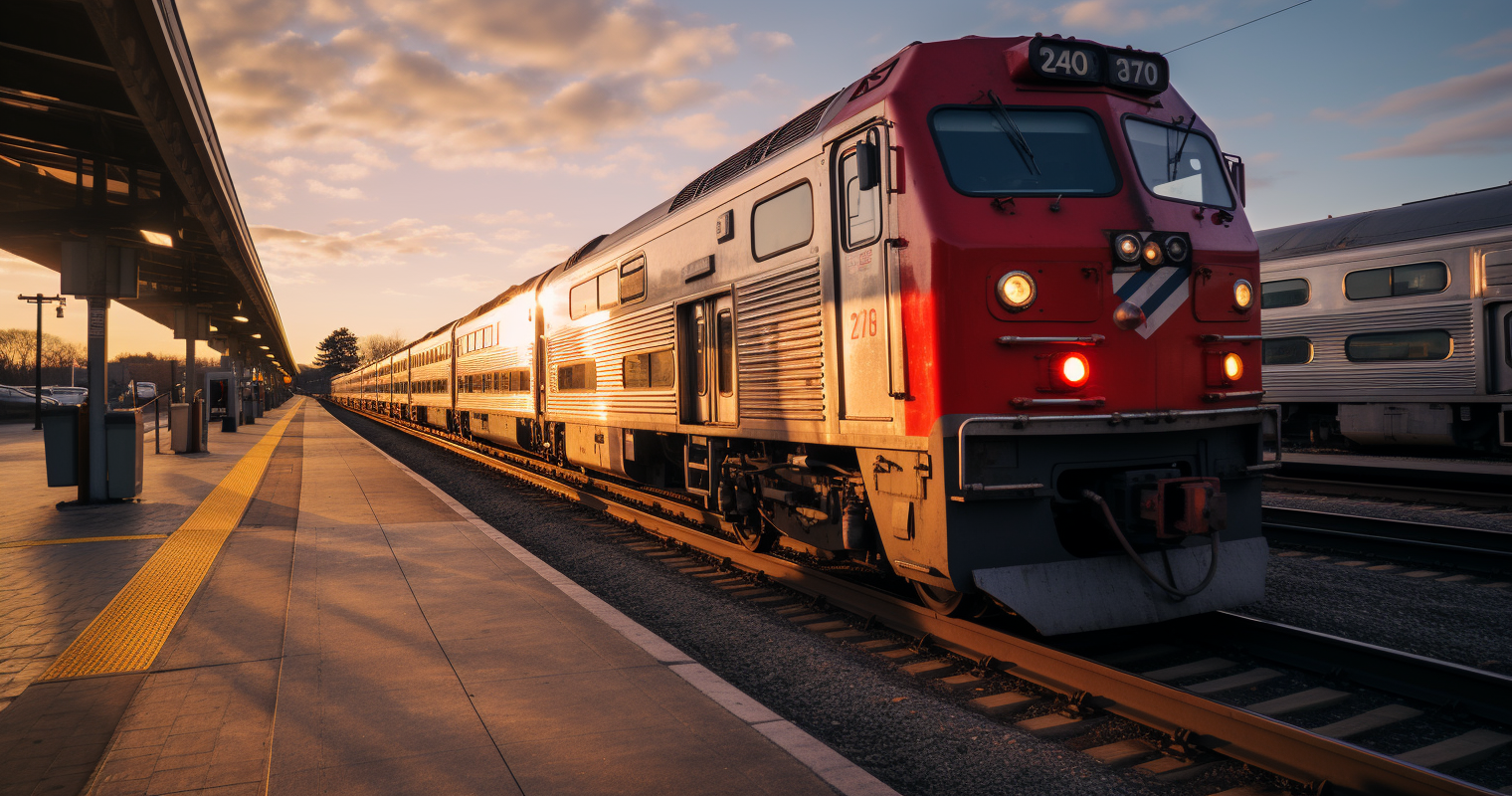
South Africa’s passenger rail network is managed principally by PRASA (the Passenger Rail Agency of South Africa), encompassing commuter, regional, and long-distance services. Although the network ranks among Africa’s most extensive by total track length, it endured serious deterioration over the past decade as a result of vandalism, infrastructure neglect, and governance failures. Active rehabilitation is underway, yet dependability remains uneven — new residents would be wise to view rail travel as a valuable complement to other modes of transport rather than a standalone solution.
| Item | Details |
|---|---|
| Main passenger rail operator | PRASA (Passenger Rail Agency of South Africa) — prasa.com |
| Network size | Approx. 20,000 km total rail; PRASA owns 2,280 km of passenger network (as of 2025) |
| Urban commuter rail | Metrorail operates in Gauteng, Western Cape, KwaZulu-Natal, and Eastern Cape |
| Rapid rail (Gauteng) | Gautrain — links Johannesburg, Pretoria, Sandton, and OR Tambo International Airport |
| Long-distance services | Shosholoza Meyl (economy/tourist class); Blue Train and Rovos Rail (luxury) |
| Corridors in service | Approx. 35 of 40 PRASA corridors restored by late 2025 (check prasa.com for current status) |
What is the overall standard of rail travel in South Africa?
South Africa’s rail infrastructure comprises an extensive Cape gauge (1,067 mm) network stretching approximately 20,000 kilometres, a system that has played a central role in mineral transportation and economic connectivity since its beginnings in 1860. Expats relocating from countries with punctual, high-frequency national rail systems — such as Germany’s Deutsche Bahn or Japan’s shinkansen — will encounter something quite different here. South Africa’s passenger rail is better understood as a system in active recovery rather than a well-established, dependable service.
PRASA-managed passenger services suffered a near-total breakdown by 2020 as copper cable theft, widespread vandalism, and procurement irregularities combined to cripple operations. Recent rehabilitation efforts have partially reversed this decline, with 35 of 40 corridors brought back into service and passenger numbers doubling during 2024/25. This collapse was not gradual — it was sharp and severe, and its legacy continues to affect the network today.
There have been meaningful signs of organisational improvement in recent years. PRASA’s 2024 annual report showed that the organisation progressed from meeting just 19% of its annual targets in 2022, to 59% in 2023, and then to 87% in 2024. A total of 39.44 million passenger journeys were recorded in 2024 — double PRASA’s own targets and 152% higher than the preceding year. These numbers reflect genuine momentum, yet it is important to recognise that they represent a recovery from an extremely low baseline rather than the restoration of a fully functioning system.
On the policy front, December 2024 saw the passage of the Economic Regulation of Transport Act, which took effect from April 2025. This legislation established a single Transport Economic Regulator tasked with overseeing fair and non-discriminatory access and pricing across rail, ports, roads, and airports. While this signals serious long-term commitment to reform, day-to-day punctuality and reliability across many routes continues to be a work in progress.
For urban commuting, Metrorail services function adequately on a number of corridors, though important limitations regarding frequency and passenger security should be understood before relying on them (see the urban rail section below). For longer journeys, Shosholoza Meyl connects major cities at affordable prices, while the Blue Train and Rovos Rail offer exceptional luxury heritage travel at premium rates. For most residents, rail works best as one component of a broader transport mix that also includes minibus taxis, buses, and private vehicles.
What classes of rail travel are available in South Africa, and what are the differences between them?
The class structure of South African rail travel differs considerably depending on whether you are using urban commuter, intercity, or luxury tourist services. Unlike systems in countries such as France or Spain, where a consistent national class hierarchy applies across all routes, South Africa’s various operators and service tiers function largely as separate entities with their own distinct arrangements.
PRASA is organised into four branches: Metrorail, which delivers commuter rail in urban centres; Shosholoza Meyl, which handles regional and intercity rail; Autopax, which provides regional and intercity coach services; and PRASA Cres, which administers PRASA’s property portfolio. Each branch operates its own ticketing and class structure independently.
On Metrorail commuter services, passengers may travel in either first class or third class (sometimes referred to as economy class). First class features slightly more padded seating and tends to be less crowded, while third class is the cheapest option and carries the bulk of daily commuters. By international standards, the distinction between the two is modest — neither offers air conditioning, reserved seating, or onboard catering comparable to European equivalents — and the fare difference is relatively small.
On Shosholoza Meyl intercity services, three broad travel categories exist: standard seating in a second-class (economy) carriage, a tourist-class sleeper compartment with shared bunk-bed arrangements, and a first-class sleeper compartment offering greater privacy. The sleeper options include bedding and can accommodate two to four passengers per compartment. These overnight choices prove popular on longer routes such as Johannesburg to Cape Town or Johannesburg to Durban.
At the top end of the market, the Blue Train and Rovos Rail are both internationally celebrated luxury rail experiences. The Blue Train runs between Pretoria and Cape Town, featuring en-suite suites, fine dining, and butler service throughout. Rovos Rail similarly offers multi-day luxury journeys across southern Africa. These are leisure and tourism products rather than practical travel options, and are priced accordingly — typically several thousand rand per person. Current fares can be found at bluetrain.co.za and rovos.com, as pricing varies seasonally.
Where can you find rail timetables and ticket prices in South Africa?
Locating accurate, up-to-date timetable and fare information can be more difficult in South Africa than in countries with a centralised national rail portal. There is no unified online booking platform equivalent to the National Rail website in the UK or the SNCF portal in France. Instead, information is distributed across several operator-specific sources.
For Metrorail commuter services, timetables and route maps are published through the PRASA website at prasa.com. However, given that many services have been progressively restored over recent years, it is essential to verify the current operational status of individual lines directly with PRASA or at your nearest station, as published timetables may not always capture the latest changes. PRASA also maintains active social media profiles on Facebook and Twitter/X, where service updates are regularly shared.
For Shosholoza Meyl intercity services, timetable and booking details are accessible through the dedicated section of the PRASA website. Fares are set and subsidised by PRASA; as of 2024, intercity routes such as Johannesburg to Cape Town remained considerably cheaper than equivalent road or air alternatives, but you should consult the official site for current pricing, as figures are subject to change. Always confirm schedules directly with PRASA, as some routes have experienced cycles of suspension and restoration.
For the Gautrain rapid rail system in Gauteng, comprehensive timetables, station maps, and fare details are published at gautrain.co.za. The Gautrain Management Agency administers the system and provides the most authoritative and current pricing information. The Department of Transport also publishes general rail policy and oversight material at transport.gov.za.
How do you buy rail tickets in South Africa, and can you book in advance?
Ticket purchasing methods vary across South Africa’s different rail services. With no single national booking platform available, the process you follow will depend entirely on which type of train you intend to use.
- Metrorail commuter tickets: These are bought at station ticket offices or at self-service vending machines on-site. Tickets are typically purchased on the day of travel, though weekly and monthly passes can also be obtained at stations. Online booking for Metrorail is not currently available in the way that is standard for commuter rail in Europe or Australia. It is worth carrying cash, as not all vending machines accept card payments consistently.
- Shosholoza Meyl intercity tickets: Advance booking is possible — and strongly advisable — particularly for sleeper compartments on busy routes. Reservations can be made at major PRASA/Shosholoza Meyl ticket offices located at larger stations such as Johannesburg Park Station, Cape Town, and Durban, by telephone through PRASA’s contact centre, or through travel agents. Visit prasa.com for current contact information and booking options.
- Gautrain tickets and Gautrain Gold Cards: The Gautrain operates a smart card system known as the Gautrain Gold Card. Cards can be purchased and loaded at Gautrain stations, via selected retail partners, or through the Gautrain app. Single-trip tickets are also available at station vending machines for infrequent users. Visit gautrain.co.za for a complete list of purchase points.
- Blue Train and Rovos Rail: Both luxury services require advance booking, often several months ahead for peak-season departures. Reservations can be made directly through the operators’ websites or via accredited travel agents. See bluetrain.co.za and rovos.com.
Smart ticketing for Metrorail commuter services forms part of PRASA’s broader modernisation agenda, though digital ticketing options in this segment remain limited at present. Carrying a printed or physical ticket where required is advisable, and consulting the PRASA website or contacting PRASA’s customer services line directly for the latest booking guidance is always recommended.
What types of rail tickets are available in South Africa, and are there discount schemes?
The range of ticket types across South Africa’s rail services varies considerably by operator. Unlike countries that offer unified national rail cards — such as Germany’s Deutschlandticket or Switzerland’s General Abonnement — South Africa has no single pass covering all passenger rail services.
On Metrorail, passengers can purchase single (one-way) journeys, return trips, or weekly and monthly commuter passes. Monthly passes offer a significant saving compared to buying individual tickets each day and are in widespread use among regular commuters. They are tied to particular origin and destination stations and are sold at ticket offices in major stations. As of 2024, Metrorail fares remain among the most affordable mass-transit options in the country, with monthly passes costing a fraction of equivalent bus or minibus taxi expenditure — though you should consult the official PRASA website for current fare tables, as these are reviewed periodically.
On Shosholoza Meyl, standard single and return tickets are available across both seated and sleeper classes. There is no flexible or open-date ticketing comparable to the open return common in European rail systems; intercity tickets are generally valid for a specified date and train. Child discounts are offered on some routes — as of 2024, children below a certain age (confirm current thresholds with PRASA) may travel at a reduced fare or free when accompanied by a fare-paying adult.
The Gautrain system already operates a smart card platform that allows top-up balances to be used across both train services and connecting bus routes. A flat-rate monthly subscription product is also available for regular commuters travelling between specific stations — see gautrain.co.za for current pricing, noting that these fares are subject to annual review as of 2025.
There are currently no national senior citizen rail cards, student rail passes, or family discount railcards equivalent to those offered by some European rail systems. Fare subsidies do exist, but they operate at a structural level — PRASA receives a government operational subsidy that keeps base fares low across Metrorail and Shosholoza Meyl. Always verify current fare levels and any available concessions directly through prasa.com, as figures change and are not always clearly signposted online.
How accessible is the rail network in South Africa for disabled passengers?
Accessibility provision across South Africa’s rail network is uneven and, in many respects, falls considerably short of the standards that passengers with disabilities may be used to in countries with modern rail infrastructure. Unlike the UK’s National Rail system — where accessibility obligations are legally enforced and passengers can book assistance through a dedicated national service — South Africa does not have a comparable regulatory framework that is applied uniformly across all rail operators.
On Metrorail, many stations — especially older facilities and those in smaller towns — lack step-free access, tactile paving, and audio-visual passenger information systems. Some of the busiest stations in Johannesburg, Cape Town, and Durban have received partial upgrades including ramps and accessible facilities, but these improvements are far from universal. PRASA manages 585 train stations across its network, and accessibility standards differ enormously between them. Wheelchair users in particular should contact PRASA directly before travelling, as assisted boarding is not available at all stations.
On the Gautrain, the accessibility picture is considerably better. As a purpose-built rapid rail system of more recent construction, all Gautrain stations incorporate step-free access, lifts, tactile guidance surfaces for visually impaired passengers, and accessible ticketing machines. The Gautrain represents the closest South African equivalent to the accessibility standards found in newer European metro systems. Passengers requiring specific assistance can contact the Gautrain helpline through gautrain.co.za.
The Blue Train and Rovos Rail both offer a more closely managed travel environment, and each can accommodate passengers with mobility requirements upon request — it is essential to discuss individual needs directly with the operator at the time of booking, as carriage and suite configurations vary between journeys. Passengers with hearing or visual impairments should also enquire about the availability of printed or auditory safety information when booking any PRASA service.
For the most current information about accessibility services and assistance booking across PRASA’s network, contact PRASA directly via prasa.com or by telephone through their customer contact centre. For Gautrain accessibility enquiries, visit gautrain.co.za.
Are there metro or urban rail systems in South Africa’s cities?
South Africa does not operate a traditional underground metro in the style of London’s Tube, Paris’s Métro, or Tokyo’s subway network. However, several cities are served by surface-level urban commuter rail and rapid rail systems that fulfil a broadly similar function for everyday travel.
Metrorail is the principal urban commuter rail operator in South Africa. It functions as a division of PRASA and runs an extensive network across the country’s major urban areas. The Metrorail network encompasses 471 stations and 2,228 kilometres of track, with services operating across four regions:
- Gauteng: Metrorail Gauteng covers the Johannesburg and Pretoria metropolitan areas, with routes radiating from three key hubs — Park Station in Johannesburg, Germiston Station on the East Rand, and Pretoria Station — connecting central Johannesburg, the East Rand, Soweto, the Vaal Triangle, the West Rand, central Pretoria, and surrounding suburbs. Notable gaps in coverage include the northern and western suburbs of Johannesburg, such as Sandton and Randburg.
- Western Cape: Metrorail Western Cape provides commuter rail services across the Cape Town metropolitan area, serving the City of Cape Town, Drakenstein, Stellenbosch, and Swartland, with connections to areas including Malmesbury, Paarl, Stellenbosch, Wellington, Strand, Mitchells Plain, Khayelitsha, and Simon’s Town. As of March 2025, 104 of the network’s 121 Western Cape stations are operational.
- KwaZulu-Natal: Metrorail operates commuter services in and around Durban, linking the city centre with surrounding townships and suburbs.
- Eastern Cape: This region runs two separate lines — one connecting East London to Berlin, and another linking Gqeberha to Uitenhage.
The defining urban rapid rail offering in South Africa is the Gautrain. This 80-kilometre system connects Johannesburg, Pretoria, Ekurhuleni, and OR Tambo International Airport, and was developed specifically to ease road congestion along the Johannesburg–Pretoria corridor and offer commuters a practical alternative to driving. Several northern Johannesburg suburbs, including Sandton, are served by the Gautrain. The system is faster, more reliable, and more modern than Metrorail, and benefits from a complementary feeder bus network operating alongside it. Ticketing is managed through the Gautrain Gold Card smart card system. Full details are available at gautrain.co.za.
Across all four regional hubs in 2025, Metrorail recorded total ridership of 77 million passengers — a significant recovery, though still well below historical peak figures. Frequency and reliability differ substantially from route to route. The variation between weekday peak services and weekend off-peak services can be considerable, with some destinations such as Simon’s Town, Stellenbosch, and Wellington served approximately once per hour on Saturdays and every two hours on Sundays.
What should expats know about using the rail network day-to-day in South Africa?
Getting to grips with South Africa’s rail system as a new arrival calls for some practical groundwork. The everyday experience is quite different from the centralised national rail networks found in many other countries, and a few key considerations will help you travel more confidently.
Language and signage: South Africa recognises 12 official languages, but English predominates in station signage, onboard announcements, and ticketing systems across the main urban services, including Metrorail and the Gautrain. Expats accustomed to bilingual or multilingual rail environments — such as those in Belgium or Switzerland — will generally find South African urban rail signage reasonably navigable, though older stations may have limited or poorly maintained displays.
Personal safety: Concerns about passenger safety on Metrorail services have persisted for many years, with incidents including assaults, arson of rolling stock during protests, and cable theft causing frequent disruptions. While PRASA’s ongoing recovery programme has brought improvements, expats are advised to stay alert, keep valuables concealed, avoid travelling alone in quiet carriages at night, and seek guidance from local colleagues or neighbours about the safest routes and times for their specific area. Many regular commuters opt for first-class carriages and confine their travel to busy peak-hour services on well-used corridors.
Seat reservations: Metrorail commuter services operate without seat reservations — passengers simply board and find available seating. On Shosholoza Meyl intercity services, sleeper compartments are reserved at the time of booking, and securing your compartment in advance is strongly recommended, particularly on the popular Johannesburg–Cape Town route. The Gautrain similarly operates without seat reservations on standard services.
Luggage: No formal weight or size restrictions for luggage are published for Metrorail commuter services, but in practice, busy peak-hour carriages leave limited room for large bags. On Shosholoza Meyl intercity trains, a reasonable amount of luggage can be stored in compartments or on overhead racks. Luxury services such as the Blue Train apply specific luggage allowances — check directly with the operator before travelling.
Service disruptions: Delays and cancellations resulting from cable theft, vandalism, signalling failures, and rolling stock shortages remain an ongoing reality. Many services were halted following vandalism and cable theft in the aftermath of the Covid-19 pandemic. PRASA is working to reinstate and upgrade signalling across many lines with the aim of increasing peak-hour frequencies to between 5 and 10 minutes. Monitoring PRASA’s official social media channels before you travel is highly recommended.
Integration with other transport: The Gautrain is supported by a dedicated feeder bus network, making onward connections from train stations across Gauteng relatively straightforward. Metrorail, by contrast, has limited formal integration with bus rapid transit or minibus taxi networks, meaning passengers often need to arrange their own onward transport after leaving a station. Planning your entire journey — not just the rail leg — before you set off is essential in most South African cities.
Frequently asked questions about rail travel in South Africa
Is it safe to use Metrorail as a daily commuter in South Africa?
Passenger safety on Metrorail has been a persistent concern, although PRASA has taken steps to strengthen security as part of its recovery efforts. On busy, frequently used corridors during rush hour, Metrorail carries hundreds of thousands of commuters each day. That said, crime remains a genuine risk, particularly on quieter services and at stations with limited staffing. New residents are encouraged to seek advice from local colleagues or neighbours about the safest routes and departure times, travel in first-class carriages where possible, and stay aware of their surroundings at all times. Keep an eye on PRASA’s social media channels for any security or service alerts affecting your route.
How do I get from OR Tambo International Airport in Johannesburg to the city by rail?
The Gautrain offers a fast, direct rail connection between OR Tambo International Airport and central Johannesburg (Park Station), Sandton, Midrand, Centurion, and Pretoria. The trip from the airport to Sandton takes roughly 15 minutes. A Gautrain Gold Card is needed to travel; cards can be purchased at the airport station on arrival. Visit gautrain.co.za for up-to-date fares and timetables.
Can I travel from Johannesburg to Cape Town by train?
Yes. Shosholoza Meyl runs an intercity service between Johannesburg and Cape Town, offering both sleeper and seated travel options. The journey takes approximately 27–30 hours. Booking in advance is strongly recommended, particularly for sleeper compartments. For budget-conscious travellers, this ranks among the most economical ways to cover the distance. Bookings can be made through PRASA at prasa.com or at major station ticket offices. Always verify current schedules directly, as frequency and routing are subject to change.
Are there any trains in South Africa that run on high-speed rail?
Not at present. South Africa currently has no high-speed rail network comparable to Europe’s TGV or ICE services. The Gautrain is the country’s fastest passenger rail service, reaching speeds of up to 160 km/h on certain sections. In October 2025, Transport Minister Barbara Creecy announced that PRASA was pursuing private sector investment to modernise and expand its network, with proposals for regional rapid rail services capable of travelling at up to 300 kph. These remain long-term plans and are not yet operational.
How do I top up a Gautrain Gold Card?
Gautrain Gold Cards can be topped up at station vending machines, through the Gautrain app (available for both Android and iOS), via the Gautrain website, or at selected retail outlets. It is advisable to maintain a sufficient minimum balance on your card at all times, as adequate credit must be loaded before you board. Visit gautrain.co.za for step-by-step instructions and a full list of top-up locations.
Are there any rail passes that cover multiple services in South Africa?
No single rail pass currently covers Metrorail, Shosholoza Meyl, and Gautrain services together — unlike, for example, an Interrail pass in Europe. Each operator maintains its own separate ticketing system. Monthly commuter passes are available for frequent Metrorail users travelling on specific routes, and the Gautrain offers a subscription product for regular commuters between particular stations. For details of current products and pricing, consult prasa.com and gautrain.co.za directly.
What is happening with South Africa’s rail reform, and will services improve?
The early signs of recovery are encouraging. PRASA has brought approximately 35 of 40 corridors back into some level of service, with investment focused on restoring infrastructure and improving safety. In August 2025, eleven private freight operators were pre-selected to access 41 routes and six key rail corridors, marking a new chapter in the sector’s development. On the passenger side, PRASA raised its capital expenditure by R5.9 billion to R21.8 billion, directing funds primarily towards rebuilding infrastructure on key service lines. Progress is real but incremental — expats can expect a gradually improving network over the years ahead rather than a swift transformation.
Where can I find the official PRASA website and contact details?
The official PRASA website is prasa.com, which serves as the primary source for Metrorail and Shosholoza Meyl timetables, route maps, service updates, and ticketing information. The Department of Transport’s website at transport.gov.za offers broader policy and regulatory context. For all Gautrain-related information, visit gautrain.co.za. Always rely on official operator sources rather than third-party timetable websites, as operational conditions across many routes change frequently.