
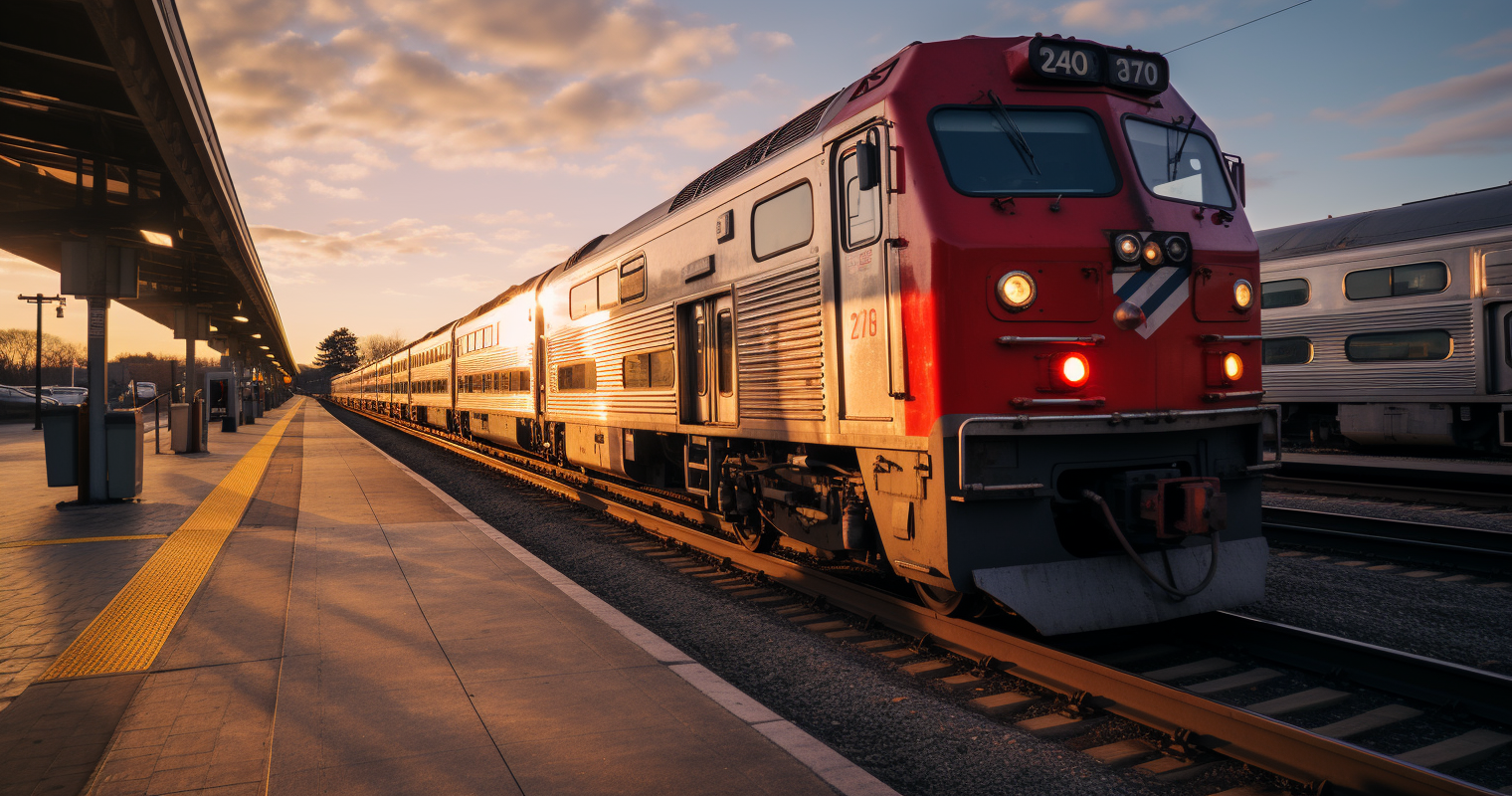
Turkey’s national passenger rail network, run by TCDD Taşımacılık, extends across more than 12,000 kilometres and serves 59 of the country’s 81 provinces. An expanding high-speed rail system — known as YHT — links key cities at speeds reaching 250 km/h, while traditional express and regional services cover the broader geography. City rail networks in Istanbul, Ankara, and İzmir round out the picture, making the overall system a genuinely practical choice for residents in well-connected areas, even if notable coverage gaps persist elsewhere.
| Item | Details |
|---|---|
| National rail operator | TCDD Taşımacılık (passenger operations); TCDD (infrastructure) |
| Network size | Over 12,000 km; reaches 59 of 81 provinces (as of 2024) |
| High-speed routes | 8 YHT routes operating at up to 250 km/h (as of August 2024) |
| Advance booking window | High-speed: 15 days; mainline: 30 days; international: 60 days |
| Sample fare (as of 2025) | Eskişehir–Ankara: approx. TL 405 (Economy) / TL 610 (Business) — check official site for current prices |
| Official booking site | ebilet.tcddtasimacilik.gov.tr |
What is the overall quality of rail travel in Turkey?
TCDD Taşımacılık is the state-owned enterprise responsible for running passenger and freight rail services throughout Turkey. While the network is impressively large, its quality is not consistent across the board: modern high-speed corridors deliver an experience on par with the best in Western Europe, whereas older conventional lines in rural parts of the country tend to be slower and less comfortable by comparison.
High-speed services currently run on eight routes connecting Istanbul, Ankara, Eskişehir, Sivas, Karaman, and Konya, with trains operating under the Yüksek Hızlı Tren (YHT) brand at up to 250 km/h. This places Turkey ahead of most of its regional neighbours, though the density of the high-speed network still falls short of established systems in Germany, France, or Japan.
Through sustained investment in rail infrastructure, TCDD has positioned Turkey as the 6th largest high-speed train operator in Europe and 8th in the world. Even so, the network is not yet fully mature: Turkey’s fourth and fifth largest cities by population — Bursa and Antalya respectively — remain disconnected from the rail system entirely, though future high-speed connections to both are under consideration.
TCDD Taşımacılık operates services across a network exceeding 12,430 km, covering 59 of Turkey’s 81 provinces. As of 2022, Turkey had 12,532 km of railway lines in total, of which 95% were single-tracked and only 21% electrified. The country’s mountainous terrain means many older lines are characterised by steep gradients and tight curves, keeping speeds low outside the high-speed corridors. Rail is a sound and affordable option for urban commuting, intercity travel on YHT routes, and long-distance overnight journeys — but bus services frequently remain the more practical solution for reaching smaller towns and rural areas.
What travel classes exist on Turkish trains?
The classes on offer depend on the type of train. High-speed YHT services and long-distance express trains generally offer two options: Economy Class and Business Class. Overnight services add sleeping compartments and couchette cars to the mix.
Economy Class provides comfortable seating with adequate legroom and either a fixed or fold-down table. Business Class on YHT trains comes with wider seats, increased legroom, and dedicated service areas. As a reference point, travelling by high-speed train between Eskişehir and Ankara costs approximately TL 405 in Economy Class or TL 610 in Business Class as of 2025 — always check the official TCDD site for up-to-date pricing.
Long-distance overnight trains include dining and sleeping cars, and some also feature couchette accommodation alongside sleepers. A four-berth Sleeper Class compartment is well suited to families or small groups, while a two-berth Sleeper Cabin offers a more private overnight experience with better amenities for those seeking a quieter journey.
Passengers aboard YHT trains can plug in their laptops, tablets, or smartphones to access the YHT Entertainment System, which offers films, music, e-books, and games from their seat. Class distinctions are most apparent on high-speed and long-distance services; regional trains typically operate with a single class of seating and do not require advance seat reservations.
Where can you find Turkish rail timetables and fare information?
The main official source for schedules and prices is the TCDD Taşımacılık booking portal. Timetables and tickets for most high-speed and long-distance services within Turkey — including seat reservations, couchettes, and sleepers — are available through ebilet.tcddtasimacilik.gov.tr. The parent infrastructure authority, TCDD, also publishes service information in English at tcdd.gov.tr.
For route planning, the independent website Rail Turkey (railturkey.org) is widely relied upon by residents and visitors alike, offering accessible English-language route guides, timetable summaries, and practical travel tips. Although not an official resource, it draws on TCDD data and is kept regularly updated. The Seat 61 guide at seat61.com is another well-regarded third-party reference for route-specific travel information.
Fares differ considerably based on train type, travel class, and how far in advance you book, so it is always best to consult the official booking portal directly rather than relying on figures cited in third-party sources. All prices are quoted in Turkish Lira (TRY), and given Turkey’s recent inflationary environment, figures from older articles may be significantly out of date.
How do you purchase train tickets in Turkey, and is advance booking possible?
Train tickets in Turkey can be obtained through several channels, and the best method typically depends on the type of journey involved. The following step-by-step guide covers the online booking process — generally the most convenient route for high-speed and mainline travel:
- Navigate to the official TCDD Taşımacılık booking portal at ebilet.tcddtasimacilik.gov.tr, or download the TCDD Taşımacılık mobile app (available for both iOS and Android).
- Input your departure station, destination, travel date, and number of passengers. Bear in mind that the system uses Turkish characters, so take care with the spelling of station names.
- Choose your preferred train, travel class, and specific seat from those available.
- Declare the gender of each passenger when prompted — this is a mandatory step. If the declared gender does not match the ticket holder’s at the point of travel, you may be required to change seat, pay a supplementary fare, or leave the train, as the system prevents passengers of different genders from sitting together or sharing a compartment unless their tickets are purchased as a group.
- Complete payment by credit or debit card. Cards accepted include those issued by Garanti Bankası, İş Bankası, Akbank, and Halkbank. Non-Turkish bank cards sometimes encounter errors during payment — if this occurs, purchasing at a station ticket office is a dependable alternative.
- Your ticket will be stored in the app for display to the train manager, and a copy will also be sent to your email address.
- Always travel with a valid photo ID bearing the same name as the ticket.
Online booking is available for all high-speed and mainline train services; however, only a very small number of regional trains can be booked via the internet, and international train tickets cannot be purchased online at all.
High-speed train tickets become available 15 days before the travel date, mainline tickets 30 days in advance, and international tickets 60 days ahead. While seats on day-of-travel or last-minute journeys are often available on shorter routes, sleeper and couchette accommodation on overnight trains tends to sell out weeks ahead — early booking is strongly advisable for these services.
Tickets can also be arranged through the TCDD telephone booking line on 444 82 33, where English-speaking operators are on hand. Most larger train stations maintain ticket offices with computerised booking systems, allowing you to purchase tickets for any journey in the country — a useful option when you first arrive in Turkey.
What ticket options and discount schemes are available in Turkey?
TCDD Taşımacılık sells single (one-way) and return tickets across all its services, with mandatory seat reservations on high-speed and mainline trains. Young children may travel without charge where no separate seat is needed: children up to 6 years of age travel free provided they do not occupy their own seat.
A number of discounted fare categories are available. Passengers aged over 60 may request a senior ticket (yaşlı bilet) to obtain a 15% reduction, though the 50% discount for those aged 65 and over currently applies to Turkish citizens only (as of 2025 — verify current eligibility through the official TCDD website). Travellers under 26 can request a youth ticket (genç bilet) for a 15% saving. Students, passengers with disabilities, and certain categories of public sector workers may also qualify for reduced fares — proof of eligibility is generally required at the point of purchase or collection.
Regular travellers can take advantage of TCDD’s pass system, marketed as TrenKart. Three formats are offered: Abonman, aimed at commuters making daily journeys between two fixed stations on mainline or regional trains; Binis Paketi, designed for frequent high-speed travellers between two stations who make at least five trips within a two-month period; and Gezgin Paketi, offering more flexible multi-journey coverage. These passes can deliver real savings for residents who depend on rail for their regular commute. Consult the official TCDD Taşımacılık website for the latest pass pricing and eligibility details, as these are subject to revision alongside fare changes.
How well does the Turkish rail network cater to disabled passengers?
Accessibility on Turkey’s rail network has been improving but remains inconsistent, with a clear contrast between the modern high-speed infrastructure and the older conventional network.
The introduction of high-speed services linking Istanbul, Ankara, and Konya has brought meaningful improvements in travel accessibility, since the trains, platforms, and stations along these routes are built to European standards. Older intercity trains, however, are still boarded via narrow steps rather than through level-access wide doors. Larger stations may have ramps — originally installed for luggage handling — or kerb cuts, but smaller halts often lack these features entirely.
The modernised transit networks in Turkey’s three major cities — Istanbul, Ankara, and İzmir — are generally well suited to passengers with disabilities. Istanbul’s Metro, the Bağcılar–Kabataş tram line, and the Marmaray suburban rail were all developed with European accessibility standards in mind.
On the Istanbul Metro, passengers with disabilities can move through the network using lifts and escalators, properly graded ramps meeting established standards, directional signage, alternative information formats, and tactile paving. Station lifts include Braille notifications for visually impaired users, and turnstile areas feature dedicated free-pass gates for passengers with disabilities.
Older stations on lines such as the M1 or T1 in Istanbul are being progressively upgraded, though full accessibility has not yet been achieved across all stops. Passengers with specific mobility or access requirements travelling on TCDD intercity services are advised to contact the TCDD call centre (444 82 33) ahead of their journey to arrange assistance. Further information on available support services can be found on the TCDD website and the Metro Istanbul accessibility page.
Do Turkish cities have metro or urban rail systems?
Turkey has a broad and rapidly growing set of urban rail networks across its largest cities. At least 12 cities operate one or more rail-based transit systems — encompassing metro, light rail, tram, funicular, or suburban rail — including Istanbul, İzmir, Ankara, Bursa, Eskişehir, Kayseri, Samsun, Konya, Antalya, Gaziantep, Adana, and İzmit.
Istanbul has by far Turkey’s most complex urban rail network. The Istanbul Metro is a rapid transit system operated principally by Metro Istanbul, a public company under the Istanbul Metropolitan Municipality, with the M11 airport line managed by TCDD Taşımacılık. As of 2024, the network encompasses 160 stations in service with a further 36 under construction; at 243.3 kilometres, it ranks as the 21st longest metro system in the world and the 4th longest in Europe. The city additionally operates tram lines, funiculars, a cable car, and the Marmaray suburban railway — a 76.6 km upgraded line that has linked both sides of the city via an undersea Bosphorus tunnel since 2013.
Ankara operates its own metro network alongside the Başkentray suburban rail service. Başkentray connects Sincan through central Ankara to Kayaş and carries an average of 73,000 passengers each day. Ankara’s urban rail is increasingly regarded as a model for modern and sustainable city transit, distinguished by high service frequency, strong accessibility features, and seamless connections to intercity rail.
İzmir is served by the İZBAN suburban rail system and a metro network. İZBAN links Aliağa in the north through Alsancak station to Cumaovası and Selçuk in the south, carrying an average of 215,000 passengers daily — making it one of the most heavily used commuter rail services in Turkey. İzmir’s metro is compact but highly efficient, and includes one of Turkey’s first fully automated, driverless lines. Its tight integration with İZBAN makes the İzmir transit system one of the most cohesive in the country.
Urban transit cards — such as the İstanbulkart in Istanbul — are accepted across metro, tram, bus, and ferry services within each city, providing a unified contactless payment experience. The Istanbul Ulaşım app (free on iOS and Android) offers real-time arrivals, journey planning, and station exit information; Google Maps also provides reliable coverage of metro routes in both Istanbul and Ankara. For official route maps and timetables, visit Metro Istanbul for Istanbul, or the relevant municipal transit websites for other cities.
What do expats need to know about everyday rail travel in Turkey?
Turkey’s train stations vary enormously — from grand historic terminals such as Ankara’s Gar to small regional stops with minimal facilities. At larger stations, all passengers pass through an X-ray and metal detector checkpoint on entry, so allow a few extra minutes for this process. Security screening of this type is standard practice at high-speed rail stations throughout the country.
Station announcements are made in both Turkish and English on Istanbul’s metro, and most intercity stations feature bilingual signage. The further you venture from major urban centres, however, the less English-language information you are likely to encounter — whether at smaller stations or aboard regional train services. Installing the TCDD app in advance and familiarising yourself with the Turkish names of your destination stations will make navigation considerably easier.
Free Wi-Fi has been introduced at train stations and terminals operated by Turkish State Railways. Aboard YHT high-speed trains, the onboard entertainment system lets passengers stream content directly to their personal devices. Free wireless internet is also available on newer Istanbul Metro lines and the Metrobüs network under the access points “IstanbulWiFi” or “AnkaraFreeNet” — adequate for messaging and map use, though not suited to bandwidth-intensive tasks.
Luggage rules on intercity trains are relatively relaxed — there are no strict size restrictions on mainline or YHT services, and passengers can use overhead racks or the storage spaces at the ends of carriages. On busy urban metro lines during peak hours (roughly 7–9 AM and 5–7 PM), travelling with large bags can be awkward, and you may find it courteous to remain near the doors to avoid obstructing other passengers.
Seat reservations are compulsory on all YHT and mainline intercity trains — you cannot simply board and take any available seat. Regional trains, by contrast, generally run without advance reservation requirements. Note that you are required to carry a photo ID document bearing the same name as your ticket at all times while travelling; a passport or Turkish residence permit will satisfy this requirement. The atmosphere on Turkish trains is generally convivial and informal — sharing food in dining cars is common, and fellow passengers tend to be welcoming and willing to help newcomers find their way around the system.
Frequently Asked Questions
Is the TCDD ticketing website available in English?
Both the official booking portal at ebilet.tcddtasimacilik.gov.tr and the TCDD Taşımacılık mobile app offer English-language interfaces, though certain sections may revert to Turkish. The telephone booking line (444 82 33) is staffed by English-speaking operators. Third-party resources such as railturkey.org also provide detailed English-language walkthroughs of the booking process.
How far in advance can I book a Turkish train ticket?
High-speed train tickets become available 15 days before the departure date, mainline train tickets open 30 days ahead, and international train tickets can be booked up to 60 days in advance. For overnight journeys to eastern Turkey in particular, booking as early as possible is highly recommended — sleeper berths are in high demand and fill up quickly.
Do I need to print my ticket, or can I use a digital version?
A printed copy is not required — you may present your ticket digitally on your smartphone. Once your booking is confirmed, your ticket is sent to you by both SMS and email. Always travel with a valid photo ID bearing the same name as your booking.
Are there discount fares for students and young people?
Yes. Passengers under 26 can request a youth ticket (genç bilet) for a 15% discount. Students may be entitled to further reductions — proof of enrolment will be required at the ticket office or upon collection. For the most current eligibility requirements and discount levels, consult the official TCDD website directly.
Which cities in Turkey have the best urban rail networks?
The most developed metro infrastructure in Turkey is found in three major cities — Istanbul, Ankara, and İzmir — each of which has built its network around local population density, geography, and existing transit patterns. Unlike many European capital cities with single unified metro systems, Turkey’s urban networks are typically woven together with commuter rail, tramways, and bus rapid transit. Istanbul’s is by far the most extensive of the three.
Is it safe to travel by train in Turkey?
Rail travel in Turkey is widely regarded as safe. Modernised lines operate digital safety systems including ETCS (European Train Control System) modules and GSM-R, bringing signalling standards into line with European practice. High-speed stations operate security screening on entry. Standard personal security precautions with your belongings apply, as they would on any train journey.
Can I use an İstanbulkart for intercity trains?
No — the İstanbulkart covers Istanbul’s urban transit network (metro, tram, bus, and ferry services) but cannot be used for TCDD intercity or high-speed train journeys. These require separate tickets purchased through the TCDD Taşımacılık booking system, at a station ticket office, or via the mobile app.
Are there direct trains between major Turkish cities and neighbouring countries?
International train tickets are not available for online purchase through the TCDD system and must be bought in person at a station ticket office or via an authorised travel agent. It is advisable to check schedules directly with TCDD, as international services have experienced suspensions and reinstatements in recent years.