
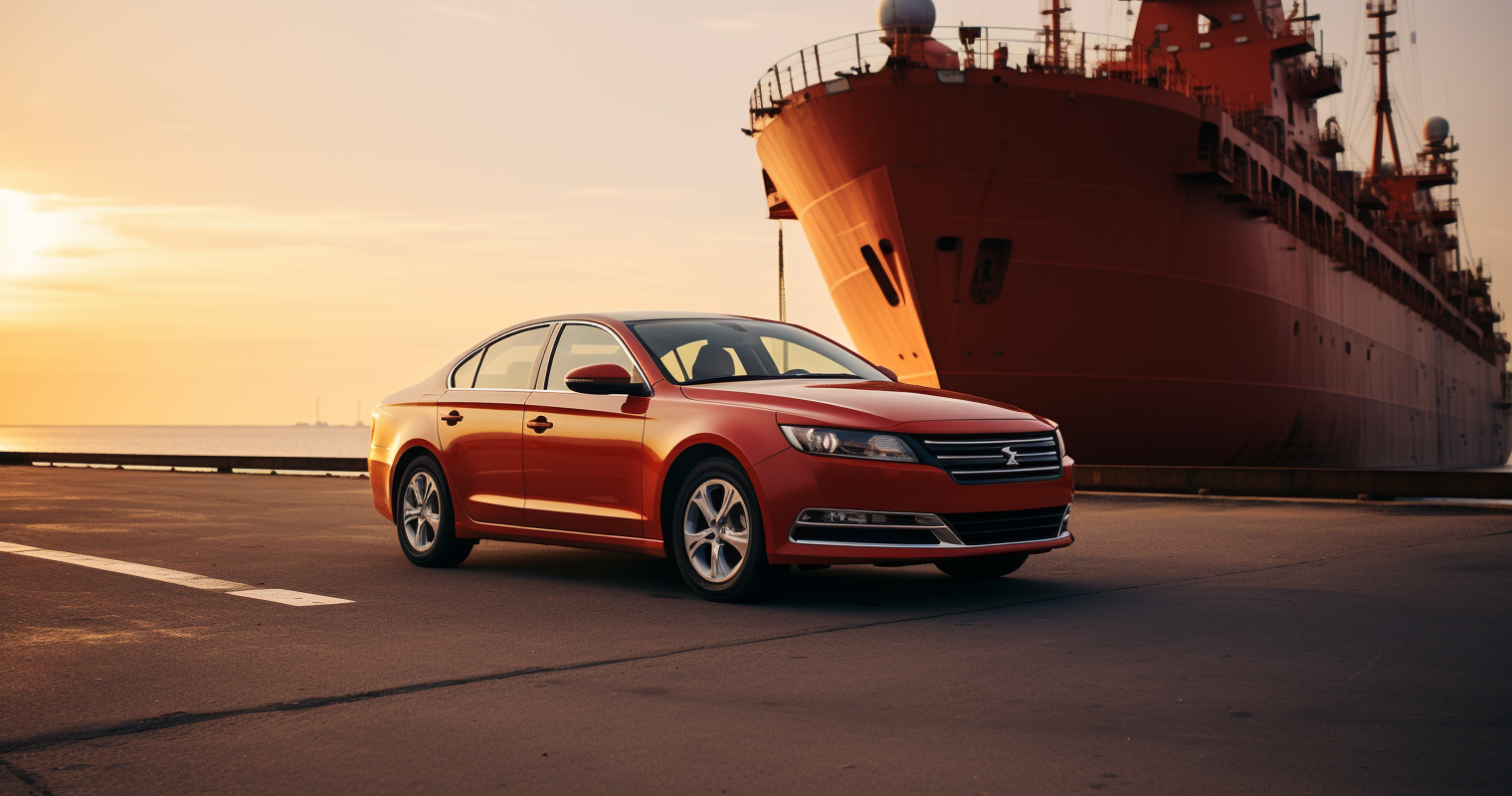
Purchasing a vehicle in the United States is broadly open to foreign nationals and expats, though successfully completing the process means getting to grips with a layered system of state regulations alongside federal rules. No federal law bars non-citizens from buying a car, yet financing arrangements, vehicle registration, insurance requirements, and converting a foreign driving licence all introduce additional steps. Bringing a vehicle in from another country is an option, but it is far from straightforward — strict federal safety and emissions standards apply to the vast majority of vehicles less than 25 years old.
| Item | Details |
|---|---|
| Import duty on passenger cars (as of 2025) | 2.5% of customs value (base rate); additional tariffs may apply depending on country of origin |
| 25-year rule | Vehicles 25+ years old are exempt from Federal Motor Vehicle Safety Standards (FMVSS) for import |
| EPA emissions exemption | Vehicles 21+ years old in original unmodified condition are exempt from EPA import standards |
| Registration authority | State Department of Motor Vehicles (DMV) — rules vary by state |
| Minimum insurance | Liability insurance required in almost every state; minimum limits vary by state |
| Foreign licence validity | Typically accepted for ~3 months; permanent residents must obtain a state licence (timeframe varies by state) |
How do I buy a new car in the United States as a foreigner?
Non-citizens are free to buy a car in the US regardless of their immigration status. No federal legislation prevents a foreign national from walking into a dealership and driving away in a new vehicle. That said, the practical experience can be considerably more involved than it is for American citizens, particularly when financing is part of the equation.
One important thing to grasp from the outset is that vehicle laws in America are predominantly set at the state level rather than federally. This means that rules and required documentation can differ meaningfully from one state to another. Before visiting any dealership, it pays to research the requirements in your particular state, since the paperwork needed for registration — which must follow any purchase — varies across the country.
When buying from a dealership, you will generally be expected to present the following:
- A valid passport and your current visa or other immigration document
- Proof of lawful presence in the United States, which may take the form of a permanent resident card or green card, driver’s licence, employment authorisation document, or a visa bearing an appropriate stamp
- Proof of a US address, such as a utility bill, lease agreement, or bank statement
- A Social Security Number (SSN) or Individual Taxpayer Identification Number (ITIN), which is useful for both financing and insurance purposes
Most buyers do not purchase a vehicle outright and will need to arrange an auto loan. This is where things become more challenging for foreign nationals. While it is possible for many buyers to apply for financing directly through the dealership, that straightforward route is generally not available to non-citizens. Most mainstream banks and credit institutions are reluctant to extend auto loans to non-US citizens because of the perceived credit risk involved.
A common misconception among newcomers is that citizenship determines loan eligibility. In reality, lenders focus almost entirely on whether the applicant has a verifiable and positive US credit history. Those who have recently arrived in the country have not yet had the opportunity to build one, so alternative documentation may be needed when applying for vehicle financing.
Newcomers often face the challenge of having little or no US credit history and can expect to encounter higher interest rates or a requirement for a substantial down payment — often somewhere in the range of 20 to 35 percent. Some lenders accept applications using an ITIN and may be willing to consider foreign credit records or bank statements. Having a US-based co-signer with a solid credit profile can improve both the likelihood of approval and the interest rate on offer. Lenders will also typically require proof of income, such as offer letters, recent pay stubs, or business bank statements. Specialist financing companies focused on expat clients exist precisely to address these challenges.
New car prices in the US span an enormous range depending on the brand and model, but in 2025 the average price was approximately $49,700. Always ask for the out-the-door price before committing, as this figure includes all dealership fees, applicable state sales tax, and registration costs on top of the advertised sticker price.
How do I buy a used car in the United States?
The used vehicle market in the US operates largely through private transactions arranged via online platforms or through used-car dealerships. Popular sites include AutoTrader, Cars.com, and Craigslist. Purchasing through a dealership tends to be the safer route, as vehicles are typically put through mechanical checks before being offered for sale, and a dealership’s reputation gives it an incentive to be transparent about any defects.
Before agreeing to buy, it is essential to thoroughly investigate the vehicle’s background. Unlike some countries where a central government authority maintains a register of vehicle history and outstanding finance, the US relies mainly on private-sector services for this purpose. Tools such as CARFAX and AutoCheck let you run a Vehicle Identification Number (VIN) check to uncover details including accident records, previous owners, odometer readings, and whether the vehicle carries a salvage or rebuilt title. Always obtain a vehicle history report when buying privately.
For used vehicles, try to verify that a full service history exists and that the seller — especially in a private transaction — is not concealing any mechanical problems. Commissioning an independent pre-purchase inspection by a qualified mechanic is strongly advisable for any private-sale vehicle.
When the sale is concluded, the key documents that should change hands include:
- The signed vehicle title — the legal record of ownership in the US, equivalent to a logbook or certificate of title in other countries
- A bill of sale, which documents the agreed purchase price, the date of the transaction, and the identifying details of both parties
- For private sales, a signed title and bill of sale are both required
The vehicle title is the document that establishes your legal ownership of the car. Whether you buy from a dealership or an individual seller, you should always receive a title as part of the transaction. This document contains important personal information such as your name and address, alongside details about the car including its make, model, year, and vehicle identification number.
Following the purchase, you are required to register the vehicle with the DMV in your state — refer to the registration section below for a full breakdown. When purchasing privately, confirm that the seller has cleared any outstanding finance secured against the vehicle, since a lien holder retains a legal interest in the car until any associated debt has been fully repaid.
Can I import a vehicle into the United States, and how does the process work?
Bringing a vehicle permanently into the United States means working through an intricate web of federal tariffs, reciprocal trade duties, safety regulations, environmental requirements, and state-level rules. Where importing a personally owned car in many countries involves mainly customs formalities, the US adds multiple layers of federal oversight through three distinct agencies: US Customs and Border Protection (CBP), the National Highway Traffic Safety Administration (NHTSA), and the Environmental Protection Agency (EPA).
As a general rule, any motor vehicle less than 25 years old must comply with all applicable Federal Motor Vehicle Safety Standards (FMVSS) to be permanently imported into the United States. The Clean Air Act similarly prohibits the importation of any motor vehicle or engine that does not meet US EPA emissions standards. A vehicle is exempted from EPA emissions requirements if it was manufactured 21 or more years ago and remains in its original, unmodified condition.
The US imposes no outright ban on vehicles based on which side of the road they are designed for. Left-hand drive vehicles are the norm in America, but right-hand drive cars are not prohibited. They are, however, subject to exactly the same safety and emissions compliance requirements as any other import, which can make the necessary modifications prohibitively expensive. There is no formal duty exemption comparable to the “removal goods” or “household effects” relief offered by some other countries for personally owned vehicles, although certain categories of importer do qualify for duty-free treatment, as described below.
Military personnel and civilian employees returning from 140 or more days of overseas service may bring a vehicle back into the US duty-free, provided it was both acquired and used abroad. Non-residents may also temporarily import a personal vehicle duty-free for up to one year, as long as they bring it with them upon entry. The vehicle must comply with US safety and emissions requirements and cannot be sold while it remains in the country. Extensions beyond this one-year period are not permitted under US import rules.
The step-by-step process for a permanent vehicle import is as follows:
- Verify your vehicle’s eligibility. Check the updated NHTSA eligibility list. For non-listed vehicles under 25 years old, you must collaborate with an NHTSA-licensed Registered Importer to adjust the vehicle to comply with US standards and file a petition with NHTSA for import eligibility.
- Gather required documentation. Prior to filing your entry with CBP, ensure you have valid proof of ownership, which is an original certificate of title or a certified copy of the original. You will also need a completed EPA Form 3520-1 and DOT Form HS-7.
- Arrange shipping. Engage an international freight forwarder to ship the vehicle to a US port of entry. Contact your carrier or shipper to confirm the arrival date so you can arrange for CBP to process it.
- File entry with CBP. To import a motor vehicle you must file an HS-7 Declaration form at the time the vehicle is imported to identify the basis for the vehicle’s entry into the United States. The CBP will issue a Form 7501 as evidence of import processing.
- Pay duties and fees. You will need to pay a Merchandise Processing Fee (MPF) to CBP as well as an import duty of 2.5% for passenger cars, along with carrier fees and other expenses (as of 2025).
- Complete safety and emissions compliance. If your vehicle does not already meet FMVSS and EPA standards, it must be brought into compliance by a NHTSA Registered Importer (RI) and an EPA-authorised Independent Commercial Importer (ICI). You must contract with these importers in advance and also post a bond at the border while the work is completed. This can be a very expensive process.
- Clear USDA inspection. The US Department of Agriculture (USDA) requires that the undercarriage of the imported vehicle be free of foreign soil to safeguard against the importation of dangerous pests.
- Register the vehicle in your state. This process and its cost will vary by state, along with the time period in which you are legally required to complete it.
Key federal authorities to consult: US Customs and Border Protection (CBP), NHTSA (safety standards and Registered Importers), and EPA (emissions compliance). Always verify current requirements with these official sources before proceeding.
What are the costs involved in importing a car to the United States?
The financial outlay involved in importing a vehicle to the US can be considerable and should be planned for with care. The table below outlines the principal cost categories to factor into your budget.
| Cost item | Indicative detail |
|---|---|
| Import duty (passenger cars) | 2.5% of the vehicle’s customs value (base rate, as of 2025). Additional tariffs may apply depending on country of manufacture — verify with CBP. |
| Merchandise Processing Fee (MPF) | A percentage of the cargo value, subject to minimum and maximum thresholds set by CBP — check current rates at cbp.gov. |
| Harbor Maintenance Fee (HMF) | Approximately 0.125% of the ocean freight value (as of 2025). |
| USMCA eligibility | To qualify for duty-free treatment under the United States-Mexico-Canada Agreement (USMCA), all vehicles must meet rules of origin for automotive goods, including regional value content (RVC) and labour value content (LVC). |
| Safety compliance / homologation | If a Registered Importer is needed, modification costs can run into thousands of dollars depending on the scope of work required. Budget widely and get quotes in advance. |
| International shipping | Varies widely by origin country, vessel type, and port; obtain multiple quotes from freight forwarders. |
| State registration fees | Varies by state and vehicle value; check your state’s DMV website for a fee calculator. |
| Sales / use tax | Applied at the state level on purchase or import value; rates vary by state (typically 0%–10%). |
The US does not operate a VAT system in the way that EU member states or the UK do. Instead, sales tax is collected at the state and sometimes local level at the point of sale or registration. This differs fundamentally from the EU model, where VAT is applied at a consistent rate across the bloc. The rate that applies to you, and how it interacts with an imported vehicle, should be confirmed with your state’s DMV or department of revenue.
Qualifying for USMCA duty-free status is not straightforward — vehicles manufactured before 2020 are unlikely to be eligible, whereas those produced on or after 1 July 2020 may satisfy the applicable rules of origin. Confirm eligibility with CBP well in advance of making any commitments.
Important note: US tariff structures have been subject to considerable policy changes. Importing a vehicle means navigating federal tariffs, reciprocal trade duties, safety standards, environmental regulations, and state-level requirements, all of which underwent significant changes in 2025. Always confirm current duty rates with US Customs and Border Protection before making any financial decisions.
How do I register a vehicle in the United States?
State law requires every vehicle to be registered with the Department of Motor Vehicles (DMV) before it can be legally driven on public roads. Registration is handled at the state level, and while the broad process follows a similar pattern across the country, the specific documentation required, applicable fees, and deadlines differ from state to state. There is no national vehicle registration body.
In general terms, you pay a fee to the state in which you reside, provide information about yourself and the vehicle, supply proof of ownership and valid insurance, pass any required safety or emissions checks, and in return receive evidence that your vehicle has been registered — typically a registration card, registration stickers, and licence plates.
For most state DMV registration applications, you should expect to bring:
- Identification showing your name, photograph, and date of birth; your Social Security Number or evidence that you are unable to obtain one; proof of lawful presence in the United States such as a visa, citizenship certificate, or permanent residency card; and proof of residency in the state, such as a state ID, bank statement, or utility bill
- Proof of vehicle ownership — a Manufacturer’s Certificate of Origin for new vehicles, or a signed title for used vehicles
- Proof of valid insurance
- Payment covering registration fees, title fees, and any applicable taxes
Certain states require vehicles to pass an inspection before they can be registered, with further inspections required every one to two years at renewal time. States such as California, New York, and Texas have emissions testing programmes, while others focus on periodic safety checks. Confirm what your specific state requires before proceeding.
If you buy from a dealership, the registration process will often be handled on your behalf, sparing you a visit to the local DMV. Private sales, however, leave the responsibility with you to visit the DMV and complete registration yourself.
For imported vehicles, you will also need to present CBP Form 7501 — the evidence of customs entry — along with documentation confirming compliance with DOT and EPA standards before the DMV will register the vehicle. Unlike a vehicle title, registration is time-limited, expiring every one or two years, and must be renewed regularly. Your state’s DMV website is the definitive source of information — most offer an online fee calculator. Locate your state’s DMV at usa.gov/motor-vehicle-services.
What insurance do I need to drive legally in the United States?
Every driver in the US is required by law to carry insurance. Rather than a single national insurer or government-run scheme, the US operates through a large and competitive private insurance market, with each state independently setting its own minimum coverage requirements. This means there is no single national standard — the level of cover you are legally obliged to hold depends on the state in which your vehicle is registered.
In the great majority of states, proof of insurance is a prerequisite for registering a vehicle and obtaining licence plates. Most DMVs will not issue plates or process a registration renewal without it. A small number of states permit alternatives such as surety bonds, but insurance remains the standard route. New Hampshire stands out as the primary exception, allowing drivers to demonstrate financial responsibility through means other than a conventional insurance policy.
The minimum cover mandated in nearly every state is liability insurance, which pays out for injuries to others or damage to third-party property when you are at fault in an accident. Additional cover types — such as collision cover for damage to your own vehicle, or comprehensive cover for theft, fire, or weather damage — are not usually required by law, but are strongly recommended and are frequently made a condition of any financing arrangement if you take out a loan to buy the vehicle.
Expats arriving in the US often find it difficult to obtain vehicle insurance without an established US credit record or local driving history. However, specialist insurers and brokers catering to expat clients do exist and are accustomed to these situations. Collecting three to five quotes from both direct insurers and local agents is advisable. Ask explicitly whether they will accept a foreign licence and whether a letter of experience from your previous overseas insurer could help reduce your premium. Many US insurers will consider such a letter, though it is not universally recognised across the market.
Always confirm the minimum requirements for your state with that state’s Department of Insurance or DMV before purchasing any policy. A helpful starting point is the National Association of Insurance Commissioners (NAIC), which provides links to each state’s insurance regulator.
What driving licence do I need in the United States as an expat?
A valid foreign licence generally allows you to drive in the US for approximately three months, though the precise period differs by state and may also depend on where your licence was originally issued. This grace period is broadly in line with what many other countries extend to visiting drivers, but the exact deadline by which permanent residents must obtain a local licence is determined at state level and can vary considerably.
If your licence is not issued in English, you will need a legally certified English translation to drive on American roads using an overseas licence. An International Driving Permit (IDP) serves as a standardised translation of your licence that law enforcement officers and vehicle rental counters can readily interpret. An IDP must be obtained in your home country through the relevant authorised motoring organisation before you depart. In the United States, an IDP is not a standalone document — you must carry it together with your valid foreign licence at all times.
Once the state-specific grace period has elapsed, anyone who has established permanent residency in a US state is required to hold a local driver’s licence. Converting a foreign licence to an American one — a process commonly referred to as a licence transfer — must be completed within the cut-off window applicable in your state.
Depending on both the country that issued your foreign licence and the state where you reside, you may need to pass an eye test, a written knowledge exam, or a practical driving test before a US licence will be issued. This is not always required. The US does not have the kind of broad bilateral licence exchange arrangements seen within the EU or between countries such as Australia and the UK. Each state administers its own process independently. Some states allow a straightforward exchange for holders of certain foreign licences; others require a knowledge test and/or a driving assessment regardless of where the original licence was issued.
Driver’s licences in the US are issued by each state’s Department of Motor Vehicles rather than any federal authority. If you are planning a long-term stay, you may apply for a state driver’s licence at a local DMV office. Documentation typically required includes Form DS-2019 or Form I-94, your passport with valid visa, proof of lawful presence or residence, a Social Security Number or Form SSA-L676, and any additional documentation specified by your particular state. Find your state DMV via usa.gov/motor-vehicle-services.
How do I sell a car in the United States?
Selling a vehicle in the US is governed primarily at the state level through the DMV. The vehicle title is the central legal document in any transaction, and the seller carries the responsibility for transferring it correctly to avoid remaining legally liable for the vehicle once it has changed hands.
The typical steps involved in selling a car privately are as follows:
- Assemble your documentation. Track down the vehicle title, any available service records, and your most recent registration paperwork. If the vehicle is subject to outstanding finance — a lien — you must repay it or arrange for the lienholder to release the title before proceeding with the sale.
- Agree on a price and draw up a bill of sale. A written bill of sale recording the agreed price, the date of the transaction, the vehicle’s identifying details (VIN, make, model, and year), and the full names and contact details of both buyer and seller is essential and is required by many states.
- Transfer the title to the buyer. Both parties typically sign the reverse of the title. The title is the most critical element of the transaction — an unsigned or incorrectly completed title can prevent the buyer from registering the vehicle in their name.
- Notify your state DMV. Most states require the seller to submit a Notice of Transfer or Release of Liability to the DMV following the sale. This formally records the change of ownership and shields you from responsibility for any fines, parking violations, or other liabilities incurred by the new owner after the sale date.
- Cancel your insurance. Once the title has been transferred and the sale is finalised, contact your insurer to cancel the policy on that vehicle.
- Deal with registration and licence plates. In many states, private sellers are required to remove the licence plates from the vehicle before handing it over. The buyer will be issued new plates upon registering it in their own name.
On the question of tax: profits arising from the sale of personal property — including a motor vehicle — can in principle be subject to capital gains tax at the federal level. In practice, however, the majority of private vehicle sales result in a financial loss relative to what was originally paid, given the depreciation most cars experience, so no capital gains liability arises. If you sell a vehicle at a profit — for example, a classic or collector’s car — you should seek guidance from a US tax professional. State-level rules may also be relevant. Consult the Internal Revenue Service (IRS) or a qualified tax adviser for advice specific to your circumstances.
Are there any ongoing costs or obligations for vehicle ownership in the United States?
The US does not impose a standalone federal road tax on private vehicles comparable to the UK’s Vehicle Excise Duty. Ongoing ownership costs are instead embedded within registration renewal fees and, in certain states, an annual personal property tax calculated on the value of the vehicle.
Registration links you as the owner to your vehicle, and unlike the title, it has an expiry date — typically every one or two years. Renewal fees vary considerably from state to state and are generally calculated based on the vehicle’s age, weight, or assessed value. You pay a registration fee both when you first take ownership and at each subsequent renewal. Costs vary by state and vehicle type — check your state’s DMV website, which is likely to provide an online calculator to help estimate what you will owe.
Periodic vehicle inspection requirements differ widely across the country. States such as New York, Pennsylvania, and Virginia mandate an annual safety inspection, broadly comparable to the UK’s MOT or Germany’s TÜV. Others, particularly in the western US, focus chiefly on emissions or smog testing rather than wide-ranging safety checks. Several states — including Florida and South Dakota — have no mandatory periodic inspection requirement at all. Where inspections are required, they typically must be completed before registration and then repeated every one to two years at renewal.
Key ongoing costs to plan for include:
- Annual or biennial registration renewal fees — payable to your state DMV; the amount varies by state and vehicle
- State and local personal property tax — some states, such as Virginia and Missouri, charge an annual tax based on vehicle value; many others do not
- Periodic safety or emissions inspection fees — where applicable in your state; the inspection fee itself is typically modest (often $10–$50), though any repairs required to pass may add to the cost
- Car insurance premiums — a compulsory and recurring expense; see the insurance section above for further detail
- Fuel costs — petrol (known as gasoline) in the US is sold by the gallon; while prices fluctuate, the US has historically maintained lower fuel prices than many comparable countries, partly as a result of lower fuel taxes
Hybrid and fully electric vehicles are becoming increasingly common in the US. By the close of 2024, government data showed that more than 20 percent of light-duty vehicle sales were hybrid, plug-in hybrid, or fully electric. Federal tax credits for certain electric vehicle purchases had previously been available, though these were under review at the time of writing. It is worth checking the latest position before making a purchasing decision. Consult the IRS website and your state’s DMV for the most current information on incentives and obligations.
Frequently asked questions
Can I buy a car in the US without a Social Security Number?
Yes, it is possible to buy a vehicle without a Social Security Number (SSN), though doing so makes arranging financing considerably harder. Some lenders will accept an Individual Taxpayer Identification Number (ITIN) as an alternative. If you are paying cash outright, an SSN is not a requirement, but you will still need valid identification and proof of your address to complete vehicle registration at the DMV. Check the specific requirements with your state’s DMV and any lender you are considering.
Do I need a US driving licence to buy and register a car?
You can purchase a vehicle without holding a US licence, but insurance and registration present the real complications. A number of insurers will issue policies to drivers holding a valid foreign licence, sometimes in combination with an IDP, and certain states will register a vehicle in your name while you are in the process of converting to a state licence. Once you become a resident, however, most states require you to obtain a local licence within a defined timeframe.
Is there a “no-fault” or “at-fault” insurance system in the US?
The US operates both systems, with the applicable one depending on the state. A minority of states — including Florida, Michigan, and New York — use a no-fault insurance framework, under which each driver’s own insurer covers their own medical costs regardless of who caused the accident. Most states operate on an at-fault or tort basis, where the driver responsible for an accident bears the financial liability. Understanding which system applies in your state is important, as it determines what minimum cover you are required to carry.
Can I temporarily bring my foreign car to the US without fully importing it?
Non-US residents who arrive in the country with their own vehicle may keep it for up to one year. Once that period ends, the vehicle must leave the United States. This temporary import arrangement is duty-free, but the vehicle may not be sold while it is in the country. Consult US Customs and Border Protection for the full conditions that apply before making any travel arrangements.
What is the 25-year rule and does it help me import my car?
Any motor vehicle less than 25 years old that is permanently imported into the United States must comply with all applicable Federal Motor Vehicle Safety Standards (FMVSS). Once a vehicle reaches 25 years of age, it is exempt from these FMVSS requirements, making the importation process substantially simpler and less costly. EPA emissions standards operate under a separate framework, with a 21-year exemption available for vehicles in their original, unmodified condition. If your vehicle meets either threshold, the import process becomes far less burdensome. Confirm your vehicle’s age and eligibility with NHTSA.
Will my foreign no-claims bonus be recognised by US insurers?
There is no formal mechanism for cross-border recognition of a no-claims history in the US, unlike the arrangements that exist within the EU or between certain Commonwealth nations. Many American insurers will, however, accept a letter of experience issued by your previous overseas insurer, setting out your claims record. Presenting this document can help bring your premiums down. Ask specifically about this when requesting quotes, as practice varies significantly between insurers — it is well worth raising the question explicitly and shopping around for the most favourable terms.
How long do I have to register a newly purchased vehicle?
The window for registering a newly acquired vehicle after purchase varies by state but typically falls between 10 and 30 days. Missing this deadline can result in fines and means you cannot legally drive the vehicle on public roads. Dealerships will often handle a temporary registration or take care of the full registration process on your behalf. For vehicles purchased privately, the responsibility rests with you to visit the DMV promptly. Check your specific state’s DMV website for the precise deadline that applies in your situation.
Are there any tax implications when I sell my car in the US?
For the majority of sellers, disposing of a personal vehicle results in a financial loss compared with what was originally paid — a reflection of normal depreciation — meaning no capital gains tax is triggered. If, however, you sell a vehicle at a profit, as might occur with a classic or collector’s car, a capital gain may need to be declared on your federal tax return and potentially a state return as well. The IRS treats gains on personal property as taxable income. If you are uncertain about your position, consult a qualified US tax professional or visit irs.gov for up-to-date guidance. Always verify the current rules with the relevant official source, as tax legislation is subject to change.