
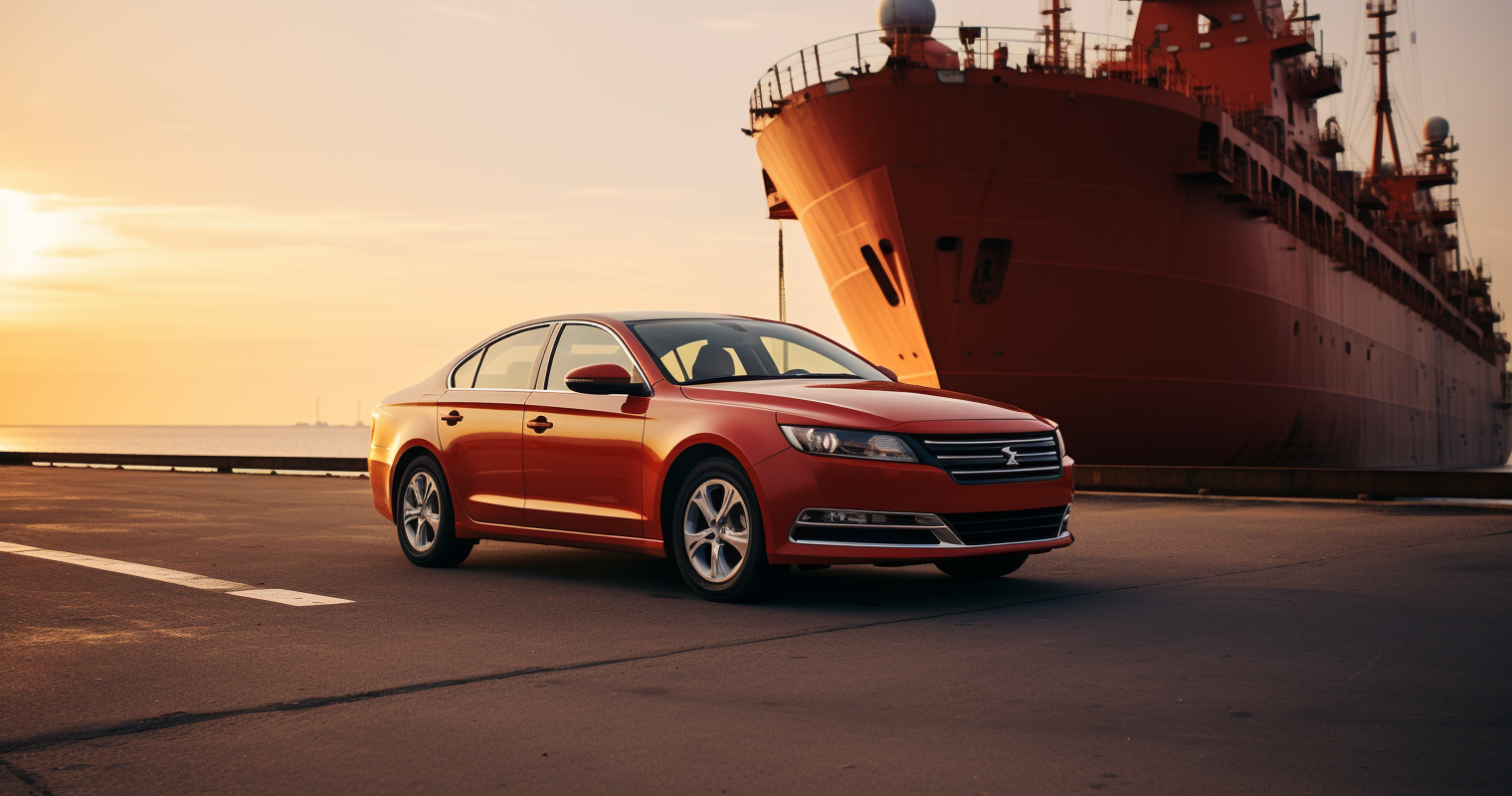
Purchasing or importing a car in Bahrain is a relatively manageable process for residents, though foreign nationals must first secure a valid residency permit and a Central Population Registration (CPR) card before they can buy or register a vehicle. Traffic in Bahrain moves on the right-hand side of the road, and both left- and right-hand drive vehicles are permitted for import. A 5% import duty and 10% VAT are levied on most imported vehicles, and cars exceeding 10 years of age are subject to heightened scrutiny at the border.
| Item | Details |
|---|---|
| Residency requirement | Valid CPR card and residency permit required to buy or import a vehicle (as of 2025) |
| Import duty (non-GCC) | 5% of CIF (Cost, Insurance, Freight) value (as of 2025) |
| VAT on imports | 10% on CIF value plus duty (as of 2025) |
| Vehicle age limit | Vehicles older than 10 years face additional import requirements; vehicles over 5 years old generally limited to third-party insurance only (as of 2025) |
| Emissions standard | Minimum Euro 4 required for imported vehicles (as of 2025) |
| Drive side | Right-hand side; both LHD and RHD vehicles accepted for import |
| Key authorities | Bahrain Revenue Authority (customs), General Directorate of Traffic (registration & licences) |
How do I buy a new car in Bahrain as a foreigner?
Foreign nationals wishing to purchase a car in Bahrain must hold a valid Bahraini residency permit or work visa. A Central Population Registration (CPR) card — Bahrain’s national identity document — is also a prerequisite. These two requirements form the baseline for eligibility; without them, completing a purchase or registering a vehicle in your name is not possible.
Acquiring a brand-new car in Bahrain is an uncomplicated experience. Dealerships typically manage the entire administrative process on your behalf, from arranging insurance to completing vehicle registration. This mirrors the experience of buying through a franchised showroom in many other countries, where the retailer coordinates all the paperwork. At the point of sale, you can expect to present your passport, CPR card, residency permit, and proof of address.
Payment can be made outright or through a car loan arranged with your bank. Most major banks operating in Bahrain extend auto financing to residents, including expatriates, though eligibility criteria differ between institutions and may depend on your employer. Securing pre-approval from your bank before visiting showrooms gives you a clear spending ceiling and strengthens your negotiating position.
Giving some thought to which model you buy is well worthwhile. The brand’s standing in the local market will have a significant bearing on the resale value you can expect when the time comes to sell. Well-established marques such as Toyota, Nissan, BMW, and Ford tend to depreciate more slowly than lesser-known brands. For up-to-date information on dealership requirements and financing conditions, always speak directly with the relevant dealership and your bank.
How do I buy a used car in Bahrain?
The second-hand car market in Bahrain is active and prices are generally competitive, but buying used demands considerably more care than purchasing new. Options include certified pre-owned programmes run by franchised dealerships, independent used-car lots, and private sellers. Private purchases tend to offer the lowest prices but carry the greatest risk, so it is wise to bring someone with solid mechanical knowledge along to any viewing. Private listings can be found through online classifieds, newspaper advertisements, and notices pinned to supermarket boards.
Before agreeing to any deal, the single most critical check is to establish whether the vehicle is encumbered by any outstanding finance. Confirm that the title is unencumbered — meaning no bank loan or hire-purchase agreement is secured against the car — before you commit to buying. The registration card (a credit card-sized document) contains a bank field; if it reads “CASH SALE,” there is no finance outstanding. Unlike some other Gulf Cooperation Council (GCC) countries, Bahrain does allow the purchase of a vehicle with outstanding finance if the lender issues a No Objection Certificate (NOC), though this arrangement involves additional complexity.
You should also investigate whether any traffic fines, unpaid road tax, or accident records are associated with the vehicle. The Bahrain Traffic Directorate can supply information on a vehicle’s status, and the General Directorate of Traffic’s online services portal enables checks on registered vehicle data. Always compare the chassis number against the registration documents, and be cautious about imported second-hand vehicles — verify the specification is appropriate for Bahraini roads and that the car has not been reported stolen. Unless you have the expertise to assess this yourself, the safest course is to choose a vehicle that was originally sold by the manufacturer through an authorised Bahraini dealer.
When both parties are ready to finalise the transaction, each should bring photocopies and originals of both sides of their CPR cards, plus the vehicle’s registration card, insurance card, and their Bahrain driving licence, to the Traffic Department. Ownership is formally transferred through the General Directorate of Traffic, at which point the buyer receives the vehicle’s registration certificate.
Many expats with experience of the Bahraini market recommend purchasing from a dealer rather than a private individual. The local climate and other environmental factors can create vehicle problems that are difficult to anticipate, and a dealership warranty — even on a used car — can provide valuable protection against unexpected repair bills.
Can I import a vehicle into Bahrain, and how does the process work?
A valid Bahraini residency permit or work visa is a prerequisite for importing a vehicle as a foreign national. The degree of complexity involved in the import process depends primarily on where the vehicle originates: bringing a car in from another GCC member state is considerably simpler than importing from outside the region.
There are several important restrictions to understand before arranging shipment. Bahrain imposes firm rules on the age of imported vehicles, generally barring cars that are more than 10 years old. This limit was itself a relaxation of a previously stricter five-year ceiling. Classic or vintage vehicles beyond the 10-year threshold may in certain circumstances be eligible for import with prior written approval. On the environmental side, Bahrain aligns with Euro emissions standards, requiring that all imported vehicles meet at least Euro 4 to be considered compliant.
As noted earlier, both left-hand drive (LHD) and right-hand drive (RHD) vehicles are accepted in Bahrain. This is a meaningful point of difference from some other jurisdictions where only one steering configuration is permitted — owners relocating from countries using either format can bring their car without requiring a conversion.
For vehicles imported from outside the GCC, the process unfolds as follows:
- Obtain a roadworthiness certificate: Arrange a roadworthiness inspection at an authorised centre in the country of origin. This confirms that the vehicle is mechanically sound and satisfies Bahraini technical standards, including those covering emissions and safety equipment.
- Obtain a vehicle import licence: Apply for a vehicle import licence from the Bahraini Ministry of Industry, Commerce, and Tourism. This document authorises the import and specifies the conditions that apply, including permitted vehicle type, age, and relevant emissions and safety criteria.
- Select a shipping method and arrange transport: Roll-on/roll-off (RoRo) shipping is the more economical option and suits most standard vehicles, while container shipping affords greater protection and is preferable for luxury, classic, or high-value cars. The principal port of entry for imported vehicles is Mina Salman Port.
- Prepare your documentation: Assemble the vehicle’s original title, evidence of ownership, a copy of your passport, and a completed customs declaration form. For sea or air shipments, you will also need a delivery order, bill of lading, and clearance certificate.
- Present documents to Bahrain Customs: Lodge an Import Customs Declaration Form (CDF) together with a Traffic Technical Inspection clearance certificate with the Bahrain Customs authorities, who will examine both the paperwork and the vehicle itself.
- Obtain an inspection licence plate: Collect an Inspection Licence Plate from the Traffic Department at the port. This requires the export licence plate, a copy of the vehicle details compiled by Customs, a vehicle insurance certificate, and your identification document.
- Proceed to registration: Once the vehicle has passed all technical checks and customs clearance is finalised, you may register it with the General Directorate of Traffic.
Engaging a licensed customs clearing agent is strongly advisable, as they can navigate the bureaucratic process efficiently and help ensure clearance is achieved without unnecessary delays — in many cases within just a few days.
For vehicles sourced from within the GCC (Saudi Arabia, Kuwait, the United Arab Emirates, Qatar, and Oman), the procedure is more streamlined. You will need to provide one of the following: a final export certificate, a customs certificate, or a detailed report in cases where the vehicle is being brought in from Saudi Arabia.
Certain exemptions from customs duties and taxes may be available. Short-term visitors may temporarily import a personal vehicle without paying duties by obtaining a Carnet de Passages en Douane (CPD), an internationally recognised customs document valid for 12 months. Diplomatic staff and consular personnel, along with their families, are generally exempt from both customs duty and VAT on personally imported vehicles. Vehicles manufactured in the United States and imported directly from there are exempt from customs duty under the US–Bahrain Free Trade Agreement. Always verify the current status of any exemption with the Bahrain Revenue Authority (Customs) before shipping, as entitlements can change.
What are the costs involved in importing a car to Bahrain?
Careful financial planning before importing a vehicle is essential, since the total cost of getting a car onto Bahraini roads can considerably exceed its purchase price. The main components to account for are set out below:
| Cost item | Rate / estimate | Notes |
|---|---|---|
| Import duty | 5% of CIF value | Calculated on cost + insurance + freight value; verify with Bahrain Revenue Authority |
| VAT | 10% on (CIF value + duty) | As of 2025; verify current rate with official sources |
| International shipping (USA to Bahrain, RoRo) | Approximately $1,400–$3,900 (2025 estimates) | Varies by departure port, vehicle size, and season |
| Customs broker / clearing agent | Variable | Strongly recommended; fees vary by agent |
| Port / demurrage charges | Variable | Collected by the port authority if vehicle is not collected promptly |
| Technical inspection / compliance | Variable | Required before registration; includes safety and emissions checks |
| Vehicle registration | Variable | Payable to General Directorate of Traffic; check current schedule |
| Vehicle modifications | Variable | May include lighting, speedometer recalibration for RHD vehicles, etc. |
Vehicles shipped to Bahrain from outside the GCC are subject to a 5% import duty, calculated on the CIF (Cost, Insurance, and Freight) value, together with VAT. As of 2025, VAT of 10% applies to the combined CIF value plus duty. Some variation in the reported applicable VAT rate exists across different sources; it is therefore advisable to confirm the current figure directly with the Bahrain Revenue Authority before committing to a shipment.
Under the US–Bahrain Free Trade Agreement, bilateral trade in industrial and consumer goods — including vehicles manufactured in the United States — is duty-free when imported directly from the USA, which can produce meaningful savings. Bahrain also participates in the GCC Unified Customs Union, under which a 5% tariff applies to most goods originating from countries outside the GCC bloc.
The duties and taxes payable will reflect the vehicle’s declared value, age, and engine capacity. You may also encounter charges for cleaning foreign soil from the vehicle’s underside to satisfy biosecurity requirements. Some additional levies may apply based on engine displacement or vehicle age, particularly where the authorities wish to encourage the adoption of cleaner, more fuel-efficient vehicles.
Compared with more demanding import regimes — Australia’s compliance framework for non-standard vehicles, for instance, can involve substantial modification costs — Bahrain’s requirements are relatively straightforward for vehicles already meeting Euro 4 standards and under 10 years of age. Nevertheless, any modifications needed to lighting systems, speedometers, or safety equipment to satisfy local rules should be included in your budget projections. Request a fully itemised quote from your shipping company and customs broker before proceeding.
How do I register a vehicle in Bahrain?
Every vehicle operated in Bahrain must be registered with the General Directorate of Traffic, which operates under the Ministry of Interior. Both locally purchased and imported vehicles are subject to this requirement, though the supporting documentation varies depending on how the vehicle was acquired.
For a newly purchased vehicle bought from a local dealer, the dealership will ordinarily handle registration and insurance on your behalf, making the process seamless. Once complete, you will be issued a registration card — a small, wallet-sized document — which must be kept in the vehicle at all times.
For a second-hand vehicle purchased locally, the transfer of ownership and re-registration must be carried out in person at the Traffic Department. Bring originals and photocopies of both CPR cards (buyer and seller), the vehicle registration card, the insurance certificate, and your Bahrain driving licence. Choosing a quieter time of day, such as late afternoon, can speed the process considerably — in some cases the entire procedure takes no more than 15 minutes.
For an imported vehicle, registration cannot take place until customs clearance has been granted and the vehicle has successfully passed a technical inspection covering both safety and emissions. The official Bahrain government services portal sets out the procedure for registering a vehicle imported from within the GCC; for non-GCC imports, a customs clearance certificate must be presented to the Traffic Department as part of the registration application.
Valid insurance must be arranged before you drive the vehicle on public roads. The General Directorate of Traffic can be accessed through the national services portal at bahrain.bh and the dedicated traffic portal at traffic.gov.bh. Check these official sites for the most current fee schedules, as charges are periodically revised.
What insurance do I need to drive legally in Bahrain?
Insurance is a legal requirement for every vehicle driven on Bahraini roads. The country operates a private motor insurance market, with a range of licensed providers offering both third-party liability and fully comprehensive products — an arrangement similar to most privately run insurance markets worldwide, rather than any form of state scheme. The legal minimum is third-party liability cover, which compensates other road users for injuries or property damage caused by your vehicle.
Comprehensive cover is available and is the prudent choice for newer or more valuable cars, offering protection for your own vehicle in addition to third-party liability. That said, an important restriction applies: vehicles more than five years old can only be insured on a third-party basis. Regardless of a vehicle’s actual condition, insurers will not offer comprehensive policies beyond this age threshold — a notable departure from many other countries where insurers retain discretion on the matter.
When obtaining a quote or taking out a policy, you will typically need to provide your CPR card, driving licence, and vehicle registration card. If you have a claims-free history with an insurer in your previous country of residence, it is worth obtaining written evidence of this, as some Bahraini insurers may informally take it into account when calculating your premium, even though there is no formal bilateral no-claims discount recognition arrangement in place.
Insurance coverage must be confirmed before a vehicle can be registered or driven on public roads. The motor insurance sector falls under the supervision of the Central Bank of Bahrain (CBB), and a register of licensed insurers is maintained at cbb.gov.bh. Always verify the current minimum legal requirements with the CBB or a licensed insurer, as regulatory conditions can evolve.
What driving licence do I need in Bahrain as an expat?
Expatriates newly arrived in Bahrain may drive using an international driving licence alongside their home country licence during the initial period of their stay. However, once residency is established and a CPR card is issued, converting the foreign licence to a Bahraini one becomes obligatory. This is an important distinction from some other countries where a foreign licence remains valid for an extended period even after residency is granted — in Bahrain, residency status triggers the conversion requirement.
To exchange a foreign driving licence, expatriates must present a valid visa and residency permit. The costs and timescales involved vary according to individual circumstances. The authority responsible for this process is the General Directorate of Traffic (Traffic Licensing Directorate), reachable through traffic.gov.bh.
Whether a test is required depends on the country that issued your licence. Bahrain has established bilateral exchange agreements with a number of nations, permitting direct conversion without the need to sit a driving or theory examination. For other nationalities, a theoretical test, practical assessment, or both may be required. The list of countries eligible for direct conversion is reviewed periodically, so always confirm your licence’s status with the Traffic Licensing Directorate before you travel.
Visitors to Bahrain who have not taken up residency may use a valid foreign licence together with an International Driving Permit (IDP) for short-term stays. Once residency is acquired, however, the IDP cannot substitute for a locally issued licence. For the most current details on eligible countries, required documents, applicable fees, and processing times, contact the General Directorate of Traffic directly.
How do I sell a car in Bahrain?
Transferring ownership of a vehicle in Bahrain is a formal process that must be completed through the Traffic Department. As a seller, you will need to obtain a roadworthiness certificate, market the vehicle, agree a price, complete the official transfer, and then cancel your insurance and road tax.
Before listing the car for sale, settle any outstanding traffic fines, unpaid road tax, or registration fees associated with it. Prospective buyers will expect to see a roadworthiness inspection certificate, and having one ready facilitates a smoother transaction. Common ways to advertise include online classified platforms, local print media, and — a practice particularly prevalent among departing expats — parking the car in a prominent spot along a busy road with a “for sale” notice displayed.
At the point of sale, both buyer and seller should attend the Traffic Department together. Each party should bring originals and photocopies of both sides of their CPR cards, along with the vehicle registration card, insurance card, and Bahrain driving licence. The transfer of ownership is logged officially, after which the buyer takes possession of the registration certificate.
It is essential that the seller does not release the vehicle until the ownership transfer has been formally recorded at the Traffic Department. Until that moment, legal responsibility for the car — including liability for any incidents involving it — remains with the registered owner. Following the completed transfer, the seller should cancel the insurance policy on the vehicle and retain written confirmation of that cancellation. Bahrain does not currently impose a capital gains tax on private vehicle sales, so there is generally no tax consequence for any profit realised — though it is wise to verify the current position with a local tax adviser, as the legislative landscape can shift.
What are the ongoing costs and obligations of vehicle ownership in Bahrain?
Running a vehicle in Bahrain involves a series of recurring costs and legal obligations that apply to all drivers, whether local or expatriate. Being aware of these from the outset helps ensure you remain compliant and avoid unnecessary penalties.
Annual vehicle registration renewal is the principal recurring obligation. Functionally comparable to an annual road tax or vehicle excise duty renewal in other countries, this must be completed with the General Directorate of Traffic each year. Integral to the renewal process is a periodic roadworthiness inspection — broadly analogous to the annual MOT test used in the United Kingdom and similar markets — during which the vehicle is examined for mechanical fitness and adherence to safety standards before registration is extended.
Emissions testing forms part of the technical inspection process. Given that Bahrain mandates compliance with Euro emissions standards and requires imported vehicles to meet at least Euro 4, continued adherence to these thresholds is expected of all registered vehicles throughout their operational life.
Annual insurance renewal is a statutory requirement. As outlined earlier, vehicles more than five years of age are restricted to third-party cover, which is typically less expensive but leaves the owner unprotected in the event of damage to or loss of their own vehicle. Shopping around among CBB-licensed insurers each renewal cycle is worthwhile to ensure competitive pricing.
Fuel expenditure in Bahrain is generally modest by international standards, as the government subsidises petrol prices. Day-to-day running costs are therefore considerably lower than in most of Europe or North America. There is no congestion pricing, low-emission zone surcharge, or equivalent to schemes such as London’s Ultra Low Emission Zone (ULEZ).
For current fee schedules relating to registration renewal and vehicle inspections, refer to the General Directorate of Traffic or the national services portal at bahrain.bh. For queries about customs and import matters, the primary point of contact is the Bahrain Revenue Authority (Customs).
Frequently asked questions
Can I buy a car in Bahrain without a residency permit?
No. Foreign nationals must hold a valid Bahraini residency permit or work visa to purchase a vehicle. A CPR card is also required. Visitors on short-stay visas are not able to register a vehicle in their own name. If your residency situation changes, confirm the latest requirements with the General Directorate of Traffic.
Are there any restrictions on the age of a vehicle I can import?
Yes. Bahrain generally prohibits the import of vehicles more than 10 years old, a limit that was itself a relaxation of a previously stricter five-year cap. Vehicles beyond the 10-year threshold are subject to additional procedural requirements and charges. Contact the Bahrain Revenue Authority (Customs) at Mina Salman for guidance on importing older vehicles.
Can I drive a right-hand drive vehicle in Bahrain?
Yes. Both left-hand drive (LHD) and right-hand drive (RHD) vehicles are permitted in Bahrain, and there is no restriction on importing or registering either configuration. Since traffic travels on the right, you may need to adjust the headlights on an RHD vehicle to avoid dazzling oncoming drivers — check applicable compliance requirements with the General Directorate of Traffic.
What import duty and VAT will I pay on a car imported from outside the GCC?
As of 2025, a 5% import duty is levied on the CIF (Cost, Insurance, Freight) value, with 10% VAT then applied to the combined CIF value plus duty. Both figures are subject to change, so verify the current rates directly with the Bahrain Revenue Authority before arranging shipment.
Do I need to retake a driving test to get a Bahraini driving licence?
It depends on the country that issued your licence. Holders of licences from countries with which Bahrain has bilateral exchange agreements may convert directly without sitting any examination. Nationals of other countries may be required to pass a theory test, practical assessment, or both. Check the current list of eligible countries with the General Directorate of Traffic.
How quickly must I convert my foreign driving licence after becoming a resident?
During the initial weeks of your stay, you may drive using an international driving licence alongside your national licence. Once you are granted resident status and receive your CPR card, you are required to convert your foreign licence to a Bahraini one — there is no extended grace period after CPR residency is conferred. Contact the Traffic Licensing Directorate for specific timelines and current documentary requirements.
Can I get comprehensive insurance on an older second-hand car in Bahrain?
No. Vehicles more than five years old can only be insured on a third-party basis in Bahrain; comprehensive cover is unavailable regardless of the car’s condition or value. If purchasing an older vehicle, bear in mind that you will have no insurance protection for the vehicle itself should it be damaged or written off in an accident, which is a significant financial risk if the car represents a substantial outlay.
What is the process for transferring ownership when I sell my car?
Both parties must attend the Traffic Department together, bringing originals and copies of their CPR cards, the vehicle registration card, insurance certificate, and driving licences. Ownership is formally recorded and the buyer receives an updated registration certificate. The seller should cancel their insurance policy and retain confirmation once the transfer is complete. Crucially, the keys should not be handed over until the transfer has been officially logged, as the registered owner retains legal liability for the vehicle until that point.