
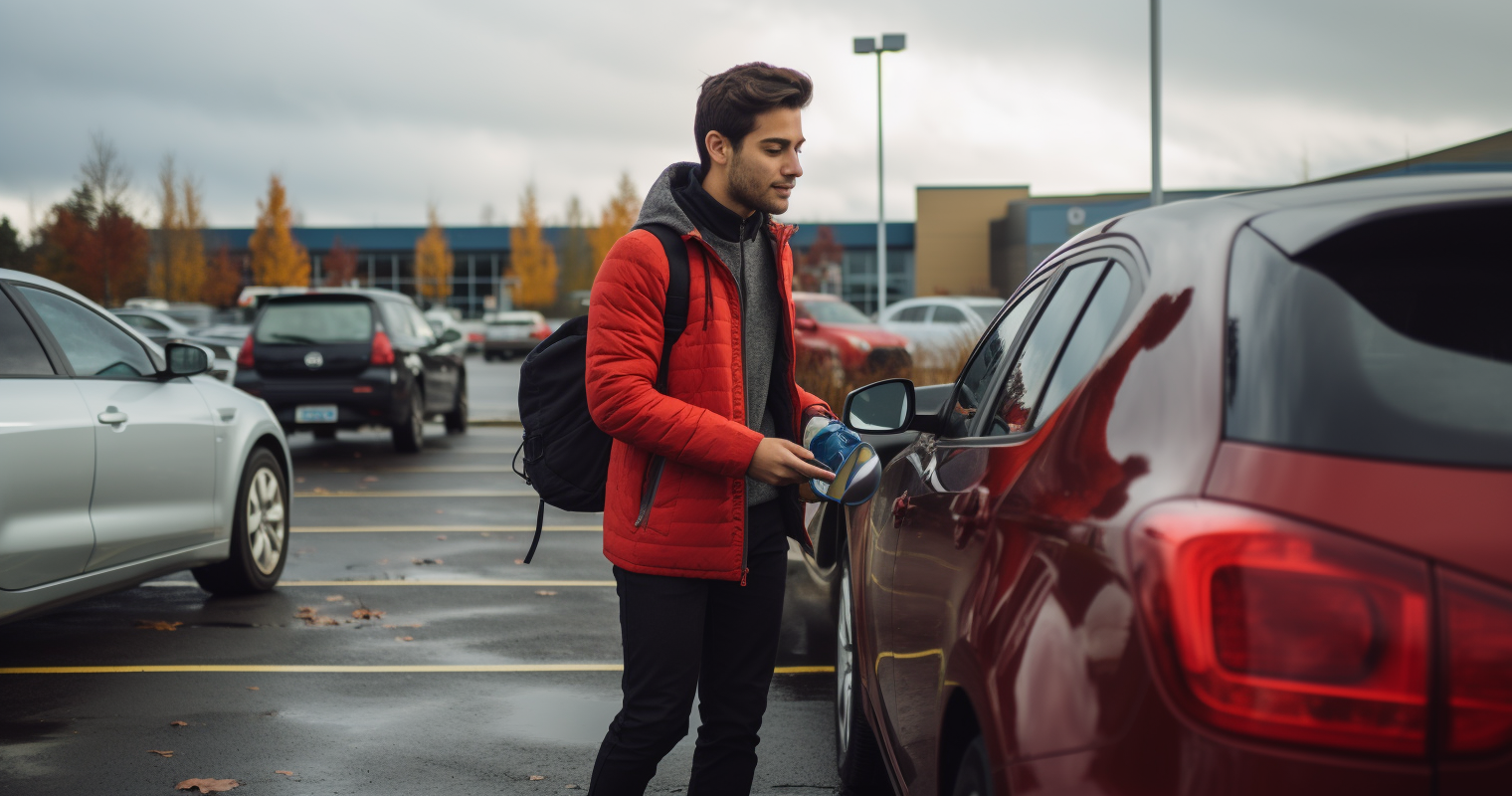
For most visitors and newcomers, hiring a car in Sweden is a relatively simple process. All the leading international rental brands have a presence here, with particularly strong coverage at Stockholm Arlanda and Gothenburg Landvetter airports. To get behind the wheel, you’ll need a valid driving licence, be at least 18 years of age (though 21 is the practical threshold at most companies), present a credit card in your own name, and familiarise yourself with Sweden’s exceptionally strict drink-driving regulations and the compulsory winter tyre requirements that apply from December through March.
| Item | Details |
|---|---|
| Minimum driving age | 18 years old (as of 2025) |
| Typical rental company minimum age | 21–25 years old; young driver surcharge often applies under 25 (as of 2025) |
| Licence requirement | Valid national licence; IDP recommended if licence is not in Latin alphabet or not in English, German, French, Swedish, Norwegian or Danish |
| Winter tyres mandatory period | 1 December – 31 March when winter road conditions exist (as of 2025) |
| Blood alcohol limit | 0.2‰ — among the strictest in Europe (as of 2025) |
| Foreign licence validity for new residents | Valid for up to 1 year after registering as a resident; exchange required thereafter for non-EEA licences (as of 2025) |
| Official authority | Swedish Transport Agency (Transportstyrelsen) |
What are the rules and requirements for renting a car in Sweden?
Sweden enforces its road and rental regulations clearly and consistently. Whether you are passing through on a short holiday or settling in for an extended stay, familiarising yourself with these requirements before you collect your vehicle will spare you from unnecessary costs, delays, and potential legal difficulties. The principal official source for driving and licensing information is the Swedish Transport Agency (Transportstyrelsen), which makes its guidance available in English.
Age requirements
While 18 is the legal minimum age to drive in Sweden, the overwhelming majority of rental companies will not hand over keys to anyone younger than 21 — and frequently 25 — for a standard vehicle. Drivers who have not yet reached 25 will almost invariably be subject to a “young driver” surcharge. The precise minimum age differs between companies and vehicle categories, so always confirm this detail with your chosen provider at the time of booking. As of 2025, certain companies such as Avis advertise a minimum of 19 for select vehicle classes — check directly with each provider for up-to-date figures.
Licence requirements
A driving licence issued by any EU or EEA member state is fully accepted across Sweden. If your licence originates from a country outside the EU and is not written in English, German, French, Swedish, Norwegian, or Danish, you will generally need either an International Driving Permit (IDP) or a certified translation to accompany it — this reflects the standard position of the Swedish Transport Agency itself.
Non-residents visiting Sweden may use their foreign licence for up to one year from the date they register as a resident. The licence should carry a photograph and display information in the Latin alphabet. Some rental firms specifically require a photo ID licence; if yours lacks one, obtaining an IDP before your trip is strongly advisable if you intend to rent a vehicle.
Payment and deposit
Virtually all rental companies in Sweden require a credit card — not a debit card — held in the primary driver’s name in order to secure the damage deposit. This is standard practice throughout European rental markets, mirroring the approach taken in countries such as France and Germany, and exists to cover the company against potential liability for damage. Deposits can be considerable, so confirm the amount before you commit to a booking.
Transmission
Manual gearboxes remain widespread across Sweden’s rental fleet. If you are only comfortable driving an automatic, make a point of filtering specifically for that option when searching, as automatic vehicles are less plentiful and often priced higher. This is particularly relevant for those relocating from countries such as the United States or Australia, where automatics are the norm.
Drink-driving
This is arguably the single most important rule to absorb before driving in Sweden. The country enforces one of the lowest blood alcohol thresholds anywhere in the world: just 0.2‰ — considerably below the 0.5‰ limit found in many European nations and the 0.8‰ limit applied in others. In practice, even a modest glass of wine or a single beer can push you beyond the legal limit. Enforcement is regular and rigorous, and the consequences — which include substantial fines, suspension of your licence, and imprisonment — are severe.
Child seat rules
Swedish law requires all children to travel in an appropriate child car seat until they reach either 12 years of age or a height of 135 cm. Most rental companies can supply child seats for a supplementary daily charge — as of 2025, Avis lists a fee of 125 SEK per day for this, though you should verify current pricing directly with the provider before booking.
Which major car rental companies operate in Sweden, and where can I find them?
Sweden is comprehensively covered by both global and homegrown rental operators. The principal hubs are Stockholm Arlanda Airport — the country’s busiest — and Gothenburg Landvetter Airport, the second-largest gateway. Rental desks also operate at city-centre locations and at a range of smaller regional airports, including those at Malmö, Kiruna, Umeå, and Kalmar.
At Stockholm Arlanda Airport
Travellers arriving at Stockholm Arlanda Airport can choose from Alamo, Avis, Budget, Enterprise, Europcar, Hertz, National, Sixt, and Mabi. The major international names maintain dedicated counters within or immediately adjacent to the terminal buildings. Some operators may direct customers to a vehicle lot that requires a short shuttle journey — it is worth checking this detail at the point of booking.
At Gothenburg Landvetter Airport
Booking platforms such as Auto Europe can help travellers arrange a rental at Gothenburg with the majority of the leading companies represented at Göteborg Landvetter Airport, as well as through offices in the city centre. Among the most established names at Landvetter are Avis, Hertz, and Budget. As the second-largest airport in Sweden after Stockholm Arlanda, Gothenburg Airport (GOT) is well served across vehicle categories.
Key company websites
- Hertz: www.hertz.com
- Avis: www.avis.com
- Europcar: www.europcar.com
- Sixt: www.sixt.com
- Budget: www.budget.com
- Enterprise: www.enterprise.com
- Alamo: www.alamo.com
- National: www.nationalcar.com
Local and regional options
Mabi is a well-regarded Swedish operator with a presence at Arlanda that frequently offers competitive rates when measured against the international chains. Aggregator platforms such as Discover Cars and Auto Europe pull together prices from multiple suppliers active in Sweden, providing a convenient way to survey the whole market — including smaller regional firms — in a single search.
How does car rental pricing work in Sweden, and what should I watch out for?
The pricing structure for car hire in Sweden broadly follows the pattern of other Northern European markets, but a number of local charges and practices deserve close attention before you sign any rental agreement.
Base pricing
Daily rates shift considerably depending on vehicle type, the time of year, and how far ahead you book. During peak holiday periods, rental cars across Sweden can become scarce quickly, so reserving well in advance is recommended both for availability and cost. Booking through a comparison platform or directly with a company will generally produce better rates than turning up at a rental desk without a prior reservation. Always establish whether a quoted price already includes basic insurance coverage and whether it is stated before or after tax.
Congestion charges
One of the most common surprises for first-time renters in Sweden is the automatic congestion fee. As of 2025, the daily congestion fee stands at 75.00 SEK in Stockholm and 60.00 SEK in Gothenburg, collected in advance at the point of checkout. Collecting a vehicle from an office situated within a congestion charge zone will result in a daily charge being applied. You may also incur this fee if you pick up from a location near such a zone and subsequently drive within it. Clarify this with the rental company when you collect the vehicle.
One-way fees
Returning a vehicle to a different location from where it was collected will attract a one-way fee in all cases. This charge varies according to vehicle category, collection and return locations, and the date of pick-up, and the applicable amount will be displayed during the online booking process. In contrast to certain markets where domestic one-way rentals carry no surcharge, Swedish operators routinely levy this fee — always check before confirming an itinerary that ends somewhere other than where it began.
Cross-border fees
If you intend to drive into a neighbouring country — whether Norway, Finland, or Denmark — you must obtain prior written authorisation from the rental company. Outside Sweden, vehicles may generally only be taken into a specified list of permitted countries. A cross-border fee of SEK 200 per day up to a maximum of SEK 2,000 per rental may apply, and customers must notify the rental branch of their plans and secure written permission before departing (as of 2025). Crossing a border without authorisation constitutes a breach of contract, incurs a penalty of SEK 10,000, and renders all insurance cover void.
Fuel policies
The standard fuel arrangement across most Swedish rental companies is full-to-full: you receive the vehicle with a full tank and are expected to return it in the same condition. Some operators offer a prepaid fuel option, which can feel convenient but rarely delivers good value unless you are certain to use the entire tank. Unlike markets such as the United States, where full-to-empty prepaid arrangements are widespread, the full-to-full model dominates in Sweden — plan accordingly and allow yourself adequate time to refuel near the return location.
Collision Damage Waiver and excess insurance
Collision Damage Waiver and Theft Protection (CDWTP) is an optional product that limits your financial exposure in the event of damage to or theft of the rental vehicle. It is typically offered at the rental desk at collection. The standard base rate in most cases covers only compulsory third-party liability; CDW is a supplementary purchase. Read the policy wording carefully to understand what the waiver genuinely covers and what excess liability remains on your side.
Consumer protection
Should a dispute arise with a rental company, the Swedish National Board for Consumer Disputes (ARN) handles complaints relating to car rental and other service providers operating in Sweden. The Swedish Consumer Agency (Konsumentverket) additionally publishes consumer rights guidance applicable to rental agreements.
Do I need an International Driving Permit (IDP) to rent a car in Sweden?
Sweden does not impose a blanket legal requirement for an IDP on all foreign drivers, but whether one is necessary in practice depends on your licence’s language, the policies of the individual rental company, and the length of your intended stay.
When an IDP is not required
Licences issued by any EU member state are accepted throughout Sweden without the need for an IDP. Visitors holding a valid UK driving licence may equally drive without one for periods of up to one year. Provided your national licence is written in the Latin alphabet and in one of the accepted languages — English, German, French, Swedish, Norwegian, or Danish — you can generally both drive and hire a car without additional documentation.
When an IDP is recommended or required
An IDP is strongly advisable for anyone coming from outside Sweden, and is particularly essential if your domestic licence uses a non-Latin script — such as Arabic, Japanese, or Cyrillic — in which case an IDP or certified official translation must be carried alongside the original licence. Beyond this, individual rental companies may impose their own IDP requirements irrespective of what Swedish law mandates.
Certain operators, including Enterprise, explicitly require an International Driving Permit from all renters who do not hold a European Union licence. This means that even where Swedish legislation would not oblige you to carry one, a specific company’s terms may do so. Always review the rental company’s conditions thoroughly at the time of booking.
IDP validity
Sweden accepts International Driving Permits issued under both the 1949 Convention (valid for one year) and the 1968 Convention (valid for up to three years). An IDP is only valid when presented together with the original domestic driving licence it supplements — it is not a standalone travel document.
The requirements outlined above reflect the position as of 2025, but rules are subject to change. Always confirm the current position with Transportstyrelsen and with your chosen rental company before departure.
What types of roads and driving conditions should I be prepared for in Sweden?
Sweden’s road network is extensive and well maintained, but drivers — especially those arriving from more densely urbanised countries — will encounter a range of conditions and hazards that require specific preparation.
Road quality and network
Swedish roads are consistently well kept and the country is widely regarded as having some of the finest highways and secondary routes in Europe. The main E-road motorway network links the major cities efficiently. Further north and in rural areas, you’ll find smaller paved regional roads, and in more remote parts of the country — such as Lapland — gravel tracks and unsealed forest roads are not uncommon. For excursions into these areas, selecting an SUV or a vehicle with good ground clearance is a sensible choice.
Winter driving and tyres
From 1 December to 31 March, winter tyres or equivalent equipment are legally required for private cars, light trucks, and light buses with a maximum total weight of 3.5 metric tons whenever wintry conditions prevail on the road. Conditions are deemed wintry when any part of the road surface is affected by snow, ice, slush, or frost. Established rental companies routinely equip their vehicles with appropriate winter tyres during this period — always confirm this at the time of booking.
Two types of legally compliant winter tyre may be provided: friction tyres (non-studded), which are more prevalent in southern Sweden, and studded tyres, which incorporate small metal pins for improved grip on icy surfaces and are more commonly fitted in Stockholm and the northern regions. Studded tyres are only permitted between 1 October and 15 April, unless continuing winter conditions justify their extended use. Certain streets in major cities also restrict studded tyres to limit particulate pollution — check local signage.
Wildlife hazards
Sweden has an exceptionally high incidence of road accidents involving animals, referred to as viltolyckor. Reported wildlife collisions continued to climb in 2025 and are projected to reach a new record, potentially exceeding 70,000 incidents across the year. The vast majority involve smaller deer species, but the most serious — and potentially fatal — accidents involve moose (älg), with more than 5,000 recorded incidents annually carrying the greatest risk of human injury or death, largely because of the animal’s height relative to vehicle bonnets.
Incidents peak around dusk and dawn, when light is poor and animals are at their most active. If you strike any of the major wildlife species — including moose, deer, or wild boar — you are legally required to stop immediately and report the accident to the police. If a large animal is in your path, brake firmly and in a controlled manner rather than swerving sharply, which risks losing control of the vehicle.
Speed limits and traffic rules
Motorway speed limits in Sweden are typically 110 km/h or 120 km/h, reducing to 70–90 km/h on rural roads and 30–50 km/h in built-up areas. Headlights must remain switched on at all times — day and night — as a legal requirement rather than a courtesy. All occupants must wear seat belts. Using a handheld mobile phone while driving is illegal. Traffic in Sweden travels on the right-hand side of the road.
Congestion zones
Both Stockholm and Gothenburg operate camera-based congestion charging systems. Charges are captured electronically and billed to you via your rental company (see the pricing section above for the applicable daily fees). There are no manual payment booths at zone boundaries. Review your rental agreement carefully to understand exactly how congestion charges will appear on your final bill.
What insurance do I need when renting a car in Sweden?
Every rental vehicle in Sweden is legally required to carry third-party liability insurance (trafikförsäkring). Beyond this statutory baseline, rental companies offer an array of supplementary products, and knowing which are genuinely worth taking can save you both money and unnecessary anxiety.
What is typically included as standard
The base rental price in Sweden generally incorporates the compulsory third-party liability cover, which provides protection for other road users in the event of an accident for which you are at fault. It does not ordinarily extend to damage sustained by the rental vehicle itself. Whether a basic level of theft protection is bundled in depends on the operator and the specific package chosen — read the rental agreement carefully rather than assuming coverage.
Collision Damage Waiver (CDW)
Collision Damage Waiver and Theft Protection (CDWTP) is an optional product that reduces your personal financial liability if the rental car is damaged or stolen. Even when a CDW is in place, an excess — or deductible — amount frequently remains, meaning you are liable for an initial portion of any repair costs. “Super CDW” or excess waiver products can eliminate this residual liability and may be purchased either from the rental company at the desk or from a specialist third-party insurer in advance of travel, often at a lower premium.
Personal Accident Insurance (PAI)
Personal Accident Insurance provides coverage for the driver and any passengers, offering compensation for disability, medical costs, or death arising from a road accident. This is a separately purchased optional product. If your existing travel insurance policy already incorporates personal accident cover, buying an equivalent product through the rental company may simply duplicate cover you already hold — review your policy before paying for it twice.
Credit card insurance
Certain credit cards include rental car excess protection as a cardholder benefit, but the scope of this cover varies enormously between providers and issuing countries. Cover that applies when renting in Australia or Canada may carry entirely different exclusions when the rental takes place in Sweden. Contact your card issuer directly to establish: (a) whether Sweden falls within their rental coverage geography; (b) what exclusions are in effect (for instance, specific vehicle classes or one-way rentals); and (c) whether declining the rental company’s CDW is a prerequisite for the card benefit to activate. Never assume coverage applies — always obtain written confirmation before travel.
Winter and wildlife damage
Standard CDW policies may not cover damage arising from particular circumstances, such as driving on unpaved gravel tracks, storm events, or certain collisions with wildlife. Examine the exclusions in your rental agreement with particular care if you plan to travel through rural northern Sweden. Where uncertainty exists, purchasing supplementary excess cover in advance through a specialist provider is often considerably cheaper than acquiring it at the rental counter.
Are there any specific rules for expats or long-term residents renting cars in Sweden?
The rules governing driving licence validity differ in meaningful ways between short-term visitors and those who have formally registered as residents in Sweden. If you are relocating rather than simply travelling, these distinctions carry significant practical consequences.
Licence validity for new residents
Holders of a driving licence from a non-EEA country will find that their licence ceases to be valid for driving in Sweden once they have been registered as a resident for more than one year. The Swedish Transport Agency has the authority to grant exemptions from this rule in specific situations, such as for full-time students or individuals on temporary secondment assignments.
For arrivals from countries outside the EU or EEA, the foreign licence remains valid for up to twelve months from the date of registration as a resident. Beyond that point — unless an exemption has been granted — you will need either to exchange your foreign licence for a Swedish one or to sit the Swedish driving test afresh. The precise process depends on the issuing country: some nations have reciprocal licence exchange agreements with Sweden, while others do not.
EEA licence holders
If your licence was issued by an EU or EEA country, it continues to be valid in Sweden without any time limit, regardless of your residency status. There is no requirement to exchange it simply because you have become a registered Swedish resident — a position consistent with how EU licences are treated across the European bloc.
How the one-year rule affects car rental
During the first year of registered residency, expats from outside the EEA can hire a car in Sweden on their foreign licence in the same way as any short-term visitor. Once the one-year threshold is crossed, however, you should hold a valid Swedish licence before attempting to rent — rental companies may request a licence that is legally valid for driving in Sweden, and your original foreign licence will no longer satisfy that requirement.
Applying for a Swedish licence
Licence applications, exchanges, and exemption requests are all administered by Transportstyrelsen. Processing times are variable. It will normally take somewhere between 8 and 12 weeks to receive a response on exemption applications, and during the period from May to August this may extend further. If your one-year residency anniversary is approaching, begin the process well in advance — do not wait until your current licence becomes invalid before submitting an application.
Renting as a long-term expat with a Swedish licence
Once you hold a valid Swedish driving licence, no additional restrictions apply to hiring a car. Standard rental requirements — relating to age, credit card, and so forth — operate in exactly the same way as for any other resident. Carry your licence and any required supporting documentation whenever you drive.
Frequently asked questions about renting a car in Sweden
What is the minimum age to rent a car in Sweden?
The legal minimum age to drive in Sweden is 18, but in practice most rental companies will not accept drivers younger than 21, and often 25, for a standard vehicle. Requirements differ between operators and vehicle categories, so always verify directly when making your reservation. As of 2025, certain companies such as Avis advertise a minimum age of 19 for selected vehicle classes — confirm current figures with the provider before booking.
Will I be charged extra if I am under 25?
Drivers who have not yet reached 25 will almost certainly be subject to a “young driver” surcharge added automatically at the point of rental. This is standard across Sweden and most European markets. The precise amount varies by company and vehicle class — establish the figure at the time of booking so it can be factored into your overall travel budget.
What happens if I have an accident in my rental car?
Stop immediately and contact the police if there are any injuries. You should also call the rental company’s emergency line, the number for which will appear in your rental agreement and is usually displayed on a card kept in the vehicle. Report every accident to the company, however minor it may seem — failing to do so can invalidate your insurance cover entirely. If the collision involves any of the major wildlife species (moose, deer, wild boar, and similar animals), you are legally obliged to stop at once and report the incident to the police (dial 112 for emergencies or 114 14 for the non-emergency police line).
Can I drive my rental car across the border into Norway, Denmark, or Finland?
In all circumstances, you must notify the rental branch of your intention to take the vehicle out of Sweden and obtain written authorisation before doing so. Crossing any border without permission constitutes a breach of the rental contract and will result in a penalty fee of SEK 10,000, with all insurance cover rendered void. Always secure written approval before embarking on any cross-border itinerary in a hire vehicle.
What if I return the car with a different fuel level than when I collected it?
The standard arrangement at most Swedish rental companies is full-to-full. Returning the vehicle with less fuel than it had when collected will result in a charge for the missing quantity — typically calculated at a rate considerably higher than standard pump prices. Refuel as close to the return point as practical and retain your receipt as proof. If you opted for a prepaid fuel package and return with fuel remaining in the tank, no refund will be issued for what has not been used.
Are winter tyres included in the rental price?
Between 1 December and 31 March, winter tyres are a legal requirement whenever road conditions are wintry. Reputable rental companies fit suitable winter tyres as a matter of course during this window, with the cost generally absorbed into the base rental rate. Nonetheless, always confirm this explicitly when booking — particularly if collecting from a smaller or more remote location. If wintry conditions occur outside this period, ask the rental company what tyres the vehicle is fitted with before driving.
Does my credit card’s travel insurance cover rental car excess in Sweden?
It may do — but this is entirely dependent on your individual card issuer’s terms and conditions. Exclusions are common and can relate to vehicle type, one-way rentals, rental duration, or geography. You must contact your card provider directly to confirm what protection, if any, applies to a rental in Sweden before placing any reliance on this benefit. Never assume coverage is in place without obtaining written confirmation from the issuer.
Do I need to register my address with any authority if I rent a car as a new resident?
Hiring a car does not in itself trigger any notification obligation to an authority. However, if you are a new resident holding a non-EEA foreign licence, bear in mind that your licence ceases to be valid for driving in Sweden after one year of registered residency. Apply to Transportstyrelsen well ahead of that deadline for either a licence exchange or an exemption. Processing normally takes between 8 and 12 weeks, and may take longer during the May to August period.