
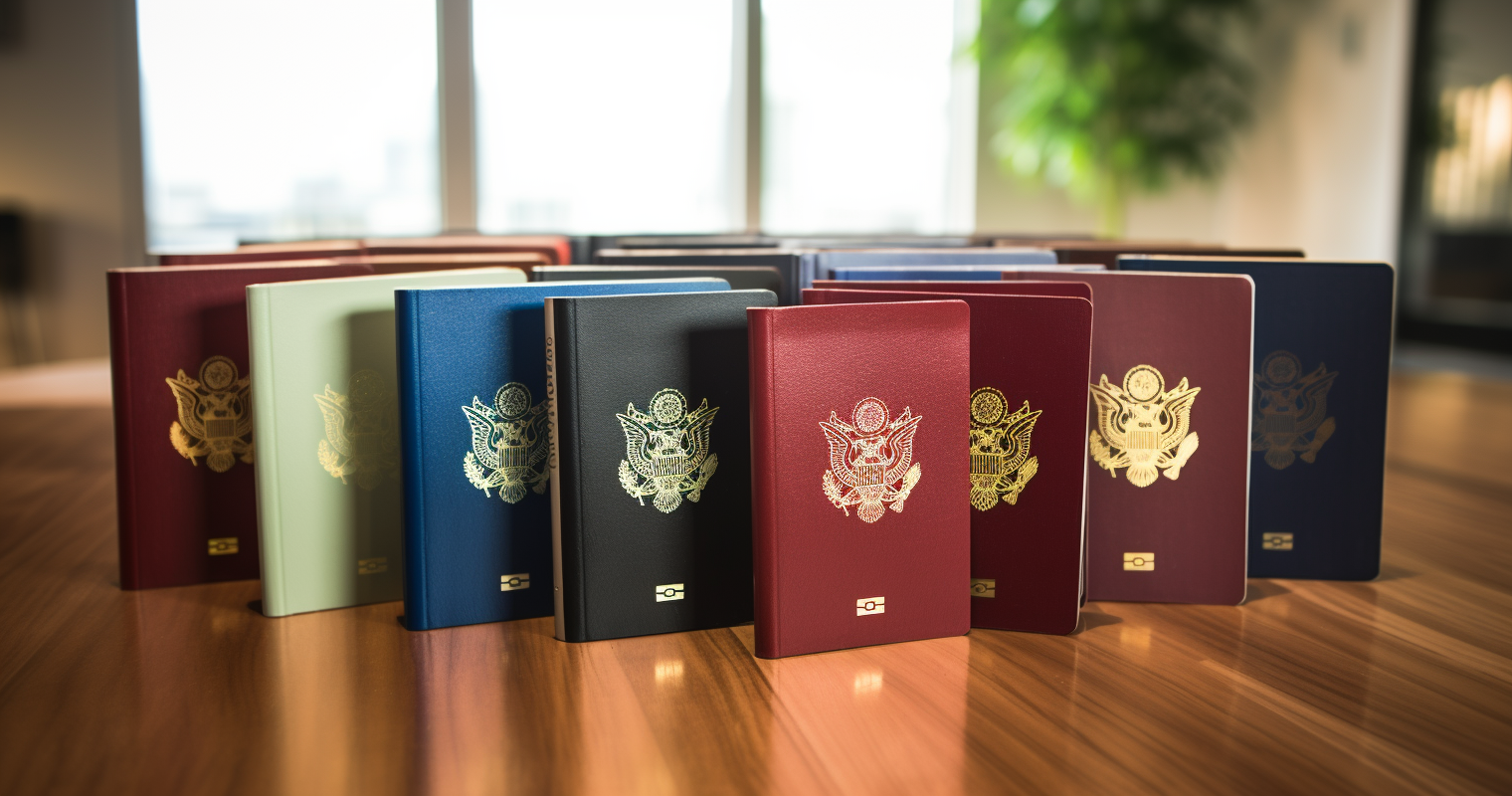
Under the Citizenship Act, 1955, Indian citizenship may be obtained through birth, descent, registration, or naturalisation. Foreign nationals pursuing the naturalisation route must generally complete a minimum of 12 years of lawful residence in India. India prohibits dual citizenship — anyone who gains Indian citizenship must give up any prior nationality — though the Overseas Citizen of India (OCI) card provides a lasting alternative arrangement for individuals with Indian roots.
| Item | Details |
|---|---|
| Standard naturalisation residency requirement | 12 years total (11 of the previous 14 years, plus 12 months immediately before application) — as of 2025 |
| Residency by marriage (registration route) | Ordinarily resident for 7 years prior to application — as of 2025 |
| OCI pathway to citizenship | Registered as OCI for 5 years, residing in India for 1 of those years — as of 2025 |
| Dual citizenship | Not permitted — existing nationality must be renounced |
| Online application portal | indiancitizenshiponline.nic.in |
| Governing body | Ministry of Home Affairs (MHA), Government of India |
| Indian passport travel access | Visa-free or visa-on-arrival access to approximately 56 countries — as of 2026 (Henley Passport Index) |
Who is eligible to apply for citizenship in India?
The Citizenship Act, 1955 establishes four distinct routes to Indian citizenship: birth, descent, registration, and naturalisation. Which route is available to you depends principally on the strength of your family connections to India and the duration of your lawful residence there.
Citizenship by birth
Anyone born on Indian soil on or after 26 January 1950 and before 1 July 1987 automatically acquired Indian citizenship at birth, regardless of their parents’ nationality. For those born between 1 July 1987 and 3 December 2004, citizenship by birth applies only if at least one parent held Indian citizenship at the time of birth. For persons born in India on or after 3 December 2004, the threshold is higher: both parents must be Indian citizens, or one parent must be a citizen while the other is not an illegal migrant.
Citizenship by descent
This route is available to individuals born outside India who have at least one Indian citizen parent. To qualify, the birth must have been formally registered at an Indian consulate within one year of the child’s birth. The requirement for a consular registration step is comparable to similar frameworks in countries like Ireland, where foreign-born children of Irish nationals must complete a formal registration process to establish their citizenship status.
Citizenship by registration
Registration as a citizen is open to certain categories of non-citizens: spouses of Indian citizens, minor children of Indian nationals, persons of Indian origin living within or outside pre-partition India, and individuals whose parents are or were Indian citizens. Those who have held overseas citizenship for a minimum of five years are also eligible under this route.
Applicants generally need to have resided in India for at least 12 months before lodging their registration application, in addition to further residence conditions that vary depending on the specific eligibility category. Spouses of Indian citizens who qualify under this route are typically required to demonstrate seven years of ordinary residence in India — considerably less than the standard naturalisation threshold, much like the reduced naturalisation tracks many other countries offer to spouses of their nationals.
Citizenship by naturalisation
Foreign nationals who do not qualify through any of the above routes may apply for citizenship by naturalisation after having been lawfully resident in India for at least 11 of the preceding 14 years, with an unbroken 12-month period of residence immediately before filing the application — amounting to 12 years in total. This is a substantially higher bar than, for instance, the five-year naturalisation routes offered by France or Germany, and is more in keeping with Switzerland’s requirement of ten years of continuous residence.
Naturalisation applicants must file Form VIIIA, together with a personal affidavit confirming the accuracy of the information provided and attesting to their own good character, as well as two supporting affidavits from Indian citizens. Applicants are also required to declare their working knowledge of at least one language listed in the Eighth Schedule to the Constitution of India.
Special provisions under the Citizenship Amendment Act (CAA)
Persons from Afghanistan, Bangladesh, or Pakistan who belong to one of six religious communities — Hindus, Sikhs, Buddhists, Jains, Parsis, or Christians — and who entered India before 2015 are not classified as illegal migrants. They may apply for naturalisation under a reduced residence requirement: at least five years of residence during the previous 14-year period, plus the standard 12 consecutive months immediately before applying. The Citizenship (Amendment) Rules, 2024, made under the Citizenship (Amendment) Act, 2019, are now operative, and eligible persons may submit their applications through the online portal.
Disqualifying conditions
Persons classified as illegal migrants are generally ineligible for citizenship through either naturalisation or registration. Those with serious criminal convictions, individuals who have been identified as a threat to national security, or those who previously renounced Indian citizenship without the necessary authorisation may also be barred from applying.
What are the steps involved in applying for citizenship in India?
The entire citizenship application process in India is overseen by the Ministry of Home Affairs (MHA), which administers the official online portal at indiancitizenshiponline.nic.in. The journey from initial application to receiving a certificate involves several formal stages. Applicants should consult the official portal directly for the latest forms, fee schedules, and processing guidance, as these details are subject to revision.
- Confirm your eligibility: Determine which route — birth, descent, registration, or naturalisation — corresponds to your personal circumstances. Consult the relevant provisions of the Citizenship Act, 1955 and satisfy yourself that you meet all residency and other requirements before you begin.
- Assemble your documentation: Gather all necessary supporting materials. Naturalisation applicants will typically need a valid foreign passport, a current residential permit, residence evidence spanning the qualifying period, a personal affidavit, two character affidavits from Indian citizens, and certificates confirming language proficiency. Two separate certificates must be provided confirming the applicant’s competence in a language listed in the Eighth Schedule of the Constitution.
- Place a public notice: Applicants for naturalisation are required to publish a notice of their citizenship intention in two local newspapers in any one of the 22 specified scheduled languages, and to include proof of these publications with their application.
- Lodge your application online: Log on to the official portal to upload scanned copies of your documents, pay the applicable fee, and print and sign the completed application form. A reference number will be generated, which can be used to track your case. Always confirm the current fee on the official portal prior to submission.
- Present documents for verification: You will be required to attend in person on a designated date to produce original documents for official review. The Oath of Allegiance will not be administered until the designated officer has confirmed that all required documentation has been submitted and verified, recording this confirmation within the online system.
- Administer the Oath of Allegiance: Once document verification is complete, the Oath of Allegiance is taken. The District Level Committee uploads a record of the administered oath to the online system and transmits the application electronically — along with confirmation of document verification — to the Empowered Committee.
- Security review and decision: The Empowered Committee examines the application thoroughly, conducting any additional enquiries it considers appropriate and taking into account the report prepared by the relevant security agency, before issuing a decision to approve or reject the application.
- Collect your certificate: Successful applicants receive a digital certificate of registration or naturalisation. Those who opted for a physical, ink-signed copy at the application stage must collect this from the office of the Director (Census Operations) of the relevant State or Union Territory, located in the State or UT capital.
The government does not publish a standard processing timeframe, and the time taken can vary considerably depending on case complexity, the security review, and the volume of applications being handled. Refer to the Ministry of Home Affairs website for the latest guidance on fees and expected durations.
What tests, interviews, or ceremonies are required as part of the citizenship process in India?
India does not administer a standardised written knowledge examination in the manner of the UK’s Life in the UK test or the US Naturalization Test. The procedural requirements instead centre on a language declaration, character references, and a formal oath.
Language requirement
Applicants must affirm an adequate level of proficiency in at least one of the 22 languages listed in the Eighth Schedule to the Constitution of India. Sufficient knowledge is considered to be established if an applicant can speak, read, or write in the chosen language. The available languages include Hindi, Bengali, Tamil, Telugu, Urdu, Punjabi, and many others, giving applicants considerable scope to nominate a language they are already comfortable with. This arrangement differs notably from countries such as Australia or the Netherlands, where formal language tests administered by accredited third parties are compulsory.
Character attestation
Naturalisation applicants must submit one sworn affidavit from themselves and two further sworn affidavits from Indian citizens who can vouch for their good character. These affidavits must be attested by a notary, oath commissioner, or District Magistrate. This is a reputational rather than an examination-based assessment.
Oath of Allegiance
The Oath of Allegiance is taken only once the designated officer has confirmed that all required documents have been properly submitted. Each person granted citizenship by naturalisation receives a certificate of naturalisation signed by an officer of at least Under Secretary rank within the Government of India. Unlike the publicly attended ceremonies that are customary in countries such as Canada or Australia, India’s oath is conducted as a formal administrative procedure before the Empowered Committee or a designated officer rather than as a public event.
Security background check
Every application is subject to a security agency assessment. The Empowered Committee takes this report into account when reaching its final determination. Applicants should anticipate that investigators will examine their immigration history, criminal background, and general conduct throughout their period of residence in India.
What are the benefits of citizenship in India?
Acquiring full Indian citizenship unlocks a set of rights and entitlements that are unavailable to long-term residents, OCI cardholders, or visa holders. These advantages span civic participation as well as day-to-day practical matters.
Right to vote and hold public office
Citizens of India have the right to participate in national, state, and local elections — both as voters and as candidates for elected positions including Parliament and state legislatures. This right is reserved exclusively for citizens and cannot be exercised by OCI cardholders or permanent residents.
Indian passport and travel access
According to the Henley Passport Index, as of 2026 the Indian passport affords visa-free or visa-on-arrival entry to 56 countries and territories, placing it 75th globally. Among the destinations accessible without a prior visa are Thailand, Malaysia, Mauritius, Vietnam, the Maldives, Sri Lanka, Indonesia, Nepal, and Bhutan. Indian citizenship also entitles holders to consular support and protection through Indian diplomatic missions around the world.
Right to own property and conduct business
Indian citizens are not subject to any limitations on the types of property they may purchase, including agricultural land and farmland. This represents a meaningful advantage over OCI cardholders, who are prohibited from purchasing agricultural land, farmhouses, or plantation properties anywhere in India.
Access to government employment
Citizenship opens the door to government positions and public service roles that are reserved solely for Indian nationals. OCI cardholders are specifically excluded from voting, standing for election to a Legislative Assembly, Legislative Council, or Parliament, and are barred from constitutional positions such as President, Vice President, or judge of the Supreme Court or a High Court. Full citizens face none of these limitations.
Education and social benefits
Citizens are eligible to compete for reserved seats and scholarships at public educational institutions that are closed to foreign nationals. Children of Indian citizens enjoy the full protections afforded by the Indian Constitution, including the right to free and compulsory education up to the age of 14 under the Right to Education Act.
Does India allow dual citizenship, or will you have to renounce your existing nationality?
The Indian Constitution expressly prohibits dual citizenship. Anyone who successfully obtains Indian citizenship is required by law to relinquish all other nationalities they hold. This requirement is absolute and applies regardless of which country the prior nationality was held in or how Indian citizenship was acquired.
The OCI card: a practical alternative
While Indian law does not recognise dual nationality, it does provide a practical alternative for foreign nationals of Indian descent through the Overseas Citizen of India (OCI) status. The OCI is not equivalent to dual citizenship, but it does confer on eligible holders a broad range of rights and privileges closely resembling those enjoyed by Indian nationals. In effect, the OCI functions as a permanent, lifelong visa that does not require the holder to surrender their existing foreign nationality. The principal limitations are that OCI cardholders cannot obtain an Indian passport, vote in elections, stand for public office, or apply for certain categories of government employment.
Under the Citizenship Act, 1955, a person who has held OCI status for at least five years and has resided in India for at least one of those years becomes eligible to apply for full Indian citizenship. This makes the OCI an effective transitional status for those who ultimately wish to naturalise but are not yet ready to relinquish their current nationality.
Your home country’s rules matter too
Before proceeding, it is essential to review the nationality laws of your home country. Some countries — including the United States — have formal voluntary renunciation procedures, while others treat the acquisition of a foreign nationality as constituting automatic loss of the original citizenship. Always seek guidance from your home country’s official immigration or foreign affairs authority before making any decisions.
How long does it typically take to become a citizen of India?
The overall timeline from first arriving in India to obtaining citizenship depends heavily on the route for which you qualify. The naturalisation pathway involves the longest waiting period, while registration through marriage or conversion from OCI status can be achieved considerably sooner.
| Route | Minimum qualifying period | Notes |
|---|---|---|
| Naturalisation (standard) | 12 years total residency | 11 of the previous 14 years, plus 12 months immediately preceding application |
| Registration (spouse of Indian citizen) | 7 years residency | Must have been ordinarily resident in India for at least 7 years |
| OCI to citizenship | 5 years as OCI cardholder + 1 year resident in India | Must have held OCI status for 5 years and been resident for at least 1 of those years |
| CAA (special provision) | 5 years of residency in the previous 14 years | Applies to specified religious minority migrants from Afghanistan, Bangladesh, or Pakistan who entered before 31 December 2014 |
Once a fully completed application has been lodged, there is no officially published standard processing timeframe. Actual processing can range from several months to well over a year, depending on the complexity of the individual case, the scope of the security background check, and current administrative capacity. Refer to the Indian Citizenship Online portal and the MHA website for up-to-date guidance, as both fees and timelines are subject to change.
What are the main reasons an application for citizenship in India might be refused?
The Ministry of Home Affairs and its Empowered Committees hold broad discretion to decline citizenship applications on various grounds. Being aware of these can help applicants compile a thorough and well-supported submission.
- Insufficient residency: Failure to adequately demonstrate the required years of lawful, ordinary residence in India is one of the most frequent causes of rejection. Unexplained gaps in residency, extended absences abroad, or time spent in India on visa categories that do not count towards the citizenship residency calculation can all result in a refusal.
- Criminal convictions or security concerns: Because the Empowered Committee relies in part on a security agency report, a serious criminal history, involvement in activities posing a risk to national security, or any failure to disclose past offences will typically lead to rejection.
- Illegal migrant status: Individuals who are classified as illegal migrants are generally barred from acquiring citizenship through either naturalisation or registration.
- Incomplete or fraudulent documentation: Applications that are missing required documents, lack credible proof of residence, or contain any misrepresentation of facts will be refused. If citizenship has already been granted and is subsequently found to have been obtained through fraud, false statements, or deliberate concealment of material information, it may be cancelled under section 7D of the Citizenship Act, 1955.
- Failure to satisfy the language requirement: An inability to demonstrate adequate knowledge of any of the 22 scheduled languages is a disqualifying factor for naturalisation applicants.
- Failure to renounce prior nationality: Because India does not permit dual citizenship, an applicant who cannot demonstrate that their previous nationality has been or will be renounced may not succeed in obtaining Indian citizenship.
Is there an appeals process?
The Citizenship Act, 1955 does not establish a dedicated independent appeals body comparable to, for example, the UK’s First-tier Tribunal (Immigration and Asylum Chamber). Applicants who consider a refusal decision to be unlawful or procedurally flawed may seek judicial review through the appropriate High Court, though this is a complex and potentially expensive avenue that requires specialist legal counsel. Anyone whose application is refused should consult a qualified legal professional in India before taking any further steps.
Where can you find reliable, up-to-date information about citizenship in India?
India’s citizenship legislation has undergone numerous amendments over the years and continues to develop. Only official government sources should be consulted for current requirements, applicable fees, and correct procedures. Information from third-party websites, social media platforms, or online forums cannot be relied upon as an accurate reflection of the current legal position.
- Indian Citizenship Online (MHA portal): indiancitizenshiponline.nic.in — the central portal for submitting all citizenship applications online, accessing official application forms, and reading guidance documents.
- Ministry of Home Affairs — Citizenship Division: mha.gov.in — the lead government ministry with responsibility for all citizenship-related matters, including policy announcements and official notifications.
- OCI Services Portal: ociservices.gov.in — the dedicated portal for information and online applications relating to Overseas Citizen of India registration, including guidance on the transition from OCI status to full citizenship.
- Ministry of External Affairs (Passports and Visas): mea.gov.in — the appropriate source for information on the Indian passport, bilateral visa exemption agreements, and the range of consular services available to Indian citizens abroad.
- National Government Services Portal: services.india.gov.in — a comprehensive directory of online government services, including direct links to citizenship application pages organised by category.
Frequently asked questions about citizenship in India
Do children born in India automatically acquire citizenship?
For persons born in India on or after 3 December 2004, citizenship at birth is not automatic on the basis of birthplace alone. Both parents must be Indian citizens, or one parent must be a citizen while the other is not regarded as an illegal migrant, for citizenship to be conferred at birth. Simply being born on Indian territory is no longer sufficient on its own.
Can Indian citizenship be lost or revoked?
Any Indian citizen aged 18 or over may voluntarily surrender their citizenship. The government also has the power to deprive a person of citizenship if it was obtained through fraudulent means, if the individual has demonstrated disloyalty to the Constitution, or if the person has aided an enemy state during a period of war. The precise grounds for deprivation are laid out in the Citizenship Act, 1955.
What happens to minor children if a parent renounces Indian citizenship?
When a parent gives up Indian citizenship, their minor children lose their citizenship status at the same time. Once those children reach adulthood, they have a one-year window within which they may elect to resume Indian citizenship. Families where one parent is surrendering Indian nationality in order to obtain citizenship elsewhere should consider this carefully before proceeding.
Can I apply for citizenship if I move abroad during the application process?
Naturalisation applications in particular require the applicant to demonstrate ordinary residence in India throughout the qualifying period. Departing India for a prolonged period once an application is under consideration could jeopardise your eligibility or cause the application to be treated as lapsed. Any change in residential status should be reported promptly to the relevant authority, and you should seek legal advice before travelling abroad after submitting your application.
Is there an investment or exceptional contribution route to Indian citizenship?
India has not introduced a formal investor citizenship programme or golden visa scheme that leads directly to citizenship, in contrast to certain Caribbean or European jurisdictions. The Citizenship Act, 1955 does not include an explicit accelerated track for persons making exceptional contributions. The standard naturalisation and registration pathways remain the principal routes available to foreign nationals. India’s immigration framework has not yet been fully modernised to reflect the country’s growing economic openness and international engagement.
What is an OCI card, and is it the same as citizenship?
The OCI card functions as a permanent, multipurpose lifelong visa that grants its holder most of the rights associated with Indian citizenship, without requiring the surrender of any existing foreign nationality. However, OCI cardholders cannot obtain an Indian passport, participate in elections, stand for public office, or apply for government positions reserved for Indian nationals. It is a widely used arrangement for members of the Indian diaspora who wish to maintain strong ties to India without fully naturalising.
Can an OCI cardholder convert to full Indian citizenship?
Yes. Under section 5(1)(g) of the Citizenship Act, 1955, a person who has held OCI status continuously for five years and has been resident in India for at least one of those five years is eligible to apply for Indian citizenship by registration. Making this transition requires the applicant to renounce all other nationalities they hold.
Are there any countries whose nationals are barred from applying for OCI status?
OCI registration is not available to any person who has at any time held citizenship of Pakistan or Bangladesh. Nationals of those countries are therefore unable to access the OCI-to-citizenship pathway. This restriction also extends to persons whose spouse or parent has held Pakistani citizenship in the context of certain related immigration permissions.
Do I need a lawyer to apply for Indian citizenship?
There is no statutory obligation to engage a lawyer when submitting a citizenship application in India — the entire process can be handled independently through the official online portal. That said, given the substantial documentation demands, the extended residency periods involved, and the serious consequences that can flow from errors or omissions in the application, many applicants choose to work with a qualified immigration lawyer, particularly where the residency history is complex or where an application has been previously refused.
What language must I demonstrate proficiency in for naturalisation?
Applicants must demonstrate an adequate level of proficiency in any one of the 22 languages enumerated in the Eighth Schedule to the Constitution of India. These include Hindi, Bengali, Tamil, Telugu, Marathi, Gujarati, Kannada, Malayalam, Punjabi, Urdu, and others. The ability to speak, read, or write in the chosen language is considered sufficient, and because applicants may select the language they are most comfortable with, this requirement is generally considered flexible in practice.