
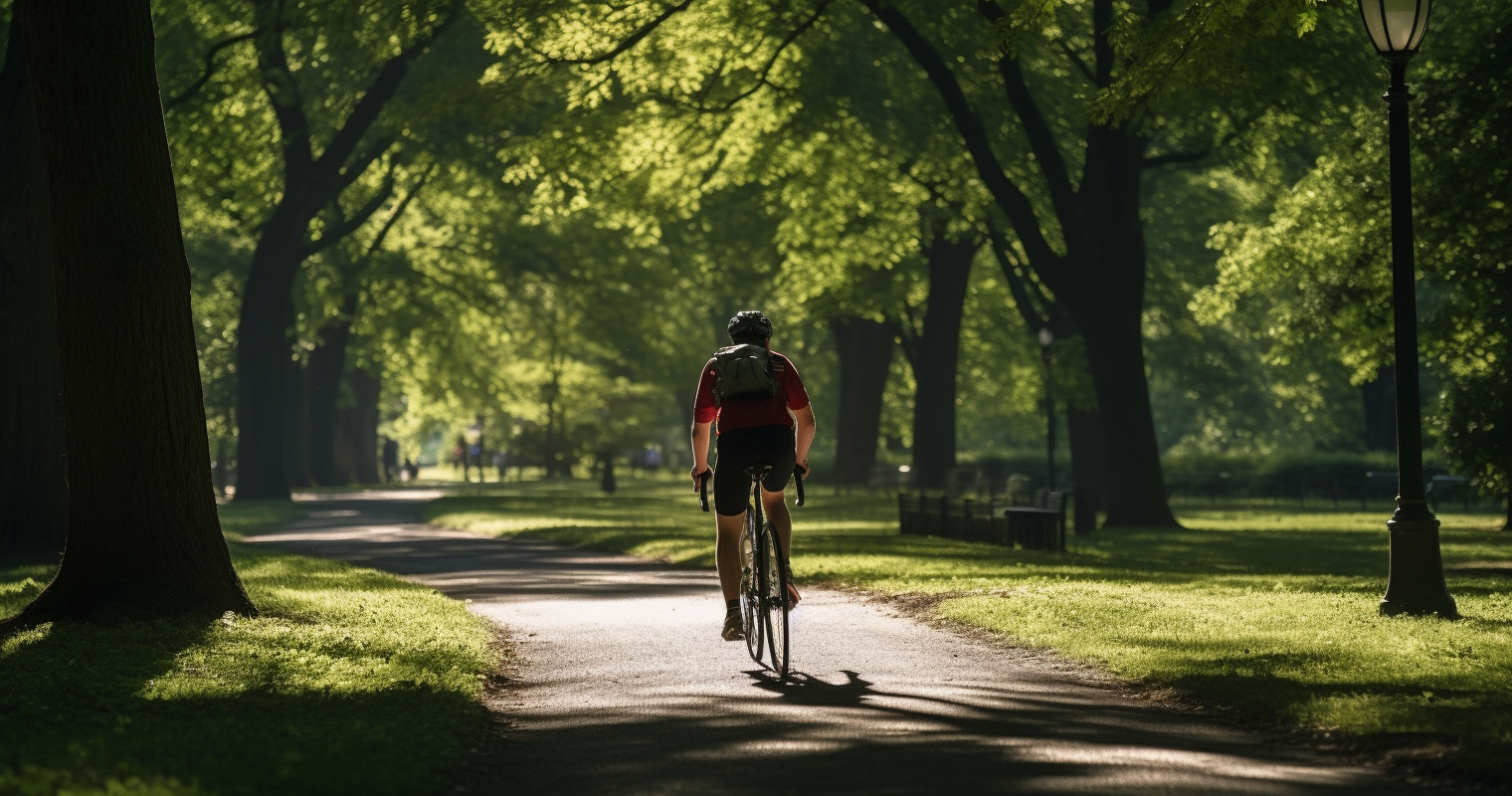
Finland is a country where cycling is woven into the fabric of everyday life — used for commuting, school trips, and daily errands rather than reserved purely for recreation. The quality of infrastructure varies considerably from one region to another, with Oulu and Helsinki at the forefront of dedicated cycling provision, but winter weather means that a pragmatic approach is essential. On the whole, cycling represents a realistic, health-conscious, and well-supported way for newcomers to get around.
| Item | Details |
|---|---|
| Cycling modal share (Helsinki) | Around 9% of trips (summer); drops sharply in winter |
| Cycling modal share (Oulu) | Around 20% of all trips; ~10% even in winter (as of 2023) |
| Helmet law | Legally required under Road Traffic Act, but no fine for non-compliance — as of 2025, 58% of cyclists wore helmets nationally |
| Lighting requirement | White/yellow front light and red rear light mandatory in the dark — legally required |
| Helsinki City Bikes season | 1 April – 31 October; over 4,600 bikes at 460+ stations (Helsinki and Espoo) |
| Bike benefit scheme | Employer-offered salary-deduction leasing scheme available; e-bikes make up 76% of benefit bikes (as of 2025) |
| Pavement cycling | Prohibited for adults; only children under 12 may cycle on pavements |
How popular is cycling in Finland — is it a common way to get around?
Cycling occupies a firm place in Finnish daily life, serving as a practical mode of transport for commuters, school children, and those running routine errands right across the country. Data from 2022 shows that 41% of Finnish adults cycled at least once a week, placing Finland second among the Nordic nations for cycling activity, behind only Denmark. While Finland has not matched the modal shares achieved in the Netherlands or Denmark — where cities like Utrecht and Amsterdam see half their journeys made by bike, and Copenhagen accounts for a third — cycling is firmly established as a transport mode in its own right rather than something done purely for pleasure.
There are meaningful differences between cities. Oulu sees around one in five journeys made by bicycle, a proportion that dips to roughly 12% during the colder months. In the capital Helsinki, cycling accounts for approximately 9% of all trips on average — a figure that still compares favourably with many major European cities. Oulu has earned international recognition as a model for urban cycling that continues through the winter months.
A growing employer-led benefit scheme is also changing commuting patterns across the country. Bike leasing programmes are broadening Finland’s cycling demographic and accelerating a nationwide move toward e-bikes, healthier daily routines, and reduced car dependency. Roughly half of those using benefit bikes now say they have replaced car journeys — for commuting or everyday tasks — with cycling. The concept is broadly analogous to the UK’s Cycle to Work salary-sacrifice arrangement, though Finland’s version operates through private leasing platforms and is picking up considerable pace.
In 2024, the average benefit bike user covered 1,277 kilometres — five times the national average — and winter cycling is gaining ground, with 58% of users reporting that they ride throughout the year. For a growing number of residents, cycling in Finland is no longer something that stops when the temperature drops.
What is the cycling infrastructure like in Finland?
Finland channels considerable investment into cycling infrastructure, and a number of its cities rank among the top performers in European comparisons for the density of bike paths per capita. Segregated routes, clearly signed cycle corridors, and well-maintained surfaces are characteristic of Finnish urban cycling provision — though quality and coverage differ substantially between cities and between urban and rural environments.
Oulu stands out as Finland’s most ambitious cycling city. Its dedicated bicycle network extends to more than 800 kilometres of segregated routes, and despite the city being under snow for up to five months each year, residents continue cycling to work and school in significant numbers. This achievement stems from deliberate, people-first urban planning dating back to the late 1960s, at a time when most cities around the world were designing their streets around cars.
Other Finnish cities also benefit from extensive provision. Eurostat analysis from 2017 identified Lahti as having the highest density of bike paths per capita among all European cities surveyed — 537 kilometres of routes for a population of around 119,000. Espoo was close behind, with 1,050 kilometres of paths serving approximately 274,000 residents. Jyväskylä offers 478 kilometres of bicycle paths, while Vantaa — part of the greater Helsinki metropolitan area — has a cycling network of 720 kilometres.
Helsinki has directed significant resources toward dedicated cycling highways. The North Cycling Highway recorded a 50% increase in traffic between 2018 and 2024, though the capital follows an unusual trajectory — its overall cycling modal share has remained broadly stable despite sustained infrastructure investment rather than following a conventional upward trend.
Outside major urban areas, dedicated cycling provision becomes considerably patchier. Long-distance roads beyond city boundaries may have no dedicated paths at all. The Finnish Transport and Communications Agency (Traficom) and the Ministry of Transport and Communications publish national cycling strategy documents and route information — the Traficom website is the best place to find current information on planned developments and national infrastructure updates.
Is cycling safe in Finland?
Finland is broadly regarded as a safe country in which to cycle. Motorists are generally accustomed to the presence of cyclists on roads and shared paths. That said, there are specific hazards that newcomers should understand, especially those relating to seasonal conditions.
From September through to April, cold weather can create genuinely dangerous riding conditions. Ice, packed snow, and inadequately gritted surfaces represent the most significant risks facing cyclists. Unlike countries such as Germany or the Netherlands, where relatively mild winters allow for consistent year-round cycling, Finland’s winters require specialist preparation — studded tyres and appropriate cold-weather clothing are not optional extras but practical necessities.
In the majority of Finnish cities, cyclist numbers fall by between 70% and 80% during the winter months as freezing temperatures and icy surfaces deter all but the most committed riders. Oulu is the notable exception: even at the coldest point of the year, its cycling modal share sits at around 10% — roughly equivalent to Helsinki’s summer figure. The decisive factor is proactive maintenance of cycling paths throughout winter, an approach that other Finnish cities are increasingly seeking to replicate.
On the question of helmets: Section 92 of the Road Traffic Act establishes a general requirement for cyclists and their passengers to wear a protective helmet. The legislation has been in force since January 2003 and applies to riders of all ages. However, there is no mechanism through which cyclists can be fined for not wearing one. This stands in contrast to countries such as Australia and New Zealand, where universal helmet laws are actively enforced with financial penalties. In practice, as of 2024, 58% of cyclists nationally wore a helmet, with usage highest in the Helsinki metropolitan area and most consistent among children.
The Finnish Road Safety Council (Liikenneturva) publishes annual safety monitoring data and statistics for cyclists. This is the recommended resource for the most up-to-date accident figures and practical safety guidance.
What are the rules of the road for cyclists in Finland?
Under Finnish law, cyclists are treated as the operators of a vehicle and are subject to almost all of the same obligations as drivers of other vehicles. This means complying with traffic signals, yielding where required, and obeying road signs. The Finnish Road Traffic Act (accessible via Finlex, currently available in Finnish) is the primary legal framework governing how cyclists must behave on public roads.
Key rules to be aware of include:
- Helmets: Under Section 92 of the Road Traffic Act, cyclists and their passengers are generally required to wear a protective helmet, though no penalty applies for non-compliance.
- Lighting: Alongside a white or light yellow front light, bicycles must be fitted with a red rear light when riding on the road in darkness, at dusk, or whenever visibility is reduced by weather or other conditions. Lights may be attached to the cyclist rather than the bike — for example, to a helmet — rather than being mounted on the bicycle itself.
- Cycle paths: As a general rule, cyclists are required to use the designated bike path wherever one exists. Where no bike path is present, cyclists must ride on the right-hand side of the road.
- Pavements: Cycling on the pavement is prohibited for adults. Only children under the age of 12 may lawfully ride on the pavement.
- Direction of travel: Bike paths are effectively one-directional, meaning cyclists must always use the path on the right-hand side of the street relative to their direction of travel.
- Buses: Cyclists on a bicycle lane must yield to buses pulling out from bus stops. If the bike lane passes to the right of a bus stop, cyclists must allow those alighting from the bus to pass unimpeded.
- E-bikes and light electric vehicles: Riders of light electric vehicles are generally required to follow the same rules as cyclists.
Finland applies the same 0.5‰ blood alcohol limit to cyclists as it does to drivers of motor vehicles. Riding a bicycle while under the influence of alcohol is a punishable offence. The Traficom information page on bicycles provides an authoritative overview of current cycling regulations, and the Finnish Road Safety Council’s cycling page offers practical guidance in English.
Do I need to register my bike or have insurance to cycle in Finland?
Finland has no mandatory bicycle registration scheme. Unlike motor vehicles, bikes do not need to be registered with any national authority before use. That said, voluntary registration through home insurance or a specialist bicycle insurance policy is strongly advisable, particularly for higher-value machines, since bicycle theft is not uncommon in Finnish cities.
Third-party liability insurance is not a legal requirement for cyclists in Finland. Most residents, however, hold a home contents insurance policy that includes personal liability cover, which typically extends to incidents involving a bicycle. Expats arriving from countries where separate cycling insurance is the norm — such as Germany, where Haftpflichtversicherung (personal liability insurance) is near-universal — will likely already be familiar with this type of cover.
For those relocating to Finland, it is worth verifying from the outset whether your home insurance policy provides adequate personal liability cover for cycling. Standalone bicycle insurance products are also offered by Finnish insurers and may be worth considering for high-value bikes or e-bikes in particular. The Finnish Financial Supervisory Authority (FIN-FSA) maintains a list of licensed insurers operating in Finland; policy costs and levels of cover vary, so comparing providers directly is recommended.
Are there public bike-sharing or rental schemes in Finland?
Helsinki is home to one of Finland’s most prominent public bike-share systems. Helsinki City Bikes serves both Helsinki and Espoo and has been integrated with the wider public transport network since May 2016. The scheme operates as a public-private partnership between the Helsinki Regional Transport Authority (HSL), Helsinki City Transport (HKL), Espoo Technical and Environment Services, Moventia, and Smoove.
With more than 4,600 bicycles distributed across over 460 stations throughout the Helsinki and Espoo regions, these distinctive yellow bikes are a familiar feature of the urban landscape and are well used by both residents and visitors. The city bike season runs from 1 April to 31 October, making it primarily a warm-season service. The Vantaa city bike service has been suspended and is preliminarily unavailable during 2026–2028, so it is worth checking the latest status before relying on it.
Users can register for a day, week, month, or full-season pass. Each pass entitles the holder to unlimited trips of up to 30 minutes; journeys beyond this threshold attract additional fees. For the most current pricing information, visit the official HSL City Bikes page, as tariffs are updated each season.
Helsinki also features the Baana — a decommissioned railway cutting repurposed as a smooth, direct cycling and pedestrian corridor through the city centre, running from the Kiasma Museum to Ruoholahti and particularly popular with daily commuters. Beyond Helsinki, cities including Tampere and Turku operate their own local bike-share programmes; contact the relevant city transport authority for current availability and pricing details.
Within Helsinki, cyclists may take their own bikes onto commuter trains, the metro, and the Suomenlinna ferry, though space constraints mean bicycles are not permitted on buses or trams. This flexibility to combine cycling with other modes of transport makes it a genuinely practical option for longer urban commutes.
Where can I buy or service a bike in Finland?
Purchasing a bicycle in Finland is a straightforward process, with a well-developed retail market serving buyers nationwide. Large sporting goods chains such as Intersport, XXL Sport, and the Finnish retailer Stadion carry a broad selection — from city and hybrid bikes through to mountain bikes and e-bikes. Specialist independent cycle shops are common in larger cities and university towns, offering more expert guidance and access to a wider range of components and accessories.
The second-hand market is lively. Online platforms such as Tori.fi — Finland’s equivalent of Gumtree or Craigslist — list a wide variety of used bicycles at prices considerably below new retail. Standard precautions apply when buying second-hand: request proof of purchase where possible, as bicycle theft does occur in Finnish cities.
E-bike uptake is expanding rapidly. E-bikes now account for 76% of all benefit bikes in Finland, with particularly high adoption rates among women (82%) and younger riders. In response, most major retailers now stock an extensive e-bike range, and specialist e-bike service centres are increasingly available across the country.
For servicing and repairs, the majority of cities have dedicated bicycle workshops. The City of Helsinki operates a bike centre in Töölönlahdenpuisto Park, open from April through to the autumn on weekdays between 09:00 and 17:00. Finnish consumer protection law — governed by the Consumer Protection Act — provides warranty rights aligned with standard EU requirements, generally a minimum of two years, so buyers can expect comparable protections to those in other EU member states when purchasing new. For detailed information on your consumer rights, consult the Finnish Competition and Consumer Authority (KKV) website.
Can I bring my bike when I move to Finland, and are there any import rules?
If you are relocating to Finland from another EU or EEA country, you are free to bring your bicycle as part of your personal belongings. No customs duties or import taxes apply within the EU single market, and personal bicycles are treated as ordinary household goods with no special restrictions.
If you are moving to Finland from outside the EU — for example, from countries in Asia, the Americas, or Oceania — your bicycle may be eligible for duty-free import as a personal effect, subject to certain conditions. Finland, in line with other EU member states, applies the EU’s relief from customs duties for personal property belonging to individuals who are transferring their normal place of residence into the EU. As a general rule, items must have been owned and in use for at least six months before the move, and must not be sold or otherwise transferred within 12 months of import. As of 2025, no separate duty is levied on bicycles imported under this personal effects relief, though the standard Finnish import VAT rate — currently 25.5% — could in principle apply to items that fail to qualify for the relief.
You will need to declare your bicycle to Finnish customs (Tulli) as part of your removal goods. Always confirm the precise current requirements before shipping anything. The Finnish Customs Authority (Tulli) publishes comprehensive guidance on moving to Finland and importing personal effects — this is the authoritative source for current thresholds, documentation requirements, and any applicable charges.
What are the best cycling routes or destinations in Finland?
Finland has a great deal to offer cyclists, whether they are looking for practical urban routes or extended touring through wilderness landscapes. Flat terrain across much of the country, extensive networks of forest paths, and breathtaking lake scenery combine to make it a compelling destination for riders of all abilities.
In Helsinki, the Baana cycling and pedestrian corridor — a former railway cutting converted into a smooth, fast route — runs from the Kiasma Museum of Contemporary Art through to Ruoholahti and is heavily used by both commuters and sightseers. The circuit around Töölönlahti Bay suits those with an interest in culture, taking in landmarks including the Oodi Central Library, Finlandia Hall, the National Museum of Finland, and the Helsinki Music Centre, all set against calm waters and surrounding parkland.
For longer touring journeys, Finland maintains a network of national cycling routes — including EuroVelo routes — managed through the national cycling body Suomen Pyöräily ry (the Finnish Cyclists’ Federation) and promoted by the national tourism authority Visit Finland. Routes such as the Archipelago Trail in southwest Finland and the historic King’s Road (Kuninkaantie) linking Helsinki with Turku and beyond are internationally regarded as classic cycle-touring destinations. The Saimaa lake district in eastern Finland offers extensive cycling through quiet roads and off-road tracks amid some of Europe’s most scenic inland waterscapes.
Oulu, which has earned its reputation as the winter cycling capital of the world, is worth visiting at any time of year. Remarkably, 52% of trips to schools and universities across Oulu’s catchment area are made by bicycle — a figure that speaks to the depth of cycling culture there. The city’s network of off-road paths through forests and along riverside corridors provides enjoyable leisure riding for all levels of experience.
For route planning, the HSL Journey Planner covers the Helsinki metropolitan area in detail. Visit Finland’s cycling section and the Finnish Cyclists’ Federation website offer national route maps and guidance for touring cyclists.
How do I get started cycling in Finland after moving there?
- Acquire a bicycle. Visit a major sports retailer (Intersport, XXL, Stadion) or browse second-hand listings on Tori.fi to find a bike that suits your needs and budget. Consider an e-bike if you plan to commute longer distances, particularly given the growing e-bike infrastructure and benefit scheme access.
- Equip your bike for Finnish conditions. Ensure your bike has a white or yellow front light and a red rear light — these are legally required in the dark. For year-round riding, invest in studded tyres for winter use. Reflective clothing and a CE-approved helmet are strongly recommended.
- Check the rules of the road. Familiarise yourself with the Finnish Road Traffic Act provisions for cyclists, available in summary form on the Liikenneturva website and via Traficom. Remember that cyclists must use bike paths where available, and adults may not cycle on pavements.
- Register for city bike access (Helsinki/Espoo). If you live in the Helsinki or Espoo area, register via the HSL City Bikes website for seasonal, monthly, weekly, or daily passes. The season runs from 1 April to 31 October.
- Check your insurance cover. Review your home contents or personal liability insurance to ensure it covers cycling-related incidents. Consider specialist bike insurance for high-value bikes.
- Ask your employer about the bike benefit scheme. Check whether your employer participates in Finland’s salary-deduction bike leasing scheme, which allows you to obtain a new bike (including e-bikes) at a reduced cost through pre-tax salary deductions.
- Plan your routes. Use the HSL Journey Planner for the Helsinki area, or the Finnish Cyclists’ Federation resources for national and regional route maps. Check your local municipality’s transport page for city-specific cycling maps and planned infrastructure works.
Frequently asked questions about cycling in Finland
Is it realistic to cycle year-round in Finland?
In the majority of Finnish cities, cyclist numbers fall by between 70% and 80% over the winter months as snow-covered and icy roads combined with freezing temperatures deter most riders. Year-round cycling is entirely achievable, however — especially in cities such as Oulu that prioritise winter maintenance of cycling paths. You will need studded tyres, suitable cold-weather gear, and a readiness to adjust your route based on conditions. The fact that 58% of Finland’s benefit bike users report riding throughout the year as of 2024 reflects growing momentum toward all-season commuting.
Is a helmet legally required for cyclists in Finland?
Section 92 of the Road Traffic Act establishes a general requirement for cyclists and their passengers to wear a protective helmet. The law has applied to riders of all ages since January 2003, but there is currently no mechanism for imposing a fine on cyclists who ride without one. In short, helmet use is a legal obligation but non-compliance carries no penalty. Wearing one is nonetheless strongly recommended for your own safety.
Can I cycle on the pavement in Finland?
Pavement cycling is prohibited for adults. Only children under the age of 12 are permitted to ride on the pavement. Adult cyclists must use designated cycling paths or, where no such path exists, the right-hand side of the road.
Do I need lights on my bike in Finland?
Yes — lights are a legal requirement. Bicycles must be fitted with a white or light yellow front light and a red rear light when riding on the road in darkness, at dusk, or whenever visibility is reduced by weather or other conditions. Given the extremely limited daylight hours that Finland experiences during winter, this is as much a practical necessity as a legal one.
Is there a bike-to-work scheme in Finland?
Yes. Finland operates a benefit bike scheme through which employers can offer bicycles to staff via a salary deduction arrangement. E-bikes now account for 76% of all benefit bikes taken up in Finland. Check with your employer whether they participate; if they do, you can obtain a new bike — including e-bikes and cargo bikes — at a reduced pre-tax cost.
How does the Helsinki City Bike scheme work for new residents?
The scheme operates over 4,600 yellow bikes across more than 460 stations in Helsinki and Espoo and has become a familiar part of the city’s transport landscape. The season runs from 1 April to 31 October, with passes available for a day, week, month, or the full season. Registration is completed through the HSL website or app, and payment is made by debit or credit card. Visit the official HSL City Bikes page for up-to-date pricing.
Do I need to register or insure my bike in Finland?
There is no mandatory bicycle registration scheme in Finland, and third-party liability insurance is not legally required for cyclists. Many residents’ home insurance policies include personal liability cover that extends to cycling incidents. For high-value bikes — particularly e-bikes — dedicated bicycle insurance is worth looking into. The Finnish Financial Supervisory Authority (FIN-FSA) can direct you to licensed insurers operating in Finland.
Can I bring my bicycle from abroad when I move to Finland?
If you are moving from within the EU or EEA, no customs duties or import restrictions apply to personal bicycles. If relocating from outside the EU, your bicycle may qualify for duty-free import under the EU’s personal effects relief scheme, provided it has been owned and in regular use for at least six months prior to your move. Always check the current requirements with the Finnish Customs Authority (Tulli) before arranging shipment.