
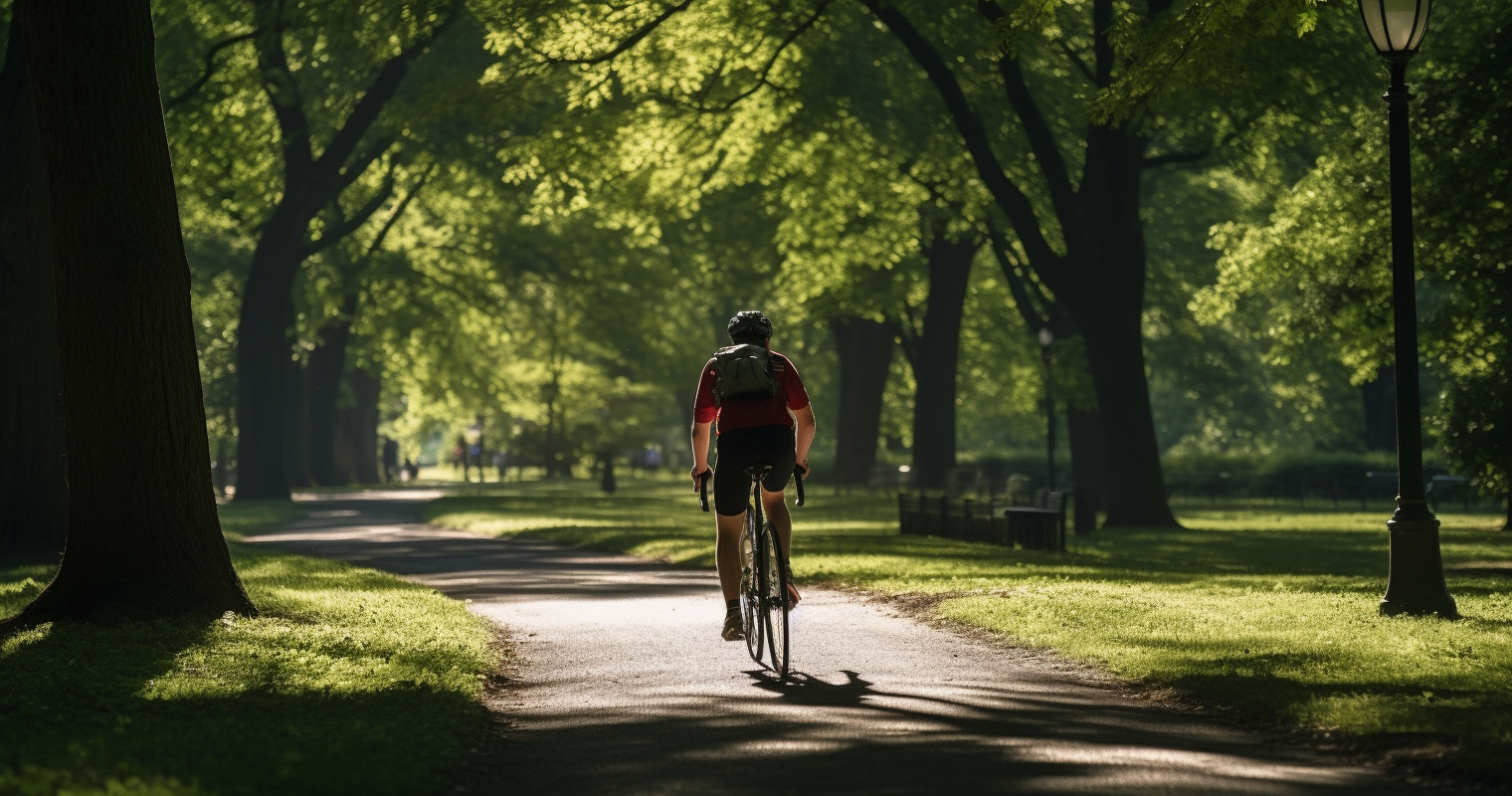
Ireland is undergoing a remarkable shift in how people get around on two wheels. Historically shaped by car dependency, the country is now seeing substantial public funding and a flourishing urban cycling culture push cycling towards the mainstream — both as a daily commuting mode and as a premier leisure and tourism activity. The quality of cycling provision is advancing quickly, though unevenly, with Dublin and Cork leading the way while many rural areas still lag considerably behind.
| Item | Details |
|---|---|
| Helmet law | Not legally required for adults; strongly recommended by the RSA (as of 2025) |
| Lighting requirement | Mandatory during lighting-up time: white front, red rear light (as of 2025) |
| Fixed charge fines | €40 for cycling offences (e.g. running a red light, no lights) (as of 2025) |
| National Cycle Network | 3,500km planned across 26 counties; cost €1.4bn target by 2040 (as of 2024) |
| Active travel investment | Over €1 billion invested since 2020; €290m allocated in 2024 alone |
| Bike registration/insurance | No mandatory registration; no compulsory cyclist insurance (as of 2025) |
How popular is cycling in Ireland — is it a common way to get around?
Cycling has carved out a meaningful and growing presence in Irish daily life, though it has not yet reached the cultural embeddedness seen in countries such as the Netherlands or Denmark, where generations of investment have made the bicycle the default choice for millions. In Ireland, cycling’s strongest growth is happening in urban centres where commuter demand and improved infrastructure are reinforcing one another, while car use continues to prevail in suburban and rural settings.
The scale of active travel’s contribution is striking: walking, wheeling and cycling collectively remove up to 660,000 cars from the roads each day across Ireland’s five largest Metropolitan Areas, according to the 2025 Walking and Cycling Index, produced in partnership with the Walk Wheel Cycle Trust and the National Transport Authority. This figure illustrates just how significantly active travel — cycling included — is already shaping movement in Irish cities.
Dublin, Cork, Galway, Limerick and Waterford are where cycling as a commuting mode is most evident, with cyclists a familiar sight on urban streets during peak hours. Weekend leisure cycling and organised sportive events attract large numbers of participants, and the amateur road cycling scene is particularly vibrant nationwide. Beyond city boundaries, however, the absence of segregated routes and the prevalence of fast, narrow rural roads mean that most people in smaller towns and the countryside still reach for the car keys rather than the bicycle for everyday journeys.
At a policy level, former Transport Minister Eamon Ryan articulated an ambition to elevate cycling and walking to become the primary transport modes across Irish cities and towns, representing a genuine strategic realignment. That said, it is sensible to view Ireland as a country on an upward trajectory — similar to many Southern European nations that are rapidly expanding their cycling offer — rather than one that has already arrived at the destination. The everyday cycling culture of places like Belgium or the Netherlands, where the bike is simply the obvious choice for millions, remains an aspiration rather than a current reality in Ireland.
What is the cycling infrastructure like in Ireland?
The Irish government committed €290 million to walking and cycling infrastructure in 2024 alone, forming part of a broader programme that has already delivered over 600km of cycling and pedestrian routes since 2020. The speed of delivery has accelerated noticeably compared with earlier periods, and that momentum shows little sign of slowing.
A sweeping National Cycle Network plan, with a target cost of €1.4 billion to be achieved by 2040, will create and join up 3,500km of dedicated cycling routes spanning all 26 counties of the Republic. The network is designed to connect 200 settlements of varying sizes and bring easy cycling access to 2.8 million people. It is being developed by Transport Infrastructure Ireland (TII) working alongside local authorities throughout the country.
The network is structured across 85 corridors, weaving together existing and planned greenways and EuroVelo routes with a new web of safe cycling connections along existing roads. The design links the network to transport interchanges, schools, universities, workplaces, leisure venues and tourist attractions. The ambition is for 80% of all households and close to 90% of jobs to fall within 5km of the network upon completion.
The quality of what is currently available varies considerably depending on where you are. Dublin possesses the most mature urban cycling network in the country, with segregated lanes steadily extending along major corridors including the Royal Canal, Grand Canal, and Dodder routes. Once Dublin’s network reaches completion, an estimated 95% of city residents will be within 400 metres of a segregated cycling facility. Cork and other regional cities are investing and expanding their own provision, but smaller towns and rural areas typically offer nothing beyond ordinary shared roads with no specialist cycling infrastructure to speak of.
The appetite for bike-share schemes is also demonstrating clear growth: public bike trips in Cork, Limerick and the other regional cities rose by 23% in 2024, and by a remarkable 51% in the opening five months of 2025. These figures point to both improving infrastructure and a genuine behavioural shift in how people choose to travel. Expats settling in a major city will find a steadily improving cycling environment; those heading to rural Ireland should research local conditions thoroughly before counting on the bike as a primary mode of transport. For the most current route maps and details of funded projects, consult the National Transport Authority (NTA) and Transport Infrastructure Ireland (TII) websites.
Is cycling safe in Ireland?
According to data published by the Road Safety Authority (RSA) — the national body responsible for road safety statistics and campaigns — 45 cyclists were killed and 1,278 were seriously injured on Irish roads between 2020 and 2024. Analysis of these incidents shows that 11% took place at junctions, 10% occurred at roundabouts, and 6% happened within cycle lanes themselves.
Averaged across those five years, the figures translate to approximately nine cyclist deaths and 256 serious injuries annually. Cyclists represented 6% of all road fatalities and 18% of all serious injuries over the same period — a disproportionately high share relative to their numbers, reflecting the vulnerability inherent in mixing with motor traffic.
Serious cyclist injuries peak between May and September, tracking the rise in cycling activity that comes with better weather. Four out of every five serious cyclist injuries happen in urban environments — on roads through cities, towns and villages where speed limits are set at 60km/h or below. This points to junctions and roundabouts as the most hazardous settings for urban cyclists, even on roads that might otherwise feel relatively safe.
Driver attitudes are gradually improving, and RSA awareness campaigns have helped raise consciousness around sharing road space. Legally, drivers are required to give a minimum clearance of 1 metre when overtaking a cyclist where the speed limit is 50km/h or under, rising to at least 1.5 metres where the limit exceeds 50km/h. Outside cities, the picture can be more demanding: many rural roads are narrow, lack hard shoulders, carry vehicles travelling at 80km/h or above, and can have rough or uneven surfaces.
Cyclists accustomed to extensive segregated networks in countries like Germany or the Netherlands will find Irish roads more challenging, particularly outside urban areas. Wearing high-visibility clothing and running front and rear lights during all riding hours — not just after dark — is strongly advisable. RSA research found that more than eight in ten serious cyclist injuries occurred in daylight, underlining how important it is to remain visible even in bright conditions. For the most current guidance and statistics, visit the RSA’s cyclist safety pages.
What are the rules of the road for cyclists in Ireland?
Wearing a helmet while cycling is not a legal requirement for adults in Ireland, though the Road Safety Authority strongly urges all cyclists to wear one, along with high-visibility clothing. This places Ireland in line with the majority of European countries on this point — though it contrasts with nations such as Australia where helmet use is legally mandated for all riders. The position may not be static: as of early 2026, the Irish government has been actively considering extending mandatory helmet requirements to cyclists and e-scooter users, so it is worth keeping an eye on any legislative developments.
Lighting is, however, a legal requirement. Bike lights must be in use during lighting-up time — the period beginning half an hour after sunset and ending half an hour before sunrise the following morning. All cyclists riding during these hours must display a white or yellow front light and a red rear light, both visible from a reasonable distance. Riding without functioning lights during these periods is an offence carrying a €40 fixed charge fine from An Garda Síochána.
Beyond lighting, cyclists are legally required to keep their brakes, lights and tyres in proper working condition. Every bike must be fitted with both front and rear brakes and an audible bell. Cyclists must comply with traffic signals — stopping at red lights, yielding where indicated, and following road markings — exactly as motorists are required to do.
Cycling on a footpath is not permitted unless a designated cycle lane has been provided on that footpath, or you are accessing or leaving a property. While it does not carry a specific fixed charge, a Garda may issue a fine if the cycling is judged to be without reasonable consideration for others. Cycling in pedestrianised areas during restricted hours is similarly prohibited unless a dedicated cycle lane is present.
Cyclists may ride two abreast where it is safe to do so, but must not ride in a way that creates an unreasonable obstruction for other road users. There is no legal duty to use a cycle lane, with one notable exception: contra-flow cycle lanes on one-way streets — lanes that allow cyclists to travel in the direction opposite to motor traffic — must be used where provided.
Children under 12 years of age should not cycle on public roads without appropriate adult supervision. Fixed charge fines for cycling offences — including running red lights or riding without lights — stand at €40 as of 2025. For comprehensive and up-to-date legal information, refer to Citizens Information’s cycling laws page and the RSA website.
Cyclists in Dublin should also be aware of a city-specific rule: cycling is not permitted in Luas (tram) lanes. The combination of track grooves, tram signals and tram traffic makes these lanes hazardous for cyclists. Whenever you need to cross Luas tracks, do so at as close to a right angle as possible to prevent your wheel from catching in the groove.
Do I need to register my bike or have insurance to cycle in Ireland?
Ireland has no mandatory bicycle registration system. Unlike motor vehicles, bikes are not required to be recorded with any official authority and carry no registration mark. Some cyclists choose to voluntarily record their bike with schemes such as BikeRegister — used widely across Europe as a tool to aid the recovery of stolen property — but participation is entirely at the owner’s discretion and carries no legal obligation.
There is equally no legal requirement for cyclists to hold third-party liability or personal injury insurance. This stands in contrast to the situation for motor vehicle users, for whom insurance is a legal prerequisite. That said, any cyclist who injures a pedestrian or damages property while riding could be subject to a civil claim for compensation. For this reason, many cyclists opt for personal liability cover, which is frequently available as an add-on to a standard home insurance policy — it is worth checking the terms of your policy once you have settled in Ireland.
For those who cycle regularly for sport or as club members, Cycling Ireland — the national governing body for the sport — offers membership packages that include a level of public liability insurance alongside access to club events and competitive licences. This route is widely taken up by committed cyclists throughout the country. Visit the Cycling Ireland website or contact a local cycle club for current membership costs and details of the insurance cover provided.
Are there public bike-sharing or rental schemes in Ireland?
Ireland’s urban bike-share provision has expanded considerably in recent years. The longest-established and most extensive scheme is Dublin’s dublinbikes, which blankets a large portion of the city centre with docking stations. Run by JCDecaux in partnership with Dublin City Council, the scheme allows users to rent a bike for short periods from any station. As of 2025, a three-day visitor pass costs around €5, with annual memberships available for regular commuters — see the dublinbikes official website for up-to-date pricing.
Dublin and several other Irish cities are also served by dockless bike-share operators including Bleeper and Moby, which allow riders to locate, unlock and leave bikes at flexible points using a smartphone app — removing the need to find a docking station. Pricing is generally structured per minute or per journey; check the relevant app for current rates. E-bike options are increasingly part of these providers’ fleets.
Beyond Dublin, public bike-share is growing steadily in regional cities. Cork and Limerick have seen public bike journeys increase by 23% in 2024 across the four regional cities, and Galway and Waterford also have their own schemes in operation. For the most current information about which scheme serves a particular city, the local authority or the Transport for Ireland website are the best places to check.
For leisure cycling and tourism, rental shops are well distributed in most towns and visitor areas, with particular concentrations along popular trail routes such as the Great Western Greenway in Mayo and the Waterford Greenway. E-bike hire has become increasingly prevalent along these corridors. Daily hire rates for a standard bike typically fall between approximately €15 and €30, while e-bikes generally range from €30 to €60 per day — contact operators directly for accurate seasonal pricing, as rates vary.
Where can I buy or service a bike in Ireland?
Purchasing a bike in Ireland is a relatively uncomplicated process, with a healthy range of outlets to choose from. Independent specialist cycle shops can be found in all major cities and most sizeable towns, stocking everything from urban commuter bikes and hybrids to performance road bikes and mountain bikes. These retailers typically offer professional fitting, a full accessories range, and ongoing maintenance — advantages that often outweigh the savings available through larger general retailers or online channels.
Halfords is the main national chain with a presence across Ireland, offering a wide price-range selection of bikes alongside servicing facilities. Buying from European online retailers is a popular alternative, though the long-term value of local after-sales support and warranty assistance is worth factoring into any purchasing decision. Under Irish consumer law — aligned with EU consumer rights regulations — products must meet standards of satisfactory quality and fitness for purpose, giving buyers protections broadly equivalent to those in other EU member states.
The second-hand market is lively, with DoneDeal and Facebook Marketplace regularly featuring well-priced used bikes from Ireland’s active cycling community. As always with second-hand purchases, a careful mechanical inspection and a check against the BikeRegister database to confirm the bike is not recorded as stolen are sensible precautions before buying.
Ireland’s government-backed Cycle to Work scheme is a significant financial incentive worth understanding early. It enables employees to acquire a bike and safety accessories through salary sacrifice, with the tax saving reducing the effective cost by up to 52% depending on the individual’s income tax rate. Employer participation is required, so your HR department is the first port of call. As of 2025, the relief covers purchases up to €1,250 for standard bikes and up to €1,500 for e-bikes. Full details are available from your employer or on the Revenue Commissioners website.
Can I bring my bike when I move to Ireland, and are there any import rules?
Those relocating to Ireland from a country outside the European Union will generally find that a bicycle qualifies as a personal effect and can be imported without paying customs duties or VAT under the Transfer of Residence (ToR) relief scheme. This arrangement allows individuals establishing their main residence in Ireland to bring personal possessions — including sporting equipment such as bicycles — into the country free of these charges, subject to satisfying a specific set of conditions.
The principal requirements for Transfer of Residence relief are: you must have been resident outside the EU for a minimum of 12 months; the bicycle must have been in your personal ownership and regular use for at least six months before your relocation; and you must not sell, rent out or lend the bicycle within 12 months of bringing it into Ireland. A bike that is new or was acquired close to the date of your move is unlikely to satisfy these conditions, in which case standard import duties and VAT would apply. As of 2025, the standard VAT rate on bicycles in Ireland is 23%, making the potential financial benefit of qualifying for ToR relief quite substantial.
If you are arriving in Ireland from another EU member state, none of these customs considerations arise. Ireland remains a full EU member, so goods move freely across internal EU borders without customs formalities — simply include your bike with your household belongings as you would any other personal property.
Before making any shipping arrangements, consult Revenue Ireland’s Transfer of Residence guidance for current requirements and the documentation you will need to prepare. The qualifying conditions and procedures are subject to change, so verifying directly with Irish Customs (Revenue Commissioners) in advance is strongly advisable.
What are the best cycling routes or destinations in Ireland?
Few countries can rival Ireland for the variety and drama of its cycling landscapes — wild Atlantic coastlines, rolling green hills, quiet river valleys and ancient heritage sites all within reach by bike. Whether you are looking for a family-friendly traffic-free trail, a multi-day touring adventure, or a challenging road cycling circuit, Ireland delivers on all fronts.
The Great Western Greenway in County Mayo is widely regarded as one of Ireland’s finest off-road cycling experiences — a 42km car-free trail tracing the route of a former railway line from Westport to Achill Island, with sweeping views of mountains and coastline throughout. Flat and well-surfaced, it is accessible to cyclists of all abilities, and bike hire is conveniently available at either end of the route.
The Waterford Greenway offers another outstanding traffic-free experience, covering 46km between Waterford city and Dungarvan along a converted railway corridor that passes over soaring viaducts and through picturesque river valleys. Its entirely off-road nature and gentle gradients make it one of the most welcoming greenways in the country for all types of rider.
The Grand Canal Greenway provides a largely flat, towpath-based route linking Dublin to the River Shannon across 130km of largely unbroken cycling. A recent extension added an 11km section from Aylmer’s Bridge to Sallins in County Kildare, bringing the eventual vision of a fully segregated, continuous route along the entire 130km canal closer to reality.
Road cyclists looking for a bigger challenge are spoiled for choice. The Wild Atlantic Way traces an epic course along Ireland’s rugged western seaboard, while County Kerry’s celebrated Ring of Kerry and the Dingle Peninsula attract riders from around the world with their breathtaking scenery and demanding gradients. On the international stage, both EuroVelo 1 (the Atlantic Coast Route) and EuroVelo 2 (the Capitals Route) pass through Ireland, plugging the country into a vast European cycle touring network.
For route planning, Cycling Ireland and Tourism Ireland maintain extensive route databases covering the whole island. Greenways.ie, managed by local authorities and Fáilte Ireland, is the dedicated resource for off-road greenway routes and trip planning.
How do I get set up with a bike and start cycling after arriving in Ireland?
- Decide on your cycling purpose: Determine whether you primarily need a bike for urban commuting, leisure riding, sport, or long-distance touring, as this will guide your choice of bike type and how much to spend.
- Research the Cycle to Work scheme: If you are employed in Ireland, ask your HR department whether your employer participates in the tax-free Cycle to Work scheme. As of 2025, this can save up to 52% on a bike and equipment purchase (up to €1,250 for standard bikes, €1,500 for e-bikes).
- Visit a local bike shop: Go to a reputable independent cycle shop in your area for a professional fitting and advice tailored to your local roads and terrain. Staff will also be able to advise on the most suitable routes and any specific local considerations.
- Familiarise yourself with the rules of the road: Read the RSA’s cyclist safety guidance and Citizens Information’s cycling laws page before your first ride.
- Equip yourself properly: Purchase a correctly fitted helmet (strongly recommended even though not currently mandatory), front and rear lights (legally required during lighting-up hours), a bell (legally required), and a high-visibility jacket or vest.
- Consider joining a cycling club or Cycling Ireland: Club membership offers training rides, social events, public liability insurance, and a great way to meet people and discover the best local routes.
- Plan your route: Use the NTA’s mapping tools, Cycling Ireland’s route finder, or apps such as Komoot and Strava to find safe, well-used routes in your area before setting off.
Frequently asked questions about cycling in Ireland
Is cycling a realistic option for commuting to work in Ireland?
In Ireland’s main urban centres — Dublin, Cork, Galway, Limerick and Waterford — cycling has become a genuinely viable commuting choice, especially for journeys of under 10km. Cycling infrastructure is expanding at pace, and the Cycle to Work tax scheme makes acquiring a suitable bike very affordable. For those living outside cities, however, commuting by bike remains more difficult owing to the limited segregated infrastructure and the higher speeds of traffic on rural roads.
Do I legally have to wear a helmet when cycling in Ireland?
No legal obligation to wear a helmet currently exists for adult cyclists in Ireland, but the RSA strongly recommends doing so at all times as an essential safety measure. The legislative position may shift — as of early 2026, the Irish government has been examining whether to introduce mandatory helmet requirements — so it is advisable to check the current law before you arrive.
What lights do I need on my bike in Ireland?
Lights are legally required during lighting-up time, which runs from half an hour after sunset to half an hour before the following sunrise. Throughout this period, cyclists must display a white or yellow front light and a red rear light, each visible from a reasonable distance. Flashing lights are permitted. Riding without compliant lights can result in a €40 fixed charge fine.
Can I use the Cycle to Work scheme when I first arrive in Ireland?
The Cycle to Work scheme is open to PAYE employees working for participating employers. No minimum period of employment is stipulated, but you must be in paid employment and subject to income tax in Ireland. The scheme allows tax-free purchase of a bike and accessories through salary sacrifice — up to €1,250 for a standard bike and €1,500 for an e-bike as of 2025. Confirm your eligibility with your employer and the Revenue Commissioners.
Is it safe to cycle on rural roads in Ireland?
Rural road cycling comes with notable challenges in Ireland. Many country roads are narrow, have no hard shoulder, and are used by vehicles travelling at speeds of 80–100km/h or more, while surface quality can be inconsistent. Traffic volumes are often low, and the scenery can be truly magnificent — but wearing high-visibility clothing, running lights even during the day, and opting for quieter back roads or dedicated greenways wherever possible are all sensible precautions that will make a real difference to your safety.
Are there bike-share schemes outside of Dublin?
Bike-share is available and growing in several cities beyond Dublin. Cork and Limerick both have established schemes that saw a 23% rise in trips in 2024 across the four regional cities, and Galway and Waterford also have bike-share provision. Dockless operators such as Bleeper and Moby serve multiple cities. Contact your local city council or consult Transport for Ireland to find out which scheme operates in your area.
Do I need insurance to cycle in Ireland?
There is no legal requirement for cyclists to carry insurance in Ireland. However, anyone who causes injury to another person or damages property while cycling could be pursued through the civil courts, making personal liability cover a worthwhile consideration. Such cover is often available through a home insurance policy. Cycling Ireland membership also includes a degree of public liability insurance for those who join.
Can I bring my bicycle from abroad when moving to Ireland?
If you are relocating from outside the EU, your bicycle may be eligible for duty- and VAT-free entry under Ireland’s Transfer of Residence (ToR) relief scheme, provided you have owned and regularly used it for a minimum of six months and satisfy the residency conditions. No customs formalities apply if you are moving from within the EU. Always confirm the current rules and required documentation with Revenue Ireland before arranging shipment, as the conditions can change.
Where can I find cycling routes and maps in Ireland?
The best official sources for route information are Cycling Ireland, Greenways.ie, and the Tourism Ireland website. The National Transport Authority publishes active travel maps for major urban areas. For on-the-ground route planning, apps including Komoot, Strava, and Google Maps in cycling mode are all widely used by cyclists across Ireland.